
Full details regarding all of my Schönlaub ancestors and related kin are found in a prior blog entry: My Schönlaub Ancestors of Minfeld, Germany. A Censor, A Mayor, A Collector (and Murder Victim), A Lawyer/Court Judge, and an Innkeeper. This newer blog post gives details specifically about the murder of my ancestor Johannes Hanß Schönlaub, his wife, Anna Apollonia Gammel, what happened to the orphaned Schönlaub children after their mother died just two years after their father was murdered; and my Matthes kin, the safe harbor.
This week’s writing prompt for 52 Ancestors, Week 11: A Turning Point. The murder of my ancestor Johannes Schönlaub was very much a turning point within the family.
The Night of the Dagger
On the cold night of November 11, 1603—St. Martin’s Eve—the village of Minfeld was shattered by a flash of steel. Respected tax collector Johannes “Hans” Schönlaub, the son of the former Mayor, sat drinking wine with his brother-in-law when he was suddenly plunged into a nightmare. Without warning, a knife was driven into his chest. He died instantly, unable to utter a single final word. The killer didn’t just steal a life; he stole a father from five young children. But the most chilling detail wasn’t the act itself—it was the identity of the man who dropped his hat and fled into the darkness: Hannß Gammel, Johannes’s own brother-in-law.

The Murder Weapon: The Bauernwehr
The word translates literally to “peasant’s defense” or “household defense.” It was a massive, single-edged knife that functioned like a precursor to the modern Bowie knife.
- Design for Lethality: Unlike a simple kitchen knife, a Bauernwehr featured a Nagel (nail)—a small steel protrusion on the side of the hilt designed to protect the hand and facilitate parrying during a fight.
- The Blade: It typically had a thick, stiff blade between 6 and 14 inches long with a reinforced point specifically designed for powerful thrusting. This matches the church book’s description of a “fatal thrust” to the chest.
- Social Context: In many Germanic regions, commoners were forbidden from carrying swords. The Bauernwehr was the clever workaround—it was legally a “knife” because its handle scales were riveted to a flat tang, yet its size made it nearly as effective as a short sword.
A Family Divided by Blood
To understand the weight of this murder, we have to look at the family table. Johannes was married to Anna Apollonia Gammel, the daughter of the well-to-do landowners Hannß Gammel and Margaretha Matthes. The man who held the knife, Hanß Gammel, was Anna Apollonia’s own half-brother. Whether the motive was a property dispute or a drunken grudge, the aftermath was catastrophic. By 1605, just two years after the murder, a grieving Anna Apollonia also passed away, leaving her children orphaned in a village haunted by their uncle’s crime.
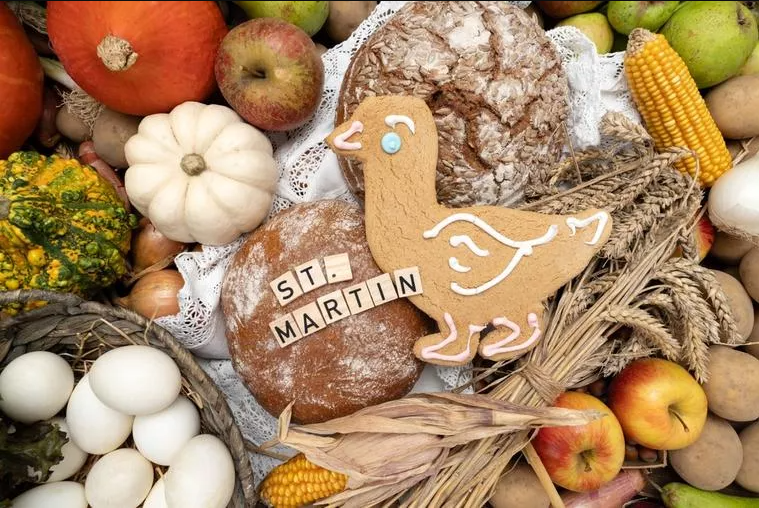
St. Martin’s Eve
During this time, St. Martin’s Eve was a major autumn festival marking the end of the agricultural year, the start of a pre-Christmas fast, and the beginning of winter. It was characterized by lavish feasting on roasted “Martinmas goose,” consuming new wine, and early forms of lantern processions, often mimicking the saint’s acts of charity. It celebrated St. Martin of Tours, a 4th-century Roman soldier turned Bishop known for his charity, specifically sharing his cloak with a beggar. Known as a “friend of children” and patron of the poor.
The Motive: A Toxic Intersection of Blood and Business
Why would Hanß Gammel turn a festive evening into a crime scene? While the church records are silent on the “why,” the family tree and the calendar offer chilling clues. In the 1600s, two things dominated village life: land inheritance and taxes. On St. Martin’s Eve, these two worlds collided with fatal results.
a. The St. Martin’s Day Deadline
The date of the murder—November 11—was no coincidence. In 17th-century Germany, St. Martin’s Day was “Tax Day.” It was the traditional deadline for settling agricultural debts, paying land rents, and closing the year’s books. As an Einnehmer (Collector), Johannes Schönlaub wasn’t just Hanß’s brother-in-law; he was the man with the ledger. If Hanß was struggling financially or disputed a debt, seeing Johannes sitting across the table with his tax pen and ledgers may have been too much for him to bear.
b. The Inheritance Trap
The Gammel household was a complex web of three different marriages. Hanß the Murderer was a son from the first marriage (to Christina), while his sister Anna Apollonia was a child of the second (to Margaretha Mattes). When their father, Hans Gammel the Elder, died in 1598, the estate had to be carved up between children from two marriages and a new third wife.
As an older son, Hanß likely felt entitled to a much larger share of the Gammel lands. Instead, he watched as his half-sister Anna Apollonia married into the powerful Schönlaub family. To Hanß, Johannes may have looked like an “outsider” who was now controlling Gammel property and maternal Matthes assets through his wife.
c. Half-Sibling Friction
Family alliances were clearly fractured. While the half-brother Martzolff was on good terms with Anna Apollonia—serving as a godfather to her children—Hanß seems to have been the outlier. In many 17th-century murders, the victim is a proxy for a deeper grievance. By killing Johannes, Hanß wasn’t just settling a debt; he was “deleting” the man who legally managed his sister’s interests and stood between Hanß and the family wealth he felt he deserved.
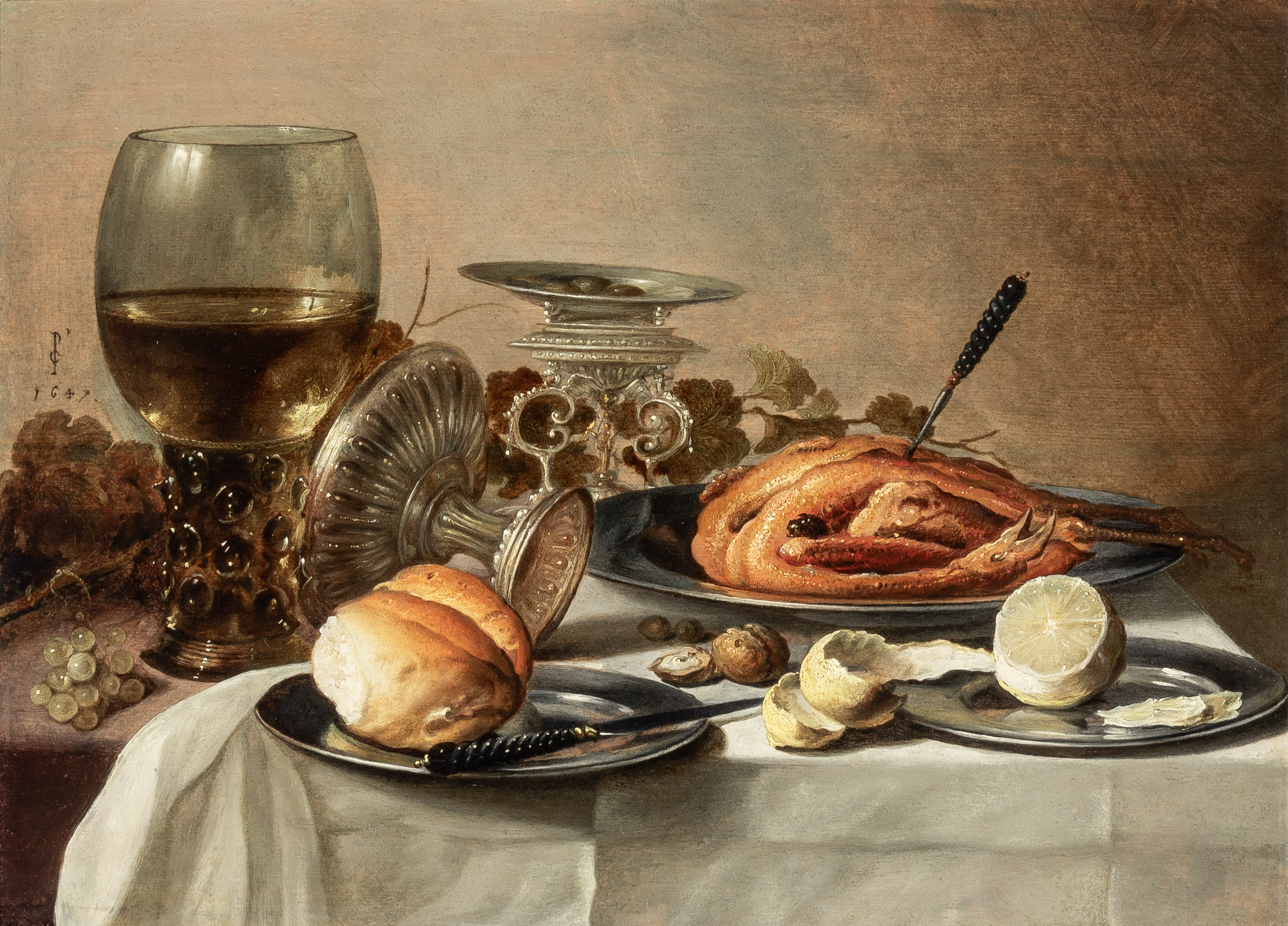
A Powder Keg of Wine and Resentment
The church book notes the men were drinking “beim Wein” (with wine). In the heat of a holiday feast, with the pressure of the St. Martin’s tax deadline looming and years of simmering inheritance resentment boiling over, the wine likely provided the final spark. Hannß didn’t just draw a knife; he drew a line through his family’s future, choosing exile over the perceived “insults” of his brother-in-law’s ledger.
The Schönlaub Ophrans: The Mystery of the Older Brothers
At this point, the family story splits. Johannes and Anna Apollonia had two older sons: Erhard (b. ca. 1592) and Hanß (b. ca. 1594). Strangely, these two boys—aged 13 and 11 at the time of their mother’s death—are entirely absent from the formal guardianship records.

Their silence in the records leaves us with a haunting question: What happened to them? In an era where 14 was the start of adult responsibility, were they already apprenticed out to tradesmen in Minfeld? Or, more tragically, did the same wave of grief or illness that claimed their mother also take them? Without further records, they remain a “lost” generation, potentially victims of the same dark era that claimed their father.
The Matthes Rescue: A Maternal Safety Net
With the Gammel name under a dark cloud after the murder, the survival of the remaining Schönlaub children fell to their mother’s maternal kin: the Mattes (Mattheßen) family of Nußdorf. The “heroes” here are the brothers of the maternal grandmother, Margaretha Matthes. Her brothers—the children’s great-uncles—Hans and Valentin Matthes. These men didn’t just provide a roof; they provided a total reset. They moved the three youngest orphans—Hanß Conrad, Valentin, and the “miracle” baby Ruprecht (born four months after the murder)—away from the shadow of their Gammel uncle’s crime in Minfeld. In Nußdorf, Hanß Conrad was raised alongside his cousin, Anna Apollonia Mattes.
The Full Circle: The Two Anna Apollonias
The most beautiful thread in this dark tapestry began three years before the murder. On Christmas Day, 1600, the elder Anna Apollonia Gammel Schönlaub stood at the baptismal font in Nußdorf as godmother for her young cousin, Anna Apollonia Mattes, the daughter of Jacob Mattes/Matthes/Matthessen the Younger. In 1623, the orphaned Hanß Conrad married that very namesake—his second cousin. It was this union of two branches of the Matthes family tree that finally allowed the Schönlaubs to return to Minfeld and reclaim their father’s stolen legacy.
Apollonia was a known and somewhat common girl’s name in German-speaking regions, including the Palatinate, during the 16th to 18th centuries, particularly between 1600 and 1660. This was directly due to St. Apollonia, who was extremely well-known throughout Europe during this period, particularly as the patron saint of dentistry and toothaches.
My direct line:
- Steffan Schönlaub and Barbara ____.
- Erhard Schönlaub and Catharina _____.
- Johannes Schönlaub and Anna Apollonia Gammel.
- Hanß Conrad Schönlaub and Anna Apollonia Matthes/Matthessen.
- Johann Ludwig Schönlaub and Anna Barbara Wambsganß.
- Johannis Schönlaub and Anna Elisabetha Zimmer.
- Anna Apollonia Schönlaub and Johann Christophel Schäffer.
- Anna Elisabetha Schäffer and Johannes Adam Propheter.
- Johann Adam Propheter and Katharina Elisabetha LeBeau.
- Johann Jacob Propheter and Anna Margaretha Weinmann.
- Margaretha Propheter and Johann Georg Fried.
- Margaretha Fried and Heinrich Weiss.
- Margaret (Margarethe) Weiss and Elias W. “Eli” Nutick (Wegt). (My great-great-grandparents).

To learn more about St. Apollonia:
- Centuries of Solace and the Sainthood of Apollonia. Virtual Dental Museum
- Saint Apollonia. Wikipedia
- February 9: Saint Apollonia, Martyr. Vatican City State.
- The Story of Saint Apollonia: The Patron Saint of Dentistry and Oral Health. Catholic365
Read about St. Martin of Tours, and St. Martin’s Day:
- St. Martin of Tours – Explore the Saints. FaithND (University of Notre Dame)
- St. Martin’s Day Traditions. germanfoods.org
- St. Martin’s Day: The European Thanksgiving. National Catholic Register
- St. Martin’s Day. Wikipedia
If you’d like to learn more about the 52 Ancestors in 52 Weeks project, please visit here:
Or join the Facebook group Generations Cafe.
If you use any information from my blog posts as a reference or source, please give credit and provide a link back to my work that you are referencing. Unless otherwise noted, my work is © Anna A. Kasper 2011-2026. All rights reserved. Thank you.


 Anna's Musings & Writings
Pingback: My Schönlaub Ancestors of Minfeld, Germany. A Censor, A Mayor, A Collector (and Murder Victim), A Lawyer/Court Judge, and an Innkeeper. | Anna's Musings & Writings