A new year, and a new year of writing prompts for 52 Ancestors. This year it appears most prompts are going to be phrases. This week it is An Ancestor I Admire. I have been thinking about this for some days, ever since the prompt was released. I could write about so many of my ancestors that I admire for various reasons. It actually seemed too overwhelming for me to pick one. So, I decided to write about two of my ancestors that I admire for having to deal with being given not-so-great Puritan virtue names. Most of my ancestors with virtue names were females. I have numerous ancestors with virtue names such as Faith, Charity, Grace, Temperance, Constance, Honor, Patience, Mercy, and Prudence. I have found only one direct male ancestor with a virtue name, Deliverance Bennett. But I wanted to write about my two ancestors with virtue names with meanings that were not as pleasant: Hopestill Hawley Davidson and Submit “Mitty” French Morgan Merchant.
What is a Puritan virtue name? It is a word name expressing a religious or moral quality, like Faith, Hope, Charity, Prudence, Temperance, Patience, Grace, or Justice, that parents gave children to encourage godly living; they also used compound names like “Praise-God” or “If-Jesus-Christ-had-not-died-for-thee-thou-hadst-been-damned” (nicknamed “Damned”), reflecting their deep spiritual values.
I must admit that my direct ancestors were lucky. They were not given the name If-Jesus-Christ-had-not-died-for-thee-thou-hadst-been-damned, with the nickname of Damned! Other names that I feel were much worse than Submit or Hopestill include Forsaken, Humiliation, Agony, Anger, Fear, Hate-evil, Flee-fornication, Helpless, Kill-sin, Mistakes, Lament, More-trial, No-Merit, Persecution, Tell-no (tell no lies), Virgin, Wrath, Wrestling, and Weakly.
The Puritan virtue name Submit embodies the virtue of submission, meaning a willingness to yield to God’s will, religious authority, or one’s husband, reflecting core Puritan values of piety, humility, obedience, and selfless devotion. As with the virtue names Obey and Obedience, Submit is not one of my favorite names. But I admire my ancestor and her wherewithal to deal with being given such a name.
Submit French was not of a Puritan family. Puritans as a distinct, dominant religious group were largely gone by the year of her birth. She was born during the years of the American Revolution on 14 December 1778 in Westfield, Hampden, Massachusetts, as the daughter of Sampson French and Lusannah “Lucy” Root. She was their only child given a virtue name. Her sisters were named Sarah, Rebecca, Lucy, Clara, Clarissa, Julia, Charlotte, and Lois. Her brothers were named Josiah, Thomas, Ira, and Clement.
She went by the nickname “Mitty”, and she did not pass the name onto her children. Nor did any of her descendants give her name to their children. I would venture to guess the name had fallen out of favor even at the time of her birth.
Submit French married on 30 January 1800 in Easthampton, Hampshire, Massachusetts, to Festus Morgan, the son of Joseph Morgan and Mary Stebbins. There was one child born of this marriage, a posthumous child, William Festus Morgan. He married Eliza Moore Russell on 4 April 1832 in New Salem, Franklin, Massachusetts.
She married second to Phineas Merchant, the son of Ezra Merchant, Jr. and Catherine Northrup, before 1804 in New York. Born of this second marriage were several children:
Orlanzo Merchant married Sara Sabina Chaffee, Abba/Abbie/Alla Hilton, and Emerline “Emily” Hotchkiss Ketchum.
Cordelia Merchant married, as his first wife, in Broome County, New York, in 1828 to Lewis F. Cole, the son of Nathaniel Cole and Laura Fuller. (My direct ancestors).
Eliza Ann Merchant married on 11 December 1830 in Colesville (Windsor), Broome County, New York, to Walker Asa Cole, the son of Nathaniel Cole and Laura Fuller.
Sampson Merchant married on 14 September 1832 in Binghamton, Broome County, New York, to Emily Temple, the daughter of James Temple and Alenda Sherwin.
Lucy Merchant married on 4 November 1832 in Broome County, New York, to Stephen Temple, the son of James Temple and Alenda Sherwin.
Theodore George Merchant married on 20 October 1839 in Williams County, Ohio, to Caroline Stevens, the daughter of Jeremiah Cogswell Stevens and Mary “Polly” Everett.
Clarissa Merchant married, as his second wife, on 25 November 1856 in De Kalb County, Indiana, Lewis F. Cole, the son of Nathaniel Cole and Laura Fuller.
C. Merchant. His first name is unknown, only that it began with the letter C. He is found in the 1840 Census for Colesville, Broome County, New York. According to the census, he was married and had one son and four daughters. Nothing more is known about him.
Merchant (male): This child may have died young.
Hopestill is a rare, Puritan-era virtue name meaning hope still or a continuous, enduring hope, used historically for both boys and girls, evoking optimism and steadfast faith. It can be related to the name Waitstill. In this case, it was often expressing a parent’s prayer or hope, possibly for a child of a specific sex, usually a male child. Waitstill was also a name that was to be a reminder to trust God, combining wait and still to signify patience and reliance on divine timing.
The first meaning of the name Hopestill is rather pleasant and related to enduring hope and faith and having patience in God’s divine timing. But it was not so wonderful when the name was given because the parents wanted a male child and hoping still for future children that were sons. To me, this would not have been a good message, and a yoke for the child to bear, reminding her of their unhappiness, if no male children were born after her birth.
Luckily for Hopestill, when she was born, there had already been a male child born to her parents. Hopestill Hawley was born about 1782 in New Milford, Litchfield County, Connecticut, as the daughter of Nathan Hawley and Sarah Kent. As with Submit, Hopestill was born during the years of the American Revolution, and Puritans were no longer a dominant religious group. She was also the only one of her siblings to be given a virtue name. There is some disagreement as to the listing of the children of Nathan Hawley and Sarah Kent, but in addition to Hopestill, they had at least two other children, a son named Abner and a daughter named Sarah. Other probable children were Seaman, William, and Sibyl Hawley.
I do not know if Hopestill had a nickname, but she may have been called Hope by her husband and family, or maybe even Tilly. She did not give the name Hopestill to any of her children. The name was not passed down to any of her descendants. As with Submit, the name Hopestill had mostly fallen out of fashion by the time of her birth.
Hopestill Hawley married about 1805 in Litchfield County, Connecticut, to Asa Davidson, the son of Christopher Davison and Jael Lassell. The History of Cornwall, on page 452, lists the marriage but not the date. Their first child was born about 1806.
Children born to Hopestill Hawley and Asa Davidson:
Asa Davison, Jr., married about 1827 in Connecticut to Catherine A. Cunningham, the daughter of Frederick Cunningham and Mary Tyler. (My direct ancestors).
Lucy Davison married, as his fourth wife, on 22 August 1843 in Hocking County, Ohio, to Ralph Bingham.
Amos Davidson married on 25 June 1845 in Goshen, Connecticut, to Temperance Allyn, the daughter of Avery Allyn and Rebecca Gallup.
Mary Ann Davison married on 18 Feb 1829 in Sharon, Litchfield County, Connecticut, to Smith S. Nickerson, the son of Archelaus Nickerson and Dorothy Holcomb.
Gurdon C. Davidson married Emily Ella White, the daughter of John White and Amanda Root.
Clarissa Davidson married 22 July 1832 in Cornwall, Litchfield County, Connecticut, to Ebenezer Bennett Durand, the son of Joseph Durand.
Luther H. Davidson married first on 2 April 1845 in Sharon, Litchfield, Connecticut, to Maria C. Baldwin, and second on 23 December 1864 in Monterey, Berkshire, Massachusetts, to Mary Tymeson.
Sarah Ann Davidson married on 11 June 1845 in Goshen, Connecticut, to Frederick M. Foster, the son of Ira Foster and Martha “Patty” Welling.
Maria “Dolly” Davidson married on 17 Nov 1842 in Lakeville, Litchfield, Connecticut, to Frederick Farnum Cleaveland, the son of Bradford Cleveland and Eunice Farnham.
Betsey E. Davidson married on 7 January 1846 in Goshen, Connecticut, to Alderman Ives, the son of Leveritt Ives and Huldah Holbrook.
Charles E. Davidson died on 26 January 1851 in Cornwall, Connecticut, at the age of twenty-three, unmarried.
Lydia E. Davidson married on 30 December 1847 in Cornwall, Connecticut, to Ebenezer W. Wooster.
I have been doing further research on my Bonnet ancestors. I was going to add the new information to my original post about my Greatsinger ancestors: My Greatsinger (Gretzinger) and Bonnett ancestors of Berlin, Germany and Related Lines, but that post has just gotten longer and longer as I have added additional information and updated it. So, I decided that my Bonnet ancestors deserve their own post. 🙂
My Greatsinger (Gretzinger) and Bonnett ancestors are through my 3rd great Grandmother, Hannah Elizabeth Kritsinger/Greatsinger (she married David Prindle, Sr.).
Her grandfather was Johann Christian Gretzinger (Greatsinger), who was the son of Johann Jacob Gretzinger and Loisa (Louisa) Antoneta Bonnett. He was baptized 17 Jun 1729 in the Jerusalem Chapel (Church of the Archangels Michael and Gabriel) in Berlin Stadt, Brandenburg, Prussia, Germany.
Loisa (Louisa) Antoneta Bonnett was the daughter of Francois Jean (Johann Frantz) Bonnet and Anna Dorothea Steiner.
My Greatsinger and Bonnet ancestors are the only ones in my family tree hailing from Berlin, Germany. I was always curious how they ended up in Berlin. Especially, my Bonnet ancestors, because their roots were in France, and the distance between Berlin and the French border is a considerable distance.
The surname Bonnet is closely related to two groups: the Waldensians and French Huguenots (French Protestants). I originally thought my ancestors may have been Waldensians, a medieval Christian movement, started by Peter Waldo in 12th-century France. They were heavily persecuted by the Catholic Church for challenging its authority. They survived by retreating to the Alps, later aligning with the Reformation, and eventually establishing modern churches in Italy, the USA, and South America, known for their resilience and distinct Protestant identity. The Waldensians had much earlier beginnings than the French Huguenots.
After locating church records for my ancestors in France, I was able to confirm that they were Huguenots, not Waldensians. Although there is no doubt that some of the branches of the Bonnet family were indeed Waldensians.
Both Waldensians and later Huguenots retreated to the Alps. They lived in Provence and the Dauphiné (areas including modern Alpes-de-Haute-Provence), with Waldensians established there for centuries before Huguenots emerged; both groups eventually faced persecution, leading many to flee, with some Waldensians and Huguenots eventually settling in Germany. The Waldensians fled France shortly after the Huguenots. The Waldensians that migrated to Germany settled in Württemberg and Hesse. The Huguenots significantly came to Berlin in Brandenburg.
They received a warm welcome. Brandenburg’s Great Elector, Frederick William, issued the Edict of Potsdam (1685), inviting Huguenots to settle in his devastated lands, offering protection and incentives. Around 20,000 Huguenots settled in Brandenburg-Prussia, becoming a significant part of Berlin’s population. The newcomers significantly boosted Berlin and Brandenburg’s culture and economy after France’s 1685 Revocation, which outlawed Protestantism. Thousands of people were welcomed, especially skilled artisans and intellectuals, who established vibrant French communities, churches (like the Französischer Dom), schools, and intellectual centers, enriching Prussia culturally and economically, fostering a lasting French-German connection. (7)
Once in Berlin, my Bonnet ancestors intermarried with native Germans and became of the Lutheran faith. French Protestants initially included Lutherans, as Martin Luther’s Reformation spread to France early on, but by the 1540s, most French Protestants, who became known as Huguenots, adopted the teachings of John Calvin, forming a distinct Calvinist movement that became the dominant form of French Protestantism, though some Lutherans remained, especially with later German influences and congregations.
Above is a map of the Provence-Alpes-Côte d’Azur region of France. As you can see, Alpes De Haute is in the center and borders northern Italy.
Alpes-de-Haute-Provence (Alps of Upper Provence) is in the Alps, forming a department in southeastern France’s Provence-Alpes-Côte d’Azur region, characterized by its transition from Mediterranean landscapes to high Alpine peaks, it is a central part of the French Southern Alps. It is situated in the heart of the Southern Alps, bordering northern Italy and other French departments.
My ancestor, Francois Jean (Johann Frantz) Bonnet, was baptized on 4 October 1660 in La Motte-du-Caire in the Alpes-de-Haute-Provence, the son of Jehan/Jean Bonnet and Marie Rolande. He died 27 Mar 1745 in Berlin, Berlin, Germany. He married Anna Dorothea Steiner on 3 Jan 1707 in Berlin. For now, the parentage of Anna Dorothea Steiner remains unknown. Francois Jean (Johann Frantz) Bonnet was older when he married Anna Dorothea Steiner. I have not found earlier marriage records for him, but it’s possible he was married as a young man in France or could have married while in the process of migrating from France to Germany, or once he arrived in Germany. I have not located any other marriage records for him. But I will continue my research.
We know that Francois Jean (Johann Frantz) Bonnet had at least one sibling, a brother, Johann (Jean) Bonnet, who married Maria Koppen and had at least one child, a son, Joseph Bonnet, who was baptized on 23 Feb 1708 in Berlin.
Jehan/Jean Bonnet was baptized on 29 March 1639 in Entrepierres, Alpes-de-Haute-Provence, France, as the son of Pierre Bonet and Genevieve Lebrond (Lebron). He married Marie Rolande. Entrepierres is a village a short distance from La Motte-du-Caire. Nothing more is known about Pierre Bonet and Genevieve Lebrond (Lebron).
Marie Rolande was baptized on 16 December 1644 in Seyne, Alpes-de-Haute-Provence, France, as the daughter of Pierre Rolande and Jehanne Rogon. The parentage of Pierre Rolande and Jehanne Rogon is unknown.
Rolande is primarily a French feminine first name. Rolande, as a surname, is a variant of the surname Roland/Rolland. The name comes from an ancient Germanic name meaning for famous land or renown of the land, derived from hrod (fame/renown) and land (land/territory). It was popularized by the legendary warrior Roland of Charlemagne’s court. (1 & 2)
The surname Rougon (Occitan: Rogon), has historical roots in the Provence region, near Seyne, and is derived from the Provençal word meaning little red or red-haired. Given the proximity of Seyne to the Provence region and the year 1644, it is highly likely that Jehanne Rogon’s maiden name is related to this Provençal origin. (3)
Lebron is a variant of the French surname Lebrun, meaning the brown one, a common descriptor for someone with brown hair or complexion. (4)
Bonnet is French surname from the medieval personal name Bonettus, a diminutive of Latin bonus ‘good’. French: occasionally, a Gascon variant of Bonneau. English and French: metonymic occupational name for a milliner, or a nickname for a wearer of unusual headgear, from Middle English bonet, Old French bon(n)et ‘bonnet’, ‘hat’. In Germany the name was borne by Waldensians, of French origin, and French Huguenots. (5 & 6)
My direct line:
Pierre Bonet and Genevieve Lebrond (Lebron).
Jehan Bonnet and Marie Rolande (daughter of Pierre Rolande and Jehanne Rogon).
Francois Jean (Johann Frantz) Bonnet and Anna Dorothea Steiner.
Loisa (Louisa) Antoneta Bonnett and Johann Jacob Gretzinger Gritzinger Ertzinger (son of Jacob Ertzinger Gertzinger Götzinger and Barbara Scheüchzer).
Johann Christian Gretzinger Gertzinger Greatsinger and Anna Anne (Antje) Palmer.
John (Johann) Kristinger/Greatsinger and Lea Litts (daughter of Roelof Litts and Sara (Saartje) Sluyter).
Hannah Elizabeth Greatsinger/Kritsinger and David M. Prindle, Sr. (son of Amos Prindle and Esther Canfield).
Daniel Prindle and Sarah Jane “Jennie” Doman (daughter of Jacob Doman and Mary Ann Davison/Davidson).
Anna Cora Prindle and Joseph Edward Cole (son of Lorin Richard Cole and Nancy M. Losure). My great-grandparents.
This week’s writing prompt is Musical. I have numerous musicians in my close family, and my great-grandfather Abraham G. Kennedy played piano and, after his retirement from teaching, worked in a piano store and a music store. Previously, I wrote about my Wenrich cousin, Ragtime Composer Percy Wenrich. But I decided to write about a fife player in my extended family. For many years, I have had a keen interest in the fife and how and why it was used in wartime.
Musicians known as fifers played a vital role in warfare, typically being young boys who, along with drummers, acted as the army’s original signal corps. They used high-pitched tunes to communicate commands (such as charge, retreat, or reveille) amid the chaos of battle, established marching rhythms, uplifted spirits, and helped manage daily camp activities, serving as essential means of communication for 18th and 19th-century armies before the advent of radios.
These musicians were generally boys aged 10-18, too young to engage in direct combat, or older men who were unfit for battle. However, this was not always the case, as there were times when boys and older men were unavailable for the roles of drummers or fifers, leading to the enlistment of regular soldiers from the ranks to take on these responsibilities. Usually, a company of soldiers was accompanied by one fifer and one drummer.
Cpt. Samuel Dewees is my 3rd cousin, 7 times removed. A fifer who served in the American Revolutionary War and the War of 1812. We share German Dohrs ancestors. The Dohrs family hailed from Kaldenkirchen, Viersen, North Rhine-Westphalia, Germany. We both descend from Matteis Dohrs (aka Theiss Doors) and his wife Agnes. Samuel’s line is via a daughter, Gerturde Dohrs who married Paulus Van Haren Küster, who are Samuel’s great-grandparents. My line is via a daughter, Elisabeth Dohrs (Doors) who married Pieter/Peter Keurlis. They are the ancestors of my maternal 4th great-grandmother Elizabeth Barbara Womelsdorf (she married Peter Losure/Lozier).
Her father was Jacob Womelsdorf. His brother John Womelsdorf is the one that formally laid out the town of Womelsdorf, Berks County, Pennsylvania, in 1762, initially naming it “Middle Town,” but it was later renamed Womelsdorf in his honor. Her mother was Catherine Elizabeth Kasebier, the great-granddaughter of Matteis Dohrs (Doors) and Agnes.
Famous kin of Matteis “Theiss” Dohrs/Doors: U.S. President, Theodore Roosevelt, and First Lady Eleanor Roosevelt.
Musicians who played the fife and drum were often younger and smaller in stature, as some accounts from that era indicate. Samuel Dewees, who was “around 15 but quite small for my age,” was enlisted by his father into the 11th Pennsylvania Regiment. Although he joined the military in 1777, Dewees spent the initial 18 months of his service either in a hospital or assisting the regiment’s colonel. Despite wearing a musician’s uniform beforehand and likely undergoing some fife training, he did not fulfill the role of a musician until the summer of 1779. (1 & 2)
Photo above is of Samuel Dewees as an older man.
During the period between late summer 1778 and spring 1779, Dewees was employed as a waiter at Humpton’s residence located at Somerset Courthouse in New Jersey. He stated that while he “homed,” he “was attired in a Fifer’s regimental coat and cap, adorned with a horse or cow tail hanging from it…”; this was during the attack on Stony Point. Samuel Dewees’ pension records indicate two different ages for him (57 years in 1820 and 56 years in 1818). A concise summary of his early military experiences, as mentioned in his memoirs, is as follows: His father, who had been captured at Fort Washington in November 1776, was freed from prison in early 1777. Samuel Dewees was enlisted by his father as a fifer in the 11th Pennsylvania Regiment led by Colonel Richard Humpton, being “about or turned of 15, but quite small for my age.” He served in the fall of 1777 at a hospital located at the “Brandywine meeting-house” (likely Birmingham Meetinghouse), at one point under the leadership of Captain George Ross, Jr. from the 11th Regiment, and he remained on duty with the sick or was absent from the military until spring 1778. After rejoining the army at Valley Forge, he returned to the 11th Pennsylvania, took on the role of waiter for Colonel Humpton, and was subsequently detached from the military again. In July 1779, when he returned to his regiment, he claimed to be “one of the musicians connected to the detachment” that tried to attack Stony Point, although General Anthony Wayne left “the musicians (or at least a portion of them), including myself,” behind him. Dewees recounted that this assault was unsuccessful, and he did not participate in the later successful attack on July 16th. (1 & 2)
My cousin, Samuel Dewees, the fifer, continued his services in the military sporadically after the war. During Fries Rebellion in 1799 he was attached to a company of regulars for the purpose of recruiting new soldiers and moved with them to Northampton, Pennsylvania where they “encamped two or three days.” He noted, “I had played the fife so much at this place, I began to spit blood… By the aid of the Doctor’s medicine and the kind nursing treatment I received… I was restored to health again in a few days and able to play the fife as usual.” (1 & 2)
Fife player Matthew Skic and drummer Keith Henning performs songs form the Revolutionary War outside of the Museum of the American Revolution. (Photo by Brad Larrison for NewsWorks)
A Revolutionary War fife was a simple, small, wooden, six-hole transverse (side-blown) flute, often made of boxwood, with metal bands (ferrules) at the ends to prevent splitting, designed to be shrill and loud for battlefield communication.
The Key Roles of Fifers were:
Battlefield Communication: Their shrill fife tunes cut through combat noise to relay commands for advancing, retreating, or firing, supplementing the drums’ signals.
Regulating Daily Life: Specific tunes announced reveille (wake-up), mealtimes, and tattoo (lights out) for soldiers in camp.
Setting Pace & Morale: They provided the rhythmic beat for marching and played music to entertain and lift spirits.
Signal Corps: They were the 18th-century equivalent of modern signalers, using music as a standardized language.
With changing warfare and new technology, their role diminished, with British armies ceasing use in the 1890s and the U.S. in 1904.
Below is a video of Fife and Drum Music of the American Revolutionary War.
Today, December 16, 2025, is Jane Austen’s 250th birthday. She was born December 16, 1775.
It was once thought that I had a much closer connection with Jane Austen, via my ancestor Elizabeth Lane, wife of John Hine. They are my maternal 9th great-grandparents. In many trees it lists her as the daughter of John Lane and Sarah Barnard. She was not their daughter, and the maiden name of Sarah as Barnard is in question, and it is via this unproven Barnard line that links up with Jane Austen. If this was the case, Jane Austen would be my 7th cousin, six times removed.
It is thought instead that Elizabeth Lane was the daughter of John Lane and Katherine Tuttle. This would link us as descendants of Charlemagne several times, and to early English Royalty, and a possible very distant connection to Jane Austen. More work needs to be done on the parentage of Elizabeth Lane Hine.
But alas, not to worry, we are still related to Jane Austen, but it’s much further back and much more distant! I descend on both sides of my tree from John, King of England aka John Lackland. As does Jane Austen. My two lines are via children he had with royal mistresses or concubines.
My favorite of Jane Austen’s books is Sense and Sensibility, and my favorite of Jane Austen film adaptations, is the one pictured above Sense and Sensibility (1995).
My first connection is via Richard FitzRoy, Baron of Chilham, a child of John with his mistress Adela de Warenne. This is on my paternal side. Armstrong-Fay–Doughty–Gooden–Watts-York-Thomas-Davis-Matheney-Wentworth-Calverley-Markenfield-Sothill-FitzWilliam-Cromwell-Bernacke-Marmion-de Dover-FitzRoy-King John.
My second connection is via Joan (Joanna) Plantagenet, Lady of Wales, a child of John with his mistress Clemence le Boteler. This is on my maternal side. Cole-Prindle-Doman–Davison-Cunningham-Tyler-Stent-Ives-Yale-Lloyd-ap John-ap Maredudd Llwyd-ap Llwelyn-ferch Dafydd Llwyd-ap Gruffudd-ferch Maredudd-ap Leuan Goch-ap Dafydd Goch-ferch Dafydd Llwyd-ap Cynwrig-ap Llyweln-ap Dafydd-Joan (Joanna) Plantagenet, Lady of Wales-King John.
Jane Austen is descended from John, King of England and his wife Isabella of Angoulême. This is so far back, and so many millions of people on this planet are descendants of John, King of England, it has been stated that most people with English ancestry are probably connected to Jane Austen.
Above painting is thought to be a portrait of Jane Austen.
As a Janeite, Austenite, an ardent Austen enthusiast, I still adore the fact that I have this connection to her! 🙂
My Barton ancestors are on my paternal Armstrong/Lyons lines. Armstrong-Lyons-Barton. My third great-grandmother is Catherine Ann Barton. She was born on 11 November 1795 in Bristol, Bucks County, Pennsylvania, as the daughter of Thomas Barton and Rebecca Ann Cooper. She died 11 May 1852 in Miami County, Ohio. She married John W. Lyons, Sr. on a Tuesday, 11 February 1817 in Newtown, Bucks County, Pennsylvania. The marriage was listed in the “Pennsylvania Correspondent and Farmers Advertiser.” They were married by Isaac Hicks, Esq. Her mother, Rebecca Ann Cooper, was descended on her paternal side from Pennsylvania Quakers with roots in England and on her maternal side from English Quakers and early German and Dutch settlers in New York.
The ancestry of her father, Thomas Barton, was more in question.
In the past, mostly based on a U.S. Sons of the American Revolution Membership Application from the 1960s, her father, Thomas Barton, is listed as a son of Edward Barton and Elizabeth Middleton. Edward Barton and his wife Elizabeth were a Quaker family of Camden, New Jersey.
Sons and Daughters of the U.S. American Revolution membership applications can contain useful and helpful information for genealogical research, they also can contain errors and are based on research done up to that date, in this case 1967.
Almost all the family trees that list Thomas as their son do so based on that membership application. It is true that Thomas lived for a time in Camden, New Jersey, and was living there in 1783, by that year he had become a Quaker. He did name his first son Edward. But there is no proof he was the son of Edward Barton and Elizabeth. Also, there is no proof Elizabeth’s maiden name was Middleton.
Sometimes, Thomas is instead listed as a son of Thomas Barton and Mary. Some give Mary’s maiden name as Kimber, but this is unproven. This Thomas Barton, who married Mary, was the son of Joseph Barton and Elizabeth Kimber. He passed on his mother’s maiden name of Kimber by giving one of his children it as a first name. The reason for linking our Thomas up with Thomas Barton and his wife Mary, is because they lived in Bucks County, Pennsylvania, which is the location where our Thomas ended up living.
He was not the son of Edward Barton and Elizabeth, nor the son of Thomas Barton and Mary. There is no DNA connection to the Edward Barton family. There is only a very slight DNA connection to the family of Thomas Barton of Bucks County, Pennsylvania, and looking closer at those few connections, it became apparent they shared Barrett ancestors with me and had no connection to my Barton family. As well as the fact that the children of Thomas Barton and Mary were Joseph, John, Sarah, Parthenia, Kimber, Deborah, Levi, James, Elizabeth, Stephen, and Eli. He did not have a son named Thomas.
Because his parentage was somewhat of a mystery, I turned to DNA to see if there was a strong link to any Barton families of Bucks County, Pennsylvania, or anywhere in Pennsylvania, or of New Jersey. It became clear that he was not related to any Barton families of Bucks County, Pennsylvania or Pennsylvania in general, nor was he of a Barton family with roots in New Jersey.
People made a few assumptions about him. One, that he was of a Quaker family. They neglected to consider that he could be a convert to the faith as an adult. Also, he did fight in the American Revolutionary War. He could have been a Quaker who decided to join the war effort. There were those within the religion that did, although most were disowned. More likely he was not yet a Quaker when he fought in the war.
Looking at my DNA matches, it kept coming back to him being of a Barton family of Colonial Maryland. Specifically, him being a grandchild of Thomas Barton and Abigail of Joppa, Maryland. I have several DNA matches to the descendants of this couple, that also match to my known Barton kin.
The parentage of Thomas Barton of Joppa, Maryland is unknown. He was born about 1685 in either England or Colonial Maryland. He died on 22 May 1730 in Gunpowder Hundred, Baltimore, Maryland.
I have seen Abigail’s maiden name listed in family trees as Blinn, White, and Jordan. Her maiden name is unproven.
Joppa is a former colonial town. Joppa was founded as a British settlement on the Gunpowder River in 1707 and designated as the third county seat of Baltimore County in 1712. The original boundaries of Baltimore County were defined in 1659 and contained all of modern-day Baltimore County, Baltimore City, Harford and Cecil counties and parts of Howard, Carroll, Anne Arundel and Kent counties. The settlement was named for the Biblical town of Jaffa in the ancient Holy Land of modern-day Israel. Joppa’s harbor began to silt in due to clear-cutting and farming upriver and coupled with multiple outbreaks of diseases such as smallpox and malaria, the county seat was moved to the growing, deep water port of Baltimore in 1768. Joppa’s population would decline rapidly thereafter, and businesses left for more prosperous environments in the new Baltimore Town. (1 & 2)
Thomas Barton and Abigail of Joppa, Maryland had the following children:
Thomas Barton II was born in Joppa, Maryland, and died after 1745. He married Elizabeth Ward.
James Barton was born 27 June 1710 in Gunpowder Hundred, Baltimore County, Maryland, and he died on 9 February 1734 in Gunpowder Hundred, Baltimore County, Maryland. He married Temperance Rollo (Rollow) on 8 September 1730. Based on his will, he had two children: Phillis Anna (Philis-Zana) Barton Norris, and James Barton.
John Barton was born 28 June 1715 in Joppa, Maryland, and died 4 January 1773 in Harford, Maryland. He married Ann Hitchcock on 23 May 1738 in Baltimore, Maryland. Based on his will he had the following children: Jemima, Keziah, William Hitchcock, James, and Samantha Ann “Nancy” Barton.
Elizabeth “Eliza” Barton was born 28 Jan 1717 in Gunpowder Hundred, Baltimore, Maryland. She married William Wright when she was about sixteen. Her husband died before 1740. Before his death, they had the following children: William Jr., Abraham, and Isaac Wright. She married James Greer on 25 May 1741 in Maryland; he died fourteen months later. They had one child, a son, James Greer. She married third to Heathcote Pickett on 26 January 1743 in Baltimore, Maryland. They had three children: Mary, Elizabeth, and Heathcote Pickett, Jr.
William Barton was born on 15 December 1718 in Joppa, Maryland, and died in 1729 in Baltimore County, Maryland.
Ann Barton was born 28 October 1720 in Joppa, Maryland. She married Charles Billingsley on 2 Oct 1760 in Joppa, Maryland. They had the following children: Ann, James, Moses, Thomas, Elizabeth, Nancy, John, William, and Prudence Billingsley.
There is some confusion regarding the son Thomas Barton II. Some try to merge him with his brother James and give them the same date of birth. I did not find a DNA connection to the Ward family of Thomas Barton II’s wife.
Regarding James Barton, I did not find a DNA connection to his wife’s Rollo/Rollow family. James Barton also died some years before our Thomas was born.
William Barton died as a child.
When considering John Barton was our Thomas’ father, it seemed to fit. I have a DNA connection to his wife’s Hitchcock family. I also have numerous DNA matches to the descendants of the children of John Barton and Ann Hitchcock. Although John does not list a son named Thomas in his will, it was not uncommon for a child to receive their share prior to a will being written. Especially considering the fact that our Thomas migrated to Pennsylvania and New Jersey some years prior.
Ann Hitchcock was the daughter of William Hitchcock II and Anne Jones, and the granddaughter of William Hitchcock I and Mary Gerves.
William Hitchcock I was born in Kent, England. He died in Colonial Maryland. His parentage is unknown.
Mary Gerves was born in England as the daughter of Robert Gervise and Amelia ____. She came with her parents to Colonial Maryland. The parentage of her father is unknown, other than knowing his roots were in England.
The parentage of Anne Jones is unproven.
Our Thomas Barton was born about 1740 in Maryland, and died in 1813 in Bristol, Bucks County, Pennsylvania. He married Patience Eldridge on 19 May 1766 in Pennsylvania. Her parentage is unknown.
Our Thomas is shown in the census as living in Greenwich Township, Gloucester County, New Jersey in 1774. On August 28, 1780, Sergeant George Hudson was ordered by Charles West, Ensign of Captain Wood’s Company of Gloucester County Militia, to warn the following men to appear at Haddonfield, Friday, September 1st, prepared to march on their tour of duty. Among the names of the men told to appear was Thomas Barton.
The exact year that Thomas Barton converted to Quakerism is unknown. What is known is that he struggled to adhere to the rules of the faith and was disciplined several times.
Above is a Painting of a Quaker meeting by an unknown British artist, Abt.1790.
He and his wife and children are found in Quaker records on 9 June 1783 in Camden, Camden, New Jersey, when the Barton family was approved to leave Camden, New Jersey, Quaker fellowship and join the Falls Meeting (Fallsington MM), in Bucks County, Pennsylvania.
On 6 August 1783 in Bristol, Bucks, Pennsylvania, he and his family are found in the Falls MM (Quaker/Society of Friends) records. The meeting house for those living in Bristol was Fallsington (aka Falls). He is found in the same records of Quaker Meetings in Fallsington MM in 1785 through April 1787. Patience Eldridge Barton died before 1789.
Based on Quaker records, he and his wife Patience had the following children: Edward, William, Sarah, Elizabeth, Thomas, Mary, and Patience. Since we do not know the parentage of Patience Eldridge, they may have named their first-born son Edward after her father or other Eldridge kin.
Edward Barton married Mary Lodge. I am a DNA match to numerous descendants of this couple. Thomas Barton married, but the name of his wife is unknown, he had at least one child. Patience died as a child. What happened to William, Sarah, Elizabeth, and Mary Barton is unknown. Did they die before reaching adulthood? Did they marry? I locate no records about them after the 1780s, nor did I find any DNA matches or descendants for these other children. There is a daughter listed aged 16 thru 25 in the 1800 census living with him in Bristol, Bucks, Pennsylvania, with his second wife and children from his second marriage. This may be one of the daughters from his marriage to Patience Eldridge.
Thomas Barton marries second to Rebecca Ann Cooper Winner (widow of Amos Winner) in 1789. It is at this point after being brought under discipline several times that he was finally disowned by the Quakers in 1789, after his marriage to Rebecca Cooper. She had been raised in a Quaker family, and her first husband, Amos Winner, who also fought in the American Revolutionary War, was raised a Quaker as well.
On 23 May 1788, Rebecca Cooper is listed as Rebecca Winner in the will of her father Joseph Cooper, a Quaker, living in Bensalem, Bucks, County, Pennsylvania. Also listed in the will are her mother Elizabeth (Severns) and her brothers Benjamin and Joseph Cooper, and sisters, Catherine (Searl), Mary (Booz), Charity (Wright), and Leticia Cooper. So, we know she married Thomas Barton after this date. Their first child was born about 1790.
Rebecca Cooper married Amos Winner in New Jersey on 1 May 1779. There was one child born to this marriage, a son, Joseph Winner. He was born about 1780 and died on 18 March 1805 in Bristol, Bucks, Pennsylvania.
Children of Thomas Barton and Rebecca Cooper:
Amos Barton was born about 1790 in Bristol, Bucks, Pennsylvania, and died 11 April 1872 in Bucks County, Pennsylvania. He is buried in the Emilie UMC (Methodist) Cemetery in Levittown, Bucks, Pennsylvania. He married Christina LaRue. He was named after his mother’s first husband Amos Winner.
Benjamin Barton was born about 1791 in Bristol, Bucks, Pennsylvania. He married Elizabeth Johnson. He was named after his maternal uncle, Benjamin Cooper.
Letitia Barton was born in 1793 in Bristol, Bucks, Pennsylvania, and died 10 September 1859 in Philadelphia, Philadelphia County, Pennsylvania. She married Samuel Boyer. She was named after her maternal aunt, Letitia Cooper Van Sant.
Catherine Ann Barton was born on 11 November 1795 in Bristol, Bucks, Pennsylvania, and died on 11 May 1852 in Miami County, Ohio. She married James W. Lyons, Sr. on 11 February 1817 in Newtown, Bucks, Pennsylvania. She was named after her maternal grandmother, Catherine Van Sant Severns, and her maternal aunt, Catherine Severns Benezet. (They are my direct ancestors).
Margaret Barton was born about 1798 in Bristol, Bucks, Pennsylvania. Nothing more is known about her.
Frances “Fanny” Barton was born in June 1800 in Bristol, Bucks, Pennsylvania, and died 20 August 1881 in Chesterfield, Burlington, New Jersey. She married Jesse Brown on 18 November 1819 in Bristol, Bucks, Pennsylvania.
George Pendleton Armstrong and Alice Elizabeth Nutick. (My great-grandparents).
Ending note: There were several men named Thomas Barton living in the areas where my Barton ancestors lived. DNA has strongly suggested that the Thomas Barton that married Rebecca Cooper Winner was the son of John Barton and Ann Hitchcock, and the grandson of Thomas Barton and Abigail ____. I do have many DNA matches to the descendants of Edward Barton, son of Thomas Barton and Patience Eldridge. But at this time, only DNA links the Thomas Barton that married Patience Eldridge, as having married second to Rebecca Ann Cooper Winner. The Thomas Barton found in the Quaker records in New Jersey and Pennsylvania, may or may not have been the same Thomas Barton that fought in the Revolutionary War in New Jersey. There was also a Thomas Barton that fought in the war in Pennsylvania. What I know to be true beyond a shadow of a doubt is that I descend from Thomas Barton and Rebecca Ann Cooper Winner, and that my Thomas appears to have been the son of John Barton and Ann Hitchcock, and the grandson of Thomas Barton and Abigail _____. In the future, I will continue my research into my Barton and related lines.
The main meaning of my name Anna is grace, divine favor, and God has shown favor. It comes from the Hebrew name Hannah. Is can be related to the name Anastasia, meaning resurrection. In other languages, from around the world, Anna means bringing goodness, offer of food, roasted grains, water, beautiful, melody, and apricot. In the Native American Algonquin language Anna means mother.
The words grace and favor are closely related to the words thankful and blessed, particularly in a theological context. “Grace” is often described as divine favor from God. “Favor” is often used interchangeably with grace to mean divine approval. In many religions, particularly Christianity, the Greek word charis is used for both grace and favor, highlighting their close connection. Thankfulness is a response to receiving these gifts, and “blessed” can describe a state of receiving both grace and favor.
The connection between grace and thankfulness is deep, as thankfulness is the appropriate response to receiving grace. The Greek word for “thanksgiving,” eucharistia, is built on the word for “grace” (charis), showing that grace is embedded within thanksgiving.
To be “blessed” can mean being in a state of receiving God’s grace and favor. Spiritual blessings can include receiving peace and wisdom, both of which are understood as gifts of grace and favor.
I love this artwork by Catholic artist Nichole Lanthier. St. Anne and Mary, Blessed Mother of Jesus.
Hannah is found in the Old Testament, the mother of the prophet Samuel, while Anna is a New Testament prophetess who encountered the infant Jesus in the temple. Anna recognized him as the Messiah, gave thanks to God, and told everyone present that the child would bring redemption to Jerusalem.
Below are my ancestors with the name Anna, Ann, Anne, Hannah, and Annette, going back to only the 5th great-grandmother level. I have not included those with a middle name of Ann, Anne, Anna, or Hannah, unless it’s the name they used, or part of their first name as in Mary Ann. I did include my grandmother, with the middle name of Annette, because I am her namesake, even though she went by her first name Glenna. Annette is a French name with Ann, and ette. Ette means small, little, or cute in French. The name means little/cute Ann.
Nancy became a nickname for Anne (and Anna) through an evolution that began with the medieval name Annis, a form of Agnes. “Mine Ancy” became “Nancy,” with Ancy being a nickname for Annis. Later, as Anne and Anna became popular, and the nickname was transferred to them.
In the USA:
Glenna Annette Kennedy, wife of Durward Edward Cole. My grandmother and namesake. She was born in Maxville, Perry County, Ohio, as the daughter of Abraham G. Kennedy and Mary Elizabeth Price.
Anna Cora Prindle, wife of Joseph Edward Cole. My great-grandmother and my namesake. She was born in Scioto, Pickaway, Ohio, as the daughter of Daniel Prindle and Sarah Jane “Jennie” Doman.
Hannah Elizabeth Greatsinger, wife of David M. Prindle, Sr. My 3rd great-grandmother. She was born in New Paltz, Ulster, New York, as the daughter of John (Johann) Kritsinger/Greatsinger and Lea Litts.
Mary Ann Davison, wife of Jacob (John Jacob) Doman. My 3rd great-grandmother. She was born in Cornwall, Litchfield, Connecticut, as the daughter of Asa Davidson, Jr. and Catherine A. Cunningham.
Mary Ann Gooden, wife of McGuireDoughty. My 3rd great-grandmother. She was born in Crawford County, Illinois, as the daughter of Lewis Gooden and Lydia Watts.
Anna “Nancy” Rogers, wife of Aden Barrett. My 3rd great-grandmother. She was born in Washington, Fayette, Ohio, as the daughter of Peleg Rogers and Mary Ellen Stafford.
Anna “Nancy” Albert, wife of John Price. My 3rd great-grandmother. She was born in Washington County, Maryland. She was the daughter of Johann Peter Albert and Anna Walpurgis Hoerner. The family was from Niklashausen, Main-Tauber-Kreis, Baden-Württemberg, Germany.
Hannah Hafer, wife of David Spatz. My 4th great-grandmother. She was born in Salem, Snyder, Pennsylvania, as the daughter of Andrew Hafer and Elisabeth (Maria Elisabeth) Druckenmiller.
Hannah Norris, wife of Nathaniel Shepherd Armstrong. My 4th great-grandmother. She was born in Baltimore, Baltimore, Maryland, as the daughter of Joseph Norris, Sr. and Mary Talbot.
Mary (Anna Mary) Linaberry, wife of Pvt. Elijah E. Chambers. My 4th great-grandmother. She was born in Hope, Warren, New Jersey, as the daughter of Johannes Conrad Lindaberry (Linnenberg) and Mary Esther (Maria Esther) Kuhl/Cool. Both her parents have German roots.
Mary Ann “Polly” Lamb, the wife of Rev. Samuel Doty. My 5th great-grandmother. She was born in South Carolina, as the daughter of John Lamb and Prudence Featherstone.
Margaret (Anna Margaretha) Metz, wife of Jacob (Johann Jacob) Doman (Dumm). My 5th great-grandmother. She was born in Germantown, Columbia, New York, as the daughter of Johann Bartholomaus Mertz and Joanna Susanna Scherp. Both her parents were born in Germany.
Anne Antje Anna Palmer, wife of Christian (Johann Christian) Greatsinger. My 5th great-grandmother. She married in Monmouth County, New Jersey. Her parentage is unproven.
In Ireland:
Anna Annie Joynt, wife of Thomas Fahey. My 3rd great-grandmother. She was of Shanaglish, Beagh Parish, Galway, Ireland, the daughter of Edmond “Ed” Joynt and Honor(a) “Nora” Larkin.
In Germany:
Anna Margaretha Weinmann, wife of Johann Jacob Propheter. My 5th great-grandmother. She was born in Heuchelheim-Klingen, Bergzabern, Südliche Weinstraße, Rhineland-Palatinate, Germany, as the daughter of Michael Weinmann and Felicitas (Felizitas) Grosshans.
I have not always liked my names Anna and Annette. When I was growing up, Anna was an old lady’s name! No one in my grade school was named Anna. I chose to go by Annette, although from kindergarten through 6th grade there was only one classmate named Annette. I met a few Hispanic girls in jr. high and high school named Ana, but no one else named Anna. There was only one other girl named Annette in jr. high and high school.
It helped, a little, when I realized that I was given the first name Anna after my great-grandmother, and the middle name Annette after my grandmother’s middle name, but I still did not love my name. I dreamt of having names like Desiree, or Priscilla! I still like the name Desiree, a French name that means desired or wished for.
Once I entered college, I chose to use my first name Anna. To this day, I know who is supposed to call me Annette, mostly family members, or a few that I went to school with, and if they call me Anna, it’s strange to me, even though everyone else does!
Now that I am oldish and, on my way, to being an old lady, I have made peace with my name. The old-fashioned name Anna even had a revival in the 1990s through 2001, when it was a popular baby name for girls. Although the name Hannah was significantly more popular in this same time period.
As the meaning of my name implies, I am blessed to be full of God’s grace and favor on this Thanksgiving Day. May the beauty and blessings of Thanksgiving bring warmth and peace to your home this holiday season. Happy Thanksgiving!
This week’s writing prompt is Rural. I decided to write about my Fuller ancestors living in the forbidding, mountainous, rocky terrain of Glastenbury, Bennington County, Vermont. It is about as rural as you will find! The town was sparsely populated from its beginning, with only six families in 1791. My Fuller ancestors were one of the six families found living there in 1791. By the turn of the century, those initial six families had left and been replaced by eight new ones. Only three of these families would remain by the next census in 1810, and only one stayed for future decades.
Above is the 1791 US Federal Census record for the inhabitants of Glastenbury, Bennington County, Vermont. Although you will find it listed in the 1790 index, Vermont became a state in 1791 and the census for that state was conducted in that year. These families lived on Glastenbury Mountain. The area was uninhabited, wild and vast.
The six families living in Glastenbury in 1791 were:
George Tibbets, Coffin Wood, Jonathan Clark, Asa Clark, Matthew Fuller, and Henry Sly.
My maternal 4th great-grandmother Laura A. Fuller Cole was born during the time the family lived in Glastenbury. Prior to migrating to Glastenbury, the family lived in Shaftsbury, Bennington, Vermont. The distance between Glastenbury and Shaftsbury is 6.4 miles. Although both places are considered to be rural, Glastenbury was far more isolated and undeveloped. Today, Glastenbury is a virtually uninhabited former town, whereas Shaftsbury is an active and well-known market town. In 1791, the population of Shaftesbury was 1,990 compared to six families in Glastenbury.
Laura Fuller was the daughter of Matthew Fuller and Martha Arnold. We know that all the original six families moved from Glastenbury prior to the 1800 census. By 1796, Matthew Fuller and his family were living in Oxford, Chenango County, New York. He is found there in the 1800 census. I was unable to locate him in the 1810 census, but we know by 1820 he is found living in Lisle, Broome County, New York. He remained there at least until the 1830 census, by 1839 he had moved 7 miles to Triangle, Broome, New York. His wife died on 3 February 1839; he died 25 April 1841. Both are buried in Triangle in Hazard Corners Cemetery. A side note: Triangle is considered very rural. In 1840, the population was 1,692. The current population is 2,793.
The Bennington Triangle, an enigmatic region in southwest Vermont notorious for unexplained disappearances, UFO sightings, and other bizarre happenings, includes the ghost town of Glastenbury, Vermont. The town’s history includes forestry operations that were abandoned after a short-lived tourism endeavor was wrecked by flooding. A number of mysterious disappearances between 1945 and 1950 solidified the region’s eerie paranormal reputation and cemented its place in local folklore.
Photo above is of the Glastonbury wilderness today. There are no remnants of the early settlers. There are only a few abandoned sites, old mines and sawmills, in the area.
Glastonbury, Vermont, had 241 residents at its height in 1880, mostly due to a logging railroad and a brief boom in charcoal manufacture. This only accounts for the population that was counted; many more temporary laborers were lured to the mountain to work in the then-thriving forestry industry. Nearly all of the mountain’s mature trees had been cut down by the late 1880s, and the town’s economy had collapsed. In 1889, the railroad was shut down. In 1894, it was briefly reactivated as an electric passenger trolley by the Bennington & Woodford Railroad, and a brief but initially successful endeavor was made to make South Glastenbury a popular tourist destination. A small fortune was spent to transform the area into a mountain resort area, which opened in the summer of 1898. Flooding, specifically in 1898, led to a washout of the railroad tracks due to erosion from logging was a major event that contributed to the decline of the former town of Glastenbury, Vermont. This was the beginning of Glastenbury’s demise as a viable town. Early in the 20th century, the town’s population decreased, reaching just seven in 1937 when the government decided to unincorporate it. Currently, there are only eight year-round residents, making it one of the least populated places in Vermont.
The above artwork is Jeanne d’Arc (Joan of Arc) by Albert Lynch, 1901, Private Collection.
In the past, I have written about my maternal ancestors Daniel Streing/Strang, Sr., and Charlotte Marie Lemaistre. I discussed their lives in France, England, and New York. In my writings about them, I did not take their lines further back than their parents and siblings.
At the time I originally wrote about them in 2021, they were my first confirmed French ancestors. I now know that I have some additional French Huguenot ancestors on my paternal Verdon lines that migrated to Colonial America. French Protestants also migrated to Berlin and Brandenberg and the Rhineland of Germany in the late 1600s to escape intense religious persecution after the Revocation of the Edict of Nantes in 1685, which stripped them of their religious freedoms. On my more recent paternal German lines, I have discovered I have French Huguenot LeBeau/de la Barre, Vacher/Vasher, Coeu, Charles, and Dupree ancestors that came to live in Ludwigshafen am Rhein and Frankenthal, in the Rhineland-Palatinate region of Germany, but they had all migrated from Uzès, Gard, France. I also have maternal French Huguenot Bonnet, Lebrond (Lebron), Rolande, and Rogon ancestors that lived in Alpes-de-Haute-Provence, France and fled to Berlin, Germany.
French Huguenots were French Protestants, primarily Calvinists, but the group also included Lutherans, who faced intense religious persecution in the 16th and 17th centuries.
My Beauharnais ancestors are on my maternal side. They are the ancestors of Charlotte Marie Lemaistre. She was the daughter of Jean Lemaistre and Charlotte Mariette. The Beauharnais ancestors are on her father’s lines.
Coat of Arms of the House of Beauharnais. Lords of Miramion and Chaussée.
The surname Beauharnais is derived from the French word beau, meaning beautiful, and harnois, which today has the meaning of harness. The second part of the surname is based on the Old French harneis meaning armor, military equipment, and accoutrements for a soldier or horse. Thus, there is an occupational link to the craft of making “beautiful” armor or soldier’s gear.
Originating in Brittany, the Beauharnais (also spelled Beauharnois) family became established in the 14th century in Orléans. They were initially merchants before expanding their influence and landed property. Members of the Beauharnais family occupied honorable positions in Orléans for centuries, and expanded their landholdings to include various lordships, including Miramion and La Chaussée. By the end of the 16th century, they had become part of the noblesse de robe (judiciary nobility).
The Beauharnais family was a well-known French noble family that gave rise to important people throughout the French Revolution and the Napoleonic era, such as Alexandre de Beauharnais and his son Eugène de Beauharnais.
We have to go back an additional four generations to get to our Beauharnais ancestors.
Jean Lemaistre married Charlotte Mariette. He was baptized on 7 March 1621 in Giens, Loire Valley, Orléans, France, as the son of son of Samuel Lemaistre and Jacqueline Souchay. He died in May 1680 in Orléans, Loiret, Centre, France.
Samuel Lemaistre was baptized on 1 December 1582 in Orléans, Loiret, Centre, France, as the son of Denis Le Maistre and Marie Le Noir. He died on 20 January 1643 in Orléans, Loiret, Centre, France.
Marie Le Noir was born in Orléans, Loiret, France, as the daughter of Pierre Lenoir and Jeanne Buatier. She died on 31 March 1631 in Orléans, Loiret, France. Her mother, Jeanne Buatier, is listed as the wife of Pierre Le Noir and the mother of Marie Le Noir in several sources. (1, 2, & 3)
Jeanne Buatier was born in Orléans, Loiret, France, as the daughter of Nicolas Buatier and Marie Beauharnais. She died on 24 August 1594 in Orléans, Loiret, France. It is at this point we encounter the Beauharnais family.
Marie Beauharnais married Nicolas Buatier on 19 July 1521. She was the daughter of Guillaume Beauharnois and Marie Le Vassor. You will see Marie listed in the above record as their fifth child.
Her father, Guillaume Beauharnois, was the Lord of Miramion, La Chaussee, La Grilliere, and Villechauve. He was the son of Jean Beauharnais and Jeanne Boilleve.
In 1505, he is listed as the Treasurer of Finances and Steward of the House of Jean d’Orléans (Le trésorier des finances et intendant de la Maison de Jean d’Orléans). This title would have referred to an official that managed the wealth and household of a prominent nobleman. In the 1500s, it would have meant he held an administrative position for a royal house. The term “Jean d’Orléans” likely refers to a member of the powerful French House of Orléans. It was not a distinct royal house but a cadet branch of the ruling House of Valois, representing a significant line of princes and dukes with royal lineage but not in the direct line to the French throne.
In 1517, he is listed as the Alderman of Orléans. In 16th-century France, the job of alderman (échevin) was to serve as a municipal administrator and magistrate within a town’s governing body. The specific duties generally revolved around overseeing local affairs, administering justice, and managing public finances. He died 30 October 1545 in Orléans, Loiret, France.
Jean Beauharnais was the Lord of Miramion and of La Chaussee. He was the son of Guillaume Beauharnais II and Jaquette Le Marie.
Jean Beauharnais was the Provost of the Marshals and a lawyer in Orléans. In 16th-century France, a Provost of the Marshals (prévôt des maréchaux) was a judicial official who maintained order within army camps, administering justice for soldiers and ensuring adherence to military law through a system known as the maréchaussée. These officials headed small contingents of sergeants, known as “archers,” and their courts were itinerant, following the army to adjudicate on issues like desertion, treason, and disputes between soldiers and the civilian population.
In 1482, Jean was accused of embezzlement. I was unable to discover any additional information regarding this charge.
His father, Guillaume Beauharnais II, was the Lord of Miramion and La Chaussee. He married on 15 November 1425 to Jaquette Le Marie. He was the son of Guillaume Beauharnais I and Marguerite De Bourges.
Guillaume Beauharnais I was the Lord of Miramion and of La Chaussee. His occupation is listed as a Merchant of Orleans (Marchand d’Orléans). He married on 20 Jan 1390 to Marguerite De Bourges.
Children of Guillaume Beauharnais I and Marguerite De Bourges:
Jean Beauharnais. He married Ann de Loynes.
Jeanne Beauharnais. She married Jean Hillaire.
Guillaume Beauharnais. He married Jacquette Le Marie. (My direct ancestors).
Peronnelle Beauharnais.
The Beauharnais family members were involved in the defense of Orléans in 1429 and were present during Joan of Arc’s famous lifting of the siege. Beauharnais family members served as soldiers and magistrates, and they fought alongside her.
Jean Beauharnais, sibling of my ancestor, gave his observations of Joan of Arc at the nullification trial that posthumously exonerated her:
“I often saw Jeanne while in Orleans; there was nothing in her which could merit reproof; she was humble, simple, chaste, and devoted to God and the Church. I was always much comforted in talking with her.” – Jean Beauharnais
The above image is of Leelee Sobieski in the 1999 Canadian television miniseries entitled Joan of Arc.
As a Catholic, I have a special place in my heart for St. Joan of Arc. Also, my son was born on her birthday.
Joan of Arc (Jeanne d’Arc) was born in Domrémy, France, on 6 January 1412, to Jacques and Isabelle d’Arc. She was raised with a strong religious faith and learned domestic skills from her mother. She was known throughout the region for her kindness toward others. During her childhood, France was embroiled in the Hundred Years’ War, battling both the English and a French faction from Burgundy. (4)
At age 13, Joan began experiencing divine visions and hearing voices from Saint Michael, Saint Catherine, and Saint Margaret. Over the next five years, these voices guided her to lead the French forces that successfully lifted the English siege of Orléans, escort Charles to Reims for his coronation, and expel the invading English forces.
On February 14, 1429, she traveled to Chinon, meeting with the Dauphin Charles on March 9th. He approved her mission to recapture Orléans, which she and her forces accomplished in a week. On July 17, 1429, Charles was crowned King of France in Reims Cathedral.
After the coronation, the king became less receptive to Joan’s counsel. She continued fighting until she was captured by the Burgundians. They, in turn, handed her over to the English after a year. The English condemned Joan as a witch and heretic, and she was burned at the stake in Rouen’s marketplace on May 30, 1431. (4) Her ashes were cast into the River Seine from the top of the Old Mathilde bridge.
In 1455, a formal appeal known as the “Trial of Nullification” or “Rehabilitation Trial” was launched to clear Joan of Arc’s name, 24 years after her 1431 execution. During this proceeding, friends, family, and former associates provided depositions that offered crucial testimony about her character, piety, and divine mission.
Her trial was nullified in 1456, and almost 500 years later, in 1920, Pope Benedict XV canonized her as a saint.
On the right side is our cousin Alexandre de Beauharnais, and on the left side is his wife Joséphine Bonaparte.
Originally, I had intended to also write about some of our other well-known cousins. I decided there was more than enough to write about just with my direct ancestors and Joan of Arc. At a future date, I will write about our Beauharnais 2nd cousin Madeleine Fabry, who was the wife of Pierre Séguier, Chancellor of France, and Alexandre de Beauharnais, and his wife, Joséphine. She was born Marie Josèphe Rose Tascher de La Pagerie. After the death of her husband, Alexandre, she married Napoleon Bonaparte. Later, their marriage was annulled because she did not produce an heir for Napoleon. She went by the first name Rose until she met Napoleon; he preferred Joséphine.
Alexandre de Beauharnais and Joséphine are related to many current European royal houses through their children. This link is primarily via their daughter Hortense de Beauharnais, who married Napoleon’s brother Louis Bonaparte. Their son, Eugène de Beauharnais, was the father of Joséphine of Leuchtenberg. Through these descendants, they are the direct ancestors to the ruling families of Sweden, Norway, Denmark, Belgium, and Luxembourg.
The furthest back that I can take my Schönlaub ancestors is to my fourteenth great-grandparents. Yes, my 14th great-grandparents! They were Steffan Schönlaub and his wife, Barbara ____ of Minfeld, Germany. These are the ancestors of my great-grandmother Alice Elizabeth Nutick Armstrong. Her mother was born near Klingenmünster. All of her mother’s ancestors were from the Rhineland-Palatinate region of Germany, all hailing from villages and towns near to each other. Steffan Schönlaub and Barbara ____ were her 11th great-grandparents.
The photo above is of the Protestant Church (Evangelische Kirchengemeinde Minfeld) in Minfeld. Photo by Gerd Eichmann.
Minfeld is the homeland of my Schönlaub ancestors. It is in Minfeld that, up until the early 1900s, most people with the surname were located. It was also found in smaller numbers in the nearby villages and towns of Kandel, Ilbesheim bei Landau in der Pfalz, and Doerrenbach. Minfeld is positioned on the southern edge of the Palatinate region and is known for its proximity to Alsace, France. The surname is also found in Strasbourg and Wissembourg in the Bas-Rhin region of France. The two cities, Strasbourg, France, and Minfeld, Germany, are connected by the border formed by the Rhine River. Wissembourg, France, is also very near to Minfeld, Germany.
Minfeld is situated in the county of Germersheim in the Rhineland-Palatinate region of Germany. It has a long history, with mentions of the village dating back to 982. Minfeld is known for its historic Protestant church with medieval wall paintings and a famous Winterhalter organ, as well as its proximity to nature reserves like the Bruchbach-Otterbachniederung nature reserve and the Palatinate Forest. The region offers outdoor activities such as hiking and cycling along the Wine Route and is also a center for viticulture, local delicacies like Saumagen, and the annual Bienwald-Marathon. As of 2023, the population of Minfeld was 1,708 residents. As of the year 2000, there were only seven residents left with the surname Schönlaub living in Minfeld.
The photo above is of Saumagen with sauerkraut and potatoes.
Saumagen is a traditional German dish from the Palatinate region, consisting of a pig’s stomach stuffed with a filling of pork, potatoes, and spices.
This dish was a favorite of German chancellor Helmut Kohl. He had it made and served to high-profile guests such as Margaret Thatcher, Mikhail Gorbachev, Ronald Reagan, and François Mitterrand. It is typically served with mashed potatoes and sauerkraut. Most Americans will find this a bit off-putting, as the meat is cooked in a pig’s stomach. The literal translation of saumagen means “sow’s stomach.” (2)
This dish is a specialty of the Rhinland-Pfalz region in Germany. It is as important to the Pfälzer people as Haggis is to the Scots. Nowadays, the butcher shop sells it in a plastic casing, not the traditional stomach. Some cook it in an oven bag instead of the traditional pig’s stomach. (2) If you scroll to the bottom of this blog entry, you will find a recipe for making Saumagen.
The tower, choir, and nave of the Protestant church of Minfeld were constructed in the middle of the eleventh century. The foundation stone for the Minfeld parish church’s Romanesque Hall church was set by monks from Seltz Abbey. At this time, the church would have been Roman Catholic. It wasn’t until 1556 that Minfeld joined the Reformation movement.
This would have been the church of my Schönlaub and related ancestors. First as Catholics, then later as part of the Lutheran faith. The church dates back to around 1053 and features medieval wall paintings uncovered during renovations. It houses a unique Winterhalter organ from 1752-1763, the façade of which is still a significant feature of the church interior.
Around 1500, the church was then extended and rebuilt in the Gothic style. Since then, two side chapels have been erected inside the church. The northern one was first devoted to Saint Anne, a well-known saint in medieval times. The Romanesque choir arch was replaced by a larger pointed arch. A bigger pointed arch took the place of the Romanesque choir arch. The choir room windows were also extended to pointed arches with tracery, and the choir room itself was fitted with a ribbed vault. During this time, the inside of the church was artistically painted, and a sacristy was also erected. This is evident in the ‘heavenly garden’ that adorns the ceiling of St. Anne’s Chapel, as well as the painted apostles, prophets, and their banners in the choir room. (1)
Since the Reformation, the Minfeld church has been Protestant. Nevertheless, both denominations began using it for worship. It was established as a simultaneous church on July 25, 1686, and it stayed that way until 1930, when the current Catholic church was dedicated.
Schönlaub is a German surname. It is taken from the German words schön, which means lovely, and laub, which means leaf or foliage. This implies a relationship to nature, perhaps suggesting that the original bearers of the name were employed in forestry or agricultural industries or resided in regions with lush surroundings.
So, how do you pronounce Schönlaub? SHOE-enn-lowb. Like the English word “shoe”, then “enn”, and “low” (like the sound ow in the English word how), the ending letter “b” is not really heard very strongly.
My 14th great-grandfather Steffan Schönlaub was born about 1515 in Kandel, Germersheim, Rhineland-Palatinate, Germany. He married Barbara (maiden name unknown) in Minfeld, and it is in Minfeld that she died on 12 November 1586. Her church death record reflects that they were of the Lutheran faith at the time of her death.
The photo above is of the German Prayer Book of the Margravine of Brandenburg from 1520. It was created for Susanna of Bavaria, wife of Casimir, Margrave of Brandenburg-Ansbach.
In the church records for Minfeld, Steffan is listed with the occupation of Zensor. In 1500s Germany, a censor was an official, often working for the Church or government, who examined books, pamphlets, and other printed materials. With the invention of the printing press, censorship shifted from correcting handwritten manuscripts to regulating printed works to control public discourse, especially during the upheaval of the Reformation. The role of a church censor was primarily to suppress books and writings deemed heretical or dangerous to religious doctrine.
We learn a bit about Steffan from his occupation. One, he was literate; he could read and write, rather well, I would venture to guess based on his occupation. It is estimated that the population of the area only had a literacy rate of around 5% or even less. The fact he was a censor, and the occupations of many of his descendants in the 1500s and 1600s, show that they were of an educated family.
We know that Steffan and his wife, Barbara, had at least one child, a son, named Erhard Schönlaub.
The above artwork of a rural German village is from Verlag von J. F. Schreiber.
Erhard Schönlaub was born about 1536. He married Catharina (maiden name unknown) in Minfeld. From church records, we learn that at the time of his death, he was the mayor of Minfeld. He was mayor from 1596 until his death in Minfeld on 19 November 1598. His wife, Catharina, died in Minfeld on 11 March 1604.
Known children of Erhard Schönlaub and Catharina:
Caspar Schönlaub was born about 1560 in Minfeld and died about 1616 in Minfeld. The name of his wife is unknown, but he had at least four sons: Hanß Conrad, Hanß, Stephan, and Johann Jacob Schönlaub.
Ursula Schönlaub was born about 1570 in Minfeld and died 20 September 1596 in Minfeld. She married, in Minfeld, to Hanß Contzelmann. The couple had 2 known children: Gertrudt and Hanß Jacob Contzelmann.
Johannes Schönlaub was baptized on Christmas Day, 25 December 1572, in Minfeld, and died 11 November 1603 in Minfeld. He married Apollonia (maiden name unknown) in Minfeld. The couple had at least three children: Hannß Conrad, Valentin, and Ruprecht Schönlaub.
Elisabetha Schönlaub was born in January 1577 in Minfeld.
The image above is from Quinten Massys, Tax Collectors, late 1520s, oil on panel, Liechtenstein Collection, Vaduz/Vienna (artwork in the public domain). Detail of fig. 1. Hands and jewels.
My line continues with the son, Johannes Schönlaub. As listed above, he was baptized on Christmas Day in 1572 and died on 11 November 1603 in Minfeld. He married in Minfeld to Apollonia ____.
In church records, it states his occupation was an Einnehmer (Collector). “Einnehmer,” as an occupation, refers to a person who collects payments or takes in money, such as a tax collector, rent collector, or anyone responsible for collecting fees or dues. An Einnehmer served in a variety of roles, primarily working for a lord, government, or merchant.
Johannes Schönlaub and his wife, Apollonia, had three children:
Hanß Conrad Schönlaub was born about 1594 in Minfeld and died 16 February 1663 in Minfeld. He married Anna Apollonia (maiden name unknown) in Minfeld. The couple had six children: Hanß Adam, Hanß Jacob, Anna Gertrud, Johannes, Sophia, and Johann Ludwig Schönlaub.
Valentin Schönlaub was born 14 September 1600 in Minfeld.
Ruprecht Schönlaub was born as a posthumous child on 18 March 1604 in Minfeld.
Johannes Schönlaub was stabbed by Hannß Gammel on St. Martin’s Eve. Below is an account (translated from German) of the church register describing his murder:
The church register reports on his murder: "Hannß Gammel, a resident here, stabbed him in the chest at 11 o'clock in the night, which was St. Martin's Eve, ... while he was drinking wine, and killed him in such a murderous manner that he could not speak another word after receiving the stab. The murderer immediately escaped, leaving the knife and the hat behind."
My ancestor Johannes Schönlaub was murdered on St. Martin’s Eve (the eve of the feast day of St. Martin of Tours). In Rhineland, Germany, bonfires were lit on Saint Martin’s Eve. Was his murderer, Hannß Gammel, a friend? Or was he someone disgruntled with Johannes due to his occupation as a collector?
We do not get those answers in what is reported in the church register. We do learn he was stabbed in the chest at 11 o’clock at night, on St. Martin’s Eve. They were drinking wine. He was killed in such a manner that he could not speak another word after being stabbed in the chest, and his murderer fled and left behind the murder weapon, a knife, and his hat.
My line continues with the son, Hanß Conrad Schönlaub. He was born about 1594 in Minfeld; some records state he was born in nearby Barbelroth. He married Anna Apollonia _____ in Minfeld. He died in Minfeld on 16 February 1663.
According to the church register, his occupation was that of a lawyer and court judge in Barbelroth and Minfeld. It is 5.4 miles between Barbelroth and Minfeld. As the crow flies, it is a distance of about 2 miles.
In 17th-century Germany (which at the time was part of the Holy Roman Empire), lawyers were well-educated, undergoing extensive training at universities. However, their education and professional function differed significantly from that of modern lawyers. They were expected to be masters of both Roman civil and canon (church) law, as well as local customs and statutes.
Hanß Conrad Schönlaub and wife, Anna Apollonia, had the following children:
Hanß Adam Schönlaub was born 6 January 1623 in Barbelroth, Germany, and died 19 February 1689 in Minfeld. He married Anna Apollonia Matthess. In the church register his occupation is listed as follows: From 1651-1660 he was a collector of the Guttenberg estate; 1655 to 1677, he was the host of zur Krone (in German, “zur Krone” means “to the crown” or “at the sign of the crown”). The phrase is most commonly associated with the names of inns, restaurants, or guesthouses in Germany). From 1663 to 1664 he was a lawyer in Minfeld; from 1666 to 1689 he was the mayor of Minfeld.
Hanß Jacob Schönlaub was born 31 October 1624 in Barbelroth. His occupation is listed as farmer. He married first to Catharina ____ and second to Apollonia ____.
Anna Gertrud Schönlaub was born 23 September 1627 in Barbelroth and died 21 September 1690 in Minfeld. She married first to Wendel Beyer in Minfeld and second to Johann Nicolaus GROß on 17 November 1687 in Minfeld.
Catharina Schönlaub was born 25 April 1630 in Barbelroth.
Johannes Schönlaub was born 23 July 1632 in Barbelroth. He married Anna Apollonia ____. In the church register it states the following (translated from German): He is mentioned as a godfather in church records in Minfeld from 1650 to 1655; he presumably married Anna Apollonia; whether he was the one who became mayor of Steinweiler is uncertain.
Sophia Schönlaub was born about 1635 in Minfeld. She died 21 February 1686 in Kandel. She was buried two days later on 23 February. She married Hanß Wilhelm Föder on 13 February 1655 in Kandel.
Johann Ludwig Schönlaub was baptized on 23 April 1643 in Minfeld and died 5 April 1703 in Minfeld. He married first to Anna Barbara ____ before 1667 in Minfeld and second to Susanna Wüst on 13 September 1695 in Minfeld. The church register lists his occupation as Wirt Minfeld zur Krone meaning innkeeper at The Crown in Minfeld. (my direct ancestors).
My line continues with the youngest son, Johann Ludwig Schönlaub. He was baptized on 23 April 1643 in Minfeld and died 5 April 1703 in Minfeld. He married first to Anna Barbara (maiden name unknown). She was the mother to all of his children. He married second to Susanna Wüst on 13 September 1695 in Minfeld. He was in his fifties at the time of his second marriage; Susanna was aged twenty-five when they married. No children were born to the second marriage.
The church register lists his occupation as Wirt Minfeld zur Krone, meaning innkeeper at The Crown in Minfeld. In German, “zur Krone” means “to the crown” or “at the sign of the crown.” The phrase is most commonly associated with the names of inns, restaurants, or guesthouses in Germany.
Inns had an important role within society —they provided lodging and food and drink to travelers, merchants, the military, and any others who needed them. They were important centers for social interaction, political discussion, and news dissemination within their towns and villages, thus making innkeepers prominent figures in their local societies.
His older brother, Hannß Adam Schönlaub, was the host of zur Krone from the years 1655 to 1677. Johann Ludwig was aged about thirty-three years old when he took over the zur Krone from his brother. At the time of his death, he was the innkeeper of zur Krone. What his occupation was prior to 1677 is not known, but he was the innkeeper until his death in 1703.
But we are able to glean a bit more information regarding Johann Ludwig Schönlaub and his social status from the baptism record of his son Johann Michael Schönlaub on 17 September 1684 in Minfeld. The church record states he was the son of Hannß Ludwig Schönlaub, relative of the council and guest at the town hall.
In 17th-century Germany, being a relative of the town council and a guest at the town hall would signify high social status, influence, and very likely wealth, as it would connect you to the ruling elite of the town and provide access to centers of local power and discourse. Such a position would imply you were part of the established families who held authority and were likely involved in trade or other prosperous enterprises that allowed them to engage with the town’s governance. Being a guest of the council suggests a formal invitation or recognition of your importance.
Children of Johann Ludwig Schönlaub and first wife Anna Barbara:
Hannß Ludwig Schönlaub was baptized on 12 August 1667 at the Minfeld Lutheran Church.
Anna Apollonia Schönlaub was baptized on 2 May 1669 at the Minfeld Lutheran Church and died 16 July 1669 in Minfeld.
Hannß Nicolaus Schönlaub was baptized 12 June 1670 at the Minfeld Lutheran Church and died 20 October 1670 in Minfeld.
Anna Apollonia Schönlaub was baptized 14 January 1672 at the Minfeld Lutheran Church. She was married first to Hannß Georg Jäger on 12 November 1689 in Minfeld. They had seven children. Her first husband died on 28 May 1705 in Minfeld. She married second to Hannß Erhard Wener on 13 October 1705.
Johann Nicolaus Schönlaub was baptized 1 September 1675 at the Minfeld Lutheran Church and died 13 December 1766 in Minfeld. He married first to Maria Eva Lutz about 1701 in Minfeld. They had one child, a son, before she died. He married second to Maria Catharina Lutz (kin to his first wife) on 29 January 1704 in Minfeld. Eleven children were born to the second marriage. According to the church register, his occupation was a lawyer, and he was the host of zur Krone in Minfeld. His uncle was the host of zurKrone, his father was the landlord and host of zur Krone. It appears that the inn stayed within the family.
Johann Conrad Schönlaub was baptized 15 July 1677 at the Minfeld Lutheran Church and died 10 January 1678 in Minfeld.
Johannes Schönlaub was baptized 22 January 1679 at the Minfeld Lutheran Church and died 5 March 1768. He married Anna Elisabetha Zimmer on 25 January 1705 in Minfeld. (My direct ancestors).
Maria Margretha Schönlaub was baptized and died on the same day on 30 January 1681 in Minfeld. There is a note in her church baptism record that reads as follows (translated from German): Emergency baptism by the midwife due to her great weakness in the house.
Juliana Magdalena Schönlaub was baptized on 13 August 1682 at the Minfeld Lutheran Church. She married Johann Valentin Trauth on 6 May 1704 in Minfeld.
Johann Michael Schönlaub was baptized 17 September 1684 at the Minfeld Lutheran Church and died 11 February 1685 in Minfeld.
Maria Margaretha Schönlaub was baptized 25 April 1686 at the Minfeld Lutheran Church. She married Johann Adam Forster. Her husband’s occupations are listed as follows: 1715 he was an innkeeper in Freckenfeld at the “Grüner Baum” (Green Tree); from 1697 to 1698 schoolmaster in Winden, Palatinate; from 1698 to 1701 schoolmaster in Mühlhofen, Palatinate.
Johann Adam Schönlaub was baptized 11 July 1688 at the Minfeld Lutheran Church and died 22 February 1689 in Minfeld.
Hannß Adam Schönlaub was baptized on 6 January 1680 at the Minfeld Lutheran Church and died on 11 November 1705 in Minfeld.
Georg Michael Schönlaub was baptized 1 January 1693 at the Minfeld Lutheran Church and died 25 November 1766 in Minfeld. He married Maria Eva Binckler on 06 January 1722 in Minfeld. The couple had nine children. His occupation is listed as a master baker.
My line continues with the son, Johannes Schönlaub, and his wife, Anna Elisabetha Zimmer. They married on 25 January 1705 in Minfeld. She was the daughter of Wendel Zimmer and ‘Anna’ Margaretha Ulm. Her father’s occupation was listed as innkeeper in Minfeld at zum Schwanen (The Swan) and a farmer.
The occupation of Johannes Schönlaub is not noted in the church records. But we do know he was of a family of good standing, with influence and wealth.
Johannes Schönlaub and his wife, Anna Elisabeth Zimmer, had the following children:
Anna Apollonia Schönlaub was baptized 15 November 1705 at the Minfeld Lutheran Church and died 12 January 1782 in Minfeld. She married Johann Christophel Schäffer on 17 November 1722 in Minfeld. (My direct ancestors).
Maria Veronica Schönlaub was baptized 18 September 1707 at the Minfeld Lutheran Church. She married Johannes Hauck on 26 August 1727 in Minfeld.
Anna Eva Schönlaub was baptized 26 December 1709 at the Minfeld Lutheran Church and died 27 May 1770 in Minfeld. She married Johann Adam Ulm (her 2nd or 3rd cousin via her mother’s family) on 20 January 1733 in Minfeld.
Anna Elisabetha Schönlaub was baptized 28 February 1712 at the Minfeld Lutheran Church and died 16 December 1781 in Minfeld. She married Johann ‘Ludwig’ Grahn on 1 May 1735 in Minfeld. A note in the church record states regarding this couple, “According to the inscription, they built the half-timbered house at Hauptstrasse 85 in 1788.”
Johannes Schönlaub was baptized on 15 May 1718 at the Minfeld Lutheran Church and died 2 March 1810. He married Maria Elisabetha Beyer on 29 November 1746 in Minfeld.
My line continues with the daughter, Anna Apollonia Schönlaub. It is at this point that we lose the Schönlaub surname, and it becomes Schäffer. She married on 17 November 1722 in Minfeld to Johann Christophel Schäffer, the son of Hannß ‘Stephan’ Schäfer and Anna Maria Daub.
In the church records, Johann Christoph Schäffer’s occupation was listed as a butcher in Minfeld and the innkeeper of zur Sonne in Minfeld. “Zur Sonne” (meaning “To the Sun“) was and is a common name for hotels, inns, and guesthouses in German-speaking countries.
There is an interesting note included in the church records regarding the recording of the death of Anna Apollonia Schönlaub Schäffer. It states, “This entry was not made by the pastor but by the school janitor Breyttingk.”
At first, I didn’t know what to think regarding the school janitor recording her death instead of the pastor of the church. But then I discovered that in 18th-century German villages, it was common for the school janitor, or Küster, to assist the pastor with church record-keeping. The note about janitor Breyttingk’s entry likely means the pastor was unavailable, and Breyttingk’s entry served as a temporary or provisional record.
Johann Christophel Schäffer and Anna Apollonia Schönlaub had thirteen children, including my ancestor, Anna Elisabetha Schäffer, who married Johannes Adam Propheter, the son of Philipp Jacob Propheter and Anna Magdalena Lambach.
Phillip Jacob Propheter was the son of Johann Hanß Philipp Propheter and Maria Katharina Sixt. Anna Magdalena Lambach was the daughter of Hanß Lambach.
My direct line:
Steffan Schönlaub and Barbara ____.
Erhard Schönlaub and Catharina _____.
Johannes Schönlaub and Apollonia _____.
Hanß Conrad Schönlaub and Anna Apollonia _____.
Johann Ludwig Schönlaub and Anna Barbara ______.
Johannis Schönlaub and Anna Elisabetha Zimmer.
Anna Apollonia Schönlaub and Johann Christophel Schäffer.
Anna Elisabetha Schäffer and Johannes Adam Propheter.
Johann Adam Propheter and Katharina Elisabetha LeBeau.
Johann Jacob Propheter and Anna Margaretha Weinmann.
Margaretha Propheter and Johann Georg Fried.
Margaretha Fried and Heinrich Weiss.
Margaret (Margarethe) Weiss and Elias W. “Eli” Nutick (Wegt).
Alice Elizabeth Nutick and George Pendleton Armstrong. (My great-grandparents).
You will find a recipe below for Pfälzer Saumagen (Palatinate Saumagen). Please let me know if any of you use the recipe and make the Pfälzer Saumagen and how you like it. It is a recipe of the Palatinate region, and something my ancestors from Minfeld, Klingenmünster, and nearby areas would have made and enjoyed as a meal.
Cut the pork meat into cubes. Peel potatoes and cut into small cubes. Now mix the pork cubes, potatoes, and sausage together.
Add your seasonings and mix well.
This recipe is from mimisadventuresineurope.blogspot.com and she uses an oven roasting bag instead of a pig stomach to cook her saumagen. It’s much harder these days to get a pig’s stomach to cook the saumagen.
After you have mixed your ingredients, place them in an oven roasting bag. It should look like the photo above. Now place it inside ANOTHER roasting bag and seal. It is very important to double bag.
Bring a large pot of salted water to a boil. Reduce heat and place the stomach into the water. Simmer for 3 hours. Don’t let the water boil. Turn the bag every hour so the other side cooks evenly.
After 3 hours, remove the stomach from the pot, drain, and serve, cutting it into slices at the table. Serve with mashed potatoes, pork gravy, and sauerkraut. Add a green salad, and you have an authentic German Pfälzer Saumagen dinner.
This week’s writing prompt is Wide Open Spaces. There are obvious ways this prompt could be taken; ancestors that homesteaded, or had a great love of the outdoors, etc. What came to mind immediately was the song “Wide Open Spaces” by The Chicks. I was lucky enough to see them in concert in Las Vegas on the weekend of 24 June 2000. I remember the date because Natalie Maines talked about getting married that weekend. She married, her now ex-husband, Adrian Pasdar, on that date. I did not know at the time if I shared any ancestors with the members of The Chicks. I first looked at the family tree of singer Natalie Maines. I did not discover any shared ancestry with her. But when I looked at the sisters Emily Strayer and Martie Maguire, I discovered that we share several ancestors!
I discovered at least four sets of shared ancestors with the sisters. We may have even more connections, but those are the ones I noticed right away when viewing their tree. All of our shared ancestors that migrated to Colonial America were in search of land, freedom, and the vast wide-open spaces that were not available to them in their home countries of England and Scotland.
The photo above is during the time the sisters were part of the duo The Court Yard Hounds. The band was active from 2009 to 2013. The duo, consisting of Martie Maguire and Emily Robison, sisters and founding members of the Dixie Chicks, formed the band during a Dixie Chicks hiatus. They released two albums, “Court Yard Hounds” in 2010 and “Amelita” in 2013. The Dixie Chicks (now The Chicks) later reformed, leading to an indefinite hiatus for the Court Yard Hounds. Emily Robinson is now known as Emily Strayer, after her marriage to Martin Strayer in 2013.
None of our connections make us close kin. The first, and closest connection, is via our seventh great-grandparents, Samuel Prindle and Dorothy Plumb. In the past, I have written about our Plumb/Crackbone and related Baldwin ancestors.
Samuel Prindle was born in Colonial New Haven Connecticut. He was the son of William Prindle (Pringle), who was born in Scotland and migrated to Colonial Connecticut, and his wife Mary ___.
My line continues with the son Daniel Prindle and his second wife Phebe Judd. These are the ancestors of my maternal great-grandmother Anna Cora Prindle Cole Cantley. The sisters line continues with the son Samuel Prindle and his wife Abigail Mudge. I have yet to write exclusively about my Prindle ancestors, but when I do, I will include the sisters in the famous kin descended from them.
Edmund Moody in The Tudors, Season 1, Episode 4.
The next set of ancestors that we share are our tenth great-grandparents Thomas Kilbourne and Frances Moody. Prior, I did write about our, somewhat well-known in history, ancestor Edmund Moody who saved the life of Henry VIII and in doing so changed history.
These are the ancestors of my maternal third great-grandmother Cordelia Merchant Cole.
The photo I posted above is of an actor playing Edmund Moody in The Tudors, Season 1, Episode 4. They do not name this servant that saved Henry VIII’s life in that TV series. I do not know who the actor is, his name is not listed in the credits. So, my ancestor gets only a small nod for a few minutes. In the limited series Wolf Hall, the accident and saving of Henry VIII is not shown, but my ancestor is mentioned by name.
St Mary’s Church, Kings Walden, Hertfordshire, UK. Photo is public domain.
Our next connection is our shared eleventh great-grandparents Rev. Robert Prudden and his wife Mildred ____. I have yet to write about my Prudden ancestors.
They are the ancestors of my maternal third great-grandmother Cordelia Merchant Cole.
When Rev. Robert Prudden died, most of his children were minors. His wife Mildred went on to marry Hugh Ingram. The family relocated to London, where Hugh was involved with the Merchant Taylors Guild, and at one point served as the Grand Master.
The transition to London must have been thrilling, considering the Prudden family had spent many years in the small agricultural community of Kings Walden, which is surrounded by the nearby towns of Luton, Streatley, and the tiny settlement of Hitchin, merely a crossroads. Observing the international traders and the exchange of various goods such as fabrics, fish, furs, herbs, wine, and lumber, organizations for trading with Africa and Turkey were established. In 1559, the Dutch controlled the pepper trade, resulting in prices soaring to 8 shillings per pound. To challenge this monopoly, the East India Company was created. Colonial enterprises were dispatched to the New World, with merchant adventurers funding Capt. John Smith’s venture into a Virginia plantation nearly 14 years prior to the arrival of the Mayflower in Plymouth, Massachusetts, and only 22 years before the founding of Milford, Connecticut by his son Rev. Peter Prudden.
The sisters and I also share twelfth great-grandparents Jacob French and Susan Warren. They are the ancestors of my maternal third great-grandmother Cordelia Merchant Cole.
The French family originated from Bures St. Mary and Assington, located in Suffolk, England. Jacob French was the offspring of Thomas French. Aside from being the father of Jacob and Thomas Jr., not much is known about him. He likely married around the year 1550. His ancestry and the name of his spouse remain unknown.
Jacob French wed Susann Warren on September 27, 1578, at Bures St. Mary in Suffolk. The parish is situated partly in Suffolk and partly in Essex, with the Stour River serving as the dividing line between the two counties. Jacob relocated to Assington around 1585 or 1586 or shifted his church affiliation to that location. Assington is adjacent to Bures to the north.
It appears that Susan Warren is probably the daughter or granddaughter of William and Katherine Warren from Bures St. Mary. The names William and Katherine are passed down through the generations.
Below is a video of The Chicks singing “Wide Open Spaces”.
If you’d like to learn more about the 52 Ancestors in 52 Weeks project, please visit here:
I am an avid Genealogist. I am an ACDP - Associate of the Congregation of Divine Providence (Sisters of Divine Providence of Texas). If you are unfamiliar with what a Religious Associate (also called an Affiliate, Consociate, Oblate, Companion) is exactly, visit my about me page for more information. In community college, I majored in American Sign Language/Deaf Studies, and Interdisciplinary Studies when at university.
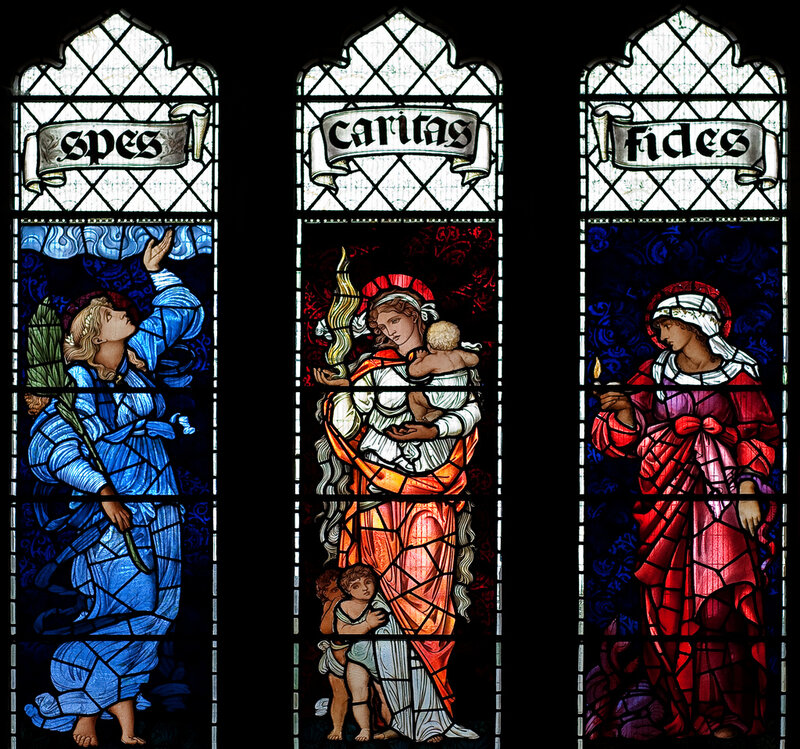


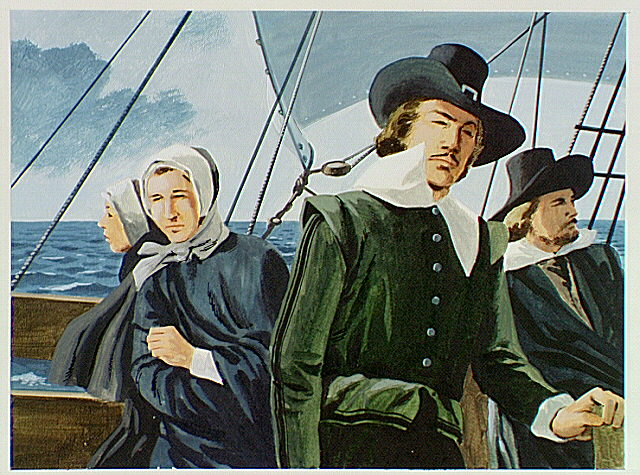

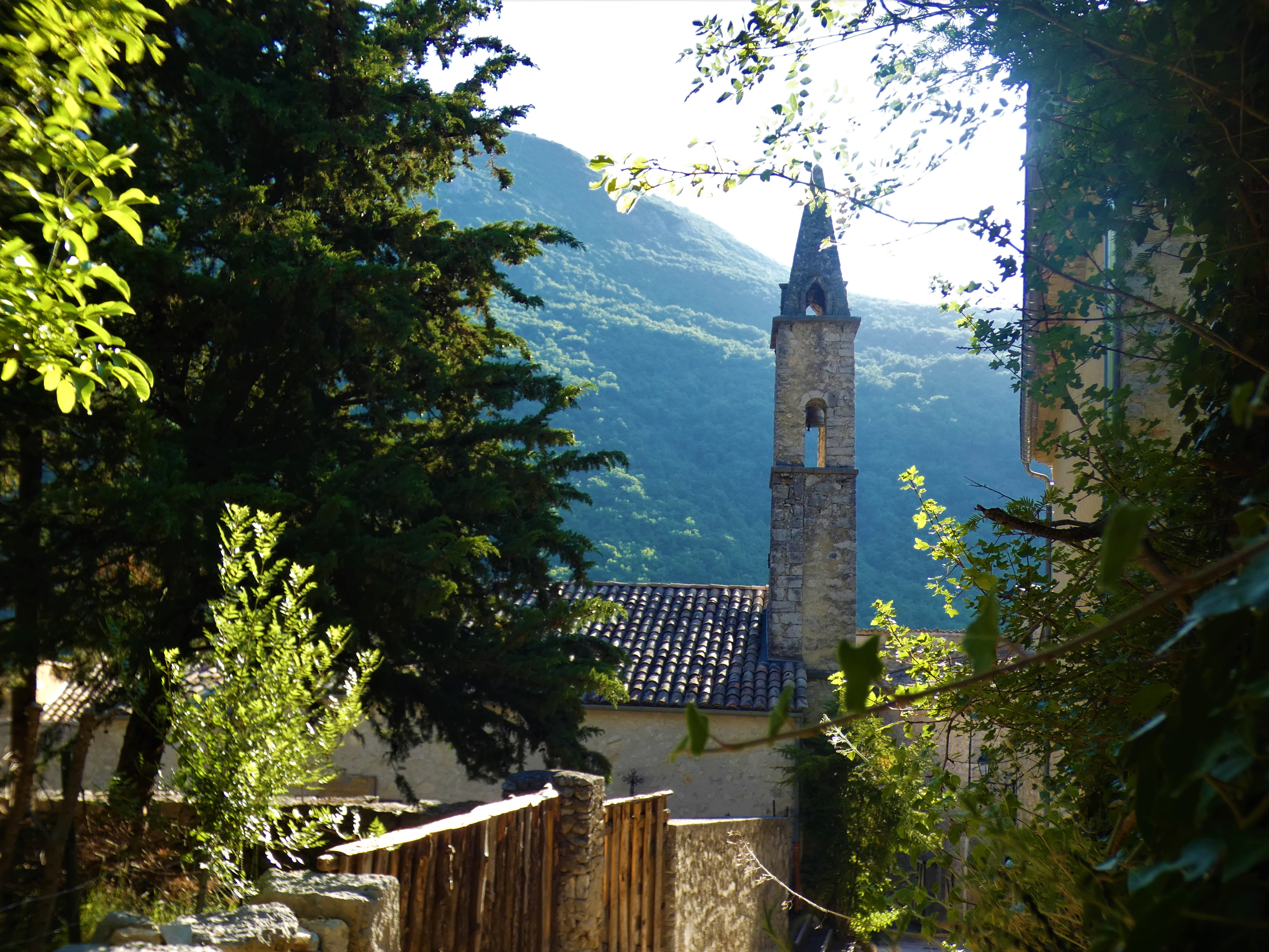

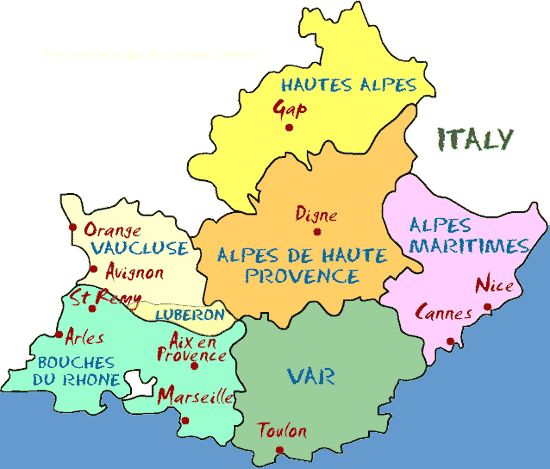




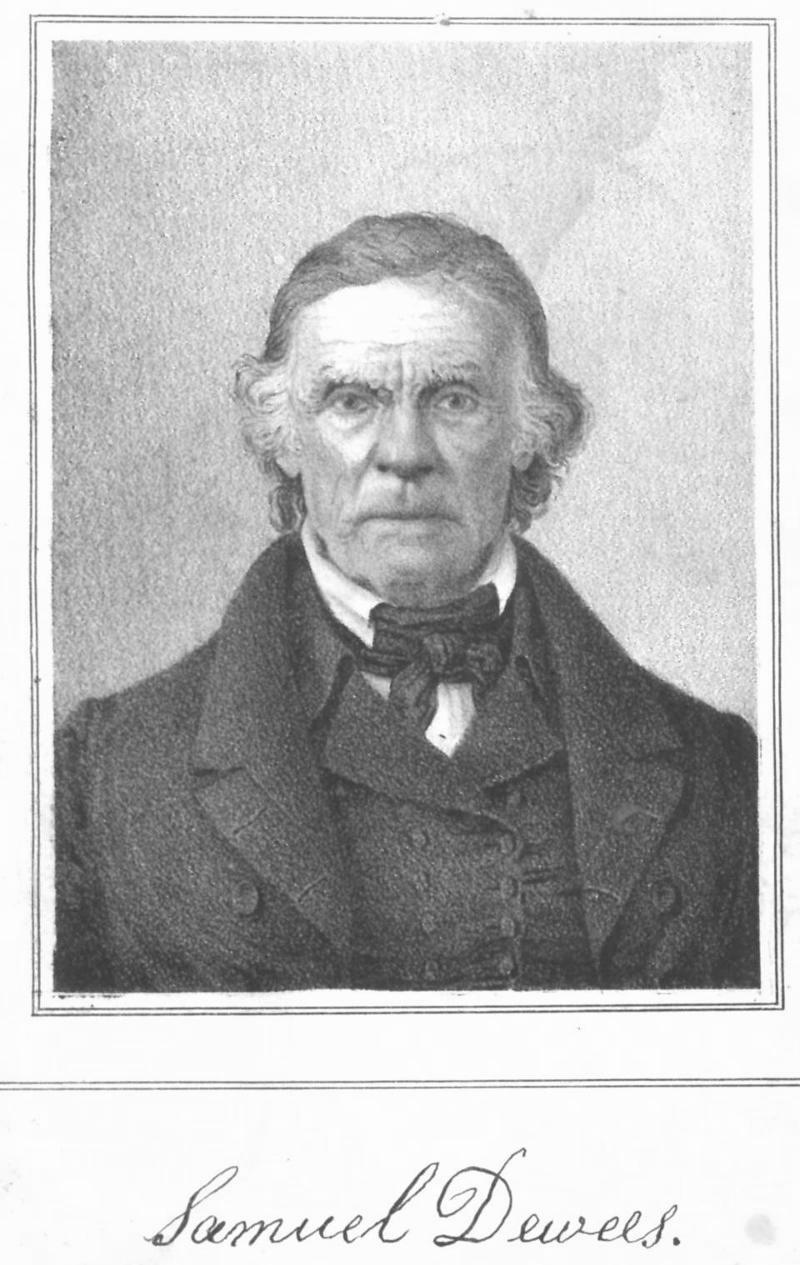
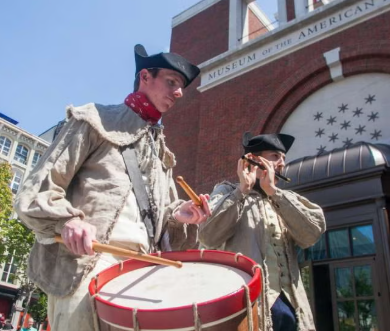

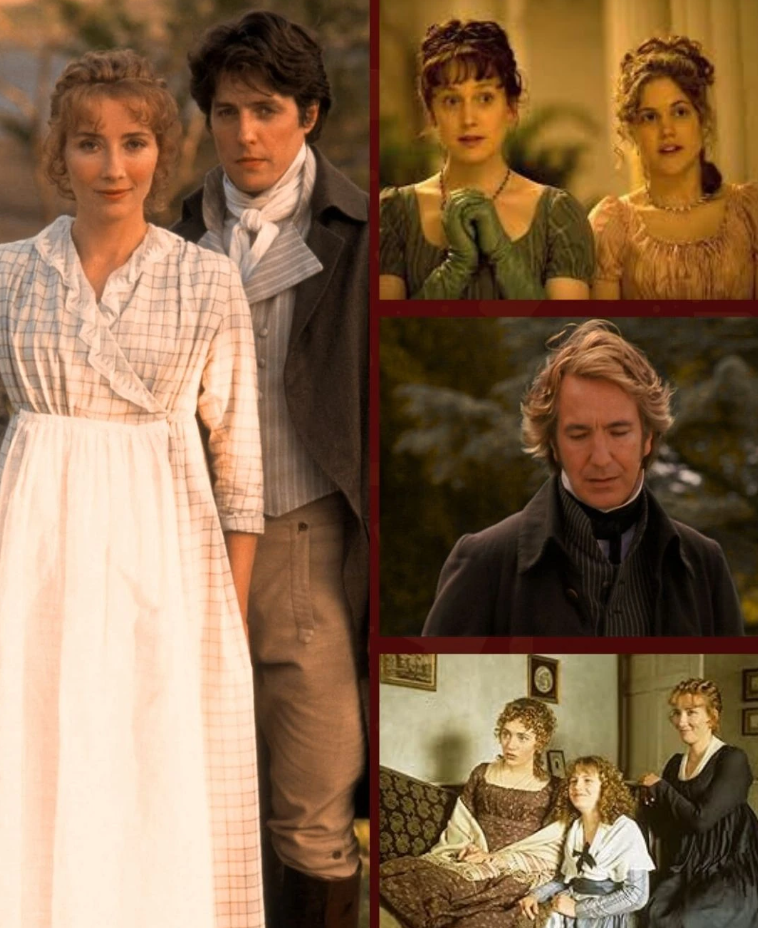
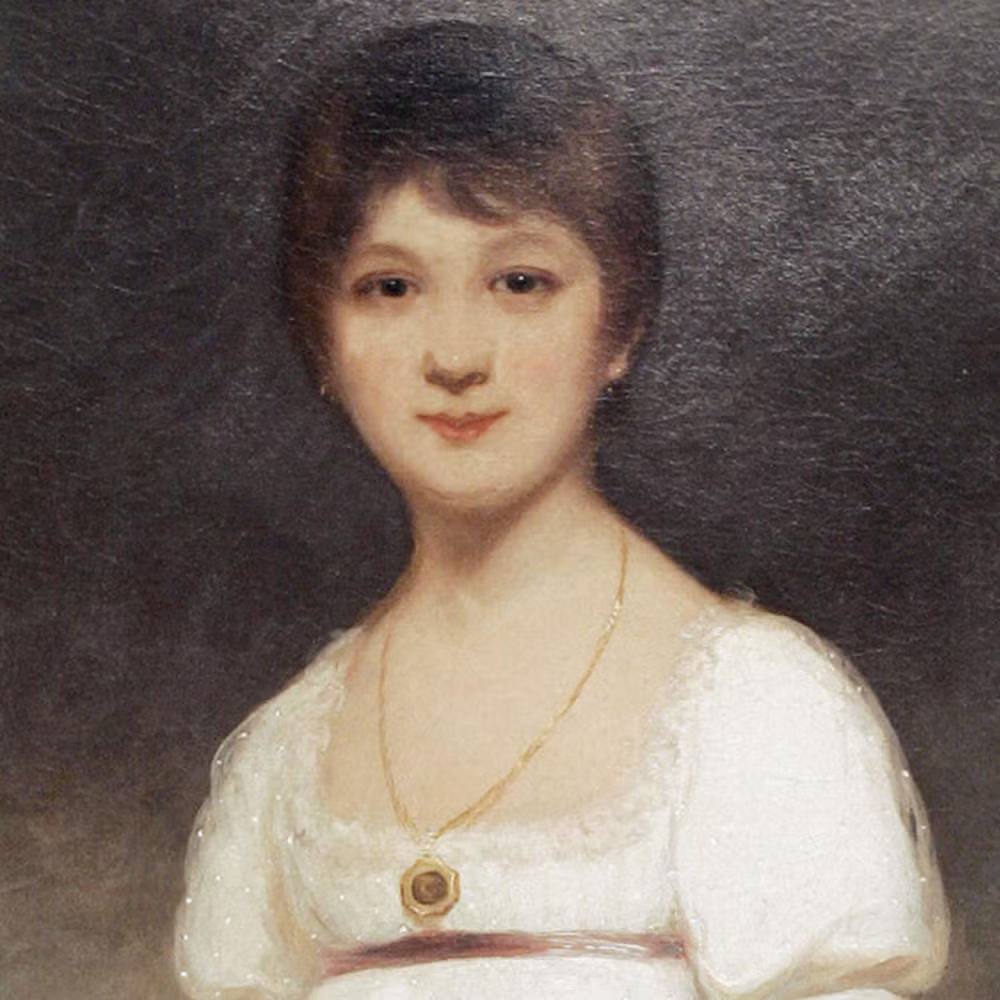


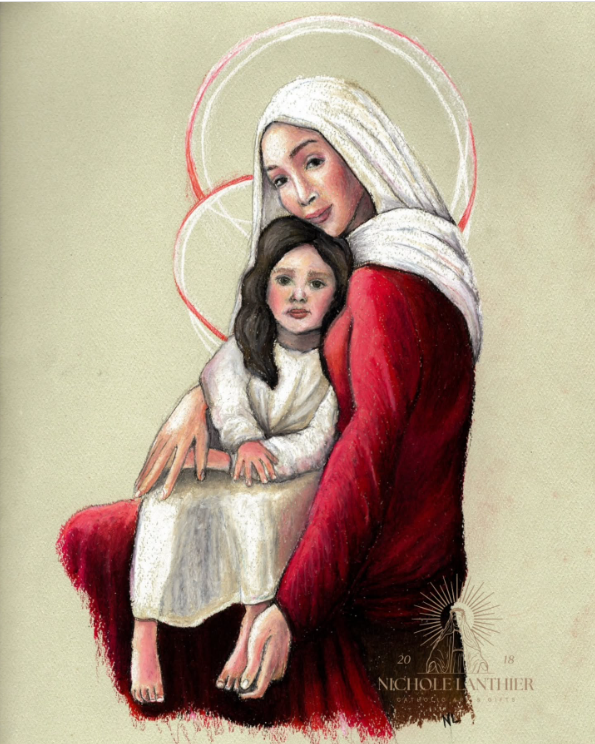


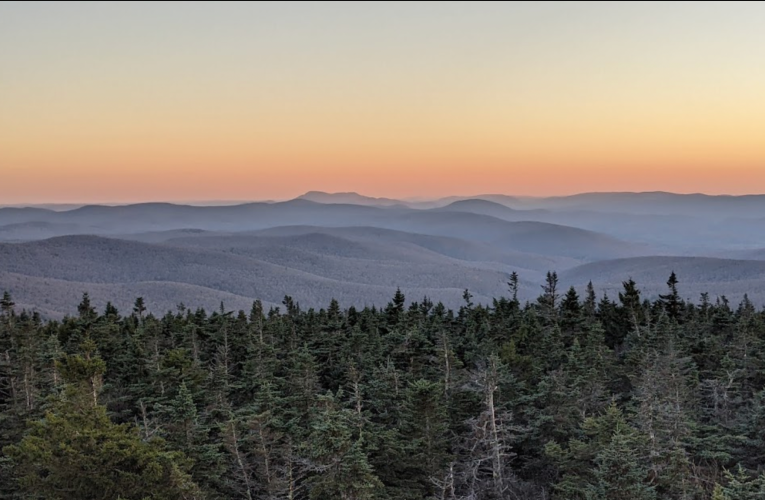
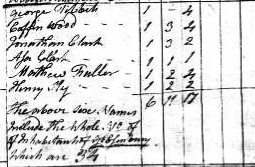
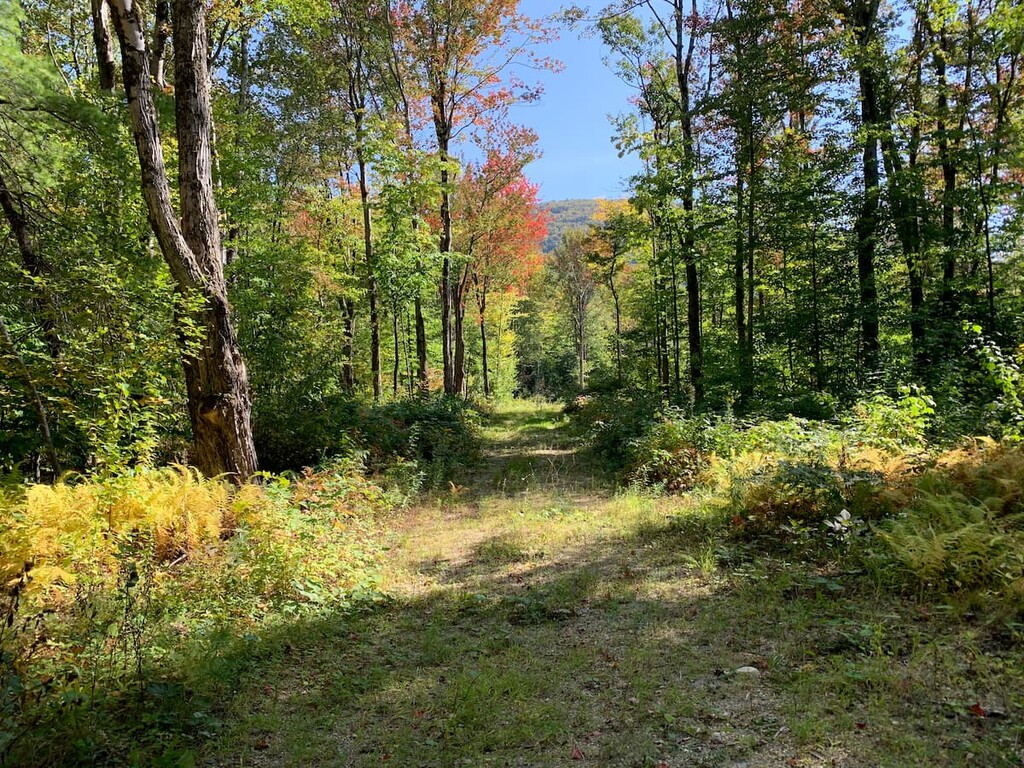


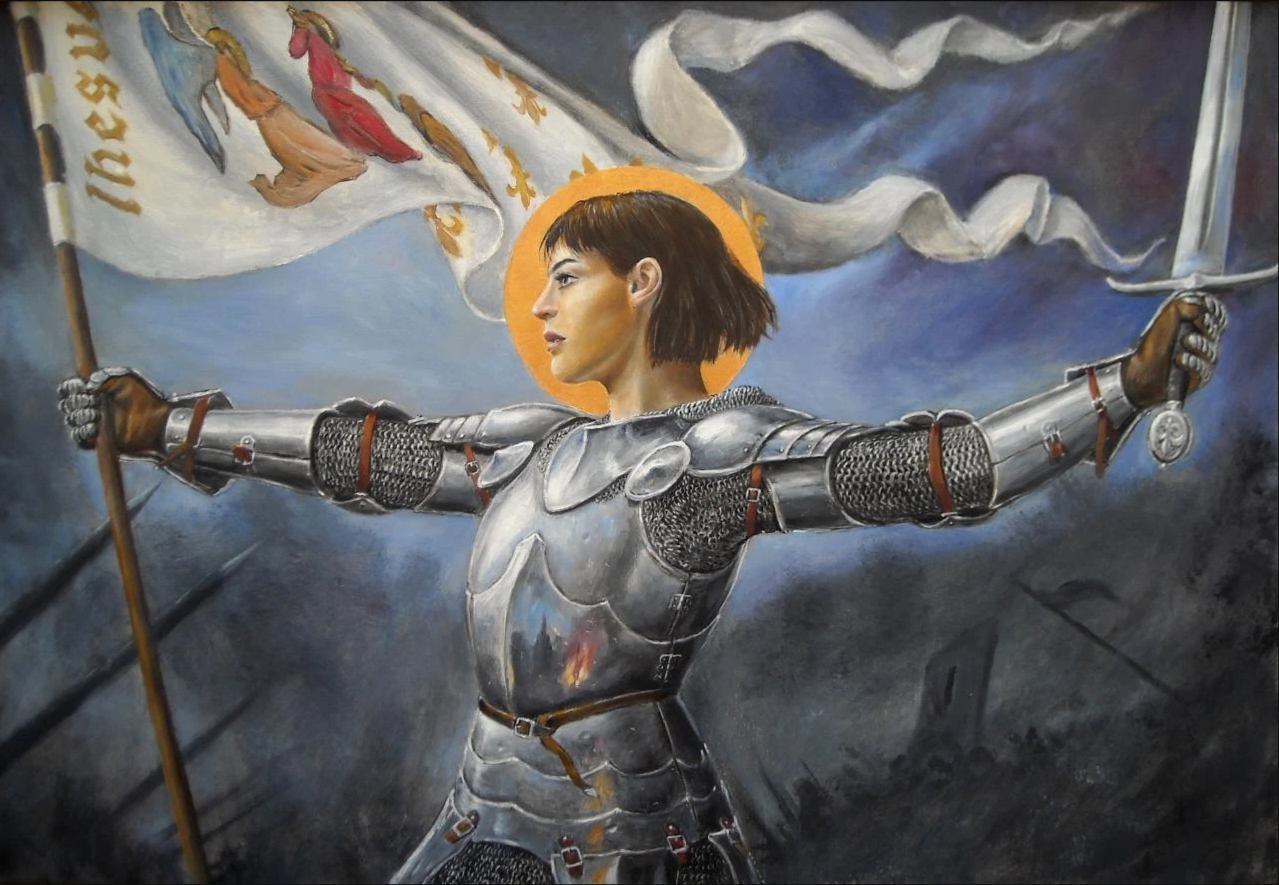




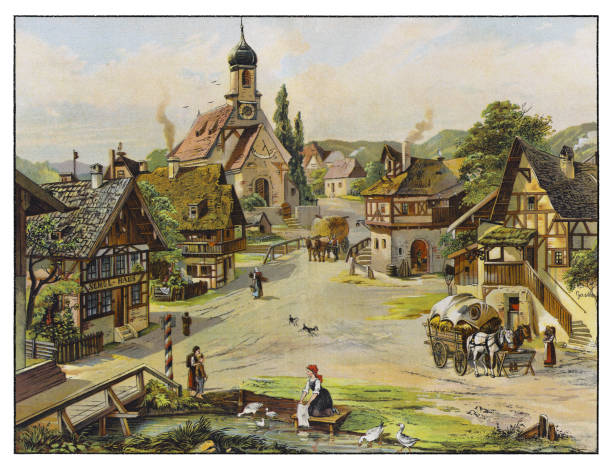




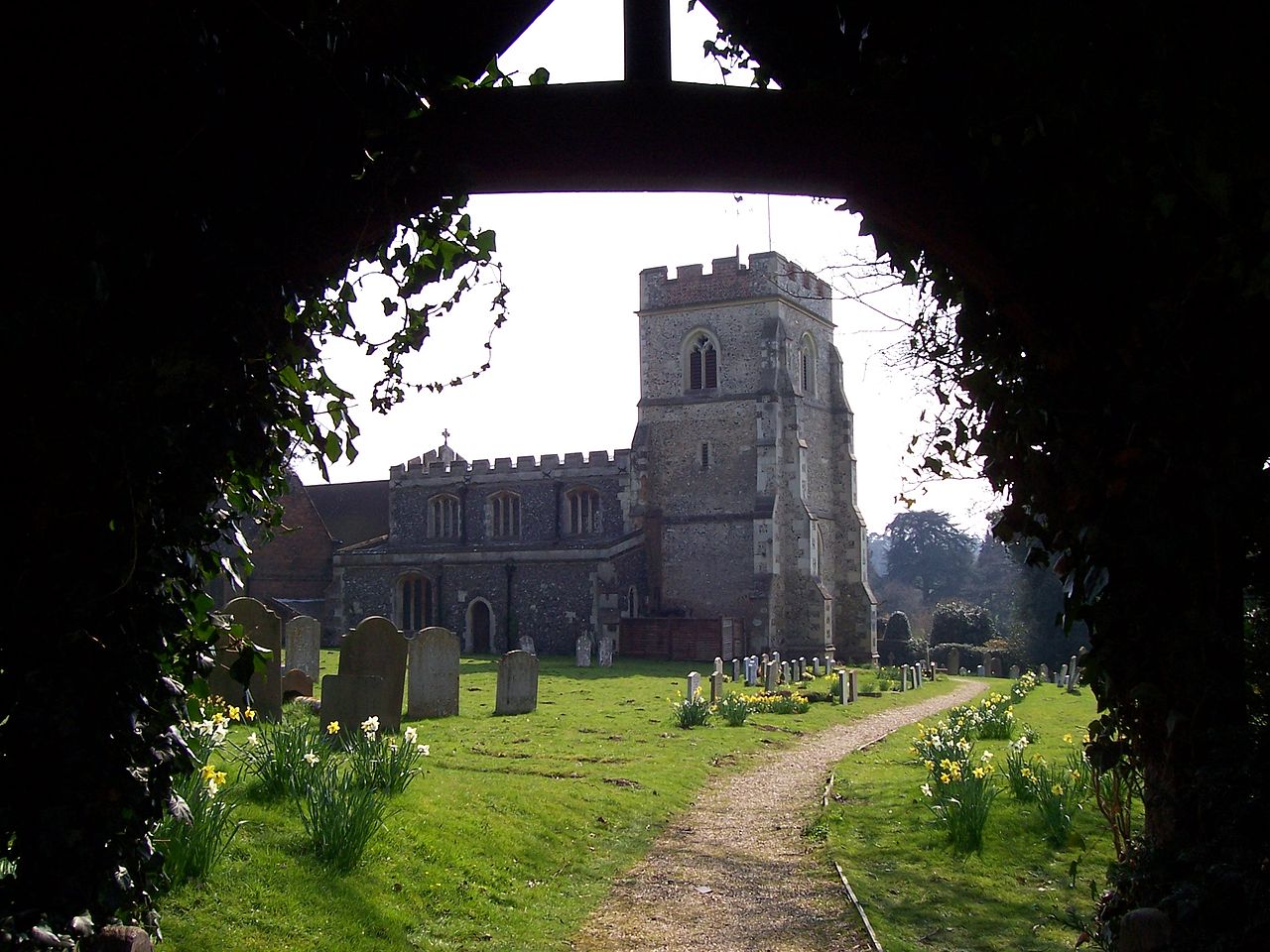
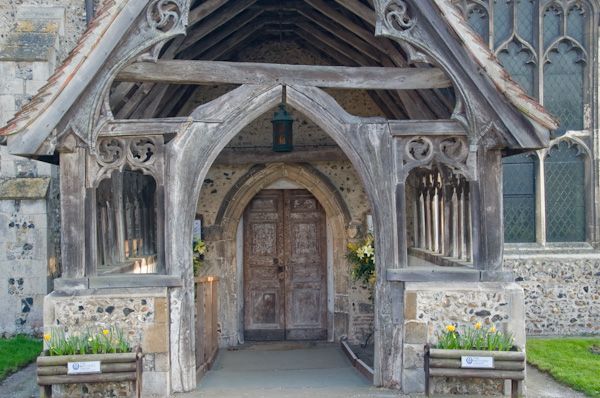


 Anna's Musings & Writings