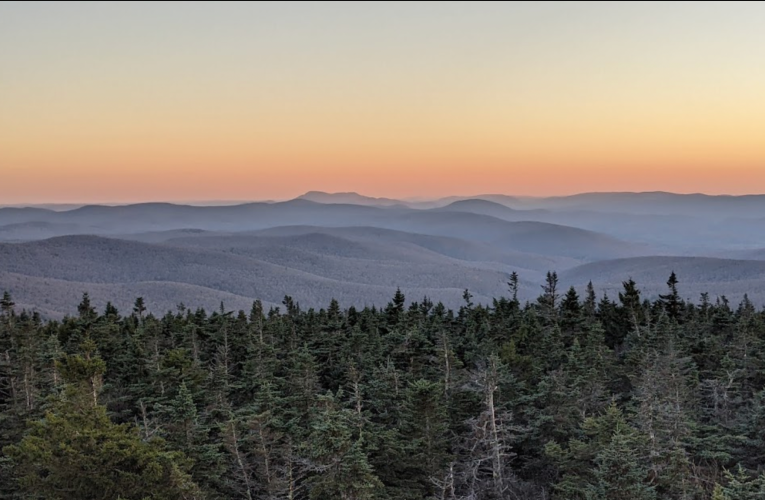
This week’s writing prompt is Rural. I decided to write about my Fuller ancestors living in the forbidding, mountainous, rocky terrain of Glastenbury, Bennington County, Vermont. It is about as rural as you will find! The town was sparsely populated from its beginning, with only six families in 1791. My Fuller ancestors were one of the six families found living there in 1791. By the turn of the century, those initial six families had left and been replaced by eight new ones. Only three of these families would remain by the next census in 1810, and only one stayed for future decades.
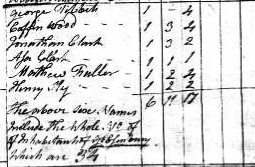
Above is the 1791 US Federal Census record for the inhabitants of Glastenbury, Bennington County, Vermont. Although you will find it listed in the 1790 index, Vermont became a state in 1791 and the census for that state was conducted in that year. These families lived on Glastenbury Mountain. The area was uninhabited, wild and vast.
The six families living in Glastenbury in 1791 were:
George Tibbets, Coffin Wood, Jonathan Clark, Asa Clark, Matthew Fuller, and Henry Sly.
My maternal 4th great-grandmother Laura A. Fuller Cole was born during the time the family lived in Glastenbury. Prior to migrating to Glastenbury, the family lived in Shaftsbury, Bennington, Vermont. The distance between Glastenbury and Shaftsbury is 6.4 miles. Although both places are considered to be rural, Glastenbury was far more isolated and undeveloped. Today, Glastenbury is a virtually uninhabited former town, whereas Shaftsbury is an active and well-known market town. In 1791, the population of Shaftesbury was 1,990 compared to six families in Glastenbury.
Laura Fuller was the daughter of Matthew Fuller and Martha Arnold. We know that all the original six families moved from Glastenbury prior to the 1800 census. By 1796, Matthew Fuller and his family were living in Oxford, Chenango County, New York. He is found there in the 1800 census. I was unable to locate him in the 1810 census, but we know by 1820 he is found living in Lisle, Broome County, New York. He remained there at least until the 1830 census, by 1839 he had moved 7 miles to Triangle, Broome, New York. His wife died on 3 February 1839; he died 25 April 1841. Both are buried in Triangle in Hazard Corners Cemetery. A side note: Triangle is considered very rural. In 1840, the population was 1,692. The current population is 2,793.
The Bennington Triangle, an enigmatic region in southwest Vermont notorious for unexplained disappearances, UFO sightings, and other bizarre happenings, includes the ghost town of Glastenbury, Vermont. The town’s history includes forestry operations that were abandoned after a short-lived tourism endeavor was wrecked by flooding. A number of mysterious disappearances between 1945 and 1950 solidified the region’s eerie paranormal reputation and cemented its place in local folklore.
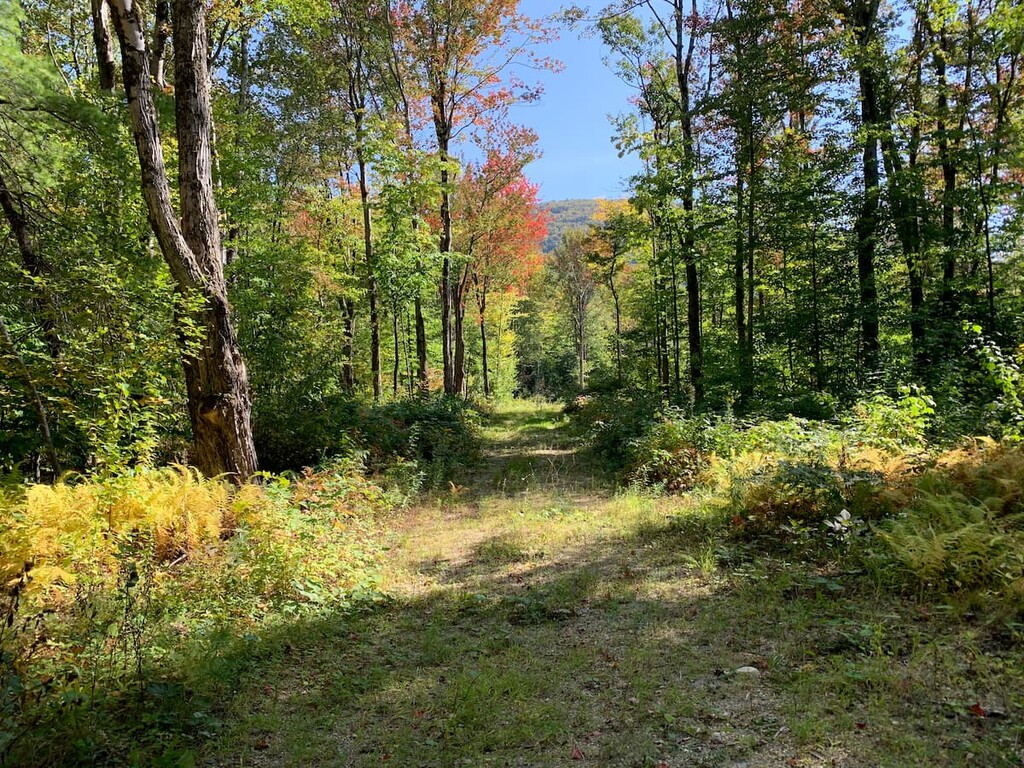
Glastonbury, Vermont, had 241 residents at its height in 1880, mostly due to a logging railroad and a brief boom in charcoal manufacture. This only accounts for the population that was counted; many more temporary laborers were lured to the mountain to work in the then-thriving forestry industry. Nearly all of the mountain’s mature trees had been cut down by the late 1880s, and the town’s economy had collapsed. In 1889, the railroad was shut down. In 1894, it was briefly reactivated as an electric passenger trolley by the Bennington & Woodford Railroad, and a brief but initially successful endeavor was made to make South Glastenbury a popular tourist destination. A small fortune was spent to transform the area into a mountain resort area, which opened in the summer of 1898. Flooding, specifically in 1898, led to a washout of the railroad tracks due to erosion from logging was a major event that contributed to the decline of the former town of Glastenbury, Vermont. This was the beginning of Glastenbury’s demise as a viable town. Early in the 20th century, the town’s population decreased, reaching just seven in 1937 when the government decided to unincorporate it. Currently, there are only eight year-round residents, making it one of the least populated places in Vermont.

To learn more about Glastenbury:
- A Creepy Ghost Town In Vermont, Glastenbury Is The Stuff Nightmares Are Made Of. Glastenbury, Vermont is a ghost town with a history of mysterious disappearances and urban legend. Written by Kristin Grimes. Updated Oct 11, 2023.
- From the Archives: The Vermont Ghost Town of Glastenbury by Erica. October 23, 2014.
- Glastenbury Wilderness. PeakVisor.
- The Haunting of Glastenbury Mountain by Vermont Country Magazine. 10/26/2023.
- New England Legends. By New England Legends / June 18, 2014.
- Glastenbury, Vermont. Wikipedia.
- Glastenbury, Vermont. This is Vermont. Via Internet Archives/Wayback Machine.
- Glastenbury. Virtual Vermont. Via Internet Archives/Wayback Machine.
If you use any information from my blog posts as a reference or source, please give credit and provide a link back to my work that you are referencing. Unless otherwise noted, my work is © Anna A. Kasper 2011-2026. All rights reserved. Thank you.


 Anna's Musings & Writings
Pingback: Submit and Hopestill. Two Ancestors that I Admire. 52 Ancestors, Week 1. | Anna's Musings & Writings