

This week’s writing prompt is Musical. I have numerous musicians in my close family, and my great-grandfather Abraham G. Kennedy played piano and, after his retirement from teaching, worked in a piano store and a music store. Previously, I wrote about my Wenrich cousin, Ragtime Composer Percy Wenrich. But I decided to write about a fife player in my extended family. For many years, I have had a keen interest in the fife and how and why it was used in wartime.
Musicians known as fifers played a vital role in warfare, typically being young boys who, along with drummers, acted as the army’s original signal corps. They used high-pitched tunes to communicate commands (such as charge, retreat, or reveille) amid the chaos of battle, established marching rhythms, uplifted spirits, and helped manage daily camp activities, serving as essential means of communication for 18th and 19th-century armies before the advent of radios.
These musicians were generally boys aged 10-18, too young to engage in direct combat, or older men who were unfit for battle. However, this was not always the case, as there were times when boys and older men were unavailable for the roles of drummers or fifers, leading to the enlistment of regular soldiers from the ranks to take on these responsibilities. Usually, a company of soldiers was accompanied by one fifer and one drummer.
Cpt. Samuel Dewees is my 3rd cousin, 7 times removed. A fifer who served in the American Revolutionary War and the War of 1812. We share German Dohrs ancestors. The Dohrs family hailed from Kaldenkirchen, Viersen, North Rhine-Westphalia, Germany. We both descend from Matteis Dohrs (aka Theiss Doors) and his wife Agnes. Samuel’s line is via a daughter, Gerturde Dohrs who married Paulus Van Haren Küster, who are Samuel’s great-grandparents. My line is via a daughter, Elisabeth Dohrs (Doors) who married Pieter/Peter Keurlis. They are the ancestors of my maternal 4th great-grandmother Elizabeth Barbara Womelsdorf (she married Peter Losure/Lozier).
Her father was Jacob Womelsdorf. His brother John Womelsdorf is the one that formally laid out the town of Womelsdorf, Berks County, Pennsylvania, in 1762, initially naming it “Middle Town,” but it was later renamed Womelsdorf in his honor. Her mother was Catherine Elizabeth Kasebier, the great-granddaughter of Matteis Dohrs (Doors) and Agnes.
Famous kin of Matteis “Theiss” Dohrs/Doors: U.S. President, Theodore Roosevelt, and First Lady Eleanor Roosevelt.

Musicians who played the fife and drum were often younger and smaller in stature, as some accounts from that era indicate. Samuel Dewees, who was “around 15 but quite small for my age,” was enlisted by his father into the 11th Pennsylvania Regiment. Although he joined the military in 1777, Dewees spent the initial 18 months of his service either in a hospital or assisting the regiment’s colonel. Despite wearing a musician’s uniform beforehand and likely undergoing some fife training, he did not fulfill the role of a musician until the summer of 1779. (1 & 2)
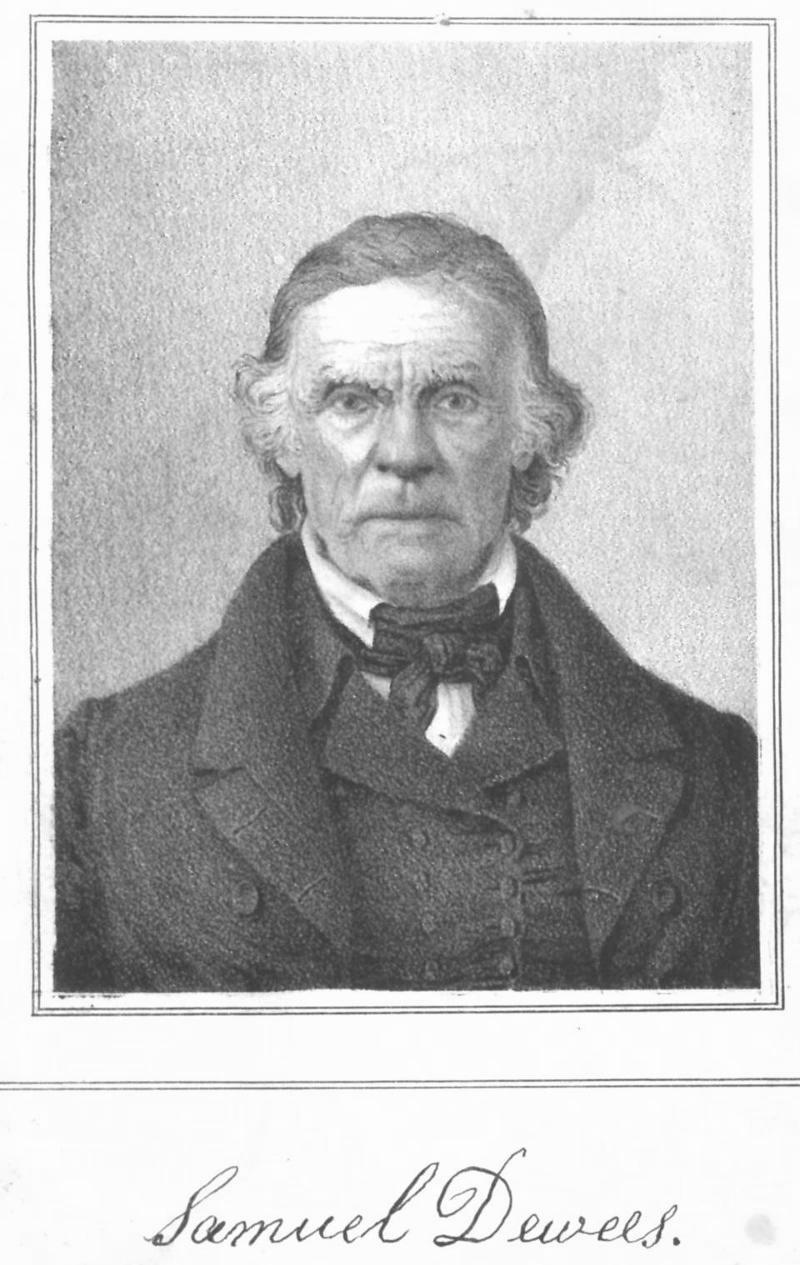
During the period between late summer 1778 and spring 1779, Dewees was employed as a waiter at Humpton’s residence located at Somerset Courthouse in New Jersey. He stated that while he “homed,” he “was attired in a Fifer’s regimental coat and cap, adorned with a horse or cow tail hanging from it…”; this was during the attack on Stony Point. Samuel Dewees’ pension records indicate two different ages for him (57 years in 1820 and 56 years in 1818). A concise summary of his early military experiences, as mentioned in his memoirs, is as follows: His father, who had been captured at Fort Washington in November 1776, was freed from prison in early 1777. Samuel Dewees was enlisted by his father as a fifer in the 11th Pennsylvania Regiment led by Colonel Richard Humpton, being “about or turned of 15, but quite small for my age.” He served in the fall of 1777 at a hospital located at the “Brandywine meeting-house” (likely Birmingham Meetinghouse), at one point under the leadership of Captain George Ross, Jr. from the 11th Regiment, and he remained on duty with the sick or was absent from the military until spring 1778. After rejoining the army at Valley Forge, he returned to the 11th Pennsylvania, took on the role of waiter for Colonel Humpton, and was subsequently detached from the military again. In July 1779, when he returned to his regiment, he claimed to be “one of the musicians connected to the detachment” that tried to attack Stony Point, although General Anthony Wayne left “the musicians (or at least a portion of them), including myself,” behind him. Dewees recounted that this assault was unsuccessful, and he did not participate in the later successful attack on July 16th. (1 & 2)
My cousin, Samuel Dewees, the fifer, continued his services in the military sporadically after the war. During Fries Rebellion in 1799 he was attached to a company of regulars for the purpose of recruiting new soldiers and moved with them to Northampton, Pennsylvania where they “encamped two or three days.” He noted, “I had played the fife so much at this place, I began to spit blood… By the aid of the Doctor’s medicine and the kind nursing treatment I received… I was restored to health again in a few days and able to play the fife as usual.” (1 & 2)
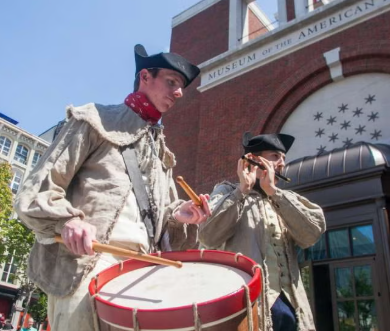
A Revolutionary War fife was a simple, small, wooden, six-hole transverse (side-blown) flute, often made of boxwood, with metal bands (ferrules) at the ends to prevent splitting, designed to be shrill and loud for battlefield communication.
The Key Roles of Fifers were:
- Battlefield Communication: Their shrill fife tunes cut through combat noise to relay commands for advancing, retreating, or firing, supplementing the drums’ signals.
- Regulating Daily Life: Specific tunes announced reveille (wake-up), mealtimes, and tattoo (lights out) for soldiers in camp.
- Setting Pace & Morale: They provided the rhythmic beat for marching and played music to entertain and lift spirits.
- Signal Corps: They were the 18th-century equivalent of modern signalers, using music as a standardized language.
With changing warfare and new technology, their role diminished, with British armies ceasing use in the 1890s and the U.S. in 1904.
Below is a video of Fife and Drum Music of the American Revolutionary War.
References:
- Samuel Dewees, A History of the Life and Services of Captain Samuel Dewees… The whole written (in part from a manuscript in the handwriting of Captain Dewees) and compiled by John Smith Hanna. (R. Neilson, Baltimore, 1844)
- “The music of the Army…An Abbreviated Study of the Ages of Musician in the Continental Army” (Part 1 of 2) by John U. Rees ©1993, 2002.
Further Reading:
- Revolution museum teaches how fife and drums were tools of war. Brad Larrison, August 19, 2017.
- The traditional fife. Rick Wilson’s Historical Flutes Page.
- What does a Revolutionary War fife look like? The Fife Museum.
- History of the Ancient. All About Fifes. A Connecticut Musical Tradition.
- “I had to take the fife and use it.” Heinz History Center. Fort Pitt Museum – Fife and Drum.
If you use any information from my blog posts as a reference or source, please give credit and provide a link back to my work that you are referencing. Unless otherwise noted, my work is © Anna A. Kasper 2011-2026. All rights reserved. Thank you.


 Anna's Musings & Writings