
I have been doing further research on my Bonnet ancestors. I was going to add the new information to my original post about my Greatsinger ancestors: My Greatsinger (Gretzinger) and Bonnett ancestors of Berlin, Germany and Related Lines, but that post has just gotten longer and longer as I have added additional information and updated it. So, I decided that my Bonnet ancestors deserve their own post. 🙂
My Greatsinger (Gretzinger) and Bonnett ancestors are through my 3rd great Grandmother, Hannah Elizabeth Kritsinger/Greatsinger (she married David Prindle, Sr.).
Her grandfather was Johann Christian Gretzinger (Greatsinger), who was the son of Johann Jacob Gretzinger and Loisa (Louisa) Antoneta Bonnett. He was baptized 17 Jun 1729 in the Jerusalem Chapel (Church of the Archangels Michael and Gabriel) in Berlin Stadt, Brandenburg, Prussia, Germany.
Loisa (Louisa) Antoneta Bonnett was the daughter of Francois Jean (Johann Frantz) Bonnet and Anna Dorothea Steiner.
My Greatsinger and Bonnet ancestors are the only ones in my family tree hailing from Berlin, Germany. I was always curious how they ended up in Berlin. Especially, my Bonnet ancestors, because their roots were in France, and the distance between Berlin and the French border is a considerable distance.
The surname Bonnet is closely related to two groups: the Waldensians and French Huguenots (French Protestants). I originally thought my ancestors may have been Waldensians, a medieval Christian movement, started by Peter Waldo in 12th-century France. They were heavily persecuted by the Catholic Church for challenging its authority. They survived by retreating to the Alps, later aligning with the Reformation, and eventually establishing modern churches in Italy, the USA, and South America, known for their resilience and distinct Protestant identity. The Waldensians had much earlier beginnings than the French Huguenots.
After locating church records for my ancestors in France, I was able to confirm that they were Huguenots, not Waldensians. Although there is no doubt that some of the branches of the Bonnet family were indeed Waldensians.

Both Waldensians and later Huguenots retreated to the Alps. They lived in Provence and the Dauphiné (areas including modern Alpes-de-Haute-Provence), with Waldensians established there for centuries before Huguenots emerged; both groups eventually faced persecution, leading many to flee, with some Waldensians and Huguenots eventually settling in Germany. The Waldensians fled France shortly after the Huguenots. The Waldensians that migrated to Germany settled in Württemberg and Hesse. The Huguenots significantly came to Berlin in Brandenburg.
They received a warm welcome. Brandenburg’s Great Elector, Frederick William, issued the Edict of Potsdam (1685), inviting Huguenots to settle in his devastated lands, offering protection and incentives. Around 20,000 Huguenots settled in Brandenburg-Prussia, becoming a significant part of Berlin’s population. The newcomers significantly boosted Berlin and Brandenburg’s culture and economy after France’s 1685 Revocation, which outlawed Protestantism. Thousands of people were welcomed, especially skilled artisans and intellectuals, who established vibrant French communities, churches (like the Französischer Dom), schools, and intellectual centers, enriching Prussia culturally and economically, fostering a lasting French-German connection. (7)
Once in Berlin, my Bonnet ancestors intermarried with native Germans and became of the Lutheran faith. French Protestants initially included Lutherans, as Martin Luther’s Reformation spread to France early on, but by the 1540s, most French Protestants, who became known as Huguenots, adopted the teachings of John Calvin, forming a distinct Calvinist movement that became the dominant form of French Protestantism, though some Lutherans remained, especially with later German influences and congregations.
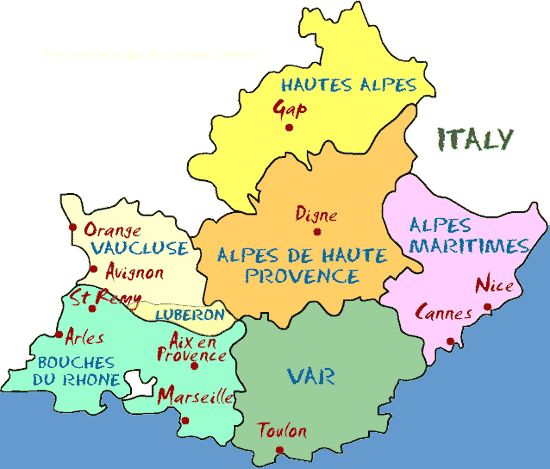
Alpes-de-Haute-Provence (Alps of Upper Provence) is in the Alps, forming a department in southeastern France’s Provence-Alpes-Côte d’Azur region, characterized by its transition from Mediterranean landscapes to high Alpine peaks, it is a central part of the French Southern Alps. It is situated in the heart of the Southern Alps, bordering northern Italy and other French departments.
My ancestor, Francois Jean (Johann Frantz) Bonnet, was baptized on 4 October 1660 in La Motte-du-Caire in the Alpes-de-Haute-Provence, the son of Jehan/Jean Bonnet and Marie Rolande. He died 27 Mar 1745 in Berlin, Berlin, Germany. He married Anna Dorothea Steiner on 3 Jan 1707 in Berlin. For now, the parentage of Anna Dorothea Steiner remains unknown. Francois Jean (Johann Frantz) Bonnet was older when he married Anna Dorothea Steiner. I have not found earlier marriage records for him, but it’s possible he was married as a young man in France or could have married while in the process of migrating from France to Germany, or once he arrived in Germany. I have not located any other marriage records for him. But I will continue my research.
We know that Francois Jean (Johann Frantz) Bonnet had at least one sibling, a brother, Johann (Jean) Bonnet, who married Maria Koppen and had at least one child, a son, Joseph Bonnet, who was baptized on 23 Feb 1708 in Berlin.
Jehan/Jean Bonnet was baptized on 29 March 1639 in Entrepierres, Alpes-de-Haute-Provence, France, as the son of Pierre Bonet and Genevieve Lebrond (Lebron). He married Marie Rolande. Entrepierres is a village a short distance from La Motte-du-Caire. Nothing more is known about Pierre Bonet and Genevieve Lebrond (Lebron).
Marie Rolande was baptized on 16 December 1644 in Seyne, Alpes-de-Haute-Provence, France, as the daughter of Pierre Rolande and Jehanne Rogon. The parentage of Pierre Rolande and Jehanne Rogon is unknown.
Rolande is primarily a French feminine first name. Rolande, as a surname, is a variant of the surname Roland/Rolland. The name comes from an ancient Germanic name meaning for famous land or renown of the land, derived from hrod (fame/renown) and land (land/territory). It was popularized by the legendary warrior Roland of Charlemagne’s court. (1 & 2)
The surname Rougon (Occitan: Rogon), has historical roots in the Provence region, near Seyne, and is derived from the Provençal word meaning little red or red-haired. Given the proximity of Seyne to the Provence region and the year 1644, it is highly likely that Jehanne Rogon’s maiden name is related to this Provençal origin. (3)
Lebron is a variant of the French surname Lebrun, meaning the brown one, a common descriptor for someone with brown hair or complexion. (4)
Bonnet is French surname from the medieval personal name Bonettus, a diminutive of Latin bonus ‘good’. French: occasionally, a Gascon variant of Bonneau. English and French: metonymic occupational name for a milliner, or a nickname for a wearer of unusual headgear, from Middle English bonet, Old French bon(n)et ‘bonnet’, ‘hat’. In Germany the name was borne by Waldensians, of French origin, and French Huguenots. (5 & 6)

My direct line:
- Pierre Bonet and Genevieve Lebrond (Lebron).
- Jehan Bonnet and Marie Rolande (daughter of Pierre Rolande and Jehanne Rogon).
- Francois Jean (Johann Frantz) Bonnet and Anna Dorothea Steiner.
- Loisa (Louisa) Antoneta Bonnett and Johann Jacob Gretzinger Gritzinger Ertzinger (son of Jacob Ertzinger Gertzinger Götzinger and Barbara Scheüchzer).
- Johann Christian Gretzinger Gertzinger Greatsinger and Anna Anne (Antje) Palmer.
- John (Johann) Kristinger/Greatsinger and Lea Litts (daughter of Roelof Litts and Sara (Saartje) Sluyter).
- Hannah Elizabeth Greatsinger/Kritsinger and David M. Prindle, Sr. (son of Amos Prindle and Esther Canfield).
- Daniel Prindle and Sarah Jane “Jennie” Doman (daughter of Jacob Doman and Mary Ann Davison/Davidson).
- Anna Cora Prindle and Joseph Edward Cole (son of Lorin Richard Cole and Nancy M. Losure). My great-grandparents.
References:
- Roland Family History – Ancestry.com
- Roland (name) – wikipedia.org
- Discover the story behind the surname Rougon – MyHeritage.com
- The surname Lebrun – Ancestry.com
- Bonnet Name Meaning – Ancestry.com
- My Greatsinger (Gretzinger) and Bonnett ancestors of Berlin, Germany and Related Lines
- The Huguenot Refuge in Brandenburg – Musée virtuel du protestantisme
Further reading:
- Who Were the Huguenots? – nationalhuguenotsociety.org
- Huguenots – HISTORY.com Editors
- History of the French Protestant Refugees, from the Revocation of the Edict of Nantes to our own Days by Charles M. Weiss.
- Huguenot Museum in the Französischer Dom. The Huguenots and Berlin – a story of persecution and tolerance
- French Huguenots in Berlin: Acculturation and Nationalism. Author: Sam Seitz. Date: March 24, 2019.
- Huguenot District – Berlin. Silk, Sin and Stages: In and Out of Northern Friedrichstraße. – VoiceMap
If you use any information from my blog posts as a reference or source, please give credit and provide a link back to my work that you are referencing. Unless otherwise noted, my work is © Anna A. Kasper 2011-2026. All rights reserved. Thank you.


 Anna's Musings & Writings
Pingback: My Greatsinger (Gretzinger) and Bonnett ancestors of Berlin, Germany and Related Lines. | Anna's Musings & Writings
Pingback: My Beauharnais Ancestors of Orléans, France, and Our Close Connection to St. Joan of Arc (Jeanne d’Arc). | Anna's Musings & Writings