This week’s writing prompt is Tradesman. I considered writing about some of my ancestors and their trades and occupations but instead opted to write about three of the surnames of my ancestors that are derived from their trade/occupation, all three with very similar origins. I have a myriad of ancestors with surnames that are directly related to a trade, but I chose Blower, Horne, and Höerner/Hörner because I thought their meanings related to their occupation were quite interesting, and unique.
I will first write about the surname Blower, its origins, history, and meaning, and my Blower ancestors.
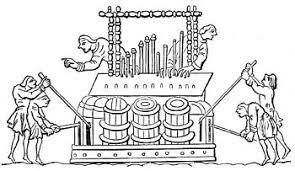
It is an English surname, an occupational name from the Middle English blouer ‘blower’ (Old English blāwere) and was someone who blew a bellows on a church organ, or a horn that was typically used to call workmen to work or as a huntsman. (1)
Large organs were built in churches from at least 1100. These instruments had many pipes and required several huge bellows to provide their wind. The job of a calcant, or bellows-pumper [the blower], was quite taxing. One got to rest during the sermon but then would be wakened by a bell rung by the organist when it was time to start pumping again. – American Guild of Organist (2)
It is quite possible that my original ancestor, with the surname Blower, was named as such because they were one of these bellows-pumpers for a church organ. It sounds like quite the laborious job!
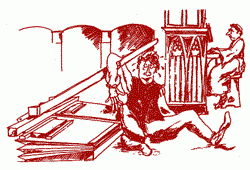
But it is also equally likely that the original ancestor given this surname blew a horn that was used to call workmen or was a horn blower of the hunt. (1)
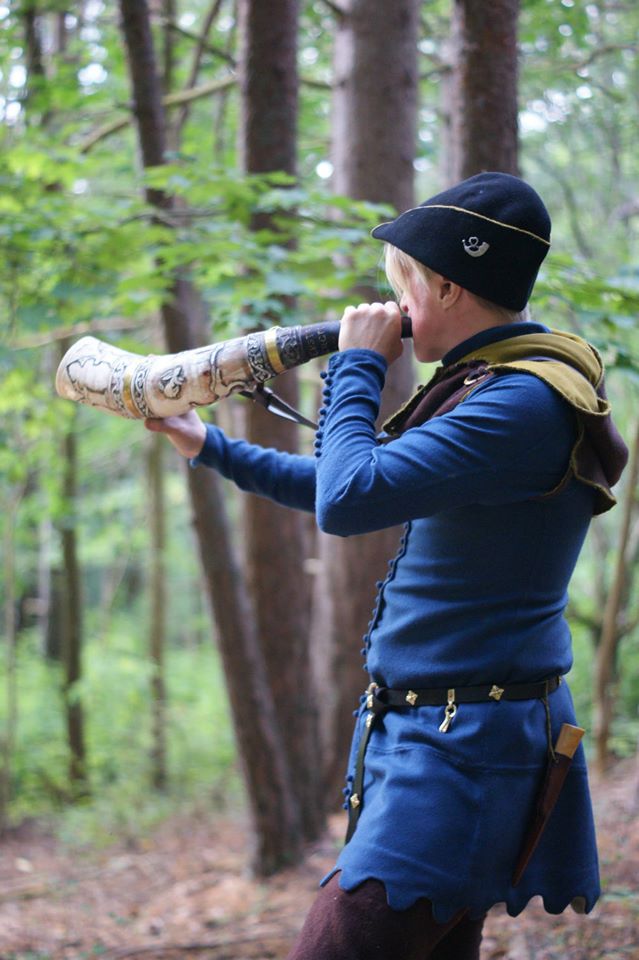
I find this second meaning to be more to my liking! A more interesting occupation, with a musical ability implied.
Although the surname blower is an occupational surname, there is a smaller chance that my ancestor was given the name as a nickname, established by the year 1300, for a loud or boastful person, to brag, boast, bluster, speak loudly, from the same Old English root word blāwere. This meaning of the name is not quite as appealing! (1)
My connection to the surname Blower is not a recent one. My maternal 10th great-grandmother was Alice Blower, born June 1615 and baptized the same month at St. Gregory’s in Sudbury, Suffolk, England, and died November 1690 in Braintree, Norfolk, Massachusetts. She was the daughter of Thomas Blower and Alice Frost. The Blower and Frost families are found in church records in Stanstead, Suffolk, England, and we can take these lines back a few more generations with them living in the Stanstead area. She married 6 January 1633/1634 at St. Katherine by the Tower, London, England, to Richard Brackett. Richard had returned to England from the Massachusetts Bay Colony to marry her and took her with him back to Boston by 1635. Alice’s parents and two of her brothers also immigrated to Massachusetts from England. (3)
The Blower line is on my maternal side. Cole – Merchant – French – Cummings – Kingsley – Brackett – Blower.
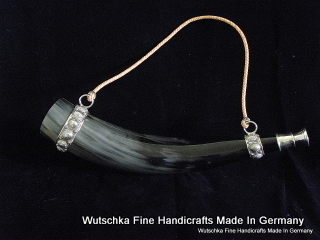
Next, I will discuss the German surname Höerner/Hörner. Its origins, history, meaning, and my Höerner/Hörner ancestors.
Höerner is derived from the German name Hörner. Hörner means horn maker and/or horn blower. In the Middle Ages, the horns of cattle were made into drinking cups or other tools. Musical instruments were also made from them and were called Hörner.

Drinking horns were made out of European bison, goat, cow, or ox horn. The first step that is needed is to remove the inner core. This is achieved by boiling or soaking the whole horn and then scraping out the softened marrow. Once the core has been removed from the horn, it’s then softened again using heat and pressed to form its desired shape. With the drinking horns of the Vikings, the animal horn is left in its natural shape. After the horn is formed, it was coated often in beeswax. It then could be fitted with metal or other details and/or carved with etchings. (4 & 5)
I have a closer connection to my Höerner/Hörner ancestors. My 4th great-grandmother was Anna Walpurgis Hoerner. She was baptized 8 April 1750 in Niklashausen, Main-Tauber-Kreis, Baden-Württemberg, Germany, and died in the USA, most likely in Maryland, but possibly in Pennsylvania. She was the daughter of Johann Georg Hoerner and Maria Barbara ____, and married 27 November 1770 in Niklashausen, Main-Tauber-Kreis, Baden-Württemberg, Germany to Johann Peter Albert. Their first two children were born in Niklashausen. They immigrated to the USA by 1788. Their next child was born in New York City. They migrated to Washington County, Maryland, where two daughters were born. I can take the Hoerner line back several generations, and they all lived in Niklashausen. The surname is found both as Hoerner and Horner in church records, although most often found as Hoerner, both with and without the Umlaut over the letter ö.
You can learn more about Niklashausen, and more about these ancestors in my blog entry about my ancestors named Walpurgas.
The Hoerner line is on my maternal side. Cole – Kennedy – Price – Albert – Hoerner.

Thirdly, I will discuss the Horne surname. The English surname Horne has a meaning similar to Blower and Hoerner. The name was taken on by someone who worked as a person who carved objects out of animal horn or made musical instruments. This name was also given to a person who was employed as a hornblower; in the Middle Ages, workmen were often summoned to work by the blowing of a horn, in this way, it has the same meaning as Blower. In addition to Horne initially being an occupational surname for someone who played the horn, it also could mean a person that lived near a horn-shaped geological site. (6 & 7) Pictured above is a replica of a horn mug from the Medieval-Tudor time period in English history.
My English Horne ancestor is my 7th great-grandmother Winifred Horne, born in Maryland and died in St. Mary’s County, Maryland. She married John Wheatley. She was the daughter of Edward Horne and Winifred ____. They arrived in Maryland in 1664. Although the family was from England, Edward Horne’s parentage is unproven.
My English Horne ancestry is on my paternal side. Armstrong – Norris – Wheatley – Horne.
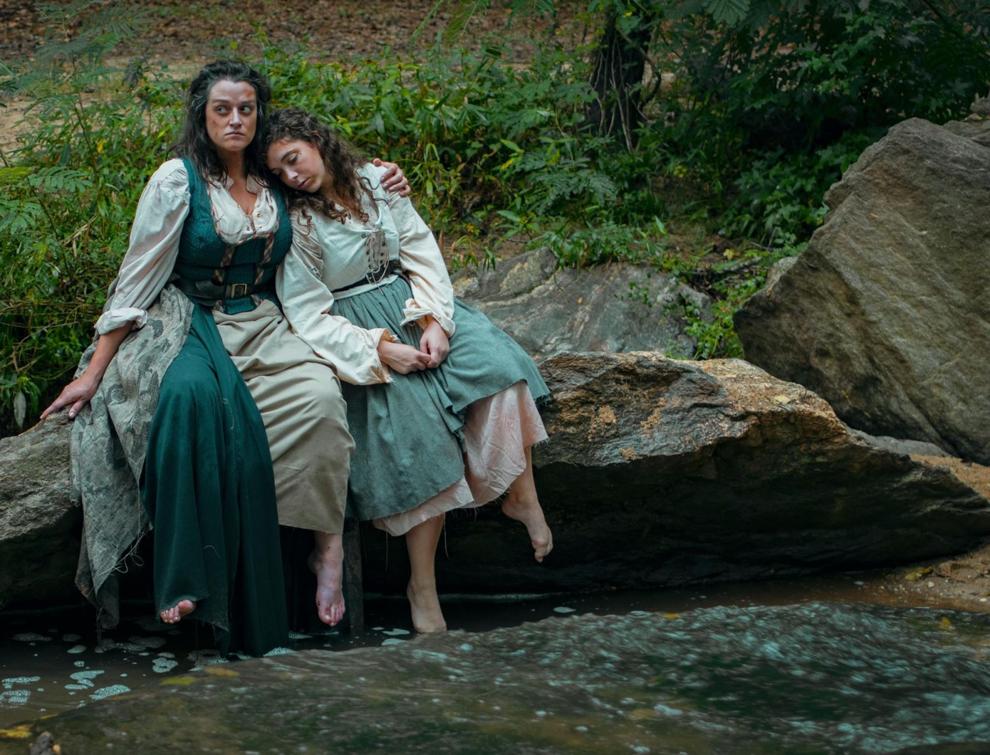
The surname Horne also has some witchy connections. The witch association comes from Janet Horne, who was the last person legally executed for witchcraft in the British Isles. The Hornes were a mother and daughter accused of witchcraft by their neighbors. The daughter managed to escape, but the mother, Janet Horne, was killed by fire. Her story inspired the play The Last Witch by Rona Munro. (7)
A side note: The actual name of Janet Horne is unknown, “Janet Horne” or “Jenny Horne” was the generic name given to all witches in the north of Scotland at that time. (8 & 9)

References:
- BLOWER Name Meaning – familysearch.org
- American Guild of Organist – A Young Person’s Guide to the Pipe Organ by Sandra Soderlund, 1994.
- Threlfall, John Brooks. The English Ancestry of Richard and Alice (Blower) Brackett of Braintree, The American Genealogist (The American Genealogist, Barrington, RI, 1976) Vol. 52, Page 73-4.
- How do they make Viking Drinking Horns? by Gaurav Tiwari. Last updated: December 22, 2022. gauravtiwari.org
- All About Drinking Horns – AleHorn.com
- Horne Surname History in England – houseofnames.com
- 100 Powerful Witch Surnames by Chelsea Nelthropp. Updated August 28, 2023
- Janet Horne – The last witch in Scotland, written by Chris Thornton | 14th of September 2022. livebreathescotland.com
- Henderson, Lizanne. Witchcraft and Folk Belief in the Age of Enlightenment: Scotland 1670–1740. Palgrave McMillan, 2017.
Further reading:
- Photo History of Ancient Drinking Horns from Around the World – thevintagenews.com
- 10 Things to Know About Medieval Drinking Horns – medievalists.net
- A complete guide to German umlauts by Marie Schmoll, April 11, 2023. berlitz.com
To learn more about Janet Horne and her daughter:
- Janet Horne – wikipedia.org
- ‘Janet Horne’ by Edwin Morgan
If you’d like to learn more about the 52 Ancestors in 52 Weeks project, please visit here:
Or join the Facebook group Generations Cafe.
If you use any information from my blog posts as a reference or source, please give credit and provide a link back to my work that you are referencing. Unless otherwise noted, my work is © Anna A. Kasper 2011-2026. All rights reserved. Thank you.


 Anna's Musings & Writings

Pingback: Happy Thanksgiving! Grace, Favor, Thankful, and Blessed. Recent Direct Ancestors named Anna and Related Names. | Anna's Musings & Writings