
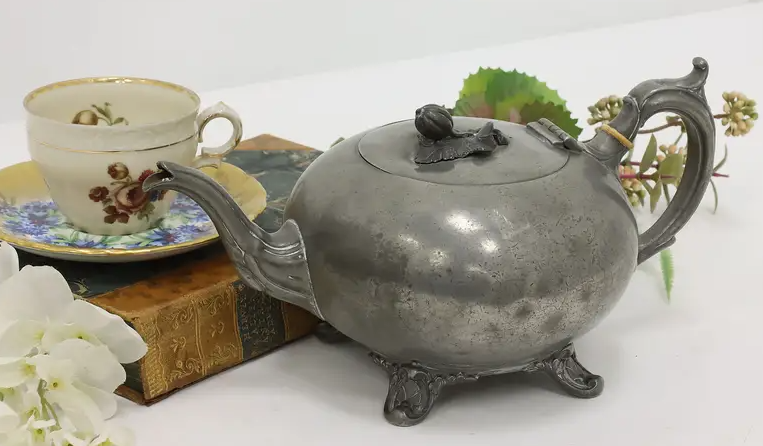
Betty Roundkettle is my 9th great-grandmother on the maternal side of my tree. I must admit, I love her surname—being the tea connoisseur that I am! Many public trees link Betty to an Elizabeth Ramsbottom, daughter of Francis, born in 1642. However, the original church register clearly says Ramsbottom—a Lancashire name. This would have made Betty thirty-four years old upon her arrival in Colonial America. The Ramsbottom surname has no connection to the surname Roundkettle; how or why someone decided that particular baptism record was our Betty is a mystery. But once it was out there, hundreds of trees copied it as fact.
The truth is that Betty was the daughter of Robert Thurkettle, a Victualler in the Cripplegate ward of London. Robert had migrated to London but was baptized on 9 March 1616 in the parish of Heydon and Irmingland in Norfolk, the son of William Thurkettle. He had three known brothers baptized in the same parish: Richard (b. 1620), John (b. 1624), and William (b. 1630). The gaps between these brothers’ baptisms likely hide the records of their sisters—including Ann Thurkettle, who would become a key figure in the story of Betty and her husband, John Plant.
Our Betty was baptized on 28 December 1653 as Elizabeth Thurkettle at St. Giles-without-Cripplegate, London, the daughter of Robert and Elizabeth Thurkettle. This would make her twenty-three when she landed in Colonial America. In the 17th century, spelling was anything but standardized. A colonial Connecticut clerk likely misheard the Norfolk surname Thurkettle as Roundkettle due to a combination of phonetic shifts. Between the thick Cripplegate working-class accent and East Anglian dialect features, vowels were often shifted or unrounded. If the clerk perceived a London rounding of the “u” in “Thurkettle,” it likely sounded like the “ou” in “Round”—giving birth to the unique American surname: Roundkettle.
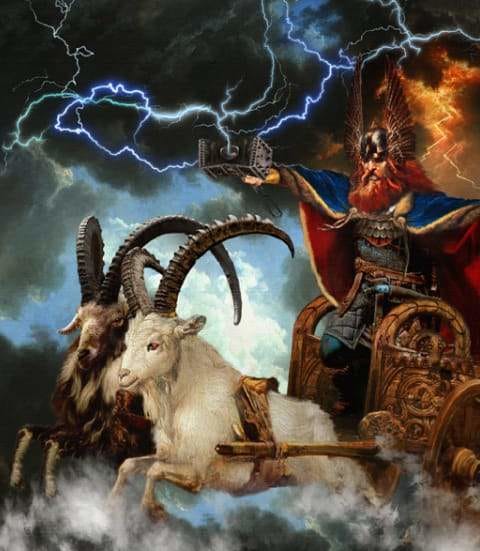
Thurkettle (and its variants like Thirkettle/Roundkettle) isn’t just a name—it’s a tangible link, a relic of the Viking Age.
The origin of the surname is from the Old Norse Þorketill (Thor-Ketill); it literally means “Thor’s Cauldron/Kettle.” In Norse mythology, the “Kettle” was a sacred vessel used for brewing ale for the gods. The “kettle” has significant symbolic and narrative roots, most notably in the myth where Thor must retrieve a massive cauldron from the giant Hymir to brew ale for the gods’ feast. During the Danelaw (9th-11th centuries), Vikings from Scandinavia settled heavily in Norfolk and Suffolk. They didn’t just bring swords; they brought their names. While the name morphed into “Thurkettle” in England, in Scandinavia today, you still see it as Torkel or Thorkild. (3 & 4)
📜 Fast Facts: The Danelaw (865–954 AD)
- What was it? A massive region in northern and eastern England where Danish laws and customs ruled supreme, established after the Vikings and King Alfred the Great agreed to stop fighting and divide the land.
- The Name Game: The term comes from the Old English Dena lagu, literally meaning “Danes’ Law.” It wasn’t just a place; it was a completely different legal system.
- Lasting Legacy in Names: If a town ends in “-by” (like Derby or Whitby) or “-thorpe” (like Scunthorpe), you’re standing in the old Danelaw! “-by” meant a village, and “-thorpe” meant a smaller hamlet.
- The “Thurkettle” Connection: Surnames like Thurkettle are the personal equivalent of “Grimston Hybrids”—names where Old Norse personal names (like Thorketill) merged with English settlements or became hereditary family names over centuries.
- Viking “Wergild”: Legal disputes weren’t always settled with jail time. In the Danelaw, people often paid wergild (blood money or reparations) to the victim or their family to settle a crime.
- Norse in Your Mouth: Every time you say the words “sky,” “window,” “leg,” or “law,” you are actually speaking Old Norse from the Danelaw era! (2)

You may be wondering what exactly is a Victualler? In the 17th and 18th centuries, a victualler was a specialized merchant responsible for providing food, beverages, and other essential provisions. In the Cripplegate section of London—a bustling ward known for its diverse trades—victuallers played a crucial role in both local commerce and the broader supply chain. (1 & 2)
The Trade of the Victualler.
In the crowded wards of Cripplegate, her father wasn’t just a merchant; he was an essential provider in a city that never stopped eating. Here is a breakdown of what that life looked like:
- The Public’s Purveyor: Robert’s primary role was providing “victuals”—the life-sustaining food and drink that fueled London’s working class and travelers moving north through the city gates.
- Master of the House: As a victualler, he was often the heart of the community, acting as an innkeeper or publican. His establishment served as a social hub, office, and dining room for his neighbors.
- The Provisioner’s Reach: His trade extended to the sea. Victuallers often prepared long-lasting cooked goods, like potted meats and hard biscuits, specifically designed to survive the months-long voyages of colonial-bound ships.
- A Licensed Pillar: This was no “fly-by-night” operation. To hold a license, a victualler was strictly regulated and required to be a man of good standing—which included mandatory attendance at St. Giles-without-Cripplegate to prove his moral fitness.
- Economic Resilience: While it was a respected trade that offered a path to financial stability, it was a daily battle of management—balancing “precarious” inventory like aging cheeses and meats against the constant demand of a hungry city. (2)
Life in Cripplegate:
As a victualler in Cripplegate, Betty’s father would have operated in one of the most historically significant wards of London. The area was a gateway for travelers moving north and was packed with landmarks like St. Giles-without-Cripplegate church, where figures like Oliver Cromwell were married. St. Giles is also where John Milton (author of Paradise Lost) was buried. Victuallers’ establishments—often called “victualling houses” or “cellars”—were generally more basic and affordable than high-end coffee houses, serving as the essential “fast food” and social hubs of the colonial era. We do not know the exact location of his tavern, but the Fore Street area was the commercial heart of the parish and the primary location for victualling houses and social hubs.
According to parish records of St. Giles-without-Cripplegate church, these are the children born to Robert Thurkettle and his wife Elizabeth:
- William (1643–1651) — The naming tribute to his father in Heydon.
- Robert Jr. (1645–1648) — The namesake.
- Elizabeth #1 (1648–1650) — The tribute to his wife.
- Judith (1652–1653) — The summer tragedy, dying just months before Betty was born.
- Elizabeth “Betty” #2 (b. 1653) — The Sturdy Sole Survivor. 🫖
- Ann (1656–1658) — The final child.
Of all the children born to Robert and Elizabeth, only Elizabeth—affectionately known as ‘Betty’—survived to adulthood. She stood as the sole survivor of a family lineage marked by early loss.
Being the daughter of a victualler in Cripplegate provided Betty Roundkettle with significant structural advantages that likely contributed to her survival during the Great Plague of 1665. While she was born around 1653, she would have been approximately 13 years old during the peak of the epidemic, a critical age where many in London faced extreme food insecurity and isolation. (2)
Survival Factors for a Victualler’s Daughter:
During the 1665 plague, the London government prioritized a mature food supply system to prevent riots. As a victualler (a professional food and drink provider), Betty’s father was at the heart of this supply chain, ensuring his household had consistent access to protein-rich diets, which recent studies suggest was a major protective factor against plague mortality.
Access to clean drink was a life-or-death matter. In 17th-century London, the River Thames was heavily contaminated. Since victuallers often brewed and served small beer or ale—where the boiling process killed many pathogens—Betty would have had a safer alternative to the city’s dangerous water supplies.
Betty is noted in family histories as being described as small and fat. In this era, being “small and fat” was a visible indicator of consistent nourishment. Because Betty’s family traded in “victuals” (food), she likely maintained a higher standard of living and nutritional reserves, which helped her body withstand the physiological stress of the city’s “Dreadful Visitation”.
Unlike the poorest residents who remained trapped in unsanitary slums, victuallers were considered essential merchants. Their role allowed them to participate in the regulated markets and delivery systems established by the Lord Mayor to stabilize the city.
While the St. Giles Cripplegate parish was one of the first areas affected by the plague, Betty’s survival allowed her to eventually emigrate to Branford, Connecticut, and marry John Plant.
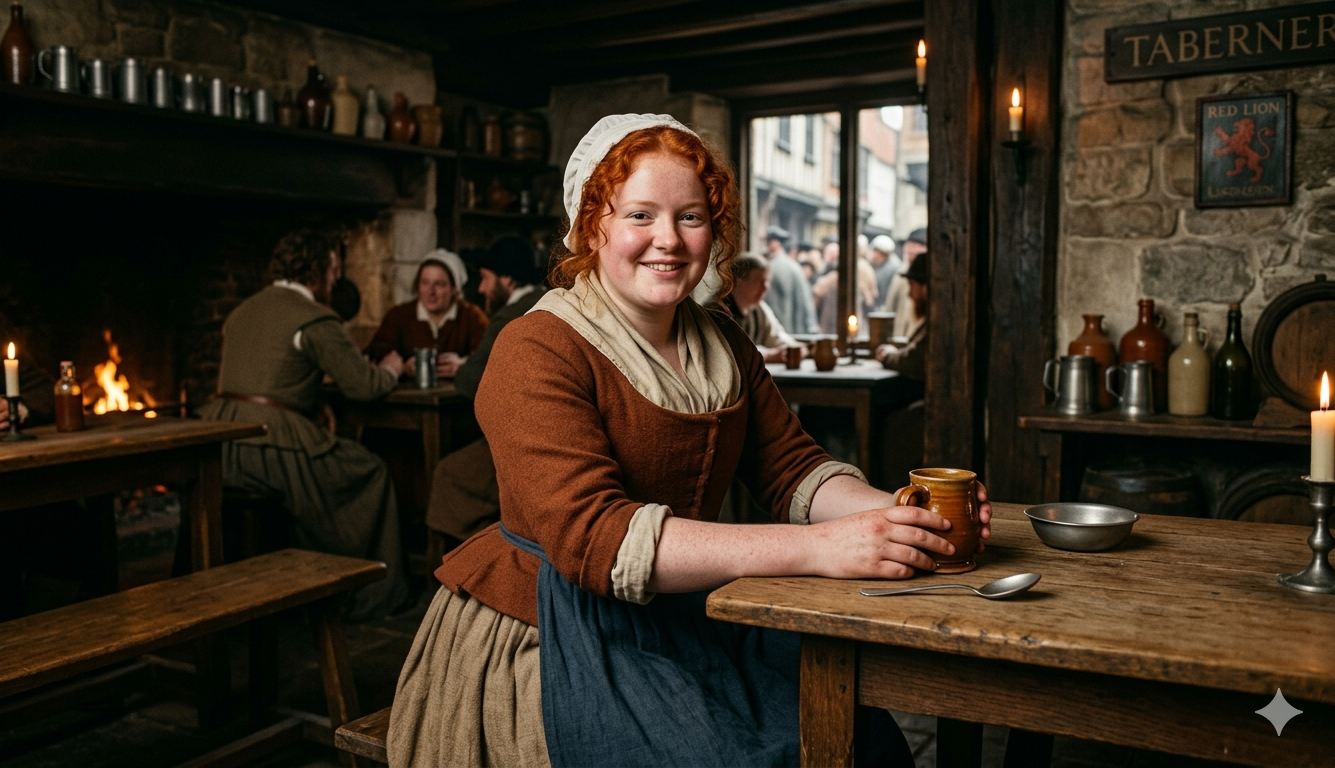
In several sources that discuss the oral history passed down regarding Betty, they state she was a small, fat, redheaded woman. In today’s culture, this would not describe a sought-after bride. In the late 17th century, John Plant likely viewed Betty Roundkettle as a choice bride due to her high survival potential, visible health, and the extreme scarcity of marriageable women in the New England colonies. According to family traditions recorded by his descendants, the two married on a ship bound for the New World because she was the only single woman on board. Whether they did marry onboard ship, which is less likely, or once they landed on solid ground, is a moot point.
A fuller figure was widely associated with fertility and robust health, which were essential for a man like John Plant, who needed to build a family to help manage his granted lands in Branford.
In the 1600s, men significantly outnumbered women in the American colonies. Finding a “marriageable woman” was a competitive necessity for survival and establishing a homestead.
Her description as “fat” was a vital signal in an era of frequent famine and disease. It proved she had access to consistent nourishment and possessed reserves necessary to survive the grueling labor of a colonial farm wife, which included gardening, livestock care, and food preservation.
Red hair was a rare and striking trait, occurring in only about 1-2% of the population. While sometimes viewed with superstition, in English culture it was also famously associated with the Tudor monarchy, symbolizing power, authority, and a “fiery” or passionate temperament.
Let’s make some food Robert would have made in his tavern, and some fun trivia:
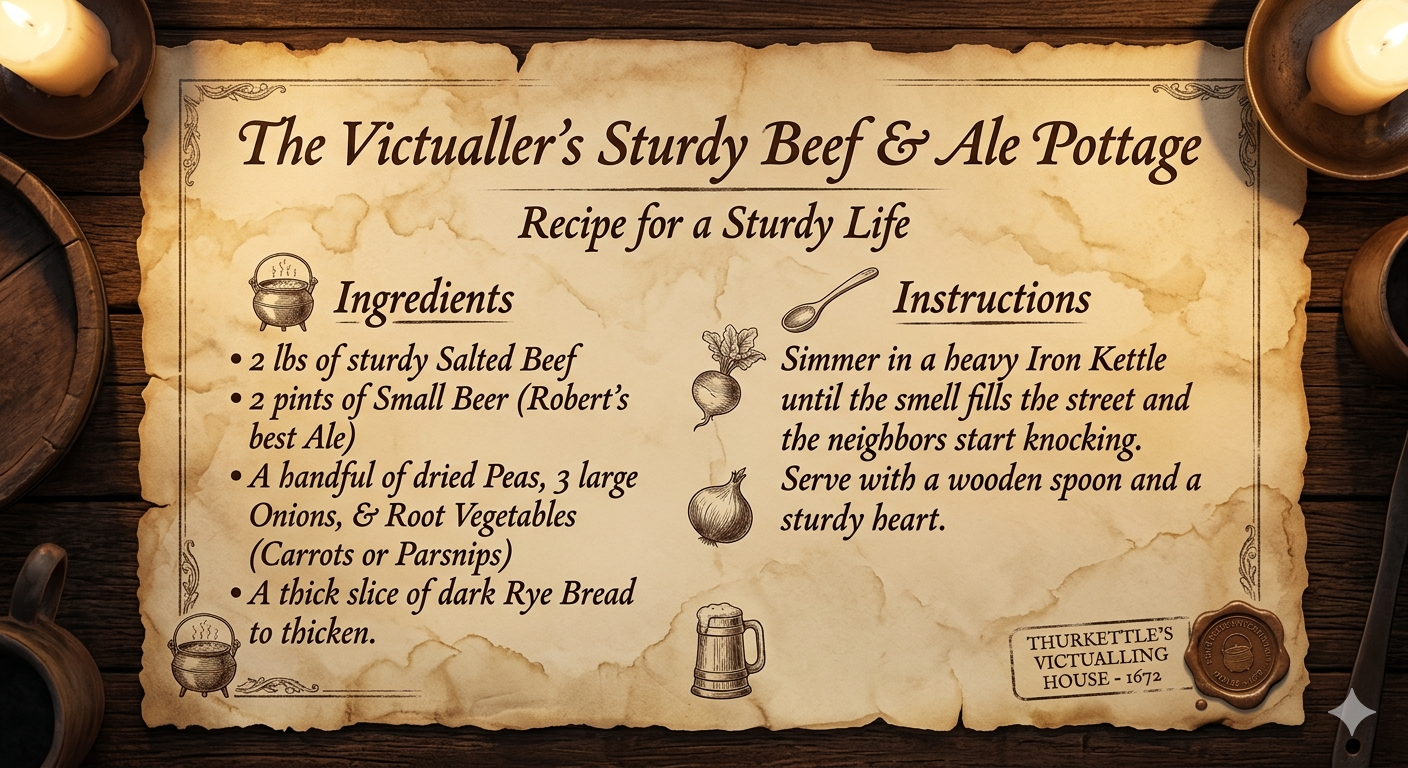
In the 1600s, a “Pottage” (stew) was the backbone of every tavern. It stayed on the fire all day, getting thicker and “sturdier” as it went. This is a historically accurate middle-class recipe that Robert would have served to his “honorable” guests.
Fun Trivia:
- Did You Know? The word “Victualler” actually comes from the Latin victus, meaning “food.” Robert wasn’t just a bartender; he was a “Life-Provider.” In a city like London, his pantry was the difference between health and hunger.
- The Viking “Kettle”: The name Thurkettle means ‘Thor’s Cauldron.’ If you were starting out in a new world with nothing but a name, would you rather be named after a sword or a cooking pot? (Hint: In the 1600s, the one with the pot survived the winter!)
- Redheaded Vikings: Since we suspect Betty was redheaded (based on oral history), in Scandinavia, red hair was often associated with Thor. Our Betty didn’t just have his name; she likely had his Viking red hair, too! (2)
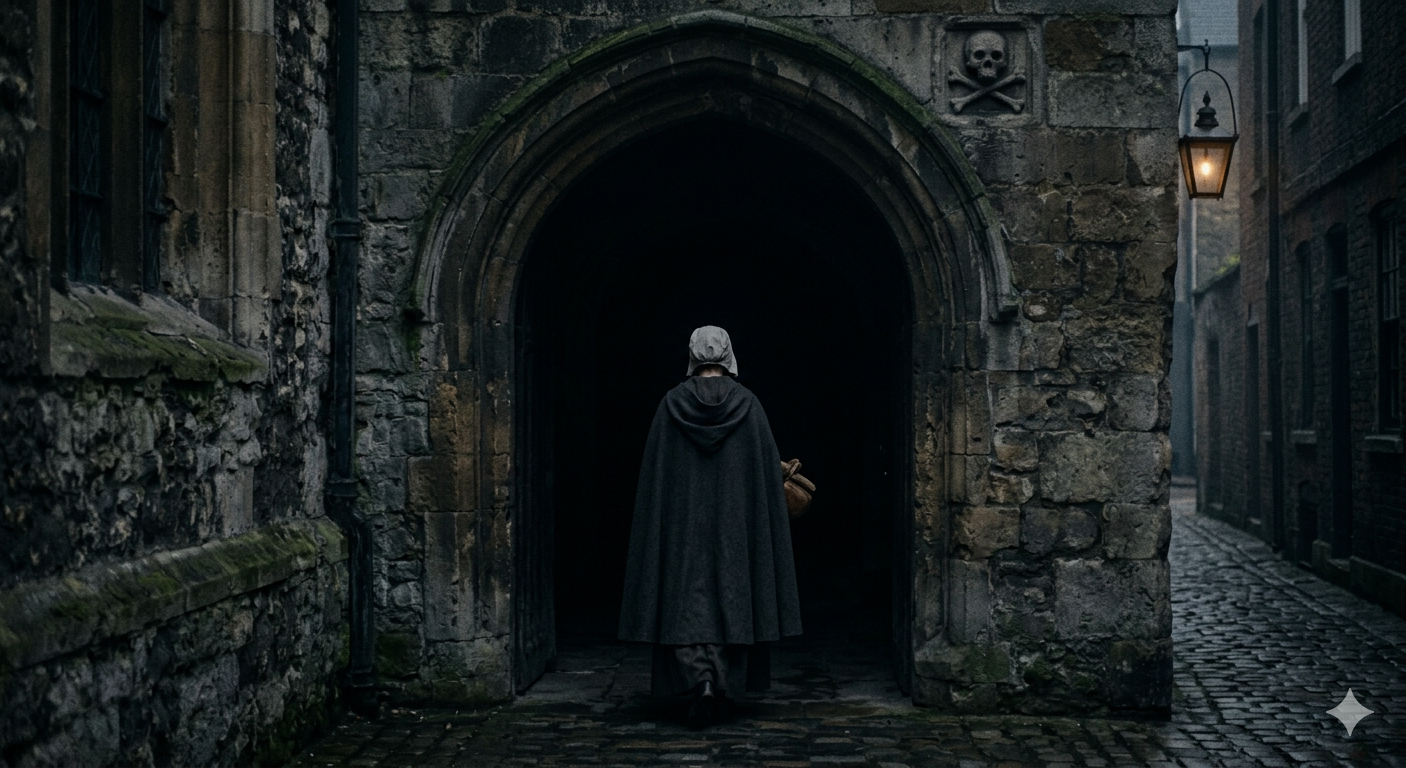
While the story of Betty Roundkettle and John Plant ends in the rugged soil of Branford, Connecticut, I made a startling discovery in the 1669 burial registers of St. Giles-without-Cripplegate that suggests their union was no mere accident of fate on a colonial ship.
Tucked away in the records of the ‘lower grounds’—the final resting place for the city’s paupers—lies a single, haunting entry for a woman named Ann Thirkettle Plant.
She died about seven years before John and Betty ever set sail, bearing a name that shouldn’t yet exist: a fusion of Betty’s maiden name and her future married name. Was Ann the invisible thread that bound these two families together in the dark alleys of London? Was she a silent witness to a connection that began long before the trek to the New World?
The records suggest she was a servant in a very familiar household—but the true nature of her role as the bridge between the Roundkettles and the Plants is a story for another time.

References:
- Occupation: Victualler. Tangled Trees. Finding our links in History – One Genealogist’s thoughts, tidbits, and inspirations.
- Google Gemini. (2024). Conversational AI response regarding Betty Roundkettle, 17th-century London victuallers, and the surname origins of Thurkettle/Thirkettle. Retrieved [30 April 2026].
- Thurkettle Surname Definition. Forebears.
- Origin, popularity and meaning of the last name THIRKETTLE. Geneanet.
A Note on Visuals:
The portraits of Betty, the shadowy archway of Cripplegate, and the parchment recipe card were created in collaboration with AI to help visualize the historical environment of my ancestors.
If you use any information from my blog posts as a reference or source, please give credit and provide a link back to my work that you are referencing. Unless otherwise noted, my work is © Anna A. Kasper 2011-2026. All rights reserved. Thank you.


Fantastic! I greatly enjoyed the way you told Betty Roundkettle’s story and wove in the historical information, it is a very compelling read. Thanks for sharing.
LikeLiked by 1 person