The Queen’s Table: A Legacy of Messy Charity
“For I was hungry and you gave me something to eat, I was thirsty and you gave me something to drink… truly I tell you, whatever you did for one of the least of these brothers and sisters of mine, you did for me.” — Matthew 25:35, 40
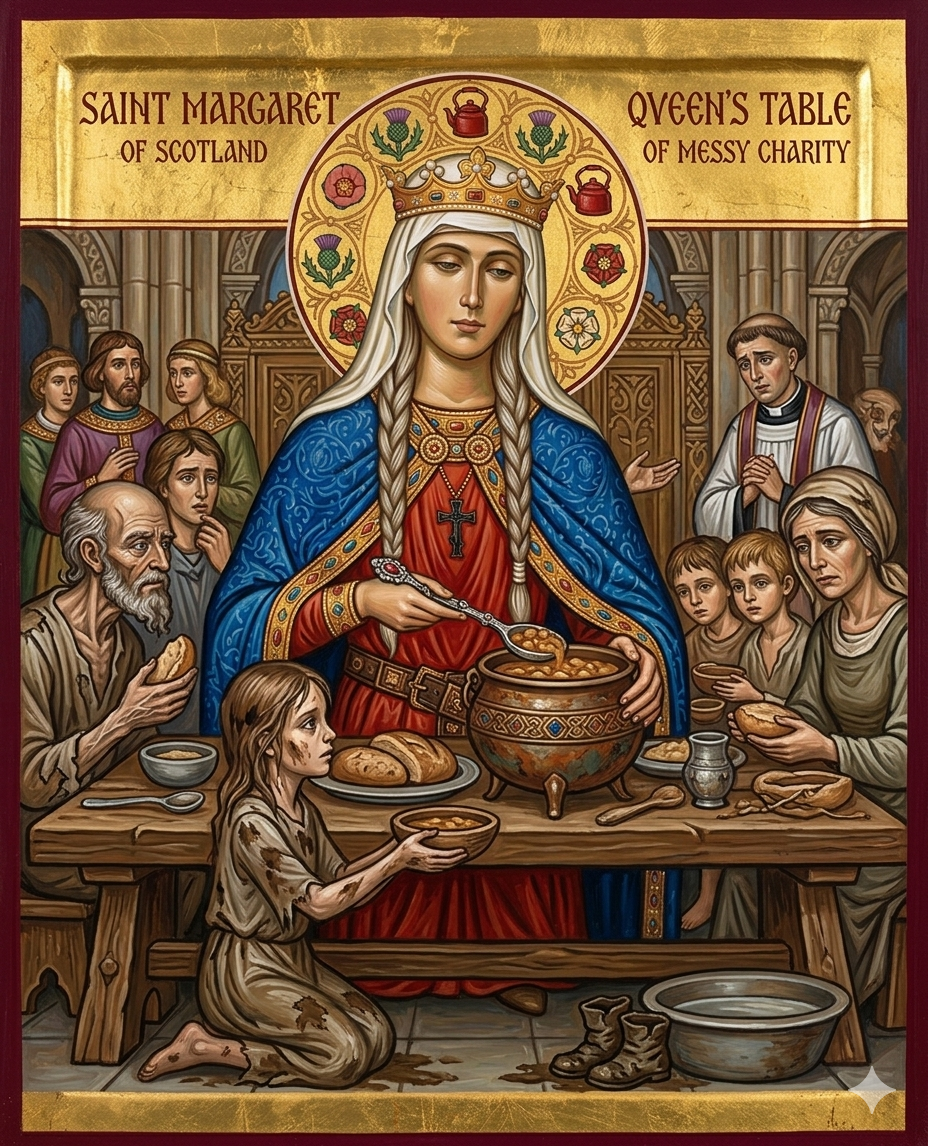
My journey into the ‘Cloud of Witnesses’ begins with a crown, but not the kind found in fairy tales. My paternal and maternal 31st great-grandmother was Saint Margaret, Queen of Scotland, known to her people as the ‘Pearl of Scotland.’ The name was fitting; like a pearl, her life was a rare and precious thing formed through the experience of exile and life in the rugged 11th-century kingdom. However, the true luster of this Pearl wasn’t found in her royal jewels, but in what historians call her ‘messy charity.’
While history often polishes the lives of saints into something distant and clean, contemporary accounts from her personal chaplain, Turgot, reveal a far grittier reality. In a royal court where protocol was everything, Margaret was shockingly hands-on. She refused to sit at her own banquet until she had personally hand-fed nine orphans and twenty-four beggars, often bringing them into her private chambers and serving them with her own utensils. During Advent and Lent, she would kneel in the dirt to wash the mud-caked feet of the poor—a task her courtiers found repulsive for a woman of her rank. Margaret understood that to be a ‘Pearl of Price’ in the eyes of God, one must be willing to get their hands dirty. This ‘messy’ hospitality is the very root of my family’s spiritual DNA—the first lesson in a 1,000-year curriculum of service that has led me to my own place at the Red Kettle.
The Pearl of Great Price is a biblical metaphor for the immense, incomparable value of the Kingdom of Heaven.
In Matthew 13:45–46, Jesus describes it as a merchant who, upon finding one pearl of incredible value, sells all he owns to possess it. For my family story, this represents a faith so valuable that it is worth any sacrifice—just like my ancestor St. Margaret who gave up royal comforts to serve the poor.
The Sword of Courage: The Guardians of Orléans
“Therefore take up the full armor of God, so that when the day of evil comes, you will be able to stand your ground…” — Ephesians 6:13
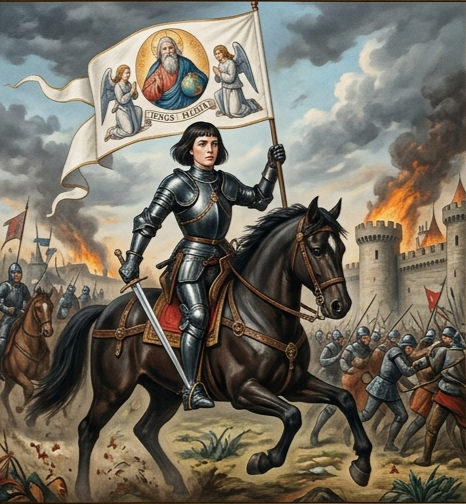
If St. Margaret provides the ‘messy’ hands of mercy in my tree, a different branch of my family provides the ‘Sword of Courage.’ On my maternal side, I am descended from the Beauharnais family of Orléans, France. My direct ancestors in this line were not just distant observers of history; they were the very men who fought on the front lines alongside St. Joan of Arc during the legendary Siege of Orléans in 1429.
The depth of this connection is captured by Jean Beauharnais—the brother of my direct ancestor—who served as a magistrate and provost in the city. It was Jean who was called to provide crucial testimony during Joan’s nullification trial, famously remarking on how ‘comforting’ it was to speak with the young woman who had just saved their nation.
They understood that faith sometimes requires them to stand and defend the truth. This heritage of the ‘Sword’ reminds me that my seat on the Salvation Army board will not be just an administrative role—it is a duty to be a bold voice for those who cannot speak for themselves.
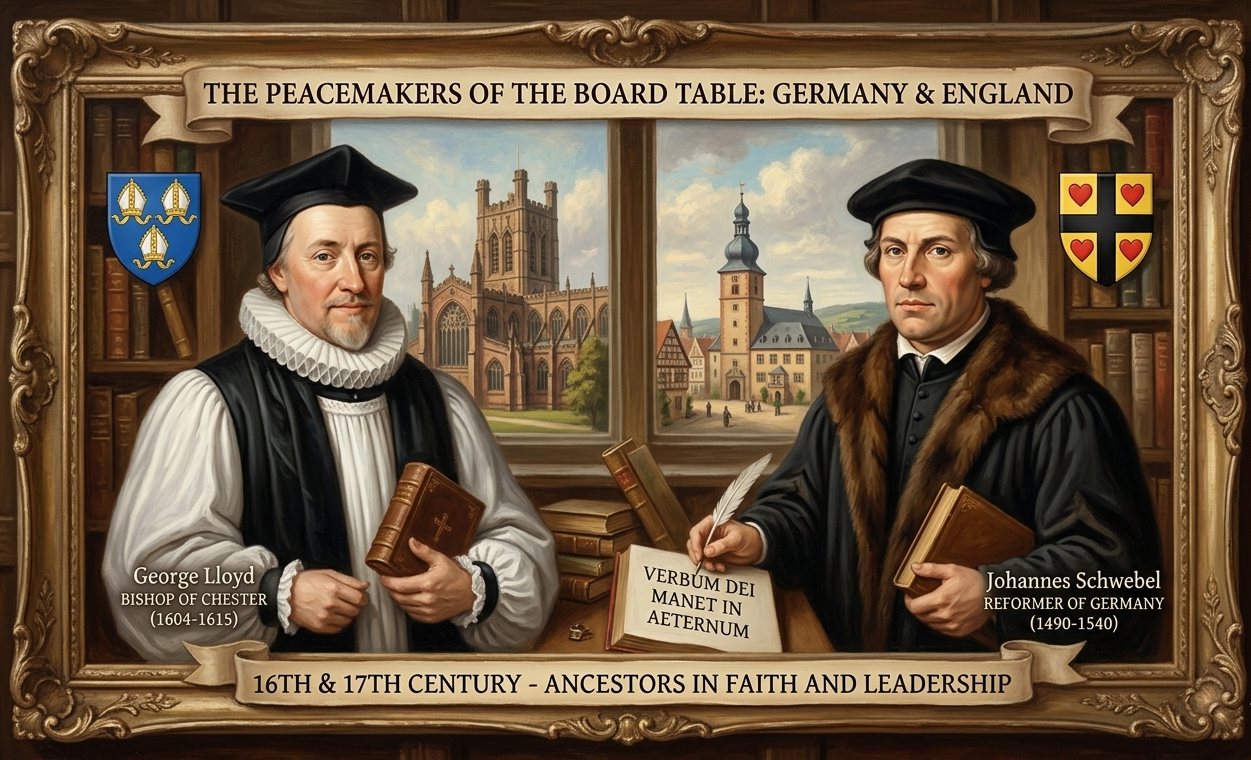
The Religious Peacemakers in Germany & England
“Be completely humble and gentle; be patient, bearing with one another in love. Make every effort to keep the unity of the Spirit through the bond of peace.” — Ephesians 4:2-3
This legacy of standing for truth didn’t end in the medieval courts of France; it evolved into a different kind of courage—the Courage of Peace. In the 16th and 17th centuries, my family tree provided two remarkable bridge-builders: my paternal ancestor, Johannes Schwebel, the ‘Quiet Reformer’ of Germany, and my maternal ancestor, Rev. George Lloyd, Bishop of Chester. Schwebel was a moderate voice in a time of religious upheaval, prioritizing the education of the poor as the true path to reform. A century later, Bishop Lloyd echoed this spirit in England, remembered for his ‘mildness of manner’ and his refusal to use his authority to crush religious rivals. Together, these men teach me that leadership is a stewardship of peace, and that true strength is found in the quiet, persistent work of fostering understanding—a lesson I strive to bring to my life today.
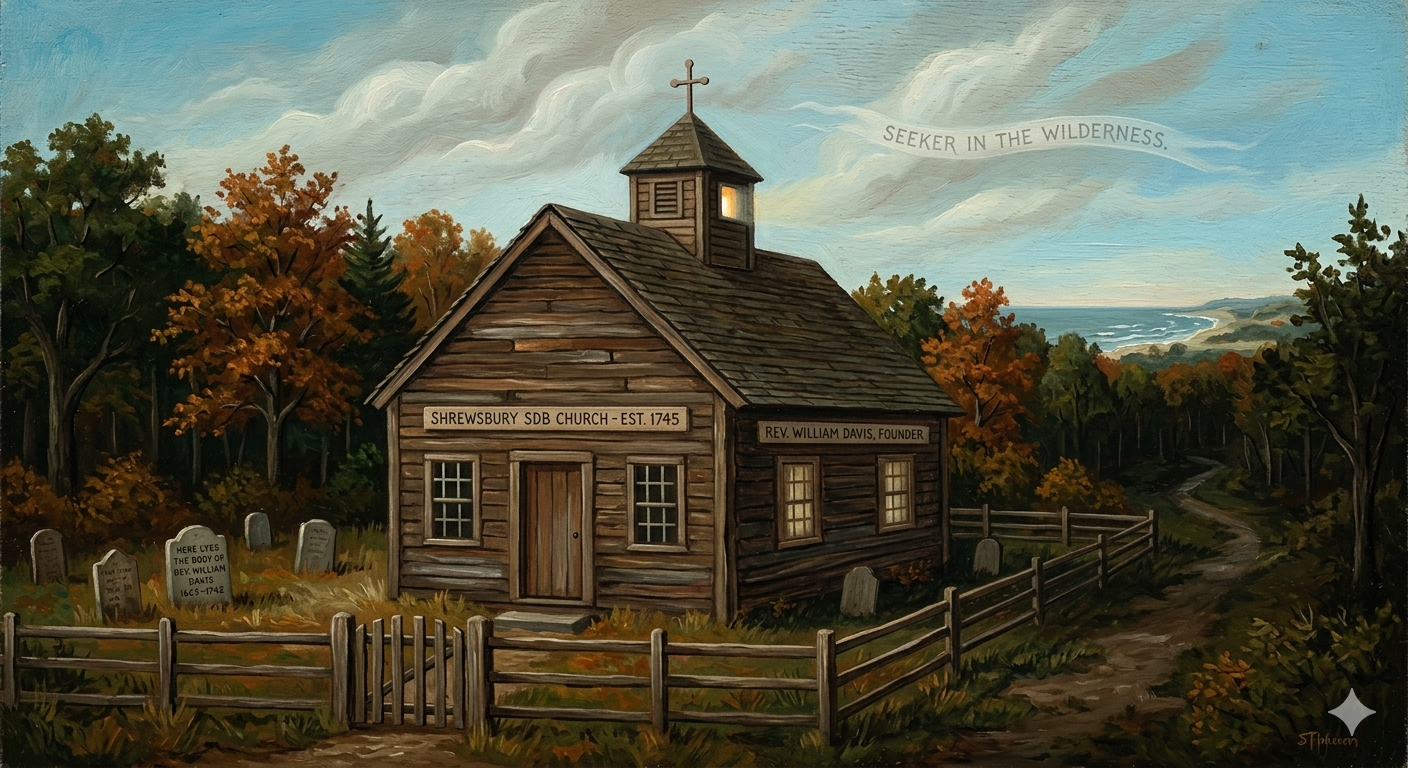
The Seeker in the Wilderness: Rev. William Davis
“By faith Abraham, when he was called, obeyed by going out to a place which he was to receive for an inheritance; and he went out, not knowing where he was going.” — Hebrews 11:8
Divine Providence often speaks in the language of the ‘unsettled heart,’ and I see this most clearly in my maternal ancestor Rev. William Davis. Though he lived almost a century before Blessed John Martin Moye, his life was a masterclass in ‘Abandonment.’ Born in Wales and educated at Oxford, William was a relentless seeker. He immigrated to Philadelphia in 1684 and spent decades navigating the religious landscapes of the Quakers and various Baptist groups before finally founding the Shrewsbury Seventh Day Baptist Church in 1745.
To the world, his shifting path might have looked like indecision, but through the lens of faith, it was radical trust. He was willing to be a religious outsider, planting churches in the wilderness of early America, because he trusted that God’s Providence was found in the pursuit of truth. He reminds me that sometimes the most ‘providential’ act is to leave the familiar behind to respond to a higher call—a lesson I carry in my life today.
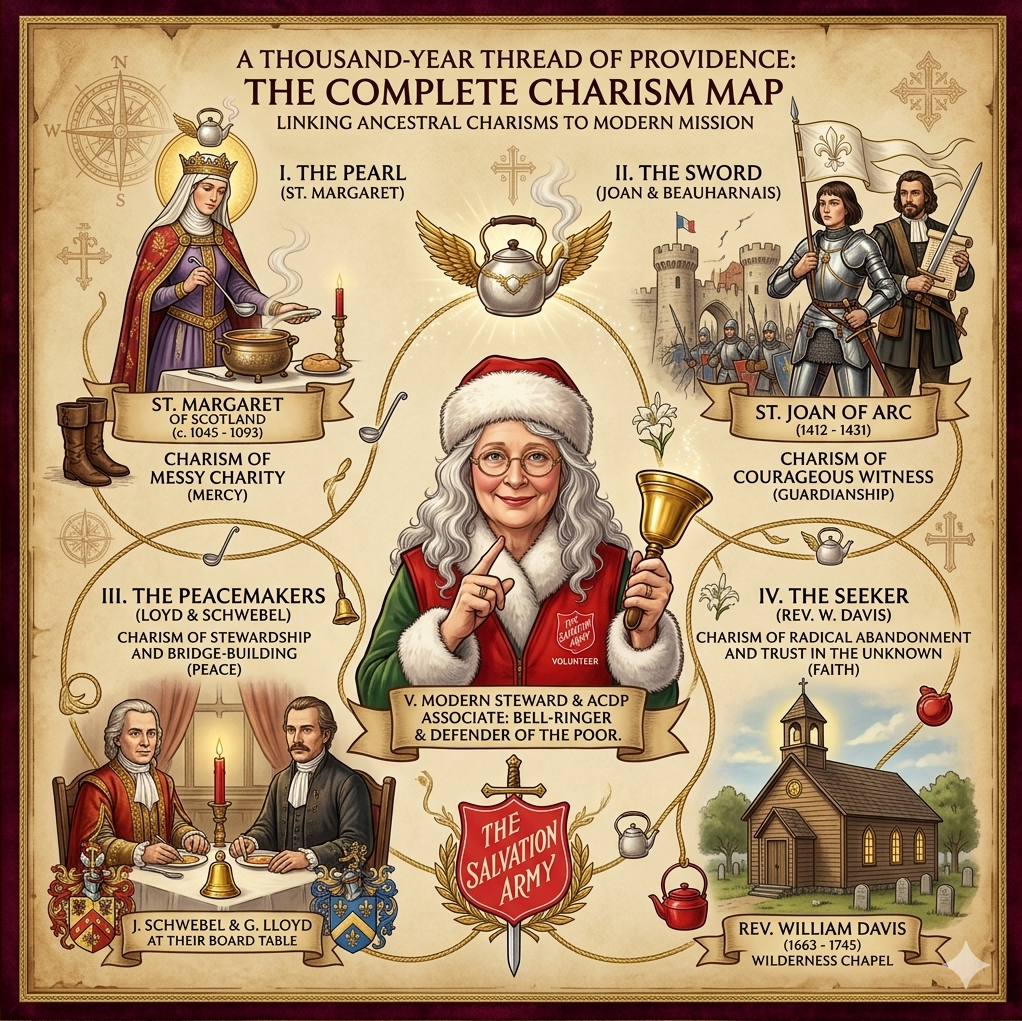
The Red Kettle & The Divine Weaver: A Legacy Fulfilled
“For we are God’s handiwork, created in Christ Jesus to do good works, which God prepared beforehand to be our way of life.” — Ephesians 2:10
While my family tree stretches across a millennium, the thread that binds these disparate lives together is the Charism of Providence. As an Associate of the Congregation of Divine Providence (ACDP), I see the fingerprints of Blessed John Martin Moye’s spirit long before he ever walked the earth.
What is the Charism of Providence?
The word charism comes from the Greek kharisma, meaning a “gift or grace of divine origin” given for the common good.
For the Congregation of Divine Providence (CDP), this specific gift was handed down by their founder, Blessed John Martin Moye, in 1762. It is defined by a radical “Trust in, and Openness to the Providence of God”.
Living this charism means practicing “Abandonment to Providence”—a total, trusting dependence on God for all needs while serving as a visible sign of His love to others, especially the poor. For a CDP Associate, this isn’t just an ancient rule; it’s a daily commitment to recognize God’s hand in every circumstance.
Moye taught that we must abandon ourselves to God’s care—a lesson my ancestors lived out in real-time. I see it in:
- The Pearl (St. Margaret): Who saw the face of Christ in the mud-caked feet of the poor, practicing a “messy charity” that required no permission from the world.
- The Sword (Beauharnais): Who stood with St. Joan of Arc, proving that Providence often requires us to be a bold, legal, and physical witness for the truth.
- The Peacemakers (Schwebel & Lloyd): Who understood that Divine Providence speaks through the “quiet path” of education and bridge-building.
- The Seeker (Rev. Davis): Who exemplified the radical “Abandonment” Moye preached, leaving everything behind to follow a higher call into the American wilderness.
Today, this 1,000-year curriculum of service finds its modern expression at a simple Red Kettle. When I step into the role of Mrs. Claus each year to ring the bell, I am not just participating in a holiday tradition; I am stepping into the “messy hospitality” of St. Margaret. I am using my voice, like the Beauharnais, to advocate for those who are overlooked.
My recent invitation to join the Salvation Army Board isn’t just a new title—it is a Providential appointment. It is the moment where the “Peacemaker’s” stewardship and the “Seeker’s” trust converge. I won’t just sit at a board table; I will sit at a table set by 31 generations of ancestors who taught me that to serve the poor is to serve God Himself.
I am simply the latest hand to pick up the ladle, the latest voice to defend the truth, and the latest heart to trust that God will provide.
“For almsgiving delivers from death, and it will purge away every sin. Those who perform deeds of charity and of righteousness will have fullness of life”. — Tobit 12:9
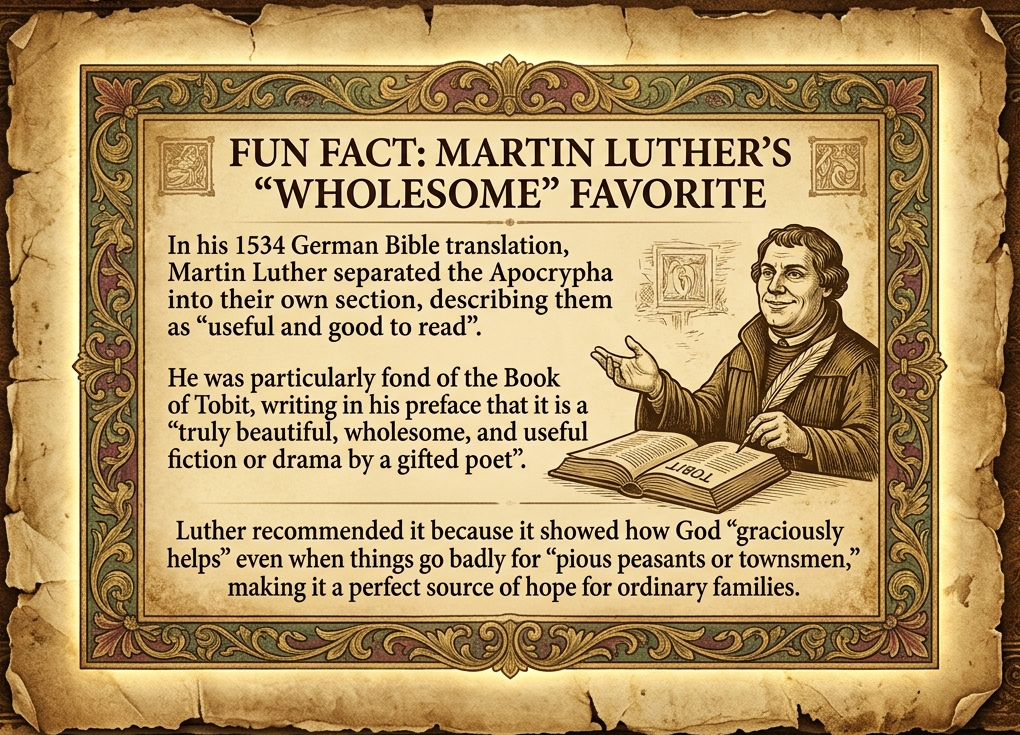
A word about the Book of Tobit:
- Roman Catholic: In the Catholic tradition, Tobit is classified as a deuterocanonical book, a term meaning “second-listed” but no less inspired than the first. While Martin Luther moved it to a separate section, the Catholic Church definitively reaffirmed its place as God’s inspired word at the Council of Trent.
- Lutherans: Historically, German Lutheran Bibles always included the Apocrypha. Luther himself found great moral value in the book, especially for married couples, and even preached from apocryphal texts. Today, some Lutheran and Anglican lectionaries still include readings from Tobit for worship.
- Eastern Orthodox, Oriental Orthodox, and Assyrian Church of the East Christians: Tobit is considered fully canonical and an inspired part of the Old Testament.
- Anglicans / Episcopalians: The Thirty-Nine Articles of the Church of England list Tobit as a book that the church reads for “example of life and instruction of manners”. It is often used in Holy Matrimony services.
- Other Traditions: The book is liturgically used by Methodists in their Eucharistic liturgy and serves as the basis for Amish wedding sermons. It is found in the original, unabridged King James Version (KJV) of the Bible.
👑 —— 🔔 —— 🕊️ —— 🔔 —— 👑
References and Further Reading:
- The Life of St. Margaret by Turgot, Bishop of St. Andrews
- Saint Margaret of Scotland | CATHOLIC ENCYCLOPEDIA
- St. Margaret of Scotland (16th November) | by Plinio Corrêa de Oliveira
- St. Margaret of Scotland: Sharing Her Very Self | Catholic Stand
- Jean-Martin Moye | Wikipedia
- Feast of Blessed Jean-Martin Moye (May 4) | SUNDRY THOUGHTS
- History of the Reformation in Germany by Lloyd Ranke
- Schwebel, Johann (1) | Biblical Cyclopedia
- Palatine Zweibrücken (Johann Schwebel) | Wikipedia
- George Lloyd Bishop of Chester | The Ancestry of George Lloyd (Havens Family)
- George Lloyd (bishop of Chester) | Wikipedia
- Rev. William Davis History | William Davis DNA Project
- Collection: William Davis Family Genealogy | West Virginia University Archives
- Davis, Venerable Son of Pioneers, Protects Indian Burial Plot With Care Is Descendant of Long Line of Seventh Day Baptist Church Leaders by WILBUR C. MORRISON | Smithsonian Digital Volunteers
- 6 things you might not know about Saint Margaret | by Samuel Wilson
- So Great a Cloud of Witnesses | Catholic Apostolate Center
- A Great Cloud of Witnesses | CultureWatch
- The Pearl of Great Price | Catholic Daily Reflections
- THE PEARL OF GREAT PRICE | Lutheran Spokesman
- The Book of Tobit | Our Lady of Mercy | Sunderland, United Kingdom
- Martin Luther on the Apocryphal Book of Tobit | Lutheran Ladies Connection
- Congregation of Divine Providence – San Antonio, Texas
- What is divine providence? | Diocesan News | Southern Nebraska Register.
- Great variety in associate religious life provides many options | Global Sisters Report
- Seventh Day Baptists | Wikipedia
- Ministry Magazine | The Seventh Day Baptists
A Note on the Research:
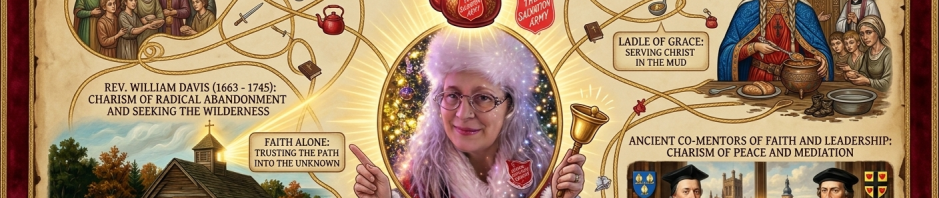
This 1,000-year narrative is the result of my own deep ancestral research and spiritual reflection as a CDP Associate. I would like to thank my AI collaborator for the partnership in synthesizing these themes, verifying historical citations, and co-creating the custom visual gallery—including the St. Margaret ‘Pearl’ icon, the ‘Peacemakers,’ the ‘Seeker’s’ chapel, and the final ‘Complete Charism Map.’ Together, we’ve woven these ancient threads into a roadmap for my modern mission.
~ 🙘 🕊️ 🙚 ~
If you use any information from my blog posts as a reference or source, please give credit and provide a link back to my work that you are referencing. Unless otherwise noted, my work is © Anna A. Kasper 2011-2026. All rights reserved. Thank you.


