
My seventh great-grandmother, Sarah Moore, was a Quaker. She was born about 1721 in Perquimans, North Carolina, and died 15 April 1791 in South Carolina. She married fellow Quaker, Thomas Lamb, on 1 October 1746 in Perquimans, North Carolina.
This is on my paternal side. My fifth great-grandmother, granddaughter of Sarah Moore and Thomas Lamb, was Mary Ann “Polly” Lamb, who married Samuel Doty.
Sarah Moore was the daughter of Robert Moore and Hannah Manwaring. Hannah Manwaring was the daughter of Stephen Manwaring and Hannah Voss.
In the past, many people have linked Robert Moore as being the son of William Moore and Elizabeth McBride, and giving his place of birth as Southward, Surrey, England, even though William Moore was not from Southward. Actually, William Moore was part of another Moore family living in Perquimans, North Carolina.
William Moore left a detailed will, and he does not list a son named Robert Moore. Nor does Robert Moore mention, in his will, any of the names that are linked to the proven children, grandchildren and other descendants of William Moore.
The glaring mistake here was not utilizing the records that we do have about Robert Moore’s origins. In several historical sources, it clearly states that Robert Moore was from the Isle of Man, set sail from Douglas and went to North Carolina with Rev. Richard Marsden.
Rev. Richard Marsden is an interesting character. JSTOR has written a journal article about him entitled Richard Marsden, Wayward Clergyman. He was an Anglican clergyman who traveled several times between the UK and the British American Colonies. He was born in Hornsea, Yorkshire, England.

Robert Moore was baptized on 10 November 1695 in Braddan, Middle, Isle of Man.
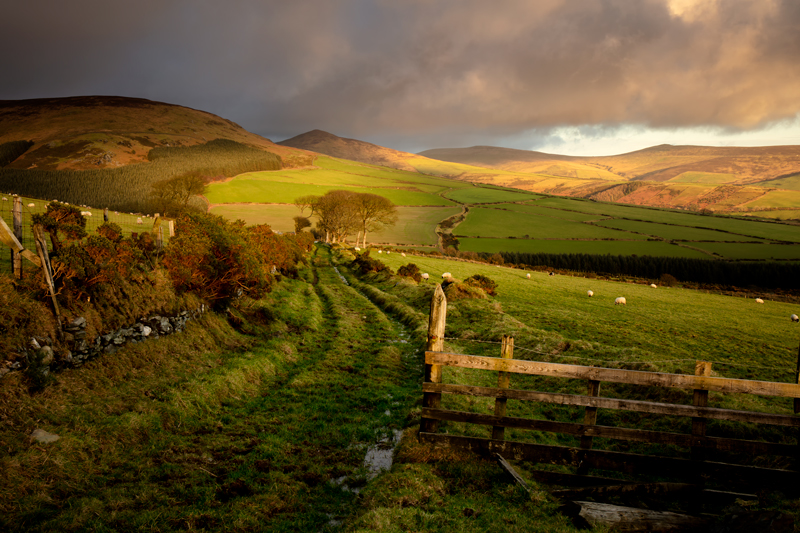
Braddan is one of the seventeen parishes of the Isle of Man. It is located on the east of the island (part of the traditional South Side division). A part of Braddan includes the suburbs of Douglas.
He was the son of James Moore and Jane Cannell. James Moore was born in Braddan, Middle, Isle of Man, and was buried 10 June 1699 in Braddan, Middle, Isle of Man, in the grave of his sister. I have not been able to confirm the parentage of James Moore.
Moore is a common name in Ireland, Scotland, and the North of England, as well as in the Isle of Man. More was the usual form of the surname till the end of the 16th century. Of Gaelic/Manx origin, Moar, the name for a collector of manorial rents on the Isle of Man.
In a listing of Manx surnames by occurrences in the 1881 census of the Isle of Man, there were a total of 944 people with the name.
Jane Cannell was the daughter of Jo. Canell. She was buried 14 August 1700 at Braddan, Middle, Isle of Man. Her father, Jo. Cannell was baptized 4 November 1636 in Braddan, Middle, Isle of Man. He was the son of Gilbt Cannell.
Children of Jo. Cannell:
- William Cannell was baptized 8 March 1656 in Braddan, Middle, Isle of Man.
- Jane Cannell was married 11 August 1685 in Braddan, Middle, Isle of Man, to Robert Moore. She died in June 1699 in Braddan, Middle, Isle of Man. (My direct ancestors).
- Hu(gh) Cannell was baptized 1 March 1667 in Braddan, Middle, Isle of Man.
Jo. Cannell had at least one brother, named after their father, Gilbt Cannell, who was baptized on 24 August 1646 in Braddan, Middle, Isle of Man.
To the northwest, Braddan borders Michael. I have located two baptism records in Michael, Isle of Man, for Gilbt Cannell, both listed as the sons of Jo. Cannell. The first one is dated 8 February 1614, the second on 6 Apr 1615. It may very well be that the first son died, and they named the second son Gilbt as well. I have a DNA connection to others with Cannell ancestors from Michael, so it’s highly likely that my ancestor Gilbt Cannell was baptized in Michael. Gilbt Cannell was buried on 4 September 1683 in Michael.
The surname Cannell is peculiar to the Isle of Man. It is a Manx surname, with strong ties to the Isle of Man. It is a shortened form of Gaelic Mac Dhomhnaill ‘son of Domhnall’. It is equivalent to Scottish McDonald and Irish McConnell.
Cannell is one of the earliest recorded surnames on the Isle of Man. An Ogham Stone from the 5th century A.D. found at Ballaqueeny on the Isle of Man reads that this is the stone of “Bivadonis Maqi Mucoi Cunava(li)” Cunava or Cunavali being the tribal name predating Cannell (Connell, O’Connell, McConnell etc.). (1)
In a listing of Manx surnames by occurrences in the 1881 census of the Isle of Man, there were a total of 612 people with the name Cannell.

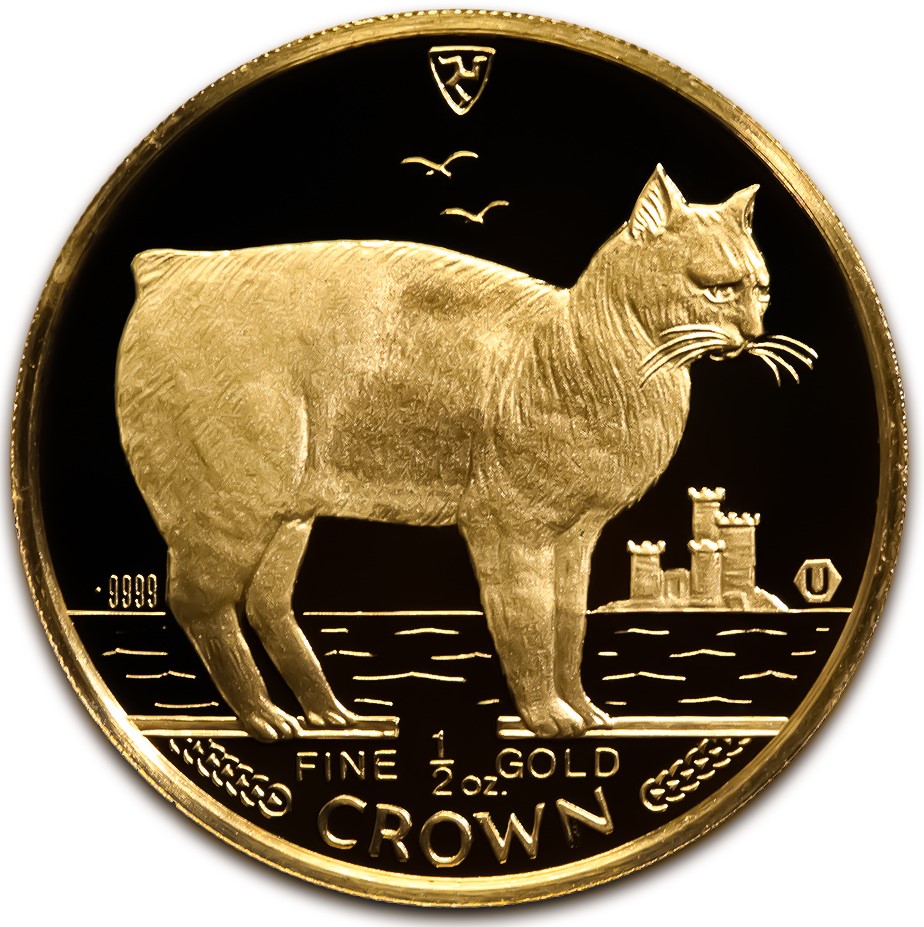
The Manx cat is a breed of domestic cat that originates on the Isle of Man, with a mutation that shortens the tail. When I was a child, I had a gray Manx cat named Chablis that we called Chebbie.
The Isle of Man is in the middle of the Irish Sea at the center of the British Isles. It is 33 miles (53km) long and 13 miles (22km) wide at its broadest point, with a total land area of 227 square miles (572 square km).
Large-scale immigration from Ireland in the fifth century AD sparked the island’s Gaelicisation, when Irish missionaries following the teaching of St. Patrick began settling on the island. As shown by Ogham inscriptions, and the Manx language emerged. It is a Goidelic language that shares a strong relationship with Scottish and Irish Gaelic. (2)
The Isle of Man was not directly affected by the upheaval of Celtic “Iron Age” civilization brought about by the Roman conquest of Britain from 43 to around 410 A.D., and a Roman naval presence in the Irish Sea might have even had a stabilizing effect. Manx civilization barely changed until the Vikings arrived in the area in 800 A.D., except for the introduction of a new religion, Christianity. (2)
The Anglo-Saxon King Edwin of Northumbria conquered Man in the seventh century, and he thereafter invaded Ireland from Man. It’s unclear how much of an impact the Northumbrians had on Man, but relatively few place names in Man have Old English roots.
At the end of the eighth century, Vikings arrived. They created Tynwald and made other territorial divides that are still in place today. In the Treaty of Perth in 1266, King Magnus VI of Norway gave the islands to King Alexander III of Scotland. However, it wasn’t until the Manx were vanquished in the Battle of Ronaldsway, close to Castletown, in 1275 that Scottish authority over Man was solidified.
In 1399, the island was placed under the feudal dominion of the English Crown following a period of alternate governance by the Kings of England and Scotland. Although the island did not join the Kingdom of Great Britain in the 18th century or its successors, the United Kingdom of Great Britain and Ireland or the current United Kingdom of Great Britain and Northern Ireland, the lordship was returned to the British Crown in 1765. Its internal self-government has never been lost. The first national legislature in the world to provide women the right to vote in a general election was the Isle of Man Parliament in Tynwald in 1881, albeit married women were not granted this privilege. (4)
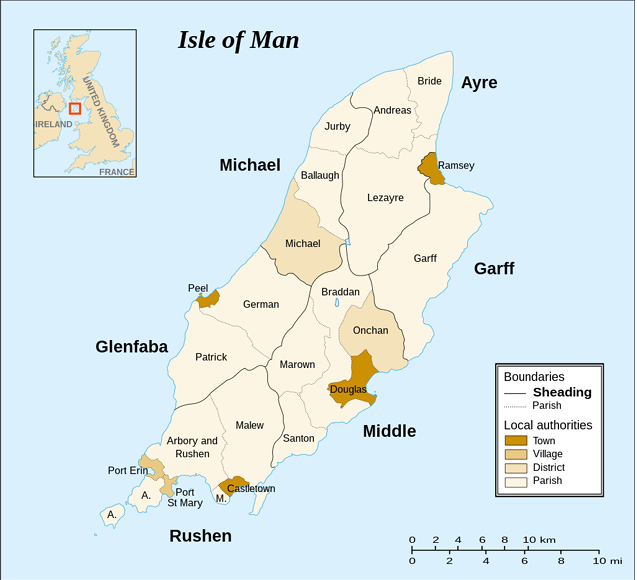
I have paternal DNA matches to others with ancestry from the Isle of Man, including matches to those with Moore ancestors from Patrick, Arbory and Rushen, and Braddan. As well as matches to those with Cannel ancestors from Malew, Arbory and Rushen, Ballaugh, and Michael.
If you want to learn more about my Lamb/Moore and Doty ancestors, click on the surnames.
My direct line:
- Jo Cannell and wife.
- Gilbt Cannell and wife.
- Jo Cannell and wife.
- Jane Cannell and James Moore.
- Robert Moore and Hannah Manwaring.
- Sarah Moore and Thomas Lamb.
- John Lamb and Prudence Featherstone.
- Mary Ann “Polly” Lamb and Samuel Doty.
- Rev. John M Doughty / Doty and Mary Jane “Jane” McGuire.
- McGuire Doughty and Mary Ann Gooden.
- John Louis Doughty and Cynthia Ann Barrett.
- Mary Adalaide “Mame” Doughty and James Francis Fay. (My great-grandparents).
References:
- Cannell Surname – en.wikipedia.org
- Celtic Farmers – gov.im. Isle of Man government. 16 March 2012. Archived from the original on 16 March 2012. Retrieved 2 May 2025.
- Magnus 3 Olavsson Berrføtt – Norsk biografisk leksikon. Store norske leksikon (in Norwegian). 28 September 2014. Archived from the original on 15 May 2013.
- Tynwald, the parliament of the Isle of Man: Adult suffrage. Tynwald.org.im. 2017. Archived from the original on 26 April 2021. Retrieved 2 May 2025.
To learn more about the Isle of Man:
- Traditional & Cultural. Visit Isle of Man. visitisleofman.com
- 5 Fascinating Facts About the Culture of the Isle of Man. visitisleofman.com
- Isle of Man. historic-uk.com
To learn more about the Manx Cat:
- The history and ‘tails’ of the Manx Breed. A brief history. manxcatcafe.co.uk
- Manx Cat | The History, Traits, and Care. July 6, 2024. felinefancy.co.uk
If you use any information from my blog posts as a reference or source, please give credit and provide a link back to my work that you are referencing. Unless otherwise noted, my work is © Anna A. Kasper 2011-2026. All rights reserved. Thank you.


 Anna's Musings & Writings
Pingback: My Quaker Lamb and Moore Ancestors in Virginia and North Carolina. Later Doty/Doughty Primitive Baptists in Kentucky, Indiana and Illinois. | Anna's Musings & Writings