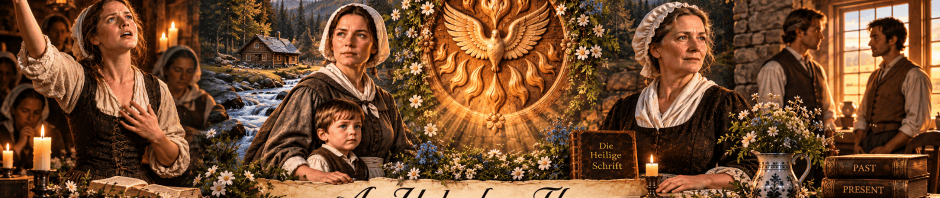
When we look at early American family trees, we often see the names of pioneer matriarchs reduced to a single line: a birth year, a marriage date, and a string of children. We assume they lived quiet, conventional lives, baking bread in log cabins and quietly nodding along in church.
But if you look closely at the roots of our early Pennsylvania Casebeer (Käsebier) line, you will find a woman whose life reads like an absolute movie!
Maria Elisabeth Mathes was not a quiet farm girl. She was an international religious radical, filled with the Holy Spirit, she was an outlawed teenage prophetess, a refugee bride, and a fierce survivor who shifted her faith to keep her children safe in a brutal new world.
From the cobblestone streets of Germany to the frontier of Pennsylvania, this is the story of her extraordinary spiritual transformation.
Act I: From Pietism to Prophecy (Halle, ca. 1695–1714)
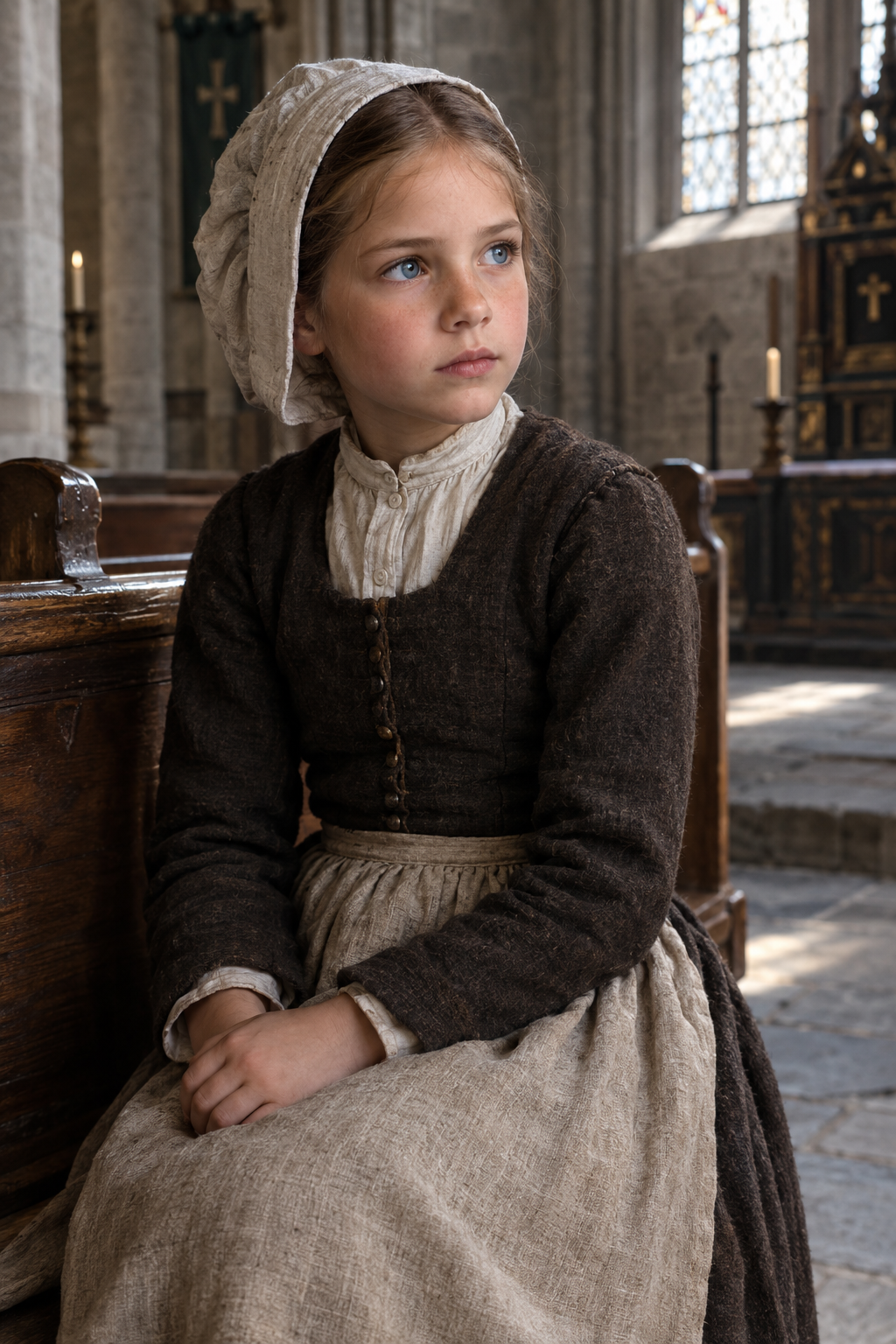
Maria Elisabeth Matthes was born about 1695 and was living in Halle (Saale), Germany, by 1714. Elisabeth grew up within this intensely religious world. Her father, Christian Matthes, was employed at the Pädagogium within the Francke Foundations, where contemporary sources describe his position by the Latin term Famulus, roughly meaning an institutional assistant or attendant.
🔎 HISTORICAL FOCUS: The Francke Foundations at Halle
Founded beginning in the 1690s by the Pietist theologian August Hermann Francke, the institutions at Halle grew from Francke’s famous orphanage into an extraordinary religious and educational complex. They included schools, the Pädagogium, printing and publishing enterprises, a library, collections, and other institutions that made Halle an important center of German Pietism.
Maria Elisabeth grew up within this intensely religious world. Her father, Christian Matthes, was associated with the Pädagogium of the Francke Foundations, where historical accounts describe him as a Famulus. Elisabeth therefore did not encounter radical religion from a secular background; she came from an environment already steeped in Pietist discipline, Scripture, education, and religious reform.
That context makes what happened in 1714 all the more striking. When Elisabeth became involved with the True Inspirationists, she entered a movement that went beyond the institutional Pietism surrounding her. The Inspirationists believed that God could speak directly through chosen human instruments, sometimes accompanied by ecstatic states. At only eighteen, Elisabeth herself became one of those prophetic voices.
Religion in early eighteenth-century Halle was deeply intertwined with institutional and civic life. Elisabeth grew up surrounded by Pietist religious discipline, Scripture, education, and expectations about proper Christian conduct.
But as a teenager working as a maidservant (Magd), Elisabeth was drawn into something far more radical. By January 1714, the eighteen-year-old had become involved with the True Inspirationists, a movement whose followers believed that God could speak directly through chosen human instruments rather than solely through established clergy and traditional religious structures.
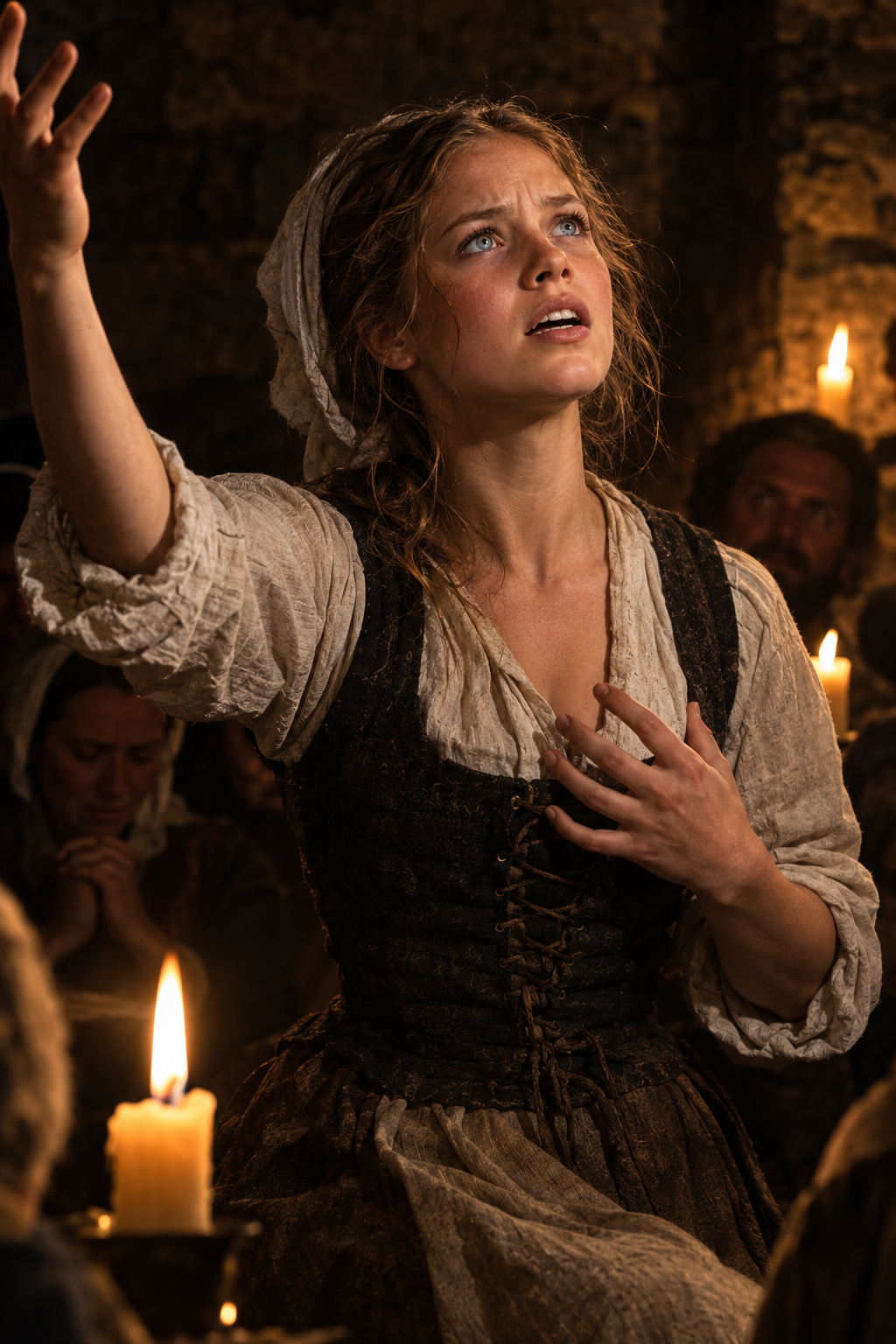
Elisabeth began experiencing extraordinary ecstatic states. Contemporary accounts describe trance-like episodes and bodily movements accompanying her inspirations. On 14 January 1714, she delivered what is identified in the surviving historical record as her first prophetic utterance. Within the movement she came to be regarded as a Werkzeug—an “instrument” through whom divine inspiration could speak.
Act II: Doubt, Miracles, and a Father’s Intervention (1714–1716)
As Elisabeth’s ecstatic experiences attracted attention in Halle, extraordinary stories began circulating about the young prophetess. She was credited with miraculous acts—including extinguishing a fire and healing a sick Frenchman. But when authorities investigated these reports, the stories proved more complicated than rumor suggested.
More revealing was Elisabeth’s own uncertainty. When questioned by the theologian Dr. Paul Anton, the eighteen-year-old reportedly acknowledged that she did not possess an inner certainty that her inspirations truly came from God. For a young woman already being treated as a prophetic instrument—a Werkzeug—this was an extraordinary admission. Elisabeth believed deeply in Jesus, but she was still struggling to understand what was happening to her.
Her father, Christian Matthes, did not simply pull his daughter away from the controversy. According to Adolph Zahn’s later account, Christian encouraged Elisabeth back toward the Inspirationist experience. The consequences reached beyond his daughter: Christian was punished by losing his position as a Famulus at the Pädagogium of the Francke Foundations.
Whatever doubts Elisabeth carried, the voice had not fallen silent. On 15 February 1714, another inspired utterance was recorded from the young maidservant.
Elisabeth’s prophetic journey did not end in Halle. During the summer of 1714, she and Franziska Sophia Pott traveled to Berlin, reportedly “on command of the Spirit.” There they joined the small circle of Inspirationists who continued to meet secretly despite growing opposition from authorities.
Elisabeth and Franziska were eventually arrested and confined in Berlin’s Friedrichs-Hospital. Clergymen visited them repeatedly, attempting to persuade the young women to abandon the Inspirationist movement.
For Elisabeth, the experience appears to have become a profound spiritual turning point. On October 14, 1714, she wrote to her brother in Halle. Her words reveal both extraordinary determination and something more complicated: a young woman beginning to question whether she fully understood the experiences that had transformed her life.
„Ich fürchte mich im geringsten nicht, wenn ich auch sollte die Zeit meines Lebens in Verfolgung und Schmach herumgehen, wenn ich nur Jesum bei mir habe …“
“I am not in the least afraid, even if I should spend my whole life amid persecution and disgrace, if only I have Jesus with me …”
— Maria Elisabeth Matthes, letter to her brother in Halle, 14 October 1714
These are not the words of someone whose faith had simply disappeared. Yet the same letter reveals a more complicated young woman. Elisabeth acknowledged that extraordinary things had happened to her—events others regarded as great acts—but confessed that she herself had never been able fully to comprehend them. They had remained obscure to her. Her faith in Jesus was unwavering; her understanding of what had happened to her was not.
It was along this exact refugee pipeline in the Wetterau region that she crossed paths with Georg Käsebier. Georg was a tailor’s son who had also been forced to flee his home in Dessau due to his radical Separatist beliefs. United by shared exile, shared danger, and a mutual hunger for true faith, the two young radicals fell in love.
Act III: The Wilderness Sanctuary (Schwarzenau, 1716–1724)
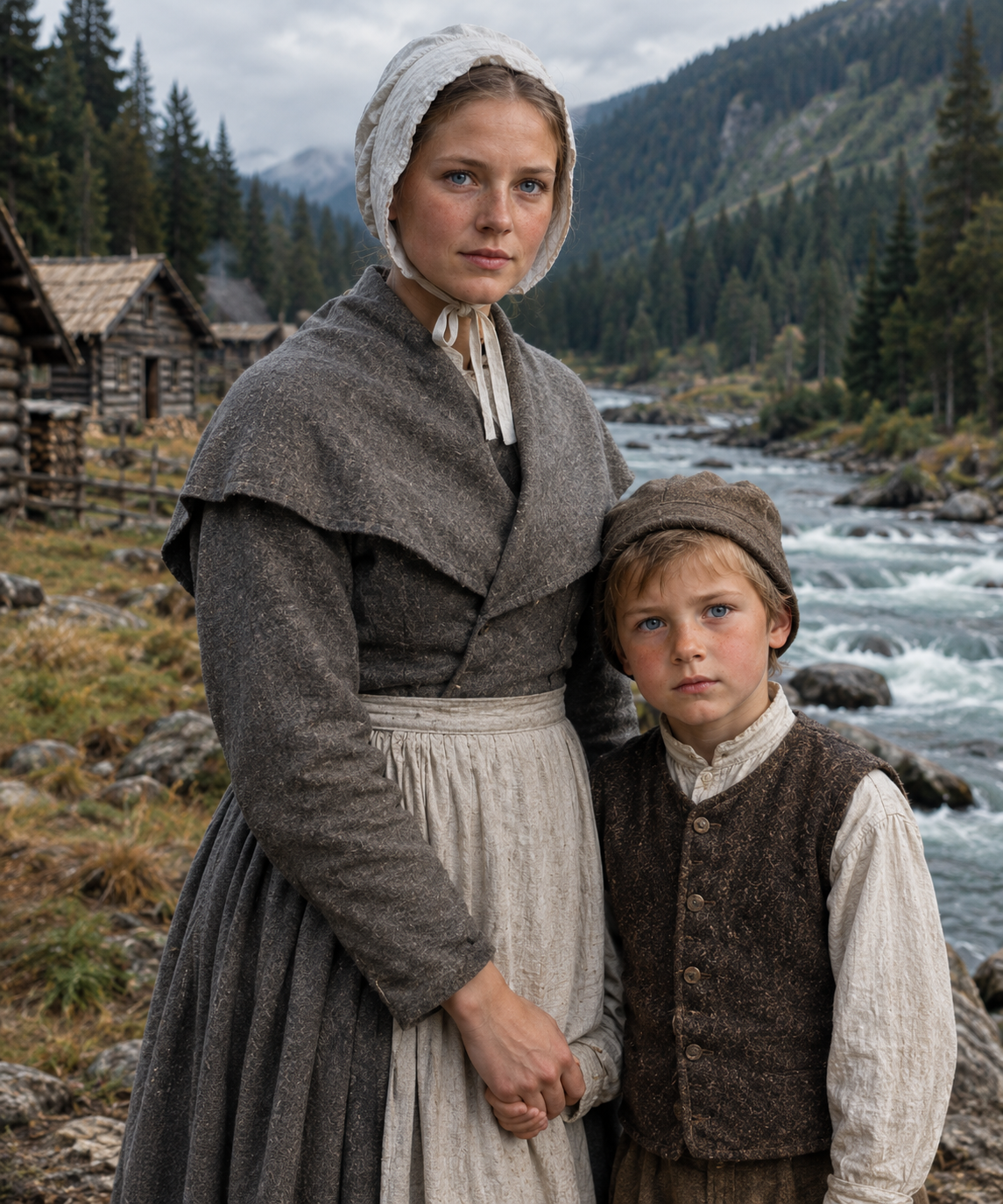
Together, Elisabeth and Georg fled further west into the mountains, arriving in the legendary sanctuary valley of Schwarzenau. Here, they encountered Alexander Mack’s newly formed Dunker (Schwarzenau Brethren) movement.
The fiery young prophetess of Halle gradually disappears from the historical record. In the years that followed, Elisabeth’s life became intertwined with the Schwarzenau Brethren, or Dunkers, and the surviving evidence begins to reveal her in a different role—as a wife, mother, and eventually an immigrant bound for Pennsylvania. She and Georg married in the Wittgenstein region, and around 1718 their son Gottfried was born.
🔎 SIDEBAR: What Was a “Dunker” Baptism Really Like?
To understand the world Elisabeth and Georg joined, you have to understand the radical act that gave them their nickname. The word “Dunker” came from the German word tunken, meaning “to dip” or “to dunk.”
Because they strictly rejected infant baptism as a corrupt invention of the state, adult converts had to be re-baptized in a way that shocked conventional European society.
The Setting: The congregation would gather on the banks of a freezing mountain river, like the Eder River in Schwarzenau or later the Wissahickon Creek in Pennsylvania.
The Action: The candidate would walk out into the cold, flowing water and kneel. The minister would then dunk them completely face-forward into the water three distinct times—once for the Father, once for the Son, and once for the Holy Ghost.
The Defiance: In the 1700s, this was a radical, illegal political statement. Crowds of hostile locals would often gather on the riverbanks to jeer and mock the “New Baptists.” Because Elisabeth and Georg fully embraced this faith, they intentionally hid young Gottfried’s birth from local state-church logs, keeping him completely off the government’s grid.
Act IV: The Atlantic Tragedy & The Germantown Crisis (1724)
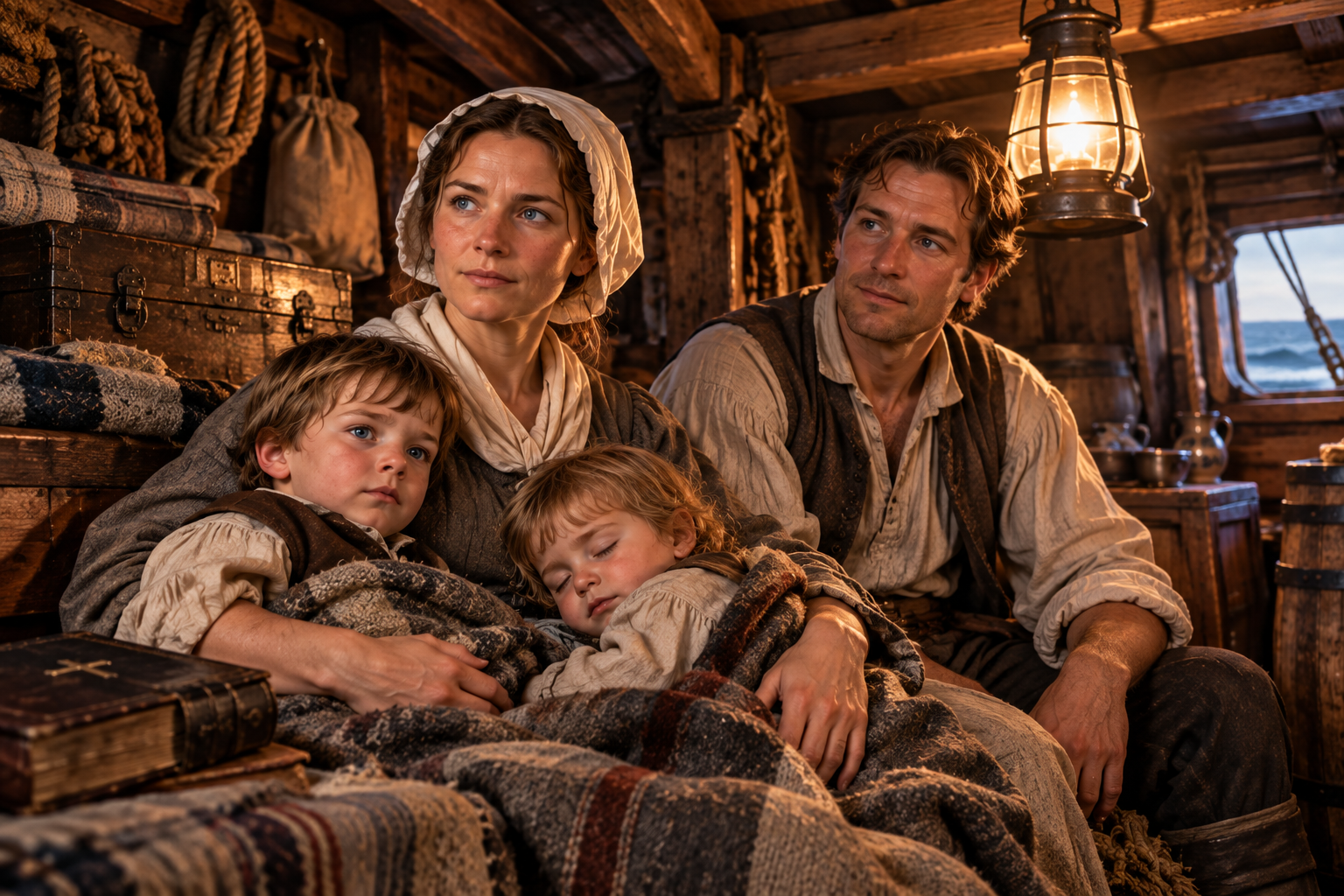
The Käsebiers were desperately poor. Local records describe the family as being in a “notoriously poor state”—raising an intriguing question that the surviving records have not yet answered: how did a nearly destitute young couple with two children finance passage across the Atlantic? What we do know is that they did not travel alone. In 1724, Georg, Elisabeth, and their sons made the journey in company with fellow religious refugees, including Johann Christoph Sauer and his family. Their shared voyage reveals the strength of the religious and social networks surrounding them, even if the precise source of the Käsebiers’ passage money remains unknown. Their route carried them through Rotterdam, Hellevoetsluis, and Dover before they finally reached Philadelphia in November 1724. Georg’s surviving letter home preserves a remarkable firsthand account of that Atlantic journey.
They survived the treacherous Atlantic crossing, only for a nightmare to unfold upon arrival: just weeks after stepping ashore, Georg contracted a severe ship fever. He passed away on December 19, 1724, in a crude log cabin in Germantown.
🔎 HISTORICAL FOCUS: Pennsylvania’s “Plain People”
When Maria Elisabeth and her young boys arrived in Pennsylvania, they entered a remarkable religious landscape. German-speaking settlers included Schwarzenau Brethren (Dunkers), Mennonites, Amish, German Reformed, Lutherans, Moravians, and other smaller religious communities. Some of the separatist groups would eventually become collectively associated with Pennsylvania’s “Plain People,” but they were never a single religious community.
The Mennonites and Amish shared Anabaptist roots, while the Schwarzenau Brethren emerged separately in Germany in 1708 from a mixture of Radical Pietist and Anabaptist influences. The groups differed in theology, worship, church discipline, baptismal practice, and community organization. Yet they also shared some important convictions—particularly an emphasis on simple Christian living, separation from worldly excess, and, among Mennonites, Amish, and Brethren, strong traditions of nonresistance and opposition to oath-taking and military participation. The early Brethren specifically practiced adult baptism by immersion and rejected infant baptism.
Their clothing should not be imagined as one identical “Plain” uniform. Simplicity and modesty were valued, but each community developed its own customs, and some of the highly recognizable forms of Plain dress associated with these groups today developed or became more standardized later. One history of the Brethren specifically notes that there is no evidence that the earliest Brethren immigrants arrived in America wearing a distinctive denominational attire.
These communities nevertheless inhabited an overlapping Pennsylvania German world. Shared language and regional origins could help immigrants form networks of neighbors, congregations, kin, and fellow migrants while maintaining very real religious differences. For a newly widowed immigrant such as Elisabeth, the Brethren community to which her family was connected could provide an especially important social and religious network.
Gottfried and Christian Gottlieb spent their early Pennsylvania years within a complex German-speaking immigrant world in which family, faith, migration, and community were closely intertwined. As they grew older, however, each would make his own choices about where—and within which religious community—his future would lie.
Act V: The Ultimate Compromise (The German Reformed Faith Matriarch)
The Käsebier family’s connection to the Brethren did not end when they crossed the Atlantic. Their immigrant party was received into an existing German religious network in Pennsylvania. But only weeks after reaching their new home, tragedy struck. Georg became seriously ill and died at Roxborough on 19 December 1724, leaving Elisabeth a young widow with two small children.
The family’s remarkable letter home preserves the tragedy in their own voices. Georg had begun the long letter on 7 November, describing their Atlantic voyage and first days in Pennsylvania. After his death, Elisabeth herself added a postscript describing her husband’s final weeks. Her words transformed what had begun as an immigrant’s report from the New World into something far more personal: a widow’s account of the loss of her husband only weeks after their arrival.
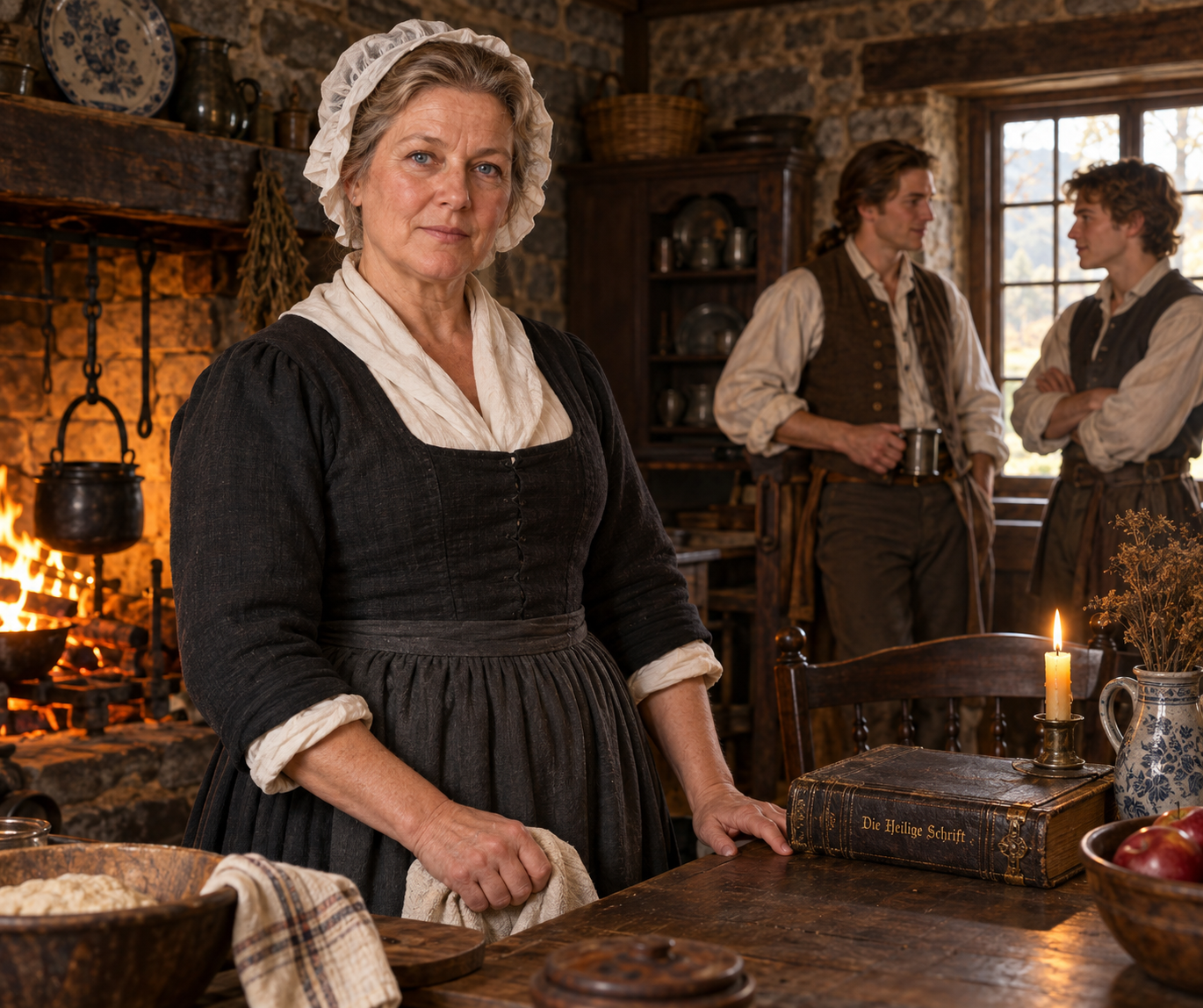
For the next several years, Elisabeth remained closely connected to her Dunker protectors. Their support had helped her family survive its most desperate moment. But for a widowed immigrant mother with two growing sons, remarriage could offer something a religious community alone could not guarantee: a permanent household, economic stability, and long-term security. In time, Elisabeth married the German immigrant Andreas Bossart.
With Andreas, Elisabeth entered a very different religious world. He belonged to the German Reformed church, and the surviving records reveal a striking change in the family’s religious practice. The young woman once known in Halle for ecstatic prophecy was now participating in an established church tradition. Most tellingly, the children she had with Andreas were baptized as infants by Reformed clergy—a practice sharply at odds with the believer’s baptism embraced by the Schwarzenau Brethren.
It was a remarkable full circle. The eighteen-year-old Werkzeug who had once spoken in ecstatic inspiration now appears in the records as the mother of a German Reformed family in Pennsylvania. Whatever Elisabeth herself believed privately—and the records cannot tell us that—the outward religious life of her household had undeniably changed.

The Legacy of the Inward Flame 🕊️🔥
A lifelong journey shaped by faith, upheaval, and the fire of the Holy Spirit.
Did Elisabeth ever truly abandon the radical faith of her youth? The surviving records cannot tell us what remained in her heart. Outwardly, her religious life changed dramatically. The ecstatic teenage prophetess of Halle eventually appears in Pennsylvania within a German Reformed household, where her younger children were baptized as infants. Yet I like to think that the inward flame never really went out.
And then, a generation later, an extraordinary thread from the family’s German past appears again. When Gottfried’s son David Casebeer was baptized, Daniel Womelsdorf served as an official baptismal sponsor. Daniel—also our ancestor—belonged to the Womelsdorf family whose roots reached back into the same Wittgenstein world inhabited by the Käsebiers before their emigration. Decades after those families left Germany, their names appear together again in a Pennsylvania church record.
The old connections had survived the Atlantic crossing. Families whose paths had first crossed in the German lands appeared together again in Pennsylvania, their lives intertwining across generations.
Maria Elisabeth’s journey had carried her from ecstatic prophecy in Halle, through religious exile and the Brethren communities of Germany, across the Atlantic, through sudden widowhood, and finally into the documented life of a German Reformed family in colonial Pennsylvania. We cannot know whether the young prophetess ever truly disappeared inside the older woman.
I like to believe she didn’t.
Perhaps the fire simply changed the way it burned. 🕊️🔥

My Direct Line:
- Maria Elisabetha Mathes and Johann Georg Käsebier
- Gottfried “Godfrey” Käsebier and Agnes Kerlin/Corleen
- Catherine Elizabeth Kasebier and Jacob Womelsdorf
- Elizabeth Barbara Womelsdorf and Peter Losure/Lozier
- Joseph Losure/Lozier and Sarah Lozier (they were Lozier/Losure first cousins)
- Nancy M. Losure and Lorin Richard Cole
- Joseph Edward Cole and Anna Cora Prindle (my great-grandparents)
💡 DID YOU KNOW? From a German Cradle to American Icons 🕊️🔥
Many American descendants carrying variants of the Käsebier/Casebeer name trace their ancestry to Johann Georg Käsebier and Maria Elisabeth Mathes, who arrived in Pennsylvania with their two young sons in 1724. After Georg’s sudden death only weeks later, Elisabeth was left to build a new life in Pennsylvania with her children. The survival of that little immigrant family preserved our direct line—and their descendants would eventually leave their mark on American history in worlds as different as music, business, and national politics.
The Master of Swing 🎺 In the early 20th century, the creative flame ignited directly within our branch of the tree with her descendant Nate Kazebier (1912–1969). Spelling his name with a phonetic “Z,” Nate became a world-class jazz trumpeter during the height of the Big Band era, playing as a key featured musician in Benny Goodman’s legendary orchestra and recording sessions alongside Gene Krupa.
The Fortune 500 Corporate & VP Leader 💼 Through the lineage of Elisabeth’s younger toddler who survived the ocean crossing, Christian Gottlieb, the family tree stretches straight into modern political history. His descendant, Charity Mariah Casebeer (1829–1912), married a preacher named Elijah Montross. Their direct lineage produced Carly Fiorina, the groundbreaking former CEO of Hewlett-Packard, 2016 U.S. presidential candidate, and historic 2016 Vice Presidential running mate.
From a destitute widow surviving a freezing log cabin to names celebrated in historic jazz halls, and the highest corridors of American industry and power, the “Inward Flame” of Elisabeth’s family truly refused to be put out.

📚 Further Reading & Deep Dives
If you would like to read about our famous kin, or explore the fascinating world of the early German “Plain People” and the radical movements that shaped Elisabeth’s world, you can explore these digitized books and websites directly online:
- European Origins of the Brethren by Donald F. Durnbaugh – A monumental sourcebook containing translated primary documents, court cases, and early exile logs tracking the family’s original footsteps through Germany.
- Fruit of the Vine: A History of the Brethren, 1708–1995 by Donald F. Durnbaugh – The most thorough, readable narrative account tracing the complete lifespan of the church from its beginnings at the Eder River down to the modern era.
- The German Sectarians of Pennsylvania: 1708–1800 by Julius Friedrich Sachse – A deeply detailed, highly illustrated look at the day-to-day life, log-cabin survival, and religious trials of the early German pioneer waves in Germantown.
- Schwarzenau Brethren – History and beliefs of the Schwarzenau Brethren aka the Dunkers.
- The Emergence of Radical Christianity: The Mysical Dunkers, its Antecedence, Hermetical Founding, Germanic Disaspora, and its Apogee on the Frontier of Colonial America. By Daniel J. Geyer.
- Who Were the German Baptist Brethren? WordPress Blog – PORTRAIT of a PACIFIST as a PATRIOT
- Plain people – Anabaptists (Amish and Mennonites), Quakers, Schwarzenau Brethren (Dunkers), Hutterites, and Early Methodists.
- Nate Kazebier – Biography at CodaMusic
- Carly Fiorina – Biography at America Made in Virigina
Sources & Historical Bibliography
To uncover the remarkable life of Maria Elisabeth Mathes, this research bypassed generic internet trees and relied strictly on primary colonial documents, original German church records, and peer-reviewed historical studies:
-
Durnbaugh, Donald F. John George Käsebier, John Christopher Sauer: Two Early Letters from Germantown. The Pennsylvania Magazine of History and Biography, vol. 84, no. 2, April 1960, pp. 219–233. (This definitive study preserves the original 1724 correspondence discovered in the European princely archives of Berleburg, detailing Georg’s birth, his sudden death, and the moving postscript letter written by a widowed Elisabeth thanking the Germantown community).
-
Hinke, William John. A History of the Goshenhoppen Reformed Charge, 1727–1819. Pennsylvania-German Society, 1920. (This volume preserves the translated infant baptism registries and family communion records for Andreas Bossart’s household, documenting Elisabeth’s integration into the German Reformed faith on the Pennsylvania frontier).
-
Evangelische Landeskirche Anhalts. Kirchenbuch Dessau, St. Marien & Dessau-Großkühnau: Taufen und Trauungen (1578–1724). Digitized scans hosted via the German Church Archive Portal (Archion.de). (Primary parish registers confirming the local ancestral footprint of the Käsebier and Kühn families in the Anhalt-Dessau region prior to their flight west).
-
Evangelische Kirche im Wittgensteiner Land. Kirchenbücher und Ortssippenbücher der Pfarrei Bad Berleburg und Schwarzenau (1711–1724). (Regional land registry records, tax lists, and parish entries documenting the family’s refugee years in the Eder River valley).
-
Communal Societies Archive. The Origins of the True Inspired of Amana. Grand Valley State University, Research Collections. (Academic background charting the Community of True Inspiration [Die Inspirierten], explicitly tracking Maria Elisabeth Mathes’ early 1714 radical campaigning and illegal underground sacraments in Halle).
-
Zahn, Adolph. Die Zöglinge Calvins in Halle an der Saale. Halle, 1864. Includes a reproduction of Maria Elisabeth Matthes’s letter to her brother in Halle, dated 14 October 1714, describing her willingness to endure persecution and disgrace for Jesus and reflecting on her difficulty understanding the extraordinary experiences that had occurred to her. German original; English translation in this article by the author.
-
Archiv der Franckeschen Stiftungen, Halle. Maria Elisabeth Matthes person index and associated manuscripts. The archive identifies her as Maria Elisabeth Matthes, born 1695, a maid (Magd), follower of the Inspired, with ecstatic experiences in Halle in 1714, and daughter of Christian Matthes. It also links her to Francke’s 1714 diary and multiple contemporary letters.
-
Maria Elisabeth Matthes Francke Foundations Digital Collections August Hermann Francke correspondence, 1714. Contemporary correspondence involving Christian Matthes and Maria Elisabeth together, including Francke’s letter of 8 March 1714 and correspondence with the Magdeburg government/consistory in April. That’s excellent evidence for the father/daughter identification and the Halle controversy.
-
Francke letter of 8 March 1714 August Hermann Francke, Tagebuch 1714. The archive confirms that Francke’s surviving 1714 diary has been published in a scholarly edition edited by Veronika Albrecht-Birkner and Udo Sträter, August Hermann Francke: Tagebuch 1714 (Franckesche Stiftungen, 2014).
-
Wittgenstein Ortsfamilienbuch (OFB), Georg Käsebier entry. This has become a major source, particularly because it points us to the underlying archival records rather than merely supplying genealogy.
Image Credits
All historical portraits, period recreations, and symbolic artwork featured throughout this story were conceptually designed using primary historical data and image prompts I provided and were generated via ChatGPT / DALL-E 3 AI technology.
Unless otherwise noted, all original research, transcriptions, and written content are © Anna A. Kasper 2011–2026. All rights reserved. Please do not re-post full text or screenshots without permission and proper attribution. Thank you for respecting independent genealogical research!


Thank you for sharing this fantastic story of your ancestress’ life. Maria Elisabeth was not just a witness but a participant in the religious transformations of the early 18th century. I too have many Anabaptist types (Brethren and Mennonites mostly) in my ancestry and often wonder how they came to turn away from the established, widely embraced and approved religions. I’m thankful they did, although finding genealogical records are more difficult to find. And, I wonder if any had similar experiences to your Maria Elisabeth.
LikeLike
Pingback: The Prophet, the Prophetess & the Chapel of the Bells | Anna's Musings & Genealogical Writings