My 39th (and 40th) Great-grandfather Charlemagne, Holy Roman Emperor. 52 Ancestors, Week 41: Most.

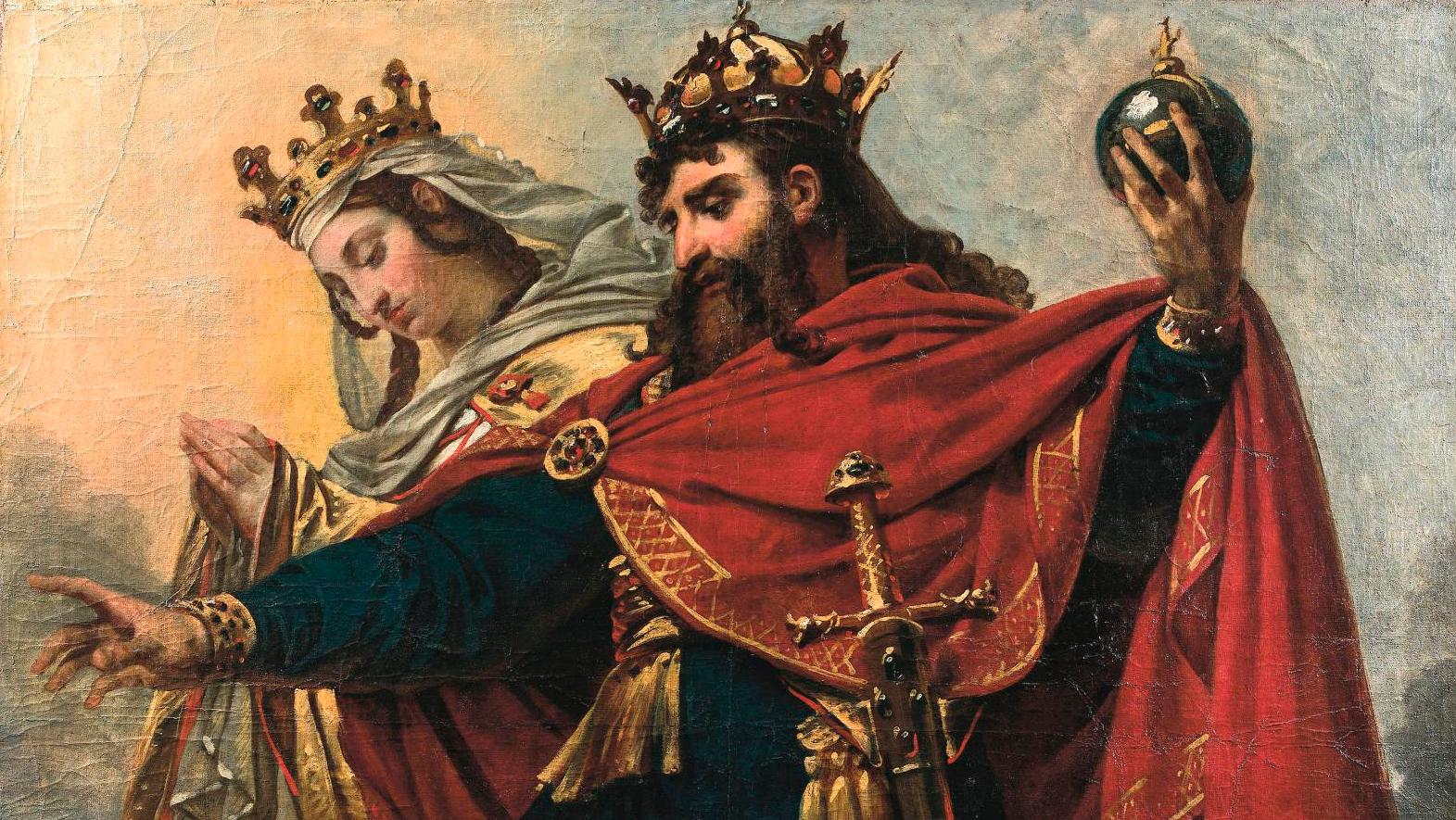
Above painting is by Antoine-Jean Gros, aka Baron Gros (1771-1835), Charlemagne and Hildegard, sketch for the dome of the Panthéon, original canvas.

This week’s writing prompt is most. I decided to discuss my 39th (and 40th) great-grandfather, Charlemagne, who was a Holy Roman Emperor in the 9th century. I am only one of his innumerable descendants. He has countless offspring. I venture to guess he has the most known descendants of any of my ancestors. He had at least 18 children with his wives and concubines, including Charles the Younger, Pippin the Hunchback, and Drogo of Metz. 

Many Europeans and Americans trace their ancestry back to Charlemagne. Some of the Mayflower Pilgrims in America, being of British ancestry, are included in his descendants. The primary line of his Carolingian family became extinct in 987, however, the secondary branches were very fruitful, leading to the belief that around 30% of individuals with European ancestry are related to Charlemagne.

Charlemagne is renowned for his achievements in uniting Western Europe, leading the Carolingian Renaissance, implementing religious reforms, and creating the seignorial system. He is frequently mentioned as the Originator of Western Culture.

Photo above is from Cindy Crawford’s Instagram. My Trowbridge/Marshall cousin and fellow descendant of Charlemagne.

My ancestry can be traced back to Charlemagne (Charles the Great) and his spouse Hildegard, the daughter of Gerold of Anglachgau. Hildegard had a noble background, with Frankish and Alemannian ancestry. I discovered my connection to Charlemagne when Cindy Crawford was revealed to be his descendant on the TV show Who Do You Think You Are? I share in common with her, English and Colonial American Trowbridge/Marshall ancestors.

The list of famous descendants of Charlemagne is HUGE! Some famous royal descendants include Henry VIII and four of his wives: Anne Boleyn, Jane Seymour, Catherine Howard and Catherine Parr. Also Charles, the current King of England (via his mother Elizabeth II), Princess Diana (via a different line than Charles), Catherine Middleton, Princess of Wales, and Megan Markle.

The list comprises numerous US Presidents such as George Washington, William Henry Harrison, Thomas Jefferson, James Madison, John Quincy Adams, Benjamin Harrison, Zachary Taylor, Grover Cleveland, Calvin Coolidge, Theodore Roosevelt, Rutherford B. Hayes, Ulysses S. Grant, William Howard Taft, Warren G. Harding, Herbert Hoover, Franklin D. Roosevelt, Richard Nixson, Gerald Ford, George H.W. Bush, George W. Bush, and Barack Obama.

Photo above is by Andrew Eccles via Getty. Dancing siblings of Dancing with the Stars fame, Derek and Julianne Hough are descendants of Charlemagne.

The list also features numerous First Ladies and U.S. Vice Presidents, along with writers, actors, inventors, politicians, astronauts, athletes, and other well-known individuals. Some of the performers included in the roster are Humphrey Bogart, Lillian Gish, Orson Welles, Steve McQueen, Judy Garland, Bette Davis, Joanne Woodward, Christopher Reeves, Matt Damon, siblings Jake and Maggie Gyllenhaal, Vincent Price, Bing Crosby, sisters Olivia De Havilland and Joan Fontaine, Katharine Hepburn, Marilyn Monroe, Lucille Ball, Elizabeth Montgomery, Geena Davis, Kyra Sedgwick, Tilda Swinton, Jodie Foster, Jennifer Lawrence, Tim Robbins, Tom Hanks, Richard Gere, Glenn Close, Angelina Jolie, Kevin Bacon, Ben Affleck, Hugh Grant, Kit Harington, and Brad Pitt.

The descendency lines from Charlemagne that I know of are both on my mother’s side, with one being closer than the other. Here is the first line:

  1. Charlemagne, Holy Roman Emperor and Queen Hildegard.
  2. Holy Roman Emperor Louis I and Ermengarde of Haspengau.
  3. Lothair I, Emperor of the Carolingian Empire and Ermengarde of Tours.
  4. Ermengarde of Lorraine and Gilbert, Count of Maasgau.
  5. Rainier I, Duke of Lorraine and Alberade.
  6. Giselbert, Duke of Lorraine and Gerberga of Saxony.
  7. Alberade of Lorraine and Renaud, Count of Rheims and Roucy.
  8. Giselbert, Count of Roucy.
  9. Ebles I, Count of Rheims and Roucy, Archbishop of Rheims and Beatrix of Hainaut.
  10. Adelaide (Alice) de Roucy and Hilduin IV, Count of Montdidier.
  11. Marguerite (Margaret) de Roucy (aka Margaret of Montdidier) and Hugh I, Count of Clermont.
  12. Adeliza (Adelise/Alix) de Clermont-en-Beauvaisis and Gilbert Fitz Richard, Lord of Clare
  13. Richard Fitz Gilbert de Clare and Alice (Adeliza) (daughter of Ranulf Meschin, 3rd Earl of Chester and Lucy of Bolingbroke).
  14. Roger de Clare, 2nd Earl of Hertford and Maud de St. Hilary (daughter of James de St. Hilary and Aveline).
  15. Aveline de Clare, Countess of Essex and Geoffrey Fitz Peter, 1st Earl of Essex.
  16. Hawise Fitz Geoffrey and Reynold De Mohun, II, Lord of Dunster, Somerset.
  17. Alice de Mohun and Robert de Beauchamp, Lord of Hatch.
  18. Humphrey de Beauchamp, Lord of Ryme, Intrinseca, Dorset and Oburnford and Sybil Oliver.
  19. Eleanor Beauchamp and John Bamfield.
  20. John Bamfield and Isabel Cobham.
  21. John Bamfield and Joan Gilbert.
  22. Thomas Bamfield and Agnes Coplestone.
  23. Agnes Bamfield and John Prowse.
  24. Richard Prowse, Gentleman and Margaret Norton.
  25. John Prowse, Lord of Chagford and Joan Orchard.
  26. Robert Prowse and Christian ____.
  27. John Prowse and Alice White.
  28. John Prowse and Elizabeth Colwick/Collack.
  29. Agnes Prowse and John Trowbridge.
  30. Thomas Trowbridge and Elizabeth Marshall. (At this point, my shared ancestry with Cindy Crawford ends. Her line continues with the son Deacon James Trowbridge and his wife Margaret Jackson, mine continues with the son William Trowbridge, Sr. and his wife Elizabeth Lamberton).
  31. William Trowbridge and Elizabeth Lamberton.
  32. Elizabeth Trowbridge and Peter Mallory.
  33. Judith Mallory and Jeremiah Canfield, II.
  34. Pvt. David Canfield and Mary Northrup.
  35. David Canfield, Jr. and Sarah Gray.
  36. Esther Canfield and Amos Prindle.
  37. David Prindle, Sr. and Hannah Elizabeth Greatsinger/Kritsinger.
  38. Daniel Prindle and Sarah Jane “Jennie” Doman.
  39. Anna Cora Prindle and Joseph Edward Cole (my great-grandparents).

The ancestry above demonstrates that Charlemagne is my thirty-ninth great-grandfather. I am the offspring of two of his sons. My ancestry on this first line is via Louis I, Holy Roman Emperor, and his wife Ermengarde of Haspengau. Pepin I, King of Italy, another son of Charlemagne, is also my ancestor, he and one of his unnamed mistresses/concubines. They are the forebears of Beatrix Hainaut (spouse of Ebles I, Count of Rheims and Roucy), located in line #9 mentioned above.

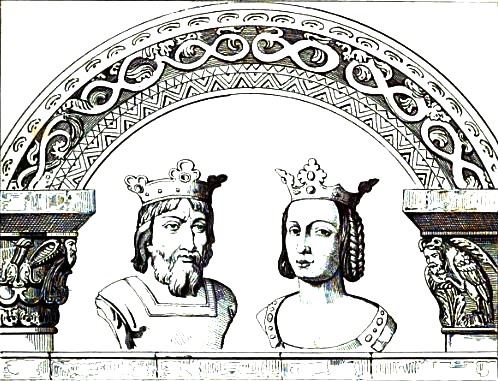
Hugh Capet and his wife Adelaide of Aquitaine. This above image is public domain.

My second line of descendancy is as follows:

  1. Charlemagne, Holy Roman Emperor and Queen Hildegard.
  2. Pepin I, King of Italy and unknown named mistress/concubine.
  3. Bernard, King of Italy and Cunigunda of Laon.
  4. Pepin II, Count of Vermandois and unknown named wife.
  5. Herbert I, Count of Vermandois and unknown partner.
  6. Beatrice of Vermandois and Robert I, King of West Francia.
  7. Hugh the Great, Duke of Franks and Count of Paris and Hedwige of Saxony, daughter of the German king Henry the Fowler.
  8. Hugh Capet, King of the Franks and Adelaide of Aquitaine.
  9. Hedwig of France and Reginar IV, Count of Mons.
  10. Beatrix of Hainaut and Ebles I, Count of Rheims and Roucy, Archbishop of Rheims.

At this point both lines link up together with Beatrix of Hainaut and Ebles I, Count of Rheims and Roucy, Archbishop of Rheims.

To learn more about Charlemagne:

  1. History. Charlemagne (c. 747 – c. 814). BBC (British Broadcasting Corporation).
  2. Charlemagne. By: History.com Editors. Updated: July 22, 2022 | Original: November 9, 2009.
  3. #203: Life of Charlemagne. Christian History Institute.
  4. Catholic Encyclopedia – Charlemagne. newadvent.org
  5. Charlemagne – Wikipedia.

If you’d like to learn more about the 52 Ancestors in 52 Weeks project, please visit here:

52 Ancestors in 52 Weeks.

Or join the Facebook group Generations Cafe.

If you use any information from my blog posts as a reference or source, please give credit. Give a link back to my work that you are referencing. Unless otherwise noted, my work is © Anna A. Kasper 2011-2026. All rights reserved. Thank you.

Posted in 52 Ancestors in 52 Weeks, Catholic, Classic Hollywood Actors, Famous Kin, Genealogy, Religious | Tagged , , , , , , , , , , , , , , , , , , , , , , , , , , , , , , , , , , , , , , , , , , , , , , , , , , , , , , , , , , , | Leave a comment

Gravestone of Sarah Cooper Woodruff. 52 Ancestors, Week 37 & 38, Tombstone & Symbols.

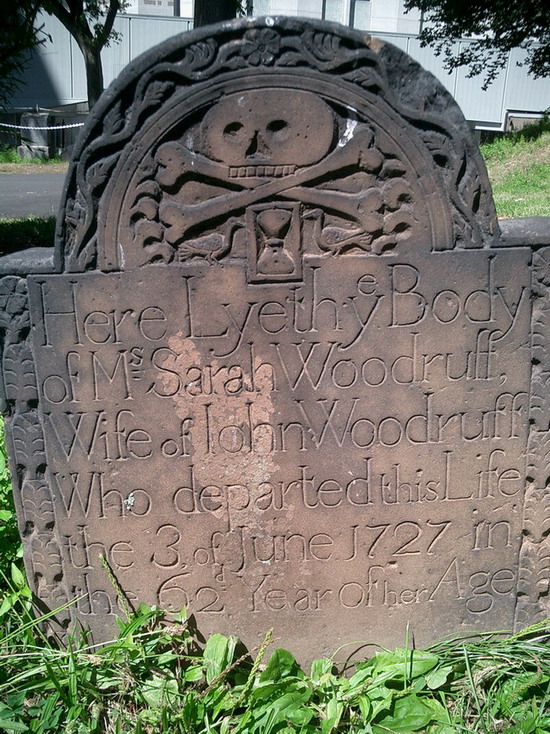
The gravestone of Sarah Cooper Woodruff.

This week’s writing prompt is Tombstone, the following week is Symbol. I decided to write about the interesting gravestone of Sarah Cooper Woodruff. It is pictured above. The combination of the cross bones effigy with an hourglass flanked by doves is a rarely seen arrangement. These symbols on tombstones from this time period are unique.

Sarah was born 17 March 1666 in Springfield, Hampden County, Massachusetts. The daughter of Timothy Cooper and Elizabeth Munson. She married 25 October 1683 in Jamaica, Queens County, New York, to John Woodruff. She died 3 June 1727 in Elizabeth, Union County, New Jersey. She is buried in the First Presbyterian Churchyard in Elizabeth.

Up-close details of the symbols carved on Sarah’s gravestone.

Her brown sandstone grave marker was carved by a craftsman whose name is not known. He was only known as The Old Elizabethtown Soul Carver I. He was active during the 1720’s-30’s. His work is distinguished by highly detailed mortality imagery. This includes the use of skull-with-crossbones soul effigies. Her gravestone shows the Puritanical emphasis on the brevity and fragility of life on earth. The harsh Puritan imagery often included skulls and crossed bones. They also included winged death’s heads and the accouterments of the grave, like the casket or coffin. Burial instruments, like the pick and ax, were also common. Nevertheless, the combination of the cross bones effigy together with an hourglass flanked by doves, is a rarely seen arrangement of symbols. Birds have universally been used to represent spirituality since ancient times. In medieval Europe, the dove represented the Holy Spirit and peace, often appearing in religious art and literature. The peacock, with its resplendent feathers, was a symbol of immortality and resurrection, often found in Christian iconography. In Colonial America, a bird in vines symbolized the soul partaking of celestial food. The dove was a Christian icon of constancy and devotion. To the Puritans the vine also represented fruitfulness, the vine providing refreshment and gladness. The hourglass served as a stark reminder of the shortness of life and the inevitability of death. (1, 2, 3, 4, & 5)

References:

  1. The Profound Symbolism of Birds Across Cultures, Wayne Clark. July 08, 2024.
  2. Sarah Cooper Woodruff, Find-A-Grave.com.
  3. 5 Reasons the Puritans Were So Joyful, Joel R. Beeke. March 30, 2019.
  4. The Symbolism of the Winged Hourglass on 18th-Century Tombstones, Devant La Mort. April 03, 2024.
  5. Winged Soul Effigy, gravleyspeaking (WordPress blog). July 11, 2014

If you’d like to learn more about the 52 Ancestors in 52 Weeks project, please visit here:

52 Ancestors in 52 Weeks.

Or join the Facebook group Generations Cafe.

If you use any information from my blog posts as a reference or source, please give credit. Give a link back to my work that you are referencing. Unless otherwise noted, my work is © Anna A. Kasper 2011-2026. All rights reserved. Thank you.

Posted in 52 Ancestors in 52 Weeks, Genealogy, Religious | Tagged , , , , , , , , , , , , , , , , , , , , , , , , , , , , , , , , , , , , , , , | 1 Comment

My Dutch/German Ancestor Stubble Stubbleson, His Origins, and His Cows 🐄 

This week’s 52 Ancestors in 52 Weeks writing prompt is free space, meaning we can write about anything we want to! I choose to write about my ancestor Stubble Stubbleson in general, and how cool it is that we know the name of two of his 🐄 cows. How often do we know the names of the animals our ancestors had as stock, farm animals, and pets? Especially in Colonial Virginia in the year 1665!

I love cows and think it’s all kinds of cool that I know the names of the cows 🐮 of my 9th great-grandfather!

Luckily, there are some existing records from Colonial Virginia about my ancestor. We know that he was a Dutch (or Deutsch aka German) man, who, if Dutch, probably came to Virginia from the Dutch settlement of New Amsterdam, now known as New York. New Amsterdam was settled by the Dutch in 1624, it was conquered by the English in 1664, recaptured by the Dutch in 1673, and relinquished to the English in 1674. Or he was a German man that migrated to Virginia from New York, Pennsylvania, or Maryland. It is thought that he was a Dutch merchant, but he equally could have been German. He was declared an alien in the 1660s. When he came to Colonial Virginia, as an unnaturalized citizen, he would have been considered an alien, and as thus, he could buy and own property, but when he died, any acquired real property reverted to the English crown.

Aliens (non-citizens) could neither inherit nor pass on real property. Subjects born in England were considered citizens in the colonies, this usually extended to those born in Scotland and Wales. (1)

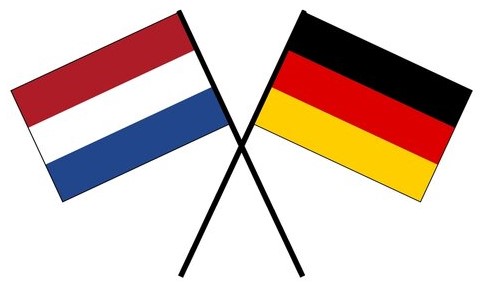
Above graphic is the Dutch and German flags.

People variously list him as born in the Netherlands, Sweden, and Denmark. But he is listed in one Colonial American Virginia record as a Dutch man (or Deutsch man). The surname Stubble is most likely from a surname found in the Netherlands and Germany. Probably the surname Stubbe, which is an English, North German, and Dutch surname. Obviously, he was not an English man, for his lands were reverted to the English crown when he died due to him being an alien, a non-citizen, and thus we know he was not English.

There are a few options for the roots of the surname Stubble, it most likely from the surname Stubbe, from the Middle Low German, and Middle Dutch stubbe meaning ‘tree stump’ or ‘tree trunk’, hence a nickname for a short, stout man. (2) A second option is that it comes from the German and Dutch word stoppel, which when translated into the English language is stubble. Although, Stoppel is known as a German surname, not Dutch.

The word for Stubble in Swedish is stubb. The surname Stubb is found in Sweden and Finland, although much more commonly in Germany. There is a chance he was from a Scandanavian country. I cannot rule that out, but it’s much more likely he was Dutch or German.

What we can assume is that he was the son of a man named Stubbe, or Stoppel, and was given his father’s first name, giving him the name Stubble Stubbleson aka Stubbe Stubbeson/Stoppel Stoppelson. Stoppel is a North German surname from Middle Low German stoppel ‘thorn’, hence a nickname for someone with a prickly personality, or for someone with a stubbly beard. Whether his name was originally German or Dutch, or even Scandanavian, his roots were Germanic.

The name of his wife has been lost to time. He had many dealings with Thomas Rawson, including ones that give the names of his 🐮 cows! It is possible he married kin to Thomas Rawson. His wife may have died in childbirth or shortly after, for we know that Stubble only had one heir, and one known child, a daughter, Ann Stubbleson Ferguson (Farguson).

Photo above is of a red heifer.

Stubble had some financial means when he arrived in Colonial Virginia.

For on 29 October 1665, Thomas Rawson of the County of Rappahannock, planter, sold to Stuble Stubbleson of the same County, planter, for 1,000 pounds of tobacco with cask, land patented 18 November 1663, 513 acres and four perches except for a small parcell of Woodland adjacent. The land was in the parish of Sittenbourne and on the north side of the mill branch. Signed Thomas Rason [sic]. Witnesses: WMoseley, John Deane. Recorded 3 November 1665. [(Old) Rappahannock County, Virginia, Wills & Deeds 1, pages 41–42.]

We learn the names of his cows in the next record, Dary, a black cow with a little white under her belly, and Cherry, a red heifer.

On 29 October 1665, Stubble Stubbleson sold to Thomas Rawson: “Know all men by these presents that I Stuble Stubleson of the County of rappa. planter do hereby acknowledge to have sold to Thomas Rawson one black Cow with a Little white under her belly named Dary cropt on the Left ear & cheek under the Crop & a swallow ford & hole on ye right & one red heiffer three years old named Cherry cropt on the Left ear & a nick under the Crop & the right ear whole them to be & to belong with their Increase to the sd Rawson or his order & I do hereby warr’t the said Sale to be good honest & Lawfull & that the sd. Cal he did at ye Subscribing hereof properly belong unto me & no person else as witness my hand this 29th:8ber 1665” Signum Stubles his ++ mark Stubleson. Test W Moseley. Recorded on 20 November 1665. [(Old) Rappahannock County, Virginia, Deed Book 1, page 45.]

On 7 December 1667 Stable Stubleson, planter of Rappahannock County, settled a dispute with Thomas Rawson over some property. He signed with a mark. [(Old) Rappahannock County, Virginia, Deed Book 3, page 457.]

On 29 June 1668, Thomas Rawson sold to Stuble Stubleson, for 1,000 pounds of tobacco and caske, land on the North side of the mill Branch at the Head of Tigners Creek, except for a small part of woods. Signed Tho: Rason. Witnesses: Tho. Freshwater, Thomas Sadler. Recorded 1 July 1668. [(Old) Rappahannock County, Virginia, Deed Book 3, page 459–461.]

In 1669, an inquisition on escheated land found that Stuble Stubbleson was an alien: Rappahannock Co., Va. 5 May 1669. John Weire, deputy escheator, by commission 29 Sept. 1668. Writ Feb. 1668/9. Jury find that Stuble Stubbleson was at the time of his decease seazed of about a hundred acres of land in Rappahannock County, also that Stuble was an alien by birth and therefor the land escheat. [Abstract by John Frederick Dorman in The Virginia Genealogist, Volume 19, Number 4, October-December 1975, page 259.]

Between 1 July 1668, when that sale was recorded and 1669, Stubble had died.

Stubble’s land had been left to his daughter Ann Stubbleson. She married John Fargisson (Fargison/Ferguson). We find the following record:

 . . . I, the said John Fargisson as marrying Ann, the only surviving daughter and heir of Stubble Stubbleson, deceased, do hereby . . . make over unto . . . William Jewill . . . with . . . the voluntary consent of the said Ann, my now wife . . . a certain piece of land . . . formerly sold by one Thomas Rawson unto the said Stubble Stubbleson . . .

On 30 March 1674, Theophilus Wheele sold to William Jewill a tract of land “formerly belonging to Stubble Stubbleston aliene and after the decease of the said Stubbleston Escheated by me”. [(Old) Rappahannock County, Virginia, Deed Book 5, page 298.]

In a deed of 1 November 1715, Thomas Jewell, planter of St. Annes Parish, sold John Bagge of the same parish 149 acres in St. Anns Parish it being part of a tract first granted 22 November 1653 to Andrew Gilson and sold by him, 6 May 1657, to Thomas Reson or Roson, and by him sold to Stubble Stubbleson on 29 June 1668, “wch sd Tract of Land upon the death of sd Stubble Stubbleson an alien by an Inquisition taken in the County of Rappahannock the first day of May one thousand Six hundred & Sixty nine, being found Escheat was granted by patent…” Recorded 21 December 1715. [Essex County, Virginia, Deed Book 14, pages 449–450.] Beverley Fleet surmises that he was Dutch.

To learn more about my ancestors Ann Stubbleson and her husband John Fargisson (Fargison/Ferguson) and my related Rogers lines, go here.

My direct line from Stubble Stubbleson:

  1. Stubble Stubbleson and possibly ____ Rawson.
  2. Ann Stubbleson and John Fargisson (Fargison/Ferguson).
  3. Mary Ferguson (Fargeson) and Joseph Rogers.
  4. Isham Rogers and Prudence _____.
  5. Shadrach Rogers.
  6. Peleg Rogers and Mary Ellen Stafford.
  7. Nancy Anna Rogers and Aden Barrett.
  8. Cynthia Ann Barrett and John Lewis Doughty (my great-great grandparents).

References:

  1. Library of Virginia Research Notes #9. Library of Virginia.
  2. Stubbe Family History Stubbe Name Meaning. familysearch.org
  3. Stoppel Family History Stoppel Name Meaning. familysearch.org

Further reading:

  1. Empty Branches on the Family Tree. Blog of a Stubbleson/Fargison (Ferguson) cousin.

If you’d like to learn more about the 52 Ancestors in 52 Weeks project, please visit here:

52 Ancestors in 52 Weeks.

Or join the Facebook group Generations Cafe.

If you use any information from my blog posts as a reference or source, please give credit and provide a link back to my work that you are referencing. Unless otherwise noted, my work is © Anna A. Kasper 2011-2026. All rights reserved. Thank you.

Posted in 52 Ancestors in 52 Weeks, Genealogy | Tagged , , , , , , , , , , , , , , , , , , , , , , , , , , , , | 2 Comments

Surnames in My Tree, Stafford. 52 Ancestors, Week 30. Boats.

This week’s writing prompt is Boats. I could have linked my prior writings about my paternal Cogswell ancestors that survived a hurricane, or prior writings about my maternal ancestor Mary Wheldon Taylor that died on a small boat, or about other ancestors that arrived via boats and ships, or a myriad of other boat-related stories. But I opted to keep it simple and write about the surname Stafford, which has a nautical related meaning.

The furthest I can take my Stafford lines back are to my sixth great-grandfather, Henry Stafford. He is believed to have been born around 1725. His place of birth is unknown but is thought to be in Sussex, Delaware, where he married and all his children were born, and where his will was written and probated. Sussex County, Delaware, is on the Atlantic Coastal Plain.

There is no doubt that my Stafford ancestors came to America via a boat or ship. Whether Henry was actually born in England, or his line was in America a few generations longer, they arrived here by way of a nautical route.

Some list his name as Henry Nathaniel Stafford to try and make a baptism record in England fit for him, and an unproven parentage based upon this record. In land records in Delaware, he is always listed as Henry Stafford. In his will and probate records, he is only listed as Henry Stafford, Planter. Although middle names were not unheard of in the 1700s, they were not common among English settlers. It was much more common with the Germans, Scandinavians, and Dutch.

He married a woman named Elizabeth. We know this because she is listed in his will. Her maiden name is unknown. Some have tried to give her the maiden names: Cook, Eaton, and Grayfox, adding a middle name of Ann. None of these maiden names are proven, and in no record is she given the middle name Ann.

Stafford is an English first name and surname.

The meaning of the surname is from the English city of Stafford, Staffordshire, but occasionally from other places with similar names, such as Stafford House in Ifield (Sussex), possibly East and West Stowford in East Down (Devon), and three minor places in Devon called Stafford, in Dolton, Broadhembury, and Colyton parishes. The places are all named for the Old English word ford ‘ford’ as the final element but have different initial elements. In general, the surname is taken from Old English stæð meaning wharf, landing place and ford meaning ford, river crossing, i.e. landing stage by the ford. Sidenote, the surname is now far more familiar to the United States than to England. (1 & 2)

The Cambridge Dictionary lists the meaning of wharf and landing place/stage as: an area like a wide wall built near the edge of the ocean or a river where ships can be tied, and goods can be taken off them. The meaning of a ford or river crossing is a shallow place with good footing where a river or stream may be crossed by wading.

You may learn more about my Stafford and related McLinn ancestors here.

My direct line:

  1. Henry Stafford and Elizabeth ____.
  2. Zorababel Stafford and Hester/Esther McLin.
  3. Mary Ellen Stafford and Peleg Rogers.
  4. Nancy Anna Rogers and Aden Barrett.
  5. Cynthia Barrett and John Louis Doughty.
  6. Mary Adalaide “Mame” Doughty and James Francis Fay. (My great-grandparents).

References:

  1. The meaning of Stafford. 23andme.com
  2. Stafford (surname). en.wikipedia.org

If you’d like to learn more about the 52 Ancestors in 52 Weeks project, please visit here:

52 Ancestors in 52 Weeks.

Or join the Facebook group Generations Cafe.

If you use any information from my blog posts as a reference or source, please give credit and provide a link back to my work that you are referencing. Unless otherwise noted, my work is © Anna A. Kasper 2011-2026. All rights reserved. Thank you.

Posted in 52 Ancestors in 52 Weeks, Genealogy | Tagged , , , , , , , , , , , , , , | 1 Comment

A Tangled Web Weaved. An Invalid Spouse, a Mistress, Illegitimate Children. What a Modus Vivendi!

Oh, what a tangled web we weave when at first we start to deceive.” – Sir Walter Scott. From his poem “Marmion”.

This week’s writing prompt for 52 Ancestors is Favorite Recipe. I always cringe when this writing prompt or some version of it comes up. In the past I was able to share a story about my French ancestor’s lack of cooking talents when he cooked for guests at his inn, you may read about him here. The last time this prompt came up just with the word recipe, I wrote about a recipe for disaster when researchers share unvetted information, and it’s passed down repeatedly and posted endlessly, you may read about that here. So, when this prompt came up again this year, I was not thrilled, so I decided to take a different approach since I don’t have a bunch of cool family recipes handed down, or anything really that would fit with favorite recipe.

I decided to take the word favorite and flip it to the opposite and to related words and meanings of unfavorite: disliked, estranged, alienated, forgotten, ignored. Then take the word recipe and play with it as well. Although many only think of food recipes when they hear the word recipe, its full meaning encompasses: a method of doing things, a prescription, a program, a technique, the process or processes, procedure, and receipt. Viewing it through a wider lens, it also includes modus vivendi which means way of living, lifestyle, way of life, and is related to modus operandi – a manner of working, a method, mode of operation, a way of doing things. Which is in turn related to the meaning of the word recipe.

In the end, that left me with an awesome writing prompt, unfavorite way of life. I could write about a situation where my ancestor was living a life that often felt as if she was forgotten and alienated, and the modus vivendi, the way of living she experienced after the birth of her last child very much would have left her feeling alienated from her husband, and in some ways forgotten. A story of being bed bound, a mistress, illegitimate children, and finally an early death at the age of twenty-seven. The modus vivendi of her second husband, his mistress, her child from her first marriage, her father, her husband’s children from his prior marriage, his illegitimate children (born after her death), his new wife he married months after her death (not his mistress) was quite a tangled web that was woven.

I need to thank a newly found Yarberry (Carter) cousin, who had knowledge about my ancestor’s life that I did not know prior, and I was able to help him by giving him the correct parentage, names of wives, and children for his ancestor John L. Wesley Carter.

I need to tell you about all the players in this story. First, I will discuss my direct ancestor, my 3rd great-grandmother, Mary Ann Gooden Doughty Carter.

Mary Ann Gooden was born about 1826 in Crawford County, Illinois. She was the daughter of Lewis Gooden and Lydia Watts. You may click on the names of her parents to learn more about my Gooden/Goodwin, Watts, and related lies.

She married McGuire Doughty in 1842 in Illinois. McGuire Doughty was the son of Rev. John M. Doughty and Mary Jane “Jane” McGuire. John M. Doughty was a reverend in the Primitive Baptist Faith. You may click on the names of his parents to learn about their family and related lines. You may also read about our ancestor Mayflower Pilgrim Edward Doty in a separate post.

In early 1843, already well into her pregnancy, she migrated with her husband from Illinois to Shiloh (now Springdale), Arkansas, and lived near the Shiloh Church, it was called the Regular Baptist Church at Shiloh which was started in 1840 and became known as the Primitive Baptist Church. Their only child, John Lewis Doughty, was born 11 March 1843 at Shiloh (now Springdale). McGuire Doughty dies at Shiloh only months later in December 1843, leaving her a young widow with an infant son. McGuire Doughty would have been buried near the Shiloh Church. In 1894, the graves near the Shiloh Church were moved to Bluff Cemetery in Springdale.

Photo above is of the Shiloh Church. This 1870 church is the third built by the congregation. My ancestors would have worshipped at the first log church that was burned during the US Civil War.

A bit about Shiloh, Arkansas and the Shiloh Church. In 1840, a small settlement was established around a log church known as the Shiloh Regular Baptist Church (it became known as the Primitive Baptist Church). The community became known as “Shiloh,” although Civil War records refer to the fledgling settlement as “Holcomb’s Spring,” after the pioneering John and Dorothea Holcomb family. The log church building burned during the Civil War and the Shiloh Church was rebuilt in 1868, a third church building was built in 1870, that church building is pictured above. By 1872, Shiloh had grown big enough to need a post office. However, Arkansas already had a town named Shiloh. Due to the abundant local springs, “Springs in the Dale” was suggested by Shiloh resident Sarah Reed Meek. The town was incorporated officially as Springdale in 1878. (2 & 3)

Photo above, Liam Neeson as Ethan Frome and his invalid wife Zenobia “Zeena” Frome played by Joan Allen.

Pictured above is Liam Neeson as Ethan Frome and Joan Allen as his invalid wife Zenobia “Zeena” Frome in the film Ethan Frome. Although the story of my ancestor Mary Ann Gooden Doughty Carter and her 2nd husband John Carter, and their live-in help Sarah “Sally” Gambill Bradshaw Yarberry does not mirror exactly the story in Ethan Frome, it is a reminiscent living situation.

Photo above is Patricia Arquette as Mattie Silver and Liam Neeson as Ethan Frome.

Pictured above is Liam Neeson as Ethan Frome and his wife’s cousin Mattie Silver, played by Patricia Arquette. In the story, his wife’s cousin came to live with the couple to keep house for her invalid cousin and her husband. Ethan Frome is revolved around the character Ethan Frome cheating on his invalid wife with her cousin who came to live with them to keep house and help them, and his internal struggle between two women that tear at his heart.

Mary Ann Gooden continued to live in Benton County, Arkansas after the death of her husband McGuire Doughty, and worked the best she could to support herself in the ways a woman was allowed to at that time, helping to take care of the children of others, taking in laundry, sewing, midwifery, etc. In 1848, her widowed father Lewis Gooden came to live with her. Also, living in Benton County near her was a widower named John Carter, his 1st wife had died in 1846, leaving him with six children, aged from 1 year to 16 years old. John Carter was known to hire outside help, and most likely Mary Ann did work for him in some fashion. They married in 1847 in Benton County, Arkansas. The family migrated to neighboring Illinois, Washington County, Arkansas, where they had a son, Lemuel Carter, born there in 1849, but the Carter family migrated back to Benton County, Arkansas before 1852, where they had their second child Elisha Richard “Lish” Carter born 18 September 1852. Mary Ann Gooden Doughty Carter had complications during and after the birth of her last child and was sickly and an invalid after his birth. During this time of her being often bed bound, her husband John Carter hired to keep house a twice widowed woman named Sarah “Sally” Gambill Bradshaw Yarberry. Mary Ann Gooden Doughty Carter died in 1853. She was buried near her husband McGuire Doughty near the Shiloh Church, as noted above, the graves from near Shiloh Church were moved in 1894 to Bluff Cemetery.

John L. Wesley Carter was born about 1802 in Scott County, Virginia. He was the son of Joseph Carter, Sr. and Martha “Patsy” Harris. He married his 1st wife Martha Ann “Annie” Gibson on 10 November 1831 in Scott County, Virginia. They had the following children: Lucy, George, Mary “Polly”, Margaret Ann “Peggy”, Martha Ann “Patsy”, and James Washington Carter, Sr.

Lucy Carter was born in Scott County, Virginia, all the rest of the children were born in Arkansas, most in Washington County, and the last child James Washington Carter, Sr., was born in Benton County. John Carter is found in the 1840 Census for Washington County, Arkansas. Washington and Benton Counties, Arkansas are adjacent, and some towns and cities are located partly within each of the counties.

John Carter’s wife Martha Ann “Annie” Gibson Carter dies in 1846, leaving him a widower with six children aged between 1 year and 16 years old. My ancestor Mary Ann Gooden Doughty was a young widow with a son, living near John Carter in Benton County. At some point after the death of his 1st wife, it is believed that Mary Ann did some work for John Carter, and by 1847 they were married.

The Carter family migrated to neighboring Illinois, Washington County, Arkansas, where John Carter had lived prior, where they had a son, Lemuel Carter, born there in 1849. John Carter is found in the 1850 Census for Illinois, Washington County, Arkansas.

Above is the section of the 1850 US Census listing the family of John Carter:

  1. John Carter, aged 48, Male, Farmer, Real Estate value: $350, born in Virginia.
  2. Mary Carter (Mary Ann Gooden Doughty), aged 23, born in Illinois.
  3. Lucy Carter, aged 16, Female, born in Virginia.
  4. Mary Carter, aged 12, Female, born in Arkansas.
  5. George Carter, aged 15, Male, born in Arkansas, Deaf.
  6. Margaret Carter, aged 11, Female, born in Arkansas.
  7. Martha Carter, aged 9, Female, born in Arkansas.
  8. James Carter, aged 5, Male, born in Arkansas.
  9. John Carter (John Lewis Doughty), aged 8, Male, born in Arkansas.
  10. Lemuel Carter, aged 1, Male, born in Arkansas.
  11. Lewis Gooden (Mary Ann’s father), aged 58, Male, born in Virginia.
  12. William R. Hillim, aged 11, Male, born in Missouri.

John Carter is also found in the 1850 Illinois, Washington County, Arkansas Slave Schedule Census. I was unable to view the actual slave schedule, only the slave schedule index, but he had at least one enslaved person in order to appear in this slave schedule census.

The Carter family migrated back to Benton County, Arkansas before 1852, where they had their second child Elisha Richard “Lish” Carter, born 18 September 1852. Mary Ann Gooden Doughty Carter had complications during and after the birth of her last child and was sickly and an invalid after his birth. During this time of her being often bed bound, her husband John Carter hired to keep house a twice widowed woman named Sarah “Sally” Gambill Bradshaw Yarberry. Mary Ann Gooden Doughty Carter died in 1853 and was buried near her 1st husband McGuire Doughty near the Shiloh Church. In 1894, the graves near the Shiloh Church were moved to Bluff Cemetery in Springdale.

I will discuss the stories involving John Carter, 2nd wife Mary Ann Gooden Doughty Carter, and their live-in helper Sarah “Sally” Gambill Bradshaw Yarberry, further down when I discuss the life of Sarah “Sally”.

Just months after the death of his 2nd wife Mary Ann Gooden Doughty Carter, in 1853, he marries in Arkansas to Jilthea Snodgrass. Not much is known about Jilthea. She was born about 1835 in Tennessee.

John Carter and 3rd wife Jilthea Snodgrass had three children: John Lasher, Jane, and Allen Carter. The first two children were born in Hico (Siloam Springs), Benton County, Arkansas, the last child was born in Texas.

By 1859, the Carter family had migrated to Palo Pinto County, Texas. John Carter is found in the 1860 US Census, for Palo Pinto, Palo Pinto County, Texas. His occupation is listed as Stock (Cattle) Raiser. Found along with him in this census were his 3rd wife Jilthia, children from his 1st wife James, and Patsey (Martha) Carter, son of his 2nd marriage Elisha Carter, and children from his 3rd marriage John, Jane, and Allen Carter.

After the death of his 2nd wife, his orphaned stepson John Lewis Doughty was taken to Illinois by his father-in-law Lewis Gooden.

His oldest daughter Lucy Carter remained in Benton County, Arkansas, and married Hiram Casey “Billy” Smith. When John Carter migrated to Texas, I do not know what happened to his deaf son George Carter, who was an adult by this time. Daughter Mary Carter married Nathan Blackwell.

There seems to be confusion as to the exact year or place of death for John Carter. It is listed as sometimes between 1863 and 1869 and was buried in a small cemetery in Palo Pinto County, Texas.

Photo of Sarah “Sally” Gambill Bradshaw Yarberry

The photo above is of Sarah “Sally” Gambill Bradshaw Yarberry, the twice widowed woman hired by John Carter to keep house when his 2nd wife Mary Ann Gooden Doughty Carter was an invalid after complications during and after the birth of her last child.

Sarah “Sally” Gambill was born 14 June 1815 in Bedford County, Tennessee. She was the daughter of Benjamin Gambill and Nancy A. Sanford.

Sarah was fifteen years old when her mother died in 1830. Sarah was raised for a short time by her stepmother, Rachel Pennington Gambill. When her father remarried on 15 May 1830, Sarah was resentful of her new stepmother and was very unhappy at home. At the age of fifteen, she married on 4 October 1830 to Silas Elijah Bradshaw. Elijah may have been an overseer for her father, Benjamin Gambill. The James Bradshaw descendants state that Elijah killed a man in Tennessee over Sarah. (1)

The couple had eight children: Nancy Ann, Lavina E. “Vina”, Alfred N., Mary Jane “Jensie”, Harriett, John Houston, Elizabeth Jane, and James Wilson Bradshaw.

Her husband died in 1842, the same year their youngest child was born. The first five children born in Tennessee and Missouri. The last three children were born in Benton County, Arkansas.

After the death of her 1st husband Silas Elijah Bradshaw, Sarah married William John Elijah Yarberry/Yarbrough about 1843. Sarah was a recent widow at the time, who had lost guardianship of most of her children after the death of her husband, Silas Elijah Bradshaw. Sarah must have had a difficult time after Elijah’s death and on October 18, 1842, guardianship of Nancy (11 years), Lavina (10 years), Alfred (8 years), Jane (6 years), Harriet (4 years), and John Houston (2 years); all minors underage of fourteen years, were given by bond to William W. Dickson, J. B. Robinson, and A. M. Morrison. There is no mention in the Bonds to James Willson born on 25 Jul 1842. He was less than three months old at the time of this proceeding and probably still nursing so, the Court did not take him from his mother. (1)

The family lived south of Siloam Springs on Highway 16, at Norwich Prairie (Norwood) around Wedington Gap, close to the line between Benton and Washington Counties. (1)

Sarah and 2nd husband William John Elijah Yarberry/Yarbrough had two children: William Milton, and Silas Franklin Yarberry, both born in Benton County, Arkansas.

Family legend says the Sarah’s husband drank a lot, that she left him because of his drinking and went to live with her daughter Nancy Bradshaw, who was only 17 or 18 years old but may have been married to Mr. Shaffer at the time. She began to regret leaving and decided to go back to him, but when she returned, she found him dead. (1) He died prior to the 1850 US Census.

Sarah is found as Sarah Yarberry in the 1850 US Census for Beatie, Benton, Arkansas. She must have regained custody of her children by this time. In the census listed with her are Nancy, Levina, Jone (Jane), Alford (Alfred), Harriett, John H., James, Wm, Silas T. Yarberry, and Winsbad Roberts aged 35.

All the children are listed with the surname Yarberry. All except Wm. and Silas should have been listed with the surname Bradshaw.

Sarah had a difficult time raising her children after the death of Mr. Yarberry. Family legend say she worked as a housekeeper, washed clothes, acted as a midwife and even split rails to support her family. (1)

During this time, Sarah kept house for John Carter and his invalid 2nd wife, and children in Benton County. My ancestor Mary Ann Gooden Doughty was the invalid wife, she died in 1853. An affair began between John Carter and Sarah during this time. His wife Mary Ann Gooden Doughty Carter must have known something was going on, most of the time people think they are successfully being sneaky, but it’s often not the case. As well as the fact that her father Lewis Gooden was living with them during this time. Her son John Lewis Doughty was old enough to be able to figure out that something was going on, he was ten years old when his mother died. John Carter’s older children from his 1st marriage were certainly old enough to know what was going on. I am sure it was a very sad time for my ancestor, being often bedridden and knowing her husband is having an affair with the person that was hired to help her and her family, and there was nothing she could do about it.

After her death, her father Lewis Gooden returned to Illinois and took his now orphaned grandson John Lewis Doughty with him.

After her death, Sarah stayed on with John Carter and kept house for him and the children who were living at home. Sarah gave birth to twin sons on 1 March 1854 named John Milton Yarberry and Thomas Newton Yarberry. They were the sons of John Carter, but he never married Sarah, the children used her married name Yarberry.

While Sarah was pregnant with the twins, John Carter married his 3rd wife, Jilthea Snodgrass. Their first child, John Lashler Carter was born 19 December 1854 in Benton County, Arkansas. This was only nine months after Sarah gave birth to her twin boys!

His older daughters from his 1st marriage, and his new wife Jilthea, were so resentful of this arrangement, that John Carter and Jilthea migrated to Palo Pinto, Texas by 1857. He faithfully sent money to provide for the twin boys to Sarah through his son-in-law Hiram Casey “Billy” Smith. However, Sarah never received the money. His daughter Lucy Carter Casey’s, on her deathbed, told her sister Mary Carter Blackwell that her husband Billy Smith kept the money meant for Sarah and the twin boys for himself. (1)

In later years, Sarah and her twin boys Milton and Thomas moved to Colorado. She died in Pueblo, Pueblo County, Colorado on 28 August 1901, and was buried there in the Chico Cemetery.

Although naturally I am going to personally think more about the feelings and pain of my direct ancestor Mary Ann Gooden Doughty Carter, but I also have some sympathy for John Carter, and for Sarah.

John Carter was not in an easy situation, Sarah had lived a rough life in many ways, I cannot excuse their behavior or the pain it would have caused to my ancestor, his children, or his new wife Jilthea, but family history stories are not always flowery or rosy. Life happens, people become infirmed, sinful behavior and affairs happen, illegitimate children are born.

References:

  1. Find a Grave (FAG) for Sarah “Sally” Gambill Bradshaw Yarberry
  2. THE HISTORICAL MARKER DATABASE, Springdale in Washington County, Arkansas — The American South (West South Central), Regular (later Primitive) Baptist Church of Shiloh.
  3. Shiloh Museum of Ozark History, A Department of Springdale, Arkansas.

Further reading and other media:

  1. What Makes Primitive Baptist Churches ‘Primitive’? Which Beliefs Set Primitive Baptist Churches Apart? learnreligions.com
  2. Where to stream the film, Ethan Frome.
  3. Read the book Ethan Frome by Edith Wharton for free online.

If you’d like to learn more about the 52 Ancestors in 52 Weeks project, please visit here:

52 Ancestors in 52 Weeks.

Or join the Facebook group Generations Cafe.

If you use any information from my blog posts as a reference or source, please give credit and provide a link back to my work that you are referencing. Unless otherwise noted, my work is © Anna A. Kasper 2011-2026. All rights reserved. Thank you.

Posted in 52 Ancestors in 52 Weeks, Genealogy | Tagged , , , , , , , , , , , , , , , , , , , , , , , , , , , , , , , , , , , , , , , , , , , , , , , | 1 Comment

Updates on My Ancestors from in and Around Klingenmünster, Germany

Looking down at Klingenmünster from Burg Landeck, the castle atop a hill. (Source: Shutterstock / Leonid Andronov)

In late February 2024, I was finally able to locate the baptism record of my 3rd great-grandfather, Heinrich Weiss. I am very grateful for the German genealogy website genealogienetz.de that has the Ortsfamilienbuch Klingenmünster (Klingenmünster Local Family Book) which contains church records, and death and burial records that I have been unable to locate elsewhere, this is where I found his baptism record and a plethora of family information and connections.

I updated my prior post: My Weiss, Fried, Propheter, and Related Ancestors from Klingenmünster, Germany, with the new information and changes to my family tree. That post is from May 2021, so I decided I should make a new blog post with some of the new information.

Latest update of August 2025, another researcher questioned one of my lines, and she had a valid point regarding my ancestor’s parentage. She pointed out that the mother listed for him, Anna Barbara Ohl, would have been 51 when he was born. Although not impossible, it was something I needed to look at closer. His baptism record shows he was the son of Joh. Adam Fried and Barbara. I will admit I had become attached to my Ohl, Willem, Sartor/Satter ancestry, and the other ancestors of Anna Barbara Ohl. But alas, after much more research, and noting that the husband of Anna Barbara Ohl, Johannes Fried, was never listed in any church records with the name Adam and my ancestor was listed as Adam, I came to the conclusion that his parentage needed to be updated.

My 4th great-grandfather, Johann Georg Fried was born 24 May 1796 in Klingenmünster. He was baptized the following day in nearby Heuchelheim-Klingen, Bergzabern, Südliche Weinstraße, Rhineland-Palatinate, Germany. I knew that he was the son of Johann Adam Fried and Barbara ____ based on his baptism record. I, once again, scoured the German church records and reexamined my DNA matches. I had noticed prior that although I had DNA connections to Ohl, Willem, and Sartor/Satter, they appeared to be via marriage to extended family members of my direct ancestors.

Going way back, I did end up with the surname Sartor in my tree after all. The two families are most-likely related. The Sartor/Satter family related to Anna Barbara Ohl are found in Edenkoben, Südliche Weinstraße, Rhineland-Palatinate, Germany. My Sartor family are found in Annweiler, Südliche Weinstraße, Rhineland-Palatinate, Germany. The distance between the two places is only 13.3 miles (21.4 km).

I looked for other baptism records listing Johan Adam Fried and wife Barbara, as well as searching for their marriage record, and any other records I could locate regarding this couple. I, again, utilized the German genealogy website genealogienetz.de that has the Ortsfamilienbuch Klingenmünster (Klingenmünster Local Family Book), and other sources.

Johann Adam Fried was born 30 April 1755 in Heuchelheim, Bergzabern, Südliche Weinstraße, Rhineland-Palatinate, Germany. He was baptized on 4 May 1755 in the same place, as the son of Heinrich Fried and Margaretha Röhm/Roehm. See Schmitt below for information regarding his wife Barbara.

In the Reformed Lutheran church, Johann Adam Fried married on 9 January 1787 in Heuchelheim, Bergzabern, Südliche Weinstraße, Rhineland-Palatinate, Germany to Maria Barbara Schmitt.

If you take the Fried lines back two generations, I end up with the exact same 8th great-grandparents, Johannes Fried and Anna Juliana ___. But there were some changes on the female lines.

Heinrich Fried was born about 1734 in Klingenmünster, Südliche Weinstraße, Rhineland-Palatinate, Germany, and died there on 15 May 1781. He married Margaretha Röhm/Roehm. He was the son of Johann Valentin Fried and Anna Barbara Kuhn.

Anna Barbara Kuhn was the daughter of Christoph Kuhn and Anna Barbara Hentz/Heinz.

Christoph Kuhn was the son of Johannes Valentin Kuhn. Anna Barbara Hentz/Heinz was the daughter of Andreas Heinz.

Maria Barbara Schmitt was baptized in the Roman Catholic Church on 6 June 1758 in Klingenmünster, Südliche Weinstraße, Rhineland-Palatinate, Germany, as the daughter of Peter Schmitt and Katharina Hahn.

Prior to her marriage to Johann Adam Fried, Maria Barbara Schmitt gave birth to a child, out of wedlock, which was not as uncommon as your think during this time period in Germany. Her son, Nikolaus Schmitt, was baptized in the Roman Catholic Church on 6 August 1781 in Klingenmünster, Südliche Weinstraße, Rhineland-Palatinate, Germany. He died two days later on 8 August 1781 in Klingenmünster. The name of the father of the child is not listed.

According to church records, Peter Schmitt was born about 1731 in Wernersberg, Südliche Weinstraße, Rhineland-Palatinate, Germany, and migrated to Klingenmünster, where he married twice, first to Katharina Hahn, four children were born to the first marriage. He married second to Katharina Stortz, there were two children born to the second marriage.

The distance between Wernersberg and Klingenmünster is 7.1 miles (11.5 km). The parentage of Peter Schmitt is unknown.

Katharina Hahn was baptized on 4 March 1729 in the Roman Catholic Church in Klingenmünster, Südliche Weinstraße, Rhineland-Palatinate, Germany, as the daughter of Johann Adam Hahn and Anna Maria Mayer.

According to church records, Johann Adam Hahn was born in Birkweiler, Südliche Weinstraße, Rhineland-Palatinate, Germany, and migrated to Klingenmünster. He was the son of Jakob Hahn and Margaretha Elisabetha ____. There were at least two other children born to Jakob Hahn and Margaretha Elisabeth ____; Heinrich and Kasper Hahn.

Anna Maria Mayer Hahn died in Klingenmünster on 2 December 1771. Her parentage is unknown. But we know she had at least six siblings; Anna Margaretha Mayer (married Peter Haar), Anna Katharina Mayer (married Joseph Stephen Leidemann), Johann Michael Mayer (married Anna Katharina Leemann), Philip Mayer (married Elisabetha Weber), and Johann Georg Mayer (married Anna Maria Emmerich).

Margaretha Röhm/Roehm was baptized on 4 February 1738 in Klingenmünster, Südliche Weinstraße, Rhineland-Palatinate, Germany, as the daughter of Benjamin Röhm and Anna Margaretha Bernzott.

Benjamin Röhm was the son of Johann Jakob Röhm and Maria Susanna (Anna Susanna) Sartor.

Johann Jakob Röhm was the son of Hans Georg Röhm and Anna Maria ____.

Anna Margaretha Bernzott was baptized on 31 January 1717 at the Roman Catholic Church in Klingenmünster, Südliche Weinstraße, Rhineland-Palatinate, Germany, she died in Klingenmünster on 4 July 1764. She married Benjamin Röhm.

She was the daughter of Sebastian Bernzott and Anna Katharina Lämel.

Sebastian Bernzott was born about 1680 and died 28 August 1737 in Klingenmünster, Südliche Weinstraße, Rhineland-Palatinate, Germany. His parentage is unknown. He had at least four brothers; Magnus Bernzott (married Maria Anna Bieler and Anna Johanna Schafft), Michael Bernzott (married Anna Apollonia Weiss – who is my Weiss 6th great-grandaunt), Johannes Bernzott (married Maria Eva Meister), and Anton Bernzott (married Maria Eva Spönler).

Anna Katharina Lämel was born about 1684 and died 13 March 1742 in Klingenmünster, Südliche Weinstraße, Rhineland-Palatinate, Germany. Her parentage is unknown. The surname Lämel only appears in Klingenmünster church records in direct relation to her.

Lämmel, a variant of the surname Lämel, is found only twice in the same church records, but much later. I find a Franz Lämmel born 20 January 1884 in Münchweiler, he married in Klingenmünster to Louise Mehlem. Just by happenstance, Louise Mehlem is my distant Weiss cousin. Gertrud Lämmel, also born in Münchweiler about 1876. She married Karl Ballweber.

Münchweiler is about 22.7 miles (36.5 km) from Klingenmünster. It is possible that Anna Katharina Lämel’s roots are also found in Münchweiler, but I cannot say for sure. All her children were born in Klingenmünster, and she died there.

The name Sartor is sometimes listed in German church records as Satter, and I found it listed once as Satorius.

Maria Susanna (Anna Susanna) Sartor Röhm was baptized on 28 February 1686 in Annweiler, Südliche Weinstraße, Rhineland-Palatinate, Germany, and died on 22 March 1742 in Klingenmünster. She married Johann Jakob Röhm on 24 June 1711 in Klingenmünster. She was the daughter of Daniel Sartor and Maria Magdalena Rübel.

Daniel Sartor was born 7 December 1663 in Annweiler, Sudliche Weinstrasse, Rheinland-Pfalz, Germany. He married Maria Magdalena Rübel on 28 April 1685 in Annweiler. Daniel Sartor was the son of Johann Peter Sartor and Sara Noe.

Johann Peter Sartor was born and died in Annweiler. He married Sara Noe on 9 September 1656 in Annweiler. There were three children born to this first marriage. He married second to Anna Elisabetha Pasquay, and there were numerous children born to this second marriage. He was the son of Hanß Peter Sartor and Judith Langsontags.

Hanß Peter Sartor died 16 November 1645 in Annweiler. His parentage is unknown.

Judith Langsontags died 17 May 1676 in Annweiler. She was the daughter of Daniel Langsontags. Nothing more is known about the Langsontags family.

The surname is actually two surnames together, Lang and Sontag(s). Her maiden name is listed only in one church record.

Maria Magdalena Rübel Sartor was born on 19 March 1665 in Annweiler. She was the daughter of Jacob Rübel and Maria Magdalena Fickeÿsen/Fickeisen/Fickeissen.

Jacob Rübel was the son of Wilhelm Rübel. Maria Magdalena Fickeisen was the daughter of Nicolai Fickeÿsen.

The surname Rübel is also found as Riebel in church records.

Sara Noe Sartor died on 5 April 1665 in Annweiler. She was the daughter of Tobias Noe and Maria Elisabetha Blacks/Blocks. The parentage of Tobias Noe is unknown. Blacks is a very uncommon surname in Germany. Blocks is a German surname. The parentage of Maria Elisabetha Blacks/Blocks is unknown.

Annweiler (aka Annweiler am Trifels) and Klingenmünster, Germany are approximately 8.5 miles (13.7 km) apart by road travel.

My 3rd great-grandfather Heinrich Weiss is still of the same Weiss family of Klingenmünster, Germany, but finding his baptism record changed his parentage and female lines. His prior parentage I listed was based on DNA matches and guessing what year he was born based on various factors. There was so much intermarriage between the families of in and around Klingenmünster, that I have innumerable DNA connections to the same families, direct connections, and via marriage.

Heinrich Weiss was born 10 February 1820 in Klingenmünster, Germany. He was the son of Johann Jakob Weiss and Katherina Wendel. His baptism record is found in the Klingenmünster church records. I have not located a death record for Heinrich Weiss, but his wife Margaretha Fried died and was buried in Klingenmünster. Because I have not located a death record for him, he may have come to the USA with his daughter, my great-great-grandmother Margaret (Margarethe) Weiss Nutick, if he did, then he must have died prior to the first census he would have been found in. But we know for sure that his wife, my 3rd great-grandmother Margaretha Fried Weiss, died and was buried in Klingenmünster.

As stated above, Henrich Weiss was the son of Johann Jakob Weiss and Katherina Wendel.

Johann Jakob Weiss was born 29 May 1785 Klingenmünster, and died there on 11 June 1852. He was the son of Johann Heinrich Weiss and Katharina Häcker, they married on there on 24 May 1773.

Johann Heinrich Weiss was born 30 Mar 1750 in Klingenmünster, and died there in 1798. He was the son of Johannes Weiss and Maria Elisabetha Bohrer, they were married there on 18 April 1746.

Johannes Weiss was born on 17 September 1694 in Klingenmünster, and died there on 31 August 1772. He was the son of Michael Weiss and Maria Elisabetha ____.

The furthest I can take the Weiss line back is to Michael Weiss and Maria Elisabetha _____. Michael Weiss was born about 1658, he died on 2 February 1713 in Klingenmünster. His parentage is unknown. The maiden name of his wife, Maria Elisabetha is unknown. They are my 7th great-grandparents.

Katharina Wendel was born 18 July 1786 in Gleiszellen, and died 21 May 1856 in Klingenmünster. Gleiszellen is 1.1 miles from Klingenmünster. She was baptized on 19 July 1786 in Klingenmünster. She was the daughter of Peter Wendel and Maria Katharina Sambach. Furthermore, she married Johann Jakob Weiss on 1 December 1811 in Gleiszellen.

Peter Wendel was born 8 June 1758 in Klingenmünster and died 27 May 1816 in Gleiszellen. He married on 11 Oct 1785 in Klingenmünster to Maria Katharina Sambach. He was the son of Johannes Wendel and Anna Maria _____.

Johannes Wendel was born 30 May 1720 in Klingenmünster, and died there on 11 November 1776. The maiden name of his wife, Anna Maria is unknown. He was the son of Johann Martin Wendel and Christina _____.

Johann Martin Wendel was born 1 July 1682, and died 27 October 1763 in Klingenmünster. His parentage is unknown. The maiden name of his wife Christina is unknown. They are my 7th great-grandparents.

Maria Katharina Sambach was born 1 June 1765, and died 29 January 1832 in Gleiszellen. She was baptized in Klingenmünster. She was the daughter of Johannes Sambach and Maria Magdalena Fünfstück. 

Johannes Sambach was born about 1741 in Klingenmünster. He married there on 11 Oct 1761 to Maria Magdalena Fünfstück. His parentage or date of his death is unknown. They are my 6th great-grandparents.

Meaning of the German surname Sambach: It is a habitational name from any of various places so called in Hesse, Bavaria, and Baden. (5) Since my family were not from these areas of Germany, it most likely is a surname linked to the placename Sambach, Otterbach, Landkreis Kaiserslautern, Rhineland-Palatinate, which is 38.2 miles from Klingenmunster.

Maria Magdalena Fünfstück was born about 1742. She was the daughter of Georg Fünfstück, he would be my 7th great-grandfather.

The surname was incorrectly read in German church records by some researchers as Funstrocks/Funstercke, it was a German cousin that correctly read and listed her maiden name in his tree as Fünfstück.

The surname Fünfstück is a rare surname, in German it means five pieces or five parts. The exact meaning of the surname has been lost to time, but it is thought to have been a nickname related to something involving the number five. 

Spelled with umlauts as Fünfstück, it is found mainly in Germany where there are 422 people with the surname, six in Austria, and one in Switzerland. Without the umlaut and spelled as Funfstuck, it is found only in the United States, where twenty-seven people carry the surname.
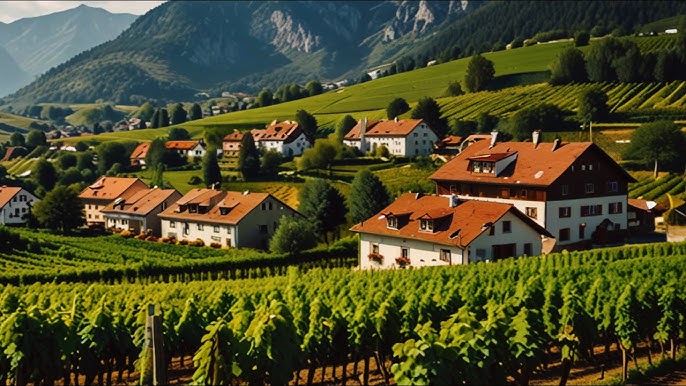
Katharina Häcker was born 3 October 1749 in Klingenmünster, and died there on 21 November 1811. She was the daughter of Johannes Häcker/Hecker and Anna Maria Wendel. The Häcker surname is sometimes found as Hecker, which is just a variation of the surname Häcker.

Anna Maria Wendel was kin to my other Wendel ancestors that I discussed prior. She was born 27 December 1724 in Klingenmünster and died there 13 September 1780. She was the daughter of Johann Martin Wendel and Christina _____. I descend twice from this couple.

Johannes Häcker/Hecker was born 5 February 1723 in Klingenmünster, and died there 30 October 1783. He married on 27 February 1743 in Klingenmünster to Anna Maria Wendel. He was the son of Georg Nikolaus Häcker and Anna Juliana ____.

Georg Nikolaus Häcker was born on 1 October 1688 in Klingenmünster, and died there on 5 February 1740. He married on 30 Apr 1715 in Klingenmünster to Anna Juliana _____. He was the son of Hans Georg Häcker.

The maiden of Anna Juliana is unknown. She was born 11 January 1696 in Klingenmünster, and died there on 13 January 1781.

Hans Georg Häcker was born 1659, he died 12 February 1750 in Klingenmünster. The name of his wife is unknown. His parentage is unknown.

Maria Elisabetha Bohrer was born 5 December 1718 in Klingenmünster, and died there on 28 November 1773. She married there on 18 April 1746 to Johannes Weiss. She was the daughter of Johann Heinrich Bohrer and Maria Elisabetha Zwipf.

Johann Heinrich Bohrer was born 29 February 1692 in Klingenmünster, and died there 11 March 1722. He married there on 27 September 1716 to Maria Elisabetha Zwipf. Although his parentage is unknown, we do know that he had at least four siblings: Anna Eva Bohrer (married Abraham Wiessing/Wissing), Hieronymus Bohrer (married Anna Catherina Willem), Johann Georg Bohrer (married Anna Apollonia Lutz), and Elisabetha Bohrer (married Johann Martin Röhm).

Maria Elisabetha Zwipf was born about 1683 in Klingenmünster, and died there 20 April 1764. She was the daughter of Johann Richard Zwipf and Anna Maria ____.

Johann Richard Zwipf was born 1636 and died 26 December 1713 in Klingenmünster. He married there on 20 August 1719 to Anna Maria; her maiden name is unknown. His parentage is unknown.

Please see my original post My Weiss, Fried, Propheter, and Related Ancestors from Klingenmünster, Germany, for the meanings of the various surnames, more information regarding all of my ancestors hailing from that area, and to fit it all together with my other related lines from in and around Klingenmünster.

Everything posted above is from my own research into the church and other records found in and around Klingenmünster. DNA does show links to all the new female lines, and as I stated prior, the Weiss lines go back eventually to the same 7th great-grandparents that I had listed prior to locating Heinrich Weiss’ baptism record.

If you use any information from my blog posts as a reference or source, please give credit and provide a link back to my work that you are referencing. Unless otherwise noted, my work is © Anna A. Kasper 2011-2026. All rights reserved. Thank you.

Posted in Genealogy | Tagged , , , , , , , , , , , , , , , , , , , , , , , , , , , | 1 Comment

Margaret Woodrow Wilson, Interesting Kin. First Daughter, Acting First Lady, Suffragette, Greenwich Village Socialite, and Hindu Nun. 52 Ancestors, Week 51: Cousins.

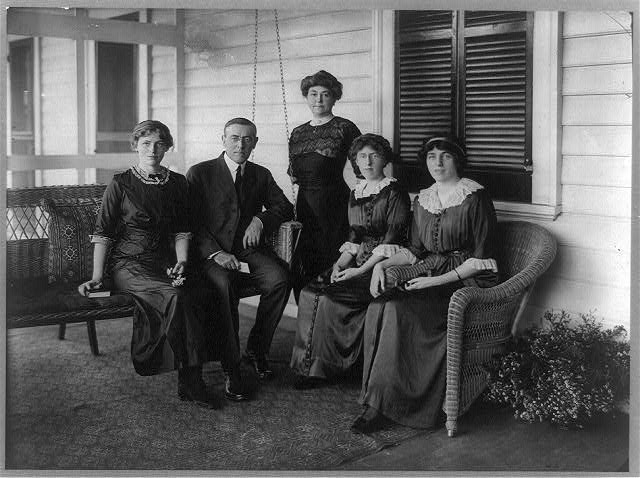
The above photo is of U.S. President Woodrow Wilson with his wife Ellen Axson Wilson and their three daughters. Margaret Woodrow Wilson is second from the right.

With this week’s writing prompt, there were a myriad of cousins I could write about. Famous, well-known, historical, and those that lived simple lives. I was going to write about First Lady Ellen Louise Axson Wilson, the wife of the 28th President of the United States Woodrow Wilson. I knew very little about her. When researching her, I realized that she died 18 months into her role as First Lady, and her eldest daughter Margaret Woodrow Wilson took over the role as acting White House social hostess. After reading more about Margaret, I decided she was quite an interesting person, not as well-known as her parents, and would make for a good subject to write about this week.

First Lady Ellen Wilson considered herself a proud Southerner. So much so that she did not want her daughters born as Yankees! So, she returned to Georgia to give birth to her first two children. Ironically, her maternal grandparents, Rev. Nathan H Hoyt, Jr. and Margaret Bliss, were Yankees! He was born in New Hampshire, and she was born in Connecticut. It is through her grandmother Margaret Bliss that the lines of our cousin kinship are found. We share Colonial Massachusetts ancestors. John Leonard and Sarah Heath.

John Leonard was born in England, he immigrated to British Colonial Massachusetts and settled in Springfield. His parentage is unproven. Preliminary Y-DNA analysis of descendants indicate he may have been related to James Leonard of Taunton and Samuel Leonard of New Jersey, but more research needs to be done.

He married Sarah Heath in Springfield on 12 October 1640. Her last name may have been Heald or Healy but is found as Heath in her marriage record. Although recently, others looking at the actual marriage record and transcription believe it reads Heald. She was born in England. Her parentage is unproven. She was not the daughter of John Heald and Dorothy Royle, as some contend. (2)

Donald Lines Jacobus speculated that she may have been brought by a relative or had been an indentured servant. He notes that Gershom Hale or Heald, son of John Heald of Concord, settled in Springfield a generation later, and it’s possible she was his sister. (1)

John and Sarah had 15 children before his untimely death. He was killed by Indians early in 1676. After his death, Sarah married twice more, on 21 February 1677 to Deacon Benjamin Parsons, who died at Springfield, 24 Aug. 1689, and thirdly at Springfield on 3 November 1690 to Deacon Peter Tilton, who died at Hadley, Massachusetts on 11 July 1696. She outlived all of her husbands and died 23 November 1711 in Springfield.

First Lady Ellen Axson Wilson’s direct line is via daughter Martha Leonard, who married Samuel Bliss. My direct line is via son Josiah Leonard, who married Sarah Dumbleton. After the death of Josiah Leonard, his wife married Thomas Root. Thomas Root is also my direct ancestor with his wife Mary Spencer.

First Lady Ellen Louise Axson Wilson and my great-grandfather Joseph Edward Cole were 6th cousins.

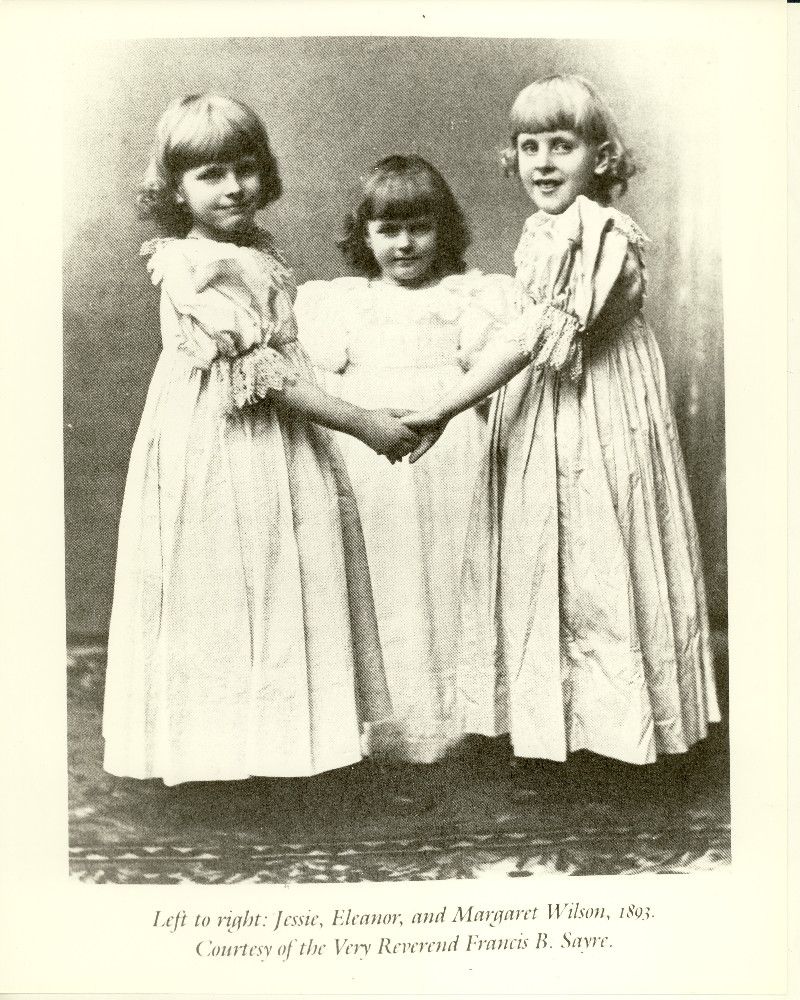
The above photo is of Margaret Woodrow Wilson with her two sisters. She was the first child of President Woodrow Wilson and his first wife, Ellen Louise Axson. She was born on April 16, 1886, in Gainesville, Georgia. The “Woodrow” in her name is from her paternal grandmother’s surname and her father’s middle name. Both of her grandfathers were Presbyterian ministers. (3) She had two younger sisters, Jessie Woodrow Wilson and Sayre Eleanor Randolph Wilson McAdoo.

At the time of her birth, her father was teaching at Bryn Mawr College, a women’s liberal arts college in Pennsylvania. After attending local schools, she opted to study at Goucher College in Baltimore. She trained in piano and voice at the Peabody Institute of Music. She recorded multiple songs, one of them titled “My Laddie” that was released by Columbia Records. There is a photo further down of the Irish harp she played, which is now in the post-Presidency home of President Woodrow Wilson.

The photo above taken of Margaret Woodrow Wilson was in 1910 when she was aged about 24. The photo has been colorized.

Her father was elected as the 28th President of the United States and came into office on 4 March 1913. Her mother Ellen was a supportive wife and an excellent hostess. Though Wilson’s administration was the first not to hold an inaugural ball when he was elected president in 1912, Ellen’s cordiality made future White House parties successful. She also oversaw the weddings of two of their daughters. She continued doing art while living in the White House and even had a studio set up on the third floor. Not only that, but she donated many of her paintings to charity. As First Lady, Ellen Wilson worked tirelessly to improve housing in Washington’s poverty-ridden and largely black slums. (4)

She suffered from Bright’s Disease, a kidney ailment that left her increasing frail. She died at age 54 on 6 August 1914, just two years into Wilson’s first term as president. Her husband was devastated by her death. With his wife’s death and the stress that came with being president, Wilson was left feeling lonely and downhearted. (4) This is when their eldest daughter Margaret stepped in as acting First Lady.

Margaret was quite free-spirited and only a 28-year-old when her mother died. She held the post of acting First Lady for only a matter of months. She did not enjoy the social demands of the position and preferred her soprano singing studies to the role of White House social hostess.

The above photo was taken in the post-Presidency home of President Woodrow Wilson. This Irish harp belonged to his daughter, Margaret, a trained musician and singer. Photo by Daniel Mulhall, Retired Irish Ambassador.

A year after the death of President Wilson’s wife, he met Edith Bolling Galt in the elevator at the White House. They got married at Edith’s Washington townhouse nine months later. (4) When they became engaged in 1915, Margaret eagerly stepped aside and allowed Edith to take over the First Lady duties.

Margaret decided to instead embark on a career as a soprano singer, even traveling to Europe to perform for Allied troops serving in World War I. Below, you can listen to Margaret singing The Star-Spangled Banner in 1915 to raise funds for the Red Cross.

Margaret and her two sisters made their support for women’s suffrage known both before and during their father’s term in office. Margaret seemed to express disagreement with her father on issues of race as well; while he institutionalized segregation of the federal workforce, Margaret, an education advocate, made a point of publicly visiting and calling attention to the poor conditions for African American students in the nation’s segregated capital. All three of Wilson’s daughters were reputed to have lobbied him on the issue of women’s suffrage. His racist policies, and his decision to enter the First World War, were protested by suffragists and others. (4) 

The many other efforts of the Suffragists finally bore fruit in 1918, when President Wilson voiced support for a constitutional amendment allowing women to vote. The President indicated that the Senate should vote in favor of passage of the amendment, which was ultimately key to its success. (6)

After leaving the White House, Margaret moved to Greenwich Village, New York, a place she had frequented in earlier years. Her father died in February 1924, when she was only 37 years old. In his will, he left her an annual allowance of $2500 (which is worth $39,529 today) as long as she remained unmarried, and it didn’t exceed one-third of the estate’s income. She seemed to enjoy her Bohemian lifestyle, but also the stipulations of her father’s will did not lend itself to her leaving her spinsterhood.

circa 1925: Margaret Wilson (1886 – 1944), eldest daughter of the 28th President of the United States Woodrow Wilson. (Photo by Hulton Archive/Getty Images)

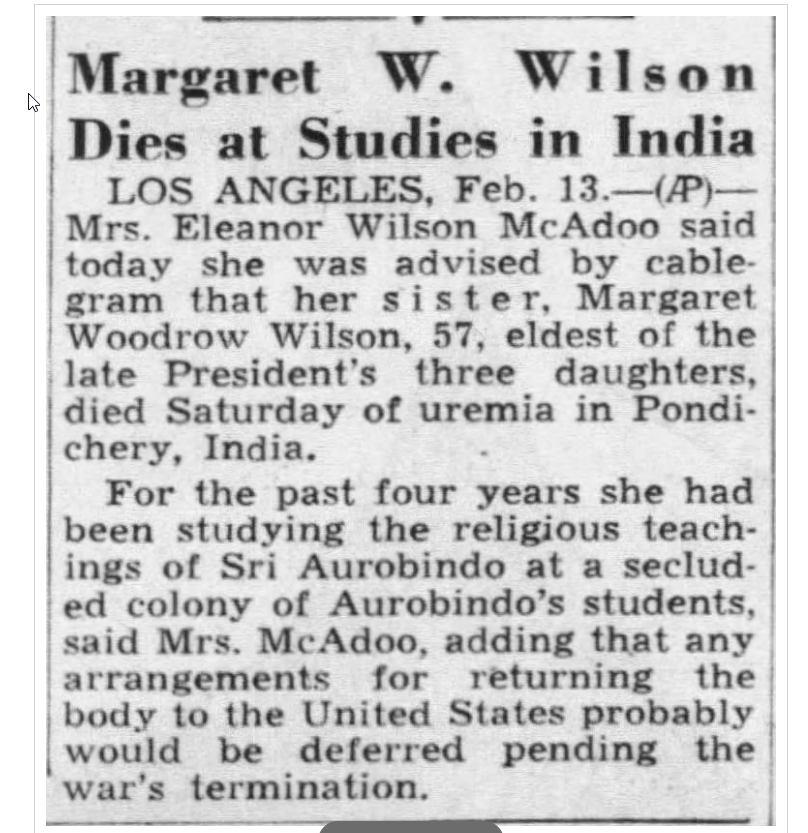
Margaret later worked in advertising and lobbied for various social causes, but in the 1930s during a visit to the New York Public Library, she encountered a book on Eastern mysticism, and soon became deeply enthralled. In 1938, she traveled to the ashram of Sri Aurobindo in Pondicherry, India, where she remained for the rest of her life. As a member of the ashram, she was given the new name ‘Nistha’, meaning “dedication” in Sanskrit, for her devotion to its teachings. She and scholar Jospeh Campbell edited the English translation of the work on the classical Hindu mystic Sri Ramakrishna, The Gospel of Sri Ramakrishna by Swmai Nikhilananda, published in 1942. In spite of entreaties from the U.S. government, Wilson refused to leave India during WWII; she died and was buried in Pondicherry in 1944. (6)

Margaret Woodrow Wilson was a First Daughter, an acting First Lady, an accomplished soprano singer and musician, a suffragette, and a Greenwich Village socialite. But she is perhaps best known for her fascination with Eastern philosophy and Hinduism and her becoming a Hindu nun in the last years of her life.

Above is Margaret Woodrow Wilson’s Obituary.

References:

  1. Jacobus, Donald Lines. Hale, House, and Related Families, Mainly of the Connecticut River Valley (Connecticut Historical Society, Hartford, 1952); Pages 678-9.
  2. A Record of the Descendants of Simon Henry & Rhoda Parsons” by Frederick Augustus Henry page 52a pub 1905 Cleveland, Ohio J. B. Savage Press.
  3. Woodrow Wilson Children at totallyhistory.com.
  4. Woodrow Wilson’s Wives at totallyhistory.com
  5. Not Every First Lady Has Been Married to the President. The role of the United States’ first lady traditionally goes to the president’s spouse, but in instances it falls to others. history.com
  6. Margaret Woodrow Wilson: First Lady, Suffragist, and Village Socialite. POSTED NOVEMBER 3, 2020, BY ARIEL KATES.

Further Reading:

To learn more about US President Woodrow Wilson:

  1. Woodrow Wilson. THE 28TH PRESIDENT OF THE UNITED STATES. whitehouse.gov
  2. Woodrow Wilson Biographical. nobelprize.org

To learn more about First Lady Ellen Louise Axson Wilson:

  1. Ellen Axson Wilson. HOME ABOUT THE WHITE HOUSE FIRST FAMILIES. whitehouse.gov
  2. Ellen Wilson, American first lady. britannica.com

To learn more about Margaret Woodrow Wilson:

  1. Presidents’ Children: Woodrow Wilson’s Daughters. potus-geeks.livejournal.com
  2. Margaret Woodrow Wilson- letters from the Ashram. Extracts of Margaret Woodrow Wilson’s letters to her friend Lois – written from the Sri Aurobindo Ashram, Pondicherry. Posted on December 10, 2011 by sriaurobindocenterla. sriaurobindocenterla.wordpress.com

To learn more about Sri Aurobindo:

  1. Sri Aurobindo en.wikipedia.org
  2. Sri Aurobindo Ashram today. sriaurobindoashram.org
  3. Sri Aurobindo’s Teaching and Spiritual Method. A Radical Approach to Evolution. auroville.org

If you’d like to learn more about the 52 Ancestors in 52 Weeks project, please visit here:

52 Ancestors in 52 Weeks.

Or join the Facebook group Generations Cafe.

If you use any information from my blog posts as a reference or source, please give credit and provide a link back to my work that you are referencing. Unless otherwise noted, my work is © Anna A. Kasper 2011-2026. All rights reserved. Thank you.

Posted in 52 Ancestors in 52 Weeks, Famous Kin, Genealogy | Tagged , , , , , , , , , , , , , , , , , , , , , , , , , , , , , , , , , , , , , , , , , , , , , , , , , , , , , , , , , , | Leave a comment

My Ancestor Martha Willoughby. 52 Ancestors, Week 49: Family Recipe. Blindly Copying Family Information Without Vetting the Research (or Lack Thereof) is a Recipe for a Family Tree Disaster.

This week’s writing prompt is Family Recipe, the suggestions are all related to family cooking recipes. I don’t really have a family cooking recipe to discuss that I can think of. But there are more than one meaning for the word recipe. The meaning that comes to mind first, a set of instructions for making a particular food dish. There are two additional meanings as well. The now archaic use of the word recipe to mean a medical prescription. The third meaning of the word recipe is one that is still used today, to mean something which is likely to lead to a particular outcome. (1) Examples, a recipe for disaster, a recipe for love, etc.

Above image is from the game Recipe for Distaster.

You may think that my use of the phrase a recipe for a family tree disaster, a bit of an exaggeration. But it is not. Once someone enters incorrect, unresearched, mis-researched, or just plain made-up information into a family tree online it gets copied thousands of times and is taken as gospel by some, despite no documentation. Getting people to rescind the incorrect information is a nightmare in itself, for even if you did get the original poster of the information to correct or remove the information, it is already out there being seen by the masses. To get thousands of people to make the correction in their trees or websites is almost impossible.

There is more than one example within my tree that I could use to make this point. But I am choosing to discuss my 4th great-grandmother, Martha Willoughby Norris.

There is GREAT confusion regarding her. I have seen my Martha, the wife of James Norris, given the maiden names: Long, Bunyan, Donaldson, Williamson, Weathersby, and Willoughby!

I have researched all the records that are available and also used DNA to piece together the puzzle of her maiden name.

Furthermore, I have painstakingly gone through all my DNA matches and looked for a connection to any of the other surnames in Maryland that people have listed as a maiden name for my Martha, that are a DNA match to me and my extended family members that are descended from James Norris and his wife Martha.

Looking at all the maiden names linked to her, I will first start with Long, since it’s the name most often listed for her, and has been copied innumerable times. Martha Long was the daughter of Coulbourne Long and Easter/Ester _____. There is a marriage record to be found for Martha Long, who married JOHN Norris, not James Norris! 

John Norris who married Martha Long was distant kin to my James Norris. John Norris was the son of Edward Norris and Hannah Scott.

I have zero DNA matches to the surname Long in Maryland. 

I descend from two related Norris lines. Edward Norris (the father of John Norris who married Martha Long) was a sibling of my ancestor Joseph Norris who married Mary Talbot. Edward Norris and Joseph Norris were both the sons of John Norris and Elizabeth “Eliza” Parsons. But my James Norris who married Martha, was only distant kin to the John Norris who married Martha Long. My James Norris, who was the son of Thomas Norris and Elizabeth McComas, was never married to Martha Long.

Both my direct ancestors (both are my 6th great-grandfathers) John Norris (m. Ann Wheatley) and Joseph Norris, Sr.  (m. Mary Talbot) were the sons of John Norris and Elizabeth “Eliza” Parsons.

I discovered where people were getting the name Bunyan from, a marriage record from the 1800s in London, England! A couple named James Norris and Mary/Martha Bunyan were married on 12 July 1843 in Saint Botolph Without Aldersgate, London, London, England. Obviously, this marriage record and this couple have no connection to Colonial Maryland a century+ earlier! I have zero DNA matches to the surname Bunyan.

Although I have a few DNA matches to the name Williamson, they are not in Maryland nor connected to this Norris line.

I do have DNA matches to the surname Donaldson, but they are ancestors on the other side of my tree, they lived in Pennsylvania, and are not connected to the state of Maryland or to my paternal Norris line.

I believe the surname Weathersby was someone mistakenly listing it incorrectly when it should have been Willoughby. Since the surnames Williamson, Willoughby, and Weathersby, are all taken from old DAR applications of the same root ancestor James Norris, I believe they actually all should be the same surname Willoughby.

I have zero DNA matches in Maryland to the surname Weathersby.

Lastly, I will discuss the surname Willoughby. I have NUMEROUS DNA matches to descendants of Richard Willoughby and Mary Willoughby Hardcastle. Both are the children of Andrew Willoughby and Anne “Annie” ____. These DNA matches descend from these two siblings and also are DNA matches to numerous people that are close and distant kin to me and all descend from James Norris and Martha.

I also have DNA matches to descendants of Mary Willoughby, who married William Wofford. She is a sibling of Andrew Willoughby. Both Andrew Willoughby and his sister Mary Willoughby Wofford are thought to be the children of William Willoughby and Hannah ____.

I went through all the known and possible children of Andrew Willoughby and Anne “Annie” ____, including their son, Richard Willoughby.

Richard Willoughby migrated from Maryland to Johnston, North Carolina. My Martha was born in Maryland and remained in Maryland for most of her life (the family did migrate from Maryland to Kentucky. Her husband James Norris dies in Butler County, Ohio), she does not fit as the child of Richard Willoughby.

But my Martha does fit as the daughter of John J. Willoughby, who married Rachel Diass (Dias/Dyas). He was also a son of Andrew Willoughby and Annie ____. 

Many list Rachel Diass/Dyas as the daughter of John Diass and Mary Sinclair, but I have not seen any sources or documentation as to why they list Mary Sinclair as her mother. There is a good chance she is the daughter of a John Dias/Dyas. His will is proven in Talbot County, Maryland is 1755 and his surname is listed as Dias/Dyas. 

There is a John Dyas, Jr. listed as serving in the Maryland Militia for Talbot County, Maryland, in 1740 and 1748. This could be the same John Dias/Dyas who dies in 1755, or he may have had a son named John Dyas/Dias, Jr. after him.

Rachel Dyas/Diass (and her father John Dias/Dyas and brother John Dias/Dyas, Jr.) may have been relations of Thomas Dyas who is listed as being born before 1640 and died before 1700 in Westmoreland County, Virginia. Thomas Dyas is one of the early colonial settlers of southern Maryland and Virginia’s northern neck counties.

I do have Dyas/Diass DNA matches. 

Some give the maiden name for Anne “Annie” wife of Andrew Willoughby as Dent.

She is not the Annie Dent that is listed as coming to Virginia in 1729. She is not Anne Dent that was the daughter of William Dent and Elizabeth Fowke, that Anne Dent died unmarried and is buried in the Durham Churchyard in Charles County, Maryland. Furthermore, she also is not Annie Dent, who was the daughter of John Dent and Mary Hatch, and married John Cadle.

I don’t believe the maiden name for Anne “Annie” ____, wife of Andrew Willoughby, is truly not known and has not been proven.

Andrew Willoughby is thought to be the son of William Willoughby, who was born in England and died 13 September 1713, in Dorchester, Maryland. But more research needs to be done to substantiate the parentage of Andrew Willoughby.

Photo from My Brave Fusiliers! blog. Smallwood’s Maryland Regiment 1776.

A marriage record for James Norris and Martha ____ has not been found. The first name Martha and her maiden name Willoughby are from an old DAR application, which does not always have accurate information, but often it does, and will sometimes give helpful and informative clues, even if it does contain errors.

James Norris was a private in the Continental Troops, Baltimore County, 1st Maryland Regiment (Smallwood’s Regiment) during the American Revolutionary War.

Side note: There are some, like I have quoted below, that have Martha moving to Bracken County, Kentucky, where Joseph and James were living. “James Norris born Baltimore County, Maryland in 1747/8. He was devised a slave in his father’s will in 1761. He was appointed administrator for the estate of Moses Norris in 1783. He migrated to Mason co., Ky with his brother Aquilla & his nephew Abraham Norris & others about 1793. About 1805 Aquilla & James moved to Brown co., Oh. where Aquilla located. Tradition states that James settled near Dayton [Ohio]; no evidence has been discovered to substantiate the tradition. James died at the home of his son, Aquilla, in Butler County, Ohio. Martha moved to Bracken County, Ky where her sons, Joseph & James [lived].” [Harry Alexander Davis, The Norris Family of Maryland & Virginia; Genealogy of Thomas Norris 1361 – 1930 (4 vol. 1941 Washington D.C. Transcript), pg. 352-3,]

In the above quoted passage, the author is confusing the two families of James Norris and John Norris. Some of the information is correct, some is not. The Martha A. Norris who dies in September 1819 in Kentucky (who is mentioned in the book) is Martha A. Long Norris, the wife of John Norris. Although there is some confusion when it comes to the woman named Martha Norris who died in September 1819. There is a Martha A. Norris, who died September 1819 and is buried in Fallston, Harford County, Maryland. This latter Martha was born Martha Amos. So, she is not the same woman as Martha Long Norris.

I would say my analysis of my DNA matches, and available records, when comparing all the surnames given for her maiden name, that Willoughby is the only name that is backed up by a very strong DNA connection.  

My direct line:

  1. John J. Willoughby and Rachel Dyas/Dias.
  2. Martha Willoughby and James Norris.
  3. Sarah “Sally” Norris and John A. Armstrong.
  4. Bradford Carroll Armstrong and Martha Ann Knight Lyons.
  5. George Pendleton Armstrong and Alice Elizabeth Nutick. (my great-grandparents).

Do I believe that my writing here about the confusion regarding the two women named Martha, that both married men of the same Norris family, will solve the nightmare of thousands of family trees that incorrectly list Martha Willoughby as Martha Long? Well, hope springs eternal!

Reference:

  1. OED – Oxford English Dictionary

If you’d like to learn more about the 52 Ancestors in 52 Weeks project, please visit here:

52 Ancestors in 52 Weeks.

Or join the Facebook group Generations Cafe.

If you use any information from my blog posts as a reference or source, please give credit and provide a link back to my work that you are referencing. Unless otherwise noted, my work is © Anna A. Kasper 2011-2026. All rights reserved. Thank you.
Posted in 52 Ancestors in 52 Weeks, Genealogy | Tagged , , , , , , , , , , , , , , , , , , , , , , , , , , , , , , , , , , , , , , | 2 Comments

Abbess Elizabeth Throckmorton, 52 Ancestors, Week 47: This Ancestor Stayed Home

This week’s writing prompt is this ancestor stayed home, some suggestions given were Homemakers, ancestors who lived their entire lives in one place, and someone who lived in a “home,” are just a few possibilities. I decided to throw it way back and talk about my 15th great-grandaunt Elizabeth Throckmorton, Abbess of Denny, and what became of monks and nuns at the dissolution of the monasteries by Henry VIII.

My Throckmorton ancestors are on my maternal side, my Underhill ancestors and family lines that I wrote about a few weeks ago.

Dissolution of the monasteries under Henry VIII.

Michael Carter writes about the dissolution at the English Heritage website:

Between 1536 and 1540, on the orders of Henry VIII, every single abbey and priory in England – some 800 in total – was dissolved, or forcibly closed. The shattered remains of monasteries such as Binham Priory, Buildwas Abbey, Gloucester Greyfriars, White Ladies nunnery and Shap Abbey are enduring witness to four years of willful and targeted destruction that led to permanent changes in the kingdom’s religion, politics, society and economics.

As a result, as many as 14,000 monks, nuns and friars, as well as countless monastic servants and tenants, had their lives changed forever, while about 200 people were executed for opposing the Dissolution.

Monasteries were especially vulnerable to attack, because of what they stood for. Many had close ties with the papacy and were home to monks and nuns who were loyal to traditional religion. Moreover, religious reformers who gained influence under Henry were especially critical of the monasteries. But monasteries were also at risk because many of them were extremely rich – and the king was often desperately short of money.

The Dissolution (also known as the Suppression) of the Monasteries proceeded in stages. The ‘lesser monasteries’ (those with an income of below £200 a year and fewer than 12 inmates) were dissolved in 1536. This was followed by further dissolutions that gathered pace in 1538, and by the middle of 1540 every monastery in England and Wales, many with histories stretching back to the Anglo-Saxons, had been dissolved.

A minority of monks, nuns and canons welcomed the dissolution of their monasteries and release from their vows. They included a small number of Evangelicals who actively embraced the reformers’ cause.

But for most monks and nuns, the arrival of Henry’s commissioners and the destruction of their monasteries was a distressing experience. One modern scholar has even argued that some developed symptoms of what we would now recognize as post-traumatic stress disorder. It is easy to understand why. The monasteries were not only their home; they were also at the center of their belief system. They provided status, self-identity, friendship and security. There are even reports of some monks dying within days of the suppression of their monasteries.  (1)

Generally, at the closure of the monasteries and nunneries, most of the religious accepted the offer of a pension. This award was generally left to the discretion of the commissioners carrying out the closure, rather than being a centrally set sum. The wealth of the monastery would be considered, with those in higher ‘management’ positions, such as an abbot, being offered an increased sum – partly, it has been argued, to entice them to go peacefully. Older members could also receive an increased amount as their chances of future employment were less than the younger members, who could potentially augment their pensions. (2)

Not all went away peacefully, some chose exile; others offered resistance to the changes. Several that resisted were hanged, drawn and quartered, while others ‘disappeared’ in prison and were starved to death. (2)

Not surprisingly, the nuns received smaller pensions, despite having less options for future employment than the monks. Many nuns returned to their family homes.

Elizabeth Throckmorton had been the Abbess of Poor Clares at Denny in Cambridgeshire since at least 1512 and perhaps earlier (3) she and the nuns under her charge were ones left without their religious house they had lived in together for many years. Denny Abbey had existed since the 12th century. It was inhabited by three different religious orders, the last being a convent of Poor Clares (Franciscan nuns).

Denny Abbey was located close to the main road between Ely and Cambridge, and wayfarers and travelers would have sought food and alms from the nuns along their journey.

Today, the main remnants of the Denny Abbey buildings, showing the door to the Templar church at center, and the priest’s house at right.

She was mentioned as “myne suster Dame Elisabeth abbas of Denny” in the 1518 will of her brother Sir Robert Throckmorton, and she received a bequest of 20 shillings. (3)

Elizabeth was renowned for both her piety and her learning. In 1528 when Humphrey Monmouth, alderman of London, ran afoul of the authorities for distributing copies of Tyndale’s translation of Erasmus he was recorded as saying that he had lent his copy to Elizabeth, at her request. (4)

After the closure of the convent in 1539, she, like many other nuns, returned to her family home in Warwickshire. She returned to her family seat of Coughton Court in Warwickshire, which was now the home of her nephew Sir George Throckmorton. The Throckmortons remained a resolutely Catholic family. She and at least two or three nuns, most likely one of whom was her niece Margaret Throckmorton (daughter of Sir Robert Throckmorton) lived quietly in an upper floor at Coughton. They wore their brown monastic habits, they followed the Rule of the Order, and continued their conventual religious life the best they could.

The dole gate from Denny Abbey, preserved at Coughton Court, Warwickshire. The top hatch was used for conversation, and the bottom one for passing food or ‘dole’. (© National Trust/Simon Pickering)

Today you will find at Coughton Court, in the dining room, the ‘dole gate’ from Denny, a wooden hatch formerly set into the abbey’s front door, which is inscribed with the name of Dame Elizabeth and her monastery. At Denny, it was used to distribute charity to the poor while ensuring the seclusion of the nuns. It may have been used at Coughton to provision Dame Elizabeth and her sister nuns while they maintained their strict enclosure. (1)

The actual words on the dole gate are ‘DOMINĀ ELISABETH THROGMARTON ABBATISSA DE DENNE DEVS LVITO’ which translates as ‘God absolve Dame Elisabeth Throgmarton, Abbess of Denny. (5)

Coughton Court, Warwickshire. Photo ©Bob Radlinski.
The Coughton estate has been owned by the Throckmorton family since 1409, but the oldest section of the building is the Tudor gatehouse (shown here) dating from 1530.

Elizabeth Throckmorton was the daughter of Sir Thomas Throckmorton of Coughton Court, Warwickshire, England and Margaret Olney.  The Throckmorton family (originally de Throckmorton) took its surname from the manor of Throckmorton in the parish of Fladbury, Worcestershire, which from the 12th century they held under the overlordship of the Bishop of Worcester. They acquired the manor of Coughton by marriage in the early 15th century. (6) Sir Thomas Throckmorton was the High Sheriff, Knight of the Shire, commissioned for the defense of the kingdom, appointed steward of all castles, manors, etc., controlled by the Bishop of Worcester and high sheriff of the counties of Warwick and Leicester.

Elizabeth Throckmorton, Abbey of Denny, had numerous siblings, including my direct ancestor Margery Throckmorton (married Richard Middlemore). (7)

A brass plaque in the church at Coughton, Warwickshire commemorates the abbess’s death on 13 Jan 1547. (3)

References:

  1. Carter, Michael What Became of the Monks and Nuns at the Dissolution? english-heritage.org.uk
  2. Q&A: Where did the monks go after the dissolution of the monasteries? historyextra.com
  3. Erler, Mary C. Women, Reading, and Piety in Late Medieval England Cambridge University Press, 9 Mar 2006 Google Books.
  4. Peter G. Bietenholz, Thomas Brian Deutscher Contemporaries of Erasmus: A Biographical Register of the Renaissance and Reformation, Volumes 1-3 University of Toronto Press, 1 Jan 2003 pg. 321 Google Books.
  5. National Trust UK, Coughton Court. nationaltrust.org.uk
  6. Sir George Throckmorton. en.wikipedia.org
  7. Roberts, Gary Boyd, The Royal Descents of 600 Immigrants to the American Colonies or the United States (2 vols.), Baltimore: Genealogical Publishing Co. (2008), 558.

To learn more about Denny Abbey:

  1. DENNY ABBEY AND THE FARMLAND MUSEUM. english-heritage.org.uk
  2. Denny Abbey. en.wikipedia.org
  3. Denny Abbey Farmland Museum. dennyfarmlandmuseum.org.uk

To learn more about Coughton Court:

  1. National Trust – Coughton Court. Facebook for Coughton Court.
  2. COUGHTON COURT. coughtoncourt.co.uk
  3. Coughton Court. History, tourist information, and nearby accommodation. britainexpress.com

To learn more about the Throckmorton family:

  1. THE THROCKMORTON FAMILY OF COUGHTON COURT. ourwarwickshire.org.uk
  2. Coughton Court Gunpowder Plot and Gardens. Chapter 4: History of the Throckmortons. tudortimes.co.uk
  3. Browning, Charles Henry. (1898). The Magna Charta Barons and Their American Descendants with the Pedigrees of the Founders of the Order of Runnemede Deduced from the Sureties for the Enforcement of the Statutes of the Magna Charta of King Johnpage 199.

If you’d like to learn more about the 52 Ancestors in 52 Weeks project, please visit here:

52 Ancestors in 52 Weeks.

Or join the Facebook group Generations Cafe.

If you use any information from my blog posts as a reference or source, please give credit and provide a link back to my work that you are referencing. Unless otherwise noted, my work is © Anna A. Kasper 2011-2026. All rights reserved. Thank you.

Posted in 52 Ancestors in 52 Weeks, Catholic, Famous Kin, Genealogy, Religious | Tagged , , , , , , , , , , , , , , , , , , , , , , , , , , , , , , , , , , , , | Leave a comment

Youthful Shoplifters, My Grand-Aunt Goldie Cole & Her Friend Rosie Venck. 52 Ancestors, Week 46: This Ancestor Went to Market.

I wasn’t really sure what to write about this week when I received the prompt of this ancestor went to market, I do have some ancestors that took wool and cloth to market, I have a few siblings of my direct ancestors that worked in the town store, one brother of my great-grandfather owned and operated a bookstore, but the week was passing by and nothing really grabbed my attention to write about, then I happened upon a newspaper article I had shared prior about my grand-aunt Goldie May Cole and her friend Rosie Venck, regarding them shoplifting during the holiday shopping rush. I thought to myself, well they did go to market, or rather stores, it’s just a different take on the writing prompt.

The newspaper clipping is above. It was published on 31 December 1909 in Fort Wayne, Indiana in the local newspaper, The Fort Wayne Daily News. Goldie was aged ten years, and her friend was aged fourteen. They shoplifted three muffs, several yards of silk ribbons, a prayer book, and other articles from downtown Fort Wayne stores during the holiday shopping rush. The high temperature that Christmas in Fort Wayne was 24 ° and the low was 10 ° with no snow or rainfall. I envision carolers singing as the girls mingled in the chilly weather among the multitude of shoppers rushing to get last minute gifts. At least in Goldie’s case, she and her mother would have been quite poor during this Christmas holiday, her mother did have some kin living 27 miles away and a few others living 40 miles away, so if they were able to travel that far, they could have had a Christmas dinner by going to be with relatives, if not, they would have been depending on the goodwill of others, or a charity to provide a Christmas meal. I am sure that all the items in the many downtown stores were like glittering objects she knew she would not be receiving as gifts. I don’t know the full financial situation of Rosie’s family, but the girls couldn’t seem to help themselves. They stored the stolen goods at each of the girl’s houses, Rosie’s parents are the ones that turned them in, knowing their daughter did not have the funds to purchase the items, nor were they gifted to her. Rosie’s older sister found her at Goldie’s home and forced her to return home after being away for a few days. They were brought to the police station and the girl’s confessed, and they were put in the charge of Probation Officer Patton until they could be sent to The Indiana Industrial School for Girls.

Vogue Magazine 1910 Autumn Models. Note the lovely muff she is holding. Muffs were a popular fashion item.

According to the article, Rosie Venck was born about 1886, and she lived with her parents and had at least one older sister and the family lived on John Street in Fort Wayne, Indiana. Her parents tell the newspaper that they have been unable to curb her wayward tendencies and are anxious that she be sent to the Industrial Home (in Indianapolis). I must assume that possibly the newspaper spelled her last name incorrectly. The Cole home was on Murray Street. The distance between Murray Street and John Street is less than a mile, so the girls lived near each other and spent time at each other’s homes.

More recently I was able to find a bit more about Rosie Venck. Firstly, she was born Rosa “Rosie” Ciernack/Charniak about 1895 in Poland (in an area also listed as Austria at that time). The surname spelling is taken from the 1910 Census, it may have been Cierniak or even Czerniak. According to the marriage record for her sister Anna S. Czarniak, they were the daughters of John Czarniak / Charniak and Mariana Sophia “Mary” Nadoshon/Nadospon/Niedospal. Her stepfather was Michel “Mike” Wnek, his surname is spelled various ways in different records as Venck, Vneck, Venck, Vnuk, Venck, and Vueck, but it appears the correct spelling was Wnek, later descendants spell it Wenk. She had an older stepbrother named Joseph Wnek, two full siblings: older sister Anna S. Ciernack/Czarniak and younger sister Stephanie Ciernack, and five half-siblings: Frank, Lewis, John Michael, Francis Agnes Wnek, and Michael A. Wnek. Some family trees also list an additional stepsister named Esther Lillian Wenk.

According to the 1910 US Census and the birth certificate for Francis Agnes Wnenk (who was born in February 1910), the family resided at 2005 John Street, Fort Wayne, Indiana. Her mother marries a third time on 23 November 1914 in Fort Wayne, Allen, Indiana, to Nicodemus/Nicholas Pogorzelsky. I find her with this husband in city directories in Fort Wayne for many years, and I find them in the 1920 census with her stepson Joseph Wneuk. I find them in the 1930 census living together with her son John Venck, he is spelling the surname as Wneuk. Rosie is not found living with them.

We can surmise that her older sister, mentioned, but not by name, in the newspaper article, was Anna Ciernak, who was eighteen in 1910. In the 1910 Census, I found the family with a date of census as April 1910. Interestingly, I do find Rosie in the 1910 Fort Wayne, Indiana, City Directory. She is listed by the name Rosie Ciernack, and is working as a clerk, and living at the same address as her mother, stepfather, and siblings. In the 1910 census she is listed as aged 15 and working as a bottle cleaner in the medical works industry. She could read and write and had a 4th grade education. I do not find any other records for Rosie Ciernack. Due to her being some years older than ten-year-old Goldie Cole, and already showing she could work, the court may have not sent her to The Indiana Industrial School for Girls, although the newspaper article does indicate that both girls were going to be sent there.

I discovered a snippet in the 1912 newspaper article above regarding her stepfather. It appears he raised her from a young age and considered her to be his daughter. It seems they did not send her off to The Indiana Industrial School for Girls, or if they did, it was for a short period of time. For as you can read above, her stepfather was distraught because his sixteen-year-old daughter (who could only have been Rosie) stayed away from home for two weeks, and friends told him that she was a “a bad girl”. Sadly, Mike Wnek committed suicide outside his grocery store in Fort Wayne.

Downtown Fort Wayne, Indiana in 1910. It would have looked very much like this when the girls went into the shops during the Christmas holidays in 1910.

As stated in the newspaper, Goldie was only ten years old, but that in spite of her tender years is said to have been mixed up in several petty thieveries before. I must point out here that Goldie’s childhood was one wrought with poverty and parental alcohol abuse, along with lots of drama, which was often detailed in the very same newspaper. She was the daughter of Joseph Edward Cole and Anna Cora Prindle. Her parents had divorced by 1910. By the 1910 census, her father had already migrated to Detroit, Michigan. He is found there working as a laborer in an auto factory, living with him is found his son Jesse Cole, aged twenty-two, working as a tailor in a tailor shop. I am unable to locate Goldie or her mother Anna Cora Prindle Cole in the 1910 census, but from the newspaper article we know they were living on Murray Street in Fort Wayne. Goldie’s older brother Loren Richard “Dick” Cole, aged twenty-four was also already living in Detroit in 1910. Her nineteen-year-old brother Durward Edward Cole had been sent to the Indiana Boys School in Guilford, Indiana, where he is found living in 1910. Her sister Mabel R. Cole, aged fourteen, is found in 1910 living in Detroit with her aunt Ona Belle (Prindle) Danner. Also, her sister Gladys Cole had died earlier in the year at age seven. Her two siblings Ida Cole and Carl Cole did not live to adulthood but may have been alive at the time, and if so would have been aged four, and twenty months. So, it appears most of Goldie’s siblings, and her father, were not living with she and her mother in 1910.

Indiana State Industrial School for Girls, children playing, view of building, 1910.

Goldie Cole was sent to the Indiana Industrial School for Girls in Indianapolis. Her friend Rosie may have been sent there as well for a short time. Above is a photo taken in 1910 of girl’s playing in the yard of the school with the school building in the background.

Interestingly, this school was still in use as of 2003. The Indiana Girls’ Industrial School started off with just one building but as it changed to Indianapolis Girls’ School, as of 2003, there were a total of 7 housing cottages, a school, a clinic, a cafeteria, and a church also on campus. (1)

Although I do not know what became of Rosie Ciernack/Charniak Wnuk after 1912, I can tell you about the life that my grand-aunt Goldie Cole lived. How long she was at the Indiana Industrial School for Girls, I do not know. But it is known that ten years later, by the time she was nineteen, she had migrated to Detroit to join her father and siblings. Her mother had migrated by this time to Phoenix, Arizona. She married for the first time on 20 January 1919 in Detroit, Michigan to Manville Harold Dewing. He was the son of Frank E. Dewing and Florence Wills; he was born in Detroit. Her groom was only sixteen years old! The marriage ended with an annulment on 26 April 1920.

Annulment record of the marriage of Goldie Cole and Manville Dewing.

The marriage appears to have been very short-lived for on 13 January 1920 Goldie is found in the census living with her father Joseph, her brother Durward and his wife Glenna, and Glenna’s sister Marie D. (Kennedy) Alexander. Her occupation is listed as laundry presser. She is listed as married in the census, but from the above annulment record, her husband filed for an annulment on 26 May 1919, and it was uncontested and granted on 26 April 1920. Interestingly, in the annulment record it includes his mother as a party, and she is listed as “Florence DeWing, his next friend”. I am not sure why she is listed that way, but it makes sense his mother would have had an issue with the marriage. He went on to marry three more times and had luck with his last marriage and had two children in the 1930s.

Divorce record of the marriage of Goldie Cole and Albert Kaskeny.

She married second on 28 January 1921 in Detroit to Albert J. “Bertalan” “Click” Kaskeny. He was the son of Joseph “Jozsef” Keskeny and Elizabeth “Erzesbeth’ Pavel, and was born in Hungary. He immigrated to the USA at the age of six with his parents. This marriage lasted fifteen months before he filed for divorce on 25 April 1922 on the grounds of extreme cruelty. The divorce was granted on 5 September 1923. He married second in 1924 and had six children from this second marriage.

My grandmother Glenna Annette Kennedy Cole and her sister-in-law Goldie May Cole. Photo taken about 1920.

The above photo is of my grandmother Glenna Annette Kennedy Cole (wife of Durward Edward Cole) and her sister-in-law Goldie May Cole. The photo was taken some time around 1920. My grandparents left Michigan by 1926 where they are found in Phoenix, Arizona, visiting his mother Anna Cora Prindle Cole, she had migrated there prior. They migrated to Amarillo, Texas, then to Oklahoma, where they lived for ten years, before eventually ending up in San Diego, California in 1941. The father Joseph Cole died in 1924. Goldie and her brother Jesse remained in Detroit, Michigan. Sibling Loren Richard “Dick” Cole also stayed in Michigan until at least 1935 but lived in Pontiac. By 1940 he was living with his brother Durward and his family in Oklahoma, he lived near his mother in Phoenix briefly but then followed his brother Durward onto San Diego.

Goldie married a third time sometime after her divorce is final in September 1923 and before the 1930 census to Joseph Ventrallo/Vantrallo. He was the son of Peta Vantrallo and Annie Gurrio. He was born in Bari, Puglia, Italy and came to the USA at age fifteen, and was a baker by trade. This marriage lasted longer, they are found together in the 1930 and the 1940 censuses and in city directories. But the marriage ended in divorced after the 1940 census and by April 1943, for he marries to another in May 1943, and had at least one child from this second marriage.

Goldie married a fourth time before 1945 in Michigan to Rudolph H. Tolliver. His parentage is unknown, he was born in Germany about 1891. The only record I could locate about him was that he is found in the 1940 census living as a lodger in a household in Sterling, Macomb, County, Michigan. He is working as a farm helper. He is listed as a naturalized American citizen. By 1950 he either died or the marriage ended in divorce.

In 1950, she is listed as Goldie Tolliver and is found living in Port Huron, St. Clair, Michigan, and lists herself as widowed. She is working as a kitchen helper in a lunchroom. She is listed as a roomer. I do know that this was her last marriage. My second cousins that live in Michigan and remember her, told me her last name was still Tolliver in the 1960s. She eventually ends up living with her niece (daughter of Jesse Cole) and my cousins remember her living with them. They have fond memories of her; they did say she liked her drink! And that she fell down the stairs and that resulted in her death. I have been unable to locate her death record, but they remember it being around 1968. So, she would have died when she was in her late 60s.

What can be gathered about her life is that as a child, she had been a shoplifter on more than one occasion. She grew up poor, and I am sure that, along with her home life, added to her childhood penchant for thievery. She had a rough childhood and upbringing; she ended up in the Indiana Industrial School for Girls. She doesn’t appear she had any brushes with the law after she became an adult. Her emotional maladies from her childhood carried over into issues in her adulthood. There was a history of alcohol abuse on the Cole side, and according to family in Michigan, she did drink a lot. Her second marriage ended with her husband accusing her of extreme cruelty. I am sure that her drinking added to the reasons why she was married four times, but she did seem to find at least some happiness and marriage longevity in her third marriage.

Siblings Jesse and Goldie Cole. Taken in Michigan.

She had an 8th grade education according to the censuses and could read and write, and worked as a laundry presser, then was able to be a housewife for some years when married to the baker Joseph Ventrallo/Vantrallo, before she is found working as a kitchen helper in a lunchroom. She never had any children, it appears she was unable to have children, for her first three husbands all had children with other women in their later marriages. She was close to her brother Jesse. Family members in Michigan (children and grandchildren of her brother Jesse Cole) have fond memories of her and loved her, and she ended up living with family in the last years of her life.

References:

  1. Family Tree: The Indiana Girl’s School | Posted by Krystal Becker | Feb 2, 2013. historicindianapolis.com

Other than the short use of this reference above regarding The Indiana Girl’s School, the remainder was written based solely on my own research and experiences.

If you’d like to learn more about the 52 Ancestors in 52 Weeks project, please visit here:

52 Ancestors in 52 Weeks.

Or join the Facebook group Generations Cafe.

If you use any information from my blog posts as a reference or source, please give credit and provide a link back to my work that you are referencing. Unless otherwise noted, my work is © Anna A. Kasper 2011-2026. All rights reserved. Thank you.
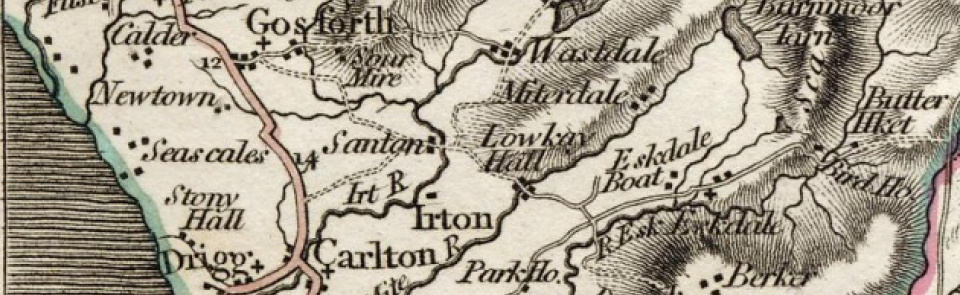
Posted in 52 Ancestors in 52 Weeks, Genealogy | Tagged , , , , , , , , , , , , , , , , , , , , , , , , , , , , , , , , | 1 Comment