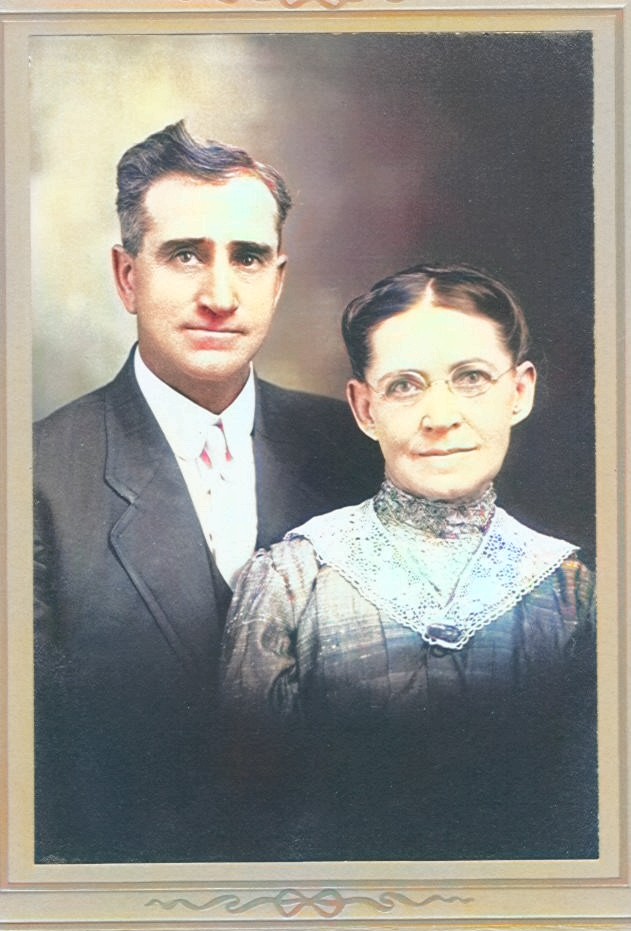
Susan Palmer Kennedy died at 106 1/2 years old. Oldest Resident of Perry County & Southeastern Ohio, Oldest Living Mother of a Son That Fought and Died in the US Civil War. 52 Ancestors, Week 24: Last One Standing.

This week’s writing prompt is Last One Standing. This led me to want to write about my 2nd great-grandmother Susan Palmer Kennedy who died at the age of 106 1/2 years old and was the oldest living resident in Perry County and in southeastern Ohio at the time of her death. In her obituary it states she died of senility, that must have come on only in the last months or year of her life, for she was still quite sharp on her 104th birthday. I had read she was blind the last year of her life, and that led to her spending more time in her room.

On her 106th birthday, she received a letter from then President Herbert Hoover, and also from the then Governor of Ohio, George White.

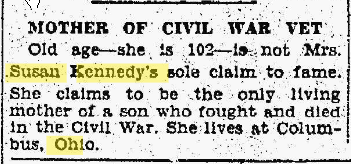
At the age of 102, it was written in a newspaper article about her that she claimed to be the oldest living mother of a son who fought and died in the US Civil War. Her oldest child, a son, John Davis Kennedy, Jr. fought and died in the Civil War on the Union side.

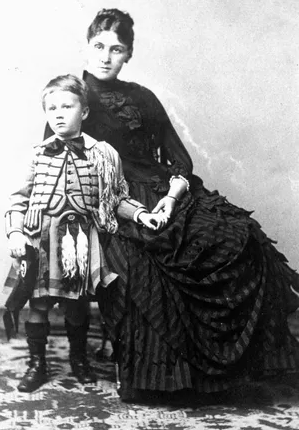
This is a cropped section from a 5-generation photo. Susan Palmer Kennedy and her son (my great-grandfather) Abraham G. Kennedy. She was aged 96 in this photo.

Susan Palmer was born 22 September 1825 in Centre County, Pennsylvania. I almost share a birthday with her, mine is the day before. She died 18 February 1932 in New Lexington, Perry County, Ohio. She was the daughter of John Palmer and Mary Ann Spots (Spatz). She migrated with her family in a covered wagon from Pennsylvania to Ohio. She stated that she walked along the wagon most of the journey.

She married 17 October 1844 in Perry County, Ohio to John Davis Kennedy. You may read more about his Kennedy roots here and about his Davis ancestors here. He also fought in the US Civil War on the Union side. He died in a mining accident on 8 October 1873 in Maxville, Perry County, Ohio. She outlived him by 58+ years.

They had numerous children: John Davis Kennedy, Jr., Abraham G. Kennedy, Mary Jane Kennedy Marlowe, George W. Kennedy, Afred P. Kennedy, Amanda Jane Kennedy Hoy Castor, Laura Ellen Kennedy Johnson, Ida Alice Kennedy Whipps, and Charles Henson Kennedy.

She was quite the character in some ways. She smoked a pipe most of her life. Above is one of the newspaper articles from her 102nd birthday. She is pictured with her son Alfred P. “A.P.” Kennedy, and the pipe she smoked is laying above the newspaper clippings. Below is another newspaper clipping from her 103rd birthday where she discusses that she only smokes the strongest brands of tobacco in her old clay pipe, which she smokes seven days a week.

Side note: My great-grandfather Abraham G. Kennedy lived to be 91 years old, he fell and hit his head and that was the cause of his death. Two of his siblings lived to be 88 years old, but he was the only one to make it into the 90s. Abraham G. Kennedy did have a son, James Worthington Kennedy, who lived to be 101 1/2 years old.

If you’d like to learn more about the 52 Ancestors in 52 Weeks project, please visit here:

52 Ancestors in 52 Weeks.

Or join the Facebook group Generations Cafe.

If you use any information from my blog posts as a reference or source, please give credit and provide a link back to my work that you are referencing. Unless otherwise noted, my work is © Anna A. Kasper 2011-2026. All rights reserved. Thank you.

Posted in 52 Ancestors in 52 Weeks, Genealogy | Tagged , , , , , , , , , , , , , , , | 1 Comment

The True Roots of my Stafford Lines. Delaware, Virginia, North Carolina, Ohio, and With Family Ties to Kentucky, Tennessee, Iowa, & Missouri. 52 Ancestors, Week 42, Dig a Little Deeper

52 Ancestors, week 43 writing prompt is dig a little deeper. When looking at my Stafford ancestors, and digging much deeper, I came upon mistakes and a major correction that needed to be made on who exactly was the root Stafford ancestor. I had noticed that in my Stafford lines, all the DNA descendants were mostly from my direct line with a handful from a known sibling of my ancestor. Although it made for a family line having a large amount of known DNA descendants that I shared, I realized there may be an error in exactly who is the root Stafford ancestor, and after correcting it, it became a line with even more shared DNA matches and descendants.

Also, you will notice how very important it is to truly study hints and record matches provided on Ancestry.com and other genealogical sites, to make sure it is truly a record tied to your ancestor(s).

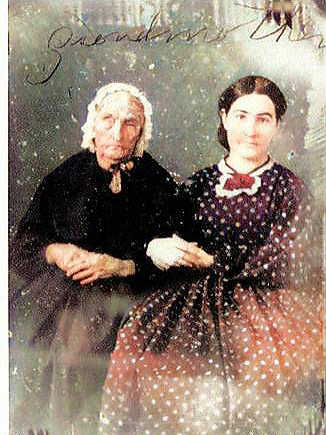
A colorized version of the original B&W photo.

My 4th great-grandmother is Mary Ellen Stafford; she married Peleg Rogers. You may discover more about him and my Rogers ancestors here. She is pictured above with her granddaughter, my 2nd great-grandmother, Cynthia Ann Barrett Doughty. I looked back on the research of my Father’s 1st cousin Ruby, who completed invaluable research on our shared lines, much of it before the invention of the Internet. I noticed she did not identify her parentage, only lists Unknown Stafford as the father, so she could link her known siblings. Then I noticed that many later on decided to link her as the daughter of an Arthur or Charles Arthur or Charles Arthur Gorden Stafford, most listing him born in Nottinghamshire, England. Where the name Arthur or Gorden came from I have no idea, I think I came upon a military record from the 20th century that included the name Charles/Arthur Gorden Stafford, which obviously has no connection to a man living in the 18th century. But Ancestry will give record suggestions like this one that you have to be careful it is actually a correct link, and the correct time period. Some link it to a Charles Stafford who’s found in a baptism record in England (not in Nottinghamshire), but there is no proof of any connection to this Charles Stafford, and none is provided. Some also list her father as a Samuel Stafford, the reason why is to be found in who they list as her mother. They list her mother as Nancy, most often as Nancy Hastings. A Samuel Stafford and a Nancy Hastings, who were Quakers, did marry, but they are not the right ages, they are more the age of Mary Ellen’s generation, they also do not live anywhere near where she was born or later lived.

I could find no other records or reasons as to why they decided to link up my Mary Ellen Stafford as a child of Arthur/Charles Arthur/Charles Arthur Gorden Stafford and Nancy ____/Nancy Hastings or Samuel Stafford and Nancy Hastings.

So, I decided to see what DNA had to say and also, I looked at the few trees that listed some of the known proven siblings of my Mary Ellen Stafford, but gave a different parentage. These few trees listed their parents as Zorababel Stafford and Elizabeth Smith. This led to me spend some days researching this possible link to my line.

My research into family naming patterns as well as DNA, did show that my Mary Ellen Stafford was the daughter of Zorababel Stafford, and the granddaughter of Henry Stafford and his wife Elizabeth _____. Zorababel was married to a woman named Elizabeth Smith. She appears to have been his 2nd wife and the mother of his later born children. The date of birth of Elizabeth is based on the 1850 census where she is listed as aged 70, born about 1780. DNA has strongly suggested his first wife’s maiden name was Hester / Esther McLin, the daughter of Hugh McLin and Charity ____. She is not listed in the will of her father. He made his will in November 1800, and she died prior to this date. She died after March 1796 and before 1798 in what is now Lee County, Virginia. My guess is she may have died in childbirth or of complications after the birth of her son Dr. James Stafford.

Lee County was the final front on the Kentucky Trace, now known as the Wilderness Road and The Trail of the Lonesome Pine. During the 1780s and 1790s, fortified buildings called “stations” were built along the trail for shelter from Indian raids as the settlers followed Daniel Boone’s path into the Kentucky frontier. Lee County was founded on 25 October 1792.

I am a DNA match to numerous descendants of Zorababel’s children. His name was based on the Biblical name Zerubbabel, but he spelled it Zorababel. Zorababel is the Greek form of the name Zerubbabel. I also am a DNA match to the McLin family and their descendants.

His daughter Anna “Ann” Stafford (who married Benjamin F. Davis) named a son Zerubabel Davis. I have several DNA matches to the descendants of Ann Stafford Davis, as well as the fact that she lived in Washington Court House, Fayette, Ohio, near my ancestor Mary Ellen Stafford Rogers. She also named a daughter Hester/Esther after her mother. She is a proven sibling.

His son Young Stafford (who married Mary “Polly” Heath) named a son Zorobabel “Babel” Stafford. Young Stafford is a proven sibling of my Mary Ellen Stafford Rogers, he also lived in Fayette County, Ohio.

His proven son Dr. James Stafford (who married Susan Ward) also named a son Zorababel Stafford. He did not come to Ohio, but I do have a DNA connection to his descendants. He named a daughter Hency (Hester).

Even though my ancestor Mary Ellen Stafford Rogers did not name any of her known children Zorababel, the name was passed down to her grandson Zora Babel Rogers. She did name a daughter Hester/Esther after her mother.

Siblings Ann, Mary Ellen, John, and Dr. James all named daughters Hester/Esther after their mother, and Dr. James named a son McLin.

Children of Zorababel Stafford and first wife Hester / Esther McLin:

  1. Anna “Ann” Stafford born about 1784 in Virginia, and died 27 August 1854 in Washington Court House, Fayette County, Ohio. She married 15 March 1801 in Rowan, North Carolina, to Benjamin F. Davis. (I have several DNA matches to their descendants).
  2. Mary Ellen Stafford born about 1786 in North Carolina, and died 1867 in Edgar, Edgar County, Illinois, she married 26 July 1806 Highland City, Highland County, Ohio, to Peleg Rogers (the son of Shadrach Rogers). They are my 5th great-grandparents.
  3. Charles Stafford born 15 July 1788 in North Carolina, and died 16 September 1866 in Fayette County, Ohio, he married 23 January 1808 in Highland City, Highland County, Ohio, to Nancy Ann Leverton. (I have DNA matches to their descendants).
  4. Young Stafford born about 1789 in North Carolina, and died after 1861 in Fayette County, Ohio. He married Mary “Polly” Heath on 6 October 1818 in Fayette County, Ohio. He lists in the census he was born in South Carolina; I believe he was mistaken, or the census taker made a mistake. (I have DNA matches to their descendants).
  5. John Stafford born about 1790 in Lee County, Virginia, and died 1840 in Overton, Tennessee, he married Keziah ___.
  6. Dr. James Stafford born 6 March 1796 in Lee County, Virginia, and died 13 March 1853 in Bloomfield, Stoddard, Missouri, he married Susan Ward about 1816 in Kentucky. Many link him as being from the 2nd marriage, although that would make Elizabeth 15 when she got pregnant and 16 when she gave birth, not impossible, but I believe he was from the first marriage. He named his last child McLin Bennett “Mack” Stafford. (I have DNA matches to their descendants).

The next known child of Zorabable Stafford was Isaac Stafford and not born until 1800. But we know Isaac Stafford was from the 2nd marriage and that his mother was Elizabeth Smith. She is found living with her son Issac Stafford and his family in the 1850 census for Pike, Stoddard County, Missouri.

Children of Zorababel Stafford and 2nd wife Elizabeth Smith:

  1. Isaac Stafford born 1800 in Virginia, and died 1880 in Bloomfield, Stoddard County, Missouri, he married about 1828 in Tennessee to Susan ____.
  2. Robert William Stafford born 18 December 1801 in North Carolina, and died 13 December 1880 in Clarinda, Page County, Iowa, he married in Tennessee to Sarah ____.
  3. William Nathan Stafford born 1803 in Overton County, Tennessee, and died 5 June 1854 in Weakley/Carroll Tennessee, he married in Tennessee to Phoebe “Pheby” Carter. (I have DNA matches to their descendants).
  4. Susan Stafford born about 1804.
  5. Elizabeth Annice “Annie” Stafford born 1806 in Tennessee, and died 1849 in Mansfield, Wright County, Missouri. She married Auburn “Albin” Davis. (I have DNA matches to their descendants).
  6. Joab Arwin Stafford born 9 May 1808 in Cumberland County, Kentucky, and died 14 January 1853 in Trezevant, Carroll, Tennessee, he married Nancy Ezell Quinn. (I have DNA matches to their descendants).
  7. Sarah Stafford born about 1809.
  8. Henry Stafford born about 1810 in Overton County, Tennessee, and died 20 September 1864 in Bloomfield, Stoddard Missouri, he married about 1831 to Margret Singleton. (I have DNA matches to their descendants).

His children were born in Virgina, North Carolina, Tennessee, and Kentucky! All over the map! A bit of information about where Zorababel Stafford lived:

Prior to 1807 he lived in Virginia and North Carolina, and it’s thought they migrated by 1807 to Kentucky, but he was in Tennessee by 1830, although some of his younger children list their place of birth as Tennessee as early as 1803. Zorababel and his brother Nathan settled for a time near their sisters in Rowan and Guilford Counties, North Carolina. In 1784, Zorababel Stafford obtained 170 acres of land in Rowan County, North Carolina, which is adjacent to Guilford County. In 1787, Zorababel and Nathan are listed as insolvent in records in Guilford County, North Carolina.

Some of the Stafford family migrated from North Carolina to Tennessee and Kentucky.

Charles and Young Stafford were among the very first settlers in Fayette County, Ohio, arriving in 1800. They were emigrants from North Carolina.  Ann Stafford with her husband Benjamin Davis also migrated to Ohio, we know they were still in North Carolina in 1802, but by October 1804 they were in Ohio. Mary Ellen Stafford Rogers also migrated with some of her siblings from North Carolina to Ohio. Some of the family eventually migrated to Iowa.

Brothers Charles and Young Stafford arrived in Fayette County at a time when the area was still largely a wilderness, primarily inhabited by Native Americans and wolves. They were noted hunters and known for their hunting skills. Both participated in the War of 1812. They both raised large families.

One of Charles’ sons, Charles Stafford Jr., continued to live in Fayette County. Charles Stafford had five sons (Robinson, Solomon, Waymon, Stephen, and Charles Jr.) who became farmers, millers, etc. He also had five daughters (Rachel, Rebecca, Nancy, Jane, and Hannah), all of whom married. At least two of Charles’ daughters, Jane and Rebecca, were living near Stanton in Fayette County as of 1872.

The rest of the Stafford family, after migrating from North Carolina to Tennessee and Kentucky stayed in Tennessee, with some eventually migrating to Missouri.

Regarding the parentage of Zorababel Stafford. He was born about 1756 in Delaware. He was the son of Henry Stafford and Elizabeth ____. Some list Elizabeth’s maiden name as Cook, based on a totally unrelated baptism record in England. Her maiden name is unproven. Her first name is proven as she is listed by name in the will of her husband. Their children are also listed in his will found in Sussex County, Delaware.

Some list Henry Stafford as Henry Nathaniel Stafford, this is based on a totally unrelated baptism record in England. He is listed by only the name Henry Stafford in confirmed records in the USA.

In his will, which was made on 21 May 1776, he is listed as Henry Stafford, Planter. The will was probated on 11 July 1776. His wife Elizabeth Stafford is listed as executor. Heirs listed are his wife, Elizabeth; and his sons Henry, Levi, Nathan, Zarobabel, Zadoc, and Roberton Stafford; daughters Elizabeth, Rachel, Lovey, and Delight Stafford, and Mary Pegg. The witnesses are Robert Clarkson, James Cooper, and Valentine Hager.

Stafford is an English surname. Henry Stafford may have been born in Delaware or Maryland, but his parentage is unproven.

McLin is an Irish surname, which is a variant of McGlynn. Macklin/MacKlin are surnames derived from the Irish Mac Giolla Eóin, which means son of the servant of Saint John. The McLin families that I have a DNA connection with were living in the Carolinas and Virginia, and some were originally from County Antrim, Ireland. The surname also has origins as a Scottish surname from the western coast of Scotland and the Hebrides islands. in this case the surname has the same meaning as in Irish, and it is derived from a devotion to St. John and is related to the surnames MacLean and MacLain.

Hester / Esther McLin married Zorababel Stafford about 1783 in Guilford County or Rowan County, North Carolina. Rowan County is adjacent to Guilford County, where Zorababel had land in 1784. Her brother Hugh McKlin/McLin, Jr., married 10 November 1783 in Guildford County to Elenor Jane Pickens. Some of her 1st cousins also married around this time frame in Guilford, North Carolina. She was the daughter of Hugh McLin and Charity ____. Hugh McLin is thought to have been born in Ireland about 1740, he died 1818 in Abbeville, Abbeville County, South Carolina. The family may be related to the Macklins of Lisburn, County Down, Northern Ireland and also of County Donegal, Ireland. He is thought to be the son of David McLin/Macklin. The maiden name of his wife Charity is unknown, some give her the maiden name of Wilson, but with no documentation or proof as to why they are giving her that name.

Dr. James Stafford in addition to naming his youngest son Mclin Bennett “Mack” Stafford, he also named other sons Larkin Milton Stafford, Jefferson Knight Stafford, Anderson Haywood Stafford, and James Milford G. Stafford. We know that his wife Susan Ward was the daughter of Elijah Ward. Nothing more is known about her father Elijah Ward or his parentage, the name of her mother is unknown. Some of the sons that were given surnames as first names could be in honor of her unknown named mother’s maiden name.

I have Larkin ancestors in my paternal tree but only ancestors that were living in County Clare, Ireland and never came to the USA and this is more recent ancestry. I did not find a strong DNA connection to Larkin families living in Colonial Virginia, or the Carolinas, etc. Bennett is a much more common surname, although I have DNA matches with the surname Bennett in their trees, there was no clear connection to my Stafford lines, same with the surnames Knight, Anderson, Milford, and Haywood.

If you’d like to learn more about the 52 Ancestors in 52 Weeks project, please visit here:

52 Ancestors in 52 Weeks.

Or join the Facebook group Generations Cafe.

If you use any information from my blog posts as a reference or source, please give credit and provide a link back to my work that you are referencing. Unless otherwise noted, my work is © Anna A. Kasper 2011-2026. All rights reserved. Thank you.

Posted in 52 Ancestors in 52 Weeks, Genealogy | Tagged , , , , , , , , , , , , , , , , , , , , , , , , , , , | 6 Comments

My Price Ancestors. A Previous Brick Wall Line.

I originally wrote this entry in May of 2023 for a 52 Ancestors weekly writing prompt regarding brick wall ancestors. I am rewriting this entry as of February 2025 and including my new findings from my research in the last year and a half.

I have gone deep down the rabbit hole of looking at others with the surname Price living in the same Ohio counties at the same time as my ancestors. I have spent hours, probably days, doing this, but to no avail. It led me to various Price families from Maryland, Delaware, Pennsylvania, New York, and elsewhere. Some obviously had no connection to my Price family, others were plausible, maybe, but no solid connections were made or provable.

Prior to this new research the furthest I could take my Price line back was to my 3rd great-grandfather John Price. We knew that he was most likely the son of John Price. He was born 7 April 1783 in Maryland, and died 1857 in Hocking County, Ohio. He married 2 May 1810 in Washington County, Maryland to Nancy Anna Albert. She was the daughter of Johann Peter Albert and Anna Walpurgis Hoerner. Her parents were from Niklashausen, Main-Tauber-Kreis, Baden-Württemberg, Germany. I wrote about them a few weeks ago. You may read about them here: Walpurgisnacht (Saint Walpurgis Night), Saint Walpurga, My Ancestors Named Walpurgis from Tauber Franconia (Germany).

Even though his parentage was unproven for many years, many linked him to various Maryland families with Welsh and English roots, and in the end, DNA did show that he was part of some of these same families they linked him up with. By studying not only my DNA matches but those of my maternal half-sister, my maternal half-niece (my half-brother’s daughter), my Kennedy/Price 2nd cousin, and other related DNA matches, I was able to figure his ancestry out and break through the brick wall.

I discovered that part of the reason I had such a confusing experience with my own DNA matches was because I share certain ancestors on both sides of my tree. This confusion is not something I found when looking at the DNA matches of my close maternal DNA family that do not share my paternal side with me.

I discovered that my 7th (and 8th) great-grandparents Thomas Parsons and Isabella ____ are my ancestors on both sides of my tree, which caused me to have DNA matches to this couple on both paternal and maternal lines. I descend from two of their children.

My closer connection is via their daughter Elizabeth Eliza Parsons and her husband John Norris; they are my paternal 6th great-grandparents.

My second connection is via their daughter Mary Parsons and her husband Mordecai Price; they are my maternal 7th great-grandparents. Also, I descend twice from this couple.

Mordecai Price was the son of Thomas Price, Jr. and Elizabeth Johnson, and the grandson of Thomas Price and Elizabeth Phillips.

Mary Parsons and Mordecai Price had the following children:

  1. John Price, Sr., married Rebecca Merryman.
  2. Thomas Price, Sr., married Keturah Merryman.
  3. Rachel Price, married Dennis Garrett Cole.
  4. Hannah Price, married William Tipton and John Bosley.
  5. Benjamin Price, married Elizabeth Hewett. 
  6. Stephen Price, married Constant Wheeler.
  7. Mordecai Price II, married Elizabeth White.
  8. Leah Price, married Thomas Ford
  9. Elizabeth married Thomas Carr
  10. Mary Price, married Jonathan Hanson and George Walker.
  11. Sarah Price, married Thomas Taylor.

My maternal 6th great-grandparents are Rachel Price / Dennis Garrett Cole and John Price, Sr. / Rebecca Merryman.

Dennis Garrett Cole was the son of John Cole and Johanna Garrett.

Rebecca Merryman was the daughter of Samuel Merryman, Sr. and Mary Boone. Side note, I also share Boone ancestors on both sides of my tree.

The next generation down, my 5th great-grandparents are John Price, and his 2nd wife Urith Cole. They were first cousins. John Price was the son of John Price, Sr. and Rebecca Merryman, and Urith Cole was the daughter of Dennis Garrett Cole and Rachel Price.

John Price married 1st to Mary Parrish on 26 June 1748. She died in 1752, and he married 2nd to Urith Cole on 26 January 1753.

John Price and Mary Parrish had one child:

  1. Leah Price, born 1 September 1749 in Baltimore County, Maryland, she died in the same place about 1785. She married Edward Gill.

Children of John Price and Urith Cole:

  1. Rebecca Price, born 25 November 1753 in Baltimore County, Maryland, and died before May 1789. She married Lewis Pitts, Jr.
  2. Sarah Price, born about 1754 in Baltimore, Maryland, and died 1822 in Tyler, Charles City, Virginia. She married 1st to ___ Cole and married 2nd to Lewis Pitts, Jr (the widow of her sister Rebecca Price).
  3. Amon Price, born 3 January 1756 in Maryland, and died 21 September 1843 in Price Edward County, Virginia. He married Rachel Tracy.
  4. John Price, born about 1757 in Baltimore County, Maryland, and died before 1830 in Ohio. He married 1st to unknown (the mother of his children) and married 2nd to Ann Price.
  5. Rachel Price, born 13 June 1758 in Baltimore, Baltimore, Maryland, and died 21 April 1761 in Baltimore, Baltimore, Maryland.
  6. Mary Price, born about 1760 in Baltimore, Maryland, and died 1845 in Washington County, Tennessee. She married Mordecai Ford.

My 4th great-grandfather is John Price, the son of John Price and Urith Cole.

This John Price is found in the 1790 and 1810 censuses for Washington County, Maryland.

By 1820, he is found in the Richland, Fairfield County, Ohio census. It appears that his wife died prior to 1820, for he marries on 7 March 1820 in Fairfield County, Ohio to Ann Price. Nothing more is known about Ann Price. It appears that John Price died prior to the 1830 census.

I have been unable to locate the 1st marriage record for my 4th great-grandfather John Price, so the name of his 1st wife, the mother of his children, is unknown.

Children of John Price:

  1. John Price born 7 April 1783 in Maryland, and died 1857 in Hocking County, Ohio. He married 2 May 1810 in Washington County, Maryland to Nancy Anna Albert. She was the daughter of Johann Peter Albert and Anna Walpurgis Hoerner.
  2. James Price born about 1785 in Maryland, and died before 1850 in Muskingum County, Ohio. The name of his wife is unknown, but he had at least nine children.
  3. Margaret Price born about 1790 in Washington County, Maryland. Nothing more is known about her. She may have died before adulthood.
  4. (Son) Price born about 1801 in Maryland.
  5. (Daughter) Price.

The next generation down is my 3rd great-grandparents John Price and Nancy Anna Albert. They married 2 May 1810 in Washington County, Maryland.

Washington County, Maryland was a hub, and many came from neighboring areas and states to marry there. It is bordered on the NW by Fulton County, Pennsylvania, to the west is Allegany County, Maryland, to the SW is Morgan County, West Virginia, to the south is Berkeley County, West Virginia, to the south is also Jefferson County, West Virginia, to the SW is Loudoun County, Virginia, to the east is Frederick County, Maryland, and to the NE is Franklin County, Pennsylvania.

My ancestors John Price and Nancy Anna Albert named their children: John F., Sarah Ann “Sally”, James, Mary Ann, and Nancy Jane Price.

Their first two children were born in Washington County, Maryland. He is found in the 1820 and 1830 US Federal Censuses for Richland, Fairfield County, Ohio. His next four children were born in Richland, Fairfield County, Ohio. By 1840 he is living in Monday Creek Township, Perry County, Ohio. The distance between Richland Township in Fairfield County and Monday Creek Township in Perry County is 14.3 miles. Fairfield and Perry Counties are next to each other and have some shared history. By 1850 he is living in Green, Hocking County, Ohio. Hocking County is next to Perry County. The distance between Monday Creek Township in Perry County and Green Township in Hocking County is 13.1 miles. He dies in 1857 in Hocking County, Ohio. His wife Nancy Albert Price is found in the 1860 census living in Green, Hocking County, Ohio, in the household of her daughter Nancy Jane Price and her husband Richard Henry Taylor and their children. Nancy dies in 1862 in Hocking County, Ohio. John and Nancy (Albert) Price are buried in Webbs Chapel Cemetery.

My line continues with the son James Price who married Julia Ann Mateer/Meteer, the daughter of Robert Meteer and Esther Chambers. They lived most of their lives in Monday Creek (Maxville), Perry County, Ohio but did live in Falls, Hocking County, Ohio during one census.

You may learn more about my Mateer/Meteer ancestors, and about my connection to my Mateer cousin actress Carole Lombard.

Famous kin of Mordecai Price and Mary Parsons:

Photo above Richard Nixson with wife and children.

Richard Nixon’s line is via their son Mordecai Price II and his wife Elizabeth White.

If you’d like to learn more about the 52 Ancestors in 52 Weeks project, please visit here:

52 Ancestors in 52 Weeks.

Or join the Facebook group Generations Cafe.

If you use any information from my blog posts as a reference or source, please give credit and provide a link back to my work that you are referencing. Unless otherwise noted, my work is © Anna A. Kasper 2011-2026. All rights reserved. Thank you.

Posted in 52 Ancestors in 52 Weeks, Famous Kin, Genealogy | Tagged , , , , , , , , , , , , , , , , , , , | 1 Comment

My Beardsley Ancestors, The Lost Village of Beard’s Wood, My Family Connection to P.T. Barnum and General Tom Thumb. 52 Ancestors, Week 20: Bearded.

This week’s writing prompt is the word bearded. Although, my great-great grandfather John Davis Kennedy had a pretty cool looking beard in the photo of him in his US Civil War Union uniform, there is not much else to write about it, he died a decade later in a mining accident and no other photos exist of him, nor are there any stories passed down about him and his beard, or any other ancestors with beard stories, or ones that were barbers. So, I will stay with original idea that came to mind, to write about my direct ancestors with the surname Beardsley.

The surname Beardsley is an English surname. It comes from the words beard and wood. The placename is believed to derive from the Olde English pre 7th Century byname Beard, from the vocabulary word for a beard, with leah meaning wood, glade, or clearing, hence it was a place named Beard’s Wood. The surname Beard by itself was a nickname for a bearded man. Beard’s Wood was a locational name for a now lost place, believed to have been situated in Nottinghamshire or nearby Leicestershire where the name is most prevalent. An estimated seven to ten thousand villages and hamlets are known to have disappeared since the 12th Century, due to such natural causes as the Black Death of 1348, in which an eighth of the population perished, and to the widespread practice of enforced “clearing” and enclosure of rural lands for sheep pastures from the 15th Century onwards. (1 & 2)

Some with the surname Beardsley do have a kinship to the surname Bardsley, which is a parish between Ashton and Oldham, near Manchester. This is not the case with my ancestors. And actually, almost all of the American Beardsley families, that came to this country in colonial times, are from the areas of Nottinghamshire and nearby Leicestershire.

My immigrant Beardsley ancestor was William Beardsley. He was born in about 1605 based upon his age being listed as 30 years on the manifest of immigrant ship Planter upon which he arrived in Boston in 1635.

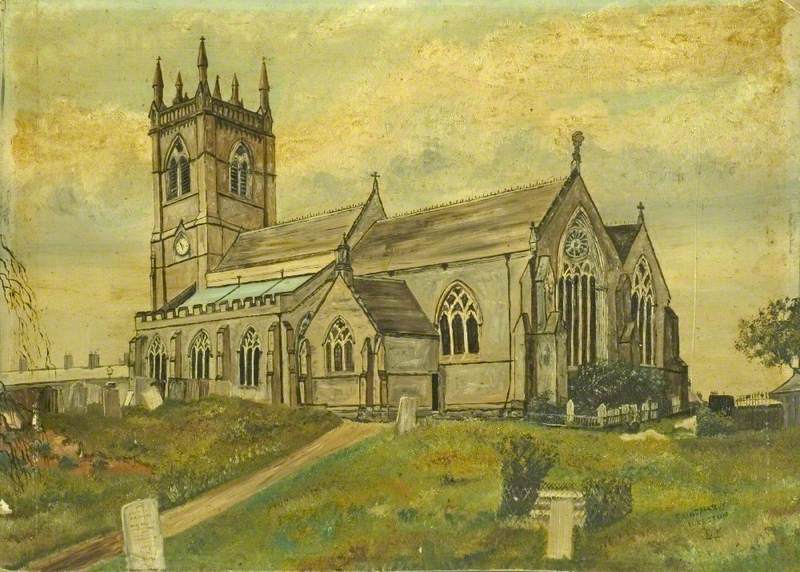
Image above is of St. Mary’s Church, Ilkieston, Derbyshire. Artwork by
Muirhead Evans (1849–1907) (attributed to).
Erewash Borough Council

He was of a Beardsley family from the areas of Nottinghamshire and Leicestershire. His wife was Mary Harvie. She was baptized on 26 January 1631/32 as Maria Harvie (Latin spelling of Mary) at Saint Mary’s Church in Ilkieston, Derbyshire, England. She was the daughter of Richard Harvie. Various later records show her surname spelling as Mary Harvie or Harvey.

William Beardsley and Mary Harvie married at the same church; Saint Mary’s on 26 January 1631. The baptism of their third child, a son, John, took place there on 2 November 1633.

The distance between Ilkieston and Nottinghamshire is 24 miles (38.6 km), and it is 20.3 miles (32.7 km) between Ilkieston and Leicestershire.

A bit about Ilkieston. It is a town in the Borough of Erewash, Derbyshire, England, on the River Erewash. The town is close to both Derby and Nottingham and is near the border with Nottinghamshire. The eastern boundary of Ilkeston is only two miles from Nottingham’s western edge and is now part of the Nottingham Urban Area. (3)

St. Mary’s is a parish church in the Church of England. It was built in the 14th century (although the church was founded in 1150), it is known as the “Mollis Chapel” because of a stained-glass window which shows the rising sun above the cross. (4)

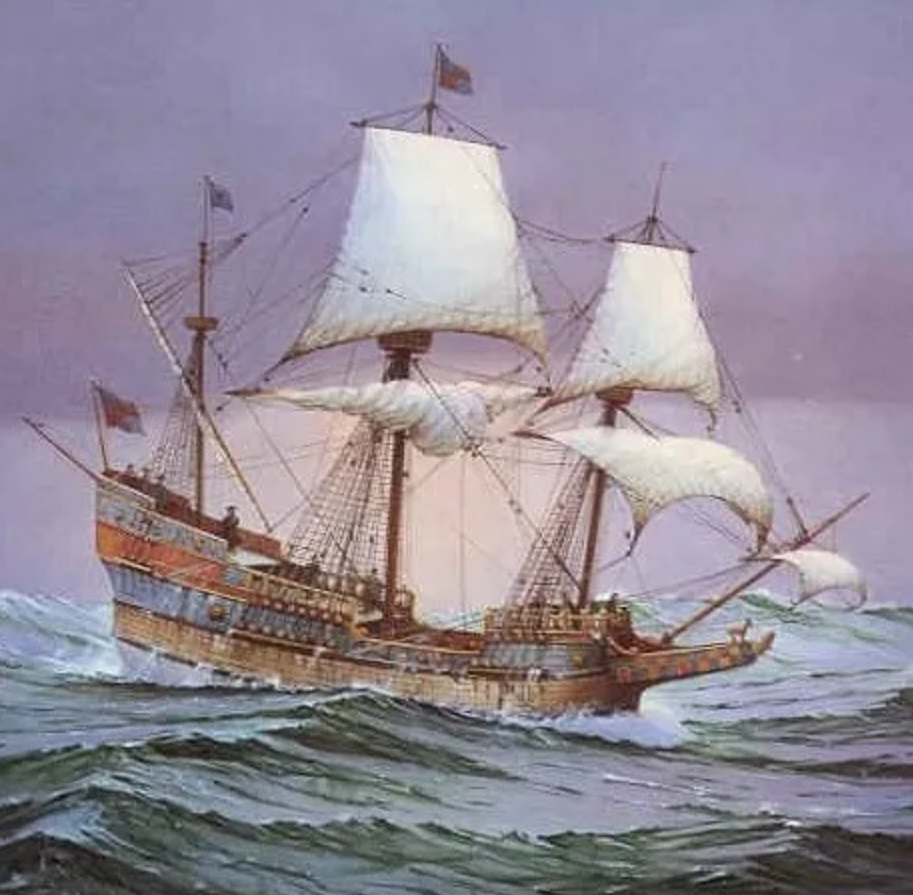
In 1635, William Beardsley and his family were identified as “of Leicestershire bound for Concord” on the manifest of the ship Planter, bound for Boston from London. Nicholas [Nico] Trerice was the shipmaster. The Planter departed London on about 10 April 1635 and arrived at Boston on Sunday, 7 June 1635. The Beardsley family brought certificates (references) from the Minister of St. Albons [St. Albans] in Hertfordshire.

The Planter ship’s manifest includes the following: Wm. Beadsley, mason, age 30; Marie Beadsley, age 26; Marie Beadslie, age 4; and John Beadslie, age 6 mo. (5) We learn from the ship’s manifest that William’s occupation was that of a mason.

Upon arriving in Boston, the Beardsley family first settled at Concord, Massachusetts where William was admitted to the church as “Wil(iam) Beadseley” a “freeman ” on 7 December 1636. Concord was located about 20 miles northwest of Boston. It was the first inland settlement by the Massachusetts Bay Colony immigrants in New England. Concord was established in 1635.

The Beardsley family and several others on the ship Planter were followers of the Rev. Adam Blakeman, a Church of England clergyman, who arrived at Boston in 1638. In the History of Stratford, Connecticut, 1639-1939: Stratford Tercentenary Commission, 1939 by William Howard Wilcoxson, the author writes:

“that, finding no land to their liking in Massachusetts, the Blakeman company trekked to Wethersfield, where again they discovered all the best land was already occupied. By August 1639 they were living on land claimed by Connecticut on the banks of the Pequonnock River, possibly as squatters. The Connecticut General Court dispatched the governor to confer with the planters at Pequannock, to give them the oath of fidelity. The English settlers appear to have seized Indian land from the Pequonnock Indians without warfare [but] there are no records of the Blakeman company’s receiving deeds from the Pequonnocks. The Pequonnocks were apparently allowed to remain on portions of their ancestral lands. And when the Pequonnocks demanded belated payments in the 1650’s, the Stratforders paid them—not to ease their consciences but simply to keep the peace. The Indians might be seen by the English as heathen nuisances, but they were still children of God, and they were neighbors.”

Led by Rev. Blakeman, the Beardsley family and 16 other families were the first Europeans to arrive there in 1639. The place was called Cupheag by the native Pequonnock people. The settlers arrived by boat at a spot called Mac’s Harbor. The area was called Pequonnocke Plantation by the General Court on 10 October 1639, then named Cupheag in June of 1640. In April 1643, it became known as Stratford. (6)

William Beardsley died between 28 September 1660, the date of his will, and the will probate date of 6 June 1661. No exact date of death has been found.

In 1939, on the 300th anniversary of the settlement of Stratford, the descendants of William and Mary Beardsley placed a bronze plaque at this Union Cemetery in Stratford. It reads as follows:

“To honor the memory of William and Mary Beardsley and the other first settlers of Stratford who landed near this spot in 1639.
Erected by the Beardsley Family Association 1939″

It is pictured above.

There is a large stone cenotaph monument with the names of William, Mary and several other Beardsley descendants at Union Cemetery. William and Mary Beardsley are not interred there. The Union cemetery was established after his death, in 1678.

My line continues with their daughter Mary Beardsley who married first to Thomas Wells (my ancestor). She married 2nd to widower Deacon Samuel Belding, Sr. (who also just happens to also be my ancestor with his first wife Mary (maiden name unknown) who was killed by Native Americans). I am also a descendant of Deacon Samuel Belding, Sr’s 3rd wife Mary Meekins (with her husband John Allis).

My line down from William Beardsley:

  1. William Beardsley and Mary Harvey (daughter of Richard Harvie/Harvey).
  2. Mary Beardsley and Thomas Wells (son of Thomas Wells and Frances Albright).
  3. Mary Wells and Stephen Belding (son of Deacon Samuel Belding, Sr. and Mary (killed by Indians) maiden name unknown).
  4. Elizabeth Belding and Richard Scott (son of William Scott and Hannah Allis).
  5. Mary Scott and Elisha Root (son of John Root and Mary Leonard).
  6. Lusannah “Lucy” Root and Sampson French (son of Samson French, Sr. and Mary Clement).
  7. Submit “Mitty” French and Phineas Merchant (son of Ezra Merchant, Jr. and Catherine Northrup).
  8. Cordelia Merchant and Lewis F. Cole (son of Nathaniel Cole, Jr. and Laura A. Fuller).
  9. Loren Richard Cole and Nancy M. Losure (daughter of 1st cousins Joseph Losure and Sarah Lozier).
  10. Joseph Edward Cole and Anna Cora Prindle (daughter of Daniel Prindle and Sarah Jane “Jennie” Doman). – My great-grandparents.
PT Barnum and General Tom Thumb.

Famous kin descended from William Beardsley and Mary Harvey:

  1. Jeremiah Day – 9th President of Yale University.
  2. P.T. Barnum – Co-Founder of Barnum & Bailey Circus.
  3. W. K. Kellogg – Founder of the Kellogg Company.
  4. Frank Kellogg – 45th U.S. Secretary of State Nobel Peace Prize Winner.
  5. General Tom Thumb – Dwarf Circus Performer.
  6. Emily Dickinson – American Poet.
  7. Howard Hawks – Movie Director.
  8. Zoe Kazan – TV, Movie and Stage Actress.
  9. Howard Dean – 79th Governor of Vermont.
  10. Phil Knight – Co-Founder, Nike Inc.
  11. Janis Joplin – Singer and Songwriter.
  12. Anna Gunn – TV and Movie Actress.
  13. Edward Norton – Movie Actor.
  14. Amy Adams – Movie Actress.
  15. Treat Williams – TV & Movie Actor.

I share additional ancestors with most of the people in the list above. Some even share the same next 3-4 generations down with me. I find it interesting that PT Barnum and General Tom Thumb were both descendants of William Beardsley and Mary Harvey, something I doubt they ever knew in their lifetimes. They were fourth cousins, one time removed.

References:

  1. Beardsley/Beardslee . . . everyone gets the drumstick here. FamilyTreeDNA groups. Last name: Bearsley.
  2. Surname Beardsley. The Internet Surname Database.
  3. Ilkeston. Wikepedia.org
  4. St Mary’s Church, Ilkeston. Wikipedia.org
  5. The original lists of persons of quality; emigrants; religious exiles; political rebels; serving men sold for a term of years; apprentices; children stolen; maidens pressed; and others who went from Great Britain to the American Plantations, 1600-1700; with their ages and the names of the ships in which they embarked by John Camden Hotten, ed., 1874. p. 50.
  6. Our History Stratford Connecticut by Barbara M. Sirois. 1988.

Additional source:

  1. William Beardsley – FAG (FindAGrave.com)

If you’d like to learn more about the 52 Ancestors in 52 Weeks project, please visit here:

52 Ancestors in 52 Weeks.

Or join the Facebook group Generations Cafe.

If you use any information from my blog posts as a reference or source, please give credit and provide a link back to my work that you are referencing. Unless otherwise noted, my work is © Anna A. Kasper 2011-2026. All rights reserved. Thank you.

Posted in 52 Ancestors in 52 Weeks, Famous Kin, Genealogy | Tagged , , , , , , , , , , , , , , , , , , , , , , , , , , , , , , , , , , , , , , , , , , , , , , , , , , , , , , , , , , , , , , , , , , , | 3 Comments

Walpurgisnacht (Saint Walpurgis Night), Saint Walpurga, My Ancestors Named Walpurgis from Tauber Franconia (Germany)

Today, April 30th, is half-way to Halloween! For someone that loves Halloween — I am a closet actress that missed her calling! — today is a pleasant reminder that summer, which hasn’t even started, will be over soon enough! I am not a fan of summer and the desert heat it brings with it. Happy Walpurgisnacht!

The night from April 30th to May 1st is called Walpurgisnacht, an abbreviation of Sankt-Walpurgisnacht – Saint Walpurgis’ Night in Germany, and sometimes also called Hexennacht (witches’ night). It has been suggested that it has its roots in the Celtic spring celebration of Beltane, and with older May Day festivals of Northern Europe. It is said that the witches meet on the Brocken, the highest peak in the Harz Mountain range, to dance around a fire. Though the saint has no concrete connection with this festival, her name became associated with witchcraft and country superstitions because of the date, which is her feast day (the day of her canonization). In modern times, Walpurgisnacht has grown to become somewhat similar to the celebration of Halloween. (1, 2, 3, 4, & 5)

“Walpurgis Night. . .when the devil was abroad— when graves opened, and the dead came forth and walked. When all evil things of earth and air and water held revel.” — from the short story “Dracula’s Guest” by Bram Stoker.

Variations of Walpurgis Night are celebrated in many countries of Northern and Central Europe, including in addition to Germany, the Netherlands, the Czech Republic, Slovakia, Slovenia, Sweden, Lithuania, Latvia, Finland, and Estonia. Although in Finland, Denmark, and Norway, the tradition of lighting bonfires to ward off witches is also observed on Saint John’s Eve (Sankthansaften, Midsummer’s Eve), which is associated with the Nativity of Saint John the Baptist. (3 & 6)

For Christians, Walpurgisnacht was the feast of Saint Walburga (Walpurga). Saint Walburga (Walpurga) was born in 710 CE in Dumnonia, today the area roughly corresponds to modern Devon. This was during the period that it was becoming incorporated into Anglo-Saxon England. She was born into a wealthy family. She was the daughter of a Christian Saxon king of the eighth century, Richard of Wessex, aka Richard the Pilgrim. At the age 10 or 11, she became an orphan and was raised and educated in a monastery in Wimborne in Dorset. She went to Germany at the call of her uncle, Saint Boniface (Holy Boniface), to aid in the work of evangelizing the Germanic tribes. Two of her brothers were missionaries, her brother Wunibald went to Heidenheim and her brother Willibald to Eichstätt. By this time, Walburga was now a nun. It is said that during her journey across the Channel, the boat got caught in a major storm. Walburga prayed without ceasing throughout the whole night until they safely reached Antwerp. Because of this ‘miracle’ she is the Patron Saint of seafarers and sailors, as well as, against storms and hydrophobia. The Christians of Germany hailed St. Walpurga for battling pests, rabies, and whooping cough, as well as against witchcraft. (1, 2, 3, & 8)

Walburga was a missionary to Franconia, particularly in Tauberbischofsheim, Bischofsheim on the Tauber. Tauberbischofsheim is just south of Niklashausen. It is 6.4 miles (10.3 km) between Tauberbischofsheim and Niklashausen. When her brother Wunibald died in 761 she took over the monastery he founded in Heidenheim. Shortly after, a women’s monastery was added, and she was the abbess of both. (9 & 10)

Walpurga died on 25 February 777 or 779 and was buried at Heidenheim. In 870, Walpurga’s remains were transferred to Eichstätt. (9)

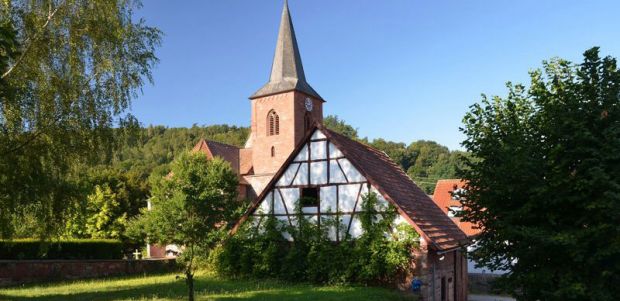
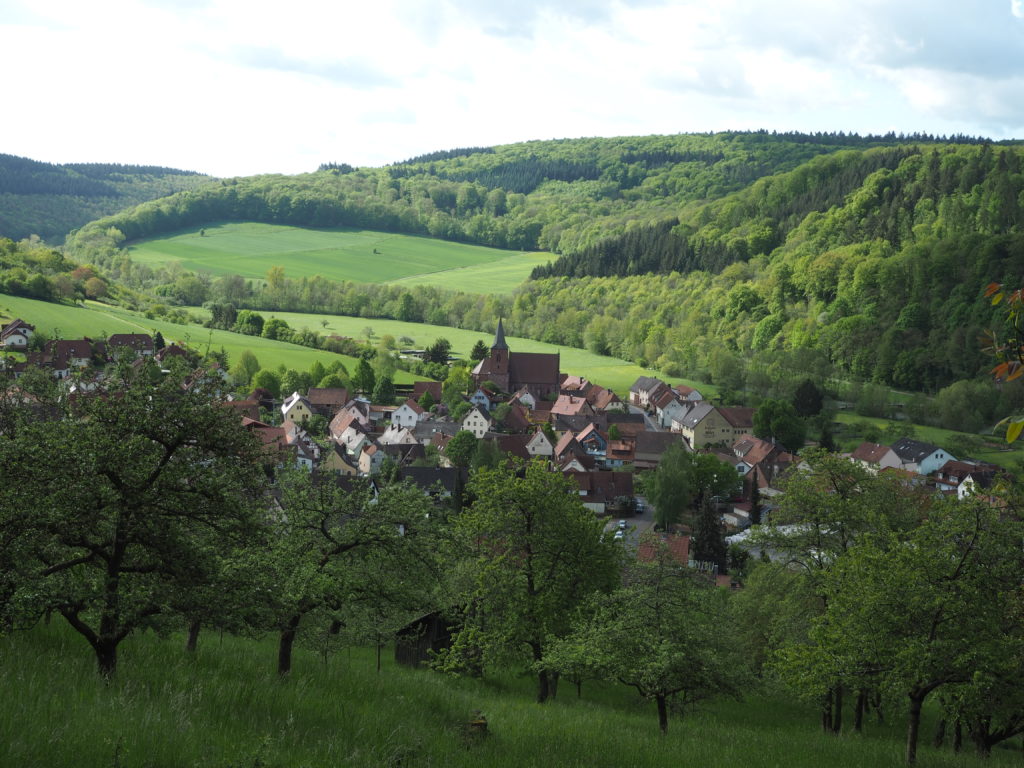
The above photo is of the village of Niklashausen in the Tauber Valley. Niklashausen is a tiny village with a current population of about 390 people. It is in the German state of Baden-Württemberg and sits right at the border with Bavaria. In this region the dialect of German that is spoken is East Franconian. (12)

A bit more about Niklashausen, taken from the official website of Niklashausen: (translated from German)

The village is located in a charming basin on the lower reaches of the Tauber, framed by steep mountain slopes with dry stone walls made of red sandstone. From these altitudes you have a wonderful view of the river and the village with its beautiful historic church, while in the area, you can take wonderful tours on the bike path. This historic place is the home of the famous piper of Niklashausen [aka The Drummer of Niklashausen]. (12)

I have a myriad of German ancestors in my tree, hailing from all over Germany. But I only have one German line that includes ancestors and kin with the name Walpurgis. The reason for this became abundantly clear to me when I learned that St. Walpurga was a missionary to Tauberbischofsheim, which is just south of the village of Niklashausen. Her influence in the area was quite strong and engendered many girls of the area to be given the name Walpurgis in her honor.

(Since I originally wrote this blog post, I did discover another ancestor with the first name Walpurga/Walburga. Walpurga Braun, who was born in Dettingen an der Erms, Reutlingen, Baden-Württemberg, Germany, she married Daniel Handel.)

My 3rd great-grandmother was named Nancy Anna Albert. She was born about 1792 in Washington County, Maryland. She was the daughter of Johann Peter Albert and Anna Walpurgis Hoerner, who were both born in Niklashausen. Not only was her mother named Anna Walpurgis, but her father’s maternal grandmother was named Anna Walpurgis _____ Rükert. She had a sister named Anna Walpurgis Albert, and a paternal first cousin named Anna Walpurgis Rückert.

I discussed in a previous post about German naming customs and that the first name, in this case Anna, would be the baptism name and the middle name, called the Rufname, in this case Walpurgis, was the name they were called. The Rufname along with the surname is what would be used in marriage, tax, land and death records.

In the above map of Franconia, you can see Tauberbischofsheim (in the yellow and white striped area) on the border with Bavaria.

In addition to my ancestor Nancy Anna Albert, the other known children born to Johann Peter Albert and Anna Walpurgis Hoerner were sons Johann Georg and Johann Martin Albert and daughters Anna Walpurgis and Maria E. Albert (Malott).

Johann Peter and sister Anna Walpurgis Albert were both born in Niklashausen. Their baptism records are found there. Johann Georg Albert died in Urphar, Main-Tauber-Kreis, Baden-Wuttemberg, Germany. He married on 13 July 1799 to Anna Maria Schmidt in Urphar. Uphar 5.4 miles (8.7 km) from Niklashausen. They had five children, two stayed in Germany, the other three immigrated to the USA. I am a DNA match to descendants of Johann Georg Albert and Anna Maria Schmidt.

Nothing more is known about Anna Walpurgis Albert; she may have died before the family immigrated to America, or she may have stayed in Germany.

Johann Martin Albert was born in New York (some list his place of birth as Pennsylvania) but his baptism record is found in the New York City Dutch Reformed Church Records. He married on 15 June 1811 in Hagerstown, Washington County, Maryland, to Catherine Klein. I am a DNA match to his descendants.

The Albert family may have spent time living in Pennsylvania, but are found in records in Washington County, Maryland. Johann Martin Albert eventually does migrate to Lancaster County, Pennsylvania, where he is buried.

Maria E. Albert was born in Maryland, most likely in Washington County, Maryland. She married 27 March 1807 in Hagerstown, Washington County, Maryland, to Thomas Malott. Their first child was born in Washington County, Maryland, the family then migrated to Stark County, Ohio, and eventually to Congress, Wayne County, Ohio. I am a DNA match to their descendants.

Nancy Anna Albert was born in Maryland, most likely in Washington County, Maryland. She married 2 May 1810 in Hagerstown, Washington County, Maryland, to John Price. He was the son of John Price, and possibly his mother was Margaret Fling (Flinn). I do have a DNA connection to the Fling (Flinn) families of Colonial Virginia and Maryland, and a more distance connection to those that migrated to Pennsylvania.

Children of James Price:

My ancestor John Price who married Nancy Anna Albert. James Price who did marry, but his wife’s name is unknown, he migrated to Muskingum County, Ohio, he had several children. Elizabeth Price who married John Wolfkill, they stayed in Washington County, Maryland, and had issue. And at least one other child, a daughter, whose names is unknown.

I do not believe that John Jacob (Johann Jacob) Price that married Christiana Catharina Albert, is one of the Price siblings. For a long time, I thought that Christiana and my Nancy were siblings, but baptism records show she was of a different Albert family that also lived in Washington County, Maryland.

John Price and Nancy Albert had the following children: John F. Price (married Mary Ann V. ___ and Sarah Hopkins), Sarah Ann “Sally” Price (married Robert T. Baird), my ancestor James Price (married Julia Ann Mateer/Meteer), Mary Ann Price (married Jacob Adam Lehman), and Nancy Jane Price (married Richard Henry Taylor).

The Price family migrated from Maryland to Ohio. First living in Richland in Fairfield County then to Monday Creek in Perry County and finally to Green, Hocking County, Ohio.

My line continues with James Price and Julia Ann Mateer/Meteer (daughter of Robert Meteer and Esther Chambers), they are my 2nd great-grandparents. They migrated briefly to Logan, Falls, Hocking County, but spent most of their lives in Perry County, Ohio, and it is where they are buried.

Although the name Walpurgis was not passed down in later generations once they were in America, I feel a kinship to St. Walpurga and to Walpurgisnacht. Happy Halfway to Halloween and Walpurgisnacht!

References and Sources:

  1. Walpurgisnacht – Night of the Witches, Named after a Saint. April 29, 2022. Anika Rieper. More than Beer and Schnitzel. Almost everything you want to know about German culture and language.
  2. Catholic Activity: St. Walburga. Catholic Culture. catholicculture.org
  3. Walpurgis Night. Wikipedia. en.wikipedia.org
  4. Mendelssohn-Bartholdy, Felix; Goethe, Johann Wolfgang von (2005). Die Erste Walpurgisnacht: Ballade von Goethe für Chor und Orchester. Yushodo Press Company.
  5. Melton, J. Gordon (2011). Religious Celebrations. ABC-CLIO. p. 915.
  6. Walpurgis Night in Sweden in 2023. officeholidays.com
  7. WHAT IS WALPURGISNACHT? 12 November 2020. Macs Adventure.
  8. “CATHOLIC ENCYCLOPEDIA: St. Walburga”. newadvent.org.
  9. Saint Walpurga. Wikipedia. en.wikipedia.org
  10. Wunderli, Richard (1992). Peasant Fires: The Drummer of Niklashausen. Chapter IV: Walpurgisnacht. Indiana University Press. p. 46.
  11. Gemeinde Werbach – Niklashausen
  12. Niklashausen official website

To read more about the celebration and history of Walpurgisnacht:

  1. Walpurgis Night – Halloween in April? April 29, 2018, by Christine Valentor. A WordPress Blog.
  2. Walpurgis Night – World History Encyclopedia. worldhistory.org

To learn more about St. Walpurga:

  1. St. Walburga. Faith. University of Notre Dame. faith.nd.edu
  2. Saint Walburga. Benedictine Nuns, St. Emma Monastery, Greensburg, Pennsylvania. stemma.org

To learn more about Niklashausen:

  1. Niklashausen official website
  2. Gemeinde Werbach – Niklashausen

Image credits:

  1. Walpurgisnacht photo at the very top is from WHAT IS WALPURGISNACHT? 12 November 2020. Macs Adventure.
  2. Happy Halfway to Halloween & Walpurgisnacht graphic is from The Spooky Vegan – Sarah E. Jahier. thespookyvegan.com
  3. Stained glass window of St. Walpurga is from the windows of the Shrine of St. Walburga. Benedictine Nuns, St. Emma Monastery, Greensburg, Pennsylvania.
  4. Village of Niklashausen – Gemeinde Werbach.
  5. View of Niklashausen from the Mühlberg – Niklashausen official website.

If you use any information from my blog posts as a reference or source, please give credit and provide a link back to my work that you are referencing. Unless otherwise noted, my work is © Anna A. Kasper 2011-2026. All rights reserved. Thank you.
Posted in Genealogy, Religious | Tagged , , , , , , , , , , , , , , , , , , , , , , , , , , , , , , , , , , , , , , , , , , , , , , , , , , , , , , , , , , , , , , , , , , , , , , , , , , , , , , , , , , , , , , | 2 Comments

My Ancestor, Royal Servant Edmund Moody Saved the Life of Henry VIII and Changed History! 52 Ancestors, Week 16 – Should Be a Movie.

This week’s writing prompt fits quite well into the story of my ancestor Edmund Moody (aka Edmond Moodye), his life would very much make for an interesting historical, costume drama movie, or even a time-leaping Sci-Fi story!

My ancestor Edmund Moody was born about 1495 in Bury St. Edmunds, Suffolk, England, and died 15 September 1562 at Moulton, Suffolk, England. Not much is known about him prior to him saving Henry VIII’s life. We do know that he was the son of Edward Moody. For we find in the History of Hitchin, it states that, From Edward Moody, 1504, whose son twenty years after saved the great despoiler’s life when he fell head first into the Hiz, they received two quarters of malt. (1)

He was married, some say twice. The name of his wife is unproven, but she may have been named Anne. He had at least four sons.

Edmund Moody in The Tudors, Season 1, Episode 4.

He served as a royal footman in the retinue of Henry VIII. You probably get visions of footmen in later centuries similar to those found in Downton Abbey, or maybe of a footman that ran along the side of a royal carriage. But Edmund was a footman of the stable, a cadge-man, the lowest ranking servant of the hunt.

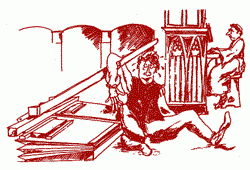
In 1525, Henry VIII during a hawking excursion at Hitchin in Hertfordshire, attempted to leap over a clay marsh using a pole: the pole broke under Henry’s weight and Henry fell into the marsh, the clay of which closed over his head. Moody leapt into the marsh and pulled the king’s head up through the clay, thereby preventing Henry from drowning and saving his life.

These events are well chronicled by several sources, including the following:

In this yere the kyng folowyng of his hauke, lept over a diche beside Hychyn, with a polle and the polle brake, so that if one Edmond Mody, a foteman, had not lept into the water, and lift up his hed, whiche was fast in the clay, he had bene drouned: but God of his goodnes preserved him. (2)

Henry the Eighth, following his Hawk, leapt over a ditch with a pole, which broke; so that, if Edmund Moody (a Foot-man) had not leapt into the Water, and lift up the King’s Head, which stuck in the Clay, he had been drown‘d (This Foot-man was rewarded both with Means and Arms, speaking his Service done to his Prince). And the King lived to perform afterwards a Deed of grand Concern. (3)

Henry VIII, too, was a keen and active falconer. He suffered a bizarre accident when flying falcons at duck. As he leaped across a brook his vaulting-pole broke, pitching the king head-first into the mud. A quick thinking cadgeman – the lowest-ranking servant of the hunt – jumped in and pulled the king out, otherwise history might have followed a different course. (4)

The photo I posted above is of an actor playing Edmund Moody in The Tudors, Season 1, Episode 4. They do not name this servant that saved Henry VIII’s life in that TV series. I do not know who the actor is, his name is not listed in the credits. So, my ancestor gets only a small nod for a few minutes. In the limited series Wolf Hall, the accident and saving of Henry VIII is not shown, but my ancestor is mentioned by name.

The Coat of Arms granted to my ancestor Edmond Moodye.

As a reward for this valiant action, he was rewarded with a pension of a groat a day or about £6 per annum, a very fair sum when we compare it with the £5 pension which the King granted to the former prior of Wymondley a few years later. Payment of Moody’s pension was honored as we see in the following example. “The 24th day of September 1531, paied to Edmond the foteman, being in pension of a grote a day for one quarter now ended, xxx shillings.” Although he started to receive the pension right away, as well as an improvement in his station in life, and the gratitude of the King, he did not receive the lands from Henry VIII or the coat of arms until October 1540 and shortly after he left court and went to live on his lands.

It appears he remained a footman and in royal employ for some years, for it states he was one as of 1531, although he most likely would have moved up the ranks a bit. In Tudor times, working as a servant was seen as a respectable career and many masters (in this case the King of England) saw some of their staff as good friends, and some became the master’s favorite. I believe that Henry VIII looked upon Edmund Moody favorably since he did save his life, especially since he eventually gives him land and a coat of arms. When Henry VIII was drowning in the mud, Edmund was the only person around him, so it was quite advantageous for Henry that Edmund chose to act quickly to save his life.

Servants generally lived in the home they worked at and would be provided with food and clothes in addition to lodging. All servants would have also had annual contracts of employment, protected their rights and ensured that their employer treated them properly. Most domestic servants would have slept in shared chambers in either the cellars or attics of the castle buildings. There might also be simple buildings outside the castle for herdsmen, servants of the stables, mill workers, woodcutters, and other craftspeople. (6 & 7) I would venture to guess that servants of the hunt would have slept in buildings near where the falcons were kept.

Regarding the gifting of land to Edmund, Moulton is a peculiar jurisdiction of the Archbishop of Canterbury, rather than the Archdeacons of Sudbury or Suffolk.

That is why Henry VIII was able to grant Edmund Moody land there; Moulton was the closest place in Suffolk to Edmund’s home which was entirely in Henry’s gift. The land was probably confiscated from a religious organization. (5)

Had Moody not leapt into the marsh to save the King, it is likely that the King would have perished: if Henry had so perished, here are just a few of the innumerable ways history would have changed if Edmund Moody had not saved the life of Henry VIII in 1524/1525:

  1. Mary I (Bloody Mary) would have become Queen at age 8. She, and her mother Queen Catherine, were devoutly Catholic and England would probably have remained Catholic as long as she reigned, presumably until at least 1558, and may have remained Catholic much longer.
  2. Neither the Act of Supremacy nor the dissolution of the monasteries would have occurred.
  3. Henry VIII would have been married to only one woman, his 1st wife Catherine of Aragon.
  4. Mary I would have married younger and probably to someone else and would have most-likely had heirs.
  5. Elizabeth I would never have been born and her long reign and bringing about what is known as the Elizabethan era would never have existed.
  6. England would have remained Catholic and there would have never been English Puritans to come to America. American history would have been different, and we would have either remained a British Colony much longer, or even could have instead been a Spanish, Portuguese, or French Colony!

Edmund Moody’s life would have changed as well. He would have remained a low-ranking royal servant, he would not have become a gentleman, he would not have received the lands, the coat of arms, or the pension. His whole life changed that day when he went from being an unnoticed low-ranking royal servant, to one of the King’s favorite footmen and eventually became a gentleman, and part of the landed gentry.

Edmund Moody (Edmond Moodye) had the following children:

  1. Rev. William Moody buried 28 June 1567 at St. Peter’s, Cockfield, Suffolk, England. He was the rector of St. Peter’s in Cockfield.
  2. Rev. John Moody buried 24 April 1567 at Benhall, Suffolk, England. He was the vicar of St. Mary’s Church in Benhall.
  3. Rev. Thomas Moody buried 26 August 1569 in Islington, Middlesex, England. He was the rector of Lackford, Suffolk, then rector of St. Peter’s, Moulton, Suffolk, before becoming the Chaplain of Islington. He was the chaplain to Lady Worcester, the widow of Henry, 2nd Earl of Worcester.
  4. Richard Moody, born 28 April 1524 at Bury St. Edmund, Suffolk, England, and died 28 April 1574 at Moulton, Suffolk. He married 4 February 1548 to Anne Panell/Parnell. He was a Puritan and his occupation was sheep grazer. After the death of his older brother Rev. Thomas Moodye he inherited his father’s land and wealth. (My direct ancestors).

My line continues with a son of Richard Moody and Anne Parnell, George Moody, Gentleman. George was a graduate of Trinity College. He was a yeoman who took up livery of his father’s lands in Moulton. He was “famous for his housekeeping & honest & plain dealing.” George inherited the family lands and wealth. He married first to Margaret Chenery on 12 October 1581.

Margaret Chenery was the daughter of John Chenery and Elizabeth Norwich. Margaret was buried 25 January 1602/3 in Moulton, Suffolk, England, the same day that their daughter Mary was christened. After her death, George Moody married second to Christian Cramp/Knapp on 19 September 1604 in Moulton, Suffold, England.

George Moody made his will 5 August 1607, and it was proved 20 November 1607. He was buried 23 August 1607 in Moulton, Suffolk, England.

My next generation down is via a daughter of George Moody and Margaret Chenery, Frances Moody. She married Thomas Kilbourn. Frances Moody and Thomas Kilbourn were both immigrants to British Colonial America. In April 1635, they left London on their way to Boston in the vessel “Increase”. They settled in Colonial Wethersfield, Connecticut. Frances Moody and Thomas Kilbourn are my 10th great-grandparents.

The list of the famous descendants of Frances Moody and Thomas Kilbourn is rather lengthy. It includes Pres. Rutherford B. Hayes, Author Louisa May Alcott, Elihu Root – the 28th Secretary of State, Frank W. Woolworth – the founder of Woolworths, Gilbert Clifford Noble – the co-founder of Barnes & Noble, Vice Pres. Charles Dawes, Actress Margaret Hamilton, Aviation Pioneer Amelia Earhart, Actors Warren Beatty and his sister Shirley MacLaine, First Lady Nancy (Davis) Reagan, First Lady Bess (Wallace) Truman, Actor Clint Eastwood, and many more. You may view the full list of their famous kin here.

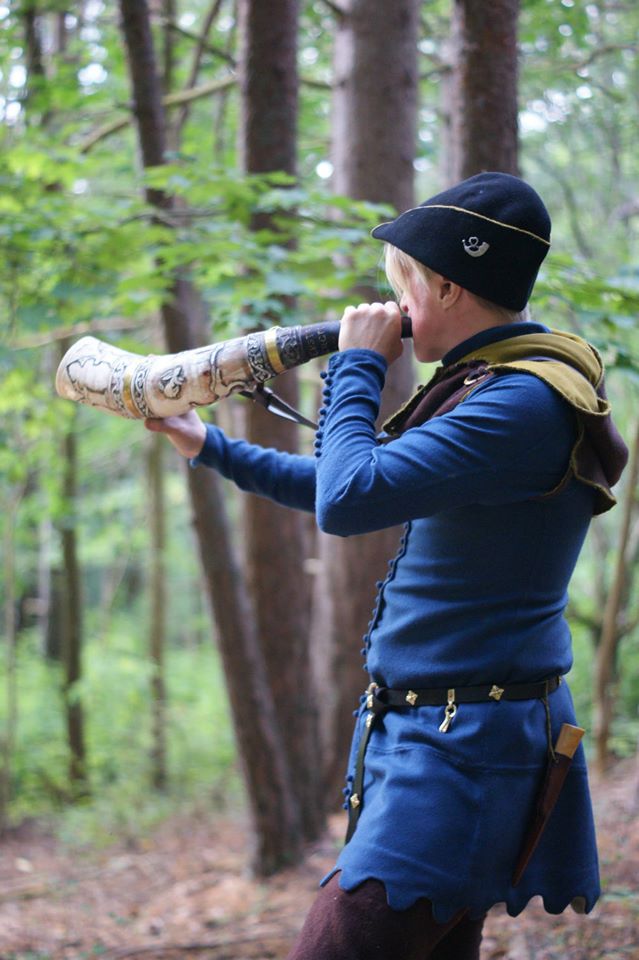
Photo from Rutland Outdoor Pursuits (UK)

Side note: Having a falconry experience is on my Life’s Adventures List, and when it does come to pass, I will be thinking of my ancestor Edmund Moody. 🙂

References:

  1. History of Hitchin by Reginald L. Hine, Gresham Press, Old Woking, Surrey, 1927- Vol. I, p. 140
  2. Life of Henry VIII by Edward Hall, 1904. Republished by Forgotten Books January 2, 2019
  3. From 1682 by John Gibbon, excerpt from page 4 (on microfilm at Harvard University Library).
  4. REALM No. 96, February 2001, page 40.
  5. Edmund Moody/Modye Gentleman – Compiler: Pomala Black, 2014.
  6. Life of a Tudor Servant – The Tudor Team: Behind the scenes with Tudor House team of volunteers. May 29, 2019
  7. The Household Staff in an English Medieval Castle by Mark Cartwright. June 1, 2018. World History Encyclopedia

Image credit:

Header image is of St Peter’s Church in Moulton, Suffolk, England.

Further reading:

  1. Medieval hawking and falconry for the royals…. Jun 14, 2025, culture, history, medieval characters, medieval life. The New Murrey and Blue blog.
  2. Falconry and the Tudors by Katharine Edgar. June 9, 2014. Katharine Edgar, writer of historical fiction for young adults.
  3. LIFE AT THE TUDOR COURT THE PLACE TO SEE, AND BE SEEN. Historic Royal Palaces.
  4. Tudor Entertainment & Pastimes. Ryan Gibson & Marilee Hanson. englishhistory.net

If you’d like to learn more about the 52 Ancestors in 52 Weeks project, please visit here:

52 Ancestors in 52 Weeks.

Or join the Facebook group Generations Cafe.

If you use any information from my blog posts as a reference or source, please give credit and provide a link back to my work that you are referencing. Unless otherwise noted, my work is © Anna A. Kasper 2011-2026. All rights reserved. Thank you.

Posted in 52 Ancestors in 52 Weeks, Famous Kin, Genealogy, Religious | Tagged , , , , , , , , , , , , , , , , , , , , , , , , , , , , , , , , , , , , , , | 15 Comments

52 Ancestors, Week 15: Solitude. Quaker Ancestors. Quakers and the Invention of Solitary Confinement.

I have quite a few Quaker ancestors that lived in several American Colonial states including Maryland, Pennsylvania, Virginia, and North Carolina. Quakers were no stranger to punishment, torture, confinement, spending time in jails and prisons, and even being hung on occasion.

The first Quakers in American were stripped, beaten, and starved. Puritans fined anyone who brought a Quaker to America. Women were stripped and beaten. Quakers caught in Massachusetts had their ears cut off. Four Quakers were murdered by Puritans for their beliefs. The Puritans threatened Rhode Island for harboring Quakers. People who spoke out in the defense of Quakers were arrested. Two Quaker children were almost sold into slavery (but not a single captain in the country was willing to let them use his boat to sell the children into slavery). Dead Quakers’ bodies were desecrated and humiliated. Europe had to intervene to save the Quakers. Although Americans, during this time period, never stopped torturing Quakers, but, in the end, the English government banned the persecution of Quakers. (1)

It is often thought that Quakers invented solitary confinement. Quakers did not invent solitary confinement. The idea of solitary confinement had been borrowed from a Calvinist, John Howard, who introduced the idea of solitude and silence leading to repentance, and the ideas took hold with the Quakers and Anglicans as humane reform of a penal system with overcrowded jails, squalid conditions, brutal labor chain gangs, stockades, public humiliation, and systemic hopelessness. Prisons up until that point had been dungeons. Quakers were very involved in the organization that started the penitentiary, which was a place that people were supposed to go and be penitent. It was a concept of reforming. It’s a cautionary tale about reforms. It drove many men mad. (2, 3, & 4)

Quakers moved away from solitary confinement within a few years of the opening of the Eastern Pennsylvania Penitentiary. By 1838, leading Quaker Elizabeth Fry was already speaking out against solitary confinement. (4) This mistake, although it was rooted in compassion and a change for the better, caused many repercussions and consequences for people in the criminal justice system.

Solitary Confinement, an idea rooted in compassion and reform that backfired.

Today Quakers activists are engaged in campaigning on many current crime and justice issues, notably restorative justice and women prisoners, to make up for the deleterious mistake that they made in the 19th century. (5)

References:

  1. 10 Horrifying Ways America’s Puritans Persecuted The Quakers by Mark Oliver
  2. Did Quakers Invent Solitary Confinement? – Quaker Speak
  3. Solitary Confinement: A Brief History From Quaker logic to America’s first electric chair, a quick tour of prisons past by Brooke Shelby Biggs. Mother Jones.
  4. Quakers Know Prisons from the Inside Out – Justice Reform. Friends Committe on National Legislation. Lobbing with Quakers.
  5. The Connection Between Quakerism and Solitary Confinement by Frank Sheffield. wildezine.com – The student news site of Sandy Spring Friends School.

Further reading:

  1. Reformers in Criminal Justice – Quakers in the World.
  2. Elizabeth Fry 1780 – 1845 – Quakers in the World.
  3. Eastern State Penitentiary – wikipedia.org
  4. Quaker Prison Reform – philanthropyroundtable.org

Photo credits:

  1. Quaker Heritage – Guildfordiana – Guilford College blog.

If you’d like to learn more about the 52 Ancestors in 52 Weeks project, please visit here:

52 Ancestors in 52 Weeks.

Or join the Facebook group Generations Cafe.

If you use any information from my blog posts as a reference or source, please give credit and provide a link back to my work that you are referencing. Unless otherwise noted, my work is © Anna A. Kasper 2011-2026. All rights reserved. Thank you.

Posted in 52 Ancestors in 52 Weeks, Genealogy, Religious | Tagged , , , , , , , , , , , , , , , , , , , , | Leave a comment

Felicitas Grosshans Weinmann, 52 Ancestors, Week 11, Lucky.

This week’s writing prompt for 52 Ancestors is Lucky. I immediately thought of the girl’s name Felicitas. Surprisingly, I only have one direct ancestor in my tree with the first name Felicitas. The name Felicitas is the female form of male name Felix, which is from the Latin adjective meaning lucky, good luck, happiness, fruitful, blessed, or fortunate. It is the root word for the English words felicity and felicitate. I do have a few men named Felix in my tree, but they are not my direct relations.

My sixth great-grandmother is Anna Felicitas (Felizitas) Grosshans (Großhans). Her name is found both as Felicitas and Felizitas in German church records. Felizitas is a German variant of the name. In Germany, the name is pronounced as Feh-LEE-tzee-tahs.

Was my ancestor happy, fortunate, or lucky in life? I do not know. All the records attached to her name are all linked to her daughter, my fifth great-grandmother, Anna Margretha Weinmann. What we do know is that she born about 1742 in or near Godramstein in the Southwest Wine Route area of the Rhineland-Palatinate in Germany. I have been unable to locate her marriage record, but she would have married before 1763 to Michael Weinmann. I have not located any death or burial records for either she or her husband Michael Weinmann. I did not locate any other baptism, marriage, or burial records listing this couple as the parents. Although I cannot be sure, this could mean that they only had one child, and may have both died when she was a child.

DNA has helped me to learn a bit more about her family and origins. I do have DNA links to those with Grosshans ancestors from Landau and Godramstein, which are 6.7 miles (10.8 km) from Heuchelheim-Klingen, 8 miles (12.9 km) from Klingenmünster, and 11 miles (18.2 km) from Kapellen-Drusweiler.

My ancestor Felicitas was born in Godramstein, Landau in der Pfalz, Rhineland-Palatinate. She was the daughter of Johann Jacob Grosshans and Anna Felicitas Sommer, and the granddaughter of Emmanuel Grosshans and Anna Catharina Werner and Johann Gabriel Sommer and Catharina Elisabetha Hohl. Other German surnames in this line: Müller, Näf, Mayer, Dubs, Rüsser, Schellenberg, Bertsch, Schwebel, Trierer(s), and Pastor. The families lived in Zweibrücken, Godramstein, and later in nearby Annweiler am Trifels and Frankweiler. Some of the families originated in Swizerland, including Vollenwied and Hausen am Albis, in Zürich.

You may read about 19th great-grandfather Wicker von Ovenbach sur Ecke by clicking here: Surname Saturday. A Day in the Life of My Ancestor Wicker von Ovenbach zur Ecke of Frankfurt am Main, Patriciate of Frankfurt. The lines go back as follows: Grosshans, Schwebel, Semler, Offenbach, Von Ovenbach.

Interesting side note regarding the surname Trierer(s): it means from Trier. So, we know that the Trierer(s) family were originally, at some point, from Trier, Germany. As the crow flies, Trier is 51 miles from Zweibrücken.

Anna Margretha Weinmann, the daughter of Anna Felicitas Grosshans and Michael Weinmann, was born and baptized on the same day, 19 August 1763 at the parish church of Heuchelheim-Klingen. She married 16 October 1792 to Johann Jacob Propheter, the son of Johannes Adam Propheter and Katharina Elisabetha LeBeau, in the parish church of Kapellen-Drusweiler. She died 26 November 1834 in Klingenmünster, and was buried two days later. The names of her parents are listed in her baptism, marriage, death, and burial records.

Michael Weinmann was the son of Ruprecht Weinmann – a Master Baker in Oberotterbach.

All of my great-grandmother Alice Elizabeth Nutick Armstrong’s maternal family were from or nearby to Klingenmünster, Germany. Anna Felicitas Grosshans is one her ancestors. Heuchelheim-Klingen is 1.9 miles (3.2 km) from Klingenmünster and Kapellen-Drusweiler is 4.2 miles (6.7 km) from Klingenmünster.

In Roman mythology the goddess Felicitas was the personification of good luck. Felicitas was a goddess of abundance, wealth and success and presided over good fortune; her feast day was celebrated on October 9. Felicitas could refer to both a general’s luck and good fortune as well as a woman’s fertility. 

Felicitas is a state of blessedness, productivity, or enjoyment inspired by God.

The name was also borne by a 3rd-century saint, a slave martyred with her master Perpetua in Carthage.

There are actually at least two saints of this name. Saint Felicitas of Rome (c. 101 – 165), also anglicized as Felicity, is a saint numbered among the Christian martyrs. Apart from her name, the only thing known for certain about her is that she was buried in the Cemetery of Maximus (Catacombe di Santa Felicita), on the Via Salaria on a 23 November. However, a legend presents her as the mother of the seven martyrs whose feast is celebrated on 10 July. The Eastern Orthodox Church celebrates their martyrdom on 25 January. Her feast day in the Roman Catholic Church is 23 November.

Saints Perpetua and Felicity (Latin: Perpetua et Felicitas) were Christian martyrs of the 3rd century. Vibia Perpetua was a recently married, well-educated noblewoman, said to have been 22 years old at the time of her death, and mother of an infant son she was nursing. Felicity, an enslaved woman imprisoned with her and pregnant at the time, was martyred with her. They were put to death along with others at Carthage in the area of Africa in the Roman province of Africa (now known as Tunisia). The feast day of Perpetua and Felicity and their Companions is 7 March.

This blog post was updated with new information on 16 March 2026.

Sources:

  1. Felicitas Roman deity – Britannica
  2. Felicitas of Rome – Wikipedia
  3. Felicitas – baby names. babycentre
  4. Felicitas – Behind the Name
  5. Felicitas, the Goddess of Wealth and Success. Weird Italy
  6. “Calendarium Romanum” (Libreria Editrice Vaticana, 1969), p. 146
  7. Perpetua and Felicity – Wikipedia

To read more about St. Felicity of Rome and Saints Perpetua and Felicitas of Carthage:

  1. Saints of the day: Perpetua and Felicity, martyrs by Susan Kehoe. WordPress Blog – A Deacons’ Wife.
  2. Perpetua and Felicitas by Mary Walker. WordPress Blog – My Lord Katie.
  3. St Felicitas of Rome – Feast Day – November 23. Catholic Readings.org

To read more about the goddess Felicitas:

  1. The Festival of Felicitas by shirleytwofeathers. Pagan Calendar. Shirleytwofeathers.com

Image credits:

  1. Saints Perpetua and Felicity. It is an Art Print by Lawrence Klimecki.
  2. Goddess related image. I give image, artistic, and graphic credit to original creators whenever possible. The origins of lovely graphic of the blond woman lounging in a tree made of branches is unknown. I have been unable to locate the name or any root information regarding the graphic. It is used on several sites discussing the goddess Felicitas, but where it originated is unknown. If you are the creator or artist of the above graphic, please let me know and I will, with great felicity 😃, give you credit.

If you’d like to learn more about the 52 Ancestors in 52 Weeks project, please visit here:

52 Ancestors in 52 Weeks.

Or join the Facebook group Generations Cafe.

If you use any information from my blog posts as a reference or source, please give credit and provide a link back to my work that you are referencing. Unless otherwise noted, my work is © Anna A. Kasper 2011-2026. All rights reserved. Thank you.

Posted in 52 Ancestors in 52 Weeks, Catholic, Genealogy, Religious | Tagged , , , , , , , , , , , , , , , , , , , , , , , , , , , , , , , , , , , , , | Leave a comment

My Great-grandfather Abraham G. Kennedy, Well Respected and Lauded School Teacher and Principal. 52 Ancestors, Week 4: Education

The above information is from the book The History of Perry and Fairfield Counties, Ohio; Their past and present by A. A. Graham and Ephraim S. Colborn and published in 1883. Directly below the biographical sketch for Abraham G. Kennedy is a sketch on his brother George W. Kennedy.

As it states, my great-grandfather Abraham G. Kennedy (they incorrectly give his middle initial as “C’) was born 10 January 1848. He was born in Pike Township, Perry County, Ohio. He was the son of John Davis “J.D.” Kennedy and Susan Palmer. His Kennedy family has strong ties to Perry County, Ohio and his ancestors were very early in Ohio and were in Perry County when it was settled and established. After his birth, his family lived briefly in Rush Creek, Fairfield County, Ohio, where his sister Mary Jane Kennedy was born in 1849, and they are found in the 1850 US Census living in Rush Creek, Fairfield County, Ohio. The next sibling James Monroe Kennedy was born in 1852 back in Perry County. Then the family was in Vinton County, Ohio in 1856 where George W. Kennedy was born. By 1858, when Alfred P. “A.P.” Kennedy was born, they had returned in Perry County and are found in the 1860 and 1870 US Censuses living in Monday Creek Township, Perry County, Ohio.

The distance between Pike Township in Perry County and Rush Creek in Fairfield County is about 12 miles. I do not know exactly where they were living briefly in Vinton County or why they were there, but in general it is about 40 miles between Pike Township in Perry County and Vinton County in general. His father worked as a Cooper (maker of barrels) and that is his occupation listed in 1850 and 1860. In 1870 it is listed as Farmer and Cooper.

I do not find the family living in Jackson Township as is listed in the biographical sketch as the place he grew-up, but Jackson Township borders with both Pike and Monday Creek Townships.

He began his occupation of teaching school on 11 January 1868 and in the 1883 biographical sketch it states he had been teaching for fourteen years and was considered one of the best teachers in Perry County.

His brother George W. Kennedy was also a teacher and taught eight terms before he worked as a clerk in a store and then established a business as a dealer in books with a shop on Main Street in New Lexington.

The biographical sketch does not discuss where Abraham was teaching school between 1868 and 1878. In the 1870 US Census we find him living with his wife and children in Monday Creek Township, Perry County, Ohio and his occupation is listed as schoolteacher, and he would have been teaching at the neighborhood school in the area near Monday Creek, before going to the county seat New Lexington to teach in 1879. He is found in the 1880 Census for New Lexington, Perry County, Ohio living with his wife in his parent’s household, and his occupation is listed as School teacher. Then in 1882 moving to the school in New Straitsville to teach.

The above photo is of an abandoned brick schoolhouse found west of New Lexington. Which gives us an excellent idea of the schoolhouses my great-grandfather taught in. The photo was taken 12 years ago by Ken and posted on his Flickr.

To give you an idea of the distance between each of the places he taught school, Monday Creek and New Lexington are 11.8 miles from each other. New Lexington and New Straightsville are 8.8 miles apart.

He was a much lauded schoolteacher for decades and later became a principal of the schools in Perry County. After retiring from the education field, he is found in the 1900 US Census for Athens, Athens County, Ohio living with his wife and children and his occupation is listed as a music dealer. We know the family migrated to Cleveland, Cuyahoga County, Ohio when his wife, Mary Elizabeth Price Kennedy, became ill. She died there on 12 May 1909 of Carcinoma of the liver.

After her death, Abraham migrated with three of his adult children to Dayton, Montgomery County, Ohio, where he is found there in the 1910 US Census. He is listed as working as a Piano Salesman. I do find him in the 1920 US Census in Columbus, Franklin County, Ohio. But they only listed his name and then put a line through it with no explanation as to why.

The photo to the left is of Abraham G. Kennedy and his mother Susan Palmer Kennedy, and is part of a 5 generations photo. The photo was taken in 1922. His mother lived to the ripe old age of 106 1/2 years!

He is found in the 1930 US Census in Columbus, Franklin County, Ohio, living with his married daughter Tessie (Kennedy) Menninger, with her husband and son. He is listed as aged 82 years and retired.

He dies aged 91 years on 24 July 1939 at St. Anthony’s Hospital in Columbus, Ohio. His cause of death was a Cerebral Compression/skull fracture due to a fall.

He taught school for decades, and then was a principal, for a total of 30+ years. Then after retiring, he worked as a music dealer and piano salesman.

I have great respect for education and am a perpetual student. I also can play the piano and am musically inclined. I would like to think that I got some of this passed down from my great-grandfather Abraham G. Kennedy.

To learn more about my Kennedy ancestors in Northern Ireland, Pennsylvania, and Ohio, with links to New Jersey, please visit my blog post My Kennedy, Graham, and Murray Ancestors from Ballintoy, Antrim, Northern Ireland.

The above 19th century pencil case is from the 19th Century School Supplies post of Joanna Church’s WordPress blog.

All research for this blog post was done by me and any references used are cited and included within the body of the post.

If you’d like to learn more about the 52 Ancestors in 52 Weeks project, please visit here:

52 Ancestors in 52 Weeks.

Or join the Facebook group Generations Cafe.

If you use any information from my blog posts as a reference or source, please give credit and provide a link back to my work that you are referencing. Unless otherwise noted, my work is © Anna A. Kasper 2011-2026. All rights reserved. Thank you.

Posted in 52 Ancestors in 52 Weeks, Genealogy | Tagged , , , , , , , , , , , , , , , , , , , , , , , , , , , | Leave a comment

My Davidson Ancestors in Ohio, and Connecticut and Related Hawley and Doman Lines.

Pictured above is my great-grandmother Anna Cora Prindle Cole. She was the daughter of Daniel Prindle and Sarah Jane “Jennie” Doman. Daniel Prindle was the son of David M. Prindle, Sr. and Hannah Elizabeth Kritsinger/Greatsinger. I have written prior about my German Greatsinger ancestors here and my related Dutch lines here.

Researching my Doman ancestors has been a bit of a headache for some decades now. Firstly, my great-grandmother pictured above was born a year before her parents married, but DNA has confirmed that she was a full sibling to all the children born after the marriage of her parents, and it also confirmed that we are descendants of both the Prindle and Doman families. In the 1870 Census for Scioto, Pickaway, Ohio, it shows Sarah Jane “Jennie” Doman Prindle living in the household of her Prindle in-laws. She and Daniel had married on 7 November 1869 in Pickaway County, Ohio. Just to confuse things further the census-taker recorded her directly below Daniel’s brother John Prindle and incorrectly listed John Prindle and Jane Prindle (Sarah Jane) as married! My great-grandmother Anna Prindle is found on the bottom line directly below her cousin Flora Hudson. The two grandchildren, Flora and Anna listed together.

The section of the 1870 US Federal Census for Scioto, Pickaway, Ohio, that I am discussing is shown above.

Sarah Jane “Jennie” Doman was the daughter of Jacob (John Jacob) Doman and Mary Ann. For many years I was confused between two women that married Jacob Doman and were both named Mary Ann! But after several months of working on this line, and finding a few new records, and countless hours examining my DNA matches and the DNA matches of my sister Linda and niece Elisabeth, I believe that I finally worked it out!

Jacob Doman married first to Mary Ann Chamberlain on 27 December 1838 in Pickaway County, Ohio. He is found in the 1840 Census for Walnut Township, Pickaway County, Ohio. The 1840 Census shows 1 Male – aged 20 thru 29 – Jacob Doman. 1 Females – aged 20 thru 29 – Mary Ann. There are no children or others found living with them.

Mary Ann Chamberlain was the daughter of Richard Chamberlain and Elizabeth Abbott. Mary Ann Chamberlain was born about 1819 in Walnut Township, Pickaway County, Ohio. Her sister Nancy Chamberlain married Jacob’s brother John Thomas Doman on 1 January 1843 in Pickaway County, Ohio. Now, we all had a few DNA matches that could link us remotely to this Chamberlain family, but now that Ancestry separates your DNA matches between maternal and paternal, it became apparent that the few connections we had were not on sides that we all shared. My sister and my niece (my brother’s daughter) only share my maternal side with me, and those Chamberlain matches, the few we had, had connections to the opposite sides of our trees.

Jacob Doman married second to Mary Ann Davidson on 4 December 1845 in Hocking County, Ohio. Pickaway County is bordered on the southeast with Hocking County.

Now, I knew from later census records that the Mary Ann that I am descended from was born about 1827 in Connecticut. She would have been about ten to eleven years old at the time when Jacob Doman married the first Mary Ann (Chamberlain).

Mary Ann Davidson Doman lists her age in the US Federal Censuses twice as being born in 1827, twice as being born in 1828, and in the two Kansas State Censuses her year of birth is listed as 1826 and 1832, but obviously she was not old enough to marry in 1838.

I finally found Jacob Doman and second wife Mary Ann (Davidson) and Jacob’s children, from both his marriages, in the 1850 Census, just today! Sadly, it is a very faded census page, but you can make it out. But it tells us many things, one that Jacob and his first wife Mary Ann Chamberlain had at least two children that were living in 1850. Mary Ann Chamberlain died around the date of the birth of her last child Mary, who was born 18 November 1845. She must have died in childbirth or of complications shortly afterwards, for Jacob Doman marries his second wife Mary Ann Davidson sixteen days later.

I am including the section of the 1850 Census I am discussing below. As you can see, it’s very faint and faded.

The above image is from the 1850 US Federal Census for Wayne Township, Pickaway County, Ohio.

Although difficult to make out, between the original transcribers and my reading of it, it includes the following:

The original transcribers saw the surname as Domand, the census-taker may have made a mistake when recording the name, or the tail of the letter “n” may have been what they were seeing.

Line number: 9 Dwelling number – 113

  1. Jacob Doman. aged 35. born 1815. male. working as a Farmer. Value of Real Estate $900. born in Virginia.
  2. Mary Ann aged 23. born 1827. female. no occupation listed. born in Connecticut.
  3. Mary C. aged 7. born 1843. female. no occupation. born in Ohio.
  4. John H. aged 9. born 1841. male. no occupation. born in Ohio.
  5. Sarah J. aged 2. born 1848. female. no occupation. born in Ohio.
  6. Mary L. aged 9 months. born 1849. no occupation. born in Ohio.

Now the children Mary C. and John H. Doman have often been incorrectly included in the family of John Thomas Doman and Nancy Chamberlain.

Mary C. is Mary Catherine Doman born 18 November 1845 in Pickaway County, Ohio, and died 24 March 1932 in Bloomington, McLean County, Illinois. She married 21 March 1878 in McLean County, Illinois to Benjamin Prothere.

John H. Doman was born 1841 in Pickaway County, Ohio. He is found in the 1860 Census living in Blue Mound, McLean County, Illinois. I have been unable to locate him in any other records after 1860.

Jacob Doman dies 1851/1852 in either Pickaway or Vinton County, Ohio. After his death, his two children from his first marriage to Mary Ann Chamberlain, go to live with their Doman and Chamberlain uncle and aunt – John Thomas Doman and Nancy Chamberlain, which is why the two children are sometimes incorrectly listed as their children. John Thomas Doman and Nancy Chamberlain were still in Pickaway County, Ohio in 1851, but by June 1853 they were living in McLean County, Illinois.

It’s understandable, his widow Mary Ann Davidson Doman was either still pregnant or had just given birth to their last child when he died. She was left a widow in her mid-twenties with three young children of her own and two stepchildren. It makes sense that Mary Catherine and John H. Doman went to live with their Doman/Chamberlain kin.

Children born to Jacob Doman and second wife Mary Ann Davidson:

  1. Sarah Jane “Jennie” Doman born 8 July 1848 in Wayne Township, Pickaway County, Ohio, and died 2 March 1909 in Askew, Steuben County, Indiana. She married Daniel Prindle on 7 November 1869 in Pickaway County, Ohio. They had eight children before they divorced in 1886. She married second to Albert Goumond on 3 April 1888 as his second wife. Side note: Her daughter Ona Belle Prindle, at the age of fifteen, married his son Prosper Jacob (P.J.) Goumond on 11 October 1892 in De Kalb County, Indiana. Sarah Jane “Jennie” Doman and Daniel Prindle are my 2nd great-grandparents.
  2. Mary L. Doman born 2 December 1849 in Wayne Township, Pickaway County, Ohio, and died 14 November 1922 in North Manchester, Wabash County, Indiana. At the age of fourteen, she married Amos Stoneburner on 15 Sep 1864 in Vinton County, Ohio. She had no children.
  3. Lucy A. Doman born 22 March 1852 in Vinton County, Ohio, and died 16 February 1928 in Oklahoma. She married 13 November 1873 in Pickaway County, Ohio, to David Grabill/Graybill/Grable. My sister, my niece, and I all have DNA matches to the descendants of Lucy A. Doman Grable.

Marriage Certificate between Mary L. Doman and Amos Stoneburner.

After the death of her husband Jacob Doman, his wife Mary Ann (Davidson) marries second to Asa Ray on 4 January 1853 in Swan, Vinton County, Ohio.

Children born to Mary Ann Davidson Doman and second husband Asa Ray:

  1. Martin Luther Ray born 10 October 1853 in Vinton County, Ohio, and died April 1905 (most likely in Oklahoma where he was living in 1900). He married Mary Emaline Beard on 29 January 1892 in Kansas. He would be my half 2nd great granduncle. I do not have any DNA matches to the descendants of this couple, but my sister does have a few matches to our Ray half-cousins. We would be half 3rd cousins, 1x removed / half-4th cousins to their descendants. So, a lot less DNA available for us to share.
  2. Orlando Freeman Ray born about 1858 in Swan, Vinton County, Ohio, and died before 1940 in Oklahoma. I do not find any marriage records for him or any descendants.

We know that the two stepchildren of Mary Ann Davidson Doman, Mary Catherine Doman and John H. Doman, went to live with their Doman/Chamberlain kin after their father’s death. It was a bit of work to figure out what happened with her children from her marriage to Jacob Doman, after her marriage to Asa Ray.

In 1860, I did find my 2nd great-grandmother Sarah Jane “Jennie’ Doman living next door to her mother in Swan, Vinton County, Ohio. She is living with Lucy Bingham, who it turns out is her maternal great-aunt. She is listed incorrectly as Sarah Bingham.

I will come back to Lucy Bingham being Sarah’s great-aunt.

I have been unable to locate Mary L. Doman in the 1860 Census. But she does marry quite young at the age of fourteen in 1864 in Vinton County, Ohio, to Amos Stoneburner. She was most likely living with extended family in 1860, and I just have not located her in that census yet.

I find Lucy A. Doman living with her mom Mary A. and stepfather Asa Ray, and her two younger half-brothers, in the 1860 Census for Swan, Vinton County, Ohio. She is incorrectly listed as Lucy A. Ray and incorrectly listed as aged 3 years old, when she was actually aged about 8 years old at the time. In 1870, I find Lucy living in Jackson, Jackson County, Ohio, with her widowed paternal aunt Susan Doman Perry. Lucy is listed as Lucy Dowman, aged 18 years old.

OK, back to Lucy Bingham.

Mary Ann Davidson was born about 1829 in Cornwall, Litchfield, Connecticut, she was the daughter of Asa Davidson, Jr. and Catherine Cunningham. Asa Davidson, Jr. was the son of Asa Davidson (Sr.) and Hopestill Hawley. Asa Davidson, Jr. and Lucy Davison Bingham were siblings and both the children of Asa Davidson (Sr) and Hopestill Hawley.

Her aunt Lucy Davison marries on 22 August 1843 in Hocking County, Ohio to Ralph Bingham, as his fourth wife! He was over twenty years older than her, and he was left a widower in his first two marriages and his third marriage ended in divorce.

It is thought that Lucy Davison was possibly a schoolteacher. She brought her teenaged niece Mary Ann Davidson with her to Ohio. She could have equally been a seamstress or worked in some other trade available to women at the time. She was aged 36 by the time she married. I tend to lean toward her being a teacher.

Lucy Davison and Ralph Bingham had one child:

  1. Patty Patta Prena Bingham born November 1846 in Ohio and died 1910 in Ohio. She married 1 January 1883 in Vinton County, Ohio, to William Tatman. They had two children: Lucy Nevada Tatman, who died as a teenager, and George Ralph Tatman who married Lelah Etta White, they only had one child, a son, who did marry and have two daughters, so there are only a few Tatman kin out there.

She is listed as Patty in most records and only once as Patta. Her father lists her name as Betty Prena Bingham in his will.

Back to Asa Davidson (Sr.), he was the son of Christopher Davidson and Jael Lassell. Christopher Davidson was the son of Thomas Davison and Lydia Herrick. Thomas Davison was the son of Thomas Davison, Sr. and Hannah Tracy. Thomas Davidson, Sr. was the son of Daniel Davison/Davisson/Davidson and Margaret Low.

Daniel Davison/Davisson/Davidson is thought to have been born in Scotland. He married Margret Low on 8 April 1657 in Ipswich, Essex, Massachusetts.

Hopestill Hawley was the daughter of Nathan Hawley and Sarah Kent.

Catherine Cunningham was the daughter of Frederick Cunningham and Mary Tyler.

In the future, I will write up a different blog post about my Doman ancestors going back to Virginia, West Virginia, Pennsylvania, and Germany. Jacob (John Jacob) Doman was the son of John Doman and Catherine M. (Catherine Mary) Grandstaff. DNA has shown that the Doman family most likely originated with an ancestor named Dumm, and it became Doman. The Grandstaff family goes back to Virginia, Pennsylvania, and Germany. Grandstaff/Grindstaff are Americanized forms of the German surname Kranzdorf or of its extinct altered form Crantzdorf. There are DNA links to Grandstaff. Johann Adam Grandstaff and wife Catherina Sophia _____ did have a daughter named Catherine Mary that fits as my ancestor.

Besides DNA, there is a census link as well. If Catherine’s maiden name is Grandstaff, then her brother Lewis Grandstaff is found in the 1850 Census for Swan, Vinton County, Ohio, living in the household of Ralph Bingham and wife Lucy Davison and daughter Patty Bingham. Lewis would have been the uncle-in-law to Lucy’s niece Mary Ann Davidson Doman Ray.

All research for this blog entry was done by me personally. The only reference is for the meaning of the name Grandstaff from the Grandstaff family history found at Ancestry.

If you use any information from my blog posts as a reference or source, please give credit and provide a link back to my work that you are referencing. Unless otherwise noted, my work is © Anna A. Kasper 2011-2026. All rights reserved. Thank you.

Posted in Genealogy | Tagged , , , , , , , , , , , , , , , , , , , , , , , , , , , , , , , , , , , , , , , , , , , , , , , , , , , , , , , | 7 Comments