The Japanese people emerge from the aboriginal Ainu people. There are still remnants of the Ainu in northern Japan. They were hunter-gatherers that worshiped nature and animals, The Ainu were animists and believed that all things are inhabited by spirits known as kamuy (kami). “There are thousands of Kami, a few appearing as personified beings in Japanese mythology, but the vast majority inhabit specific places in the Japanese landscape. Kami can also be deceased ancestors or national figures.” (p. 161, ROTW) But the kami are not easily classified, and this is not an all-inclusive definition.
The Ainu reverence of the Akkorokamui entered into Shintoism, and in which it became a minor kami. And as such it would be considered both part of Ainu and Shinto religious folklore of Japan. In Ainu folklore, it is called the Atkorkamuy. Its name can be translated as “string-holding kamuy.” String-holding refers to the octopus’s string-like tentacles, while kamuy is an Ainu term for a divine being (similar to the Japanese term kami). In Ainu folklore, Akkorokamui is both revered and feared and known as the lord of Uchiura Bay. According to Shinto mythology, the creature is octopus and human-like and contains a bright red color. The 19th-century account by John Batchelor of his encounter with it confirms what the Akkorokamui looks like. John Batchelor was an Englishman and missionary who lived among the Ainu, and he is known for his extensive writings about them, their culture, and life. He also kept a journal of his experiences and interactions. In his book, The Ainu and Their Folklore, he provides many details of physical attributes of the creature. In it he states that the creature was 120 meters [131.2 yards] in length and a red color with large staring eyes. He also specifies that this red color of the Akkorokamui was a striking red, seemingly likened to the color of the reflection of the setting sun upon the water.
Another old 19th-century account was made by a Japanese fisherman, which I has been translated from the original Japanese:
And I saw ahead something huge and red undulating under the waves. I at first thought my eyes deceived me and that I was merely seeing the reflection of the sun upon the water, but as I approached, I could see that in fact it was an enormous monster, 80 meters in length at least, with large, thick tentacles as big around as a man’s torso. The thing fixed me with a huge, staring eye before sinking out of sight into the depths.
Once, spirits cursed Rebunge, a villager of Abuta Toyoura in Hokkaido, Japan, to see the destruction of his town. They sent a part-spider-part-human creature, Yaoshikepu (also known as Yushkep Kamuy (goddess of the spiders) or Ashketanne Mat (Long-fingered Woman)), to fulfill the curse. Yaoshikepu caused rampant destruction throughout the town, slaughtering so many that the streets were filled with crimson blood. After hearing the townsfolk tremble with fear, the sea kami, Repunkamui, transformed Yaoshikepu into an octopus, and cast her into the sea.
The Reunkamu, the sea kami, are the killer whales [orcas] of Japan who were known by the Ainu people as Repunkamui – “Gods of the sea”.
“I shall swallow the whale and ship, empty the sea, and appear in red when you are cursed.” – Akkorokamui
After Yaoshikepu was cast into the sea, she began to grow, eventually beginning to consume larger prey, such as whales and ships. One day, Akkorokamui gobbled up a boat full of fishermen. In her stomach, they called for help. Hearing the cries, Repunkamui poisoned Akkorokamui, causing her great pain. As Akkorokamui hollered in agony, the fishermen escaped. However, Akkorokamui learned to harness the venom, using it to attack her prey. In the description of the sighting of the creature by John Batchelor, he stated that as the monster attacked the ship, it “emitted a dark fluid which has a very powerful and noxious odor.
The Akkorokamui is also characteristically described with the ability to self-amputate, like several octopus’ species, and regenerate limbs. This characteristic manifests in the belief in Shinto that Akkorokamui hashealing powers. Consequently, it is believed among followers that giving offerings to Akkorokamui will heal ailments of the body, in particular, disfigurements, and broken limbs.
Graphic from: Myth and Folklore: Celebrating World Octopus Day
Self-purification practices for Akkorokamui are often strictly followed. While Akkorokamui is often presented as a benevolent kami with powers to heal and bestow knowledge, it is fickle and has the propensity to do harm. Akkorokamui’s nature as an octopus means that it is persistent and it is near impossible to escape its grasp without permission. Like other Shinto purification rituals — Ritual purity: Ritual bathing to spiritually and physically cleanse yourselves before entering a shrine to worship the kami prior to entering the shrine of Akkorokamui, one’s hands must be cleaned with water with the exception that one’s feet must also be cleaned as well. Akkorokamui enjoys the sea and offerings that reflect this: fish, crabs, mollusks, and the like are particular favorites of Akkorokamui, which give back that which it gave. Homage to Akkorokamui is often for ailments of the limbs or skin, but mental purification and spiritual release are particularly important.
More recent reports of the creature in Japan have surfaced over the years as well, including into modern days. In the 1980’s passengers of a cruise ship in the bay in came upon asurprising sight of what appeared to be a massive creature thrashing about in the water with what appeared to be tentacles breaking the surface. The creature was described as being bright red in color and being around 80 feet in diameter. In the 1970’s, a fishing boat also reported bumping up against something in the water which they at first took to be a rock, but when the crew looked overboard, they saw an enormous red mass, and according to the report an eye peering out from the depths that was supposedly the size of a dinner plate. There was even a report of a beachcomber who supposedly came across a piece of what he said was an octopus tentacle that was reported as being around as thick as a telephone pole. It has also been sighted in Taiwan, Korea, and other Asian countries.
Before we chalk up the stories of the Akkorokamui as just a folktale to be dismissed, I would remind us as Christians that the Leviathan is a Biblical sea monster! It is a creature with the form of a sea serpent (a very large serpent!) in Judaism and is referenced in several books of the Hebrew Bible, including Genesis, Psalms, the Book of Job, the Book of Isaiah, and the Book of Amos; it is also mentioned in the apocryphal Book of Enoch. In Genesis 1:21 it states, “On the fifth day God created the tanniynim, which is the plural form of the Hebrew word tanniyn, meaning “sea creature” or “sea monster.” In Isaiah 27:1, in the original text the word tanniyn is used, which is directly referring to the Leviathan (which is also referred to as a dragon or a reptile in some versions). The use of these words leads some experts to believe that since the word tanniyn is referring to the Leviathan in Isaiah, then tanniynim is referring to Leviathans being created on the fifth day. This suggests it is possible that God did in fact kill multiple Leviathans at one point, and that only one remains. The Leviathan in Isaiah is described again as a singular entity that will be destroyed by God, as well as being described as a serpent.”
Inthe Book of Job, Leviathan is thought to be a fire-breathing dragon. In Bel and the Dragon (extended verses of the Book of Daniel), we again find a dragon (Bel and the Dragon NRSV – Daniel and the Priests of Bel – When – Bible Gateway). Of course, we also have the dragon in the New Testament Book of Revelation, but most (but not all) think it’s symbolic.
We also have the talking donkey in chapter 22 of the Book of Numbers, and the talking snake in Genesis. The Nephilim, and, in the King’s James version of the Bible, unicorns! 🦄
Left: Virgin Mary holding the unicorn (c. 1480), detail of the Annunciation with the Unicorn Polyptych, National Museum, Warsaw.Credit: Public Domain. Right: Maiden with Unicorn tapestry,15th century (Musée de Cluny, Paris). Credit: Public Domain.
Although some scholars believe that unicorn was a translation mistake, there is an argument to be made that the animal did exist but probably looked a bit different than our idea of a unicorn today. The Biblical unicorn was a real animal and not the later mythical creature known as a unicorn. The word is translated in later versions of the Bible as oryx, or sometimes wild ox, wild bull, buffalo, or rhinoceros. But we really don’t know for sure exactly what the one-horned animal translated from the Hebrew re’em as unicorn looked like.
There are a myriad of stories in The Bible that people of other religions would find odd, bizarre, or strange. I try to be mindful of this when learning about the religions of the world.
Totally unrelated (well not totally unrelated) side note: Researching the Akkorokamui brought to mind one of my favorite TV series streaming on Netflix – The OA, and The Old Night Octopus in season two, episode 4, SYZYGY.
The OA – season two, episode four, SYZYGY. Photo from Netflix.
☆ This blog post is from my work in the World Religions course at Phillips Seminary. ☆
Reference:
ROTW = Hopfe, Lewis M., et. al. Religions of the World, 13th Edition. Pearson Education, 2016.
Most of us are familiar with the Shaolin Kung Fu style of martial arts. Even if you do not follow or practice the martial arts yourself, you may have seen Shaolin Kung Fu as portrayed by David Carradine in the 1970’s TV series, or in the 1973 Bruce Lee film Enter the Dragon, as well as more recent movies and TV series. Full disclosure here, I am a child of the 70’s and I loved the TV series Kung Fu! 😉
They were based on the warrior Kung Fu monks of the Shaolin Monastery/Temple.
Shaolin Temple is a Chan (“Zen”) Buddhist temple located in Dengfeng, Henan Province, China. Chan (Zen) meaning a meditation/meditative state, it is a Chinese school of Mahayana Buddhism. “Mahayana emphasizes the altruistic practice—called the Bodhisattva practice—as a means to attain enlightenment for oneself and help others attain it as well.” (ROTW, p. 108-109 & 145)
The Chan branch of Buddhism developed in the sixth century CE and is an indigenous form of Chinese Buddhism. It spread to several East Asian countries including Japan, Korea, and Vietnam. Although the word Chan signifies its meditative techniques, that is not what made it distinctive within schools of Chinese Buddhism. What made it different was their novel use of language, its development of new narrative forms, and its valorization of the direct and embodied realization of Buddhist awakening. In contrast with the epistemic, hermeneutical, and metaphysical concerns that shaped other schools of Chinese Buddhism.
The Shaolin Temple is believed to have been founded in the fifth century, It is the main temple of the Shaolin school of Buddhism to this day. The martial arts films and the Kung Fu TV series have made the Shaolin Monastery the most famous and popular to visit Buddhist temple in the world.
Two students sparring on the Shaolin Temple grounds. Photo credit: Vision China
Although Kung Fu did not originate at the Shaolin Monastery, and martial arts were practiced in China way before the founding of this temple, there is strong historical documentation of martial arts being practiced there for centuries.
The name of the temple refers to the nearby woods of Shaoshi mountain, which is one of the seven peaks of the Song mountains. The first Shaolin Monastery abbot was Batuo (also called Fotuo, Bodhidharma or Buddhabhadra), a dhyāna (which means profound meditation) master who came to ancient China from ancient India to expand the Buddhist teachings. A legendary Buddhist monk, Bodhidharma was originally a prince from the Pallava Kingdom in South India. He crossed the Himalayas and is traditionally credited as the carrier of Chan Buddhism to China in 464 CE and also as having started the physical training of Shaolin monks, which would eventually lead to the creation of Shaolin Kung Fu. In Japan Bodhidharma is known as Daruma. He is regarded as the first Chinese patriarch of Chan Buddhism.
The Shaolin monks practice both mindfulness meditation and concentration meditation.
A bit of interesting history involving the monks of Shaolin and Japanese dwarf pirates!
The Wokou pirates raided the coastlines of China, Japan, and Korea. The above picture is of Wokou pirates surrendering to the Koreans on Tsushima in 1389.
Because of the developed fighting skills, the Shaolin monks were often sent to fight for China. One of the major threats to China was the ferocious Wokou, the dwarf pirates from Japan. In the early 16th century, many coastal towns in China were frequently ravaged by these pirates. Trade suffered immensely, and people started fleeing from coastal areas.
In 1553, the Japanese dwarf pirates, the Wokou, attacked the port city of Hangzhou, China. Many people died, and thousands were left homeless. The Ming court decided to sent 120 elite Shaolin Kung Fu monks to attempt to stop and destroy the Wokou. They were not as easy to defeat as the monks originally thought them to be. It took the fighting of four major battles, until at the Battle of Wengjiagan, the Shaolin monks defeated the Wokou.
The Shaolin Temple today is a huge complex where martial arts enthusiasts, Zen Buddhists, and tourists flock every year. Thousands of young people from around the globe come there to study Kung Fu (known as Wushu in China) in the schools around the temple. The studying of Shaolin Kung Fu provides a way out of poverty for thousands of children and young people.
But not everyone likes what commercial success has brought to the temple. The monetary successes are evident everywhere and some sights are even jarring, like the telephone kiosks with Buddhas on top!
The abbot of the monastery is Shi Yongxin. He is a farmer’s son from nearby Anhui, he has been credited as the architect of Shaolin’s revival since taking over in 1999. He is known for his business-minded acumen and for transforming the temple and promoting Chan (Zen) Buddhism throughout the world over the past two decades, this approach has spawned his detractors to give him the nickname CEO MONK.
Since 1986, he has led Shaolin monk delegations across China and abroad to perform Shaolin martial arts shows, registering the trademark of the names “Shaolin”, and “Shaolin Temple” in 1994.
He has been accused of fathering children with several women and of pilfering money from the temple coffers. Although so far, he has been exonerated of these accusations. He also was criticized for accepting expensive gifts, including a luxury sports car from the authorities, and many monks did not like the decision to host its own martial arts reality TV show.
But Qian Daliang, general manager of the Henan Shaolin Temple Development Company, insists the temple needs its commercial activities to ensure its survival. “The Shaolin monastery has had its ups and downs. At one point there were over 2,000 monks here, but after the Cultural Revolution, there were only 15 monks left. But the spirit of Shaolin never stops, and that’s what we are aiming to continuously deliver.” said Mr. Qian.
Whether you agree with the commercialization of the Shaolin Temple or not, it provides an abundance of advantageous benefits for the local people of the area, across China, and the world. Including economic, social, cultural, and religious benefits. There are more than a million students of Kung Fu around the world, and many centers of Shaolin culture and learning globally, which stem in large part from the Shaolin Temple.
☆ This blog post is from my work in my World Religions course at Phillips Seminary. ☆
Reference:
ROTW = Hopfe, Lewis M., et. al. Religions of the World, 13th Edition. Pearson Education, 2016.
The Joynt surname is not one of the most popular surnames found in Ireland. And it’s an even smaller group that were and are Irish Catholic. “Joynt is an Irish surname of Huguenot origin meaning graceful or slim.” It is also listed as “originally a Huguenot name, from the Old French word “joint” meaning “united,” or “joined.” (1 & 2)
The surname Joynt was first found in Ireland in counties Limerick and Mayo. Most of the Huguenots arrived in Ireland via England, having first fled to Switzerland, Germany, or Holland. Although some of the Huguenots in Ireland were essentially religious refugees, their numbers were increased by five Huguenot regiments recruited directly from Holland by the English King William of Orange, in his fight against the Irish forces of the deposed James II in 1690. Following William’s victory at Boyne, most of these Huguenots settled in Ireland. They were encouraged (forced) by William of Orange to settle in Ireland and by 1710 they numbered several thousand. (1 & 3)
In Irish Church Records, edited by James G. Ryan, published by Flyleaf Press, Dublin, Vivien Costello points out there were four waves of Huguenots that emigrated to Ireland following persecution in continental Europe: the second half of the 16th century; early 17th century; 60 years following the 1685 Edict of Nantes; and after the war of Austrian Succession ended in 1748. (3)
The migration of a branch of the Joynt family to the lonely, wind-swept country of County Mayo in the West Coast of Ireland is believed to have come about because of the Irish rebellion which started in 1641.
In 1649 Oliver Cromwell arrived with an army to subdue the Catholic rebels a process which took until 1653 to complete. He continued the policy of James I “The Plantation of England” by making substantial grants to his officers to establish an English Protestant presence amongst the rebellious Catholics. It is believed that two brothers of the Joynt family, both Captains in Cromwell’s Army received such land grants and settled in Counties Mayo and Limerick. We know that a William Joynt was the Sheriff of County Limerick c1659. (6)
In all likelihood my Joynt ancestors would have been originally French Huguenots. Were they religious refugees? Or was my ancestor recruited by William of Orange and ended up in Ireland? Or am I related to the two Joynt brothers thought to have been soldiers in Cromwell’s army and received land grants and settled in Counties Mayo and Limerick? However they came to be in Ireland, they would have been of the Protestant faith. How did my Joynt ancestors end up Roman Catholic? It certainly would not have been advantageous at this time in Irish history to convert to Catholicism. I venture to guess that it could have been love that engendered this change of faith. I realize that may be a romantic notion, but there would have been only a few reasons why someone would make such a drastic change in their life by converting to Roman Catholicism. Of course, the person would have been disinherited, and it would have made for a good reason to migrate to another area and is possibly how they ended up in Clare and Galway.
The furthest I can take my Joynt family line back is to Edmond Joynt who was born about 1782 most likely in County Clare. He lived in Poulataggle, Kilkeedy, Clare, Ireland. He married Honor(a) “Nora” Larkin. He died 15 April 1866 in Poulataggle, Clare, Ireland. He possibly may have been the son of Michael Joynt who is found in records as a flax grower in County Mayo in 1796.
There are a few more found with the spelling as Joint:
From the above graphics, the majority of Joynt householders in Ireland in the years 1847-1864 lived by far in County Mayo. It’s only a small group of us in Clare and even less in Galway. My ancestor Anna “Annie” Joynt Fahey was already married by this time. Her father Edmond “Ed” Joynt, brother Michael “Ned” Joynt and Joynt kin would have been included in the four Joynt households in County Clare, and the five found in County Galway would include her brother David Patrick Joynt before he came to the USA
The parentage of Honor(a) “Nora” Larkin is unknown. But DNA connections have shown she had at least two brothers. One brother who lived in Tubber, Galway, Ireland, and another brother who lived in Killaloe Parish, Clare, Ireland. I am a DNA match to descendants of both of these brothers. DNA has shown a strong connection to the Larkin families of Killaloe, Clare. It has also shown a tie between the Larkin families in Galway and Clare, and even a remote connection to Tipperary. This is not surprising because the original lands of this branch were on the borders of Munster, Tipperary and Meath. However, Cromwell’s policy of dispersal drove many west to Galway (and Clare). Larkin cousins are found in Ireland, USA, Australia, and New Zealand.
Meaning of the surname Larkin:
The Irish surname Larkin is an anglicization of the Gaelic Lorcan, a personal name meaning “rough” or “fierce.” The progression to Larkin from the original Ui Lorcain or O’Lorcain name began after the Norman invasion. Under the English influence the O was discarded to leave the name Lorcan or Lorkin. By the 18th century the name had become anglicized to the more common Larkin. (4)
The ancestral home of David Patrick Joynt and Bridget Ann McDermott in Shanaglish, Galway, Ireland.
If you follow The Cancelled Land Books for Poulataggle it seems to show that Edmond Joynt is “the father of sons, Michael, Martin and David. Michael, being the eldest because he was the one to remain on the land in Poulataggle. Since Edmond’s presumed oldest son was Michael, Edmond may be the son of Michael Joynt who was a flax grower in County Mayo in 1796 and who has not been found on any other records.” (3)
Children of Edmond “Ed” Joynt and Honor(a) “Nora” Larkin:
Michael “Ned” Joynt born about 1802 and was of Poulataggle, Kilkeedy, Clare, Ireland. He may have married Mary ____. Some of his descendants migrated to England. (I have DNA matches to those that went to England).
David Patrick Joynt born about 1803 and was of Shananglish, Beagh Parish, Galway, Ireland. He died 15 January 1869 in Dyersville, Dubuque, Iowa, USA. He married Bridget Ann McDermott. (I am a DNA match to numerous descendants of this couple).
Anna “Annie” Joynt born about 1804 and was of Gort, Galway, and died before 1854 in Philadelphia, Philadelphia, Pennsylvania. She most likely lived in Shanaglish with her brother or other family before marrying. She married Thomas Fahey of Peterswell Parish, Galway, he was the son of Patrick Fahey and Honora “Norah” O’Donnell. (My direct ancestors).
Mary Joynt born about 1805 and was of Gort/Beagh Parish, Galway, Ireland. She died about 1870 in County Galway. She married John Fahey – he was a cousin of Thomas Fahey who married Anna “Annie” Joynt. Descendants of this couple went to Australia and New Zealand. (I am a DNA match to descendants of this couple).
Honor “Norah” Joynt born about 1812 and was of Gort, Galway, Ireland, she died about 1840 in Gort, Galway, Ireland. She married Thomas Carrig/Carrigg. Descendants of this couple went to Australia. (I am a DNA match to descendants of this couple).
Martin Joynt born about 1816 and was of Gort, Galway, Ireland. He lived in Abbeyknockmoy, Galway, Ireland. He married Mary Fahey who was most likely kin to Thomas Fahey and John Fahey.
Bridget “Biddy” Joynt born about 1820 in Tubber, Kilkeedy, Clare, Ireland. She lived in Abbeyknockmoy Parish, Galway, Ireland.
Daughter Joynt.
Possible additional children of Edmond “Ed” Joynt and Honor(a) Larkin:
Patrick “Pat” Joynt (Joyent) born 8 March 1818 in Tubber, Kilkeedy, Clare, Ireland, and died 29 April 1898 in Wheeling, Ohio County, West Virginia. He married Mary Connors. He lived in Tubber, Kilkeedy, Clare before coming to the USA. (I have a few remote DNA matches to descendants of this couple).
Elizabeth Joynt born about 1819 in Tubber, Kilkeedy, Clare, Ireland and died 29 December 1884 in Southold, New York, USA. She married Patrick Rabbit(t). (I have a few DNA matches to the descendants of this couple).
Griffith’s Valuation Record. 1855. Showing Edmond Joynt in Poulataggle, Corrofin, County Clare.
Taken from the death record for Edmond Joynt:
Date/Place of Death: 15th April 1866 at Poulataggle. Edmond Joynt, Married. Age Last Birthday: 82 years, Farmer. Certified Cause of Death/Illness Duration: Tumor on Jaw 5 yrs. Informant Qualification/Residence: Thos. Mullins, Poulataggle, present at death.
Of interest from the Parish of Kilkeedy, County Clare, Ireland:
In The Parish of Kilkeedy, A Local History compiled by Frank Brew, on page 211 is an article written by James O’Loughlin called Memories of Tubber and Kilkeedy During the “Troubles”. He says, “The Volunteers I remember best were Frank Kelly, the Ruanes, O’Briens, Moylans, O’Loughlins, Walshes, Joynts…” (5) The troubles talked about here are 1916-1922, the Volunteers were the old I.R.A.
My great x2 grandfather Daniel “Dan” Wolfetone Fahey (Fay)
My line continues with Daniel Wolfetone “Dan” Fahey (Fay), a son of Anna “Annie” Joynt and Thomas Fahey. He married Catherine Mary “Kate’ Nestor Mullen. She was the daughter of Michael Nestor and Catherine Hansberry. I will be writing another blog entry in the future that centers on my ancestor Dan Fay and his life in Ireland and the USA, and also my other Fahey, O’Donnell, Nestor, and Hansberry ancestors and kin. I do have a secondary Joynt/Nestor family connection, so I needed to include this family information here for it to all make sense.
It appears that the Joynt, Nestor, and Fahey families all knew each other in Ireland, and it made for additional connections in the USA.
David Patrick Joynt, brother of my ancestor Anna “Annie” Joynt Fahey, and his wife Bridget Ann McDermott and most of their children immigrated to the USA.
My additional Joynt/Nestor connection is to one of the children of David Patrick Joynt and Bridget Ann McDermott. They had a daughter named Mary Joynt.
Mary Joynt Nestor Murphy.
Mary Joynt was born September 1832 in Shanaglish, Gort, Galway, Ireland, and died 28 January 1905 in Emmetsburg, Palo Alto, Iowa, USA. She married first to Michael Nestor on 15 July 1861 in Pittsburgh, Allegheny, Pennsylvania, USA. They had five children together.
Her husband Michael Nestor was the brother of my great-great grandmother Catherine Mary “Kate” Nestor Mullen Fahey (Fay).
Mary Joynt married second to Edward Murphy on 21 May 1872 in Iowa, USA. Two children were born of this second marriage.
I am a DNA match to the descendants of Mary Joynt Nestor Murphy from both of her marriages.
References:
Weekley, Ernest (1916). Surnames. J. Murray. p. 130.
For additional research on the Joynt families of Ireland and especially information about the descendants of David Patrick Joynt and Bridget Ann McDermott check out the website Celtic Cousins of Joynt cousin Cathy Joynt Labath. She is no longer doing family tree research and has not updated the site since 2013, but it has some good information. Her research does not include much information gleaned from DNA research, since it was before it was so readily available.
Indian woman dancing during the Holi festival in India. Photo from Stylegods.com
Hindu Holy Days – The Ancient Indian Festival of Holi. Also known as The Festival of Love, The Festival of Colors and The Festival of Spring.
The Holi festival is mentioned briefly under the Hindu Holy Days section of our textbook (Religions of the World (ROTW), p. 84) and the first photo in this week’s Clement’s Brain (additional resources written by instructor of the my World Religions course) appears to be taken during the celebration of this festival.
Holi is a very popular festival. It is celebrated in February/March. It celebrates the end of winter and welcomes the arrival of spring, and the blossoming of love. It is a time of forgiveness, to forgive and forget, yourself and others. It is a time to celebrate and have fun, meet new people, visit old friends, and create new beginnings. (1, 2, & 3)
“Holi is dedicated to the god Krishna, and . . . once was a fertility ceremony. It “also celebrates the destruction of demons.” (ROTW, p. 84)
figure of Holika burning a top a pyre during the Holika Dahan. Photo from : INDIAN YUG.com
So, what are the origins of the name of the festival Holi? It is “derived from Holika, the sister of demon King Hiranyakashyap” (4) and aunt of Prahlad. She was a demoness who was burnt to death.
The Hindu legend of Demoness Holika, her brother the Demon King Hiranyakashyap, and her nephew Prahlad:
Demon King Hiranyakashyap was an enemy of Lord Vishnu, but his son Prahlad was an ardent Lord Vishnu devotee. Hiranyakashipu didn’t approve of his son’s devotion to Lord Vishnu and planned to kill Prahlad with the help of his sister Holika. Demoness Holika has a shawl gifted by Lord Brahma that protected her from the fire. Holika lured Prahlad to sit with her in a huge bonfire. But as the fire lit, Prahlad prayed to Lord Vishnu to keep him safe. So, Lord Vishnu summoned a gust of wind to blow the shawl off of Holika and onto Prahlad, saving him from the flames of the bonfire and burning Holika to her death. (5)
This story of Holika’s death (Holika Dahan) symbolizes good over evil.
The first day of the festival is celebrated as Holika Dahan when people gather and start a bonfire. The Holika bonfire is a place where people gather around the pyre to perform religious rituals and Holika prayers (Holika puja), sing, dance, or just watch the fire and eat and talk with friends. On top of the pyre is a likeness of the Demoness Holika who tricked Prahalad into the fire. It is believed that Holika prayers give prosperity and power and ward off fear. (4 & 5)
Wedding during Holi – The Festival of Colors. India. Photo from : WEDDINGSUTRA.COM
The second day of the festival is why it’s called the Festival of Colors.
This is the day when people apply colors to themselves and to one another. It is a time to party and enjoy the festival. Traditional food delicacies are eaten and imbibement of cold beverages, including drinks made with bhang (marijuana). You will encounter on this day people playing drums and other instruments, singing, and dancing. As in the photo above, weddings are a joyful occasion that many couples opt to celebrate during the Festival of Love and Colors. It is a day to celebrate spring, love, and life with colors. Colors of joy, prosperity, happiness, and peace. (6)
It is a festival that is inclusive of all. People of all classes, castes, and religions come together.
Holi is also sometimes known as the Festival of Reversals, because it is a time where people from the lower castes can engage freely with and even tease those of the higher castes. (7)
“. . . caste and taboo restrictions are set aside and pleasure is emphasized.” (ROTW, p. 84)
The above mandala is not from a celebration of Holi, but it does show a meshing of religions in the imagery. The origins of “this too shall pass” are unknown. Some trace the phrase back to Persian Sufi poets, while others credit King Solomon, although it is not recorded in any of his biblical works. (11)
According to Rabbi Lisa Rubin (Director of the Center for Exploring Judaism), “King Solomon was trying to humble his wisest servant, so he asked him to perform a seemingly impossible task: to find something that did not exist. He requested a magic ring — one that, if a sad man wore it, he would become happy and if a happy man wore it, he would become sad.” The story suggests that the servant could not find anything of such nature. So, King Solomon decided upon himself to go to a jeweler and design a ring with the inscription in Hebrew saying, “Gam ze ya’avor,” which means, “This, too, shall pass.” (13)
And certainly the verses of Ecclesiastes 3:1-8 where there are purpose and season for all things under heaven could be said is saying everything shall pass. “All things have time, and all things under [the] sun pass by their spaces. (Everything hath a time, and all things pass forth in their places under the sun.)” (WYC)
These artists in Denmark that created this and many more mandalas have included the words “This too shall pass” which for them is in relation to the 5 hours spent to create each work of art and its temporary nature. One of their mantras is “this too shall pass.” “. . . remembering this, we like the idea that every mandala has a finite lifecycle depending on the weather.” (10)
Many believe the inclusion of those of other faiths in the celebration of Holi is of importance to all. Muslims and Christians often celebrate Holi together with Hindus, Buddhists, and those of other faiths. (8) The Christian Indian churches have found new meaning in the festival.
Holi has great significance for Christians, as the Church is increasingly concerned about the integrity of creation. By absorbing Holi into the Christian festival calendar as the feast of creation, the Church in India can impart faith education on man´s ecological obligations,” says Jesuit theologian Fr. AMA Samy (Arul Maria Arokiasamy) of New Delhi´s Vidyajyoti Institute of Religious Studies. He also stated, Christians should adopt more Indian traditions to counter the charge by Hindu fundamentalists that Christianity and Indian culture are incompatible. (7)
The absorbing of festivals, holy days, and holy sites is not new within the Christian faith. This happened in Ireland, and the Mexican Day of the Dead (Día de los Muertos) comes to mind as well. They are just a few of the countless examples where the church has intermingled local customs, beliefs, holy days, and holy sites with Christian beliefs.
Fr. George Gispert-Sauch, another Jesuit priest who is an Indologist and was a professor at Vidyajyoti, believes Holi resembles Easter in spirit and the Western Carnival in observance. The passage from death to life in Holi is similar to Christ’s death and resurrection. (7)
I am in agreement with the purpose and actions of Ecumenism and interfaith harmony. The goals of interreligious or interfaith relations are mutual understanding and respect, with collaboration in meeting the challenges we commonly face in the society and world in which we live.” (12)
According to a recent Pew Research Survey, a large number of Indian Christians follow practices and beliefs not traditionally associated with Christianity, including Karma, reincarnation, and the purifying powers of holy river Ganga. Many Indian Christians also celebrate and participate in Hindu holy days including Holi and Diwali. And you will often encounter Christian women in India sporting the ‘bindi’ on their forehead, which is more associated with Hindus, Buddhists, and Jainists. (9)
☆ This blog post is from one of the week two assignments in my World Religions course at Phillips Seminary. ☆
Ebeling, Karin (2010), Holi, a Hindu Festival, and its Reflection in English Media; The Order of the Standard and the Differentiation of Discourses: Files of the 41st Linguistic Colloquium in Mannheim. 2006, 1, 107
Wendy Doniger (Editor), Merriam-Webster’s Encyclopedia of World Religions, 2000, Merriam-Webster, p. 455
Additional Links (that I found enlightening or informative):
Khatri, Tek Bahadur. Bindi and Tilak – A Biblical Response. The Khatri Parivaar. Together in HIS Service Since 2010 (Joshua 24:15) – a cross-cultural (Pracharak) Evangelist through Indian Evangelical Mission (IEM). 19 February 2018.
Photo from National Geographic.com – Travel 365: Best of 2014.
The Sámi people are an indigenous group that is found in parts of Norway, Sweden, Finland, and some areas of northwestern Russia. They are the most northernmost indigenous people living in Europe. They have made their home there for the past 3,500 years. You will find the largest population of Sámi in the Norwegian tundra. Nine out of ten people in that area are Sámi. They are now thought of as an Arctic people, but in the Middle Ages their territory extended far into southern Norway and Sweden.
Many of the Sámi people today practice the Lutheran religion. The Sámi were subjected to experiences similar to the Native Americas of North America. Christianity came to the Sámi with an influx of Scandinavians coming to the area. Many of Scandinavians viewed the Sámi as a backward people and believed their shamanic beliefs and practices to be a form of devil worship. Their traditional religious beliefs were suppressed as well as their language and culture. Holy sites and sacred drums were destroyed. Some Sámi living in Norway experienced forced sterilization.
Reminiscent of what happened to the indigenous populations in America and Canada, Sámi children were removed against their will from their homes by the Norwegian government and sent to state-run missionary schools. Once there, they were only allowed to speak Norwegian and were often punished if they used the Sámi language to communicate.
They suffered many other injustices brought about by laws and practices of the Norwegian government toward the Sámi, especially in the early decades of the 20th century. There was much plundering of the nature resources found in the areas where the Sámi lived — items such as timber, minerals, and oil. Their territory has been subjected to threats to the environment and their culture, and it also affected their ability to continue in their traditional livelihood and long history of herding reindeer. There were some significant strides made in the later part of the 20th century to help protect the Sámi. In 1990, Norway recognized the Sámi as an indigenous people. This has helped with the efforts to protect Sámi land, their culture, livelihood, and traditions. And quite recently, in Norway, a state-appointed truth and reconciliation commission investigated the discrimination perpetrated on minorities including the Sámi and Kven peoples. (8)
As in the case of Native American religions, these outside influences and the efforts to suppress their traditional beliefs and convert the Sámi to Christianity engendered a loss of some knowledge of the traditional religious practices of the Sámi. But there is renewed interest in the traditional Sámi beliefs, and many come to visit the area where the Sámi live, called Sápmi, and it has a thriving tourist industry. When making the film Frozen II, even Disney consulted with indigenous elders for knowledge and insight on the Sámi history and culture.
I noticed many similarities between the traditional Sámi belief system and the indigenous religions covered in our textbook (Religions of the World, Hopfe et al.). Their beliefs encompassed a system of three interconnected elements: animism, shamanism, and polytheism. The Sámi animism showed itself in the belief that all significant objects, animals, trees, lakes, plants, rocks, etc., possess a soul.
Sámi polytheistic beliefs manifest themselves in a multitude of spirits and deities that are seen as sacred. The most important of these are the Mother, Father, Son, and daughter called Radienacca, Radienacce, Radienkiedde, and Radienneida. There are also Horagalles, a god of thunder and fire, the sun-goddess Beive, and a moon goddess called Manno. And a powerful goddess of death named Jabemeahkka.
I noticed parallelism between the Native American religions and the traditional Sámi beliefs in many ways including of the venerating of one’s ancestors and their spirits. But the Sámi were also similar in one way to some of the indigenous African religious beliefs in that not only did they place great worth in their connection to their ancestors, but they also believed their ancestors took an active role in the affairs of the living.
The Sámi have a shamanistic form of worship which includes drumming and traditional chanting called yoiking. They used this chant, the yoik (also spelled joik), as an expression of spirituality and to tell stories, and share legends. The Sámi shaman traditionally was a healer and protector and was called a noaide.
You can really hear a similarity between this yoik of the Sámi in the video below and the chanting of some Native American tribes:
Mun Ja Mun by Adjágas
The musical group is called Adjágas and this yoik is called Mun ja Mun. As they show in their video, “This yoik, Mun Ja Mun, is from the southern area of Sápmi.”
I love this! After discovering it, I have listened to it countless times! I am listening to it right now as I type this. 😉
The group Adjágas is from Sápmi, Norway and are Sámi joikers, Lawra Somby and Sara Marielle Gaup with a band of musicians. The group formed in 2004. Sara Marielle Gaup and Lawra Somby, both are from a long line of Sámi ancestry. They combine traditional forms with contemporary instruments and styles. A yoiker is a singer or a chanter with a Sámi origin, and it represents a very historically important part of the musical history of Northern Europe. The group’s name Adjágas is a Sámi word describing the mental state experienced between waking and sleeping. (6 & 7)
Although there are vast differences between the indigenous religious beliefs and the beliefs found in Christianity, I believe we can find links between all religions.
In Christianity, if we are living our life Coram Deo — before the face of God, in the presence of God — in the spirit of the verses found below in Psalm 139:7-10, where the Lord is believed to be fully present everywhere, to me it is seeing and feeling God in everything in the world, in all his creation.
“Where can I go from your Spirit? Where can I flee from your presence? If I go up to the heavens, you are there; if I make my bed in the depths, you are there. If I rise on the wings of the dawn, if I settle on the far side of the sea, even there your hand will guide me, your right hand will hold me fast. If I say, “Surely the darkness will hide me and the light become night around me,” even the darkness will not be dark to you; the night will shine like the day, for darkness is as light to you.” (NIV)
If God is omnipresent and ubiquitous (“found everywhere”) he, his Spirit, is everywhere. He is to be found everywhere in creation, in the heavens and beyond. Although not exactly the same as animism, I do see it as similar in some ways to the Christian God existing in all things in his creation.
This idea that the Spirit of God, the Holy Spirit, is all around us is also found in Jeremiah 23:23-24 and the Book of Wisdom 11:25-12:1:
“Am I a God at hand, declares the Lord, and not a God afar off? Can a man hide himself in secret places so that I cannot see him? declares the Lord. Do I not fill heaven and earth? declares the Lord.” (ESV)
“How could a thing remain, unless you willed it; or be preserved, had it not been called forth by you? But you spare all things, because they are yours, O Ruler and Lover of souls, for your imperishable spirit is in all things!” (NAB)
Seeing God in nature is also found throughout the Canticle of Brother Sun and Sister Moon of St. Francis of Assisi. In the theology of St. Francis he often referred to animals as brothers and sisters.
Brother fire, sister water, Mother Earth. . .
This section calls Mother Earth our Sister.
“Praised be You my Lord through our Sister, Mother Earth who sustains and governs us, producing varied fruits with colored flowers and herbs.” (1)
And with the teachings of St. Hildegard von Bingen including the concept of Veritas.
“O Holy Spirit, you are the mighty way in which everything that is in the heavens, on the earth, and under the earth, is penetrated with connectedness, penetrated with relatedness.” (2 & 5)
Hildegard has God saying:
“I have created mirrors in which I consider all the wonders of my originality which will never cease.” (3 & 5)
For St. Hildegard nature was a mirror for the soul and a mirror for God.
“If humankind could have known God without the world, God would never have created the world.” – Meister Eckhart (4 & 5)
“Creation is not a mere scenic backdrop so humans can take over the stage. Creation is in fact a full participant in human transformation, since the outer world is absolutely needed to mirror the true inner world. There are not just two sacraments, or even seven; the whole world is a sacrament!” – Fr. Richard Rohr, OFM (5)
On a more personal note, I find God present in the world all around me, here in the high desert, and in the mountains near Flagstaff. I feel closer to my Creator when near the ocean. I find the Spirit of God is there (and everywhere), in the waves, the sand beneath my feet, the salty air, the seagulls flying above, the wind against my face, the sun, the moon, the sky, the clouds, I am ensconced in the Holy Spirit, the holy shades and hues of Her voice — weaving a sacred melody within the sound of the waves engulfing me, surrounding me. God is there and with me always, all around me, in brother fire, sister water, Mother Earth, in the Veritas. . . the greening, and the Spirit of the Lord is flowing in me.
On a side note, sadly, I see a linear line between the Aboriginals in Australia, Native Americans, First Nations of Canada, and the Sámi of Scandinavia and northern Russia in what the settlement of Europeans cost them all, literally and in their history, beliefs, language, religion, culture, and way of life.
In listening to videos of the music of the indigenous people of Australia — the Aboriginals and the Torres Strait Islanders — I came across this video and just had to share it. The Aboriginal singer is Gurrumul (born Geoffrey Gurrumul Yunupingu). He was an Indigenous Australian musician. He was born blind. Sadly, he died in 2017 at the age of 46.
From Gurrumel’s The Gospel Album. It is a duet of ‘Amazing Grace’ with Paul Kelly.
This song is from Gurrumel’s The Gospel Album. It is a duet of ‘Amazing Grace’ with Paul Kelly. He is singing in his native language. Sometimes, despite the painful past and history, it is possible for the two worlds of the indigenous and Christian to come together beautifully filled with the Spirit of the Lord. This is one of those times, you can feel the presence of God listening to this song. the Holy Spirit is there working through them. The song brought tears to my eyes.
☆ This blog post is from one of the assignments in my World Religions course at Phillips Seminary. ☆
Hildegard of Bingen, Meditations with Hildegard of Bingen, by Gabriele Uhlein (Santa Fe, NM: Bear & Co., 1982), 41.
Hildegard of Bingen’s Book of Divine Works, with Letters and Songs, ed. Matthew Fox (Santa Fe, NM: Bear & Co., 1987), 128.
Meister Eckhart, The Complete Mystical Works of Meister Eckhart, ed. by Maurice O’Connell Walshe, revised by Bernard McGinn (New York: The Crossroad Publishing Company, 2009), 275.
Rohr, OFM, Fr. Richard. Nature as a Mirror of God. Center for Action and Contemplation. 8 November 2016.
Ragazzi, Rossella. 2007. Firekeepers. Digital Beta, 57 minutes. Norway: Sonar Film
In this month of August on the 25th will mark the 372nd anniversary of the death of my quite interesting and significant ancestor Rev. Thomas Shepard. He and his third wife Margaret Borodell are my 8th great-grandparents. She was the daughter of John Borodell. Two of Margaret Borodell’s siblings are more well-known, Ann Borodell who married George Denison, and John Borodell, merchant of London.
Rev. Thomas Shepard was born in Towcester, Northamptonshire, England on 5 November 1605, the son of William Shepard and Anna Bland. Towcester is a market town in Northamptonshire, England. It currently lies in West Northamptonshire but was the former administrative headquarters of the South Northamptonshire district council.
Towcester lays claim to being one of the oldest continuously inhabited settlements in the country. It was the Roman town of Lactodorum, located on Watling Street, today’s A5. In Saxon times, this was the frontier between the kingdom of Wessex and the Danelaw. Towcester features in Charles Dickens’s novel The Pickwick Papers as one of Mr. Pickwick’s stopping places on his tour. The local racecourse has hosted many national horse racing events. (12)
Born on the day that the gunpowder plot was discovered, at the very hour in which Parliament was to have been blown up, Thomas lost his devout mother when he was just four.A godly woman, she had loved young Thomas and prayed earnestly for him. His stepmother disliked him and often incited his father to punish him, although Thomas admitted he may have deserved it. Thomas remembered his father, a grocer, as, on the whole, a wise and godly man, but he died when Thomas was just ten. His father died when he reached ten, at which point he lived with his grandparents, who neglected him. Later an older brother, whom he held in high and grateful regard provided him with a loving home. And he knew a measure of happiness, “for him God made to be both father and mother unto me. (8)
A schoolmaster ignited in him a scholarly interest, which ultimately led to entry into Emmanuel College in Cambridge University at the age of fifteen. He accounts in his autobiography that he lived a dissatisfied and dissolute life. Although he hungered for God, he hungered more for the things that fed his lust and pride; and he gambled, bowled and drank. After getting drunk one night he fled to a field and prayed. At the moment when he was worst, Christ was best to him, and Thomas “saw” the Lord’s sorrow for his sin. He vowed to spend part of each day in meditation. Resolutions did not change his heart. In fact, his character did not change until he heard a Puritan preach on Paul’s words “Be renewed in your mind.” (Romans 12.) which led him to pray out in a nearby field, at which point he underwent the beginnings of a conversion experience. (5 & 8)
In 1627, he became assistant schoolmaster at Earls Colne Grammar School in Earls Colne, Essex. He was graduated at Oxford in 1627, ordained in the established church. His sermons and Puritan ways drew the ire of Church of England Archbishop William Laud, and he was forbidden to preach. He was 1630 silenced for non-conformity. He was subsequently tutor and chaplain in the family of Sir Richard Darby, whose cousin he married. He was silenced again in 1633.
Following the death of his elder son, he left England in October 1635 with his wife, Margaret Touteville and younger son, Thomas Shepard, on a difficult voyage for Massachusetts in Colonial America where he became minister of one of the leading churches in the colonies, the First Church in Cambridge (Congregational, currently UCC), Massachusetts and also of Harvard University, then a very new school charged with training men for the Christian ministry in the Puritan colonies of New England. Along with John Allin and John Eliot, he was involved in preaching to the native peoples on New England. From the time he became minister First Church of Cambridge, succeeding Thomas Hooker, until his death, he remained pastor of this church.
Shepard House.
He was active in founding Harvard, and instrumental in placing it at Cambridge. Nathaniel Morton, the historian, says of him: “By his death not only the church and people of Cambridge, but all New England, suffered a great loss.” (1)
His first wife Margaret Touteville died shortly after his arrival in New England, his second wife, Joanna Hooker, died in 1646, he also lost other children to death, though he framed these experiences, if not without difficulty, into the perspective of his theology.
From 1637 to 1638, during the Antinomian Controversy, he sat with the other colonial ministers during both the civil and church trials of Anne Hutchinson and was a very vocal critic of hers during the latter.
Anne Hutchinson.
The Antinomian Controversy, also known as the Free Grace Controversy, was a religious and political conflict in the Massachusetts Bay Colony from 1636 to 1638. It pitted most of the colony’s ministers and magistrates against some adherents of the Free Grace theology of Puritan minister John Cotton. The most notable Free Grace advocates, often called “Antinomians”, were Anne Hutchinson, her brother-in-law Reverend John Wheelwright, and Massachusetts Bay Governor Henry Vane. The controversy was a theological debate concerning the “covenant of grace” and “covenant of works”. (13)
Anne Hutchinson has historically been placed at the center of the controversy, a strong-minded woman who had grown up under the religious guidance of her father Francis Marbury, an Anglican clergyman and schoolteacher. In England, she embraced the religious views of dynamic Puritan minister John Cotton, who became her mentor; Cotton was forced to leave England and Hutchinson followed him to New England. (13)
“He was a vigorous and popular writer on theological subjects and published New England’s Lamentations for Old England’s Errors (London, 1645); The Clear Sunshine of the Gospel Breaking out on the Indians of New England (1648; New York, 1865); Theses Sabbatica (1649); and left in manuscript numerous sermons that were subsequently printed in England. These include Subjection to Christ, with a memoir of him by Samuel Mather and William Greenhill (London, 1652), and The Parables of the Ten Virgins and other Sermons (1660; new ed., Aberdeen, 1638). His autobiography was published (Cambridge, Massachusetts, 1832), and his collected works, with a memoir of him by Reverend Horatio Alger (3 vols., Boston, 1853). Cotton Mather also wrote his memoir in the Magnalia, and in his Lives of the Chief Fathers of New England.” (10)
An excerpt from the writings of Rev. Thomas Shepard:
“All men’s souls are naturally unfit and unprepared to enjoy communion with Christ; it is said, (Rev. xxi.) unclean “Nothing enters into the new Jerusalem on earth, which is unclean, and defileth;” and, (Heb. xii. 14,) “Without holiness no man shall see the Lord.” Now, naturally all men are defiled, and unclean vessels, and under the power of their sins, loathing angels’ food, the grace of Christ, and weary of the fellowship of Christ; and, therefore, they must be prepared for the Lord first; this is one reason why preparation to every holy duty is needful, and so needful, that let men perform any holy duty, wherein they draw near to Christ without a heart prepared, (Ps. x. 17,) their performances are rejected, or not blessed; and hence Rehoboam, though he did maintain the worship of God at Jerusalem, “yet he prepared not his heart,” (2 Chron. xii. 14;) and hence Hezekiah mourns, and begs pardon for this, “that he is so purified according to the purification of the sanctuary.” Now, to a holy duty, and communion with Christ here, this is needful; sore eyes can not behold the sun without grief; sick bodies loathe the best food; if the Lord should let a carnal heart into heaven with that heart he hath, and not change his nature, he would not stay there if he could escape; but having his swinish nature, he would be in his mire again; and the government of Christ being a bondage to him, he would break bonds, and break his prison, if he knew where to fly from the presence of the Lord; and hence, no work so wearisome as Christ’s now, no time so uncomfortable and tedious as abiding under Christ’s wings in his ordinances now. 1 Cor. xv. 50, “If flesh and blood can not enter into the kingdom of heaven, much less corruption.”
His written legacy includes an autobiography and numerous sermons, which in some measure of contrast with others of his day, tended to accent God as an accessible and welcoming figure in the individual life. Today a plaque at Harvard University, in the words of Cotton Mather, records that it was in consideration of the salutary effect of Shepard’s ministry that the college ultimately came to be placed in “Newtowne”, known today as Cambridge, Massachusetts. (13)
Rev. Thomas Shepard married first to Margaret Touteville in 1632 in London, England. Margret Touteville was the daughter of Charles Touteville (Estouteville) and Ann Robertson. She is considered a gateway ancestor – an ancestor that is descended from royalty, the aristocracy, or landed gentry.
Children of Rev. Thomas Shepard and Margaret Touteville:
Thomas Shepard born 1630 in London, England and died 1630 in London, England.
Rev. Thomas Shepard born 5 April 1635 in London, England and died 22 December 1677 in Charlestown, Suffolk, Massachusetts. He married Anna Tyng.
Margaret Touteville died February 1636 in Cambridge, Middlesex, Massachusetts.
Rev. Thomas Shepard married second in early 1640 to Joanna Hooker the daughter of Rev. Thomas Hooker.
Children of Rev. Thomas Shepard and Joanna Hooker:
Rev. Samuel Shepard born October 1641 in Cambridge, Middlesex, Massachusetts, and died 7 April 1668 in Rowley, Essex, Massachusetts. He married Dorothy Flint.
John Shepard born 14 July 1644 in Cambridge, Middlesex, Massachusetts, and died 14 July 1644 in Cambridge, Middlesex, Massachusetts.
John Shepard born 2 April 1646 in Cambridge, Middlesex, Massachusetts, and died 1719 in Kittery, York, Maine. He married Rebecca Putnam.
Joanna Hooker died on 28 April 1646 in Cambridge, Middlesex, Massachusetts.
Rev. Thomas Shepard married third to Margaret Borodell, the daughter of John Borodell, on 8 September 1647 in Cambridge, Middlesex, Massachusetts.
Child born to Rev. Thomas Shepard and Margaret Borodell:
Rev. Jeremiah Shepard born 11 August 1648 in Cambridge, Middlesex, Massachusetts, and died 2 June 1720 in Lynn, Essex County, Massachusetts. He married Mary Wainwright, the daughter of Col. Francis Wainwright and Philippa Sewall (Sewell). Phillippa Sewall (Sewell) may be a gateway ancestor. She was the daughter of George Sewell and his second wife Sarah ____ (not Sarah Ward, who was his first wife). They are my direct ancestors.
After the death of Rev. Thomas Shepard, his wife Margaret Borodell married second at Cambridge, Massachusetts on 19 November 1650 to Rev. Jonathan Mitchell.
Rev. Thomas Shepard died of quinsy, a Peritonsillar abscess, which is a complication of tonsillitis at the age of 44.On his death-bed, he said to the young ministers around him, “That their work was great, and called for great seriousness;” and mentioned to them three things concerning himself: “That the study of every sermon cost him tears; That before he preached any Sermon he got good by it himself; and, That he always went into the pulpit, as if he were to give up his accounts to his Master. (3)
Three of Shepard’s sons followed him into the ministry; Thomas Shepard II, Samuel Shepard, and Jeremiah Shepard.
Famous kin descended from Rev. Thomas Shepard and first wife Margaret Touteville:
Abigail (Smith) Adams, First Lady of the United States; U.S. President John Quincy Adams; U.S. President Franklin D. Roosevelt; Poet and Playwright T.S. Eliot; and 1952 Olympic Sailing Gold Medalist John Adams Morgan.
Famous and/or distinguished kin descended from Rev. Thomas Shepard and third wife Margaret Borodell:
TV actor and host David Hartman; and U.S. Senator Tammy Duckworth (I love this one! She used to be my Senator when I lived in Illinois) and me! 😘❤️️
Famous kin descended from Margaret Borodell and second husband Rev. Jonathan Mitchell:
U.S. President Grover Cleveland; Henry Lee Higginson, founder of the Boston Symphony Orchestra; actress Shirley Temple; and actor James Spader.
Meaning of surname Shepard: Shepherd, as its name suggests, is an occupational name for someone employed to tend and watch over sheep. Its origins are the Old English sceap meaning “sheep” and hierde meaning “herdsman.” The German equivalent is Schaefer. Shepherd, Shephard, Sheppard, and Shepard are the main surname variants. (14)
Meaning of the surname Borodell: Borodell would appear to be a corruption or alternate spelling of Borrowdale, a small area in the English county of Cumberland, which is near the origins of my ancestor John Borodell. Gosforth and Santon are both in Cumberland County, the family also had dealings with those from Cockermouth, which is near Grange in Borrowdale.
The surname Borrowdale is from Cumberland “where they derived their name from the village of Borrowdale, in the parish of Crosthwaite, often called often called Grange in Borrowdale. The village dates back to at least c. 1170 when it was listed as Borgordale and meant “valley of the fort river” derived from the Old Scandinavian word “berg” + “by.” (15)
Meaning of Bland surname: Bland is a surname thought to derive from Old English (ge)bland ‘storm’, ‘commotion’. It is thought to have originated in an area in Yorkshire (where there is a place called Bland Hill). It predates the adjective ‘bland’ meaning “characterless or uninteresting” which arrived in England around 1660. (16)
My direct ancestor is his son Rev. Jeremiah Shepard.
My direct line:
Rev. Thomas Shepard and Margret Borodell (daughter of John Borodell).
Rev. Jeremiah Shepard and Mary Wainwright (daughter of Col. Francis Wainwright and Philippa Sewall (Sewell).
Nathaniel Shepard (Shepherd) and Elizabeth Wade (daughter of Col. Thomas Wade and Elizabeth Cogswell).
Elizabeth Shepherd and William Armstrong (son of John Armstrong, Jr. and Rebecca Hicks).
Nathaniel Shepherd Armstrong and Hannah Norris (daughter of Joseph Norris and Mary Talbot).
John A. Armstrong and Sarah “Sally” Norris (daughter of James Norris and Martha ____. She was kin to her mother-in-law Hannah Norris).
Bradford Carroll Armstrong and his third wife Martha A. Knight Lyons (daughter of James W. Lyons and Catherine Barton).
George Pendleton Armstrong and Alice Elizabeth Nutick (daughter of Elias “Eli” Nutick (Emick, Emich, Emig) and Margaret (Margarethe) Weiss). My great-grandparents.
Follow the link below to my blog entry to learn about the ancestry of Elias “Eli” Nutick and Margaret (Margarethe) Weiss:
N. Adams (ed.), The Autobiography of Thomas Shepard, the celebrated minister of Cambridge, N.E., with additional notes of his life and character (Pierce and Parker, Boston 1832).
Thomas Shepard (1605-1649) A sharp preacher and theologian who wrote in an extraordinarily power style and manner. APM. A Puritan’s Mind.
“Sheppard, Thomas (SHPT619T)”. A Cambridge Alumni Database. University of Cambridge.
Battis, Emery (1962). Saints and Sectaries: Anne Hutchinson and the Antinomian Controversy in the Massachusetts Bay Colony. Chapel Hill: University of North Carolina Press. pp. 189–248.
Hanson, Robert Brand (1976). Dedham, Massachusetts, 1635-1890. Dedham Historical Society. p. 63.
In answer to the reverend servant of Christ, Mr. John Ball. By Thomas Shephard, sometimes fellow of Emanuel-Colledge in Cambridge, and late pastour of Cambridge in New-England (Printed by E. Cotes for Andrew Crooke, and are to be sold at the Green Dragon in Pauls Church-yard, London 1653).
This is part of a mural found in the Union Hotel in Flemington, Hunterdon County, New Jersey and is of my ancestor Johann Philip Kaes (John Philip Case) and his friend Tuccamirgan, Chief of Delaware Native American tribe.
Johann Philip Kaes was born about 1679 in Anhausen, Neuwied, Rheinland-Pfalz, Germany, the son of Hans Henrich Kaes and Anna Veronica ____. He is found near Rückeroth at Anhausen in church records. Anhausen is 5 miles northeast of Neuwied.
He married first to Anna Elizabetha Jung, daughter of Frantz Henrich Jung and Veronika Remer, on 29 November 1703 in Anhausen, Germany. His first wife Anna Elizabetha Jung died 21 September 1721 in Anhausen, Germany, and Johann Philip Kaes immigrated to America. He was naturalized in New Jersey on 8 July 1730. He married second to Rachel Houser/Hauser in Hunterdon County, New Jersey.
The village of Anhausen, Germany. (1)
The village of Anhausen lies on the edge of the Westerwald on the hill of the Neuwieder Basin in the Rhine-Westerwald Nature Park. Anhausen includes the residential areas of Bergmannshof, Forsthaus, Forsthaus Braunsberg, Petershof and Rosenhof. Neighboring municipalities are Meinborn, Rüscheid and Thalhausen, the nearest towns are Dierdorf and Neuwied. Near the outskirts of Anhausen is the Limes. The regional hiking route Rheinhöhenweg leads along the Limes. (1)
Kaes/Kase surname meaning: The name is derived from the Middle High German word “kaeser and kæse” denoting a person who made and sold cheese – occupational name for a cheese maker or cheese merchant. Also, from topographic name from Rhineland dialect Kas ‘thicket of young oak trees. (4 & 5)
Jung surname meaning:The Jung surname means “young,” and was often used to distinguish the younger of two men with the same name, such as a son from a father or the younger of two cousins. It derives from the German word jung, from the Middle High German junc, meaning “young.” (6)
Meaning of Remer surname: North German and Dutch: occupational name for a maker of leather reins and similar articles, from Middle Low German remer ‘leather worker’. (7)
The site of the Case-Dvoor farmstead lies near the eastern end of a 5,000-acre tract that stretches along the northern edge of the Amwell Valley. Pennsylvania founder William Penn owned the land, and when he died in 1718, his three sons inherited it. Those sons — John, Thomas and Richard — subdivided the property, selling a 374-acre portion straddling Tuccaminjah Creek (later Mine Brook) to German immigrant Johan Philip Kaes (later Anglicized to Case) in March of 1738. (2)
A rather peculiar story handed down in the Case family evokes the frontier conditions current throughout much of Hunterdon County well into the 18th century. One of Johan Philip’s sons used to talk about his mother getting lost in the woods. She went to hunt her cow and wandered around for several hours and finally saw a column of smoke curling above the tops of the trees. Going in that direction she came to a house, and, after knocking at the door, discovered it to be her own dwelling. . . The wolves would often howl around the Case house, and one of these animals came on the doorstep and attacked the dog, when Mrs. Case drove him off with a stick. (2)
Johan Philip Case replaced his pioneer dwelling with a substantial stone house cemented with mud that stood on the east side of the creek (the land currently owned by St. Magdalen de Pazzi Roman Catholic Church). When Hugh Capner tore the house down around the 1850s, he found the walls solid and strong. (2)
Philip Case (Johan Philip’s son) acquired the property on the west side of the creek encompassing the present farmstead, which had been sold out of the family some years earlier. He lived and farmed here throughout his life. (2)
A Delaware Indian Chief named Tuccamirgan lived nearby and John Philip and the Indian became very close friends. John Philip would not have survived on his settlement without the help of Tuccamirgan. The Indian assisted John Philip with the building of his cabin and provided protection from the hostile nearby natives. They protected the Cases from the dangers of the wilderness and showed them how to live off the land. (2)
As time went on, the Delaware Chief and Case’s bond became stronger. The Cases had many young children, and the Delaware Chief and his wife, having none of their own, would frequently “borrow” some of the Case children. They would bring the children back to their wigwam up the creek, taking good care of them and spending the whole day together. They would then return the Case children to their father at the end of the day.
It is also believed that Chief Tuccamirgan carved a crib out of a tree and gifted it to John Phillip Case to use for one of his babies. The Chief and his wife found great joy in the Case children, and they gladly spent their days babysitting and becoming second parents to the Case children.
The friendship Tuccamirgan and Case shared was an unbreakable bond. The Chief referred to John as his “blue brother,” and together they would smoke “the pipe of peace” over the course of their friendship. The ancient pipe bowl that accompanied Tuccamirgan’s pipe, an artifact which was already hundreds of years old at the time, was gifted to John as a sign of their friendship. It was passed down in the Case family until it was donated to the Hunterdon County Historical Society in 1925. (15 & 16)
As he was nearing his death, Chief Tuccamirgan requested that he be buried near his good friend, so Case buried him on his land. This became the first grave in what was afterward known as the Case burial ground. The burial was attended with great ceremony (there was a wild dance about his grave, which was kept up all through the night). The grave was dug very deep, and the Chief was placed in a sitting position facing the East. His war and hunting implements were buried with him. Six years later John Philip Case joined his Indian friend in the little cemetery. The hallowed ground is less than a hundred feet wide. It is located in Flemington’s residential area on Bonnell Street surrounded by houses on all sides. In 1925 the Flemington Historical League restored the cemetery. The lot was regraded and re-seeded; stones were reset. A protective stone wall was erected at the front of the property and a monument to the Indian Chief who had befriended the first settler John Philip Case was raised. Seven hundred citizens attended the dedication of a marble obelisk in memory of Chief Tuccamirgan. On one face is written ‘In Memory of the Delaware Indian Chief Tuccamirgan 1750″; and on the other, “Erected by the Citizens of Flemington As a Tribute to this Friend of the White Man’. (3)
Known eight children of Johann Philip Kaes and first wife Anna Elizabetha Jung:
Eva Maria Kaes was born in Anhausen, Germany. She was Christened, 27 July 1704 in Anhausen, Germany. She is mentioned in his father’s will. She married Johann Paul Kuhl (Cool), son of Leonard (Leonhard) Kuhl and Anna (Anna Veronica) Staats/Staadts, before 1728. She immigrated to America before 1730. Paul (Johann Paul) and Mary (Eva Maria) signed many land deeds in New Jersey. She and their children are mentioned by name in her husband’s will which is on file at the Hunterdon County Courthouse. She died circa 1783 in Hunterdon County, New Jersey. (They are my direct ancestors).
Anna Maria Kaes was born 10 January 1709, in Anhausen, Germany. She is mentioned in his father’s will. She married Henrich Peter Dilts in 1759, Anna and Henry signed land deeds in Hunterdon County, New Jersey. She died 27 November 1754.
Maria Catharina Kaes was born 17 February 1711, in Anhausen, Germany. She died on 11 June 1722 at age 12 in Anhausen, Germany.
Johann Valentin Kaes was a twin born 12 July 1713, in Anhausen, Germany. He died on 21 July 1721 at age 8 in Anhausen, Germany.
Johann Wilhelm “William” Kaes was a twin to the above Johann Valentin. Johann William was born 12 July 1713, in Anshausen, Germany. William was naturalized in New Jersey on 8 July 1730. He married Elizabeth “Elsje” Berg. William’s will was dated 18 April 1769 and probated 5 May 1769 in Hunterdon County, New Jersey.
Veronika Frona Catherine Kaes was born on 7 January 1715, in Anhausen, Germany. She married Henrich Winter. She is mentioned in his father’s will as Frona “Veronica” Catharina, wife of Henrich Winter. She died 9 June 1781 in Greenwich, Warren County, New Jersey.
Anna Elizabetha Kaes was born 26 February 1718, in Anhausen, Germany. She married Peter Aller. She is mentioned in his father’s will. She died 1754 in Amwell Township in Hunterdon County, New Jersey.
Johann Jacobus “Jacob” Kaes was born 10 April 1720, in Anhausen, Germany. He married Elizabeth Wyckoff, He died 1754 in Hunterdon County, New Jersey.
His first wife Anna Elisabetha Jung died 21 Septempter 1721 and he married second to Rachel Houser/Hauser.
Known four children of Johann Philip Kaes and second wife Rachel Houser/Hauser:
Henrich Kaes was born after 1725 and before 1748 in Hunterdon County, New Jersey. He is mentioned in his father’s will. He died 7 January 1780 in Hunterdon County, New Jersey.
Peter Kaes (Case) was born after 1725 and before 1752 in Hunterdon County, New Jersey. He is mentioned in his father’s will. He died 25 September 1796 in Hunterdon County, New Jersey. Administrators of will – Elizabeth Case, Charles Reading, and John LaTourrette.
Philip Kaes (Case) was born 15 June 1753 in Hunterdon County, New Jersey. He is mentioned in his father’s will. He married Amy Ann Robbins, circa 1776. He died 5 May 1831 in Hunterdon County, New Jersey.
4. Catharina Kaes (Case) was born 1755 in Hunterdon County, New Jersey. She is mentioned in his father’s will. She married 12 June 1773 at Amwell, Hunterdon County, New Jersey to Andrew Mershon. She died 25 July 1823.
Meaning of surname Kuhl: It is a topographic name for someone who lived by a hollow or depression, Middle High German kule, Middle Low German kule or habitational name from one of the numerous minor places in North Germany named with this word. The spelling Kühl results from a folk-etymological association with High German kühl ‘cool’ (Middle High German küel(e)) (see 2). (Kühl): nickname from Middle High German küel ‘cool’, ‘calm’. from a short form of a Germanic personal name formed with an element cognate with Old Norse kollir ‘helmet’. (8)
Meaning of the surname Staats: North German and Dutch: patronymic from Staat. The meaning of the German word Staat translates into English as state (= Land), country.
Village of Zurbach. Photograph by Anthony Dezenzio. (9)
The Kuhl and Staats families were from Zürbach, Maxsain, Westerwaldkreis, Rhineland-Palatinate, Germany. The community of Maxsain consists of the centres of Maxsain and Zürbach, which lies some 3 km [1.9 miles] to the east of the main centre and has about 60 inhabitants. The centre was amalgamated into the community of Maxsain with administrative reform in 1974. Worth seeing are the Evangelical church and the Backes community house in the village centre.” With only 60 inhabitants, it’s very small! Zürbach is 16 miles from Anhausen.
My direct line:
Johann Philip Kaes (John Philip Case) and Anna Elizabeth Jung.
Eva Maria Kaes (Case) and Johann Paul Kuhl.
Wilhelm (William) Kuhl (Cool) and Ester Maria (Mary) Fries.
Mary (Maria) Esther Kuhl (Cool) and Johannes Conrad Lindaberry (Linaberry/Linaburg).
Mary (Anna Mary) Lindaberry and Pvt. Elijah E. Chambers.
Esther Chambers and Robert Meteer (Mateer).
Julia Ann Meteer (Mateer) and James Price.
Mary Elizabeth Price and Abraham G. Kennedy (my great-grandparents).
I will write future blog posts about my other ancestors discuss below, but I will give some general information here about them and the origins and meanings of their surnames.
Ester Maria (Mary) Fries (wife of Wilhelm (William) Kuhl (Cool)) was born in Berks County, Pennsylvania and was the daughter of Johannes Martinus Fries, who was born in Zweibrücken, Rhineland-Palatinate, Germany, and Rebecca ____. The Fries family migrated from Pennsylvania to New Jersey. Her surname is a rare and interesting one. It is of German and Flemish (Dutch) origin and is an ethnic name for someone from Frisia (Friesland).
The name of this region is ancient and of uncertain origin; the most plausible speculation derives it from an Indo-European root prei- ‘to cut’, with reference to the dikes necessary for the cultivation of low-lying land. There is archaeological evidence of the construction of ditches and dams along the southern shores of the North Sea from at least the time of Christ. [It is an] occupational name for a builder of dams and dikes. The word was used in this sense in various parts of Germany during the Middle Ages and is probably a transferred use of the ethnic term, dike building being a characteristic occupation of Frieslanders. diminutive of Friedrich. (10) The variant spellings include Fryze, Freeze, Fries(e), Fryse, and Freese.
Johannes Conrad Lindaberry (Linaberry/Linaburg) was the son of Jacob Leinenberg/Linnenberg and Catherina ____. My Lindaberry (Linaberry/Linaburg) ancestors were from Urbach, Neuwied, Rhineland-Palatinate, Germany.
Lindaberry, Linaberry, Linaburg, Lineberry, are all Americanized spellings of the German surname “Leinberg, a habitational name for someone from Leinburg in Bavaria, or a topographic name from Middle High German lin ‘flax’ + berg ‘mountain’. (12)
Pvt. Elijah Chambers was the son of Stephen Chambers and Elizabeth _____. My Chambers line (I have two Chambers lines in my tree, but they are not related) was in Monmouth County, New Jersey, and Half Moon, Centre County, Pennsylvania. And goes back the next generation to either Ireland or England.
Chambers is a common surname of English origin. It usually denoted either a servant who worked in his master’s private chambers, or a camararius, a person in charge of an exchequer room. (13)
Robert Meteer was the son of James Mateer (McTeer) and Elizabeth Nelson. My Meteer (Mateer/McTeer) line goes back to Cumberland County, Pennsylvania, and eventually to Kilkeel, Down, Northern Ireland. The Mateer name is Scottish and Irish (Ulster), and McTeer is Irish (Ulster), all are a shortened form of McAteer.
The surnames MacIntyre and McAteer are popular in Ireland, particularly in Ulster, but they actually originated in Scotland. There are a number of variations to the name including MacAteer, McInteer and McIntyre. History of the Irish name MacAteer is from the old Scottish Gaelic name Mac an t-Saoir. The ‘Mac’ prefix means ‘son of’, while Saoir comes from the word ‘Saor’ which meant ‘craftsman’ or ‘carpenter’. So the surname meant ‘son of the carpenter’. It is the Gaelic equivalent of the English surname ‘Wright’. (14)
You can read all about my ancestor James Mateer/McTeer and related kin here.
James Price was the son of John Price and Nancy Albert. My Price line had been a bit of a brick wall. But I am now updating this post to state that it is no longer a brick wall! John Price was the son of John Price. Although, the name of the wife of the elder John Price is unknown, I was able to take his lines back.
The elder John Price was the son of John Price and Urith Cole. I will be writing a new blog post outlining my new ancestors. But I did discover why it was so difficult to use DNA to discover my Price ancestors. It is because I share the same sets of ancestors’ way back on both sides of my tree. So, I have DNA matches that will match to both maternal and paternal matches. I descend 3 times from Thomas Parsons and his wife Isabella, twice on my paternal side and once on this maternal Price line. I descend twice from Robert Boone and his wife Ann, once on my paternal side and once on this maternal Price side.
My Price ancestors are thought to have originated in Cowes, Isle of Wight, England.
Meaning of the surname has a few origins. Price is a patronymic surname derived from the Welsh ap Rhys, meaning “son of Rhys.” The given name Rhys means “enthusiasm” in Welsh. Price is the 84th most popular surname in the United States. Price is also popular in England, coming in as the 47th most common surname. (19) The second origin for Price is job descriptive and directly connected with the 1066 Norman French invasion. The derivation is from the Old French “pris”, meaning literally ‘price’, and as such the word describes an early Trading Standards Officer, one who set the local prices for goods. (20) The German surname Preis is a nickname for a laudable or celebrated person from the Middle High German prīs German Preis ‘praise fame worth’. (21)
I have been able to take the Albert line back pretty far. Nancy Albert was the daughter of Johann Peter Albert and Anna Walpurgis Hoerner. They were both born in Niklashausen, Webach, Baden-Württemberg, Germany. Niklashausen is a district in the German municipality of Werbach, located in the federal state of Baden-Württemberg at the border to Bavaria, Germany. The regional dialect spoken by people in Niklashausen is East Franconian.” (11)
Meaning of the surname Albert: from the personal name Albert, composed of the Germanic elements adal ‘noble’ + berht ‘bright’, ‘famous’. The standard German form is Albrecht. (17)
Meaning of the surname Hoerner: Hoerner is derived from the German name Hörner. Hörner may mean “horn maker”. It could also mean “horn blower”, “at end of field”, or “dweller near mountain peak” . . .. Another source states that “Hörner = der Hornbearbeiter, bzw. der Hornbläser.” This was clarified as follows: “The name of Hoerner or Hornbläser (a Musician) descends from the occupation or the job title. In former times in the Middle Ages, the horns of cattle were converted to drinking cups or other tools. Musical instruments were also made from them, so-called horns = Hörner. Today there are still ‘horns’, (Hörner = music instrument) but these are out of sheet metal. (18)
I spent my pre-teen and teenage years in Spring Valley, California. This area is a suburb located to the east of San Diego. Notably, there are peacocks that roam freely, finding their place among the homes and streets in the hills above Casa de Oro. I have a fondness for the peacocks! Whenever I return home for a visit, I always make an effort to spot them. The calls of the peacocks are like music to my ears.
Peacocks are technically known as peafowls. The males are called peacocks, while the females are known as peahens, although both genders are commonly called “peacocks” in casual conversation. (1)
Numerous early Christian artworks, including paintings and mosaics, depict the peacock. The peacock continues to be a symbol during the Easter and Christmas seasons, particularly in Eastern traditions. (2) The ‘eyes’ found in the peacock’s tail feathers represent the omniscient nature of God in Christianity and, in some views, symbolize the [Holy Mother] Church. A depiction of a peacock drinking from a vessel is interpreted as a Christian faithful partaking in the waters of eternal life. Additionally, if one perceives its feathered tail with numerous ‘eyes’ as the celestial dome adorned with the sun, moon, and stars, the peacock may also represent the cosmos. The peacock is linked to Paradise and the Tree of Life, as well as to the concept of immortality. In Christian imagery, the peacock is frequently portrayed in proximity to the Tree of Life. (9)
The peacock can be seen in numerous mosaics and images found in the baptisteries of both Eastern and Western ancient Catholic Churches.
The peacock has historically represented nobility. Monarchs frequently included peacocks in their gardens. Peacocks can be found adorning the interiors of royal palaces and featured in the designs of royal garments. Additionally, the peacock serves as a symbol for the Vatican. There are also mentions of peacocks acting as protectors at the Gates of Paradise.
Photo of the courtyard of The Vatican Museum. A large pinecone and two peacock statues. (11)
The bronze statues of a pinecone and a peacock in a courtyard at the Vatican Museum are situated in an area known as the Belvedere Courtyard. This space was designed by Donato Bramante starting in 1506 for Pope Julius II in order to link the Vatican Palace with the Sistine Chapel. The original design of the courtyard featured three tiers connected by staircases and bordered by galleries that were slightly angled towards the Sistine Chapel.
The Cortille della Pigna, also known as the Court of the Pinecone, features the well-known bronze pinecone statue that stands 13 feet tall and was originally part of a fountain from Roman times near the Pantheon. This statue was relocated to the courtyard of the former St. Peter’s Basilica during the Middle Ages and was moved once more in 1608 to its current location. (6)
Image above is St. Barbara (note she is holding a peacock feather). By Master of Frankfurt, Southern Netherlandish, 1460-ca.1533. Oppenheimer Gallery.
For Ashkenazi Jews, the golden peacock represents happiness and artistic expression, with the bird’s feather quills serving as a metaphor for a writer’s muse. (3)
Peacocks have fascinated people for millennia. Even King Solomon was recognized for having peacocks, which represented his immense riches.
During the reign of King Solomon, his fleet of Tarsis vessels brought back cargoes that included “gold and silver, ivory, as well as monkeys and peacocks” over voyages that lasted three years. (1 Kings 10:22) While some of Solomon’s ships made journeys to Ofir (likely located in the Red Sea region; 1 Kings 9:26-28), 2 Chronicles 9:21 associates the transportation of these cargoes—peacocks included—with the ships that “went to Tarsis” (which is thought to be in Spain). (8)
In ancient times, it was thought that the skin of a peacock was impervious to decay and would remain intact even after its death. Saint Augustine examined this idea and was astonished at how long the skin actually persisted, noting in City of God, “a year later, it was still unchanged, though somewhat more shriveled and drier.”
Photo above is showing peacocks as part of a decoration of a columbarium, Catacombs of St. Sebastian, third century. Photo originally found at divdl.library.yale.edu
This unusual occurrence prompted various ancient cultures to regard the peacock as a symbol of immortality, while Christians viewed it as a reminder of the heavenly realm. The peacock’s feathers, which shed once a year, reinforced this association and introduced the spiritual representation of resurrection, as the peacock would grow new feathers.
Furthermore, the eye-shape pattern on the peacock’s plumage reminded Christians of the omnipresent eye of God. The peacock is an ancient symbol of eternal life. The peacock’s tail, adorned with its ‘thousand eyes’ symbolizes omnipotence and is frequently attributed to the Archangel Michael. The peacock’s feather is sometimes associated with St. Barbara. (4, 5, & 12)
For these reasons, peacocks were often discovered in Christian catacombs and churches, appearing prominently on tombs as a perfect representation of eternal life and the soul’s immortality.
This stone marble panel [above] likely originated from a European church, monastery, or convent dating to the 6th or 7th century. Other similar carvings from the same era demonstrate that these symbols served as funerary images on sarcophagi, the joined peacocks and cross providing a reminder of the eternal afterlife. The vines and leaves encircle the cross and peacocks. Another interpretation is that the two collectively represent the sacred body and blood of Christ. The museum offers a text suggesting the possibility that the vines, the source of wine, and the peacock, the incorruptible flesh, would together be a symbol for Christ. (7)
Other connections to the peacock within Christianity: The relationship between the old law and the new law typology is closely related to the symbolism of the peacock. Observing the bird’s molting feathers and subsequent re-growth, Christians drew an immediate parallel to Christ’s fulfillment of the old law—all things old pass away only to be reborn into a greater glory. Just like peacock discards its old feathers, the Law of Moses is set aside. Moreover, just as the peacock grows more beautiful feathers, so emerges the Law of Christ. (10)
The awe-inspiring stained-glass window by Guido Nincheri shown below is located in Quebec, Canada in The Church of Saint-Léon-de-Westmount. In this full image of the window, you can see God and His angels above Adam and Eve alongside the animals in the Garden of Eden. This stained-glass window is absolutely stunning! And I ADORE that it has animals found in Paradise including the peacock (guardians of the Gates of Paradise).
The photo above is from: God’s Gift: Eve and Adam in a Floral Paradise – Institute for Stained Glass in Canada.
If you’d like to learn about other symbols in Christian art and their meanings, please see my blog post Symbols in Christian Religious Art.
The progenitor of many Davis families in New York, Pennsylvania and West Virginia was the ever-controversial Rev. William Davis of Glamorganshire [Glamorgan], Wales [research has shown that his father was William Davies of Llanstephan, Radnorshire, Wales, where in his will Rev. William Davis is listed as his son] who arrived at Penn’s colony in America as a Quaker convert in 1684. Inspired by William Penn and George Fox while a ministerial student at Oxford, he left school before graduating in order to join Quaker brothers and sisters in Philadelphia two years after Penn had founded the “city of brotherly love”. (1)
Matriculated Oxford University June 30, 1682, at age 18 to study theology. Documentation from the Bodleian Library at Oxford University archives suggest his father was William Davies of Llanstephen, Wales. While studying at Oxford he became interested in the doctrines of the Quaker Society. He left not finishing school, and immigrated to Philadelphia in 1684 living amongst William Penn and others of the Society.
Penn’s colony “Pennsylvania” provided a safe haven for the Society of Friends, nicknamed “Quakers”, who were being persecuted by the Puritans throughout New England.
Within the first year, young William Davis found a wife. In his lifetime, William Davis married twice and possibly had ten children. Both wives were named “Elizabeth” (Brisley and Pavior). (1)
His first marriage to Elizabeth Brisley took place in Philadelphia, Pennsylvania in 1685.
As a member of the Society of Friends in the new city of Philadelphia, a young, exuberant William Davis soon rose as a speaker on doctrinal issues. His subsequent views, however, were not well received as he and others became dissatisfied with the Quaker leadership. In 1691, William Davis, became a follower of George Keith, who had come to Philadelphia in 1689, to serve as headmaster at a Quaker school. Keith soon felt the Quakers had strayed from orthodox Christianity and formed a “short-lived group called the Christian Quakers”, of which William Davis likely was a part. However, within a couple of years, William and George also parted ways — again — because of doctrinal issues. Keith returned to England, hoping to gain support, but found his views rebuked by the Quaker leadership there as well. Before the decades end, George Keith was an ordained Anglican priest. (1)
Banished by the Baptists.
Still seeking his denominational niche, about 1696, William Davis “accepted many principles of the Baptists after coming in contact with Rev. Thomas Killingsworth” and was baptized by him. Davis joined the Pennepek Baptist Church near Philadelphia, where he later became pastor. It may have been here that he met and took his second wife, Elizabeth Pavior. William’s first wife, Elizabeth Brinsley cause of death is unknown, but epidemics were rampant during this period. (1)
His first wife Elizabeth May Brisley Davis died 30 June 1700 in Philadelphia, Pennsylvania.
In 1698, William Davis was banished from the Pennepek Baptist Church for expressing a heretical view of the person of Christ. Two years later, he published his controversial book called “Jesus Christ, the Crucifyed Man – the Eternal Son of God ” in which he describes Christ both human and divine in nature, a theory, by today’s standards, considered centuries ahead of its time. (1)
OLD SEVENTH DAY BAPTIST MEETING HOUSE AT WESTERLY, RHODE ISLAND. Built about the year 1680, by the church then known as the Westerly Church, now known as the First Hopkinton Church. (3)
Rev. William Davis took his “heretical views” to Rhode Island, a new colony founded on freedom of religious tolerance. A year later, in 1699, he returned to Pennepek and organized a Seventh Day Baptist church as a branch of the Providence (Rhode Island) Church. Seventh Day Baptist history mentions a third group of churches (which) came out of the Keithian split from Quakerism in the Philadelphia area about 1700. (2)
Seven years later, in 1706, he and his wife (second wife Elizabeth Pavior) returned to Rhode Island and applied for membership into the Newport Seventh Day Baptist Church, and three years later, he was called to be their pastor.
Fifty years prior, in the 1660s, this church had splintered away from the First Baptist Church of Newport, when a few members became convinced that the Ten Commandments should be obeyed literally and began to observe the Sabbath on Saturday, the seventh day of the week. (2)
Although he had served as pastor of other churches, Rev. William Davis was not ordained as a Seventh Day Baptist minister until 1710, in Westerly, Rhode Island, where the denomination flourished. Years later, Seventh Day Baptists fled to Westerly to avoid British occupation. (4) The extended Davis family was likely among them. To this day, Westerly, Rhode Island is the home of the SDBC General Conference offices.
On March 1, 1714, following his father’s death in Wales, William Davis, then in his 40s, applied for membership to a church in England, with plans to claim his portion of his father’s estate. William was said to have been born in the Shire of Radnor in South Wales, and his father, William Davies of Llanstephen. (5) But as he was about to return to his homeland, family and friends changed his mind.
In the spring of 1717, William and Elizabeth (Pavior) returned to Pennsylvania where they remained for the next seven years, during which time a fire to caused them a “severe loss”. (6) From here, they moved between Stonington, Connecticut and Westerly, Rhode Island (by 1734) – villages only a few miles apart along the Atlantic coast, most likely abiding in homes of their children. (1)
Circa 1740, when a Seventh Day Baptist group organized in Monmouth County, New Jersey – William and Elizabeth (Pavior) Davis, now elderly, moved for the last time to settle with family between the Manasquan and Shark Rivers. Although William’s son, John, was called by the SDB elders to pastor this new congregation, he declined. Instead, he (apparently) stepped aside out of respect for his father. In 1745, the Shrewsbury Seventh Day Baptist Church was formally organized with Rev. William Davis as minister. The first congregation consisted of “five men and eight women, all having come from Stonington, Connecticut”. (7) That same year, William Davis of Wales died. He was 82 years old. Fifteen years later, his wife, Elizabeth (Pavior) died in Middletown, a community on the north coast of Monmouth County, New Jersey. (4)
Of William Davis of Wales, Seventh Day Baptist historian Don Sanford writes: His loyalty to the denomination has never been questioned, although both his temperament and certain unorthodox views caused considerable controversy not only among the Pennsylvania churches, but in Rhode Island and New Jersey as well… his descendants provided the nucleus, nearly a century later, for a migration into what is now West Virginia.(4)
Children of Rev. William Davis and first wife Elizabeth Brisley:
Martha Davis born about 1687 in Philadelphia, Pennsylvania. She may have married Joseph Eaton.
Rev. John Davis born 5 May 1692 in Philadelphia, Pennsylvania, and died 18 August 1754 in Shrewsbury, Monmouth, New Jersey. He married Elizabeth Maxson, daughter of Rev. John M. Maxson, Jr. and Judith Clarke. (My direct ancestors).
Mary Davis born about 1695 in Philadelphia, Pennsylvania, and died 1789. She married Richard Ridley on 24 September 1715.
William Davis born 7 November 1695 in Westerley, Washington, Rhode Island, and died April 1751 in Philadelphia, Pennsylvania. He married Rachel Evans.
Children of Rev. William Davis and second wife Elizabeth Jane Pavior:
Thomas Davis, died 1786, and married Bethia Maxson. They lived in Pennsylvania and Middletown, New Jersey. His son Joseph Davis was captured by the British at the Battle of Middletown, he was imprisoned in 1777 in New York.
Joseph Davis. He married first to Anna Babcock and second to Mary Babcock. They lived in Middletown, New Jersey. Joseph came from Pennsylvania to Shrewsbury, New Jersey in 1747 and to Westerly, Rhode Island in 1752.
Edward Davis. He married Sarah Bowen in 1744 in Gloucester, Rhode Island.
Lydia Davis. She married Hope Covey.
James Davis born 1720, and died 1778. He married Judith Maxson at Westerly, Rhode Island. The British burn his shipyard. He was killed by a stray bullet as he rode out to watch the Battle of Monmouth.
Elisabeth Davis. She married Joseph Maxson of Stonington, Connecticut.
My ancestor is Rev. John Davis, son of Rev. William Davis and Elisabeth May Brisley. As noted above Rev. John Davis, was called by the SDB (Seventh Day Baptist) elders to pastor the new congregation (Shrewsbury Seventh Day Baptist Church), he declined. Instead, he (apparently) stepped aside out of respect for his father.
On 25 August 1715 in Westerly, Washington, Rhode Island, Rev. John Davis married Elizabeth Maxson. She was the daughter of Rev. John Maxson, Jr. and Judith Clarke.
Colonial Women, 1876, H. W. Pierce.
Rev. John Maxson, Jr. was born 12 October 1666 in Westerly, Washington, Rhode Island, and died 28 October 1747 in Hopkinton, Washington, Rhode Island. He was the son of Rev. John M. Maxson, Sr. and Mary Mosher, the daughter of Hugh Mosher and Lydia Maxson. Rev. John Maxson, Jr. married Judith Clarke.
Rev. Joseph Clarke, Jr. was the son of Rev. Joseph Clarke, Sr. and Margaret Turner.
Judith Clarke was the daughter of Rev. Joseph Clarke, Jr. and Bethia Hubbard.
Rev. Joseph Clarke, Sr. was born 9 December 1618 in Westhorpe, Mid Suffolk District, Suffolk, England, and died 1 June 1694 in Newport, Rhode Island. He married Margaret Turner (she died 1694).
Rev. Joseph Clarke, Sr. was one of the four brothers who came to Portsmouth in 1638, and the only one to leave children. He and his wife Margaret had ten [children], six of them boys. While his older brother John was spending thirteen years in London getting a charter for Rhode Island, Joseph became the spiritual leader of the community, and one of the founders of the Seventh-Day Baptist Church in Newport. Later he was the first pastor of the church in Hopkinton, later Westerly. For seven years he was the Governor’s Assistant from Newport, and for two more years from Westerly. He was also Deputy for several years, dying in office at the age of seventy-two. (8)
Rev. Joseph Clarke, Sr. – There were four brothers of the name Clarke, John, Thomas, Joseph, and Carew. Dr. John Clark was born Oct. 8, 1609, and died April 20, 1676. He was thrice married but left no issue; was several times Deputy Governor, and for a long time Colony Agent in London. (9)
Rev. Joseph Clarke, Sr. was the son of Thomas Clarke and Rose Kerridge (Kerrich/Keridge).
Thomas Clarke was born in October 1570 in Westhorpe, Suffolk, England, and baptized at St. Margaret’s there on November 1. He was the son of John Clarke and Katherine Cook. He married Rose Kerrich at All Saints Church in Saxtead, Suffolk, on May 11, 1600. They returned to Westhorpe and settled there. When his father died, Thomas probably took his father’s lands in Westhorpe because he resided there when his children were born. His brothers John, Carew and Christopher must have taken their father’s lands in Finningham, as subsidies were levied on them at Finningham in 1597. Thomas and Rose had eight children at Westhorpe. Thomas died July 29, 1627 and was buried in the churchyard of St. Margaret’s Church at Westhorpe on the 30th. (10)
Rose Kerrich was born in April 1572 in Saxtead, Suffolk, England and baptized there on April 13 of that year. She was the daughter of William and Margery Kerrich. She married Thomas Clarke in All Saints Church in Saxtead on May 11, 1600. Rose died at Westhorpe on September 19, 1627 and was buried in the churchyard of St. Margaret’s Church there on the 20th. (10)
Bethia Hubbard (wife of Rev. Joseph Clarke, Jr. and mother of Judith Clarke Maxson) was the daughter of Rev. Samuel Hubbard and Tacy Cooper.
Rev. Samuel Hubbard was born 10 May 1610 in Suffolk, England, and died 10 May 1689 in Newport, Rhode Island. He was the son of Captain James Hubbard and Naomi Cooke (Cocke).
Religious persecution is likely what brought Samuel Hubbard to America in 1633. His grandfather, Thomas Hubbard, is mentioned in John Foxes’ 1563 Book of Martyrs, as follows:
These here vnder were persecuted out of the towne of Mendelsam, in the countye of Suffolke by Syr Ihon Tirrell of Gipping hal.
Symon Harlstoun and Katherine hys wyfe with his fyue children.
VVilliam VVhiting and Katherin his wife.
Thomas Dobson and his wife.
Thomas Hubbard and his wyfe.
He is not the religious martyr burned at the stake in Essex, England named Thomas Higbe or Thomas Higbed, who is also mentioned in Foxes’ book. Samuel Hubbard’s father, James of Mendelsham, “was a suspect who escaped persecution.” After disembarking from the ship, the James Grant, Samuel Hubbard first settled in a Massachusetts village called Salem. (1)
My ancestors Rev. John M. Maxson, Jr. and his wife Judith Clarke were baptized and joined the Newport Seventh Day Baptist Church on 31 July 1692. He was ordained deacon in the Westerly church 21 August 1712, as they were members of that church after it was set off from the Newport church. In 1720 he became pastor of the Westerly church, following his father [Rev. John M. Maxson, Sr.]. He served as pastor for twenty-seven years, until his death in July 1747. In 1739 his brother Joseph was ordained Elder to assist him. John, Jr., was an extensive land holder in Westerly. He represented Westerly in the Colonial Assembly in 1742, 1743 and 1744. (9)
Children of Rev. John M. Maxson, Jr. and Judith Clarke:
Judith Maxson born 23 September 1689 in Westerly, Washington, Rhode Island, and died November 1731. She married Capt. Samuel Hubbard Burdick.
Mary Maxson born 26 October 1691 in Westerly, Washington, Rhode Island, and died 16 March 1692 in Westerly, Washington, Rhode Island.
Jesse Maxson born 1692 in Westerly, Washington, Rhode Island, and died 1710 in Shrewsbury, Monmouth, New Jersey.
Bethiah Maxson born 31 July 1693 in Westerly, Washington, Rhode Island, and died 18 April 1751 in Shrewsbury, Monmouth, New Jersey. She married her first cousin Joseph Maxson. They were among the founding 18 members of the Seventh Day Baptist Church of Shrewsbury, New Jersey.
Elizabeth Maxson born 7 November 1695 in Westerly, Washington, Rhode Island, and died 18 April 1751 in Shrewsbury, Monmouth, New Jersey. She married Rev. John Davis. (My direct ancestors).
Hannah Maxson born 13 June 1698 in Westerly, Washington, Rhode Island, and died after 19 March 1752 in Hopkinton, Washington, Rhode Island. She married Hubbard Burdick.
Captain John Maxson born 21 April 1701 in Westerly, Washington, Rhode Island, and died 1786 in Westerly, Rhode Island. He married Thankful Randall.
Dorothy Maxson born 20 October 1703 in Westerly, Washington, Rhode Island, and died 1741 in Westerly, Washington, Rhode Island. She married Thomas Burdick.
Susannah Maxson born 19 October 1706 in Westerly, Washington, Rhode Island, and died 1774 in Westerly, Washington, Rhode Island. She married George Deake.
Joseph Maxson born 1 December 1709 in Westerly, Washington, Rhode Island, and died July 1710 in Westerly, Washington, Rhode Island.
Avis Maxson born 27 December 1712 in Westerly, Washington, Rhode Island, and died 1795 in Westerly, Washington, Rhode Island. She married Samuel Hubbard Burdick.
You probably noticed that several Maxson children married into the same Burdick family. I also have a link to this same Burdick family, but you have to take it two generations down to my Davis/Crandall ancestors.
Elizabeth Maxson and Rev. John Davis are my direct ancestors.
Children of Rev. John Davis and Elizabeth Maxson:
Elizabeth Davis born 17 April 1717 in Westerly, Washington, Rhode Island, and died 14 December 1791 in Shrewsbury, Monmouth, New Jersey. She married William Bland.
Rev. Thomas William Davis born 15 May 1718 in Westerly, Washington, Rhode Island and died 15 July 1791 in White Day Creek, Monongalia, West Virginia. He married Tacy Crandall. She was the daughter of John F. Crandall and Mary Yeomans.
Martha Davis born 14 August 1721 in Westerly, Washington, Rhode Island, and died 1 April 1756 in Waterford, New London, Connecticut. She married Nathan Rogers.
Rev. John Davis II born 16 September 1723 in Westerly, Washington, Rhode Island, and died 29 August 1792 in Bristol, Hartford, Connecticut. He married Bethia Rogers.
Joseph Davis born 24 September 1726 in Westerly, Washington, Rhode Island, and died in Rush, Monroe County, New York. He married first to Comfort Langworthy and married second to Dorcas Clark.
Anna Davis born 23 January 1728 in Westerly, Washington, Rhode Island, and died 10 May 1786 in Shrewsbury, Monmouth, New Jersey. She married John Havens.
Judith Davis born 7 April 1731 in Westerly, Washington, Rhode Island, and died 1785 in Shrewsbury, Monmouth, New Jersey. She married Thomas Babcock.
Experience Davis born 1735 in Westerly, Washington, Rhode Island, and died 20 October 1795 in Salem, Harrison, West Virginia. She married Zebulon Maxson.
Mary Ann Davis born 5 December 1737 in Westerly, Washington, Rhode Island, and died 16 January 1785 in Hopkinton, Washington, Rhode Island. She married Elisha Stillman.
Tacy Crandall (wife of Rev. Thomas William Davis) was the daughter of John F. Crandall and Mary Yeomans.
Rev. Thomas William Davis and Tacy Crandall are my 5th great-grandparents.
John F. Crandall was born 1682 in Westerly, Washington, Rhode Island, and died 17 January 1767 in Hopkinton, Washington, Rhode Island. He married Mary Yeomans, who was the daughter of Samuel Yeomans and Mary Ellis.
John F. Crandall was the son of Rev. Joseph Crandall and Deborah Burdick; she was the daughter of Robert Burdick and Ruth Hubbard. This is where my direct line links up with the same Burdick family that has so many Maxson/Burdick intermarriages.
Ruth Hubbard, wife of Robert Burdick, was the daughter of Rev. Samuel Hubbard and Tacy Cooper.
Ruth Hubbard Burdick listed above, and Bethia Hubbard (wife of Rev. Joseph Clarke, Jr. and mother of Judith Clarke Maxson) are both my ancestors and both were the daughters of Rev. Samuel Hubbard and Tacy Cooper.
Elder John Crandall Home in Westerly, RI (Photo take 7-8-2008). The home is still standing. There are several structures on the property. The House and many barns. It is on Pound Road. Photo by Jennifer Geoghan. (11) – (See references at bottom)
This one is the biggest of the barns and the one you have to pass on the path to the cemetery. The barns are in disrepair. Photo by Crandall cousin Jennifer Geoghan. (11) (See references at bottom).
My ancestor Rev. John Crandall was a minister in the Seventh-Day Baptist Church. He lived in Westerly, Washington, Rhode Island, and died in Newport, Rhode Island. He married Mary Yeomans. Rev. John Crandall was the son of Rev. John Crandall. Some give the name of the wife of Rev. John Crandall as Mary Opp. The name of his first wife is unknown and unproven; she was the mother of Rev. John Crandall. His first wife died in 1670 and was buried 2 August 1670. He married second to Hannah Gaylord.
The above photos are of the homestead built by my ancestor Rev. John Crandall (Elder) and one of the many barns on the property, there is also a family cemetery on the property.
Elder John Crandall’s homestead was built in 1665, it’s 1411 square feet with 3 bedrooms and one bath. The lot size is 4,724,953 square feet. The Crandall homestead stayed in the family for 332 years until owners Irving and Arlene Crandall, gave back their land to the Narragansett tribe of Rhode Island in 1991. They had been unable to pay the overdue taxes of $5,500 annually. The 350 acres was estimated to be worth $1.37 million dollars in 1991. Their move thwarted the City of Westerly’s threat to seize the land. It also stopped speculators who hoped to make a fortune in development. The Narragansetts agreed to pay all back taxes. The written agreement also allowed the couple and any heirs they choose to live on the homestead for life. (12)
John Brown, a Narragansett tribal council member said, this whole thing kind of renewed my faith in mankind. It has now come full circle. My people gave this land to the original Crandalls as a gesture of good will, and now it has been returned to us in the same spirit. He said tribal records show that Elder John Crandall got the land from the Narragansett in 1659, and it was re-granted to his heirs through a signed deed in 1732 out of gratitude for their friendship and help. He said the good relations between the family and the Narragansett continued through successive generations. (12)
Arlene and Irving got a great sense of satisfaction after all the years of feeling the pressure from the town of Westerly for unpaid taxes. They didn’t have any children. Irving Crandall passed away on May 17, 2015, at age 94. He was the proprietor of Crandall’s Junkyard until his retirement. He joined his wife Arlene Bliven Crandall who died on April 5, 2005, at age 80. They are both buried in the Old Crandall Cemetery on the property. (12)
Rev. John Crandall, one of the founding settlers of Westerly, Rhode Island, was born about 1612 in Monmouthshire, England to James and Eleanor Crandall. Some biographers put his date of birth closer to February 16, 1617, the date of his christening recorded at Westerleigh, Gloucestershire, England. As such, some historians believe Westerly, Rhode Island, was named for the town in England where he was christened, or possibly even born. (11)
While the exact date of Crandall’s arrival is not known, it is believed to be 1637 when he arrived in Providence, Rhode Island, then a new settlement and a refuge for dissident Puritans from the Massachusetts Bay Colony.
From Providence he came to Newport, Rhode Island, as early as 1651. (The first actual documentation for Elder John Crandall in American is in 1643 when he appears as a grand jury member in Newport.) He became a prominent member of the Baptist church there, subsequently the first elder of the denomination at Westerly, Rhode Island. With John Clarke and Obadiah Holmes, he went to Lynn, Massachusetts, to hold services for the Baptists, was arrested there July 21, 1651, and sent to prison in Boston. Ten days later he was convicted of breaking the law by holding services and fined five pounds, in default of which he was to be publicly whipped. Upon his promise to appear at the next term of court he was released. (11)
In 1655, he was a freeman of Rhode Island; in 1658-59, 1662-63, he was a commissioner.
With eight others he signed a letter to the court of commissioners of Rhode Island, dated August 27, 1661, in relation to a tract of land at Westerly, where they and others desired to settle.
He was a deputy to the general assembly in 1687, and in the fall of that year was living at Westerly. He and Joseph Torrey were appointed commissioners to treat with Connecticut as to jurisdiction over disputed territory, May 14, 1669, and he was supplied with thirty-five shillings by the colony of Rhode Island to pay his expenses to Connecticut.
In November 18, 1669, he received a letter from the governor and assistants of Connecticut, complaining that he and others had appropriated a large tract of land belonging to Stonington, Connecticut. He and Tobias Saunders answered the complaint for the Westerly people. He was conservator of the peace at Westerly in 1670, and deputy to the general assembly again in 1670-71.
He was arrested by the Connecticut authorities, May 2, 1671, and was advised by the Rhode Island government to decline to give bond. The Rhode Island colony promised to pay his expenses and defend him.
His first wife is thought by some to be Mary Opp (born 1633; died August 1, 1670), and he married (second) Hannah Gaylord (born 1647), probably daughter of William Gaylord and Ann (Porter), of Windsor, Connecticut. She died in 1678. He died at Newport, where he had moved because of King Philip’s War, in 1676. (11)
Note that there is no record of the name of Elder John’s wife in any Rhode Island records nor has a record of the marriage ever been found. Based on the approximate dates of birth of their children (with the eldest, John, born ca. 1649 based on the date he appears as a freeman in Westerly) it would appear likely that Elder John married his first wife in the latter part of the 1640s. It also would seem to indicate that he probably married her in America. Since she is referred to as a “Sabbath keeper” in communications from Samuel Hubbard, it is likely that she was of the Seventh Day Baptist faith, and perhaps she was a daughter of one of the SDB families in Rhode Island at the time. (11)
Rev. John Crandall (Elder) is the ancestor of a number of prominent Americans, including actors Amy Adams, Lucille Ball, and Katharine Hepburn; cooking teacher, author, and television personality Julia Child,; anthropologist and folklorist Ruth Benedict; author, storyteller, humorist, voice actor, and radio personality Gary Edward “Garrison” Keillor, County Music and Pop singer Billy Gilman, First Lady Frances Folsom Cleveland (wife of US President Grover Cleveland), John Batterson Stetson (Inventor of the Cowboy Hat), and TV Producer Cash Warren.
Included in this blog entry is information about my Davis, Crandall, Maxson, Burdick, and related direct ancestors and kin. To tie it all togther, I need to go back to my 5th great-grandparents Rev. William Thomas Davis and Tacy Crandall.
Thomas William Davis born 1 May 1738 in Westerly. Washington, Rhode Island, and died 30 September 1740 in Westerly, Washington, Rhode Island.
John Davis born 1 May 1738 in Westerly, Washington, Rhode Island, and died 1739 in Westerly, Washington, Rhode Island.
Rev. Nathan Davis, Sr. born 9 May 1740 in Westerly, Washington, Rhode Island, and died before 17 October 1814 in Salem, Harrison, West Virginia. He married Anne “Annie” Gifford.
Elizabeth Davis born 1746 Westerly, Washington, Rhode Island, and died 1807 West Union, Doddridge, West Virginia. She married Ephraim Maxson and Cornelius Sutton.
Lydia Davis born 21 OCT 1749 in Westerly, Washington, Rhode Island, and died 18 April 1828 in Lincklaen, Chenango, New York. She married Samuel Stillman.
Mary S. Davis born 1750 in Shrewsbury, Monmouth, New Jersey, and died in 1806 in Shrewsbury, Monmouth, New Jersey. She married Rev. Jacob Davis (who was her Davis/Maxson kin).
Rev. John Davis born 1 January 1754 in Westerly, Washington County, Rhode Island, and died 22 May 1842 in Jane Lew, Lewis County, West Virginia. He married Marvel D. Maxson (who was his Maxson relation).
Ruth Davis born 1757 in Shrewsbury, Monmouth, New Jersey, and died before 1830 in Pike Township, Perry County, Ohio. She married Dennis Kennedy, who was the son of John Kennedy and Sarah Murray. (My 4th great-grandparents).
William “Greenbriar Billy” Davis born 21 Mar 1758 in Shrewsbury, Monmouth County, New Jersey, and 6 January 1845 in Shelby County, Ohio. He married Elizabeth Anna Johnston.
Martha Davis born 15 August in Squankum, Monmouth, New Jersey, and died 2 January 1854 in Salem Township, Shelby, Ohio. She married Deacon Thomas Babcock, Jr.
Tacy Davis born 1761 in Shrewsbury, Monmouth, New Jersey, and died 1 June 1858 in Pennsylvania, She married Thomas S. Palmer.
Henry Davis born about 1762.
______ Davis (Father of John and William Davis who both went to Pike Township, Perry County, Ohio).
The next generation down is my ancestor John Kennedy, son of Dennis Kennedy and Ruth Davis. He married Jane Williams, daughter of Zachariah Williams and Elizabeth Swartzlander.
☆ Side note: For a long time, the parentage of my ancestor Ruth Davis Kennedy was a brick wall. I must thank my sister Linda; my niece, my brother’s daughter, Elisabeth; my grandniece, my sister’s granddaughter, Bethany; my cousin William; and my Kennedy cousins Laura and her father John. For it was only with my DNA matches, as well as all of them also matching to the same Davis, Crandall, Maxson, Burdick, and related lines that enabled me to piece together her ancestry. As well as the fact that her husband’s Kennedy family were also Baptist, and the Kennedy family helped build the first Baptist Meeting House in Perry County, Ohio, shortly after the county was formed. And it also explains why Ruth Davis and Dennis Kennedy named a daughter Tacy Kennedy. The first name Tacy was passed down numerous times (35+ times!) throughout the various family lines. My ancestor, my 2nd great-grandfather, Capt. John Davis Kennedy (pictured below), the grandson of Dennis Kennedy and Ruth Davis, was given the middle name Davis in honor of his grandmother’s maiden name. ☆
My great-great grandfather John Davis Kennedy in his US Civil War uniform.
There was so much intermarriage in these families, that I am not surprised that I have a TON of DNA matches. Also, I am descended from a few lines twice.
“Entering Into Covenant: The History of Seventh Day Baptists in Newport,” by Don A. Sanford, Newport History: the Quarterly Journal of the Newport Historical Society, vol. 66, part 1, no. 226, Summer 1994.
“Entering Into Covenant: The History of Seventh Day Baptists in Newport,” by Don A. Sanford Sanford, Don A. (1994) “Entering Into Covenant: The History of Seventh Day Baptists in Newport,” Newport History: Vol. 66: Iss. 226, Article 2. Available at: https://digitalcommons.salve.edu/newporthistory/vol66/iss226/2
The surname McGuire/Maguire is an Irish surname (also found in Scotland), with its roots to be found in County Fermanagh, Ireland (now Northern Ireland). The surname McGuire is an Anglicized version of the Gaelic name Mag Uidhir, which means son of Odhar. Odhar is a byname that means sallow thus meaning the son of the pale complected. Derived from the Gaelic word Mac Uidhir, McGuire signifies an individual who is fair-skinned or has a light complexion.
My sixth great-grandfather was Lieut. James McGuire, born about 1734, most likely in Pennsylvania, and died on 19 August 1782 at the Battle of Blue Licks, which at the time this area was part of Virginia, and is now Blue Lick Springs, Nicholas County, Kentucky.
I am rewriting parts of this blog post found below with an update as of 27 January 2025.
It had been previously thought that James McGuire was a son of John McGuire and Catherine Mary ____, with roots in County Fermanagh, Northern Ireland and County Kerry, Ireland. This is now discounted by virtue of Y-DNA testing linking James to a group of McGuire’s originating in Pennsylvania and migrating into Virginia around 1750 with origins in what is now Northern Ireland.
Investigating my ancestor James McGuire presents numerous challenges. One significant issue is the existence of several individuals named James McGuire, which often makes it difficult to assign specific records to the correct person, especially concerning military documentation. Additionally, a devastating fire at a courthouse in Fayette County, Kentucky, in 1803 resulted in the loss of all records predating that year. Compounding these difficulties, James passed away intestate, further complicating efforts to piece together his family history.
Below are possible, and in some cases very probable, siblings for James McGuire:
Thomas McGuire, born about 1723, and died 1792 in Hopewell, Washington, Pennsylvania. He married Elizabeth ____.
Cornelius McGuire, born about 1725, and died 1779 in Botetourt County, Virginia. He is said to have married Elizabeth Giles Taliferro.
John McGuire, born about 1730 most likely in Pennsylvania, and died 1782 in Montgomery County, Virginia.
Archibald McGuire, born about 1728, and died about 1779 in Ft. Boonesborough, Fayette, Kentucky.
Pvt. William (William Moses) McGuire born between 1725-1735, and died about 1809 in Madison County, Kentucky. Some show him dying in 1796 in Franklin County, Virginia. He married Rachel ______.
Timothy McGuire born about 1740, most likely in Pennsylvania, and died August 1790 in Oglethorpe County Georgia. He married Mary Finney.
Samuel McGuire.
Margaret McGuire, who died in Virginia. She married _____ Horn.
Phot above is of historical marker at the Blue Licks Battlefield in Kentucky.
Lieut. James McGuire died at the Battle of Blue Licks. The Battle of Blue Licks occurred on August 19, 1782, marking the final engagement of the American Revolutionary War in Kentucky. Situated on a hill adjacent to the Licking River in present-day Robertson County, a contingent comprising approximately 50 British rangers and 300 American Indians launched a surprise attack against 182 Kentucky militiamen, resulting in a rout that claimed the lives of around 64 individuals. This battle represented the most significant defeat for the Kentuckians throughout the conflict. (4)
Inscription on the monument for the fallen in the Battle of Blue Licks:
“So valiantly did our small party fight, to the memory of those who unfortunately fell in the Battle, enough of Honour cannot be paid.” – Daniel Boone Monument dedicated August 19, 1928
The wife of Lieut. James McGuireis often listed as Margaret Black, also known as Margaret Elizabeth Black. However, these claims lack proper sourcing, and there is only scant circumstantial evidence connecting her to James McGuire. According to a newspaper article, it is likely that she passed away in the Three Forks area of the Kentucky River, near Beattyville, in what is now Lee County, established in 1870. There is no credible information available regarding her parents. Folklore suggests that she married James around 1755, during which time he was likely residing in Albemarle County, Virginia, leading to the assumption that Margaret was living in proximity to him.
By 1774, James relocated his family from Albemarle/Amherst County, Virginia, to Botetourt County, Virginia, and subsequently moved around 1775 to the Fort Boonesborough region of Kentucky. He later appears to have settled in McGee’s Station, which was situated in present-day Clark County, Kentucky. Due to these relocations, their children were born in Virginia, although some may have been born in the area that would become Kentucky in 1792. James died in battle and seemingly left no will. The situation is further complicated by the fact that the McGee’s Station area was part of Fayette County, Kentucky, at the time of his death. Unfortunately, nearly all records from Fayette County were lost in a courthouse fire in 1803, leaving many questions unresolved due to the absence of necessary documentation.
However, tax records from 1787 do exist, which indicate that “Maget” or Margaret was recorded alongside her underage son, John.
In April 1775, [James] McGuire was part of Daniel Boone’s first expedition through the Cumberland Gap. McGuire was one of the first pioneers to travel the Gap. After his arrival at the Kentucky River, McGuire helped build the settlement of Boonesborough.
In 1778, McGuire took part in the Great Siege of Boonesborough, during which 400 Native Americans, accompanied by 12 former French soldiers from the French and Indian War, initiated a siege at the gates of Boonesborough. This effort represented a lackluster attempt by the former French soldiers to establish a new French colony to the west of the Appalachians. (5)
The French fired fireballs at the fort from their cannons. After a duration of 13 days, the French forces, along with their Indian allies, abandoned their efforts and withdrew into the forest. The Indian forces experienced 40 fatalities and sustained hundreds of injuries, while the Pioneers at Boonesborough reported merely 2 casualties
On August 19, 1782, McGuire took part in the final battle of the Revolutionary War that occurred in Kentucky. During the Battle of Blue Licks, a group of several hundred Shawnee launched an ambush against 180 Kentuckians under the command of Daniel Boone. After conferring with his fellow officers, Boone concluded that it was preferable to engage in combat rather than risk being labeled a coward. The battle resulted in the deaths of 72 Kentuckians, including McGuire. Following the conflict, McGuire’s remains were returned to Boonesborough, where he was interred near their residence. By 1810, Boonesborough had become recognized as the first ghost town of the Western frontier. McGuire’s wife, Margaret, along with their daughter, Christina, relocated to what is now Whitley County, where a significant number of McGuire’s descendants continue to reside today. (5)
Graphic above is regarding The Battle of Blue Licks.
Despite numerous uncertainties, it is possible to outline a preliminary biographical profile for James McGuire. Following his departure from Pennsylvania, James, along with his likely brothers Cornelius (circa 1725-1779) and John (circa 1730-1782), arrived in what was then known as Albemarle County, Virginia, around the year 1750. In 1761, Albemarle County was divided to create Amherst County. Both John and Cornelius are referenced in various land records in Amherst County up until at least 1769, and there is a single mention of James McGuire in the year 1778, although it is likely that he was not residing there at that time. Additionally, a record from 1779 indicates that James substantiated his claim of having served as a soldier in Captain Christian’s Company in 1760, likely in the neighboring Augusta County.
James, Cornelius, and John relocated to Botetourt County prior to 1774, as evidenced by their appearances in tithable lists. James remained in the area until 1775. Cornelius passed away around 1779, while John died in Montgomery County circa 1782. In 1774, James conducted a survey for 100 acres of land situated at the confluence of the Greenbrier and New Rivers, near present-day Bellepoint and Hinton in Summers County, West Virginia. Notably, James did not submit a formal application for a patent for this property.
In approximately 1775 or 1776, James relocated to Kentucky. Initially, he likely resided in or around Boonesborough, but by 1780, he had seemingly moved to David McGee’s Station, which was then part of Fayette County. McGee’s Station was situated roughly 2.5 miles northwest of Boonesborough, close to the town of Becknerville. On 22 March 1780, James acquired a treasury warrant for 100 acres. However, on 17 September 1780, he transferred this warrant to David McGee, who was subsequently granted the land in 1786.
The Battle of Blue Licks occurred after British and Indian forces launched attacks on Bryan’s Station. On August 19, 1782, a group of Kentucky militia engaged these forces at Blue Licks, located on the Licking River. Among those who lost their lives was Lieutenant James McGuire, whose name is memorialized on a monument dedicated to this conflict. It is believed that the deceased, including McGuire, were interred in a mass grave approximately two days following the battle. Unfortunately, no documentation regarding McGuire’s commission as a Lieutenant has been found, likely due to the courthouse fire in 1803 that destroyed many records. An unverified online source suggests that James McGuire enlisted in the militia in June 1782.
Children of Lieut. James McGuire (his wife Margaret was the mother of at least some of his children, possibly all of them):
Christina McGuire, born 10 February 1753 in Albemarle County, Virginia, and died 15 October 1807 in Knox County, Kentucky. She married Capt. Charles Hobert Gatliff.
Jesse McGuire born about 1759 in Albemarle County, Virginia, and died 19 August 1782 at the Battle of Blue Licks, Nicholas County, Kentucky.
Cornelius McGuire born about 1762 in Tazewell County, Virginia, and died before 1782 (a few reports indicate Cornelius was “scalped by Indians in 1792“. Others have suggested the death was before 1782.
Daniel McGuire born before 1765, and possibly as early as 1755, in Albemarle County, Virginia, and died after 1834 in Kentucky or Tennessee. He married ‘Nelly’ (Eleanor) ____ in 1823.
Francis Marion “Frank” McGuire born about 1762 in Amherst County, Virginia, and died 13 October 1805 in Sellersburg, Clark County, Indiana. He married Elizabeth Barnes, the daughter of George Barnes and Mary Christmas. (My ancestors).
John McGuire, born 6 March 1766 in Amherst County, Virginia, and died about 1843 in Carter County, Kentucky. He married Ruth ____.
James McGuire born about 1773 in what was then Fincastle County, Virginia, and died October 1868 in St. Helens, Owsley, Kentucky. He married Diadema Mann.
Elizabeth McGuire born about 1774 and died 1821 in Montgomery County, Kentucky.
William W. McGuire born 1775 in what was then Fincastle County, Virginia, and died in September 1847 at about age 72 in Jackson County, Missouri. He married Elizabeth Abbott.
Esther McGuire born about 1776 in what was then Fincastle County, Virginia, and died in March 1856 in Lawrence County, Indiana. She married George Tincher.
Margaret McGuire born about 1777 in Kentucky County, Virginia, and died about 1807 in Madison County, Kentucky. She married first to Alexander Eoff/Goff and married second to Thomas Hamilton.
Archibald Dillard McGuire about 30 Jun 1779 in Boonesborough, Kentucky County, Virginia (Ft. Boonsboro, Madison County, Kentucky), and died 15 April 1870 in Proctor, Lee, Kentucky. He married first to Margret Guyer, second to Susannah Anna Bush, and thirdly to Catherine Brandenburg.
Francis Marion “Frank” McGuire married Elizabeth Barnes on 20 October 1789 in Bourbon County, Kentucky. She was the daughter of George Barnes and Mary Christmas. George Barnes may have been the son of John Maxey Barnes, Sr. and Elizabeth ____. There is a DNA connection to the Barnes/Maxey families, but there are also DNA connections to other Barnes/Barns families of North Carolina. Mary Christmas was the daughter of Thomas Christmas and Temperance Whitlock. The Christmas family has roots in Virginia before migrating to North Carolina. Mary Christmas, along with her siblings and mother, are listed in the will of her grandfather Thomas Christmas. The Barnes surname is found as Barns and Barnes in various records.
Known children of Francis Marion “Frank” McGuire and Elizabeth Barnes:
Martha “Mary” McGuire born 11 May 1790 in Bourbon County, Kentucky and died 27 August 1834 in Bartholomew County, Indiana. She married William Royse.
Francis McGuire born 1799 in Washington County, Indiana and died 27 January 1830 in Bartholomew County, Indiana. He married Mary Johnson.
Mary Jane “Jane” McGuire born 25 December 1800 in Washington County, Indiana and died 20 November 1874 in Casey, Clark County, Illinois. She married Rev. John M. Doty/Doughty on 1 November 1817 in Washington County, Indiana. (My 4th great-grandparents).
James Martin McGuire born 28 December 1805 in Clark County, Indiana and died 6 January 1856 in Libertyville, Jefferson County, Iowa. He married Margaret Brannon.
Warrant Issued for Francis Marion McGuire in the Commonwealth of Kentucky.
There was a warrant issued in Kentucky for Francis Marion McGuire in 1792 for the killing of some Delaware Indians, it is possible and very likely that this was a revenge killing (for the death of his father and brother at the Battle of Blue Licks). The warrant stated the “said Francis Marion McGuire has left the commonwealth.” As you can see his oldest child, Martha “Mary” McGuire, was born in 1790 in Bourbon County, Kentucky, and the next known child was born in 1799 in Washington County, Indiana. There may have been other children born in the in-between years that died young, but he had left Kentucky by 1792, when the warrant was issued, and was in Indiana before 1799. The McGuire family lost touch with Francis Marion “Frank” McGuire after he left Kentucky, and some in his family thought he had gone to Tennessee. It is possible that the family did go to Tennesse, briefly, before migrating to Indiana. His wife’s parents George Barnes and Mary Christmas followed them to Indiana.
Francis Marion “Frank” McGuire headstone in Silver Creek Cemetery in Sellersburg, Clark County, Indiana.
WILL OF FRANCIS McGUIRE
In the name of God Amen, I, Francis McGuire, Being weak of body, yet of perfect mind and memory, do make this my Last Will and Testament and desire I may be received by all as such, and knowing the mortality of the body it being appointed for all men once to die, I give my body to the earth from whence it was taken to be buried in a decent and Christian like burial, at the direction of my Executor.
First, I desire that all my just debts shall be paid.
Second I desire that my wife, Elizabeth, shall have my land during her widowhood and afterwards to receive her third, and the balance to be equally divided amongst my children. Yet is my desire that if my wife should marry that my children should have their maintenance and schooling off my Plantation. I also will to my wife two head of horse creatures to wit, the fox horse and her choice of the rone (roan) filly or the sorrel mare and as many cow, sheep, and hogs as she thinks proper to keep and all the household and kitchen furniture with the farming utensils. Excepting a bureau which I leave to my daughter, Martha. I desire that my Bonds, Notes, and Book accounts be collected and the balance of my effects sold and the Whole amount (except Twenty Dollars I leave to my wife) to be laid out in land for my children.
I do hereby constitute and appoint my wife, Elizabeth and James N. Wood, Executors to this my Last Will and Testament.
Given under my hand and seal, this 8th day of October in the year of our Lord, 1805.
N.B. I desire that my wife should have all the corn and small grain which is sowed this season.
Francis McGuire (Seal)
Signed in presence of James McCoy, Nancy McCoy
October 26th, 1805
Indiana Territory Clark County.
Also on the same day, is granted to the said Executors, a warrant of Appraisement authorizing and appointing Elisha Kerr and Absalom Little, after being duly sworn for that purpose, to enter upon and proceed to appraise all and singular the personal estate of Francis McGuire, deceased, and to make due return thereof to the Executors.
My 4th great-grandparents are Mary Jane “Jane” McGuire (daughter of Francis Marion “Frank” McGuire and Elizabeth Barnes) and Rev. John M. Doty.
Rev. John M. Doty was the son of Samuel Doty and Mary Ann “Polly” Lamb. My Doty line goes all the way back to Mayflower Pilgrim Edward Doty. Our line is accepted by the Mayflower Society.
Children ofRev. John M. Doty/Doughty and Mary Jane “Jane’ McGuire:
Featherstone Doughty born 2 May 1818 in Indiana and died 29 Aug 1877 in Missouri. He married Charity Gooden, daughter of Lewis Gooden (Goodwin) and Lydia Watts.
Maguire/McGuire Doughty born 9 Jul 1820 in Indiana and died 1843-1845 in Arkansas. He married Mary Ann Gooden, daughter of Lewis Gooden (Goodwin) and Lydia Watts. (My direct ancestors).
John Montgomery Doughty born 6 Apr 1822 in Green, Grant County, Indiana, and died 25 Dec 1865 in Casey, Clark County, Illinois. He married first to Mahala J. Moore; he married second to Armetta A. Howe.
Elizabeth Matilda Doughty born 28 Aug 1824 in Greene County, Indiana, and died 12 May 1904 in Bourbon County, Kansas. She was left a widow three times. She married first to Samuel Deverell, second to Thomas Jefferson Rose, third to Earl O’Neill, fourth to Isaac Shively.
Samuel Doughty born 5 Oct 1826 in Indiana. He married Cynthia A. Parker.
Francis Marion “Frank” Doughty born 12 Mar 1830 in Greene County, Indiana, and died 27 May 1909 in Demar, Clinton County, Iowa. He married Sarah Elizabeth Davis.
Percilla / Pernelia P. Doty born Oct 1830 in Indiana, and died 11 Jul 1903 in Jasper, Missouri. She married John A. Lamb (he and Percilla were Lamb 2nd cousins).
Mary Ann “Polly” Doughty born 29 Apr 1832 in Morgan County, Indiana, and died after 1915 in Cumberland County, Illinois. She married Western Humphrey.
Prudence Jane Doughty born 7 Mar 1834 in Clark County, Illinois, and died 6 Nov 1900 in Parsons, Labette County, Kansas. She married John H. Myers.
Jonathan Jones Doughty born Apr 1836 in Casey, Clark County, Illinois, and died 18 Apr 1913 in Clinton, Vermillion County, Indiana. He married Mary Jane Crane.
James Preston Doughty born 23 Apr 1840 in Cumberland, Clark County, Illinois, and died 17 May 1919 in Santa Fe, Santa Fe County, New Mexico. He marries first to Martha Ann Ellis, and second to Mariah Caroline Ellis.
Daniel Stanley Doughty born 31 Jan 1842 in Casey, Cumberland County, Illinois, and died 24 Mar 1905 Alto Pass, Union County, Illinois. He marries Lucina A. Burr.
Joseph Jeptha Doty/Doughty born 26 Jun 1844 in Clark County, Illinois.
Rev. John M. Doty/Doughty and second wife Mary Alice Bartlett had one child:
Lester Loran Doughty born 6 Feb 1879 in Casey, Clark County, Illinois, and died 19 Jul 1952 in Houston, Harris County, Texas. He married first to Nora Dell Huey, and second to Ethel May Frasier.
My line continues with John Lewis Doughty, my 2nd great grandfather, the son of Maguire/McGuire Doughty and Mary Ann Gooden. He was born 11 Mar 1843 in Benton County, Arkansas and died 4 Dec 1911 in Quay, Payne County, Oklahoma. He married Cynthia Ann Barrett.
Cynthia Ann Barrett was the daughter of Aden Barrett and Nancy Anna Rogers. My Barrett lines go back to Virginia; Chester County, Pennsylvania; Maryland; and England. My Barrett and related Chambers ancestors were Quakers.
My great-great grandmother Cynthia Ann Barrett Doughty with her maternal grandmother Mary Ellen Stafford Rogers. Her grandmother died in 1867.
Famous kin descended from James McGuire; I was only able to discover one person, US Vice President JD Vance.
US Vice President JD Vance (born James Donald Bowman) is a descendant of James McGuire, via his son Archibald Dillard McGuire and wife Margaret “Peggy” Guyer. This link is found on his father’s side. JD Vance’s great-great-grandmother was Emily McGuire (she married Jacob “Jake’ Bowman).
I am an avid Genealogist. I am an ACDP - Associate of the Congregation of Divine Providence (Sisters of Divine Providence of Texas). If you are unfamiliar with what a Religious Associate (also called an Affiliate, Consociate, Oblate, Companion) is exactly, visit my about me page for more information. In community college, I majored in American Sign Language/Deaf Studies, and Interdisciplinary Studies when at university.


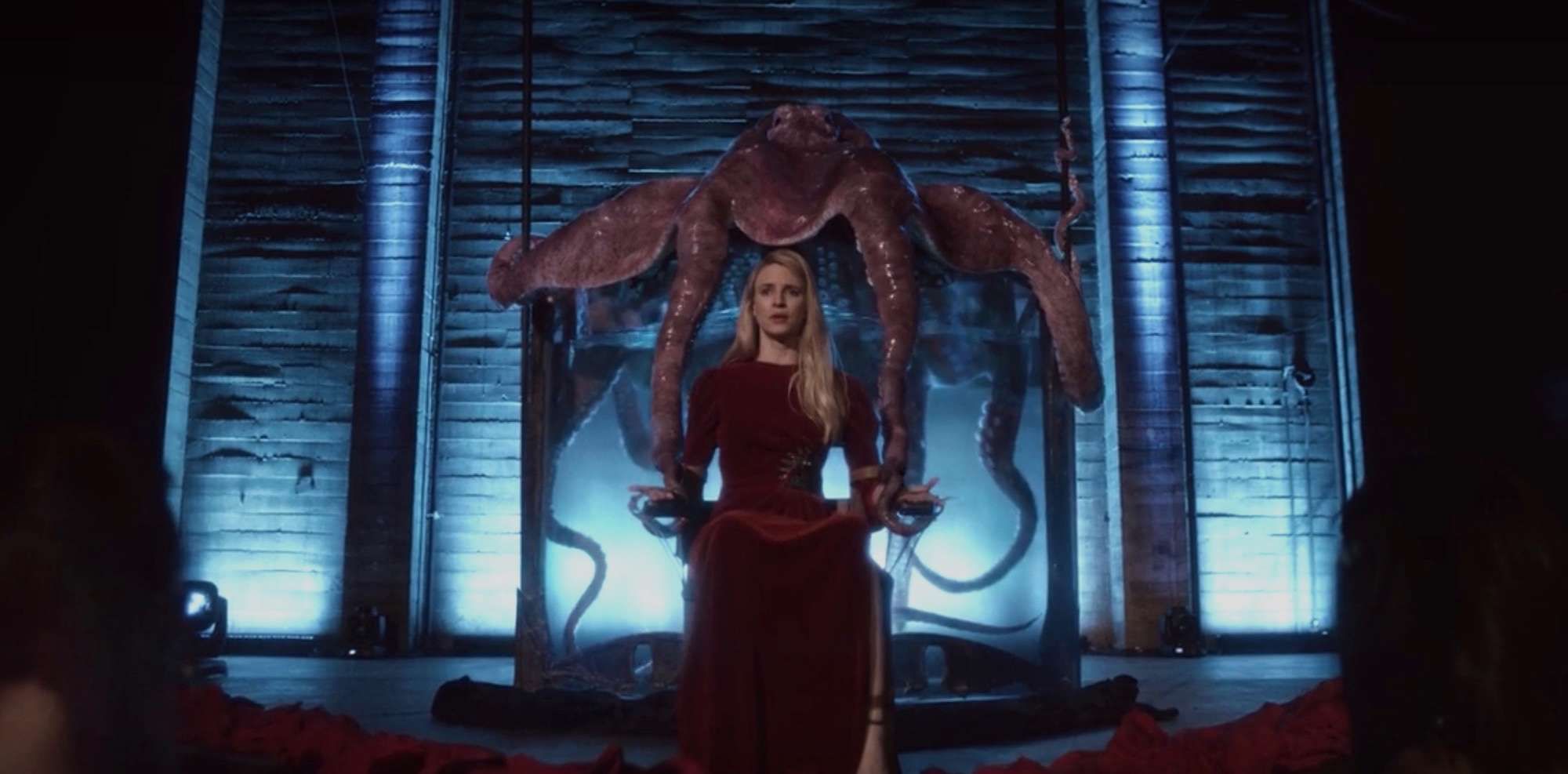

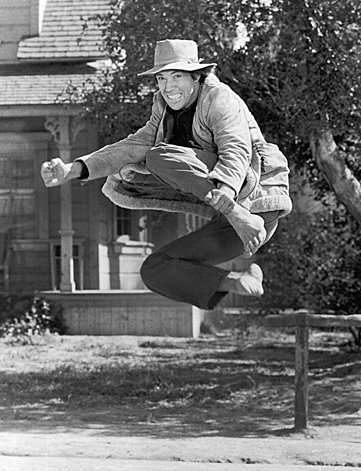

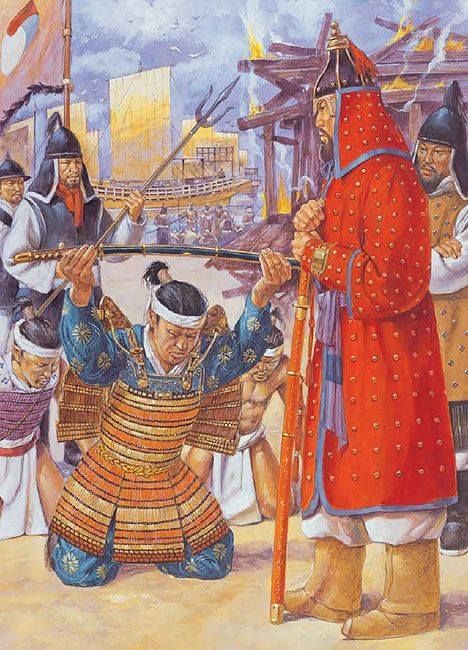

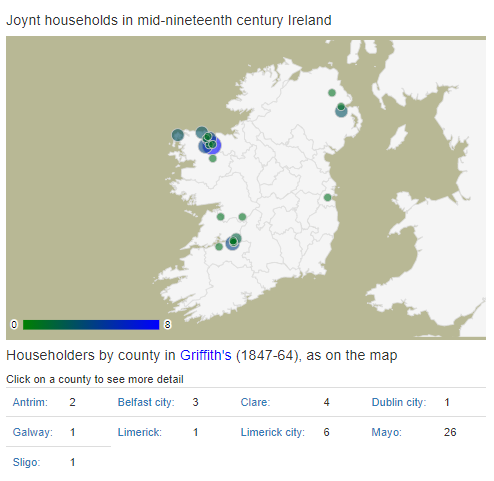


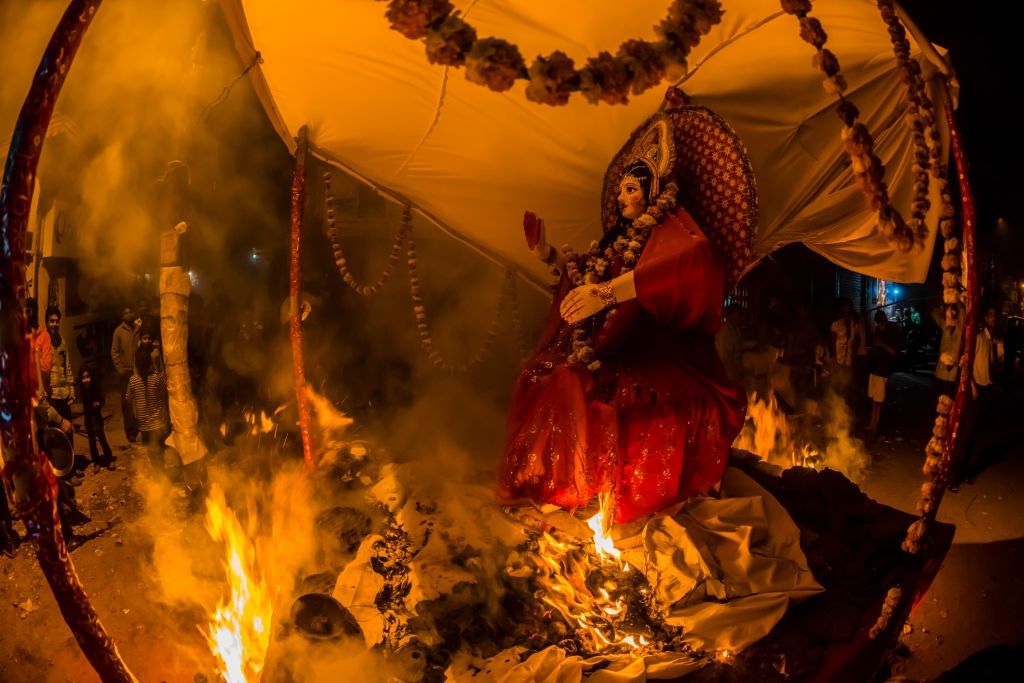


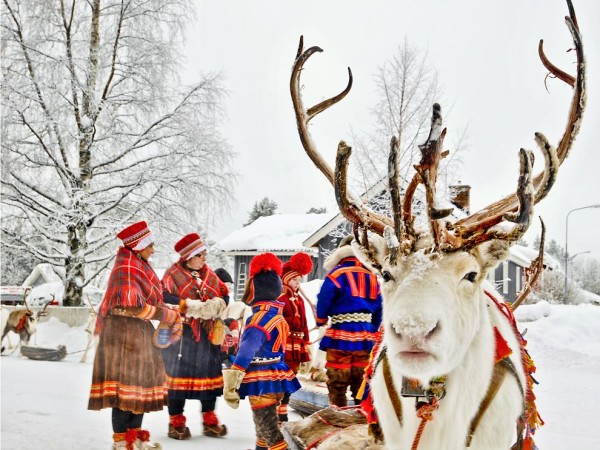



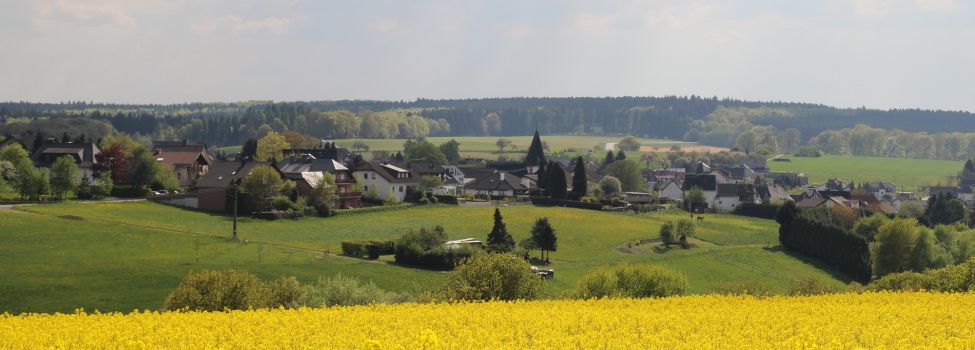
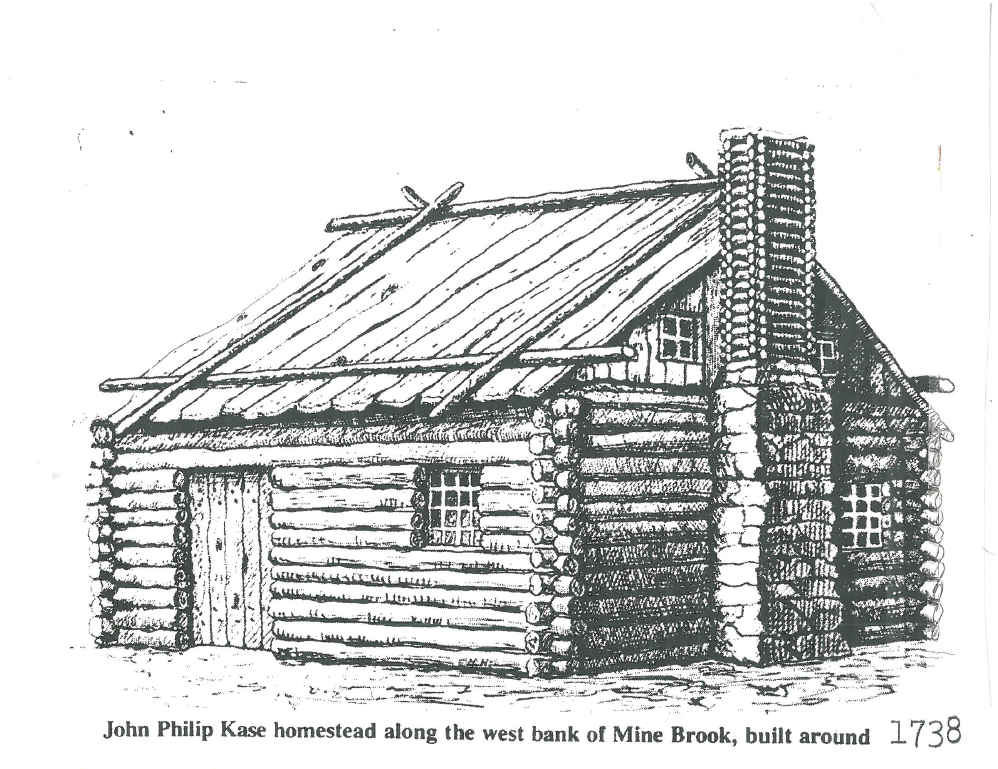

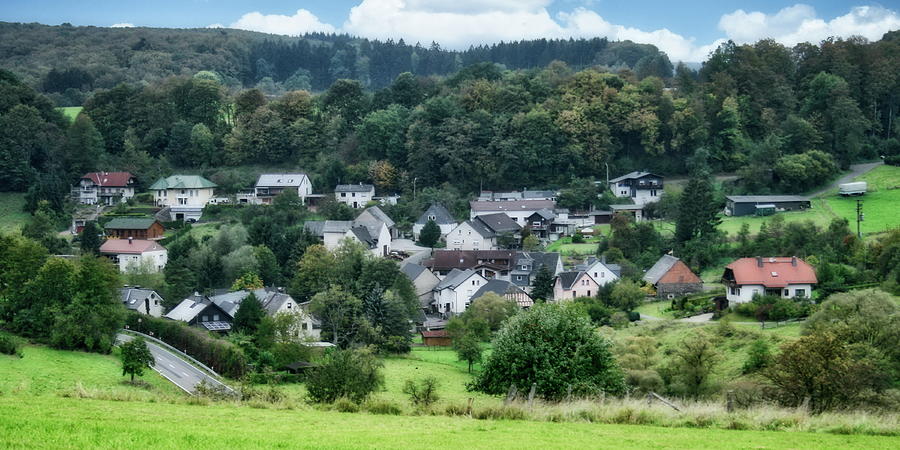




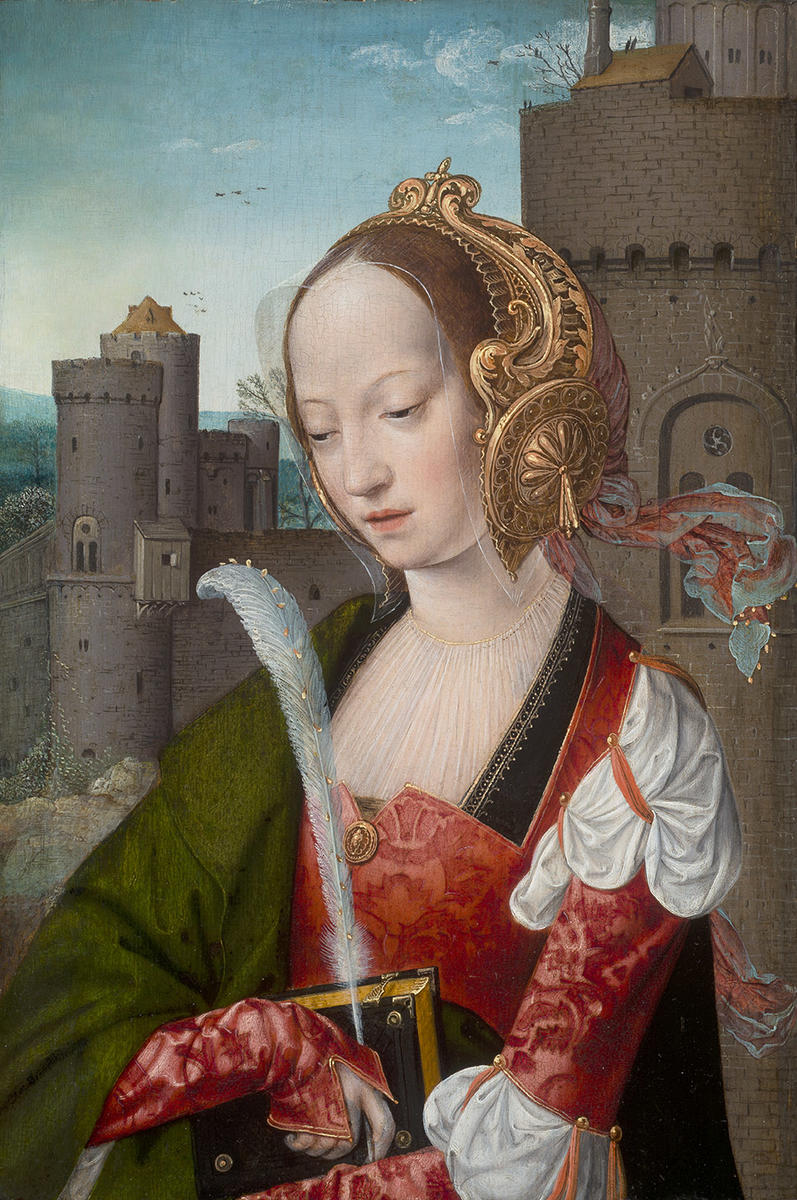
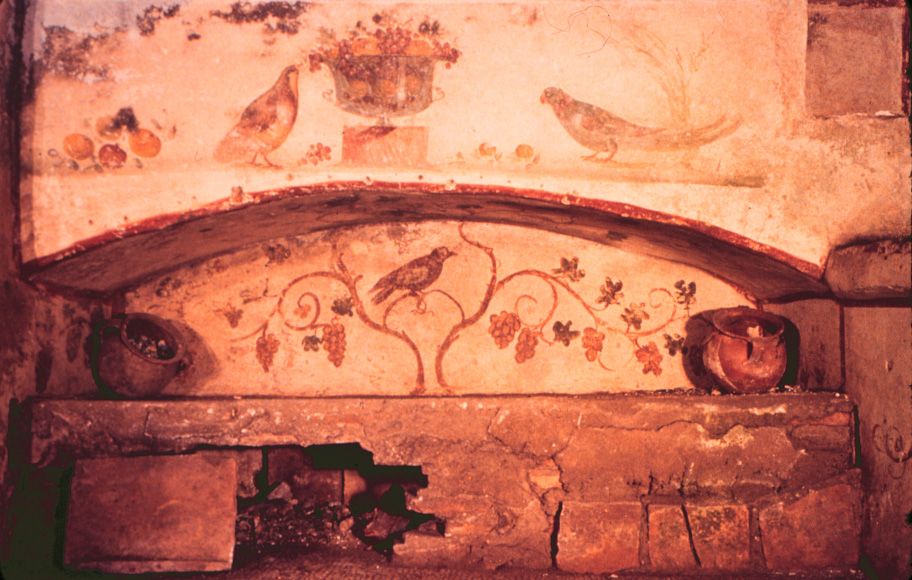

 peacock (guardians of the Gates of Paradise).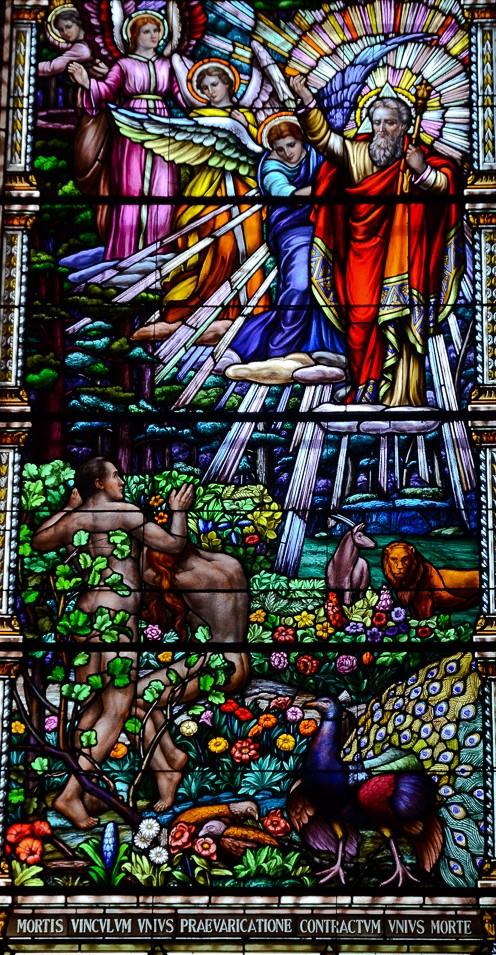
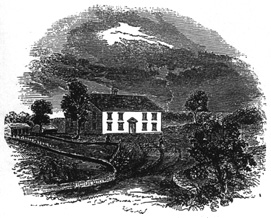
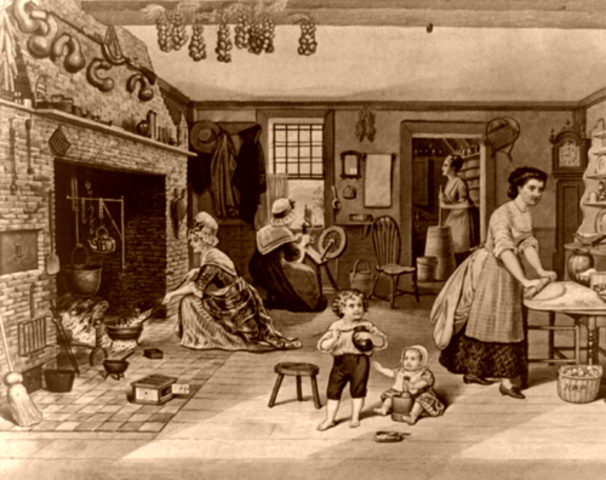


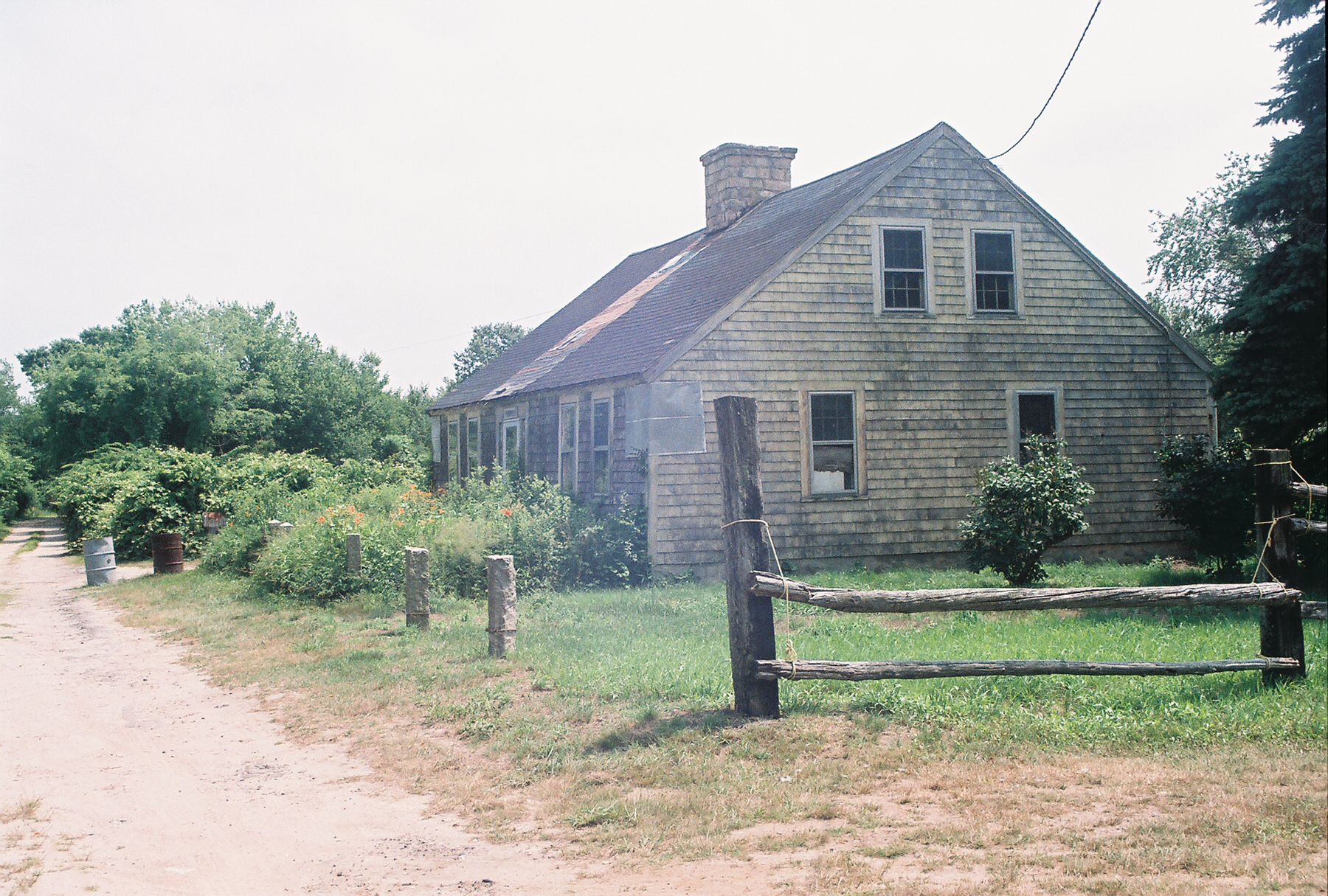
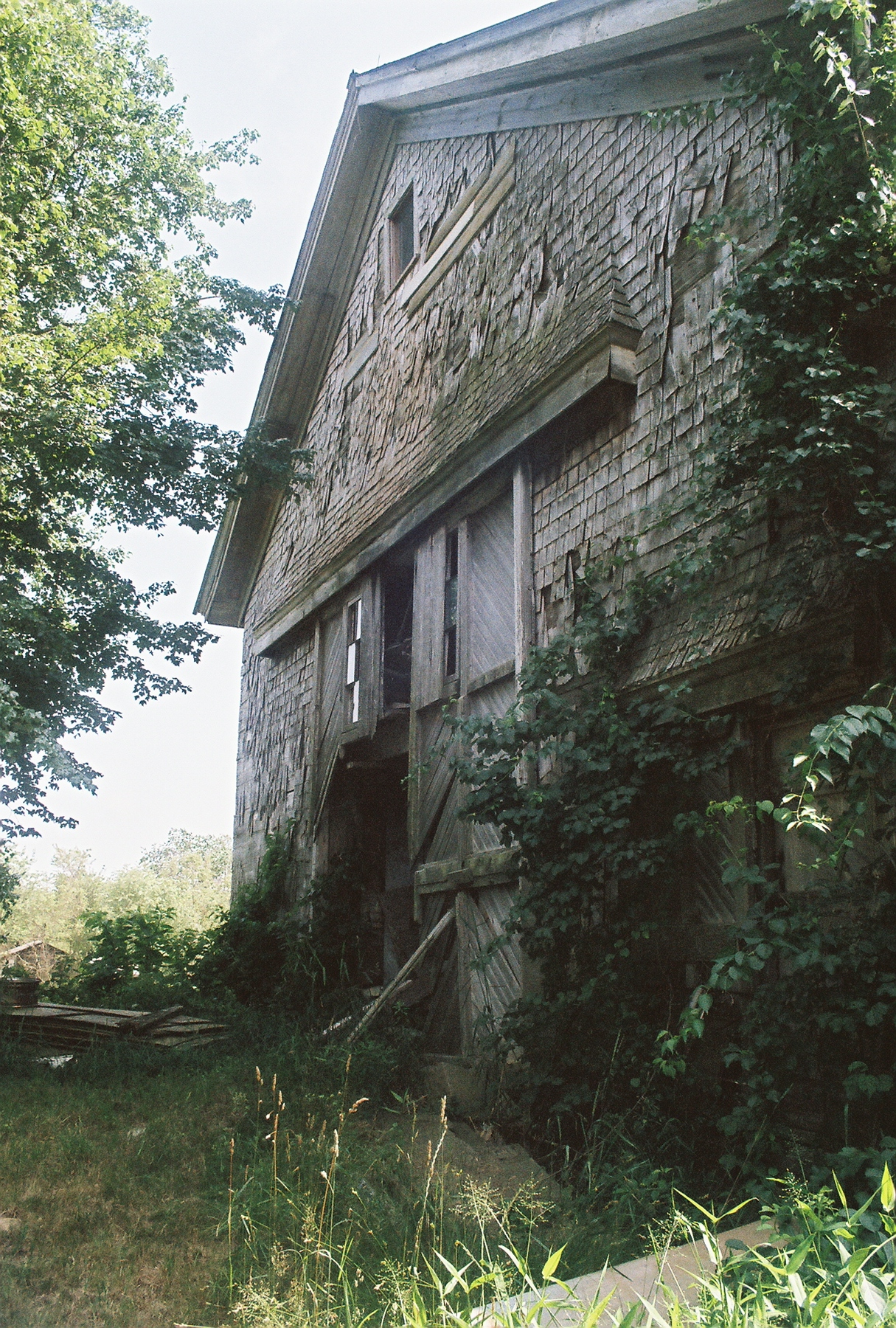



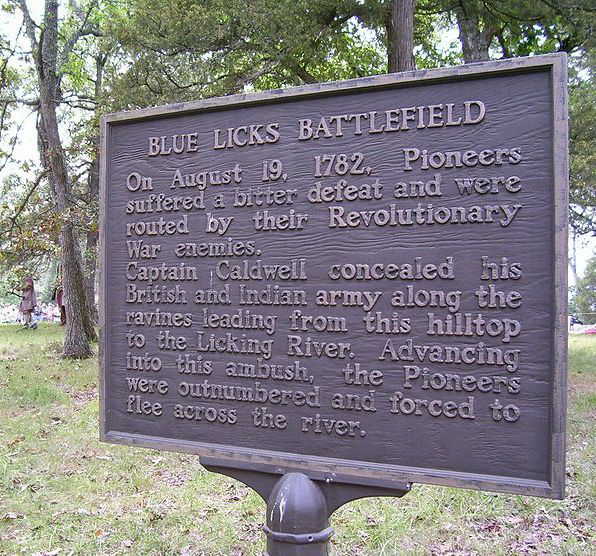
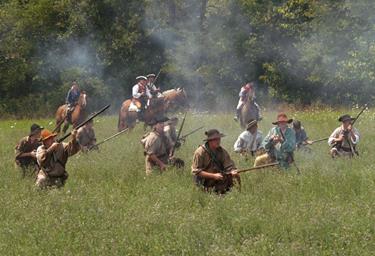
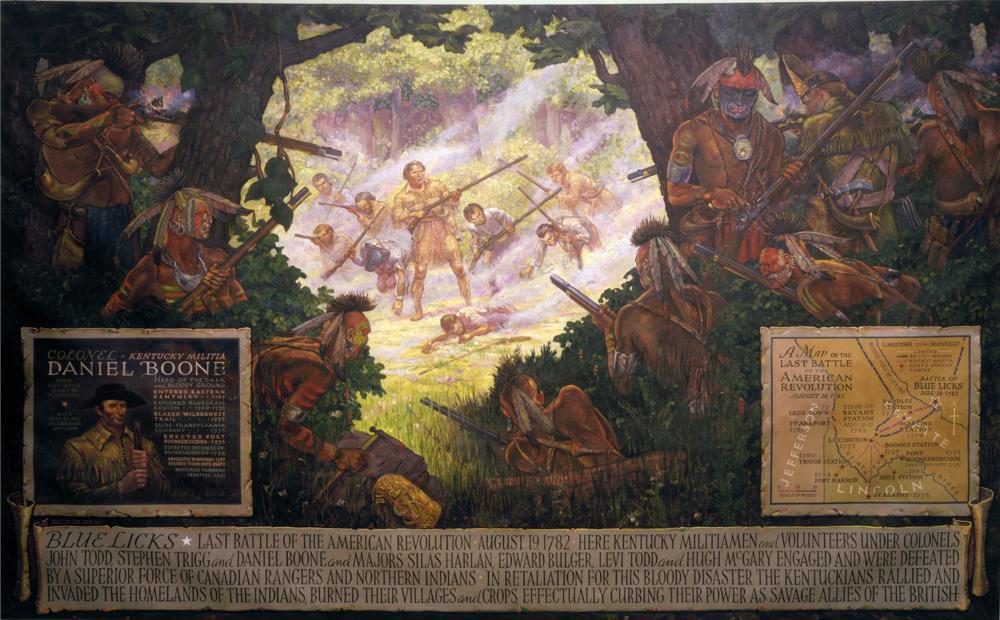

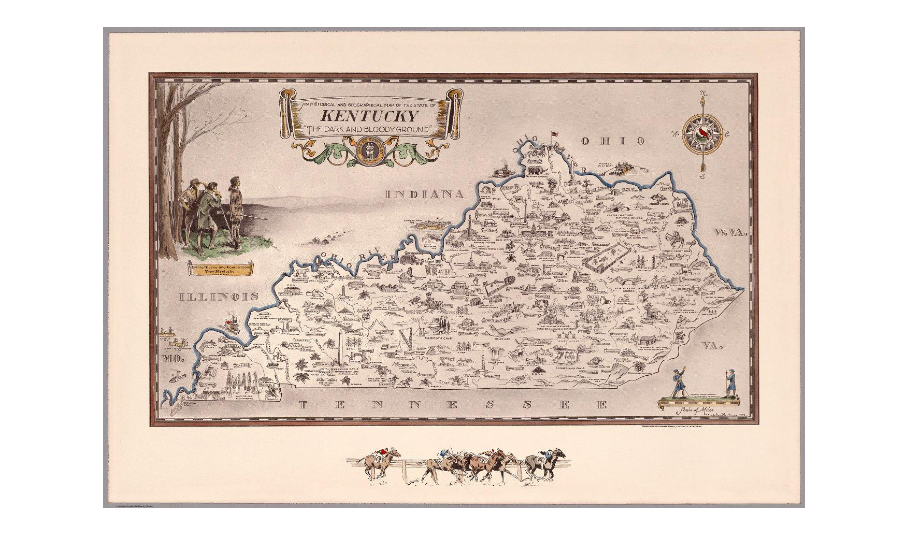
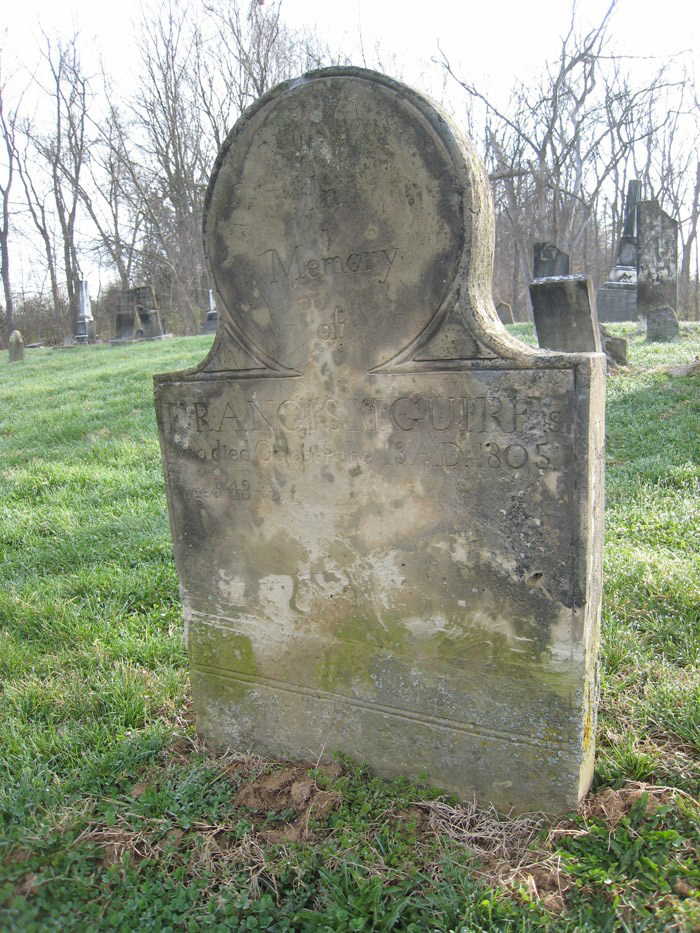
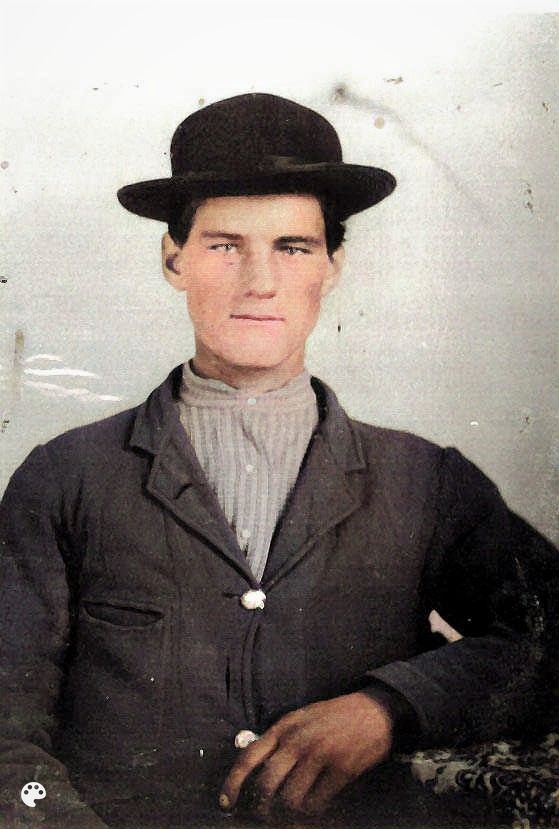
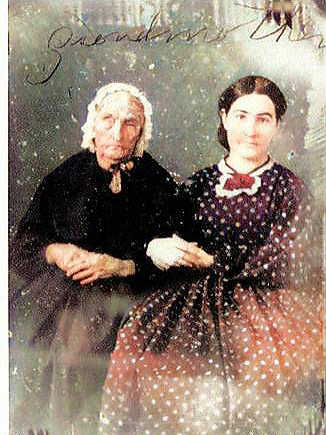

 Anna's Musings & Writings