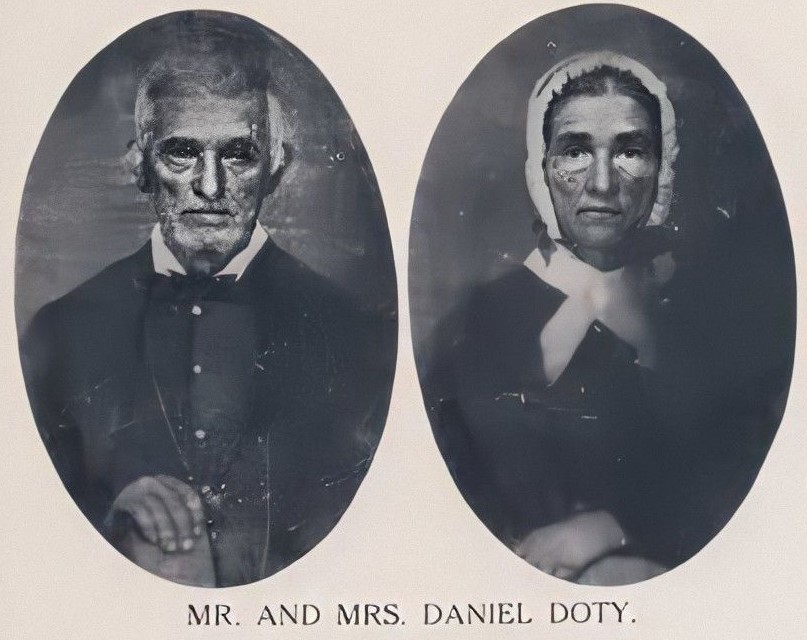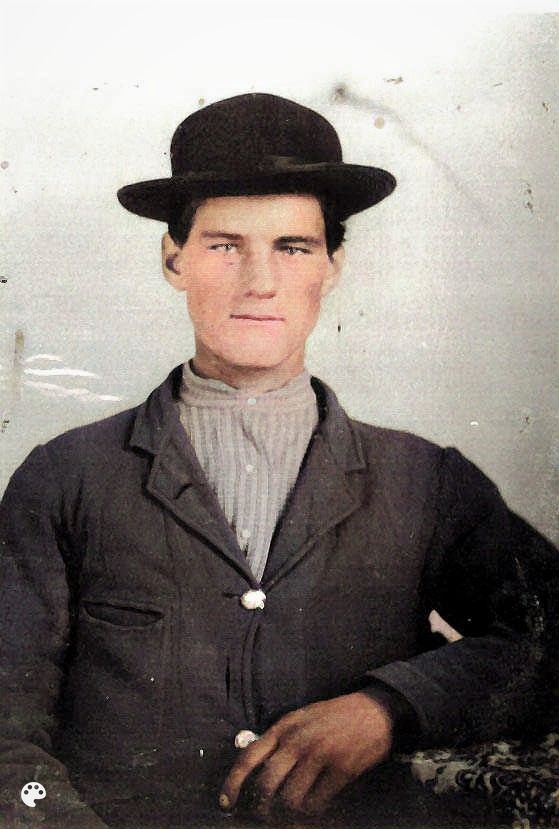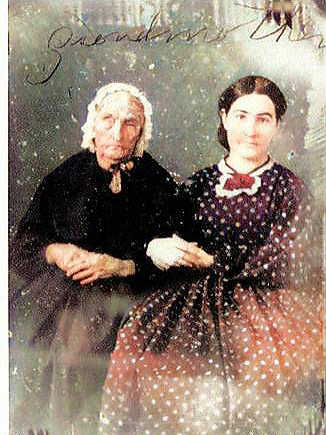
My Lozier/Losure/Loser/Looser/Loeser Ancestors from Oberriexingen, Germany (and related lines)

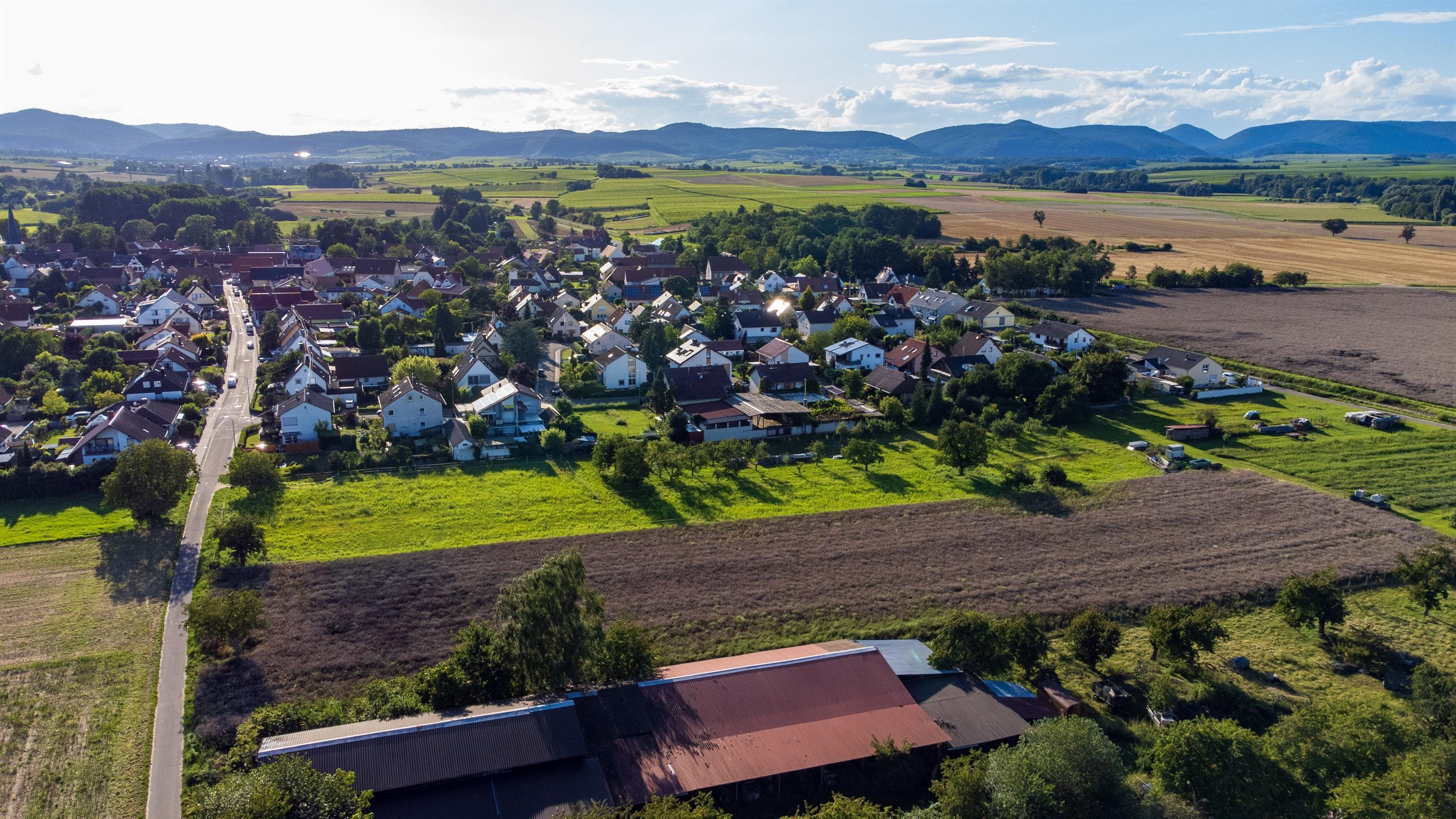
Oberriexingen, Germany. Photo copyright Helmut-Roman Köhler – Fotos & Bilder

Updated on 21 August 2025 with new information regarding the maiden name of Eva Elisabetha, wife of Christoph “Stofel” Lozier/Losure, and her parentage.

My maternal 3rd great-grandparents Joseph Losure and Sarah Lozier were first cousins.

The furthest I can take this line back is to my 8th great-grandfather, Elias Looser. He was born about 1663 in Oberriexingen, Ludwigsburg, Baden-Württemberg, Germany. I found one researcher listing his date of death August 14, 1741, but I have been unable to locate a record supporting this death date. He married Anna ____.

Elias Looser and Anna ___ had the following children based on baptism records:

  1. Margaretha Looser, baptized on 15 October 1682 in Oberriexingen.
  2. Hanss Jacob Looser, baptized on 21 March 1685 in Oberriexingen. He died 25 November 1762 in Oberriexingen. He married before 1707 to Anna Maria Knapper. She was the daughter ofHans Conrad Knapper and Barbara ____. This is my direct line.
  3. Hanss Wilhelm Looser, baptized on 22 April 1688 in Oberriexingen. He died in 1762 in Oberriexingen. He married first to Anna Catharina ______. They had ten children. After her death, he married second on 27 January 1733 in Oberriexingen to Margaretha (Anna Margaretha) Schmid. Four children were born to the second marriage.
  4. Anna Maria Looser, baptized on 26 February 1692 in Oberriexingen.

Anna Maria Knapper was the daughter of Hans Conrad Knapper and Barbara ____.

Hans Conrad Knapper and Barbara ____ had the following children based on baptism records:

  1. Anna Catharina Knapper baptized on 9 September 1682 in Oberriexingen.
  2. Anna Barbara Knapper baptized on 5 March 1684 in Oberriexingen.
  3. Anna Maria Knapper baptized on 9 December 1689 in Oberriexingen. She married Hanss Jacob Looser before 1707 in Oberriexingen. This is my direct line.
  4. Johann Geoge Knapper – baptized as Johann Jerg Knapper (Jerg is a nickname for Georg) on 25 April 1691 in Oberriexingen. He married on 13 November 1714 in Enzweihingen (which is 6 miles from Oberriexingen) to Anna Barbara Gukhel.

My line continues with Hanss Jacob Looser/Loser and Anna Maria Knapper.

Children of Hanss Jacob Looser and Anna Maria Knapper, based on baptism and other records:

  1. Elias Looser baptized 2 March 1705 in Oberriexingen, and died before 1723 (before the birth of his brother Elias born in July 1723) in Oberriexingen.
  2. Matthäus (Matthaeus) Loser baptized 7 October 1707 in Oberriexingen, and died 1766 in Bethel Township, Lancaster County, Pennsylvania. He married first to Barbara ___, and after her death, he married second on 18 November 1738 in Oberriexingen to Catharina Barbara Schwenck. This is my direct line.
  3. Christianus Loser baptized on 23 July 1710 in Oberriexingen.
  4. Anna Catharina Loser baptized on 12 September 1713 in Oberriexingen.
  5. Anna Maria Loser baptized on 10 July 1718 in Oberriexingen.
  6. Eva Catharina Loser baptized on 13 November 1719 in Oberriexingen.
  7. Elias Loser baptized 7 July 1723 in Oberriexingen. He married on 5 November 1748 in Oberriexingen to Anna Maria Stroh.
  8. Johann Jacob Looser born about 1725 in Oberriexingen. He married on 4 February 1749 in Oberriexingen to Eva Catharina Ansel.

Matthäus (Matthaeus) Loser married first about 1730 to Barbara _____. She died before 1738, and he married second on 18 November 1738 in Oberriexingen to Catharina Barbara Schwenck. Her family was from 12.4 miles away in Stuttgart. She was the daughter of Johan/Hans Conrad Schwenck and Albertina/Sabina Dorothea Keller. I cannot take the Schwenck line back further, but I am able to take her mother’s lines back a few more generations.

Albertina/Sabina Dorothea Keller was born in early May 1695 in Stuttgart and baptized there 9 May 1695. She was the daughter of Leonhardt Keller and Dorothea _____.

Leonhardt Keller was the son of Leonhardt Keller (Sr.). Leonardt Keller (Sr.) was born and baptized in Stuttgard. He was the son of Sebastian Keller and Anna Harnester.

Although the baptism record for Catharina Barbara Schwenck is found in Stuttgart u Untertürkheim, the family had migrated to Enzweihingen by 1716, when the baptism record of her sister Anna Maria Schwenck was found there and in 1730 the baptism record of her sister Johanna Elisabeta Schwenck also is found in Enzweihingen. Oberriexingen is 2.4 miles from Enzweihingen.

In the baptism record of Catharina Barbara Schwenck found in Stuttgart u Untertürkheim on 30 May 1714 her parents are listed as Johan/Hans Conrad Schwenck and Albertina/Sabina Dorothea Keller. In the baptism records of Anna Maria Schwenck and Johanna Elisabeta Schwenck the parents are listed as Johann Conrad Schwenck and Regina Schwenck. Some list Regina with the maiden name of Brucks. I have not seen documentation supporting the Brucks surname. Albertina / Sabina / Regina could all be the same name being mistranscribed. Or maybe Albertina/Sabina Dorothea Keller Schwenck died in 1714 possibly in childbirth or of complications, and Johan/Hans Conrad Schwenck married a woman named Regina (Brucks). Either way, the family migrated to Enzweihingen, which is close by to Oberriexingen where Catharina Barbara Schwenck married Matthäus (Matthaeus) Loser on 18 November 1738.

Mattäus (Matthaeus) Loeser/Loser/Looser and first wife Barbara ____ had at least two known children based on baptism records:

  1. Hanss Jerg Loser baptized on 25 October 1731 in Oberriexingen.
  2. Hanss Jacob Loser/Loeser baptized 26 September 1736 in Oberriexingen. He married on 22 November 1762 in Bethel, Berks County, Pennsylvania to Margaretha Schmidt.

Mattäus (Matthaeus) Loeser/Loser/Looser and second wife Catherina Barbara Schwenck had 7 known children based on baptism records:

  1. Elias Loser baptized 7 March 1740 in Oberriexingen. He died 3 August 1745 in Oberriexingen.
  2. George Loeser born about 1741 in Oberriexingen. He died in 1773 in Mount Zion, Bethel Township, Lebanon County, Pennsylvania. He married 6 February 1751 in Lancaster, Lancaster, Pennsylvania to Barbara Schuckin.
  3. Christof “Stofel” Loser (Lozier/Losure) baptized Hanss Christoph Loser on 23 January 1742 in Oberriexingen. He died 30 September 1822 in Plain Township, Wayne County, Ohio. He married about 1768 in Pennsylvania to Eva Elisabetha Daurich. (My 5th great-grandparents).
  4. Friderica Dorothea Looser baptized 11 May 1744 in Oberriexingen.
  5. Matthaeus Loeser/Loser baptized 28 July 1748 in Oberriexingen.
  6. Maria Agness Looser baptized 30 January 1750 in Oberriexingen.
  7. Anna Maria Loser baptized 12 September 1751 in Oberriexingen.
The main street through Oberriexingen in Baden-Württemberg (Germany) with the Church of St. George in background. Photo from File:Hauptstraße Oberriexingen.jpg – Wikimedia Commons.

A bit of information about Oberriexingen, Germany:

Oberriexingen is a town in the district of Ludwigsburg, Baden-Württemberg, Germany. It is situated on the River Enz. It is 12.4 miles northwest of Stuttgart, and 10.6 miles west of Ludwigsburg. The current population of Oberriexingen is a little over 3,000 people.

Loeser is a German habitational name from any of several places called Lösau, Losa, or Losau. [It is a] Status name for a tenant farmer who had bought off the feudal obligations on his land, from Middle High German losen, lösen ‘to redeem’. Variant of Lazar. (3) Loser is a variant of the name Loeser.

Schwenk name meaning: North German: variant of Schwanke. South German (mainly Württemberg, Silesia, and Bavaria): from Middle High German swenken ‘to swing or sling’, apparently a nickname, of which the original application cannot now be established.” (8) Since my Schwenk family were from Stuttgart which is in Baden-Württemberg in south Germany the name would mean “from Middle High German swenken ‘to swing or sling’.

Keller surname meaning: German: from Middle High German kellaere ‘cellarman’, ‘cellar master’ (Latin cellarius, denoting the keeper of the cella ‘store chamber’, ‘pantry’). Hence an occupational name for the overseer of the stores, accounts, or household in general in, for example, a monastery or castle. Kellers were important as trusted stewards in a great household, and in some cases were promoted to ministerial rank. (9)

Knapper (Knäpper) is a German surname and is an unflattering nickname from an agent derivative of knappen ‘to be stingy’ or, in some places, ‘to grab or snatch’. (22)

According to the Commemorative Biographical Record of Wayne and Holmes County, Ohio, published in 1889 it is said that Christoph . . . Stofel” Lozier, came to America from Germany with his parents, when he was seven years of age. He was a weaver by trade, an occupation he followed in Virginia, and at an early date he [re]located [to] Westmoreland County, moving thence in 1814 to Wayne County, Ohio. Stofel Lozier had a family of twelve sons and one daughter, and four of the sons and the daughter came with him to Ohio; three of the sons were married and had families. (1)

It appears the family came to the U.S. at least a few years later, since Stofel’s two youngest siblings were born in Oberriexingen in 1750 and 1751. His brother married in 1758 in Lancaster, Lancaster County, Pennsylvania. So, we know the family came after 1751 and was here at least a few years before 1758.

I have not found the family in any records in Virginia, but they are found in records in Pennsylvania and Ohio.

Above is the baptism record for Eva Elisabetha Daurich. Her father is listed as Johannes Daurich, and the sponsor was her family member Eva Elisabetha Daurich

Christoph “Stofel” Lozier/Losure married Eva Elisabetha Daurich. She was born 18 March 1750 in Cocalico, Lancaster County, Pennsylvania. She was baptized on 25 March 1750 at Muddy Creek Lutheran Church in Cocalico, as the daughter of Johannes Daurich. The name of her mother was not listed in the baptism. The sponsor listed was her kin, and probable namesake, Eva Elisabetha Daurich.

In German church records the surname is listed as Duerich.

Johannes Daurich (Duerich) was baptized on 21 July 1703 at the Evangelical Lutheran Church in Neubronn, Ostalbkreis, Baden-Württemberg, Germany, as the son of Hanss Christoph Duerich and Maria Barbara Pantlion.

Hanss Christoph Duerich married on 7 February 1693 at the Evangelical Lutheran Church in Neubronn, Ostalbkreis, Baden-Württemberg, Germany, to Maria Barbara Pantlion. Per the marriage record, Hanss Christoph Duerich was the son of Hanss Jacob Duerich, and Maria Barbara Pantlion was the daughter of Jerg (Georg) Pantlion.

Interestingly, the, as the crow flies, distance between Neubronn, Ostalbkreis, Baden-Württemberg, Germany and Oberriexingen, Ludwigsburg, Baden-Württemberg, Germany is about 15-19 miles. I wonder if the Duerich and Lozier families knew each other in Germany. If not, it’s quite a happenstance that they lived so close to each other in Germany prior to coming to Pennsylvania.

Meaning and origins of the Daurich and Duerich surnames. The Daurich and Duerich surnames are a variant of the German surname Dautrich, which is a rare German surname likely derived from the ancient Germanic name Dietrich, meaning powerful and people/race. These surnames are rare in Modern Germany. While present historically, these surnames are uncommon today.

Background information and meaning of the surname Pantlion.

The surname Pantlion is a rare surname in Germany, where it is held by 41 people. It is most common in Baden-Württemberg, where 63 percent live. My Pantlion ancestors were from Neubronn, which is in the Southern Germany. When the name is of South German origin, it could be a pet form of the personal name Pantlen, a vernacular version of Pantaleon. The name Pantaleon, in turn, is of Greek origin, stemming from the elements “pan-” meaning “all” or “every” and “léōn” meaning “lion”. Some also connect Pantaleon to the Greek “Panteleēmōn” which means “all-merciful”. Thus, the surname means all-lion or all-merciful. Saint Pantaleon, a 4th-century Christian martyr, is associated with this name. (24)

Biographical information regarding Saint Pantaleon is below.

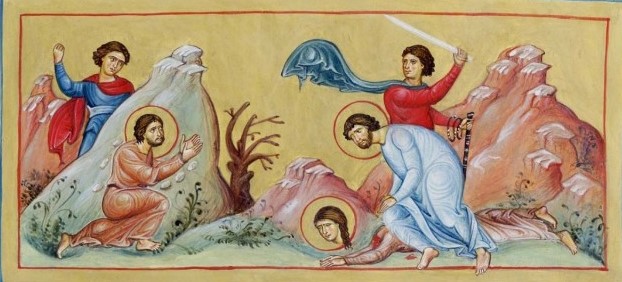
Saint Pantaleon
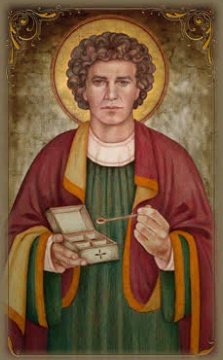
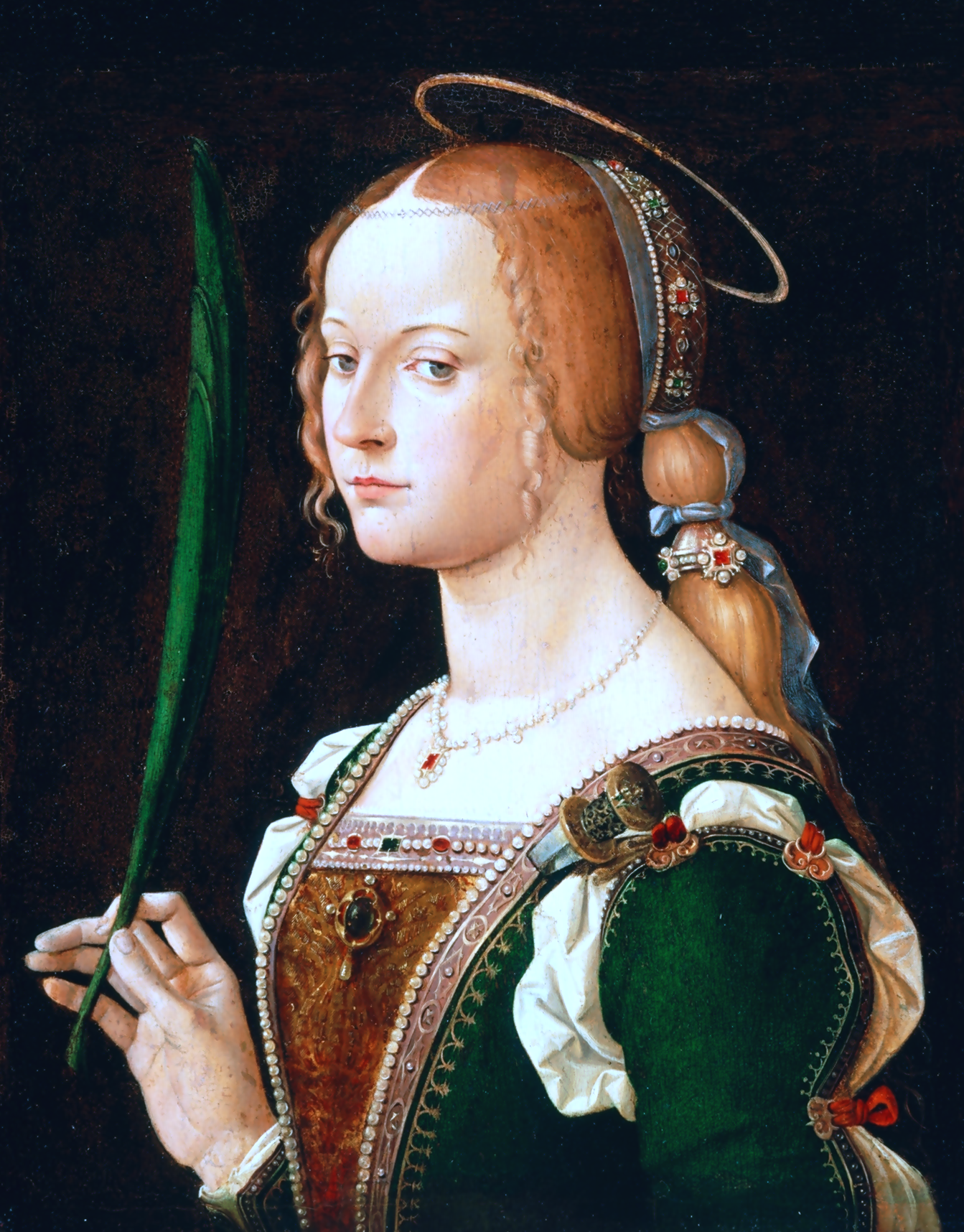
Above image is of St. Pantaleon. Artwork by Tracy L. Christianson.

Saint Pantaleon, one of the 14 Holy Helpers, was born near the Black Sea in Asia to a wealthy pagan father and Christian mother who taught him the faith. He was such a celebrated doctor that the Roman Emperor Galerius appointed him as his personal physician. Pantaleon’s excessive involvement in the pagan court influenced him to deny his Christianity. He lived as a pagan for some time before a priest named Hermolaos made him realize that he had committed a grave sin. Pantaleon repented and rejoined the Church. To make up for his mistake, Pantaleon wished to suffer and die in Jesus’ name. For the time being, he lived by the example of Christ’s charity by offering his medical services to the poor free of charge. When the persecution of Diocletian began, Pantaleon immediately gave away all of his possessions to the poor and was soon accused of being a Christian. When given the choice of denying his Faith or being put to death, Pantaleon immediately chose to die for his Christian beliefs. He died on 27 July 305 AD in Nicomedia, in what is modern-day Izmit, Turkey. He is the patron saint of physicians and midwives, the patron against accidents and loneliness, and the helper for crying children. His feast day is 27 July. (23)

Christoph “Stofel” Lozier/Losure andEva Elisabetha Daurich had 13 children:

  1. Matthias Lozier born about 1769 in Westmoreland County, Pennsylvania and died 1825 in Hopwell Township, Perry County, Ohio. He married first to Maria Magdalena _____ and married second to Rosina Dumbauld. (My 4th great-grandparents).
  2. Henry Lozier born about 1770 in Pennsylvania and died after 1850 in Noble County, Indiana. He married 27 August 1805 in Columbiana County, Ohio, to Elizabeth Snook.
  3. Elizabeth Lozier born about 1772 in Pennsylvania and died in Wayne County, Ohio, she married Jacob Hines.
  4. John Lozier born 3 January 1772 in Westmoreland County, Pennsylvania and died 31 March 1855 in Petersburg, Mahoning, Ohio. He married 25 April 1802 in Columbiana County, Ohio, to Anna Marie Musser.
  5. Nicholas Lozier born 10 January 1774 in Pennsylvania and died 24 October 1813 in West Township, Columbiana County, Ohio. He married Elizabeth _____.
  6. Peter Losure/Lozier born about 1774 in Westmoreland County, Pennsylvania and died 17 March 1829 in Wayne County, Ohio. He married Elizabeth Barbara Womelsdorf. (My 4th great-grandparents).
  7. Jacob Lozier born about 1780 in Pennsylvania and died 14 February 1845 in Fulton, Fulton County, Ohio. He married to an unknown named wife, and they had issue.
  8. Sebastian Lozier born about 1782 in Pennsylvania and died 16 October 1855 in Columbiana, Columbiana County, Ohio. He married Margaret Hines.
  9. John Jacob (Johann Jacob) Losure/Lozier born 17 August 1783 in Hempfield Township, Westmoreland County, Pennsylvania and died 1875 in Dawson, Fayette County, Pennsylvania. He married to Mary A. Washabaugh.
  10. Christopher Losure born about 1784 in Pennsylvania and died 16 June 1841 in Saltlick, Fayette County, Pennsylvania.
  11. Isaac Lozier born about 1785 in Pennsylvania and died 1881 in Greenup, Greenup County, Kentucky. He married Mary Gordon. (Some give his birthplace as Virginia).
  12. George Lozier born 14 October 1788 in Westmoreland County, Pennsylvania and died 1 November 1848 in Lakeville, Holmes County, Ohio. He married Elizabeth Manger.
  13. David Christopher Losure born about 1790 in Donegal, Westmoreland County, Pennsylvania and died 1839 in Wayne, Wayne County, Ohio. He married Hannah Burgan.

I descend from two sons of Christoph “Stofel” Lozier/Losure and Eva Elisabetha Daurich.

My first line is through their son Matthias Lozier.

Matthias Lozier was born about 1769 in Westmoreland County, Pennsylvania and died 1825 in Hopewell Township, Perry County, Ohio. He is buried next to his wife at Saint Pauls Church Cemetery in Glenford, Perry County, Ohio.

He married about 1790 in Pennsylvania to Maria Magdalena ____. They had the known following children:

  1. Anna Elizabeth Lozier born 11 March 1791 in Donegal Township, Westmoreland County, Pennsylvania.
  2. Rosina Lozier born 24 July 1794 in Donegal Township, Westmoreland County, Pennsylvania.
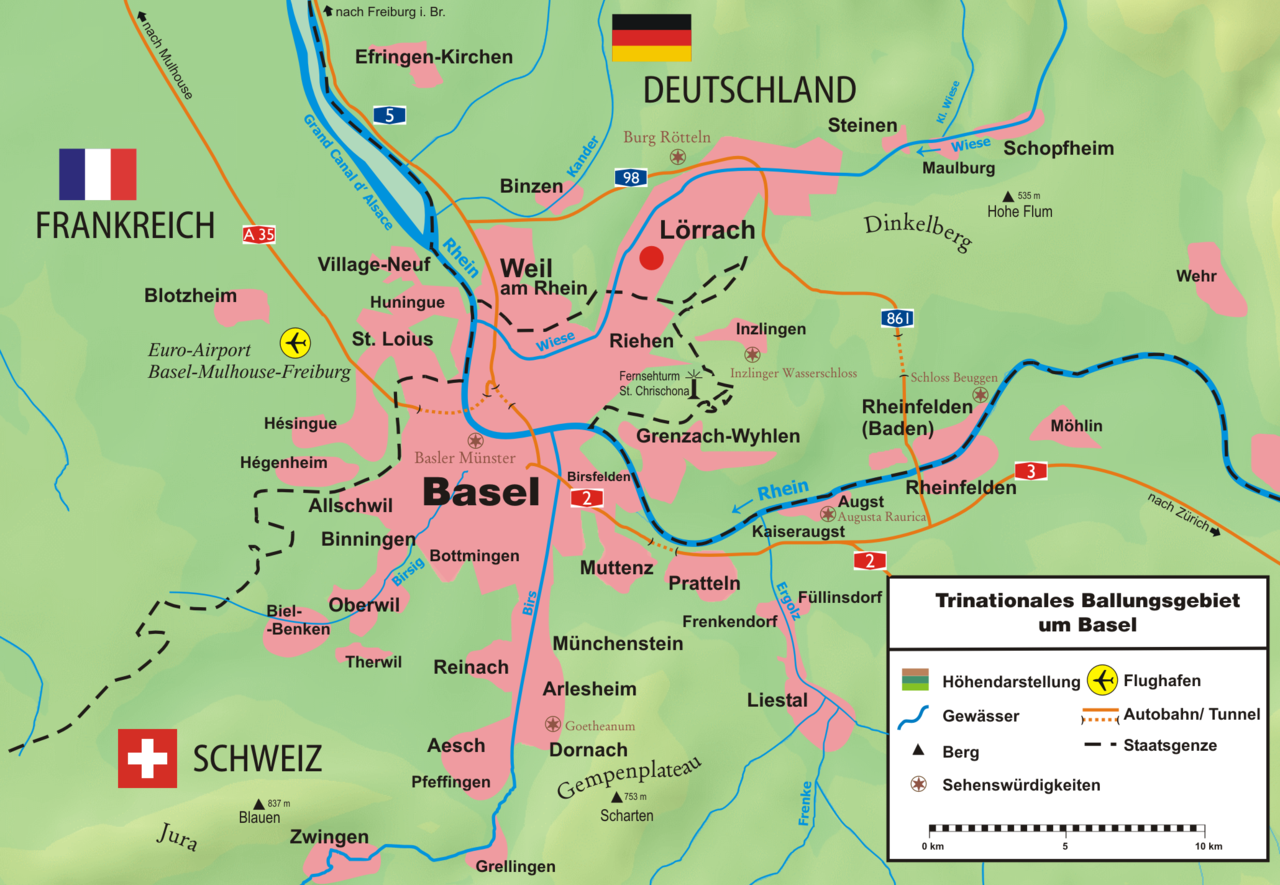
German: Border triangle Germany-France-Switzerland. Photo from File:Grossraum Loerrach Basel.png – Wikimedia Commons.

Matthias Lozier married second about 1801 in Pennsylvania to Rosina Dumbauld (widow of Joseph Nathanial Slaughter). Rosina Dumbauld was the daughter of Ernest Frederick Dumbauld and Elizabeth Hager. The granddaughter of Abraham Dumbauld and Salome Lang and great granddaughter of Johann Martin Dumbald and Anna Maria Tschudi. The Dumbauld family were originally from Basel, Basel-City, Switzerland, and they go back some generations in Switzerland. Eventually they migrated 6.5 miles to Lörrach, Baden-Württemberg, Germany.

Sitting on the Rhine river in northern Switzerland, Basel balances old-school and contemporary culture. Photo from City Guide: Basel, Switzerland – what to see and do | Escapism (escapismmagazine.com).

Basel, Switzerland is a city in northwestern Switzerland on the river Rhine. Basel is Switzerland’s third-most-populous city (after Zürich and Geneva) with about 200,000 inhabitants. Lörrach is a town in southwest Germany, in the valley of the Wiese, close to the French and the Swiss borders. It is the capital of the district of Lörrach in Baden-Württemberg. The city population has grown over the last century, with only 10,794 in 1905 it has now increased its population to 49,382. (2)

Lörrach was founded sometime before 1102, when it was first mentioned in history as a market-town. Today, Lorrach is known for its luxurious and non-traditional villas, earthquakes, Rotteln Castle, for being the capitol of Germany for one day during the Revolutions of 1849, and as the location of the largest Milka chocolate factory.

The Lörrach market. Lörrach sits In the “three-countries corner” of Switzerland, France, and Germany. Photo from Three countries, markets galore: Lörrach, Baden (DE) | Anita’s Feast (anitasfeast.com).

Dumbauld name meaning: Origin unidentified. Possibly a Frenchified spelling of German Dambold(t), from an old personal name composed of an earlier form of Old High German tac ‘day’ + bald ‘bold’. (9)

Hager name meaning: Dutch and North German: from a Germanic personal name composed of hag ‘hedge’, ‘enclosure’ + hari, heri ‘army’. from a Germanic personal name, Hadugar, composed of the elements hadu- ‘combat’, ‘strife’ + gari, from garwa ‘ready’, ‘eager’. German (also Häger): topographic name for someone who lived by a hedged or fenced enclosure, Middle High German hac. German and Jewish (Ashkenazic): nickname for a thin man, from Middle High German, German hager ‘thin’, ‘gaunt’. (10) 

Lang is a surname of Germanic origin, closely related to Lange, Laing and Long, all of which mean “tall.” (11)

Tschudi (variants: Schudy, Shoudy, Shudi, Schudi, Tschudy) is a surname common in the Canton of Glarus, Switzerland. The surname Tschudy is a patronymic surname formed from a pre-existing personal name. Tschudy is the Silesian equivalent to the English name Stephan. (12 & 13)

Matthias Lozier and Rosina Dumbauld had the following children:

  1. Simon Lozier born 20 September 1807 in Westmoreland County, Pennsylvania and died 9 October 1890 in Liberty, Clarke County, Iowa. He married Susana “Susan” Sarah Berge Neel.
  2. Sarah Lozier born 1810 in Westmoreland County, Pennsylvania and died 1876 in Newville, DeKalb County, Indiana. She married in 1829 in Wayne County, Ohio to her first cousin Joseph Losure.

Mattias Lozier and Rosina Dumbauld along with their children Simon Lozier and Sarah Lozier and Rosina’s son from her first marriage John (John Joseph) Slaughter all came to Perry County, Ohio in 1818. They lived in Hopewell Township. Perry County was founded 1 March 1818 from parts of Fairfield, Washington and Muskingum counties. Mattias Lozier, Rosina Dumbauld, and John (John Joseph) Slaughter are all buried at Saint Paul’s Church Cemetery in Glenford, Perry County, Ohio.

It is interesting to me that they ended up in Perry County. They are my ancestors on my maternal grandfather’s side. My maternal grandmother’s family were all from Perry County and were some of the first settlers there. My Kennedy and Palmer ancestors and my Lozier/Dumbauld ancestors most likely knew each other in Perry County. Purely by happenstance — for the families would not have a genealogical connection for a few generations, and my grandparents did not meet in Perry County, they met in Dayton, Montgomery County, Ohio.

The second son of Christoph “Stofel” Lozier/Losure and Eva Elisabeths Daurich that I descend from is Peter Losure/Lozier.

Peter Losure/Lozier was born about 1774 in Westmoreland County, Pennsylvania and died 17 March 1829 in Wayne County, Ohio. He married Elizabeth Barbara Womelsdorf. She was the daughter of Jacob Womelsdorf and Catherine Kasebier. The Womelsdorf family lived in Amity, Berks County, Pennsylvania. Jacob Womelsdorf’s brother John Womelsdorf founded Womelsdorf, Berks County, Pennsylvania.

Jacob Womelsdorf was the son of Daniel (Johann Daniel) Womelsdorf and Elisabeth Michaelis. Daniel (Johann Daniel) Womelsdorf was born 11 November 1703 in Diedenshausen, Siegen-Wittgenstein, North Rhine-Westphalia, Germany and died 6 November 1759 in Amity, Berks County, Pennsylvania. Elisabeth Michaelis was born 1703 in North Rhine-Westphalia, Germany and died 1 August 1772 in Amity, Berks County, Pennsylvania.

Michaelis is a German surname that means descendant of Michael (who is like God). Some give her maiden name incorrectly as McMichael which is a Scottish surname with the same meaning. The name Michaelis is found in Mettingen, Germany.

Daniel (Johann Daniel) Daniel Womelsdorf was the son of Johannes Womelsdorf and Anna Elisabeth Kemper. Johannes Womelsdorf was born 1660 in Girkhausen, Siegen-Wittgenstein, North Rhine-Westphalia, Germany and died 1730 in Diedenshausen. Anna Elisabeth Kemper was born 1665 in Girkhausen, Siegen-Wittgenstein, North Rhine-Westphalia, Germany and died 1740 in Diedenshausen.

Diedenshausen Church – Photo from Diedenshausen – Wikipedia.

Diedenshausen is a small village, since 1975 a constituent community of Bad Berleburg in Siegen-Wittgenstein district and Arnsberg region in North Rhine-Westphalia in the Federal Republic of Germany. It is located on the east side of the heavily forested Rothaargebirge (Red-haired Mountains), immediately on the border with Hesse. A few houses lie to the east of the Elsoff creek which forms the state border, and they are technically in Hesse. (14)

The small farming village of Diedenshausen was first mentioned in documents in 1194. The political philosopher Johannes Althusius was born and raised there. The accepted faith of the people was the Reformed doctrine of Calvinism. Native son Daniel Womelsdorf was the first from the village known to emigrate to America in 1724. Native son Jacob Weller von Molsdorf die Schwanfelder and his family were some of the earliest recorded members of this family to emigrate to America, landing in Philadelphia in 1710. (14)

Today, the village has a large number of restored half-timbered houses for which reason it was designated by the German government, in 1998, as one of the “Federal Golden Villages”. In 2008 Diedenshausen celebrated its millennium (1000th anniversary) as a dedicated village/area which drew many American descendants to celebrate as well. (14)
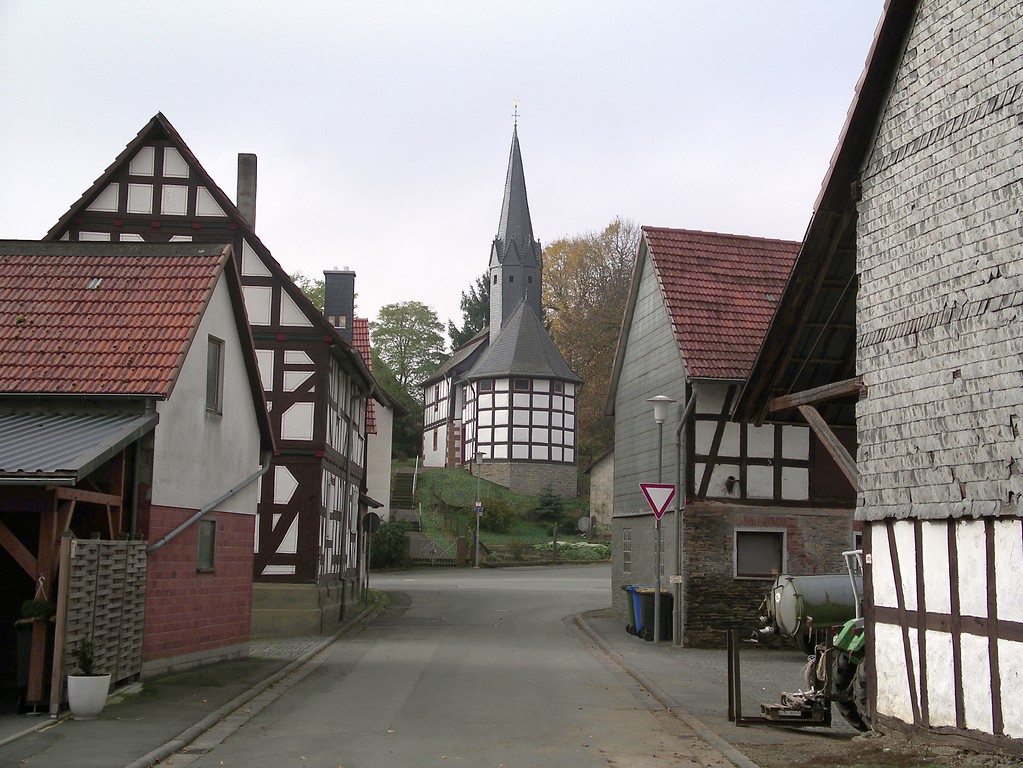
Half-timbered village Diedenshausen. Photo from Fachwerkdorf Diedenshausen | Objektansicht (kuladig.de).

Johannes Womelsdorf was the son of Georg Womelsdorf and Anna Else Lueckel. Both were born and died in Diedenshausen, Siegen-Wittgenstein, North Rhine-Westphalia, Germany. Georg Womelsdorf was the son of Johannes Womelsdorf and Margaretha Bickelbach. Johannes Womelsdorf was born and died in Diedenshausen, Siegen-Wittgenstein, North Rhine-Westphalia, Germany and Margaretha Bickelbach was born in Alertshausen, Siegen-Wittgenstein, North Rhine-Westphalia, Germany.

Anna Else Lueckel was the daughter of Zacharias Lueckel and granddaughter of Johann Lueckel and Elisabetha “Anna” Rausch. All of Diedenshausen, Siegen-Wittgenstein, North Rhine-Westphalia, Germany.

Anna Elisabeth Kemper was the daughter of Johannes Kemper and Anna Loew. And granddaughter of Johannes Loew and Christine Scheffhen. They all were born and lived in Diedenshausen, Seigen-Wittgensteine, North Rhine-Westphalia, Germany.

Girkhausen is 7 miles away from Diedenshausen and Alertshausen is 2.3 miles from Diedenshausen.

Womelsdorf is a German habitational name from a place so named near Erndtebrück. (4) Erndtebrück is 15.4 miles from Diedenshausen and 14.7 miles from Girkhausen.

Meaning of the surname Kemper: The German form of Kemper designated a peasant farmer, while the Dutch referenced someone who worked with hemp. Kemper may have also been used as a surname for people from one of the German-Dutch towns called Kempen. (5)

The surname Scheffhen was most likely Scheff or Schaff since the letters “en” were added to the the female’s maiden name in church records. The German word Schaffen originally meant “create”. The word schaffen as it is used today “is a translation for — to succeed, to pull off and to manage.” One source states that the surnames Scheff and Schaff are derived from the Middle High German term “schaffaere,” which referred to the manager or steward of a household.” Another source states that Schaff is a “metonymic occupational name for a tubmaker, from Middle High German schaff(e) ‘wooden vessel’, ‘scoop’.” And another source states that both the surnames are a variant of the German surname Schaaf which is a “German: metonymic occupational name for a shepherd, from Middle High German schaf ‘sheep’. In some cases, it may have been a nickname for someone thought to resemble a sheep, or a habitational name for someone living at a house distinguished by the sign of a sheep. (17, 18, 19, & 20)

I was unable to find any information about the surname Bickelbach. The German word bach means a stream, creek, or brook. I did find the meaning for the surname Bickel by itself without being attached to bach.

The surname Bickel is Dutch and German: from bickel ‘pickaxe’ or ‘chisel’, hence a metonymic occupational name for someone who made pickaxes or worked with a pickaxe or for a stonemason. Compare Bick. German: nickname for a dice player, from the same word in the sense ‘die’. South German: from a pet form of Burkhart. (21)

Since my Bickelbach ancestors were not from Southern Germany, it would not be a pet form of surname Burkhart. It may or not be related to Bick being a nickname for a dice player. My best guess would be that the surname in the case of my family originated with an ancestor that lived near a stream, brook, or creek, and they were someone that worked making pickaxes or used one and/or worked as a stonemason.

Lueckel is a German surname that means Descendant of Liudiko (little people), a pet form of names beginning with Leute (people), as Liudman, Liuderich and Liutwin. (6)

Rausch name meaning nickname for a noisy person, from a noun derivative of Middle High German ruschen ‘to make a noise’. topographic name for someone who lived by a swamp, from Middle High German rusch(e) ‘reed’. (7)

Meaning of Loew surname: German (Löw): variant of Loewe. Loewe is derived from the Middle High German lewe, meaning lion. (15 & 16)

Peter Losure/Lozier and Elizabeth Barbara Womelsdorf had the following children:

  1. David Losure/Lozier born about 1793 in Pennsylvania and died 6 November 1826 in Plain Township, Wayne County, Ohio. He married Mary _____.
  2. Mary A. (Anna/Hannah Maria) Losure/Lozier born 1 May 1795 in Beaver County, Pennsylvania and died before August 1837 in Wayne County, Ohio. She married 10 February 1820 in Wayne County, Ohio to Levi Baton/Eaton Smith.
  3. Barbara Losure born about 1796 in Beaver County, Pennsylvania and died 14 April 1871 in Riceland, Wayne County, Ohio. She married Peter Troxel.
  4. Jacob Losure born 3 July 1800 Beaver County, Pennsylvania and died 1 February 1881 in Clay Township, Kosciusko County, Indiana. He married Rheumay Wilson and Dorcas Smith.
  5. Joseph Losure born 18 September 1801 in Beaver County Pennsylvania and died before 1880 in Newville, DeKalb County, Indiana. He married his first cousin Sarah Lozier. (My 3rd great-grandparents).
  6. Elizabeth Losure born 6 September 1802 in Beaver County, Pennsylvania, and died 20 September 1882 in Ravanna, Mercer, Missouri. She married Philip Houser.
  7. Catherine Losure born between 1805-1810 in Beaver County, Pennsylvania.
  8. Susan Losure Brandt born in 1813 in Beaver County Pennsylvania, and died 1849 in Warsaw, Kosciusko, Indiana. She married Joseph Brandt and Hezakiah Bowen.
  9. Sophia Losure born in 1814 in Wooster, Wayne, Ohio, and died 30 June 1882 in Copley, Summit County, Ohio. She married Chester (Cluster) P. Cole.
  10. Louisa Lozier born 3 August 1817 in Wayne County, Ohio, and died 11 May 1898. She married Jacob Hines, Jr.
  11. Peter Losure/Lozier born 23 June 1819 in Wayne County, Ohio, and died 1 January 1889 in De Kalb County, Indiana. He married Elizabeth Jarrett and Sarah Headley.

At this point in my family history story, it becomes rather sad. My 3rd great-grandparents, as I noted prior, were 1st cousins. I have several 1st cousin intermarriages in my tree, although most are during the early Colonial America time period. In the case of my 3rd great-grandparents, their close kinship caused issues with almost all of their children. My 2nd great-grandmother was the only one of their children who married and has descendants today.

Joseph Losure and Sarah Lozier had the following children:

  1. William Samuel Losure born December 1830 in Wayne County, Ohio. He never married. After the death of his parents, beginning with the 1880 Census, he is described as “idiotic”. He worked as a farm hand. He is last found aged 70 years old in the 1900 Census living in Keyser, in the DeKalb County Asylum (Poor House).
  2. Simon Losure born about 1833 in Wayne County, Ohio. He never married. He is described in the censuses as having a physical disability. He worked as a farm hand. He died on 16 December 1903 in Keyser, De Kalb, Indiana and is listed as pauper on his death certificate.
  3. Lisa Jane Losure born about 1835 in Wayne County, Ohio. She never married. After the death of her parents, beginning with the 1880 Census, she is described as “idiotic”. She worked as a housemaid. She is last found aged 65 years old in the 1900 Census living in Keyser, in the DeKalb County Asylum (Poor House).
  4. Nancy M. Losure born 1838 in Plain Township, Wayne County, Ohio and died 1890 in Newville, DeKalb County, Indiana. She married 9 September 1858 in DeKalb County, Indiana to Lorin Richard Cole (son of Lewis Cole and Cordelia Merchant). (My great-great grandparents).
  5. Mary Ann Losure born 1841 in Wayne County, Ohio. She never married. She died about 1862 in Newville, DeKalb County, Indiana and was buried on the family farm. She had a child out-of-wedlock in 1862, the identity of the father of this child is unknown. She may of died in childbirth or of complications. Her son Preble Losure is found living with his grandparents in the 1870 Census, aged 8 years old. He disappears from all records after this census.
  6. Rebecca Ann Losure born September 1843 in Wayne County, Ohio. She never married. After the death of her parents, beginning with the 1880 Census, she is described as “idiotic”. She worked as a house-maid. She is found in the 1900 Census living in Keyser, in the DeKalb County Asylum (Poor House) – along with 2 of her siblings. She died 10 February 1907 in DeKalb County, Indiana and is listed as pauper on her death certificate.

References:

  1. Commemorative Biographical Record of Wayne & Holmes Co. Publ. Chicago: J. H. Beers & Co., page 810, 1889.
  2. Basel – Wikipedia; Lörrach – Wikipedia.
  3. Loeser Name Meaning & Loeser Family History at Ancestry.com®
  4. Womelsdorf Name Meaning & Womelsdorf Family History at Ancestry.com®
  5. Kemper: Name Meaning, Popularity, and Similar Names | Nameberry
  6. Luecke Surname Origin, Meaning & Last Name History (forebears.io)
  7. Rausch Name Meaning & Rausch Family History at Ancestry.com®
  8. Schwenk Name Meaning & Schwenk Family History at Ancestry.com®
  9. Dumbauld Name Meaning & Dumbauld Family History at Ancestry.com®
  10. Hager Name Meaning & Hager Family History at Ancestry.com®
  11. Lang (surname) – Wikipedia
  12. Tschudi – Wikipedia
  13. Tschudy Name Meaning, Family History, Family Crest & Coats of Arms (houseofnames.com)
  14. Diedenshausen – Wikipedia
  15. Loew Name Meaning & Loew Family History at Ancestry.com®
  16. Loewe Name Meaning, Family History, Family Crest & Coats of Arms (houseofnames.com)
  17. Schaff Surname Meaning – Ancestry
  18. Scheff Surname Meaning – House of Names
  19. The meaning and use of “schaffen” | German is easy!
  20. Schaaf Surname Meaning – Ancestry
  21. Bickel Surname Meaning – Ancestry
  22. Knapper Name Meaning – Ancestry
  23. Saint Pantaleon – Saint Mary’s Press
  24. Pantleon Name Meaning – Forebears

Most of this blog post is based on my own genealogical research.

If you use any information from my blog posts as a reference or source, please give credit and provide a link back to my work that you are referencing. Unless otherwise noted, my work is © Anna A. Kasper 2011-2026. All rights reserved. Thank you.

Posted in Genealogy | Tagged , , , , , , , , , , , , , , , , , , , , , , , , , , , , , , , , , , , , , , , , , , , , , , , , , , , , , , , , , , , , , | 4 Comments

Task of Theology. Why it’s important to Me. General and Special Revelations

  1. What do you see as the task of theology and why is this important for you and for your faith community?

The work or task of theology according to Migliore is,” . . . inseparably bound to an identifiable faith community that worships God, attends to Scriptures and its accounts of God’s work and will, and engages in manifold ministries of education, reconciliation, and liberation. In short, theological inquiry requires continuing participation in the common life of a community of faith, prayer, and service.” (1). He goes on to expound in detail on these core principles in chapter one, but I found this definition of the task of theology above to be clear and concise.

“Roman Catholic Systematic Theology undertakes the task of a comprehensive and synthetic understanding of the Christian faith as mediated through the Scriptures and the Catholic Tradition and as through the Scriptures and the Catholic Tradition and as interpreted by the conciliar and papal magisterium.” This definition found in Merriam-Webster’s Collegiate Dictionary to me is very dry, but it is correct. But it makes it sound like the laity of the church have no role, and are merely sheep following the papal magisterium with no living, breathing role. With all the recent scandals and upheavals in the Catholic Church, I believe we are living in the age of the laity and the congregation has and is becoming of greater importance in every aspect of the Catholic Church.

If you delve into the meaning of the catechism of the church, the Oxford Dictionary describes catechism as meaning, “a summary of the principles of Christian religion in the form of questions and answers, used for the instruction of Christians.” Schreck in The Essential Catholic Catechism, states, “the Catholic Church is the continuing presence of Jesus on earth.” Which very much includes the laity and the whole body of the church.

I can see the praxis approach of liberation theology very much in the ideas and ways in which Pope Francis leads the Catholic Church. His personal history and being born and raised in Argentina and his Latin American roots in general very much color his ways of thinking and mirrors “Praxis” as described by Migliore as, “a technical term designing a way to knowledge that binds together action, suffering, and reflection.” (1) And the words of Gustavo Gutierrez in defending the importance of the praxis approach of liberation theology as, “critical reflection on Christian praxis in the light of the Word.” (1) Pope Francis has brought to the church, a renewed faith in “real charity, action, and commitment to the service of others”, and social justice. Recently Pope Francis said, “Church teaching on giving priority to the well-being of the poor and marginalized is not a political or ideological choice; it lies at the very heart of the Gospel.” (2)

Many in the Catholic Church have not appreciated the way Pope Francis is leading the church. But I personally find it to be a much-needed breath of fresh air in the church and steers the church into being more Christ-like in the vein of the verse below from Romans.

“Bless those that persecute you. Don’t curse them, pray that God will bless them. Rejoice with those who rejoice, and weep with those who weep. Live in harmony with each other. Do not be proud, but be willing to associate with people of low position. Do not be conceited. Not repaying anyone evil for evil; procuring that which is good not only in the sight of God, but even in the sight of all men. If possible, and to the extent that it depends on you, live in peace with all people.” – Romans 12, 14-18 (NLT)

  1. How might you explain the relationship between general and special revelation to an adult Sunday school class and why is this an important distinction?

General revelation is God showing himself through his wondrous creations in nature, through common grace, and through the human conscience. It is available to all people.

Examples: The majestic Grand Canyon, the mighty expanse of the oceans, the stars filling the night sky.

The writings of Hildgard Von Bingen often capture the revelation of God in nature.

“O most honored Greening Force,

You who roots in the Sun;
You who lights up, in shining serenity, within a wheel
that earthly excellence fails to comprehend.

You are enfolded
in the weaving of divine mysteries.

You redden like the dawn
and you burn: flame of the Sun.”

– Hildegard von Bingen, Causae et Curae

Special revelation is how God reveals Himself in the form of the Holy Spirit through supernatural and miraculous means. Special revelation is direct and specific.

Examples: Dreams, visions, miracles, feeling the presence of the Holy Spirit in prayer and worship, God speaking to people by voice alone, through Theophany (a visible manifestation of God’s presence) and voice, through angels, prophets, high priests.

If I was teaching a group of adults about general and specific revelations, I would first have the class read Psalm 19:1, “The heavens declare the glory of God; the skies proclaim the work of his hands.” (NIV). Then would ask them for provide examples of God found in nature from their own personal experiences.

Then we’d read and discuss Bible verses that show God revealing himself to us through special revelation such as Matthew 1:23 “Behold, a virgin shall be with child, and shall bring forth a son, and they shall call his name Emmanuel, which being interpreted is, God with us.” (KJV), God speaking to Moses out of the burning bush in Exodus 3:1—4:23, God speaking in dreams; Genesis 28:12-16, 1 Kings 3:5, Matthew 2:12. etc.

God has spoken to me in a dream three times in my life, once when I was 17 and twice when I was 36 years old.

☆ This blog post is from my work in the Theology course I took at Phillips Seminary. ☆

*****

I love the song All Creatures of Our God and King. This scaled down version by Elenyi is beautiful. She sings in English and Danish.

All Creatures of Our God and King / Alting som Gud har skabt (literal translation is Everything God has Created) by Elenyi. (Elenyi actually is a group of three LDS sisters, but only one is singing in this video).

References:

  1. Migliore, Daniel L. (2014). Faith Seeking Understanding: An Introduction to Christian Theology (3rd edition), Wm. B. Eerdmans Publishing Company.
  2. Making the poor a priority isn’t political, it’s the Gospel, pope says | National Catholic Reporter (ncronline.org)

If you use any information from my blog posts as a reference or source, please give credit and provide a link back to my work that you are referencing. Unless otherwise noted, my work is © Anna A. Kasper 2011-2026. All rights reserved. Thank you.
Posted in Bible Study, Catholic, Religious, Theology | Tagged , , , , , , , , , , , , , , , , , , , , , | Leave a comment

My Kennedy, Graham, and Murray Ancestors from Ballintoy, Antrim, Northern Ireland

Ballintoy Harbor. Photo copyright Stephen Dickey – MountainsAndWaves.com

The furthest I can take my Kennedy family line back is to my 6th great-grandparents John Kennedy and Anne Graham.

John Kennedy (I) was born about 1700 in Antrim, Northern Ireland. Anne Graham was born about 1702 in Antrim, Northern Ireland. The Kennedy and Graham families lived in Ballintoy and had kin 5 miles away in Ballycastle. Going way back, possibly to the early 1600’s, my Graham ancestors were from The Outer Hebrides in Scotland and came to Ballintoy.

Most present-day Grahams in Ireland stem from an extended family of that name who settled in White Park, County Antrim in the early 1600’s having been banished as Reivers (Outlaws) from Scotland where they suffered from persecution and certain death as a law had been passed that anyone by the name of Graham were to be hanged summarily. (1)

White Park Bay, County Antrim by William Yeaman. William Yeaman used to paint at Ballintoy Harbor. He passed away in 2008.

White Park Bay is about 2.5 miles from Ballintoy.

Ballintoy is a small village on the Causeway Coastal Route between Ballycastle and the Giant’s Causeway. It is 17 miles northeast of Coleraine, 5 miles west of Ballycastle. The village was originally built around a single street. Ballintoy means “the northern townland” in Irish (Baile an Tuaigh). It is in the historic barony of Cary. The village lies about a half a mile from Ballintoy Harbor, a small fishing harbor at the end of a very small, narrow, steep road down Knocksaughey Hill which passes the entrance to Larrybane and Carrick-a-Rede Rope Bridge. The harbor is host to a dawn service on East Sunday each year. (2)

The village was used for the fictional town of Lordsport in the Isle of Pyke second season of HBO’s medieval fantasy television series Game of Thrones. The harbor has hardly changed in hundreds of years, which makes Ballintoy the perfect setting for the medieval saga. [Being] Home to just under 200 people. (3)

The majority of Kennedys who settled in Northern Ireland are of Scottish origin from territories of Galloway and Ayr just across the Irish Sea some 20 miles away. These Scottish Kennedys intermarried with local Irish. (4) The years after the middle of the seventeenth century saw a large migration from Scotland to Ireland.

John Kennedy and Anne Graham had one known confirmed son:

John Kennedy (II) born about 1722 in Ballintoy, Antrim, Northern Ireland, and died 1795 in York, York County, Pennsylvania. He married Sarah Murray in 1748 in County Antrim, Northern Ireland. Shortly afterward they immigrated to America and first came to Baltimore, Maryland, then migrated to Pennsylvania.

The Murray family lived in and around Ballintoy, but Murray kin are thought to have also lived in Bushmills which is 8 miles from Ballintoy. For those that enjoy Irish whiskey, the town is best known for the Old Bushmills Distillery that was established in 1784.

John Kennedy (II) and Sarah Murray had the following known confirmed children:

  1. Elizabeth Kennedy born probably about 1750 and died after November 1835.
  2. John Kennedy (III) born 23 December 1753 in Pennsylvania, and died 20 November 1835 in Allegheny County, Pennsylvania. He married in 1777 in Pennsylvania to Margaret Burkhart. Margaret Burkhart was the daughter of George Frederick Burkhart I. (I am a DNA match to several descendants of this couple).
  3. Dennis Kennedy born about 1752 in Pennsylvania, and died 1824 in Pike Township, Perry County, Ohio. He married Ruth Davis about 1778. Ruth Davis was the daughter of Rev. Thomas William Davis and Tacy Crandall. A few of her Davis cousins also came to Perry County, Ohio. Her Davis line goes back to Llanstephan, Radnorshire, Wales. (My 4th great-grandparents). Please see my blog post My Davis, Maxson, Crandall, Burdick, and related lines, in Wales, England, and Rhode Island, Pennsylvania, New Jersey. for details about my Davis, Crandall, and related family lines.
  4. Jane Kennedy born about 1756 in Pennsylvania and died after November 1835. She married ______ Wright.

Elizabeth Kennedy and Jane Kennedy Wright were listed in the will of their brother John Kennedy (III). That is how we know they died after November 1835. Little else is known about Elizabeth Kennedy and Jane Kennedy Wright. I have not found any descendants for them as of yet. Dennis Kennedy was not in his brother’s will, because he had died 11 years earlier.

In the U.S. Sons of the American Revolution Membership Application for John Kennedy (III), his father is listed as John Kennedy and his mother’s maiden name as Sarah Murray Kennedy.

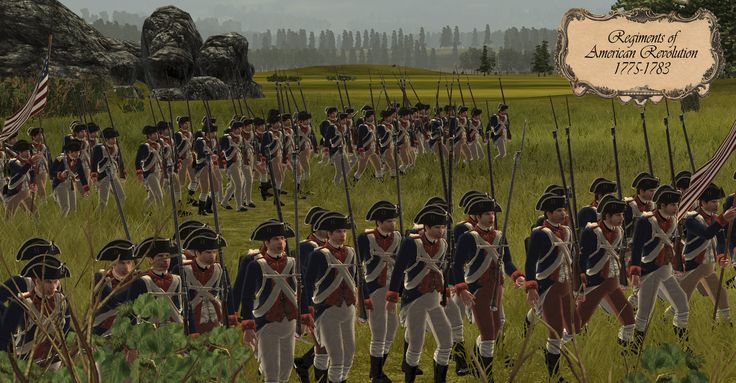
Regiments of the American Revolution 1775-1783

John Kennedy (III) served in the U.S. Revolutionary War in Butler County, Pennsylvania as a First Peace Officer.

John Kennedy (III) stayed in Pennsylvania. He and his wife Margaret Burkhart had eight children.

Dennis Kennedy was in the Pennsylvania Milita in Allegheny County with a muster date of 1791. His military service was after the Revolutionary War time period. Below is information about militias and especially in Pennsylvania during the time he served in the militia.

Militias Under the Constitution

The militia for the new nation of the United States of America diverged significantly from the colonial system. The Articles of Confederation and the Second Amendment to the U.S. Constitution called for the formation of state militias in lieu of a permanent standing army. Similarly, the Pennsylvania Constitutions of 1776 and 1790 expressly stated the danger of a standing army in peace time and based the defense of the state on militia companies. In 1792, during Philadelphia’s decade as the nation’s capital, the U.S. Congress passed a Militia Act requiring each state to maintain militia units and authorized the president to call and command state forces (as President Washington did during the Whiskey Rebellion in 1794). Philadelphia companies participated in military engagements against foreign aggressors and civil emergencies throughout the nineteenth century, including the War of 1812 and the Nativist Riots of 1844. (5)

Dennis Kennedy and Ruth Davis had the following children:

  1. Priscilla (Prucyilla) Kennedy born 30 July 1774 in Pennsylvania, and died 1845 in Morgan County, Ohio. She married James Nelson. She is listed by the nickname Prucy in her father’s will. (I am a DNA match to descendants of his couple).
  2. John Kennedy born about 1776 in Allegheny County, Pennsylvania, and died before 1850 in Pike Township, Perry County, Ohio. He married Jane Williams on 14 January 1812 in Muskingum County, Ohio. She was the daughter of Zachariah Williams and Elizabeth Swartzlander. (My 3rd great-grandparents).
  3. James Kennedy born after 1781 in Allegheny County, Pennsylvania, and died before 1850 in Pike Township, Perry County, Ohio. He never married.
  4. Tacy Kennedy born about 1782 in Allegheny County, Pennsylvania, she died young.
  5. Sarah “Sally” Kennedy born about 1874 in Allegheny County, Pennsylvania, and died after 1866 in Malta, Morgan County, Ohio. She married Thomas Risen. (I am a DNA match to descendants of this couple).
  6. Ruth Kennedy born about 1785 in Allegheny County, Pennsylvania, and died 2 February 1856 in Perry County, Ohio.
  7. Seth Kennedy born 1790 in Allegheny County, Pennsylvania, and died before 1850 in Pike Township, Perry County, Ohio. He married Polly Ashbaugh on 2 December 1821 in Perry County, Ohio. Her surname is incorrectly listed as Ashbrook in their marriage record. She was the daughter of John Ashbaugh and Catherine Miller. (I am a DNA match to descendants of this couple).
  8. Abigail Kennedy born about 1795 in Allegheny County, Pennsylvania, and died before 1850 in Maxville, Perry County, Ohio. She is aged 16 to 25 in the 1820 US Federal Census, so her birth year is between 1795 and 1804.

In later census records, descendants of Seth Kennedy and John Kennedy list their father born in Virgina and Pennsylvania. They most likely list both Virgina and Pennsylvania because Allegheny County was disputed between Virginia and Pennsylvania until the Mason-Dixon Line was finalized in 1780.

Dennis Kennedy is found in the 1800 US Federal Census living in Beaver, Allegheny County, Pennsylvania. I have not located him in the 1810 Census.

By 1811, Dennis Kennedy and his wife Ruth and many of his children had migrated from Pennsylvania to Ohio. They traveled with a group of other Scots Irish; most coming from New Jersey and Pennsylvania and being born in Counties Antrim and Armagh in Ireland (now Northern Ireland). The group was of the Protestant faith. By December 1817 when Perry County, Ohio was formed, he, his wife, and children were some of the first settlers of the county. Perry County was formed (from sections of Fairfield, Muskingum, and Washington Counties) on 26 December 1817.

Dennis Kennedy’s wife Ruth and all his children are mentioned by name in his will found in Perry County, Ohio. In his will, it is stated that he is to be buried next to the Baptist Meeting House. In his will, he assigned his son John Kennedy to be guardian for James Kennedy, and he asks for his daughter-in-law Polly (wife of Seth Kennedy) to take care of James Kennedy. It appears he had some kind of disability.

The Old Baptist Cemetery in New Lexington, Ohio. The cemetery is now sandwiched between houses within a neighborhood.

A few years after Perry County, Ohio was formed, Dennis Kennedy financially contributed to the building of the (Old) Baptist Meeting House. He with his sons John and Seth helped build the (Old) Baptist Meeting House, which stood next to the (Old) Baptist Cemetery for many years. Dennis Kennedy, Ruth Davis Kennedy, John Kennedy, Jane Williams Kennedy, Seth Kennedy, and Polly Ashbaugh Kennedy are all buried in the Old Baptist Cemetery in New Lexington, Perry County, Ohio.

Ruth Davis Kennedy’s father Rev. Thomas William Davis, several of her brothers, and her paternal uncle were all ministers in the Seventh-Day Baptist Church.

John Kennedy and Jane Williams had the following children:

  1. Rebecca Kennedy born October 1813 in Muskingum County, Ohio, and died after 1880 in Little Salt Precinct, Lancaster, Nebraska. She married Anthony Dittoe (as his 2nd wife) on 26 July 1834 in Perry County, Ohio. (There are a few living descendants for this line).
  2. Moses Kennedy, born 1814 in Muskingum County, Ohio, and died March 1893 in Pike Township, Perry, Ohio. He married Chloe Brown in Perry County, Ohio. (They had numerous children but there are no living descendants for this line).
  3. Elizabeth Jane Kennedy born 27 November 1817 in Pike Township, Perry, Ohio, and died 16 September 1903 in Randolph County, Indiana. She married Ezra Robinson Coddington on 22 March 1834 in Perry County, Ohio. (I am a DNA match to descendants of this couple).
  4. Priscilla Jane Kennedy born June 1819 in Pike Township, Perry, Ohio, and died after 1900 in Perry County, Ohio. She married Absalom Brown (brother of Chloe Brown) on 20 August 1839 in Perry County, Ohio. (I am a DNA match to descendants of this couple).
  5. Capt. John Davis Kennedy born 8 July 1825 in Pike Township, Perry, Ohio, and died 8 October 1873 in Maxville, Perry, Ohio in a mining accident. He married Susan Palmer on 17 October 1844 in Perry County, Ohio. She was the daughter of John Palmer and Mary Ann Spotts. (My great-great grandparents). See my blog post Daniel Streing / Strang, Sr. and Charlotte Marie Lemaistre – My first confirmed French Ancestors for my Palmer related French ancestors Daniel Strang, Sr. and Charlotte Marie Lemaistere.
  6. Sarah Ann Kennedy born September 1827 in Pike Township, Perry, Ohio, and died 13 June 1858 in Pleasant (Oakfield), Perry County, Ohio. She married Walter Thomas Minshall (as his 2nd wife) on 2 October 1853 in Perry County, Ohio. They had two children, only one has descendants today, most with the surname Minshall and a few with the surname Brownmiller.
Captain John Davis Kennedy in his U.S. Union Civil War uniform.

Prior to fighting in the U.S. Civil War John Davis Kennedy worked as a Cooper. He continued this trade after the war but also worked in a mine in Perry County, Ohio. He died unexpectedly in a mining accident at the age of 48 years old. His wife, Susan Palmer Kennedy, outlived him by 57 years! She died at the age of 106 1/2 years old.

John Davis Kennedy and Susan Palmer had the following children:

  1. John Davis Kennedy (Jr.) born 1846 in Ohio, and died 23 January 1863 in Youngs Point, Louisiana while serving in the Union Army in the U.S. Civil War.
  2. Abraham G. Kennedy born 10 January 1848 in Pike Township, Perry County, Ohio, and died 24 July 1939 at St Anthony’s Hospital in Columbus, Franklin, Ohio. He married Mary Elizabeth Price on 26 May 1870 in Perry County, Ohio. She was the daughter of James Price and Julia Ann Mateer/Meteer. (My great-grandparents).
  3. Mary Jane Kennedy born 14 October 1849 in Ohio, and died 27 December 1927 in Tampa, Hillsborough, Florida. She married 13 October 1870 to Levi Worth Marlowe in Perry County, Ohio.
  4. James Monroe Kennedy born 14 April 1852 in Perry County, Ohio, and died 4 December 1903 in New Lexington, Perry, Ohio. He married first to Sarah Ann Sprankle on 8 October 1880 in Perry County, Ohio. He married second to Laura E. Free on 7 February 1893 in Perry County, Ohio.
  5. George W. Kennedy born 4 March 1856 in Vinton County, Ohio, and died 30 January 1919 in Portland, Multnomah, Oregon. He married 22 June 1882 to Alice Augusta Arnold.
  6. Alfred P. “A.P.” Kennedy born 1 January 1858 in Perry County, Ohio, and died 27 September 1946 in Lima, Allen, Ohio. He married first to Mary Caroline Poling on 27 January 1876 in Perry County, Ohio. He married second to Mary Ellen Poling on 14 November 1879 in Perry County, Ohio. He married third to Emma L. Poling on 19 February 1910 in Hardin County, Ohio.
  7. Amanda Jane Kennedy born 28 June 1860 in New Lexington, Perry, Ohio, and died 23 December 1918 in Cleveland, Cuyahoga, Ohio. She married first to James Clement Hoy on 13 June 1882 in Perry County, Ohio. She married second to William Ardell Castor on 24 March 1888 in Franklin County, Ohio.
  8. Laura Ellen Kennedy born 6 September 1864 in Perry County, Ohio, and died 3 January 1953 in Columbus, Franklin, Ohio. She married in 1889 in Perry County, Ohio to Charles A. Johnson.
  9. Ida Alice Kennedy born 31 March 1866 in Hocking County, Ohio, and died 7 July 1930 in Columbus, Franklin, Ohio. She married 28 May 1891 in Perry County, Ohio to Isaac Newton Whipps.
  10. Charles Henson Kennedy born 31 December 1870 in Monday Creek Township, Perry County, Ohio, and died 9 November 1925 in Bellevue, Huron, Ohio. He married in 1899 in Perry County, Ohio to Leonore M. “Linnie” Stewart.
5 Generation photo. Abraham G. Kennedy is standing; his mother Susan Palmer Kennedy is seated in center front.

In the above 5 generation photo is Susan Palmer Kennedy seated in center. Her son Abraham G. Kennedy is standing behind her. Emma Florence Kennedy Ricketts, daughter of Abraham G. Kennedy, is seated on right. Lillian M. Ricketts Deaver Winsor, daughter of Emma Florence Kennedy Ricketts, is seated on left. The twin baby boys are Gilbert McKeever “Mac” Deaver and Wilson Charles Deaver.

My grandmother Glenna Annette Kennedy Cole. ♡

References:

  1. Graham, Joe. The Graham Family History. Genealogy of the Graham Family (rushlightmagazine.com)
  2. Ballintoy – The Causeway Coast. Ballintoy (causewaycoast.holiday)
  3. Day 22: Filming at Ballintoy Harbour – Winter is Coming WinterIsComing.net. 15 August 2011.
  4. The Kennedy Clan of Ireland – Kennedy Society of North America. Compiled by Garry Bryant. Sources: Irish Families, Their Names, Arms, & Origins by Edward MacLysaght; Irish Pedigrees by John O’Hart; Great Families of Ireland, page 225; and If You’re a Wee Bit Irish by William Durning. Kennedy Society of North America
  5. Militia – The Encyclopedia of Greater Philadelphia – Essay written by William V. Bartleson.

If you use any information from my blog posts as a reference or source, please give credit and provide a link back to my work that you are referencing. Unless otherwise noted, my work is © Anna A. Kasper 2011-2026. All rights reserved. Thank you.
Posted in Genealogy | Tagged , , , , , , , , , , , , , , , , , , , , , , , , , , , , , , , , , , , , , , , , , , , , , , , , , , , , , | 13 Comments

My Weiss, Fried, Propheter, and Related Ancestors from Klingenmünster, Germany

My great-grandparents George Pendleton Armstrong and Alice Elizabeth Nutick.

Update of 26 February 2024: I was able to finally locate the baptism record for my 3rd great-grandfather Heinrich Weiss. This brought some changes to my tree and his parentage. I will provide the updated and correct information below and remove the lines that are now incorrect. These only change part of my tree, I am still part of the same Weiss family of Klingenmünster, but on the female Weiss lines is where you will see the biggest change. My Fried, Propheter, and related lines remain the same. There was so much intermarriage between the families in and around Klingenmünster, that I find that I have more than one line or connection with many of my DNA matches related to these lines. After locating this baptism record, I looked at my DNA matches again, very closely, and it became obvious this was his family line. I found numerous Bohrer, Zwipf, Wendel, and Häcker DNA matches. I am very grateful for the German genealogy website genealogienetz.de that has the Ortsfamilienbuch Klingenmünster (Klingenmünster Local Family Book) which contains church records, death and burial records that I have been unable to locate elsewhere, this is where I found his baptism record and a plethora of family information.

Pictured above are my great-grandparents George Pendleton Armstrong and Alice Elizabeth Nutick. He was the son of Bradford Carroll Armstrong and Martha A. Knight Lyons. His family, for the most part, have been in the United States a long time. Almost all of his lines are found living in Colonial America. I have a multitude of interesting ancestors on his side that I will be writing blog entries about in the future. However, she was the daughter of two German immigrants Elias “Eli” Nutick and Margaret (Margarethe) Weiss.

Margaret/Margreth (Margarethe) Weiss came from Germany to the USA in 1865 and settled in Hamilton County, Ohio.

Elias Nutick and Margaret (Margarethe) Weiss were married on 3 March 1870 in Hamilton County, Ohio.

Four of the Nutick children in front of their home in Columbia Township, Hamilton County, Ohio.

Children born to Elias “Eli” Nutick and Margarethe Weiss:

  1. Valentine Nutick born 11 Apr 1868 in Columbia Township, Hamilton County, Ohio, he died 15 May 1919 Madisonville, Cincinnati, Hamilton County, Ohio. He never married.
  2. Alice Elizabeth Nutick born March 1871 in Columbia Township, Hamilton County, Ohio, she died 28 August 1949 in Seattle, King County, Washington. She married 22 June 1889 in Hamilton County, Ohio to George Pendleton Armstrong (son of Bradford Carroll Armstrong and Martha A. Knight Lyons). – My direct ancestors.
  3. Carrie Nutick born 8 July 1873 in Columbia Township, Hamilton County, Ohio, and she died 17 October 1952 in Indian Hill, Hamilton County, Ohio. She married 1892 in Hamilton County, Ohio to David Newton Muchmore.
  4. George Jacob Nutick born 22 November 1875 in Columbia Township, Hamilton County, Ohio, he died 1946 in Washington, D.C. He married Anna Louise Wein.
  5. Emma Mae Nutick born 12 September 1880 in Columbia Township, Hamilton County, Ohio, she died 27 May 1946 in Cincinnati, Hamilton County, Ohio. She married in Cincinnati, Ohio to Frank John Huddleston.
  6. Charles Nutick born 26 June 1883 in Columbia Township, Hamilton County, Ohio, he died 22 June 1913 at the Tuberculosis Hospital in Cincinnati, Hamilton County, Ohio. He never married.
  7. Harry Henry Nutick born 10 June 1885 in Columbia Township, Hamilton County, Ohio, he died 29 November 1961 in Mason, Warren County, Ohio. He married Lillian Myrtle Armstrong on 5 February 1906 in Hamilton County, Ohio. Lillian was the daughter of Ennis Turpin Armstrong and Marelda Elsa “Elma” Stevens. Lillian and George Pendleton Armstrong (husband of Alice Elizabeth Nutick) were 1st cousins. Creating a double connection between the children of the two couples.

A few explanations as to why their first-born Valentine Nutick was born prior to their marriage. One option is that his year of birth is incorrect. But he is listed as aged 1 year in the 1870 Census. His father may have been married prior and Margaret Weiss was his stepmother that raised him from the time he was a baby. It appears that Eli was much older than Margaret, so it’s quite possible he was married prior, but I have found no other marriage record for him. On Valentine’s death certificate his parents are listed as Eli Nutick and Margaret Weiss. The informant was his sister-in-law. Valentine never married and has no descendants, so DNA is of no help in this situation. Also, most (but not all) of the marriage records for this time period in Hamilton County, Ohio were destroyed by fire. People were asked to re-register their marriage record, this was done by the groom or bride or the person that married them. Also, some records were re-created by using marriage announcements from the newspaper. So, it is possible they really married a few years prior to 1870.

Carrie Nutick Muchmore with her children: Blanche M., Florence Margaret, Wilbur Newton, Blanche M., and Mabel A. Muchmore.

To learn more about Elias “Eli” Nutick, his real surname, his parentage and the mystery solved regarding his homeland, please see my recent blog post: 52 Ancestors, Week 15. How Do You Spell That? My 2nd Great-Grandfather Elias “Eli” Nutick.

Looking down at Klingenmünster from Burg Landeck, the castle atop a hill. (Source: Shutterstock / Leonid Andronov)

Margaret (Margarethe) Weiss was born 23 June 1846 in Klingenmünster, Südliche Weinstraße (Southwest Wine Route), Rhineland-Palatinate, Germany. Her baptism record of 28 June 1846 is found in the nearby parish of Heuchelheim-Klingen. She died 31 December 1919 in Madisonville, Cincinnati, Hamilton County, Ohio. She was the daughter of Heinrich Weiss and Margaretha Fried.

Klingenmünster is found within the Southwest Wine Route district in Germany. It is near the border with France. Its current population is about 2,200 people.

Heinrich Weiss was born 10 February 1820 in Klingenmünster, Germany. He was the son of Johann Jakob Weiss and Katherina Wendel. His baptism record is found in the Klingenmünster church records. I have not located a death record for Heinrich Weiss, but his wife Margaretha Fried died and was buried in Klingenmünster.

Johann Jakob Weiss was born 29 May 1785 Klingenmünster, and died there on 11 June 1852. He was the son of Johann Heinrich Weiss and Katharina Häcker, they married on there on 24 May 1773.

Johann Heinrich Weiss was born 30 Mar 1750 in Klingenmünster, and died there in 1798. He was the son of Johannes Weiss and Maria Elisabetha Bohrer, they were married there on 18 April 1746.

Johannes Weiss was born on 17 September 1694 in Klingenmünster, and died there on 31 August 1772. He was the son of Michael Weiss and Maria Elisabetha ____.

Michael Weiss was born about 1658; he died on 2 February 1713 in Klingenmünster. His parentage is unknown. The maiden name of his wife Maria Elisabetha is unknown. They are my 7th great-grandparents.

Meaning of the surname Weiss, Weiss or Weiß, also written Weis or Weisz, pronounced like “vice”, is a German surname, meaning ‘white’ in both Germa It comes from Middle High German wîz (white, blonde) and Old High German (h)wīz (white, bright, shining). (3)

Katharina Wendal was born was born 18 July 1786 in Gleiszellen, and died 21 MAY 1856 in Klingenmünster. Gleiszellen is 1.1 miles from Klingenmünster. She was baptized on 19 July 1786 in Klingenmünster. She was the daughter of Peter Wendel and Maria Katharina Sambach. She married Johann Jakob Weiss on 1 December 1811 in Gleiszellen.

Peter Wendel was born 8 June 1758 in Klingenmünster and died 27 May 1816 in Gleiszellen. He married on 11 Oct 1785 in Klingenmunster to Maria Katharina Sambach. He was the son of Johannes Wendel and Anna Maria _____.

Johannes Wendel was born 30 May 1720 in Klingenmünster, and died there on 11 November 1776. The maiden name of his wife Anna Maria is unknown. He was the son of Johann Martin Wendel and Christina _____.

Johann Martin Wendel was born 1 July 1682 and died 27 October 1763 in Klingenmünster. His parentage is unknown. The maiden name of his wife Christina is unknown.

The illustration above: Turner (Draaier) J.G. Van Vliet, 1635 Etching.

Meaning of the Wendel surname: German occupational name for a turner, from Middle High German wendel ‘to turn’ or Middle Low German wendelen ‘to turn, twist’. (4) The definition of a turner is a worker in wood who used a lathe to make curves in the wood. See etching above.

Maria Katharina Sambach was born 1 June 1765 and died 29 January 1832 in Gleiszellen. She was baptized in Klingenmünster. She was the daughter of Johannes Sambach and Maria Magdalena Fünfstuck. 

Johannes Sambach was born about 1741 in Klingenmünster. He married there on 11 Oct 1761 to Maria Magdalena Fünfstuck. His parentage or date of his death is unknown. They are my 6th great-grandparents.

Meaning of the German surname Sambach: It is a habitational name from any of various places so called in Hesse, Bavaria, and Baden. (5) Since my family were not from these areas of Germany, it most likely is a surname linked to the placename Sambach, Otterbach, Landkreis Kaiserslautern, Rhineland-Palatinate, which is 38.2 miles from Klingenmunster.

Maria Magdalena Fünfstuck was born about 1742. She was the daughter of Georg Fünfstuck, he would be my 7th great-grandfather.

The surname was incorrectly read in German church records by some researchers as Funstrocks/Funstercke, it was a German cousin that correctly read and listed her maiden name in his tree as Fünfstuck/Fünfstocks.

The surname Fünfstuck is a rare surname, in German it means five pieces or five parts. The exact meaning of the name has been lost to time, but it thought to be a nickname related to something involving the number five. 

Spelled with umlauts as Fünfstück, it is found mainly in Germany where there are 422 people with the surname, six in Austria, and one in Switzerland. Without the umlaut, spelled as Funfstuck, it is found only in the United States, where twenty-seven people carry the surname.

Katharina Häcker was born 3 October 1749 in Klingenmünster, and died there on 21 November 1811. She was the daughter of Johannes Häcker/Hecker and Anna Maria Wendel. The Häcker surname is sometimes found as Hecker, which is just a variation of the surname Häcker.

Anna Maria Wendel was kin to my other Wendel ancestors I discussed prior. She was born 27 December 1724 in Klingenmünster and died there 13 September 1780. She was the daughter of Johann Martin Wendel and Christina _____. I descend twice from this couple.

Johannes Häcker/Hecker was born 5 February 1723 in Klingenmünster, and died there 30 October 1783. He married on 27 February 1743 in Klingenmünster to Anna Maria Wendel. He was the son of Georg Nikolaus Häcker and Anna Juliana ____.

Georg Nikolaus Häcker was born on 1 October 1688 in Klingenmünster, and died there on 5 February 1740. He married on 30 Apr 1715 in Klingenmünster to Anna Juliana _____. He was the son of Hans Georg Häcker.

The maiden of Anna Juliana is unknown. She was born 11 January 1696 in Klingenmünster, and died there on 13 January 1781.

Hans Georg Häcker was born 1659, he died 12 February 1750 in Klingenmünster. The name of his wife is unknown. His parentage is unknown.

Meaning of the surname Häcker: an occupational name for a butcher or a woodcutter, from a derivative of Middle High German hacken and Dutch hakken ‘to hack, to chop’. (5) The surname Hecker is just a variant of Hacker meaning ‘butcher, woodcutter’. Another source states the connetion to butcher and woodcutter, but also includes that Häcker can also be from the Middle High German word “hecke”, meaning “fence”. Generally believed meaning someone who lived near a fence or had fences as part of their occupation. (16)

Maria Elisabetha Bohrer was born 5 December 1718 in Klingenmünster. and died there on 28 November 1773. She married there on 18 April 1746 to Johannes Weiss. She was the daughter of Johann Heinrich Bohrer and Maria Elisabetha Zwipf.

Johann Heinrich Bohrer was born 29 February 1692 in Klingenmünster, and died there 11 March 1722. He married there on 27 September 1716 to Maria Elisabetha Zwipf. Although his parentage is unknown, we do know that he had at least four siblings: Anna Eva Bohrer (married Abraham Wiessing/Wissing), Hieronymus Bohrer (married Anna Catherina Willem), Johann Georg Bohrer (married Anna Apollonia Lutz), and Elisabetha Bohrer (married Johann Martin Röhm).

Bohrer surname meaning: A German (also spelled Böhrer) and Swiss German occupational name from Middle High German born ‘to bore or drill’. (17)

The above graphic is from a site with Zwipf Feeding bags for small birds. Very cool, please visit their site.

Maria Elisabetha Zwipf was born about 1683 in Klingenmünster, and died there 20 April 1764. She was the daughter of Johann Richard Zwipf and Anna Maria ____.

Johann Richard Zwipf was born 1636 and died 26 December 1713 in Klingenmünster. He married there on 20 August 1719 to Anna Maria; her maiden name is unknown. His parentage is unknown.

Meaning of the Zwipf surname: a nickname for a lively energetic person, from Middle High German wipfen ‘to spring, vault, or bound’. (18)

Margaretha Fried Weiss was born 25 April 1819 in Klingenmünster and her baptism record of 28 April 1819 is found in the nearby parish of Heuchelheim-Klingen. She died 21 April 1853 in Klingenmünster and is buried there. She was the daughter of Johann Georg Fried and Margaretha Propheter.

Heuchelheim-Klingen. Currently, around 800 people live in Heuchelheim-Klingen. It is 2 miles from Klingenmunster.

The surname Fried is pronounced Freedt and sounds similar to the English word Freed. Fried is almost always a Jewish surname, but in the case of my family that are found in the Lutheran church records in Klingenmünster and nearby parishes, it most likely was actually Freed which is a German surname from a short form of the personal name Friedrich.

Johann Georg Fried was born 24 May 1796 in Klingenmünster and his baptism record of 25 May 1796 is found in the nearby parish of Heuchelheim-Klingen. He died after 1881 in Hamilton County, Ohio. He married 12 September 1820 in the nearby parish of Bad Bergzabern to Margretha Propheter. He was the son of Johann Adam Fried and Maria Barbara Schmitt.

Johann Adam Fried was born 30 April 1755 in Heuchelheim, Bergzabern, Südliche Weinstraße, Rhineland-Palatinate, Germany. He was baptized on 4 May 1755 in the same place, as the son of Heinrich Fried and Margaretha Röhm/Roehm.

In the Reformed Lutheran church, Johann Adam Fried married on 9 January 1787 in Heuchelheim, Bergzabern, Südliche Weinstraße, Rhineland-Palatinate, Germany to Maria Barbara Schmitt.

Heinrich Fried was born about 1734 in Klingenmünster, Südliche Weinstraße, Rhineland-Palatinate, Germany, and died there on 15 May 1781. He married Margaretha Röhm/Roehm. He was the son of Johann Valentin Fried and Anna Barbara Kuhn.

Anna Barbara Kuhn was the daughter of Christoph Kuhn and Anna Barbara Hentz/Heinz.

Christoph Kuhn was the son of Johannes Valentin Kuhn. Anna Barbara Hentz/Heinz was the daughter of Andreas Heinz.

Maria Barbara Schmitt was baptized in the Roman Catholic Church on 6 June 1758 in Klingenmünster, Südliche Weinstraße, Rhineland-Palatinate, Germany, as the daughter of Peter Schmitt and Katharina Hahn.

Prior to her marriage to Johann Adam Fried, Maria Barbara Schmitt gave birth to a child, out of wedlock, which was not as uncommon as your think during this time period in Germany. Her son, Nikolaus Schmitt, was baptized in the Roman Catholic Church on 6 August 1781 in Klingenmünster, Südliche Weinstraße, Rhineland-Palatinate, Germany. He died two days later on 8 August 1781 in Klingenmünster. The name of the father of the child is not listed.

According to church records, Peter Schmitt was born about 1731 in Wernersberg, Südliche Weinstraße, Rhineland-Palatinate, Germany, and migrated to Klingenmünster, where he married twice, first to Katharina Hahn, four children were born to the first marriage. He married second to Katharina Stortz, there were two children born to the second marriage.

The distance between Wernersberg and Klingenmünster is 7.1 miles (11.5 km). The parentage of Peter Schmitt is unknown.

Katharina Hahn was baptized on 4 March 1729 in the Roman Catholic Church in Klingenmünster, Südliche Weinstraße, Rhineland-Palatinate, Germany, as the daughter of Johann Adam Hahn and Anna Maria Mayer.

According to church records, Johann Adam Hahn was born in Birkweiler, Südliche Weinstraße, Rhineland-Palatinate, Germany, and migrated to Klingenmünster. He was the son of Jakob Hahn and Margaretha Elisabetha ____. There were at least two other children born to Jakob Hahn and Margaretha Elisabeth ____; Heinrich and Kasper Hahn.

Anna Maria Mayer Hahn died in Klingenmünster on 2 December 1771. Her parentage is unknown. But we know she had at least six siblings; Anna Margaretha Mayer (married Peter Haar), Anna Katharina Mayer (married Joseph Stephen Leidemann), Johann Michael Mayer (married Anna Katharina Leemann), Philip Mayer (married Elisabetha Weber), and Johann Georg Mayer (married Anna Maria Emmerich).

Margaretha Röhm/Roehm was baptized on 4 February 1738 in Klingenmünster, Südliche Weinstraße, Rhineland-Palatinate, Germany, as the daughter of Benjamin Röhm and Anna Margaretha Bernzott.

Benjamin Röhm was the son of Johann Jakob Röhm and Maria Susanna (Anna Susanna) Sartor.

Johann Jakob Röhm was the son of Hans Georg Röhm and Anna Maria ____.

Anna Margaretha Bernzott was baptized on 31 January 1717 at the Roman Catholic Church in Klingenmünster, Südliche Weinstraße, Rhineland-Palatinate, Germany, she died in Klingenmünster on 4 July 1764. She married Benjamin Röhm.

She was the daughter of Sebastian Bernzott and Anna Katharina Lämel.

Sebastian Bernzott was born about 1680 and died 28 August 1737 in Klingenmünster, Südliche Weinstraße, Rhineland-Palatinate, Germany. His parentage is unknown. He had at least four brothers; Magnus Bernzott (married Maria Anna Bieler and Anna Johanna Schafft), Michael Bernzott (married Anna Apollonia Weiss – who is my Weiss 6th great-grandaunt), Johannes Bernzott (married Maria Eva Meister), and Anton Bernzott (married Maria Eva Spönler).

Anna Katharina Lämel was born about 1684 and died 13 March 1742 in Klingenmünster, Südliche Weinstraße, Rhineland-Palatinate, Germany. Her parentage is unknown. The surname Lämel only appears in Klingenmünster church records in direct relation to her.

Lämmel, a variant of the surname Lämel, is found only twice in the same church records, but much later. I find a Franz Lämmel born 20 January 1884 in Münchweiler, he married in Klingenmünster to Louise Mehlem. Just by happenstance, Louise Mehlem is my distant Weiss cousin. Gertrud Lämmel was also born in Münchweiler about 1876. She married Karl Ballweber.

Münchweiler is about 22.7 miles (36.5 km) from Klingenmünster. It is possible that Anna Katharina Lämel’s roots are also found in Münchweiler, but I cannot say for sure. All her children were born in Klingenmünster, and she died there.

The name Sartor is sometimes listed in German church records as Satter, and I found it listed once as Satorius.

Maria Susanna (Anna Susanna) Sartor Röhm was baptized on 28 February 1686 in Annweiler, Südliche Weinstraße, Rhineland-Palatinate, Germany, and died on 22 March 1742 in Klingenmünster. She married Johann Jakob Röhm on 24 June 1711 in Klingenmünster. She was the daughter of Daniel Sartor and Maria Magdalena Rübel.

Daniel Sartor was born 7 December 1663 in Annweiler, Sudliche Weinstrasse, Rheinland-Pfalz, Germany. He married Maria Magdalena Rübel on 28 April 1685 in Annweiler. Daniel Sartor was the son of Johann Peter Sartor and Sara Noe.

Johann Peter Sartor was born and died in Annweiler. He married Sara Noe on 9 September 1656 in Annweiler. There were three children born to this first marriage. He married second to Anna Elisabetha Pasquay, and there were numerous children born to this second marriage. He was the son of Hanß Peter Sartor and Judith Langsontags.

Johann Peter Sartor died 16 November 1645 in Annweiler. His parentage is unknown.

Judith Langsontags died 17 May 1676 in Annweiler. She was the daughter of Daniel Langsontags. Nothing more is known about the Langsontags family.

The surname is actually two surnames together, Lang and Sontag(s). Her maiden name is listed only in one church record.

Maria Magdalena Rübel Sartor was born on 19 March 1665 in Annweiler. She was the daughter of Jacob Rübel and Maria Magdalena Fickeÿsen/Fickeisen/Fickeissen.

Jacob Rübel was the son of Wilhelm Rübel. Maria Magdalena Fickeisen was the daughter of Nicolai Fickeÿsen.

The surname Rübel is also found as Riebel in church records.

Sara Noe Sartor died on 5 April 1665 in Annweiler. She was the daughter of Tobias Noe and Maria Elisabetha Blacks/Blocks. The parentage of Tobias Noe is unknown. Blacks is a very uncommon surname in Germany. Blocks is a German surname. The parentage of Maria Elisabetha Blacks/Blocks is unknown.

Annweiler (aka Annweiler am Trifels) and Klingenmünster, Germany are approximately 8.5 miles (13.7 km) apart by road travel.

The German surname Sartor is humanistic name and is a variant of Sartorius meaning Tailor. From the Latin Sartor. (12)

Back to Margaretha Propheter, wife of Johann Georg Fried.

Margaretha Propheter was born 22 Mar 1795 in Heuchelheim-Klingen and died before 1880. She married 12 Sep 1820 in Heuchelheim-Klingen to Johan Georg Fried. She was the daughter of Johann Jacob Propheter and Anna Margaretha Weinmann.

Johann Jacob Propheter was born 2 December 1769 in Kapellen-Drusweiler, and died 2 December 1846 in Heuchelheim. He married Anna Margaretha Weinmann on 16 October 1792 in Heuchelheim. He was the son of Johannes Adam Propheter and Katharina Elisabetha LeBeau.

Johannes Adam Propheter was born 16 January 1742 in Barbelroth, and died 3 March 1815 in Bad Bergzabern. He married Katherina Elisabeth LeBeau on 16 August 1763 in Kapellen-Drusweiler. He was the son of Philipp Jacob Propheter and Maria Elisabetha Scherer. Other than they lived in Barbelroth, nothing more is known about his parents.  

Scherer is a German occupational name for a sheepshearer or someone who used scissors to trim the surface of finished cloth and remove excessive nap, from German Scherer, agent derivatives of Middle High German scheren ‘to shear’. (9)

 Barbelroth, which is 6 miles (9.6 km) from Klingenmünster.

Meaning of the Propheter surname: It is found in several European counties including England, France, and Germany, and it is derived from the occupation of a prophet or seer. It is a variant spelling of the surname Prophet, which ultimately comes from the Middle English word “prophete” or the Old French word “prophete,” both meaning “prophet.” The surname Propheter likely originated as a nickname or occupational name for someone who was believed to have the ability to predict the future or possess divine insight. (20)

Anna Margaretha Weinmann was born 9 August 1763 in Heuchelheim, and died there 26 November 1834. was the daughter of Michael Weinmann and Felicitas (Felizitas) Grosshans. Nothing more is known about her father.

Weinmann, this unusual name is of German origin and is a metonymic occupational name for someone who produced and or sold wine. The derivation is from the medieval German “win”, in modern German “wein”, meaning “wine” or “vine”, with “mann”, man. (7)

Felicitas (Felizitas) Grosshans was born about 1742 in Godramstein, and died in Edesheim. She was the daughter of Johann Jacob Grosshans and Anna Felicitas ___.

Johann Jacob Grosshans was born on 8 October 1693 in Godramstein, and died there 4 February 1761. He married Anna Felicitas; her maiden name is unknown. He was the son of Emanuel Grosshans and Anna Catharina Werner.

Anna Kathrina Werner died 29 May 1733 in Godramstein. She was the daughter of Thomas Werner. Nothing more is known about him, and the name of her mother is unknown.

Emanuel Grosshans was born 11 June 1669 in Godramstein, and died there 15 March 1737. He married there on 12 October 1692 to Anna Catherina Werner. He was the son of Johann Friedrich Großhans and Anna Margaritha Bertsch.

Johann Friedrich Großhans was born June 1629 in Godramstein, and died there 21 September 1679. He married there on 16 August 1668 to Anna Margaritha Bertsch.

Anna Margaritha Bertsch was born 11 October 1650 in Godramstein. She was the daughter of Johann Ludwig Bertsch and Catherina _____.

Johann Ludwig Bertsch died 25 November 1658 in Godramstein. His parentage is unknown. He married Catherina; her maiden name is unknown. Catherina died 21 October 1677 in Godramstein.

Godramstein is 6.7 miles from Heuchelheim-Klingen.

Johann Friedrich Großhans was the son of Philipp Großhans and Anna Barbara Schwebel.

Philipp Großhans was the son of Nicolaus (Nicklaß) Großhans and Barbara Trierers.

Anna Barbara Schwebel was the daughter of Johann Henrich Schwebel and Anna Margaretha Pastor.

Johann Henrich Schwebel was the son of Heinrich Schwebel.

The parentage of Barbara Trierers is unknown.

The parentage of Anna Margaretha Pastor is unknown.

Grosshans is a German surname a compound name from Middle High German groz ‘large’ + Hans, a pet form of the personal name Johann(e)s (see John), hence a nickname used to denote a large man called Hans or to distinguish between two bearers of this personal name. (8)

Schwebel is a German habitational name from a diminutive of Schwab ‘Swabian’. Possibly also from Middle High German swebel and Yiddish shvebl ‘sulfur’. Its application as a German surname is obscure. (21)

Trierers is an obsolete form of the German surname Trier.  It is a habitational surname from the city of Trier on the Mosel Germany named in Latin as Augusta Treverorum ‘city of Augustus among the Treveri’ a Celtic tribal name of uncertain etymology. (22 & 23)

Pastor is an occupational surname for the profession of a religious (usually Christian) pastor and the profession of a shepherd pastor. In German and Dutch, it is a humanistic surname a translation into Latin of German Schäfer or any other surname meaning ‘shepherd’ (24 & 25)

Katharina Elisabetha LeBeau was born 31 March 1743 in Kapellen-Drusweiler and baptized 3 April 1743 in the Kapellen-Drusweiler parish. She died before 1778 in Kapellen-Drusweiler. She was the daughter ofJohann Georg Jacob LeBeau and Maria Juliana Först.

Johann Georg Jacob LeBeau married on 29 May 1742 in Kapellen-Drusweiler to Maria Juliana Först. He was the son of Abraham LeBeau. Nothing more is known about his father, nor do we know the name of his mother.

LeBeau / Le Beau is a surname of French origin and is a nickname for a handsome man (perhaps also ironically for an ugly one), from Old French beu, bel ‘fair’, ‘lovely’ (Late Latin bellus), with the definite article le. Compare Beau, Lebel. (10) My LeBeau / Le Beau ancestors lived in an area of Germany very close to the border with France, and it appears their roots were French.

Maria Juliana Först was born 6 April 1720 in Klingenmuenster, and was baptized there on 21 April 1720, she died 3 October 1770. She was the daughter of Johannes Först and Juliana Elisabetha ____. Nothing more is known about her father, nor do we know her mother’s maiden name.

Först is a German surname and is a shortened form of Foerster or Förstner. The name Foerster is an occupational hereditary surname, a type of surname that was taken from a word describing or common to the profession of the original bearer. It is a name for a person whose occupation is forestry, or a person who lives near a forest. (11)

Evangelical Reformed Lutheran Church records of my Propheter, Weinmann and other ancestors going further back LeBeau/Le Brea, and Först/Fuerst are found in Klingenmünster and in nearby parishes of Kapellen-Drusweiler, Bad Bergzabern, and Heuchelheim-Klingen. My Grosshans ancestors are mostly found in Godramstein and Heuchelheim-Klingen.

The village of Barbelroth in the Südliche Weinstraße (Southwest Wine Route), Germany.

A little information about Barbelroth:

Half-timbered village in the Bergzaberner Land

The 650-soul community of Barbelroth is located one kilometre east of Bad Bergzabern. Here you can still experience real South Palatinate charm, which is not to be found anywhere else in the world. Half-timbered houses characterize the village and give the village in the Bad Bergzaberner Land its very special character – like its inhabitants, who radiate peace and serenity. (1)

Back to my fourth great-grandparents. The marriage of Johann Georg Fried and Margaretha Propheter is recorded 12 September 1820, but the baptism record of their daughter Margretha Maria Fried is recorded 28 April 1819. Both are found in the Evangelical Reformed Lutheran church records of the parish of Heuchelheim-Klingen. It appears there may be a dating error of the year in one of both of the records, since it puts her birth at 17 months before their marriage. I have been unable to view the actual church records and what is available is the transcribed text by others, so it may actually be an error made when the records were transcribed, or she was born before they married, but they are listed as her parents in the baptism record. Also, there is very strong DNA evidence linking me and other descendants to these Fried and Propheter families. I have many Fried DNA matches in the USA, and Propheter DNA matches in the USA and Germany.

Known children of my 4th great-grandparents Johann Georg Fried and Margaretha Propheter:

  1. Margretha Fried born 25 April 1819 in Klingenmünster and died 21 Apr 1853 in Klingenmünster. She married Heinrich Weiss. (My direct ancestors).
  2. William Fried was born about 1821 in Heuchelheim-Klingen, Bergzabern, Südliche Weinstraße, Rhineland-Palatinate, Germany, and died before 25 July 1880 in Louisiana, USA. He married Catherine _____. (I am a DNA match to descendants of this couple).
  3. Frederick (Friedrich Jacob) Fried born 2 February 1824 in Klingenmünster and died July 1889 in New Orleans, Orleans, Louisiana. He married Anna Maria (Mary Ann) Weis. (I am a DNA match to descendants of this couple).
  4. George Jacob Fried born 16 March 1837 in Heuchelheim-Klingen and died 3 November 1898 in Ohio. He married 5 January 1862 in Hamilton County, Ohio to Katherina Weis. (I have DNA matches that are descendants of this couple).
  5. Barbara Fried born 23 April 1838 in Bad Bergzabern and she died 20 June 1926 in Cincinnati, Hamilton County, Ohio. She married 1st to Valentine John Miller and 2nd to ____ Renschler. (I have a DNA connection to descendants of she and her husband Valentine John Miller).

As you can see some of the Fried siblings came to Cincinnati, Ohio. Two brothers went to New Orleans, Louisiana. Some of our Propheter kin also came to Cincinnati, Ohio.

Kapellen-Drusweiler. The village of Kapellen-Drusweiler has a population of about 936 people.

A bit of information about the village of Kapellen-Drusweiler which is 4 miles from Klingenmünster:

The wine village Kapellen-Drusweiler in the district of Südliche Weinstraße belongs to the municipality of Bad Bergzabern and lies between the Palatinate Forest Biosphere Reserve and the Rhine. 1800 hours of sunshine spoil this particularly favorable spot on the “Southern Wine Route”. Despite its proximity to the spa town of Bad Bergzabern, Kapellen-Drusweiler has retained a quiet, village character. On a well-developed cycle path or hiking trail you can be in a few minutes in the old town centre of Bad Bergzabern. Spas and parks, restaurants, shops and a variety of leisure activities invite you to linger. The district town of Landau, an old garrison fortress with listed buildings, is also just a few minutes’ drive away. A special feature of Kapellen-Drusweiler is the Rosengarten hiking trail in the vineyards south of the village, which clearly shapes the townscape and sets an event highlight in the region with the annual rose hike – a wine hike with tasting in the vineyards.” (2)

Known children of my 3rd great grandparents Heinrich Weiss and Margaretha Fried:

  1. Margaret (Margrethe) Weiss born 23 June 1846 in Klingenmünster. Her baptism record of 28 June 1846 is found in the parish of Heuchelheim-Klingen. She died 31 December 1919 in Madisonville, Cincinnati, Hamilton County, Ohio. She married Elias “Eli” Nutick in Hamilton County, Ohio. (My great-great grandparents)
  2. Charlotta Weiss born 4 June 1848 in Klingenmünster and baptized 9 June 1848 in the Klingenmünster church parish.
  3. Barbara Weiss born 5 May 1849 in Klingenmünster and baptized 13 May 1849 in the Klingenmünster church parish.
  4. Katharina Weiss born 16 April 1851 in Klingenmünster and baptized there on 21 April 1851, she died there on 28 March 1915. She remained in Germany. She married 28 February 1878 in Klingenmünster to Johannes Stübinger. They had five known children. Two of these children married and at least one has descendants today via a daughter, the children have the surname, Gensinger. All remained in Germany.

Nothing is known about Charlotta and Barbara Weiss other than their baptism records being found in Klingenmünster. So far, I have not found any marriage records for them in Germany, or the USA and I have not found any descendants or DNA matches related to them. They may have died young.

So, other than possible Gensinger kin in Germany today, the only other one to have descendants from this couple is my 2nd great grandmother’s line.

My great-grandmother Alice Elizabeth Nutick Armstrong with all of her children. My grandfather is on the far left in the back.

References:

  1. Barbelroth in der Pfalz. 100% Pfalz • Barbelroth in der Pfalz (100prozent-pfalz.de)
  2. Kapellen-Drusweiler in der Pfalz. Kapellen-Drusweiler in der Pfalz | http://www.pfalz-info.com
  3. What Is White In German (questionfun.com)
  4. Wendel Family History – Wendel Name Meaning (FamilySearch.org)
  5. Häcker Family History – Häcker Name Meaning (FamilySearch.org)
  6. Surname Database: Weinmann Last Name Origin (surnamedb.com)
  7. Scherer Name Meaning & Scherer Family History at Ancestry.com®
  8. Grosshans Name Meaning & Grosshans Family History at Ancestry.com®
  9. Lebeau Name Meaning & Lebeau Family History at Ancestry.com®
  10. Foerster Name Meaning, Family History, Family Crest & Coats of Arms, German (houseofnames.com)
  11. Sartor surname meaning – (Ancestry.com)
  12. Barth surname meaning – (Ancestry.com)
  13. Acker surname meaning – (Ancestry.com)
  14. Gleich surname meaning – (4crests.com)
  15. Surname Häcker – Meaning and Origin (www.igenea.com)
  16. Bohrer Family History – Bohrer Name Meaning (FamilySearch.org)
  17. Zwipf Family History – Zwipf Name Meaning (FamilySearch.org)
  18. Propheter – Propheter Meaning & Origin (namediscoveries.com)
  19. Schwebel – Surname Meaning & Origin (Ancestry.com)
  20. Trier Family History (Ancestry.com)
  21. Trier – (en.wiktionary.org)
  22. Pastor Family History (Ancestry.com)
  23. Pastor (surname) (en.wikipedia.org)

If you use any information from my blog posts as a reference or source, please give credit and provide a link back to my work that you are referencing. Unless otherwise noted, my work is © Anna A. Kasper 2011-2026. All rights reserved. Thank you.

Posted in 52 Ancestors in 52 Weeks, Genealogy | Tagged , , , , , , , , , , , , , , , , , , , , , , , , , , , , , , , , , , , , , , , , , , , , , , , , , , , , , , , , , , , , , | 7 Comments

Embracing the Beauty of Your High Forehead . . . You are Altogether Lovely

Left, how I usually snap pics of me, forehead cut off! Center and right, forehead in all its glory!

“Loving yourself is the greatest revolution.” – Unknown 

The photos of myself above show on left how, on most days, I cut part of my forehead off when taking photos of myself with my cell phone. The other two show my high forehead in all its glory! Going about my daily life I rarely think of my high forehead. As a child and teenager, I was not teased, no one ever said a word about my forehead. I had never heard of the phrase “5 finger forehead” until researching the writing of this blog post.

The term means that all five of your own fingers fit in the space of your forehead. It can be used as a derogatory term as well.

Woman’s Beauty in Middle Ages.

When in my twenties a family member mentioned that I should have bangs or a hair style that hides my big forehead, I am sure they were well meaning. But they don’t have a high forehead, and I am sure they thought they were “helping me” to be more beautiful. But I became much more aware of my high forehead after that comment. I have at times in my life had bangs, but I have two cowlicks (as well as very wavy hair) and bangs don’t like to stay down, so I tend to not choose bangs.

You may be wondering what constitutes a high forehead? The exact definition is defined as a forehead which is larger than that of 70% of the population. In males, this is 2.8 inches (7.1 cm), and for females, it is 2.4 inches (6 cm). (1) If you are curious, my forehead is about 3 inches, measuring from the bottom of my widow’s peak, a little more if I measure from at my hair line above my widow’s peak.

Although studies have also shown that large foreheads on females are considered attractive by males, it’s not that black and white. The female face that is found most attractive by males also includes balanced features, so a high forehead is just part of the equation that also includes high eyebrows, large eyes, a narrow nose with a pointed tip, high cheekbones, full lips of equal proportion, a narrow tapered chin that is not over-sized or too small, and an oval face shape are found to be the most alluring. If you happen to have prominent dimples it’s a bonus likable, facial feature. Of course, this is what is considered to be the most beautiful female face today. Throughout history, the face of beauty has changed, and it ebbs and flows.

Saint Justina of Padua – 1490s by Bartolomeo Montagna

During Medieval times a high hairline was sought, and a high forehead was considered one of the features found most attractive. The above painting of Saint Justina of Padua was painted in the 1490’s by Bartolomeo Montagna. He painted the saint as an elegantly dressed woman depicting the fashion that was popular during the time period of the artist. As you can see, she has a high hairline and forehead. Queen Elizabeth I’s super-large forehead also made her a beauty in her time.


Women not graced with a naturally high forehead would pluck the hair at the hair line to create a higher forehead.

The late Middle Ages liked its maidens with high foreheads, long necks, sallow complexions and lackluster eyebrows. Added to that, the “babeliest” of Medieval babes rocked low sloping shoulders and protruding stomachs. Many women resorted to potions of vinegar or quicklime to erode their natural hairline (often taking the skin with it), whilst to keep foreheads as unsullied as possible, eyebrows were tweezed within an inch of their lives. (2)


My high forehead would have served me well in Medieval times! I will admit, I have my good and bad days when seeing my high forehead in photos and will often give in to the urge to crop the photo to give my face a more balanced look and less forehead. Other days, I am a proud member of the high forehead sisterhood and embrace my forehead and kind of like it, especially coupled with my widow’s peak. My widow’s peak has its own childhood story! I love my widow’s peak, and the fact that only a few of us have one in the family, my maternal grandmother, my niece Elisabeth, and me. But as a tween, I shaved it off! I laugh thinking about it now.

Filippo Lippi´s Madonna with Child and Two Angels (1465). 

It all boils down to self-acceptance. Not always an easy feat to master, I know. As Christians we are to live in the world but are not to be of it (John 17). We are affected as women by the world, its beauty standards, we would have to live in a cave alone to not know about and be affected at least in some way, for it is all around us. But finding our worth and beauty in God is the key.

He formed, loved you, and knew you, He knitted you together in your mother’s womb:

“You made all the delicate, inner parts of my body and knit me together in my mother’s womb.” – Psalm 139:13 (NLT)

He loved us before he formed the world. He chose us in Him to be holy and unblemished before Him, in love:

Even before he made the world, God loved us and chose us in Christ [in Him] to be holy and without fault in his eyes.” Ephesians 1:4 (NLT)

We are valuable to God:

“And the very hairs on your head are all numbered. So don’t be afraid; you are more valuable to God than a whole flock of sparrows.” – Luke 12: 7 (NLT)

We are worth more than rubies and pearls:

As a virtuous woman of God, we are worth more than precious gems, far above rubies, and pearls, no number of precious stones can be equal to our worth. We are priceless, precious, rare, dear, fine, treasured, and cherished. (Proverbs 31:10)

We are beautiful, for we are a new creation in Christ:

“This means that anyone who belongs to Christ has become a new person. The old life is gone; a new life has begun!” – 2 Corinthians 5:17 (NLT)

Portrait of a Lady in Red by Anonymous. Painted between 1460-1470. Italian (Florentine) School.

He is there for us:

“Then Jesus said, Come to me, all you who are weary and carry heavy burdens, and I will give you rest. Take my yoke upon you and learn from me, for I am gentle and humble in heart, and you will find rest for your souls. For my yoke is easy and my burden is light.” – Matthew 11:28-30 (NLT, NIV).

Remember we are created in God’s image (Genesis 1:1). God loves beauty. As Thomas Aquinas stated, God “is beauty itself.” (3)

I embrace the Father of my soul, in a complete love, our perfect Father who loves us with a perfect love. Knowing that my value comes from Him, my Abba, for I am beautiful to Him, I am “altogether lovely”.  ♥♥♥

16th century fashion and beauty. 1575-1600.

Our job as Christians is to remember the difference between the beautiful and the pretty,” because pure beauty is found in goodness and truth. When we gaze upon ascetically pleasing objects or witness kind deeds in this world, we are at best seeing imperfect versions of the pure beauty that can only be found in God. (4)

The atoning work of the Lord Jesus is the epicenter of all that is true, good, and beautiful. The cross of Christ may not be pretty, but it certainly is beautiful,

In Revelation Jesus is described as “His face like the sun in all its brilliance” and it reminds me of the transfiguration of Jesus in Matthew, “[Jesus] was transfigured before them, His face shone like the sun, and His clothes became white as the light” -Matthew 17:2.

♡ His magnificent beauty! ♡

JoAnn McFatter perfectly describes Jesus’ powerful, magnificent beauty in the song below.

Lyrics to the song “Beauty” by JoAnn McFatter

What can make the angels cry, 

Cause their wings to hide their eyes? 

What can make the angels cry, 

Cause their wings to hide their eyes? 

All your beauty, oh Lord, your beauty, 

Making the angels cry, 

Causing their wings to hide their eyes. 

Oh it’s your beauty, Wondrous beauty, 

Your majesty, your splendor, the light, 

The wondrous light, Causing the angels to cry. 

Your marvelous light, Causing the angels hide their eyes. 

Transcendent beauty, transcendent beauty 

Holy, Holy (x18), 

Lord It’s your beauty, 

your beauty Standing right there, 

standing right there, right in front of your glory,  

In front of all the Holy, Holy Bowing down, 

bowing down Standing right there, 

from of your glory, standing right there, 

in the midst of the Holy Holy 

That’s where we want to be, 

Just to glance of your beauty, of your beauty. 

Your beauty (x2), beauty (x3) 

How can I find a way, to tell of all your ways 

My God the maker of everything. 

How can I find a way, to declare of all your ways 

My God the maker of everything. 

What will silence all the words, 

through the ages men thought must be heard? 

What will silence all the words,  

with thought just must be heard? 

Oh it’s your beauty, simply your beauty, your beauty, beauty, your beauty 

Open up, open up my eyes (x3), to see you 

Open up, open up my eyes (x3), 

to see you Open up, open up my eyes (x3),

to see you Open up, open up my eyes (x2), 

to see you Lord you take away the veil, take away the veil.

References:

  1. What Is Considered a Big Forehead? – Magnum Workshop
  2. Medieval Beauty — AUTUMN MOON BEAUTY + WELLNESS
  3. Patrick Sherry, Spirit and Beauty (New York: Oxford University Press, 1992), 70; see also Thomas Aquinas 1a.iv.2; xiv.6.
  4. Albert Mohler, “Can Beauty Save the World?” Chapel Sermon, The Southern Baptist Theological Seminary, September 1, 2016. Will Beauty Save the World? – AlbertMohler.com

If you use any information from my blog posts as a reference or source, please give credit and provide a link back to my work that you are referencing. Unless otherwise noted, my work is © Anna A. Kasper 2011-2026. All rights reserved. Thank you.
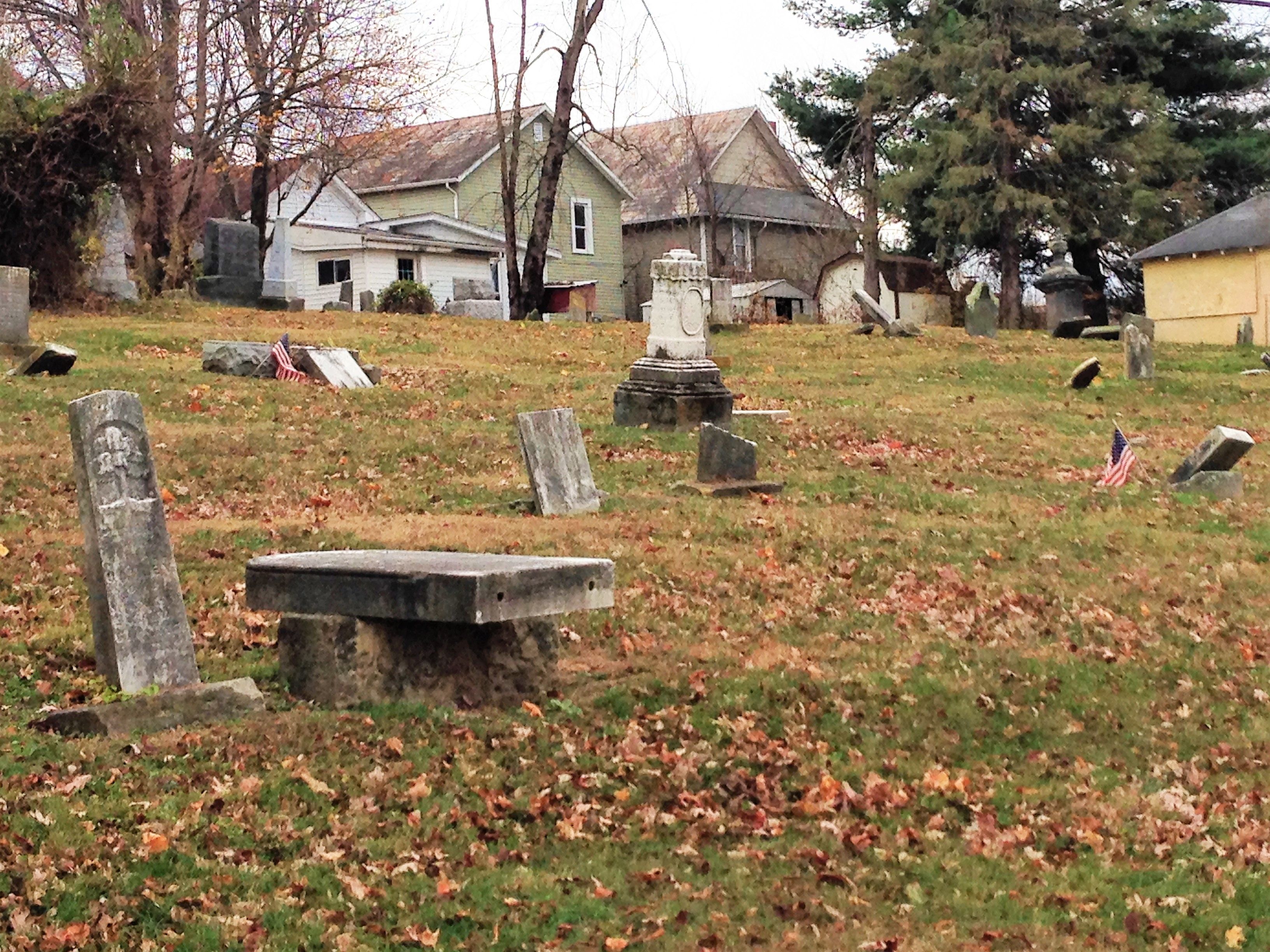
Posted in Beauty and Self-Acceptance, Bible Study, Catholic, Religious, Uncategorized | Tagged , , , , , , , , , , , , , , , , , , | Leave a comment

Letter to Philemon

Letter to Philemon = Freedom in Forgiveness (Pinterest Bible Journaling pin)

The Epistle of Paul to Philemon:

Background information about this epistle:

Purpose: To convince Philemon to forgive his slave Onesimus and accept him as a brother in the faith.
Original audience: Philemon, who was probably a wealthy member of the Colossian church.
Date written: Approximately A.D. 60, during Paul’s first imprisonment in Rome, at about the same time Ephesians and Colossians were written.
Setting: Slavery was very common in the Roman Empire, and evidently some Christians had slaves. Paul does not condemn the institution of slavery in his writings, but he makes a radical statement by calling this slave Philemon’s brother in Christ. (Life Application Study Bible)

Colossae:

“In the Roman period, Colossae was in the province of Phrygia in central Asia Minor about 125 miles east of Ephesus. It sits near the Lycus River at the foot of Mt. Cadmus, the highest mountain in Turkey’s western Aegean Region. Colossae is close to two other well-known cities in the ancient world: Laodicea (modern Laodikeia) lies 11 miles to the west, and Hierapolis (modern Pamukkale) lies 15 miles northwest of Colossae. …Pottery from the site of Colossae reveals settlements from the Late Chalcolithic to the Byzantine and Islamic periods (3500 B.C.E.–1100 C.E.). It confirms that Colossae was first geopolitically and economically important during the Persian period (547–330 B.C.E.), and it retained its significance in Greco-Roman times (fourth century B.C.E.–fourth century C.E.) during the growth of the Jesus movement in the region in the first century C.E.” – Biblical Archaeology Review (1)

Some important points for readers of today:

Slavery was quite common and an established norm within ancient Roman society, although we, the current readers of Philemon, and our modern western society in general, consider it unacceptable and abhorrent.

We will not agree with Paul’s viewpoint on slavery. We cannot view Philemon, or any of the verses about slavery in the New Testament, through our contemporary lens.

Again, I need to provide a bit of historical and cultural background regarding first-century slaves. (Also see additional background information of the practice of slavery in the first century that is contained in my blog post on Titus – The Epistle to Titus).

The fate of a slave depended largely on the temperament of his or her master. Masters could punish slaves brutally for real or perceived infractions. Sexual abuse of slaves was also common. Slave work included hard labor as well as skilled service like tutoring, bookkeeping, and estate managing. Masters often freed slaves—and for numerous reasons, including as a reward for obedience and loyalty. Written contracts, however, commonly enforced continued work by freed slaves for their former masters. A wide range of circumstances dictated whether a slave would be educated, illiterate, poor, wealthy, abused, or comfortable.

New Testament writers lived in the Roman Empire and likewise adopted widespread attitudes about slaves. …Several [New Testament] passages address slaves directly, which is evidence that they were attracted to the early Jesus movement (1 Cor 7:21, 1 Tim 6:1, 1 Pet 2:18). Christian slaves navigated the complex world of enslavement with their new faith. (2)

“…[Philemon]…its influence has been perhaps most resonate beyond the walls of the church rather than within, as the diminutive correspondence became a site of contestation over the morality of slavery in the United States. …Philemon has unfortunately been too frequently and tragically misread.” (Aymer, p 613)

“[In antiquity] …slavery was not an inevitable and inescapable condition of a particular people. Emancipation was possible, and slavery was not necessarily seen as an inheritance passed down from generation to generation.” (Aymer, p 615)

Last week when I discussed the Python slave girl/fortune teller, I was a bit confused (and unhappy with Paul) as to why he did not exorcise the demon from within her much earlier. He waited until the demon had taunted him for several days, until he became aggravated and ordered the unclean spirit to leave the poor girl. Exorcising the demon from within her days earlier would have been the most caring and loving thing to do. Yes, I understand that he would have known that his actions would have angered her masters. Did he wait because he didn’t want to deal with the fallout of his actions? And thus he waited and only after the unclean spirit greatly annoyed him to the point where he turned and ordered it to leave her. (I will be posting in the future my writings about the slave girl with a pythonic spirit found in Acts and will put the link to the blog entry here when it is created).

So was Paul pro-slavery? Ben Wirtherington addresses this issue in an article from Biblical Review, “Paul was working hard, with great rhetorical finesse, to implement what he firmly believed: Anyone who was “in Christ” had been set free from the old oppressive patterns of life and was to live as a new creature, re-created in the image of Christ.” (3)

The Epistle of Paul to Philemon:

  1. Greetings from Paul.

Paul addresses the letter to “Philemon our dear friend and fellow worker—also to Apphia our sister and Archippus our fellow soldier—and to the church that meets in your home.” – Philemon 1:1b-2 (NIV)

Apphia:

Many have thought that Apphia was Philemon’s wife, including in the 4th century writings of John Chrysostom. Most modern commentators believe she was probably the wife of Philemon.

The name Apphia means fruitful. Which, to me, brings to mind the 63 times the word fruitful is found in the Bible. Especially, in Genesis where it says many times to “be fruitful and multiply”.

She is the only woman mentioned in the introduction of the Pauline epistles.

Some have attempted to make the case for Apphia being a deaconess, like Phoebe, or having a leadership role in the home church. But there is no concrete evidence to support these ideas. “Sisters” in the early church were involved in missionary activities. And it is fair to assume that Apphia had her share in the church and in its missionary activities, though we do not know in which function and to what extent. (4)

Whatever her role, she was a respected member of the home church, she is mentioned by name by Paul, and thus showed that she had an influential status. The verse does seem to imply that the church was in Philemon’s home (most likely the home of he and his wife Apphia). And would have meant that he along with his wife Apphia, both together would have offered their home to be a home church.

[Apphia was] …a sister with a significant say in the household of God, and as a potential leader who may have had considerable positive influence upon the life and ministry of Onesimus who, once freed, used his freedom to boldly live and proclaim the gospel as a faithful brother, no longer as a slave. Paul’s inclusion of Apphia illustrates that he does not discriminate on the basis of gender and pays respect to each leader as an equal in Christ, as a sister…and perhaps as an advocate for Onesimus’s manumission. (5)

I [Paul] give thanks to my God always, remembering you [Philemon, Apphia, and family] in my prayers, hearing of the love and the faith that you have in the Lord Jesus and for all the holy ones. ― Philemon 1:4–5. (NHEB, BSB, LSV)

Philemon 1:4. Bible Journaling from pin on Pinterest. Originally posted by Nola Pierce Chandler.

Paul’s Thanksgiving and Prayer.

In 1:6 Paul’s prayer for Philemon was setting the stage for the request Paul would make in this letter. Philemon was active in his faith and generous in sharing its blessings. As he gained fuller understanding of all that Christ had done on his behalf, this knowledge should cause him to respond appropriately to Paul’s request regarding Onesimus. (Life Application Study Bible)

The Body of the Letter.

“Paul continues to emphasize not his power over Philemon but the relationship they share. But notice that Paul continues to point glancingly to his power even as he says he is subsuming it. …Paul states that he could demand Philemon’s compliance (v.8), and yet he appeals to a brother in faith, not an inferior person (v.9).” (Aymer, p 616)

…Paul based his request not on his own authority [as an elder and apostle] with Philemon, commanding him to deal kindly with his…slave. But Paul based his request not on his own authority but on Philemon’s Christian commitment. (Life Application Study Bible)

“We learn in verse 10 the primary concern of Paul’s letter: he is interceding on behalf of Onesimus, who has become like a son to Paul. …it is not immediately clear what the backstory is between Onesimus and Philemon.” (Aymer, p 616)

But what is the backstory exactly?

“Most interpreters have theorized that Onesimus escaped his master’s house and yet somehow ended up becoming a Christian under the tutelage of Paul, Philemon’s friend.” (Aymer p 613)

My study Bible agrees with this theory that Onesimus was a runaway slave. I prefer what Aymer and others have hypothesized, “…Onesimus probably was Philemon’s slave. He was likely sent to Paul by Philemon to care for Paul’s needs in prison; Paul now sends Philemon back to Onesimus.” (Aymer, p 615)

This makes much more sense to me, then believing that Onesimus just ran into Paul, quite by happenstance, and as a runaway slave, and cared for Paul while he was in prison.

In verse 15, Paul says, “It seems you lost Onesimus for a little while so that you could have him back forever.” Most have used this verse to show he was a runaway slave. Could Onesimus have been lost for a little while, in that by Philemon sending him to care for Paul, and during this time he was tending to Paul, he was lost (unavailable to perform his duties) to Philemon and his household? If Apphia was indeed Philemon’s wife, then she too was affected by Onesimus’ absence from within her home. And to “have him back forever” as showing the new kinship that Onesimus, Philemon and Paul all have together as Christians — as well as a kinship to all brothers and sisters in Christ that endures forever.

Onesimus: From Slave to Brother! (Bible Journaling pin on Pinterest. Originally uploaded by Peggy Thomas).

“Verses 15-16 mark the transformation of Onesimus and a reinvention of the relations between him and Philemon. Paul theorizes in verse 15 that Onesimus’s separation from Philemon (whatever the reason) was a divine initiative so that their bonds would be extended but also transformed. Onesimus is more than a slave now, Paul tells Philemon; he has become your brother, your kin, a part of you (v. 6).” (Aymer, p 617)

Paul genuinely loved Onesimus. Paul showed his love by personally guaranteeing payment for any…goods [debts] or wrongs that Onesimus might be responsible. (Life Application Study Bible)

“Just as Onesimus previously stood in Philemon’s stead, Paul now asks Philemon to receive his erstwhile slave as if Paul himself were his guest (v. 17). When Philemon sees Onesimus, he ought to imagine the face of Paul. Paul offers to fulfill any debt he might have incurred, even taking the scribe’s pen in his own hand to state this (v. 19). And yet, the very next verse is an even more powerful rhetorical stroke: : “I say nothing about your owing me even your own self.” In saying nothing of the indebtedness, Paul nonetheless raises it. In these renewed communities of faith, it seems, debt is ever present, never discharged, but its payment also never demanded.” (Aymer, p 617)

Philemon owed his soul to Paul, meaning that Paul had led Philemon to Christ. Because Paul was Philemon’s spiritual father, he was hoping that Philemon would feel a debt of gratitude that he would repay by accepting Onesimus with a spirit of forgiveness. (Life Application Study Bible)

Final Greetings.

“When he asks Philemon to make his household ready for a visit, Paul is not just making necessary travel arrangements or being a polite guest. He is promising a visit to the household of sisters and brothers to ensure their community reflects the gospel in all its fullness. Even in this brief letter, the rhetoric of persuasion is consistent and at the center of Paul’s argumentation.” (Aymer, p 618)

This request to ready a guest room for him, would have been a request of Philemon and his household, including his wife Apphia.

Paul also sent a letter to all Christians of Colossae, offering sound advice and hopeful encouragement. Evidently there were preachers in Apphia’s hometown at that time who would veer off on angles, getting away from the core of Christianity―Christ. Paul gave warning in this letter against embracing these “shadow” teachings and reminded the Colossians to keep Jesus at the center of their lives.

In the fourth chapter of this letter, there is a brief reference to Apphia’s possible son, Archippus, indicating that he was a church leader in Colossae. [Achippus is also mentioned in the opening of the letter to Philemon (1:2)]

It is fair to assume that Apphia read both of these letters―Philemon and Colossians―in their entirety; it is even plausible that they were read to other new Christians in her home church. How these letters directly influenced Apphia and her family as they continued to grow and help others grow in Christ is intriguing to consider.” (6)

“…Philemon is an exhortation to communities of faith to bond as kin, to embrace one another as children of God. The gospel reconstitutes our relations and our communities at a fundamental level. The gospel also calls us, then, to give ear to those who are normally voiceless in our midst. Our communities must have wide boundaries and an eagerness to invite other voices to speak along with an equal yearning to listen carefully to these marginalized voices.” (Aymer, p 620)

In Closing.

So, what happened to Onesimus?

He turns up in Colossians. “Tychicus will tell you all the news about me. He is a beloved brother, a faithful minister, and a fellow servant in the Lord. I have sent him to you for this very purpose, that you may know about us, and that he may encourage your hearts. With him I am sending Onesimus, our faithful and beloved brother, who is one of you. They will tell you about everything here.” Colossians 4:7-9 (BSB)

Colossians and Philemon were written around the same time. The exact order the epistles were written is not known for sure. But let us assume that Colossians was written shortly after Philemon. Then we get answers to the fate of Onesimus. Philemon did free him. He is shown to have become (continues to be) a faithful servant of the church and a beloved brother in Christ who is helpful (continues to be helpful) to Paul.

According to ancient traditions, Onesimus went from slave to bishop. Various traditions pick up where the New Testament left off and find Onesimus as the bishop of Ephesus, having been ordained by the apostles. However, his newfound Christian faith brought him under fire, and he was arrested in Rome and sentenced to death after preaching about the beauty of celibacy. He was cruelly tortured and then beaten to death.

While little else is known about Onesimus, it reminds us that these various characters in the Bible were real people and were deeply affected by the proclamation of the Gospel. They were changed forever and helped others find freedom in Jesus Christ. (7)

Early church writings include a tradition that Philemon, Apphia, Archippus and Onesimus, all of whom are addressed in the epistle Philemon, were stoned to death during the reign of Nero, who was a Roman Emperor from 54 to 68 A.D. (8)

Sts. Philemon, Archippus, Onesimus, and Apphia. Holy Apostles of the Seventy.

Another version (tradition) is found within the Orthodox Church. Saints Philemon and Apphia, and also Saint Archippus (who also lived at Colossa), all received the crown of martyrdom during the persecution of Nero (54-68). During a pagan festival an enraged crowd rushed into the Christian church when services were going on. All fled in terror, and only Saints Philemon, Archippus and Apphia remained. They seized them and led them off to the city prefect. The crowd beat and stabbed Saint Archippus with knives, and he died on the way to the court. Saints Philemon and Apphia were stoned to death by order of the prefect. (9)

How might we apply the ideas/concepts in Philemon to help introduce a Not-Yet Christian to Jesus and/or of interest to a No-Longer Christian to give Him another try?

I would use the letter to Philemon with not-yet Christians, those who have left the church and new Christians. Even though it does include the hot button issue of slavery, which would matter especially to African-Americans because of the history of slavery in America and elsewhere in the world. But there is a lot of love expressed and to be found in Philemon. We are a new creation in Christ. Our relationships are transformed. How we treat each other as part of the Christian family, our kinship together within the family of God. We are different, our lives will be different because we are Christians. This letter also strongly addresses the practice of reconciliation and forgiveness of others.

The Epistle of Paul to Philemon ends with “May the grace of the Lord Jesus Christ be with your spirit.” (1:25, NLT)

In the Liturgy of the Roman Catholic Rite, we say at Mass, Dominus vobiscum et cum spiritu tuo. After Vatican II (since 1970) this has been translated as: The Lord be with you (Priest says). And also, with you (congregation responds). This is the way it was when I was growing up in the church and up until they revised the translation of the Roman Missal in 2010 and the translation is now revised to read: The Lord be with you (Priest says). And with your spirit (congregation responds).

So, I will end with sending you all three greetings/salutations!

May the grace of the Lord Jesus Christ be with you. Dominus vobiscum et cum spiritu tuo. The Lord be with you, and with your spirit.

☆ This blog post is from my work in Intro. to the New Testament course I took at Phillips Seminary. ☆

References:

Required for course:

Aymer, Margaret (Ed.), Briggs Kittredge, Cynthia (Ed.), Sanchez, David A. (Ed.), (2014) Fortress Commentary on the Bible: The New Testament. Minneapolis, MN: Fortress Press

Life Application Study Bible, New Living Translation, 2014, Wheaton, Il: Tyndale House Publishers

Additional References Used:

  1. Trainor, Michael, “Colossae—Colossal in Name Only?”, Biblical Archaeology Review 45:2, March/April 2019
  2. Katy E. Valentine, “Slavery in the New Testament “, n.p. [cited 14 Mar 2021]. Online: Slavery in the New Testament (bibleodyssey.org)
  3. Witherington III, Ben. “Was Paul a Pro-Slavery Chauvinist?” Bible Review 20:2, Apr. 2004. Biblical Archaeology Society Online Archive. Was Paul a Pro-Slavery Chauvinist? · The BAS Library.
    Accessed 12 Mar. 2021. Was Paul a Pro-Slavery Chauvinist? · The BAS Library
  4. Christoph Stenschke, “Married Women and the Spread of Early Christianity,” Neotestamentica 43.1 (2009), 145-194, 155.
  5. Quient, Nicholas. “Was Apphia an Early Christian Leader? An Investigation and Proposal Regarding the Identity of the Woman in Philemon 1:2” Web journal post. Priscilla Papers The academic journal of CBE International. CBE (Christians for Biblical Equality) International. 29 Apr. 29 2017. Web. Accessed14 Mar. 2021. Was Apphia an Early Christian Leader? | CBE (cbeinternational.org)
  6. Doyle-Nelson, Theresa. “St. Apphia—A Saint Who Was Asked to Prepare a Room for Paul – St. Apphia and her husband, St. Philemon share Nov. 22 as a memorial.” Web blog. National Catholic Register. http://www.ncregister.com. 22 Nov. 2019. Accessed 14 Mar. 2021.
    St. Apphia—A Saint Who Was Asked to Prepare a Room for Paul| National Catholic Register (ncregister.com)
  7. Kosloski, Philip. “Whatever happened to Onesimus, the slave mentioned by St. Paul?” Web blog. SPIRITUALITY. Aleteia. 16 Feb. 2019. Accessed 14 Mar. 2021.
    Whatever happened to Onesimus, the slave mentioned by St. Paul? (aleteia.org)
  8. Aboutbibleprophecy.com. “Apphia.” Website. aboutbibleprophecy.com. Accessed 14 Mar. 2021. Apphia (aboutbibleprophecy.com)
  9. The Orthodox Church in America. “Apostles of the Seventy Philemon and Archippus, Martyr Apphia, wife of Philemon and Equal-to-the-Apostles, and Onesimus, disciple of Saint Paul.” Website. The Orthodox Faith / Lives of the Saints. Accessed 14 Mar. 2021.
    Apostles of the Seventy Philemon and Archippus, Martyr Apphia, wife of Philemon and Equal-to-the-Apostles, and Onesimus, disciple of Saint Paul – Orthodox Church in America (oca.org)

See also:

Bible Journaling Philemon images are from Pinterest pins: (1023) Pinterest

If you use any information from my blog posts as a reference or source, please give credit and provide a link back to my work that you are referencing. Unless otherwise noted, my work is © Anna A. Kasper 2011-2026. All rights reserved. Thank you.

Posted in Bible Study, Catholic, Religious | Tagged , , , , , , , , , , , , , , , , , , , , , , , , , , , , | Leave a comment

The Epistle to Titus

Paul’s Letter to Titus

Letter to Titus – Message of Titus 3:7

Background information about this epistle:

The Pastoral Epistles (PE) comprise a corpus of pseudepigraphical teachings attributed to the apostle Paul and ostensibly written to his closest followers, Timothy and Titus. These books were likely compiled in the early second century CE. (Aymer, p 589)

While the canonical shape of the PE corpus places Titus at the end (being the shortest of the writings), it is quite likely that the corpus was originally intended to conclude with what is now called 1 Timothy, which takes the form of a final testament from Paul before his death. (Aymer, p 602)

…Timothy and Titus stand for those leaders who work to keep the church alive as it moves forward and finds its shape and purpose in each succeeding generation. (Aymer, p 608)

Our hypothesis is…that the Pastoral Epistles belong to the period shortly after the death of Paul. They, especially 2 Timothy, are based on authentic Pauline materials whose extent cannot now be traced precisely, and they may well have been produced in a group which included Timothy and Titus themselves. The stimulus came from the existence of an authentic letter behind 2 Timothy, which was already beginning to face up to the problems of the opposition and led to the composition of 1 Timothy and Titus to deal more explicitly and fully with the problems caused by opposition and heresy in Ephesus and Crete. The letters were intended to give Pauline backing to Timothy and Titus and associated church leaders in their work of calling the congregations back from false teaching and practices.” – Howard Marshall, 1999 International Critical Commentary via The Pastoral Epistles, page 92 (1)

…we must not forget that it was the author’s intention that those reading the letters would do so as though they were listening to Paul himself. The intention was to reproduce what Paul himself would have said were he still alive. We should remember that this is how these letters were read, and why they were preserved, treasured, copied, and distributed. This is how they have been read down through the centuries. We would be wrong to so highlight their pseudonymity as to fall into the temptation of thinking that their value is thereby lessened. We, too, would do well to focus on the content and to listen to Paul as we read…” – The Pastoral Epistles, TITUS: The Letter of Paul to Titus, p 636-637 (1)

Heeding Fr. Fallon’s words above, and because I am in agreement with him, I will proceed, in my detailed discussions of the actual words found in Titus, as though we are listening to Paul himself.

Who was Titus?

We are given the answer in Galatians 2:1-3 and 2 Corinthians 7:5-16; 8:23; 12:18. Titus was with Paul on his second trip to Jerusalem. He was a Gentile and was not required to be circumcised. He is described as Paul’s companion (partner) and fellow-helper (co-worker) and as being closely affiliated with the Christian community of Corinth and was seen as a fruitful pastor.

Titus was a Greek believer. Taught and nurtured by Paul, he stood before the leaders of the church in Jerusalem as a living example of what Christ was doing among the Gentiles. Like Timothy, he was one of Paul’s trusted traveling companions and closest friends. Later he became Paul’s special ambassador [to the church in Corinth] and eventually the overseer of the churches on Crete. (Life Application Study Bible)

Epistle of Titus:

  1. Opening Words of Paul to Titus.

Titus parallels the scenario envisioned in 1 Timothy; Paul is writing during the period of his Aegean ministry (prior to his departure to Rome) to one of his trusted emissaries, in this case Titus on the Island of Crete.” (Aymer, p 607)

Titus 1:2 “God, who does not lie,” (LSV) reminds me of my devotional reading of Hebrews 6:18, “it is impossible for God to lie” (BLB).

  1. Leadership in the Church.

The churches [in Crete] were probably founded by Cretan Jews who had been in Jerusalem at Pentecost (Acts 2:11)…” (Life Application Study Bible)

Paul describes the qualifications to Titus that are required of the elders that he appoints (he gave similar instructions to the church in Ephesus in 1 Timothy 3:1-7; 5:22):

An elder must live a blameless life, be faithful to his wife, have children that are steadfast believers and not seen as having a reputation for being wild or rebellious. An elder is God’s steward and again it is said that he is to lead a blameless life. He must not be arrogant, quick-tempered, given to drunkenness or violence, and must not be dishonest or greedy with money. He must be hospitable to strangers (guests) and must be a lover of what is good. He must be wise and just and live a devout and disciplined life. He must hold fast to the faithful word that he may also be able to encourage others with sound doctrine and also convince those who speak against it. (Titus 1:6-9. NRSVCE, YLT, NLT, NIV, TPT, NTE, RGT)

You may notice that the above-required qualifications for the most part are all related to a person’s character and how they live their life and conduct themselves in relationships. And not about skills or knowledge. Something I think we all should remember when considering (and evaluating) leaders in the church. “It is important to have leaders who can effectively preach God’s Word; it is even more important to have those who can live out God’s Word and be examples for others to follow.” (Life Application Study Bible)

The Cretans:

As I mentioned prior, Cretans were present, at the Feast of Pentecost. Paul’s description of the Cretan character in Titus 1:10-16 was one agreed upon by several writers in antiquity. In Titus 1:12, “The people of Crete are all liars, cruel [evil] animals, and lazy gluttons”, Paul is quoting a well-known poet of Crete, Epimenides of Knossos. The opinion, “Cretans are always liars…” was repeated by Callimachus in the Hymn to Zeus 8 (“Epiphanius and Jerome think that Callimachus took the words from Epimenides” – Meyer’s NT Commentary).

The people of Crete were known for their mendacity, self-indulgent behavior, and sexual promiscuity. The men in particular were known for their violence, and many were mercenary soldiers.

This was the environment that Titus and the church in Crete were surrounded by.

All this discussion of mendacity is in stark contrast to how Paul talks about God, and that He is a “God, who does not lie”.

“…Paul warns Titus to be on the lookout for people who teach wrong doctrines and lead others into error.” (Life Application Study Bible). He tells Titus, “They must stop listening to Jewish myths and the commands of people who have turned away from the truth.” – Titus 1:14 (NLT)

  1. Right Living in the Church – Promote Right Teaching.

Chapter two of Titus includes verses that can rip open (old and new) wounds. Some of these verses have been used (incorrectly) to hold women submissive and to condone slavery (especially of African Americans in antebellum America).

Paul does briefly discuss older men and younger men and how they should live. And that Titus should “Teach older men to exercise self-control, to be worthy of respect, and to live wisely. They must have sound faith and be filled with love and patience.” – Titus 2:2 (NLT)

And to also “encourage young men to live wisely” and that Titus should himself be “an example to them by doing good works of every kind”… “teach the truth so that your teaching can’t be criticized.” – Titus 2:6-8 (NLT)

“The advice given to young men was very important. In ancient Greek society, the role of the husband/father was not viewed as a nurturing role but merely as a functional one.” (Life Application Study Bible)

No one really seems to have much conflict (or wounds) tied to these verses regarding how older and younger men should conduct themselves. It is the verses sandwiched in-between and the ones that follow afterward that are the crux of the debate.

“…teach the older women to live in a way that honors God. They must not slander others or be heavy drinkers. Instead, they should teach others what is good. These older women must train the younger women to love their husbands and their children, to live wisely and be pure, to work in their homes, to do good, and to be submissive to their husbands. Then they will not bring shame on the word of God.” – Titus 2:3-5 (NLT)

Again, not many find the directive that older women are to live in a way that honors God, they are not slander others, they shouldn’t drink heavily, they should teach others what is good, or even that they should be instructive to (in general — share their wisdom) with younger women. The verse continues with the directive that the older women should teach younger women to live wisely, be pure, and do good. As a side note here, personally, I would like to believe that the older women mentioned here (in conjunction with Paul in the former chapter quite recently talking about elders) that their role as a teacher of other women could be considered one that implies or at least entertains the possibility, that they were regarded as a deaconess.

The discomfort begins with the directive that the younger women should be instructed to love their husband and their children and to work in their homes. Not that there’s anything wrong in general with espousing (and showing) love for your husband and children or being a housewife. But many see it as pigeonholing women into the role of (only) a wife and/or mother.

But the discomfort (and often downright anger) bubble up in earnest with the next words, “and to be submissive to their husbands.”

First, we need to look at Titus 2:4-5 in the Greek culture in Crete at the time. Paul’s directive…was appropriate for the young wives in Crete at that time, yet these instructions do not define these women or women in general. Instead, the Bible shows that some women, even in ancient times, were involved in all kinds of ventures, ministries, and roles with God’s blessing. New Testament women such as Lydia, Priscilla, and Phoebe worked, traveled, and had influential leadership roles in ministry. Paul did not identify these women primarily by their family relationships or their domestic situations. Instead, they are described and identified by their work, their travels, and their ministries. (2)

…nowhere does the New Testament give any indication that young girls or older women should be confined to the home or restricted to domestic duties. Paul’s instruction in Titus 2:4-5 (and in 1 Timothy 5:14) was specifically related to young women of childbearing age and is similar to instructions, also concerning young wives, that were written by pagan authors of the time. Paul’s instruction directly reflects the cultural values of his day. …his words relate to a group of women in a culture different from our own. The principle behind his instruction, however, continues to have relevance. (2)

I also must point out here that husbands are told in Ephesians 5:25 to “love your wives. Love them just as Christ loved the church. He gave himself up for her.” And in verse 33 that a husband “must love their wife as he loves himself”. (NIRV) And in Ephesians 6:4 are instructed to nurture (nourish, love) their children with loving discipline and counsel that bring the revelation of our Lord.

“One particular strategy of the PE writer in Titus 2 that Dewey [Women’s Bible Commentary, Joanna Dewey] uncovers is the conscripting of older women to “encourage younger women in their submission to the patriarchal social order and their subordinate role within it (Titus 2:3-5; see Dewey, 361). This strategy has a long history in the implementation of patriarchy. Often, within women’s struggle for equality in ecclesial structures over the course of the twentieth and twenty-first centuries,” (Aymer, p 609)

I thought it’d be interesting to look at what words are used for this verse in the various Bible translations. Here is what I found:

…be living under the authority of their husbands. – ASV, BBE

…be/being submissive/submit to their own husbands. – CEB, CJB, HCS, NLT, NRS, OJB, RSV, WNT

…being (to be) subject to/in subjection to their own husbands. – DBY, JUB, LEB, NASB, NIV, WYC, YLT, WEB

…be obedient to their own husbands. – KJV, NKJV, RHE, TMB, TYN WBT

…be good wives. – MSG

…yield to their husbands. – NCV

…must follow the lead of their husbands. – NIRV

I would say that most of the words used: submissive, submit, subject to/in subjection, be obedient to — all would be similar to obey and all connote submission. Yield to / must follow the lead of — are not quite as harsh but are in the same vein. The only truly charitable translation is from The Message Bible — “be good wives.”

I found this study of the various translations to be quite enlightening, especially upon further research. There is much more to be said about the word being translated here –hupotassō.

Catherine Clark Kroeger writes, “hupotassō has a broader range of meanings than just “submit.” It can also mean: “to support,” “join with,” “identify or associate with,” “behave responsibly toward” or “relate in such a way as to promote meaning and understanding.” (3)

Thayer’s Bible Dictionary [says]: “In non-military use, [hupotasso] was ‘a voluntary attitude of giving in, cooperating, assuming responsibility, and carrying a burden’”

So I believe we can venture to extrapolate, based on this additional, broader information regarding the definition of the word hupotassō, that he is communicating that wives are participating in and choosing to partake in a mutual (voluntary) submission between both husband and wife. A carrying of each other’s burdens, cooperating with (each other), acting responsible toward (each other), joining with (each other), supporting (each other), relating to each other in a way that promotes meaning and understanding.

But this does not take away anything from the abuse that has been heaped upon women because of this verse and other similar verses in the Bible. Victims of domestic violence, in Christian – Bible believing homes – have been subjected to terrible emotional, verbal, sexual, and physical abuse. Often based on how the abuser sees his God-given role as the head of the family and his expectation of total submission and obedience from his wife. The use of these verses in this way, is a form of abuse in itself. Often causing women to associate the abuse with God and blaming herself. Jesus weeps with and for these victims — women abused in His name. Their behavior, based on power and control over another, has absolutely no connection to/or with our Savior Jesus Christ.

My last comment about this specific topic is that the main point of all this instructing of others on how to behave was based on the members of the church in Crete needing to be Christians that behave in an appropriate way that is not disruptive to social harmony within the church body. Behaving in ways that are not in unison with the beliefs ascribed here would bring disrepute to God and Christian doctrine, and would be disruptive to the church and the unbelievers around them would speak poorly of the Christian men and women and the church, and it would make it difficult to share the Word of God (with conviction) to others. (Titus 2:5, 8, 9-10).

Onward, to the next verse that has been wounding to others when misused.

“Slaves must always obey their masters and do their best to please them. They must not talk back or steal but must show themselves to be entirely trustworthy and good. Then they will make the teaching about God our Savior attractive in every way.” – Titus 2:9-10 (NLT)

I need to provide a bit of historical and cultural background regarding first-century slaves:

In the first century, slaves were not distinguishable from free persons by race, by speech or by clothing; they were sometimes more highly educated than their owners and held responsible professional positions; some persons sold themselves into slavery for economic or social advantage; they could reasonably hope to be emancipated after ten to twenty years of service or by their thirties at the latest; they were not denied the right of public assembly and were not socially segregated (at least in the cities); they could accumulate savings to buy their freedom; their natural inferiority was not assumed.”(4)

“Slavery in the Roman Empire was a fact of life. Most people could not imagine a society without slaves. Some people spoke out against the mistreatment of slaves, and there were slave revolts, but no abolitionist movement existed.” (5)

I will discuss in more detail the life of first-century slaves and slavery as mentioned in the New Testament when I discuss the Letter to Philemon in my next blog post which I will post within a few days.

In several New Testament epistles, it strongly tells (counsels) slaves to obey their masters. (Eph 6:5-8, Col 3:22-24, 1 Tim 6:1-2, 1 Pet 2:18, Titus 2:9-10). These verses were used to show (by twisting them to conform to their idea of slavery) that God was instructing African-American slaves in antebellum America, in the eighteenth and nineteenth centuries, how they were to behave toward their masters.

Slavery was common in Paul’s day. Paul did not condemn slavery in any of his letters, but he advised slaves and masters to be loving and responsible in their conduct (Ephesians 6:5-9). (Life Application Bible)

“The teaching in Titus 2:9, “tell slaves to be submissive to their masters and give satisfaction in every respect: they are not to talk back” (an eerie echo of the mandate for women’s silence in 2 Tim. 2:12), has played a role in casting all of Paul’s teachings in a negative light. The great twentieth-century North American theologian Howard Thurman recounts the story that his grandmother (who was enslaved as a child) would ask him to read the Scripture to her, but rarely asked for the writings of Paul. When Thurman asked why, she noted that the slave master’s preacher would often remind the slaves that Paul said slavery was God’s will and several times a year would quote, “slaves should submit to and honor their masters” (Thurman, 30-31).” (Aymer, p 609)

  1. Right Living in society – Do What is Good – Avoiding Controversy for the Whole Church.

“The PE writer’s concern for “the quiet life” continues into chapter 3 with a call for members of the church to be “subject to rulers and authorities, to be obedient, to be ready for every good work, to speak evil of no one, to avoid quarreling (Titus 3:1-2).” (Aymer, p 609)

As Christians, our first allegiance is to Jesus as Lord, but we must obey our government and its leaders as well. Christians are not above the law. Obeying the civil law is only the beginning of our responsibility; we must do what we can to be good citizens. (Life Appreciation Study Bible)

“In the mist of the call for obedience among church members…the PE writer challenges his audience to positively “devote themselves to good words,” to “avoid stupid controversies, genealogies, dissensions, and quarrels about the law,” and “to have nothing more to do with anyone who causes divisions” (Titus 3:9-10). …the writing stands within the church’s tradition of promoting ecumenical engagement even in the midst of acknowledging doctrinal difference. The concept is captured well in the phrase (often attributed to Augustine) “In necessary things, unity; in unnecessary things, liberty; in all things, charity.” (Aymer, p 610)

How might we apply this idea/concept to help introduce a Not-Yet Christian to Jesus and/or interest a No-Longer Christian to give Him another try?

I don’t know that I would choose Titus as a letter to use in trying to reach not-yet Christians. Partly due to the hot-button issues in a few of the verses. Especially women submitting to husbands and slaves are to obey their masters. Although I do believe I would be able to discuss these issues if they were brought up by a not-yet Christian or one who has left the church. But there are so many other books/letters and verses that include the love of Jesus and the message of His gift of salvation available to all that I would go to first. I would for sure use this letter when trying to reach those that have left the church and with new Christians. This letter does contain valuable lessons, guidance, directives, knowledge, and counsel for today’s church and believers. But I would always remember and heed the words of Fr. Fallon (found directly below in my closing) when sharing the message of Jesus of Nazareth.

In Closing.

I would like to close my discussion of the Epistle of Titus with the words of Fr. Fallon, bringing us back to our current world and more importantly back to our Savior Jesus Christ:

“Our world is desperately crippled, desperately hungry for meaning, and thirsty for love. Too much idolatry, too much false religion, too many false Jesus, have added to the confusion and driven too many honest people into a lifeless agnosticism. Those of us who claim to follow Jesus have an obligation to our world to ensure that when we present Jesus as the answer to our modern ills, it is the real Jesus of Nazareth that we present. He is the revelation of the one and only God. He is the ‘only one by whom we can be saved’ (Acts 4:12).” – Fr. Michael Fallon (1a)

Though our lives as Christians have many challenges and times of sadness and times of joy, I will continue to exalt thee Lord. . . It is well with my soul. (It is well, it is well with my soul. Regardless of our season in life (Ecclesiastes 3:1-8)). As Blessed Julian of Norwich said, “All shall be well, and all shall be well and all manner of thing shall be well.”

In her thirteenth showing, anchoress Blessed Julian of Norwich receives a comforting answer to a question that has long troubled her:

“In my folly, before this time I often wondered why, by the great foreseeing wisdom of God, the onset of sin was not prevented: for then, I thought, all should have been well. This impulse [of thought] was much to be avoided, but nevertheless I mourned and sorrowed because of it, without reason and discretion.

“But Jesus, who in this vision informed me of all that is needed by me, answered with these words and said: ‘It was necessary that there should be sin; but all shall be well, and all shall be well, and all manner of thing shall be well.’

“These words were said most tenderly, showing no manner of blame to me nor to any who shall be saved.”All shall be well | InContext | Christian History Institute).

I Exalt Thee / It is Well With My Soul – Celtic Worship

☆ This blog post is from my work in my Intro. to the New Testament course I took at Phillips Seminary. ☆

References:

Required for course:

Aymer, Margaret (Ed.), Briggs Kittredge, Cynthia (Ed.), Sanchez, David A. (Ed.), (2014) Fortress Commentary on the Bible: The New Testament. Minneapolis, MN: Fortress Press

Life Application Study Bible, New Living Translation, 2014, Wheaton, Il: Tyndale House Publishers

I used various translations of The Bible when comparing how Titus 2:3-5 has been translated.

Additional References Used:

1. The Pastoral Epistles, Michael B. Fallon, MSC.

Father Michael Fallon is a Missionary of the Sacred Heart (MSC) in Australia.

1a. I am a big fan of Fr. Fallon’s most recent book Jesus as Portrayed in the New Testament: Divine Love in a Human Heart, (Melbourne, Australia: Coventry Press, 2020). It is available for purchase online Jesus as Portrayed in the New Testament: Divine Love in a Human Heart: Fallon, Michael, but most of it is also available to read on his website here: Microsoft Word – jesus_book-2020.docx (mbfallon.com)

2. Mowczko, Marg (BTh). “BUSY AT HOME: HOW DOES TITUS 2:4-5 APPLY TODAY?” Web blog post. Exploring the biblical theology of Christian egalitarianism. margmowczko.com, 11 Jun. 2013. Web. 13 Mar. 2021. “Busy at Home”: How does Titus 2:4-5 apply today? | Marg Mowczko

3. Aída Besançon Spencer and Catherine Clark Kroeger, “1 Peter,” The IVP Women’s Bible Commentary (Downers Grove, Ill.: InterVarsity Press, 2002), 787.

4. Murray Harris, Slave of Christ: A New Testament Metaphor for Total Devotion to Christ, NSBT Volume 8 (Downers Grove, Ill.: InterVarsity Press – Academic, 2001), 44

5. Katy E. Valentine, “Slavery in the New Testament”, n.p. [cited 14 Mar 2021]. Online: Slavery in the New Testament (bibleodyssey.org

Images related to women in Titus and message of Titus 3:7 are both from Bible Journaling pins on Pinterest: (1019) Pinterest

If you use any information from my blog posts as a reference or source, please give credit and provide a link back to my work that you are referencing. Unless otherwise noted, my work is © Anna A. Kasper 2011-2026. All rights reserved. Thank you.

Posted in Bible Study, Catholic, Religious | Tagged , , , , , , , , , , , , , , , , , , , | 1 Comment

Spiritual Growth Through Trauma

Before I include my own insights into my own personal faith and spiritual growth journey, I feel I need to give some context and general information about the stages of faith:

“It is important to remember that such developmental “stages” or types are descriptive, not prescriptive.  In other words, they attempt to describe the way faith generally develops, but do not prescribe how faith must or should develop in any individual.  The descriptions do not suggest that one stage or kind of faith is better than another, only that how individuals or communities understand faith may differ from each other.

Stage One: Primal Faith
[Dominant in Infants from Birth to Age 3]

This stage in a young child’s faith formation sets the foundation for what will later develop as a conscious, intentional and personal faith. A very young child cannot be said to have any conscious faith at all, but he or she is unconsciously developing a basic attitude about reality — a perception about whether the world and the people in it are basically friendly or dangerous, pleasant or painful, trustworthy or capricious.
• This stage establishes a fundamental but pre-conscious disposition which will eventually enable the child to believe that there is a God who loves and cares for them.

•   •   •

Stage Two: Imaginative Faith
[Dominant in Children Ages 4 to 8]

At this stage faith has a magical or imaginary quality, marked by the child’s ability to believe almost anything.  It is essentially intuitive, non-rational and non-conceptual.  It is based on what the child feels rather than on what the child thinks or “knows.”  It is, in a sense, “borrowed” from adults whom the child trusts to be knowing and truthful.  This stage sets the foundation for the child’s eventual ability to believe in nonmaterial realities and sacred mysteries which cannot be seen or “proven.”  Imaginative faith is almost entirely non-critical or naive, in the sense that children for the most part lack the knowledge, experience and insight to evaluate or judge the content of faith against objective criteria.
• In this stage the child’s image of God depends primarily on what parents do and say.  If parents are loving, kind and forgiving, the child assumes that God, who is like a cosmic parent or grandparent, is also loving, kind and forgiving.

•   •   •

Stage Three: Literal Faith
[Dominant in Children Ages 6 to 12]

During this stage the child is gradually developing the ability to think for her or him self and beginning to ask questions about things which earlier they took for granted, including their parents’ faith.  At this stage, children develop an intense desire and need to know how things really are.  They are fascinated by stories, rituals and traditions which show real people living out their faith in concrete ways.  They depend on authority figures, rules and structure to assure them that reality is ordered and safe. Literal faith is the first step toward a less naive and more critical attitude toward faith, although the older child’s ability to subject the content of faith to critical standards is still limited.
• In this stage, the child is like to imagine God as something like a divine superhero who uses his power and authority to create order and justice by rewarding good and punishing evil.

•   •   •

Stage Four: Conventional Faith
[Dominant in Young Adults and Adults Age 13 and Older]

During this stage faith is shaped by the individual’s growing ability and desire to participate in the wider world beyond parents and family.  There is developing need to belong and be accepted by peers and friends who share the individual’s interests and values.  Faith is highly inter-personal, institutional, and communal; like the older child, it is rooted in the group and is shaped by the conventions, traditions, rules and habits of the group or faith community to which he or she belongs.  Conventional faith may incorporate critical and non-critical attitudes toward faith.  Young and early adults develop the ability to evaluate faith-claims by more objective standards, but may suppress critical questions out of fear, or for the sake of the security and acceptance provided by the group.
• In this stage the older child, young adults and many adults image God as an authority figure who holds the group — and the world — together by enforcing order — a kind of cosmic “Godfather” with whom one exchanges “favors,” who rewards loyalty and punishes disloyalty.  In this sense, God may be loving and merciful, but never at the expense of justice. 

•   •   •

Stage Five: Personal Faith
[Dominant in Adults Age 20 and Older]

This stage is sometimes characterized as a period of rebellion or withdrawal, a kind of spiritual adolescence.  In this stage individuals are rethinking the conventions and convictions of the group as they search for a personal faith, independent of the individuals and groups they relied upon as children and young adults.  This stage may be marked by a certain amount of ambivalence and confusion — both a desire to belong and a need to be independent. Personal faith represents the individual’s transition from a primarily pre-critical to a post-critical faith. It is a highly critical stage in which individuals evaluate faith-claims against personal experience, “common sense,” rational and scientific criteria.
• In this stage an individual’s relationship to God may be very personal and private, but nonetheless real and intense.  Some individuals in this stage express a desire to be “spiritual but not religious.”

•   •   •

Stage Six: Conjunctive or Mystical Faith
[Possible in Adults in Their 30s or Older; Rarely Before Middle Age]

In this stage an individual adult become more aware of the presence of the Divine Mystery in all of life.  This awareness produces a deep sense of sufficiency, wholeness and peace, which enables the individual to accept and believe what cannot be fully understood or explained.  Faith now includes a sense of solidarity and compassion, which allows the individual to reconnect with the faith community and to live comfortably with contradictions and shortcomings within the self and the faith community.  Mystical Faith is the first stage in a post-critical attitude about faith.  Adults in this stage reject the literalism of early stages not because it is untrue, but because it is not true enough; they have discovered that there are truths (or mysteries) embedded in reality which do not conflict with, and can not be judged by, entirely rational or scientific standards.
• In this stage an individual experiences God’s presence in the deepest levels of oneself, others and creation, transcending superficial differences.  The human analogy would be to the deep interpersonal connection which spouses sometimes feel. This awareness of God as the Holy Spirit leads to an abiding conviction that all will be well because God wills it.

•   •   •

Stage Seven: Universal Faith
[Rare in a Few Adults During or After Middle Age]

In this stage an individual’s faith is shaped by an intense awareness of the unity of all living things and the oneness of God’s creation.  A vision of the Kingdom of God breaking into everyday reality frees the individual to be both radically detached from self and passionately committed to living a life of self-sacrificing love marked by transcendent values like truth, justice and love and devoted to overcoming division, oppression and violence of every kind. Universal faith is the ultimate stage in the development of a post-critical attitude toward faith.  Adults in this stage realize that the truths embedded in faith are ultimately more important and helpful than those which emerge from rational or scientific inquiry.
• In this stage an individual’s image of God defies words or images. The individual’s life and faith center on an awareness of God’s transforming presence.  The rare individuals who reach this level live lives of totally self-less love, uncompromised by concerns for personal status, comfort or security.” (1)

•   •   •

The stages faith based on Hagberg and Guelich:

God’s grace and the stages of faith

As an example of the different way in which we experience God and God’s involvement in our lives, depending on our home stage of faith, I’ve taken just one of the categories I address in this chapter and pulled all the stage examples together here. The category is God’s grace or unconditional love, which is the same, no matter what, but which seems so different depending on what we are experiencing in our lives. I list one word first and then the description that is in each stage.

Stage One: Awe, Relief (Faith is…Recognizing God)

God’s love and acceptance comes through mostly in the miraculous experiences at this stage. We may experience relief from pain, release of guilt, a sense of being heard for the first time. We are awed by God’s love, and overwhelmed by the miracles of beauty, the mystery of new life, and gifts of time and goodness.

Stage Two: Forgiveness (Faith is…Learning about God)

Our experience of God’s love at this stage is being forgiven. We are freed from our initial load of guilt and depravity. We can now grow in our path, our program. It is just beginning for us, but we feel as if we’ve reached a summit already. We are grateful

Stage Three: Empowerment (Faith is…Working for God)

God’s love allows us to feel good about the gifts God has given us, allowing us to use those gifts for the good of others. This empowers our work. We extend that empowerment to others.

Stage Four: Faithfulness (Faith is…Re-discovering God)

God’s unconditional love for us slowly emerges as a dimension of this stage that we were not expecting. So often when we feel we are losing our faith or struggling, we think that those in authority will be displeased. If, at these times, we can take in God’s love, we find God’s grace and love are abundant. What a discovery. God’s grace also allows us to discover new elements in our relationship with God that we never knew were there.

The Wall: Transformation (The Place of Inner Choices)

Grace appears in unusual ways and when we least expect it. We may lose a job, for instance, and find out that this was the only way in which we could take the risk to change careers or to get into work that is more suited to us. God brings us through the depths to a place that is better, even if we don’t earn as much money or have as much power as we did before. Our hope at the Wall is that we will move forward one day at a time and receive enough of God’s love to carry on.

Stage Five: Acceptance (Faith is…surrendering to God)

Acceptance of self and others

Stage Six: Life as Grace (Faith is…reflecting God)

As Frederich Buechner says, “All moments are key moments and life itself is grace.”

•   •   •

The following is my analysis of my spiritual journey. It was in response to questions posed and assignments due in my Spiritual Development course at Phillips Seminary last September 2020.

Prior to May 2017, although unaware of what stages of faith I was in or going through, I existed in my faith journey as an adult for many years in stages 3 and 4 (sometimes between the two). Fowler writes, “In many ways religious institutions ‘work best’ if they are people with a majority of committed folk best described by Stage 3” (Fowler, 164) and at times I have leaned into my Catholic faith for all the answers. But I also had a keen interest in engaging with other cultures, exploring other faiths and interfaith dialogue. So, I could see outside of my own “fish bowl” and had some features of stage 4.

On 16th May 2017, my whole life changed, I almost died in a house fire that destroyed my home, my car, and all my belongings in addition to killing my 12-year-old beloved fur-girl kitty Livia. I literally had nothing except a pair of leggings and a t-shirt I had been sleeping in and a pair of singed garden shoes on my feet, I was suffering from smoke inhalation and severe anxiety, but was still grateful that I had home and car insurance and was put up in a motel and received aid from The Salvation Army, The Red Cross, my neighbors and my cousin Christina.

This experience of losing everything propelled me into the wall spiritually. I was living in survival mode. At no time did my belief system tell me that God would protect me from having trauma in my life, so I did not blame God. But I did enter a time of deep reflection. Once my insurance settled with me and spent time in counsel for a few weeks in Missouri with my cousin Theresa and her husband Russ (who are co-ministers of a Christian Church (Disciples of Christ and work as chaplains) who have years of experience with dealing with those that are dealing with loss and trauma, then lived with family in NW Arizona for 3 weeks before I moved into a very small place I bought on 1.5 acres. I should point out that my neighbor was responsible for the fire by leaving a fire unattended smoldering in his back yard for 2 days, so I wanted no neighbors near me and space around me. It wasn’t until I was living alone again and was alone with my thoughts, and pondering my faith, that post traumatic stress disorder set in and I spent almost 2 years with serious sleep issues and waking up in the middle of an anxiety attack 1-2 times every time I slept — I would awake feeling sheer terror and not knowing where I was. (I still experience these attacks and sleep disturbances at times and am still left with some insomnia issues, especially in times of great stress, it just no longer happens every time I sleep).

Most people — their religious beliefs do not change after a trauma. “The reviewed literature suggests that most people do not change their religious beliefs after a trauma, but significant changes occur for a smaller proportion of people—either increasing or decreasing their religious beliefs. These effects are greatest for people who develop PTSD.” (2)
I am part of the smaller proportion of people, my faith did change, not the core of my religious beliefs, but the stages of my faith.

I will say that at times in my journey the last few years, that I felt that living in an anchorhold like Julian of Norwich, or wandering the earth like Caine in Kung Fu sounded quite pleasing to me! (Actually neither of those paths would be easy, but it was more of a fantasy version in my own head).

I no longer am attached to things. The loss of everything has changed my perspective. Yes, I occasionally miss items that were sentimental from my childhood, photos that no longer exist, etc… But I have discovered, what you need is very different from what you think you need.

I identify with a quote of Quaker George Fox, “There is that of God in every man.” I have Quaker ancestors on both sides of my family tree and have found some precious nuggets from studying their faith.

Hagberg and Guelich describe Stage 4 as a journey inward and Stage 5 is a journey outward (from my inner life). Fowler calls Stage 5 Conjunctive Faith but I have seen it also called Mystical Faith, a term I much prefer. My awareness and faith, in several ways, now mirror many of the tenants of Stage 5 described in the next paragraph.

In the Mystical Faith stage the person is “aware of the presence of the Divine Mystery in all of life. This awareness produces a deep sense of sufficiency, wholeness, and peace, which enable the individual to accept and believe what cannot be fully understood or explained. Faith now includes a sense of solidarity and compassion, which allows the individual to reconnect with the faith community and to live comfortably with contradictions and shortcomings within the self and the faith community.” (1)

I do not know if I have completely moved into Stage 5 – Mystical Faith. But in the last 3+ years, I have gone through the wall and come out the other side.

“For the soul’s sense is love; by love it perceives whatever it perceives; alike when it is pleased and when it is offended. When the soul reaches out in love to anything, a certain change takes place in it by which it is transmuted into the object loved; it does not become of the same nature as that object, but by its affection it is conformed to what it loves.”

— William of Saint-Thierry

Update: Only in the last few months, now into 2021, have begun to have some good nights of sleep and sometimes am able to go to sleep at a time considered more normal. It’s a process, and it is precarious at best, but I remain hopeful.

Praise You in This Storm

This song is very fitting for my spiritual journey. Originally a song by Casting Crowns, this rendition by Natalie Grant speaks to me.

Lyrics:

Praise You in This Storm

I was sure by now
God, You would have reached down
And wiped our tears away
Stepped in and saved the day
But once again, I say, “Amen” and it’s still rainin’

Well, as the thunder rolls
I barely hear Your whisper through the rain
“I’m with you”
And as Your mercy falls
I’ll raise my hands and praise the God who gives
And takes away

And I’ll praise You in this storm
And I will lift my hands
For You are who You are
No matter where I am
And every tear I’ve cried
You hold in Your hand
You never left my side
And though my heart is torn
I will praise You in this storm

I remember when
I stumbled in the wind
You heard my cry to You
And raised me up again
But my strength is almost gone
How can I carry on
If I can’t find You?

But as the thunder rolls
I barely hear Your whisper through the rain
“I’m with you”
And as You mercy falls
I’ll raise my hands and praise the God who gives
And takes away

And I’ll praise You in this storm
And I will lift my hands
For You are who You are
No matter where I am
And every tear I’ve cried
You hold in Your hand
You never left my side
And though my heart is torn
I will praise You in this storm

I lift my eyes unto the hills
Where does my help come from?
My help comes from the Lord
The Maker of Heaven and Earth
I lift my eyes unto the hills
Where does my help come from?
My help comes from the Lord
The Maker of Heaven and Earth
(I lift my eyes unto the hills)
(Where does my help come from?)

And I’ll praise You in this storm
And I will lift my hands
For You are who You are
No matter where I am
Every tear I’ve cried
You hold in Your hand
You never left my side
And though my heart is torn
I will praise You in this storm
And though my heart is torn (Though my heart is torn)
I’ll praise You in this storm (Praise you in this storm)

Songwriters: Bernie Herms, John Mark Mark Hall

•   •   •

References:

Texts required and used for course:

Fowler, James W. 1995 (Revised edition). Stages of Faith: The Psychology of Human Development and the Quest for Meaning. San Francisco, CA: HarperOne.

Tenny-Brittian, William Rev. 2005. Prayer for People Who Can’t Sit Still. Nashville, TN: Chalice Press.

Tenny-Brittian, William Rev. 2006. High-Voltage Spirituality. Nashville, TN: Chalice Press.

Hagberg, Janet O. & Guelich, Robert A. 2004 (2nd edition). The Critical Journey: Stages in the life of faith. Salem, WI: Sheffield Publishing Company.

Also:

Stages of Faith Descriptions – An Oasis of Beauty, Hope, and Healing (janethagberg.com)

Additional Resources Used:

  1. Stages in Faith Development – on Waterloo Catholics website (based on Fowler). Stages in Faith Development | Waterloo Catholic Faith Formation | Waterloo, IA (waterloocatholics.org)
  2. The Effect of Trauma on Religious Beliefs: A Structured Literature Review and Meta-Analysis by Darius Leo, Zahra Izadikhah, Erich C. Fein, Sayedhabibollah Ahmadi Forooshani. The Effect of Trauma on Religious Beliefs: A Structured Literature Review and Meta-Analysis – Darius Leo, Zahra Izadikhah, Erich C. Fein, Sayedhabibollah Ahmadi Forooshani, 2021 (sagepub.com)

If you use any information from my blog posts as a reference or source, please give credit and provide a link back to my work that you are referencing. Unless otherwise noted, my work is © Anna A. Kasper 2011-2026. All rights reserved. Thank you.

Posted in Catholic, Religious, Uncategorized | Tagged , , , , , , , , , , , , , , , , , , , , , , | Leave a comment

My Quaker Lamb and Moore Ancestors in Virginia and North Carolina. Later Doty/Doughty Primitive Baptists in Kentucky, Indiana and Illinois.

The furthest I can take my Lamb ancestry back with certainty is to my Quaker 8th great-grandparents Henry Lamb and Elizabeth ____.

Henry Lamb was born about 1697 in England. He was banished to Virginia from England, for utterances of unorthodox doctrines (Quakerism), he migrated from Virginia to Perquimans County, North Carolina and then to Rowan County, North Carolina. He died 10 February 1761 in Rowan County, North Carolina. His death is recorded in the Quaker Center Monthly Meeting record. He married Elizabeth ___ in 1723 in Nansemond County, Virginia. His move from Virginia to North Carolina was most likely engendered because of how poorly Quakers were being treated in Virginia and many moved onto North Carolina or other Quaker friendly areas.

Henry Lamb and Elizabeth ____ had the known following children:

  1. Thomas Lamb born June 1723 Nansemond, Virginia and died 4 Aug 1784 in Randolph County, North Carolina. He married Sarah Moore, daughter of Robert Moore and Hannah Manwaring. Thomas and Sarah are my direct ancestors.
  2. Mary Lamb born 1726 Nansemond, Virginia and died 1796 in Edgefield, Edgefield, South Carolina. She married Joseph Sanders.
  3. William Lamb born 1728 Nansemond, Virginia and died 6 Dec 1750 in Perquimans, Perquimans, North Carolina. He married Rachel Newby and Miriam Newby.
  4. Reuben Lamb born 4 Jul 1732 Nansemond, Virginia and died 4 Aug 1784 Randolph, North Carolina. He married Martha Moore (sister of Sarah Moore).
  5. Esau Lamb born 4 Jul 1733 Nansemond, Virginia and died 8 Mar 1790 Randolph County, North Carolina. He married Elizabeth Newby.
  6. Isaac Lamb born 7 Nov 1734 Nansemond, Virginia and died 8 Mar 1790 Perquimans County, North Carolina. He married Elizabeth Nixon.
  7. Joseph Lamb born about 1738 in Perquimans County, North Carolina and died 25 Nov 1820 Climax, Randolph County, North Carolina. He married Frances Beeson.
  8. Bethia Lamb born 10 Jan 1740 in North Carolina and died 15 Aug 1829 in Center, Randolph County, North Carolina. She married Benjamin Beeson, Jr.
  9. Elizabeth Lamb born 1 Aug 1741 in North Carolina and died 2 Apr 1801 in Greensboro, Guildford County, North Carolina. She married Samuel Osborne.
  10. Jacob Lamb born 9 Sep 1742 Center, Rowan County, North Carolina and died Nov 1800 in Randolph County, North Carolina. He married Sarah Stone.
  11. Selena Elizabeth “Betty” Lamb born 1 Jan 1757 in New Guildford, North Carolina and died 1789 New Guildford, North Carolina. She married Edward Beeson.

Update of May 2025: To learn more about my Moore ancestors, please see my recent blog post Surname Saturday. My Moore & Cannell Ancestors from the Isle of Man, Who Settled in Perquimans County, North Carolina.

A map of early Quaker Meetings in North Carolina.

Brothers Thomas Lamb and Reuben Lamb married sisters Sarah and Martha Moore. There were also Lamb/Newby and Lamb/Beeson intermarriages.

My ancestors are Thomas Lamb and Sarah Moore. Both the Lamb and Moore families were Quakers.

My line continues with their son John Lamb born about 1750 in Perquimans County, North Carolina. He married Prudence Featherstone, born about 1753, most likely in Virginia.

Children of John Lamb and Prudence Featherstone:

  1. Arthur Lamb was born about 1771 in South Carolina and died before July 1840 in Tennessee. The name of his wife is unknown, but he had at least three children: William, John, and Arthur Lamb.
  2. Mary Ann “Polly” Lamb was born August 1772 in South Carolina and died 17 April 1843 in Edward County, Illinois. She married Samuel Doty in Kentucky. (My direct ancestors).
  3. Jesse Lamb was born about 1779 in South Carolina. He married Peggy Colley on 24 December 1812 in Livingston County, Kentucky.
  4. Son Lamb was born about 1780 in South Carolina.
  5. Daughter Lamb was born about 1790 in South Carolina.
  6. Hannah Lamb was born about 1798 in South Carolina, and died on 24 March 1889 in Crawford County, Illinois. Some list her date of death as 20 July 1861 in West York, Crawford County, Illinois. She married first to James E. Moore on 3 June 1819 in Clark County, Illinois. After his death, she married second to Benjamin Evans on 20 April 1825 in Clark County, Illinois.
  7. James Lamb born about 1800 in Kentucky. He married Elizabeth Daily in November 1828 in Edgar County, Illinois.

My Lamb line with my 5th great-grandmother Mary Ann “Polly” Lamb, a daughter of John Lamb and Prudence Featherstone. She married Samuel Doty, the son of Jeremiah Doty and Sarah B. ____. He was a descendant of Mayflower Pilgrim Edward Doty and Faith Clark. Our line is accepted by the Mayflower Society.

To learn more about our ancestor Mayflower Pilgrim Edward Doty see my blog post: My Contentious and Quarrelsome Mayflower Pilgrim Ancestor Edward Doty.

It appears at some point, the family left the Quaker faith, for in the next generation several become ministers in the Primitive Baptist faith living first in Kentucky, then Indiana, before moving onto Illinois with some venturing to Missouri and Iowa.

Children of Samuel Doty and Mary Ann “Polly” Lamb:

Rev. Preston Doty with third wife Mariah. Photo courtesy of my Doty cousin Ginny Feldman.
  1. Samuel Doty born 1793 in Kentucky and died before Mar 1835 in Clark County, Illinois. He married Mary Ann Dolson.
  2. Rev. Jeremiah Doty born 28 Jun 1794 Barren, Warren County, Kentucky and died 10 May 1861 in Edwards County, Illinois. He married Martha Patsy Dunnigan/Dunnagan.
  3. Rev. John M. Doty/Doughty born 30 Apr 1797 in Barren, Warren County, Kentucky and died 2 Sep 1878 in Casey, Clark County, Illinois. He married Mary Jane “Jane’ McGuire. She was the daughter of Francis Marion “Frank’ McGuire and Elizabeth Barnes. He married second to Mary Alice Bartlett. Rev. John M. Doty and his first wife Mary Jane McGuire are my direct ancestors.
  4. Rev. Daniel Doty/Doughty born 24 Dec 1800 in Red Boil Springs, Macon County, Tennessee and died 12 Aug 1872 in Willow Hill, Jasper County, Illinois. He married Isabel Ritter.
  5. Prudence Doty born 1803 Warren County, Kentucky and died 1880. She married William Gadberry.
  6. Joseph L. Doty/Doughty born 23 Jun 1804 in Warren County, Kentucky and died 27 Jun 1880 in Flat Creek, Mountain Township, Barry County, Missouri. He married first to Rebecca Ann Burcham and married second to Hannah Sparks.
  7. Elder Mastin Doty born 1 May 1806 in Warren County, Kentucky and died 15 Jan 1875 in Wilton, Boone County, Missouri. He married first Mary “Polly” Fletcher and married second to Abigail (widow Fletcher).
  8. Rev. Preston Doty/Doughty born 22 Apr 1807 in Warren County, Kentucky and died 1 Jan 1887 in Harrison County, Iowa. He married first to Nancy Shrum, he married second to Elizabeth Murphy, he married third to Maria (Mariah) H. Lee Boles.
  9. James Doty/Doughty born 21 Oct 1808 in Warren County, Kentucky and died 14 Apr 1843 in West Salem, Edward County, Illinois. He married Elizabeth “Betsy” Brown.
  10. Nancy Doty/Doughty born 1810 in Warren County, Kentucky and died 3 Feb 1825 in Indiana.
  11. Reuben Doty born 1811 Kentucky.
  12. Featherstone Doty/Doughty born 14 Apr 1814 in Warren County, Kentucky and died 1852 in Illinois. He married Francis “Fannie” Grant.
Rev. Daniel and Isabel Ritter Doty

Most people are familiar with Society of Friends, Quakers, but less so with Primitive Baptists. So what are the history and beliefs of Primitive Baptists?

Primitive Baptists – also known as Hard Shell Baptists, Foot Washing Baptists, or Old School Baptists – are conservative Baptists adhering to a degree of Calvinist beliefs, that coalesced out of the controversy among Baptists in the early 19th century over the appropriateness of mission boards, tract societies, and temperance societies. The adjective “primitive” in the name is used in the sense of “original”. (1, 2) They were originally called Regular Baptists and later known as Regular Predestinarian and also Primitive Baptists.

Clark County and Jasper County, Illinois Primitive Baptist churches with my ancestors and their kin in the records:

“GOOD HOPE

Good Hope Church was organized on July 28, 1832, by Elders Abraham Stark and William Stancil, with six charter members, viz., Lewis Walker, Stanley B. Walker, Daniel Goble, Martha Walker, Mary Walker, and Sitha Goble. The original site of this church was about a mile southwest of Westfield, Illinois.

Good Hope Church was received as a member of the Wabash District Association in about 1836. In 1839, Good Hope church hosted the annual meeting of the Wabash District Association. At that time, Elder Stanley B. Walker, Elder John M. Doty, and Lewis Walker, were the messengers, and the church reported 52 members. Good Hope Church was dropped from the Wabash District Regular Baptist Association in 1841, for retaining the name “United Baptist,” by a unanimous vote of the churches. The church then became identified with the modern mission system and was no longer recognized by the Primitive Baptists.

SALEM

Salem Church united with the Wabash District Association in the late 1830’s or early 1840’s, and hosted the annual meeting in 1847. Masten Doty was a member of this church. The church ceased to represent in the Wabash District Association in about 1865.

SURNAMES OF MEMBERS:

Davidson, Doty, King, Newman, Odom, Piper, Weldon (very incomplete list due to loss of records).

Jasper County, Illinois:

NORTH FORK (OF EMBARRASS RIVER) CHURCH:

North Fork Church was organized on February 10, 1829, at the home of Richard Eaton, about two miles west of present-day Oblong, about one-half mile west of the river from which it took its name. The charter members were dismissed from Grand Prairie Church of Crawford County. The church met for many years in Willow Hill township. In 1884, Jeremiah Doty and wife gave a deed to the church for Lots 4 and 5 in Doty’s 2nd Addition to the town of New Liberty (Willow Hill). The church continued to meet there until it closed, in 1979. Pastors of the church included Elders Thomas Young, Daniel Doty, William H. Smith, A. J. Lanter, William Lewis, James George, J. C. Biggs, H. C. Bell, Cina Greathouse, Jasper Dalby, Benjamin Ferguson, George W. Inyart, T. J. Parr, Jerry Brown, William E. Wright, Oscar Wallace, J. D. Vandeveer, and Cecil R. Fuson.

Family names who were members of this church included:

Allen, Allison, Anderson, Armstrong, Arnold, Baker, Bartlett, Bartley, Baughess, Beel, Biggs, Bonom, Bridges, Brooks, Bruner, Burcham, Cable, Carpenter, Cawhorn, Chriss, Conrad, Cottrel, Cox, Daubs, Dillman, Dispenny, Dodd, Doty, Eaton, Erwin, Fear, Ferguson, Fowler, Gardner, George, Graves, Greene, Griggs, Hambric, Harrison, Highsmith, Hill, Hilton, Holensaic, Holmes, Hon, Hone Hume, Hunt, Ireland, James, Jeffers, Jennie, Johnson, Jones, Kasserman, Keen, Kennedy, Kermicle, Kibler, Kinkade, Lameron, Lanter, Laws, Lewis, Manning, McCoy, McDaniel, McKenzie, Metcalf, Miller, Mock, Musgrove, Neal, Nebergall, Newkirk, Odell, Oef, Parr, Phelps, Pierson, Pile, Portlock, Powell, Price, Purcell, Rice, Richards, Ridlen, Robinson, Rodd, Rowe, Salisbury, Sheller, Skidmore, Smith, Stall, Stone, Tarpley, Taylor, Todd, Trowbridge, Van Black, Watts, Weaver, Welch, Wolensaid, Wright, York, Young.” (3)

My Doty ancestors and kin were ministers, elders, and members in Primitive Baptist churches in Cumberland County, Jasper County, and Edwards County, Illinois as well as in Harrison County, Iowa and Boone County, Missouri.

Have you seen the film “Cold Mountain“? If so, the church scenes and the Sacred Harp / Shape-Note singing in the film are to be found in the Primitive Baptist Church. I included the video below that includes a well-known hymn that was sung in the film “I’m Going Home”.


Children of Rev. John M. Doty and Mary Jane “Jane’ McGuire:

  1. Featherstone Doughty born 2 May 1818 in Indiana and died 29 Aug 1877 in Missouri. He married Charity Gooden, daughter of Lewis Gooden (Goodwin) and Lydia Watts.
  2. Maguire/McGuire Doughty born 9 Jul 1820 in Indiana and died 1843-1845 in Arkansas. He married Mary Ann Gooden, daughter of Lewis Gooden (Goodwin) and Lydia Watts. Maguire Doughty and Mary Ann Gooden are my direct ancestors.
  3. John Montgomery Doughty born 6 Apr 1822 in Green, Grant County, Indiana and died 25 Dec 1865 in Casey, Clark County, Illinois. He married first to Mahala J. Moore; he married second to Armetta A. Howe.
  4. Elizabeth Matilda Doughty born 28 Aug 1824 in Greene County, Indiana and died 12 May 1904 in Bourbon County, Kansas. She was left a widow three times. She married first to Samuel Deverell, second to Thomas Jefferson Rose, third to Earl O’Neill, fourth to Isaac Shively.
  5. Samuel Doughty born 5 Oct 1826 in Indiana. He married Cynthia A. Parker.
  6. Francis Marion “Frank” Doughty born 12 Mar 1830 in Greene County, Indiana and died 27 May 1909 in Demar, Clinton County, Iowa. He married Sarah Elizabeth Davis.
  7. Percilla / Pernelia P. Doty born Oct 1830 in Indiana and died 11 Jul 1903 in Jasper, Missouri. She married John A. Lamb (he and Percilla were Lamb 2nd cousins).
  8. Mary Ann “Polly” born 29 Apr 1832 in Morgan County, Indiana and died after 1915 in Cumberland County, Illinois. She married Western Humphrey.
  9. Prudence Jane Doughty born 7 Mar 1834 in Clark County, Illinois and died 6 Nov 1900 in Parsons, Labette County, Kansas. She married John H. Myers.
  10. Jonathan Jones Doughty born Apr 1836 in Casey, Clark County, Illinois and died 18 Apr 1913 in Clinton, Vermillion County, Indiana. He married Mary Jane Crane.
  11. James Preston Doughty born 23 Apr 1840 in Cumberland, Clark County, Illinois and died 17 May 1919 in Santa Fe, Santa Fe County, New Mexico. He marries first to Martha Ann Ellis, and second to Mariah Caroline Ellis.
  12. Daniel Stanley Doughty born 31 Jan 1842 in Casey, Cumberland County, Illinois and died 24 Mar 1905 Alto Pass, Union County, Illinois. He marries Lucina A. Burr.
  13. Joseph Jeptha Doty/Doughty born 26 Jun 1844 in Clark County, Illinois.

Rev. John M. Doty/Doughty and second wife Mary Alice Bartlett had one child:

  1. Lester Loran Doughty born 6 Feb 1879 in Casey, Clark County, Illinois and died 19 Jul 1952 in Houston, Harris County, Texas. He married first to Nora Dell Huey, and second to Ethel May Frasier.
My great-great grandfather John L. Doughty.

My line continues with John Lewis Doughty, my 2nd great grandfather, the son of Maguire/McGuire Doughty and Mary Ann Gooden. He was born 11 Mar 1843 in Benton County, Arkansas and died 4 Dec 1911 in Quay, Payne County, Oklahoma. He married Cynthia Ann Barrett.

See my blog post Urquhart – Some of my Scottish Ancestors. And Related English Watts and Goodwin/Gooden Lines to follow my Watts lines back to Colonial Virginia and my Gooden lines all the way back to England.

Cynthia Ann Barrett was the daughter of Aden Barrett and Nancy Anna Rogers. My Barrett lines go back to Virginia; Chester County, Pennsylvania; Maryland; and England. My Barrett and Chambers ancestors were also Quakers.

Photo above is of my great-great grandmother Cynthia Ann Barrett Doughty with her maternal grandmother Mary Ellen Stafford Rogers (my great x4 grandmother). Her grandmother died in 1867.

I am a DNA match to Doty-Doughty/Lamb cousins, Lamb/Moore cousins (other descendants of Thomas Lamb and Sarah Moore), and even to a few Manwaring cousins. I am also a DNA match to the descendants of Reuben Lamb and Martha Moore, I have a double kinship with them because we share both Lamb and Moore ancestors.

Last updated December 2025.

References:

  1. Crowley, John G. (2006). “The Primitive or Old School Baptists”. In Jonas, William Glenn (ed.). The Baptist River: Essays on Many Tributaries of a Diverse Tradition. Macon, GA: Mercer University Press.
  2. Mead, Frank S; Hill, Samuel S; Atwood, Craig D (2010) (13th edition). Handbook of Denominations in the United States. Nashville, TN: Abingdon Press.
  3. Primitive Baptist Library: Primitive Baptist Family History Assistance (pblib.org)

If you use any information from my blog posts as a reference or source please give credit and provide a link back to my work that you are referencing. Unless otherwise noted, my work is © Anna A. Kasper 2011-2026. All rights reserved. Thank you.

Posted in Genealogy | Tagged , , , , , , , , , , , , , , , , , , , , , , , , , , , , , , , , , , , , , , , , | 10 Comments

Daniel Streing / Strang, Sr. and Charlotte Marie Lemaistre – My first confirmed French Ancestors.

My first confirmed French 🇫🇷 ancestors! They were French Huguenots. To my knowledge, I believe they are my only French ancestors (see update below, I have found additional French ancestors).

Update December 2025: I have discovered I have a more French ancestors in my tree, including a few more French Huguenots. At the time I originally wrote this blog post in 2021, they were my first confirmed French ancestors. I now know that I have some additional French Huguenot ancestors on my paternal Verdon lines that migrated to Colonial America. French Protestants also migrated to the Rhineland of Germany in the late 1600s to escape intense religious persecution after the Revocation of the Edict of Nantes in 1685, which stripped them of their religious freedoms. On my more recent paternal German lines, I have discovered I have French Huguenot LeBeau/de la Barre, Vacher/Vasher, Coeu, Charles, and Dupree ancestors that came to live in Ludwigshafen am Rhein and Frankenthal, in the Rhineland-Palatinate region of Germany, but they had all migrated from Uzès, Gard, France.

Recently, in September 2025, I wrote about my Beauharnais Ancestors of Orléans, France, and our close connection to St. Joan of Arc (Jeanne d’Arc). They are the ancestors of Charlotte Marie Lemaistre, wife of Daniel Streing/Strang. She was the daughter of Jean Lemaistre and Charlotte Mariette. The Beauharnais ancestors are on her father’s lines.

Please be sure to read the quite entertaining and amusing description found below by Madam Knight about when she visited and stayed at my ancestor’s Strang’s Tavern and Inn.

Daniel Streing/Strang, Sr., was born in 1655 in Gien, Loiret, France. (Gien is on the Loire River and is 50 miles from Orléans). Daniel Strang, Sr. attended the Protestant Academy of Geneva, Switzerland. Danieland his brother, Jacques, were sent to Paris by their father, Henri, to learn the wholesale wine trade in the cellars of Michel and Guillaume Hubert, Michel being a maternal uncle by marriage. (2)

Loire River in Gien. Photo by Benjamin Kerr.


Archaeological excavations have shown that Gien was a trading post for farmers and blacksmiths in pre-historic times, and that a town was founded in Roman times. As a Protestant town, Gien suffered greatly during the Religious Wars, with the looting of the churches and clergy being hunted down. (1) Sadly, much of Gien was destroyed during the Second World War. The town was bombed by the Luftwaffe, who aimed to destroy the town’s bridge to prevent the French Army from retreating. The bombardment created a huge fire which completely destroyed over four hundred buildings, including the town’s two main churches. The town was rebuilt after the war. Gien is popular as a tourist destination and is known for its grapes (vineyards) and goat cheese.


The surname is listed originally as Steing in records in England and America but slowly became Strang.


Daniel and the others were Huguenots, which were French Protestants who held to the Reformed – Calvinist or Presbyterian traditions of Protestantism. Originally, also included in the French Huguenot group were Lutherans. Daniel and Charlotte were members of the Reformed French Church.


Daniel Steing, Sr. was the son of Henri Strengs / Strangs / Lestrange and Marie Babault.


Daniel Streing, Sr. and Charlotte Marie Lemaistre were married 21 August 1680 at The Chateau de Chamerolles, at Lorret, France, it was one of the few churches where Protestants of Huguenot or similar descent were able to marry. Their first child was born in France. The remainder of their children were born in America.


Charlotte Marie Lemaistre was also born in Giens, Loire, France and was the daughter ofJean Lemaistre and Charlotte Mariette.


Daniel Strang, Blaise Thibou, Samuel LeMaistre, Guillaum and Michel Hubert were among the first of what was to number 500,000 Frenchmen who forsook their properties and fled the realm rather than convert to Catholicism or be tortured and killed. Daniel fled to London from Paris in a wine cask aboard a Seine River barge and occupied himself there as a merchant until 1688, when he migrated to America. (2)


Daniel and Charlotte immigrated to Boston, Massachusetts and soon after went to New York City, New York.

Daniel Strang, Sr. is listed as one of the residents of New Rochelle, New York in 1698 and is listed as a Lieutenant of Infantry.


From the Rye, New York history site:

The center of Rye moved from the Long Island Sound area to the King’s Highway, aided by Strang’s Tavern at what is now the corner of the Post Road and Rectory Street and the Square House. Both taverns were the center of colonial life, providing local residents and travelers with food, drink, shelter, entertainment, news, and politics. (2)


From the book Chronicle of a Border Town: History of Rye, Westchester County, New York:


In the village itself, ‘Strang’s tavern’ was the ancient public house. A portion of the original building still standing on the southeast corner of the post-road and Rectory Street.

A pencil drawing of Strang’s Tavern and Inn


Madam Knight of Boston gives an amusing description of her entertainment at this inn, in the course of her journey on horseback in 1704 from that city to New York: —


‘From Norowalk we hasted towards Rye, walking and leading our horses near a mile together, up a prodigious high hill; and so riding till about nine at night ; and there arrived and took up our lodgings at an ordinary inn a French family kept. Here being very hungry, I desired a fricasee, which the Frenchman undertakeing mannaged so contrary to my notion of cookery, that I hastned to bed superless : being shewd the way up the pair of stairs which had such a narrow passage that I had almost stopt by the bulk of my body. But arriving at my apartment found it to be a little Lento chamber, furnisht amongst other rubbish with a high bedd and a low one, a long table, a bench and a bottomless chair. . . . My poor bones compalined bitterly, not being used to such lodgings ; and so did the man who was with us ; and poor I made but one grone, which was from the time I went to bed to the time I riss, which was about three in the morning. Setting up by the fire till light, and having discharged our ordinary, which was as dear as if we had had far better fare, we took our leave of Monsier, and about seven in the morn came to New Rochell, a French town, where we had a good breakfast, and in the strength of that, about an how’r before sunsett, got to York.’ (3)

Daniel died two years after Madam Knight’s visit to his inn. His wife Charlotte kept and ran the inn for several years. Both Daniel and Charlotte died in Rye, Westchester County, New York and both are buried in the Strang Burial Ground.

In Charlotte’s will she leaves her wedding clothes to her 3 daughters. I could only hope that one of her descendants still has them. Part of her will gives her wedding clothes to her three daughters, Clorinda, wife of Samuel Purdy: Charlotte, wife of Roger Park, and Mary Prudence, wife of John Budd.

My direct line:

  1. Daniel Strang (Streing), Sr. and Charlotte Marie Lemaistre (daughter of Jean Lemaistre and Charlotte Mariette.
  2. Mary Prudence Strang and John Budd (son of Joseph L. Budd and Sarah Underhill).
  3. Elijah Budd and Hannah Ursula “Ursty” Sine (daughter of Conrad Sine (Sayn) and Elisabetha Christina _____, both were born in Germany).
  4. Mary Budd and Solomon Palmer (son of Peter Palmer and Judith Reynolds).
  5. Floyd Palmer and Barbara Wolf (daughter of Peter Wolf and Catherine ____. Both born in Pennsylvania with German roots).
  6. John Palmer and Mary Ann Spotts (daughter of David Spatz and Hannah Hafer, both they and their parents were born in Pennsylvania, but all had German roots).
  7. Susan Palmer and John Davis Kennedy (son of John Kennedy and Jane Williams).
  8. Abraham Kennedy and Mary Elizabeth Price (daughter of James Price and Julia Ann Meteer/Mateer) – my great-grandparents.

A special thanks to my sister Linda; my niece, my brother’s daughter, Elisabeth; my grand-niece, my sister’s granddaughter, Bethany; my Cole cousin William; and my Kennedy/Price cousins Laura and her father John, for it is with all of us being DNA matches to other known Budd and Strang cousins and descendants that helped confirm our descendancy from Daniel Strang, Sr. and Charlotte Marie Lemaistre.

References:

  1. The Three Gs: Gien, Grapes and Goats’ cheese (hotelsafloat.com)
  2. Brief History — Rye Historical Society (ryehistory.org)
  3. Baird, Charles Washington. (1871). Chronicle of a Border Town: History of Rye, Westchester County, New York, 1660-1870, Including Harrison and the White Plains Till 1788. New York, NY: Anson D. F. Randolph and Company.

See also:

  1. Baird, Charles W., Rev. History of the Huguenot Emigration to America (Dodd, Mead & Co., New York, 1885). Vol. II, p 96.
  2. Baird, Charles W., Rev. “L’Estrange.” The New York Genealogical and Biographical Record (New York Genealogical and Biographical Society, 1870-). 1871, Vol. 2, pp 179-186.
  3. Strange, Charles Alfred. “The Strangs of Westchester”. The New York Genealogical and Biographical Record (New York Genealogical and Biographical Society, 1870-), Vol. 98, Oct 1967, pp 199-204.
  4. A Day To Remember | Banner of Truth USA
  5. Huguenots – Definition & French Huguenots – HISTORY

If you use any information from my blog posts as a reference or source, please give credit and provide a link back to my work that you are referencing. Unless otherwise noted, my work is © Anna A. Kasper 2011-2026. All rights reserved. Thank you.

Posted in Genealogy | Tagged , , , , , , , , , , , , , , , , , , , | 8 Comments