The Epistle to Titus

Paul’s Letter to Titus

Letter to Titus – Message of Titus 3:7

Background information about this epistle:

The Pastoral Epistles (PE) comprise a corpus of pseudepigraphical teachings attributed to the apostle Paul and ostensibly written to his closest followers, Timothy and Titus. These books were likely compiled in the early second century CE. (Aymer, p 589)

While the canonical shape of the PE corpus places Titus at the end (being the shortest of the writings), it is quite likely that the corpus was originally intended to conclude with what is now called 1 Timothy, which takes the form of a final testament from Paul before his death. (Aymer, p 602)

…Timothy and Titus stand for those leaders who work to keep the church alive as it moves forward and finds its shape and purpose in each succeeding generation. (Aymer, p 608)

Our hypothesis is…that the Pastoral Epistles belong to the period shortly after the death of Paul. They, especially 2 Timothy, are based on authentic Pauline materials whose extent cannot now be traced precisely, and they may well have been produced in a group which included Timothy and Titus themselves. The stimulus came from the existence of an authentic letter behind 2 Timothy, which was already beginning to face up to the problems of the opposition and led to the composition of 1 Timothy and Titus to deal more explicitly and fully with the problems caused by opposition and heresy in Ephesus and Crete. The letters were intended to give Pauline backing to Timothy and Titus and associated church leaders in their work of calling the congregations back from false teaching and practices.” – Howard Marshall, 1999 International Critical Commentary via The Pastoral Epistles, page 92 (1)

…we must not forget that it was the author’s intention that those reading the letters would do so as though they were listening to Paul himself. The intention was to reproduce what Paul himself would have said were he still alive. We should remember that this is how these letters were read, and why they were preserved, treasured, copied, and distributed. This is how they have been read down through the centuries. We would be wrong to so highlight their pseudonymity as to fall into the temptation of thinking that their value is thereby lessened. We, too, would do well to focus on the content and to listen to Paul as we read…” – The Pastoral Epistles, TITUS: The Letter of Paul to Titus, p 636-637 (1)

Heeding Fr. Fallon’s words above, and because I am in agreement with him, I will proceed, in my detailed discussions of the actual words found in Titus, as though we are listening to Paul himself.

Who was Titus?

We are given the answer in Galatians 2:1-3 and 2 Corinthians 7:5-16; 8:23; 12:18. Titus was with Paul on his second trip to Jerusalem. He was a Gentile and was not required to be circumcised. He is described as Paul’s companion (partner) and fellow-helper (co-worker) and as being closely affiliated with the Christian community of Corinth and was seen as a fruitful pastor.

Titus was a Greek believer. Taught and nurtured by Paul, he stood before the leaders of the church in Jerusalem as a living example of what Christ was doing among the Gentiles. Like Timothy, he was one of Paul’s trusted traveling companions and closest friends. Later he became Paul’s special ambassador [to the church in Corinth] and eventually the overseer of the churches on Crete. (Life Application Study Bible)

Epistle of Titus:

  1. Opening Words of Paul to Titus.

Titus parallels the scenario envisioned in 1 Timothy; Paul is writing during the period of his Aegean ministry (prior to his departure to Rome) to one of his trusted emissaries, in this case Titus on the Island of Crete.” (Aymer, p 607)

Titus 1:2 “God, who does not lie,” (LSV) reminds me of my devotional reading of Hebrews 6:18, “it is impossible for God to lie” (BLB).

  1. Leadership in the Church.

The churches [in Crete] were probably founded by Cretan Jews who had been in Jerusalem at Pentecost (Acts 2:11)…” (Life Application Study Bible)

Paul describes the qualifications to Titus that are required of the elders that he appoints (he gave similar instructions to the church in Ephesus in 1 Timothy 3:1-7; 5:22):

An elder must live a blameless life, be faithful to his wife, have children that are steadfast believers and not seen as having a reputation for being wild or rebellious. An elder is God’s steward and again it is said that he is to lead a blameless life. He must not be arrogant, quick-tempered, given to drunkenness or violence, and must not be dishonest or greedy with money. He must be hospitable to strangers (guests) and must be a lover of what is good. He must be wise and just and live a devout and disciplined life. He must hold fast to the faithful word that he may also be able to encourage others with sound doctrine and also convince those who speak against it. (Titus 1:6-9. NRSVCE, YLT, NLT, NIV, TPT, NTE, RGT)

You may notice that the above-required qualifications for the most part are all related to a person’s character and how they live their life and conduct themselves in relationships. And not about skills or knowledge. Something I think we all should remember when considering (and evaluating) leaders in the church. “It is important to have leaders who can effectively preach God’s Word; it is even more important to have those who can live out God’s Word and be examples for others to follow.” (Life Application Study Bible)

The Cretans:

As I mentioned prior, Cretans were present, at the Feast of Pentecost. Paul’s description of the Cretan character in Titus 1:10-16 was one agreed upon by several writers in antiquity. In Titus 1:12, “The people of Crete are all liars, cruel [evil] animals, and lazy gluttons”, Paul is quoting a well-known poet of Crete, Epimenides of Knossos. The opinion, “Cretans are always liars…” was repeated by Callimachus in the Hymn to Zeus 8 (“Epiphanius and Jerome think that Callimachus took the words from Epimenides” – Meyer’s NT Commentary).

The people of Crete were known for their mendacity, self-indulgent behavior, and sexual promiscuity. The men in particular were known for their violence, and many were mercenary soldiers.

This was the environment that Titus and the church in Crete were surrounded by.

All this discussion of mendacity is in stark contrast to how Paul talks about God, and that He is a “God, who does not lie”.

“…Paul warns Titus to be on the lookout for people who teach wrong doctrines and lead others into error.” (Life Application Study Bible). He tells Titus, “They must stop listening to Jewish myths and the commands of people who have turned away from the truth.” – Titus 1:14 (NLT)

  1. Right Living in the Church – Promote Right Teaching.

Chapter two of Titus includes verses that can rip open (old and new) wounds. Some of these verses have been used (incorrectly) to hold women submissive and to condone slavery (especially of African Americans in antebellum America).

Paul does briefly discuss older men and younger men and how they should live. And that Titus should “Teach older men to exercise self-control, to be worthy of respect, and to live wisely. They must have sound faith and be filled with love and patience.” – Titus 2:2 (NLT)

And to also “encourage young men to live wisely” and that Titus should himself be “an example to them by doing good works of every kind”… “teach the truth so that your teaching can’t be criticized.” – Titus 2:6-8 (NLT)

“The advice given to young men was very important. In ancient Greek society, the role of the husband/father was not viewed as a nurturing role but merely as a functional one.” (Life Application Study Bible)

No one really seems to have much conflict (or wounds) tied to these verses regarding how older and younger men should conduct themselves. It is the verses sandwiched in-between and the ones that follow afterward that are the crux of the debate.

“…teach the older women to live in a way that honors God. They must not slander others or be heavy drinkers. Instead, they should teach others what is good. These older women must train the younger women to love their husbands and their children, to live wisely and be pure, to work in their homes, to do good, and to be submissive to their husbands. Then they will not bring shame on the word of God.” – Titus 2:3-5 (NLT)

Again, not many find the directive that older women are to live in a way that honors God, they are not slander others, they shouldn’t drink heavily, they should teach others what is good, or even that they should be instructive to (in general — share their wisdom) with younger women. The verse continues with the directive that the older women should teach younger women to live wisely, be pure, and do good. As a side note here, personally, I would like to believe that the older women mentioned here (in conjunction with Paul in the former chapter quite recently talking about elders) that their role as a teacher of other women could be considered one that implies or at least entertains the possibility, that they were regarded as a deaconess.

The discomfort begins with the directive that the younger women should be instructed to love their husband and their children and to work in their homes. Not that there’s anything wrong in general with espousing (and showing) love for your husband and children or being a housewife. But many see it as pigeonholing women into the role of (only) a wife and/or mother.

But the discomfort (and often downright anger) bubble up in earnest with the next words, “and to be submissive to their husbands.”

First, we need to look at Titus 2:4-5 in the Greek culture in Crete at the time. Paul’s directive…was appropriate for the young wives in Crete at that time, yet these instructions do not define these women or women in general. Instead, the Bible shows that some women, even in ancient times, were involved in all kinds of ventures, ministries, and roles with God’s blessing. New Testament women such as Lydia, Priscilla, and Phoebe worked, traveled, and had influential leadership roles in ministry. Paul did not identify these women primarily by their family relationships or their domestic situations. Instead, they are described and identified by their work, their travels, and their ministries. (2)

…nowhere does the New Testament give any indication that young girls or older women should be confined to the home or restricted to domestic duties. Paul’s instruction in Titus 2:4-5 (and in 1 Timothy 5:14) was specifically related to young women of childbearing age and is similar to instructions, also concerning young wives, that were written by pagan authors of the time. Paul’s instruction directly reflects the cultural values of his day. …his words relate to a group of women in a culture different from our own. The principle behind his instruction, however, continues to have relevance. (2)

I also must point out here that husbands are told in Ephesians 5:25 to “love your wives. Love them just as Christ loved the church. He gave himself up for her.” And in verse 33 that a husband “must love their wife as he loves himself”. (NIRV) And in Ephesians 6:4 are instructed to nurture (nourish, love) their children with loving discipline and counsel that bring the revelation of our Lord.

“One particular strategy of the PE writer in Titus 2 that Dewey [Women’s Bible Commentary, Joanna Dewey] uncovers is the conscripting of older women to “encourage younger women in their submission to the patriarchal social order and their subordinate role within it (Titus 2:3-5; see Dewey, 361). This strategy has a long history in the implementation of patriarchy. Often, within women’s struggle for equality in ecclesial structures over the course of the twentieth and twenty-first centuries,” (Aymer, p 609)

I thought it’d be interesting to look at what words are used for this verse in the various Bible translations. Here is what I found:

…be living under the authority of their husbands. – ASV, BBE

…be/being submissive/submit to their own husbands. – CEB, CJB, HCS, NLT, NRS, OJB, RSV, WNT

…being (to be) subject to/in subjection to their own husbands. – DBY, JUB, LEB, NASB, NIV, WYC, YLT, WEB

…be obedient to their own husbands. – KJV, NKJV, RHE, TMB, TYN WBT

…be good wives. – MSG

…yield to their husbands. – NCV

…must follow the lead of their husbands. – NIRV

I would say that most of the words used: submissive, submit, subject to/in subjection, be obedient to — all would be similar to obey and all connote submission. Yield to / must follow the lead of — are not quite as harsh but are in the same vein. The only truly charitable translation is from The Message Bible — “be good wives.”

I found this study of the various translations to be quite enlightening, especially upon further research. There is much more to be said about the word being translated here –hupotassō.

Catherine Clark Kroeger writes, “hupotassō has a broader range of meanings than just “submit.” It can also mean: “to support,” “join with,” “identify or associate with,” “behave responsibly toward” or “relate in such a way as to promote meaning and understanding.” (3)

Thayer’s Bible Dictionary [says]: “In non-military use, [hupotasso] was ‘a voluntary attitude of giving in, cooperating, assuming responsibility, and carrying a burden’”

So I believe we can venture to extrapolate, based on this additional, broader information regarding the definition of the word hupotassō, that he is communicating that wives are participating in and choosing to partake in a mutual (voluntary) submission between both husband and wife. A carrying of each other’s burdens, cooperating with (each other), acting responsible toward (each other), joining with (each other), supporting (each other), relating to each other in a way that promotes meaning and understanding.

But this does not take away anything from the abuse that has been heaped upon women because of this verse and other similar verses in the Bible. Victims of domestic violence, in Christian – Bible believing homes – have been subjected to terrible emotional, verbal, sexual, and physical abuse. Often based on how the abuser sees his God-given role as the head of the family and his expectation of total submission and obedience from his wife. The use of these verses in this way, is a form of abuse in itself. Often causing women to associate the abuse with God and blaming herself. Jesus weeps with and for these victims — women abused in His name. Their behavior, based on power and control over another, has absolutely no connection to/or with our Savior Jesus Christ.

My last comment about this specific topic is that the main point of all this instructing of others on how to behave was based on the members of the church in Crete needing to be Christians that behave in an appropriate way that is not disruptive to social harmony within the church body. Behaving in ways that are not in unison with the beliefs ascribed here would bring disrepute to God and Christian doctrine, and would be disruptive to the church and the unbelievers around them would speak poorly of the Christian men and women and the church, and it would make it difficult to share the Word of God (with conviction) to others. (Titus 2:5, 8, 9-10).

Onward, to the next verse that has been wounding to others when misused.

“Slaves must always obey their masters and do their best to please them. They must not talk back or steal but must show themselves to be entirely trustworthy and good. Then they will make the teaching about God our Savior attractive in every way.” – Titus 2:9-10 (NLT)

I need to provide a bit of historical and cultural background regarding first-century slaves:

In the first century, slaves were not distinguishable from free persons by race, by speech or by clothing; they were sometimes more highly educated than their owners and held responsible professional positions; some persons sold themselves into slavery for economic or social advantage; they could reasonably hope to be emancipated after ten to twenty years of service or by their thirties at the latest; they were not denied the right of public assembly and were not socially segregated (at least in the cities); they could accumulate savings to buy their freedom; their natural inferiority was not assumed.”(4)

“Slavery in the Roman Empire was a fact of life. Most people could not imagine a society without slaves. Some people spoke out against the mistreatment of slaves, and there were slave revolts, but no abolitionist movement existed.” (5)

I will discuss in more detail the life of first-century slaves and slavery as mentioned in the New Testament when I discuss the Letter to Philemon in my next blog post which I will post within a few days.

In several New Testament epistles, it strongly tells (counsels) slaves to obey their masters. (Eph 6:5-8, Col 3:22-24, 1 Tim 6:1-2, 1 Pet 2:18, Titus 2:9-10). These verses were used to show (by twisting them to conform to their idea of slavery) that God was instructing African-American slaves in antebellum America, in the eighteenth and nineteenth centuries, how they were to behave toward their masters.

Slavery was common in Paul’s day. Paul did not condemn slavery in any of his letters, but he advised slaves and masters to be loving and responsible in their conduct (Ephesians 6:5-9). (Life Application Bible)

“The teaching in Titus 2:9, “tell slaves to be submissive to their masters and give satisfaction in every respect: they are not to talk back” (an eerie echo of the mandate for women’s silence in 2 Tim. 2:12), has played a role in casting all of Paul’s teachings in a negative light. The great twentieth-century North American theologian Howard Thurman recounts the story that his grandmother (who was enslaved as a child) would ask him to read the Scripture to her, but rarely asked for the writings of Paul. When Thurman asked why, she noted that the slave master’s preacher would often remind the slaves that Paul said slavery was God’s will and several times a year would quote, “slaves should submit to and honor their masters” (Thurman, 30-31).” (Aymer, p 609)

  1. Right Living in society – Do What is Good – Avoiding Controversy for the Whole Church.

“The PE writer’s concern for “the quiet life” continues into chapter 3 with a call for members of the church to be “subject to rulers and authorities, to be obedient, to be ready for every good work, to speak evil of no one, to avoid quarreling (Titus 3:1-2).” (Aymer, p 609)

As Christians, our first allegiance is to Jesus as Lord, but we must obey our government and its leaders as well. Christians are not above the law. Obeying the civil law is only the beginning of our responsibility; we must do what we can to be good citizens. (Life Appreciation Study Bible)

“In the mist of the call for obedience among church members…the PE writer challenges his audience to positively “devote themselves to good words,” to “avoid stupid controversies, genealogies, dissensions, and quarrels about the law,” and “to have nothing more to do with anyone who causes divisions” (Titus 3:9-10). …the writing stands within the church’s tradition of promoting ecumenical engagement even in the midst of acknowledging doctrinal difference. The concept is captured well in the phrase (often attributed to Augustine) “In necessary things, unity; in unnecessary things, liberty; in all things, charity.” (Aymer, p 610)

How might we apply this idea/concept to help introduce a Not-Yet Christian to Jesus and/or interest a No-Longer Christian to give Him another try?

I don’t know that I would choose Titus as a letter to use in trying to reach not-yet Christians. Partly due to the hot-button issues in a few of the verses. Especially women submitting to husbands and slaves are to obey their masters. Although I do believe I would be able to discuss these issues if they were brought up by a not-yet Christian or one who has left the church. But there are so many other books/letters and verses that include the love of Jesus and the message of His gift of salvation available to all that I would go to first. I would for sure use this letter when trying to reach those that have left the church and with new Christians. This letter does contain valuable lessons, guidance, directives, knowledge, and counsel for today’s church and believers. But I would always remember and heed the words of Fr. Fallon (found directly below in my closing) when sharing the message of Jesus of Nazareth.

In Closing.

I would like to close my discussion of the Epistle of Titus with the words of Fr. Fallon, bringing us back to our current world and more importantly back to our Savior Jesus Christ:

“Our world is desperately crippled, desperately hungry for meaning, and thirsty for love. Too much idolatry, too much false religion, too many false Jesus, have added to the confusion and driven too many honest people into a lifeless agnosticism. Those of us who claim to follow Jesus have an obligation to our world to ensure that when we present Jesus as the answer to our modern ills, it is the real Jesus of Nazareth that we present. He is the revelation of the one and only God. He is the ‘only one by whom we can be saved’ (Acts 4:12).” – Fr. Michael Fallon (1a)

Though our lives as Christians have many challenges and times of sadness and times of joy, I will continue to exalt thee Lord. . . It is well with my soul. (It is well, it is well with my soul. Regardless of our season in life (Ecclesiastes 3:1-8)). As Blessed Julian of Norwich said, “All shall be well, and all shall be well and all manner of thing shall be well.”

In her thirteenth showing, anchoress Blessed Julian of Norwich receives a comforting answer to a question that has long troubled her:

“In my folly, before this time I often wondered why, by the great foreseeing wisdom of God, the onset of sin was not prevented: for then, I thought, all should have been well. This impulse [of thought] was much to be avoided, but nevertheless I mourned and sorrowed because of it, without reason and discretion.

“But Jesus, who in this vision informed me of all that is needed by me, answered with these words and said: ‘It was necessary that there should be sin; but all shall be well, and all shall be well, and all manner of thing shall be well.’

“These words were said most tenderly, showing no manner of blame to me nor to any who shall be saved.”All shall be well | InContext | Christian History Institute).

I Exalt Thee / It is Well With My Soul – Celtic Worship

☆ This blog post is from my work in my Intro. to the New Testament course I took at Phillips Seminary. ☆

References:

Required for course:

Aymer, Margaret (Ed.), Briggs Kittredge, Cynthia (Ed.), Sanchez, David A. (Ed.), (2014) Fortress Commentary on the Bible: The New Testament. Minneapolis, MN: Fortress Press

Life Application Study Bible, New Living Translation, 2014, Wheaton, Il: Tyndale House Publishers

I used various translations of The Bible when comparing how Titus 2:3-5 has been translated.

Additional References Used:

1. The Pastoral Epistles, Michael B. Fallon, MSC.

Father Michael Fallon is a Missionary of the Sacred Heart (MSC) in Australia.

1a. I am a big fan of Fr. Fallon’s most recent book Jesus as Portrayed in the New Testament: Divine Love in a Human Heart, (Melbourne, Australia: Coventry Press, 2020). It is available for purchase online Jesus as Portrayed in the New Testament: Divine Love in a Human Heart: Fallon, Michael, but most of it is also available to read on his website here: Microsoft Word – jesus_book-2020.docx (mbfallon.com)

2. Mowczko, Marg (BTh). “BUSY AT HOME: HOW DOES TITUS 2:4-5 APPLY TODAY?” Web blog post. Exploring the biblical theology of Christian egalitarianism. margmowczko.com, 11 Jun. 2013. Web. 13 Mar. 2021. “Busy at Home”: How does Titus 2:4-5 apply today? | Marg Mowczko

3. Aída Besançon Spencer and Catherine Clark Kroeger, “1 Peter,” The IVP Women’s Bible Commentary (Downers Grove, Ill.: InterVarsity Press, 2002), 787.

4. Murray Harris, Slave of Christ: A New Testament Metaphor for Total Devotion to Christ, NSBT Volume 8 (Downers Grove, Ill.: InterVarsity Press – Academic, 2001), 44

5. Katy E. Valentine, “Slavery in the New Testament”, n.p. [cited 14 Mar 2021]. Online: Slavery in the New Testament (bibleodyssey.org

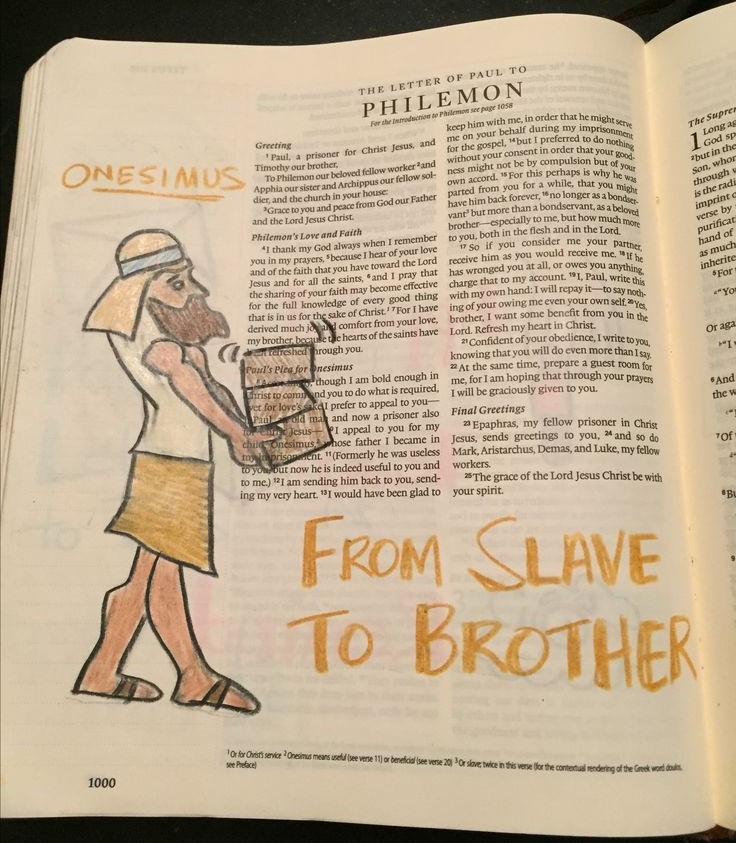
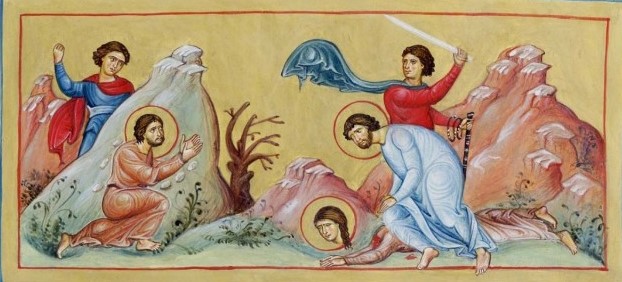
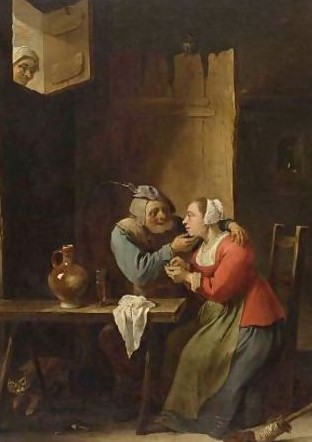
Images related to women in Titus and message of Titus 3:7 are both from Bible Journaling pins on Pinterest: (1019) Pinterest

If you use any information from my blog posts as a reference or source, please give credit and provide a link back to my work that you are referencing. Unless otherwise noted, my work is © Anna A. Kasper 2011-2026. All rights reserved. Thank you.

Posted in Bible Study, Catholic, Religious | Tagged , , , , , , , , , , , , , , , , , , , | 1 Comment

Spiritual Growth Through Trauma

Before I include my own insights into my own personal faith and spiritual growth journey, I feel I need to give some context and general information about the stages of faith:

“It is important to remember that such developmental “stages” or types are descriptive, not prescriptive.  In other words, they attempt to describe the way faith generally develops, but do not prescribe how faith must or should develop in any individual.  The descriptions do not suggest that one stage or kind of faith is better than another, only that how individuals or communities understand faith may differ from each other.

Stage One: Primal Faith
[Dominant in Infants from Birth to Age 3]

This stage in a young child’s faith formation sets the foundation for what will later develop as a conscious, intentional and personal faith. A very young child cannot be said to have any conscious faith at all, but he or she is unconsciously developing a basic attitude about reality — a perception about whether the world and the people in it are basically friendly or dangerous, pleasant or painful, trustworthy or capricious.
• This stage establishes a fundamental but pre-conscious disposition which will eventually enable the child to believe that there is a God who loves and cares for them.

•   •   •

Stage Two: Imaginative Faith
[Dominant in Children Ages 4 to 8]

At this stage faith has a magical or imaginary quality, marked by the child’s ability to believe almost anything.  It is essentially intuitive, non-rational and non-conceptual.  It is based on what the child feels rather than on what the child thinks or “knows.”  It is, in a sense, “borrowed” from adults whom the child trusts to be knowing and truthful.  This stage sets the foundation for the child’s eventual ability to believe in nonmaterial realities and sacred mysteries which cannot be seen or “proven.”  Imaginative faith is almost entirely non-critical or naive, in the sense that children for the most part lack the knowledge, experience and insight to evaluate or judge the content of faith against objective criteria.
• In this stage the child’s image of God depends primarily on what parents do and say.  If parents are loving, kind and forgiving, the child assumes that God, who is like a cosmic parent or grandparent, is also loving, kind and forgiving.

•   •   •

Stage Three: Literal Faith
[Dominant in Children Ages 6 to 12]

During this stage the child is gradually developing the ability to think for her or him self and beginning to ask questions about things which earlier they took for granted, including their parents’ faith.  At this stage, children develop an intense desire and need to know how things really are.  They are fascinated by stories, rituals and traditions which show real people living out their faith in concrete ways.  They depend on authority figures, rules and structure to assure them that reality is ordered and safe. Literal faith is the first step toward a less naive and more critical attitude toward faith, although the older child’s ability to subject the content of faith to critical standards is still limited.
• In this stage, the child is like to imagine God as something like a divine superhero who uses his power and authority to create order and justice by rewarding good and punishing evil.

•   •   •

Stage Four: Conventional Faith
[Dominant in Young Adults and Adults Age 13 and Older]

During this stage faith is shaped by the individual’s growing ability and desire to participate in the wider world beyond parents and family.  There is developing need to belong and be accepted by peers and friends who share the individual’s interests and values.  Faith is highly inter-personal, institutional, and communal; like the older child, it is rooted in the group and is shaped by the conventions, traditions, rules and habits of the group or faith community to which he or she belongs.  Conventional faith may incorporate critical and non-critical attitudes toward faith.  Young and early adults develop the ability to evaluate faith-claims by more objective standards, but may suppress critical questions out of fear, or for the sake of the security and acceptance provided by the group.
• In this stage the older child, young adults and many adults image God as an authority figure who holds the group — and the world — together by enforcing order — a kind of cosmic “Godfather” with whom one exchanges “favors,” who rewards loyalty and punishes disloyalty.  In this sense, God may be loving and merciful, but never at the expense of justice. 

•   •   •

Stage Five: Personal Faith
[Dominant in Adults Age 20 and Older]

This stage is sometimes characterized as a period of rebellion or withdrawal, a kind of spiritual adolescence.  In this stage individuals are rethinking the conventions and convictions of the group as they search for a personal faith, independent of the individuals and groups they relied upon as children and young adults.  This stage may be marked by a certain amount of ambivalence and confusion — both a desire to belong and a need to be independent. Personal faith represents the individual’s transition from a primarily pre-critical to a post-critical faith. It is a highly critical stage in which individuals evaluate faith-claims against personal experience, “common sense,” rational and scientific criteria.
• In this stage an individual’s relationship to God may be very personal and private, but nonetheless real and intense.  Some individuals in this stage express a desire to be “spiritual but not religious.”

•   •   •

Stage Six: Conjunctive or Mystical Faith
[Possible in Adults in Their 30s or Older; Rarely Before Middle Age]

In this stage an individual adult become more aware of the presence of the Divine Mystery in all of life.  This awareness produces a deep sense of sufficiency, wholeness and peace, which enables the individual to accept and believe what cannot be fully understood or explained.  Faith now includes a sense of solidarity and compassion, which allows the individual to reconnect with the faith community and to live comfortably with contradictions and shortcomings within the self and the faith community.  Mystical Faith is the first stage in a post-critical attitude about faith.  Adults in this stage reject the literalism of early stages not because it is untrue, but because it is not true enough; they have discovered that there are truths (or mysteries) embedded in reality which do not conflict with, and can not be judged by, entirely rational or scientific standards.
• In this stage an individual experiences God’s presence in the deepest levels of oneself, others and creation, transcending superficial differences.  The human analogy would be to the deep interpersonal connection which spouses sometimes feel. This awareness of God as the Holy Spirit leads to an abiding conviction that all will be well because God wills it.

•   •   •

Stage Seven: Universal Faith
[Rare in a Few Adults During or After Middle Age]

In this stage an individual’s faith is shaped by an intense awareness of the unity of all living things and the oneness of God’s creation.  A vision of the Kingdom of God breaking into everyday reality frees the individual to be both radically detached from self and passionately committed to living a life of self-sacrificing love marked by transcendent values like truth, justice and love and devoted to overcoming division, oppression and violence of every kind. Universal faith is the ultimate stage in the development of a post-critical attitude toward faith.  Adults in this stage realize that the truths embedded in faith are ultimately more important and helpful than those which emerge from rational or scientific inquiry.
• In this stage an individual’s image of God defies words or images. The individual’s life and faith center on an awareness of God’s transforming presence.  The rare individuals who reach this level live lives of totally self-less love, uncompromised by concerns for personal status, comfort or security.” (1)

•   •   •

The stages faith based on Hagberg and Guelich:

God’s grace and the stages of faith

As an example of the different way in which we experience God and God’s involvement in our lives, depending on our home stage of faith, I’ve taken just one of the categories I address in this chapter and pulled all the stage examples together here. The category is God’s grace or unconditional love, which is the same, no matter what, but which seems so different depending on what we are experiencing in our lives. I list one word first and then the description that is in each stage.

Stage One: Awe, Relief (Faith is…Recognizing God)

God’s love and acceptance comes through mostly in the miraculous experiences at this stage. We may experience relief from pain, release of guilt, a sense of being heard for the first time. We are awed by God’s love, and overwhelmed by the miracles of beauty, the mystery of new life, and gifts of time and goodness.

Stage Two: Forgiveness (Faith is…Learning about God)

Our experience of God’s love at this stage is being forgiven. We are freed from our initial load of guilt and depravity. We can now grow in our path, our program. It is just beginning for us, but we feel as if we’ve reached a summit already. We are grateful

Stage Three: Empowerment (Faith is…Working for God)

God’s love allows us to feel good about the gifts God has given us, allowing us to use those gifts for the good of others. This empowers our work. We extend that empowerment to others.

Stage Four: Faithfulness (Faith is…Re-discovering God)

God’s unconditional love for us slowly emerges as a dimension of this stage that we were not expecting. So often when we feel we are losing our faith or struggling, we think that those in authority will be displeased. If, at these times, we can take in God’s love, we find God’s grace and love are abundant. What a discovery. God’s grace also allows us to discover new elements in our relationship with God that we never knew were there.

The Wall: Transformation (The Place of Inner Choices)

Grace appears in unusual ways and when we least expect it. We may lose a job, for instance, and find out that this was the only way in which we could take the risk to change careers or to get into work that is more suited to us. God brings us through the depths to a place that is better, even if we don’t earn as much money or have as much power as we did before. Our hope at the Wall is that we will move forward one day at a time and receive enough of God’s love to carry on.

Stage Five: Acceptance (Faith is…surrendering to God)

Acceptance of self and others

Stage Six: Life as Grace (Faith is…reflecting God)

As Frederich Buechner says, “All moments are key moments and life itself is grace.”

•   •   •

The following is my analysis of my spiritual journey. It was in response to questions posed and assignments due in my Spiritual Development course at Phillips Seminary last September 2020.

Prior to May 2017, although unaware of what stages of faith I was in or going through, I existed in my faith journey as an adult for many years in stages 3 and 4 (sometimes between the two). Fowler writes, “In many ways religious institutions ‘work best’ if they are people with a majority of committed folk best described by Stage 3” (Fowler, 164) and at times I have leaned into my Catholic faith for all the answers. But I also had a keen interest in engaging with other cultures, exploring other faiths and interfaith dialogue. So, I could see outside of my own “fish bowl” and had some features of stage 4.

On 16th May 2017, my whole life changed, I almost died in a house fire that destroyed my home, my car, and all my belongings in addition to killing my 12-year-old beloved fur-girl kitty Livia. I literally had nothing except a pair of leggings and a t-shirt I had been sleeping in and a pair of singed garden shoes on my feet, I was suffering from smoke inhalation and severe anxiety, but was still grateful that I had home and car insurance and was put up in a motel and received aid from The Salvation Army, The Red Cross, my neighbors and my cousin Christina.

This experience of losing everything propelled me into the wall spiritually. I was living in survival mode. At no time did my belief system tell me that God would protect me from having trauma in my life, so I did not blame God. But I did enter a time of deep reflection. Once my insurance settled with me and spent time in counsel for a few weeks in Missouri with my cousin Theresa and her husband Russ (who are co-ministers of a Christian Church (Disciples of Christ and work as chaplains) who have years of experience with dealing with those that are dealing with loss and trauma, then lived with family in NW Arizona for 3 weeks before I moved into a very small place I bought on 1.5 acres. I should point out that my neighbor was responsible for the fire by leaving a fire unattended smoldering in his back yard for 2 days, so I wanted no neighbors near me and space around me. It wasn’t until I was living alone again and was alone with my thoughts, and pondering my faith, that post traumatic stress disorder set in and I spent almost 2 years with serious sleep issues and waking up in the middle of an anxiety attack 1-2 times every time I slept — I would awake feeling sheer terror and not knowing where I was. (I still experience these attacks and sleep disturbances at times and am still left with some insomnia issues, especially in times of great stress, it just no longer happens every time I sleep).

Most people — their religious beliefs do not change after a trauma. “The reviewed literature suggests that most people do not change their religious beliefs after a trauma, but significant changes occur for a smaller proportion of people—either increasing or decreasing their religious beliefs. These effects are greatest for people who develop PTSD.” (2)
I am part of the smaller proportion of people, my faith did change, not the core of my religious beliefs, but the stages of my faith.

I will say that at times in my journey the last few years, that I felt that living in an anchorhold like Julian of Norwich, or wandering the earth like Caine in Kung Fu sounded quite pleasing to me! (Actually neither of those paths would be easy, but it was more of a fantasy version in my own head).

I no longer am attached to things. The loss of everything has changed my perspective. Yes, I occasionally miss items that were sentimental from my childhood, photos that no longer exist, etc… But I have discovered, what you need is very different from what you think you need.

I identify with a quote of Quaker George Fox, “There is that of God in every man.” I have Quaker ancestors on both sides of my family tree and have found some precious nuggets from studying their faith.

Hagberg and Guelich describe Stage 4 as a journey inward and Stage 5 is a journey outward (from my inner life). Fowler calls Stage 5 Conjunctive Faith but I have seen it also called Mystical Faith, a term I much prefer. My awareness and faith, in several ways, now mirror many of the tenants of Stage 5 described in the next paragraph.

In the Mystical Faith stage the person is “aware of the presence of the Divine Mystery in all of life. This awareness produces a deep sense of sufficiency, wholeness, and peace, which enable the individual to accept and believe what cannot be fully understood or explained. Faith now includes a sense of solidarity and compassion, which allows the individual to reconnect with the faith community and to live comfortably with contradictions and shortcomings within the self and the faith community.” (1)

I do not know if I have completely moved into Stage 5 – Mystical Faith. But in the last 3+ years, I have gone through the wall and come out the other side.

“For the soul’s sense is love; by love it perceives whatever it perceives; alike when it is pleased and when it is offended. When the soul reaches out in love to anything, a certain change takes place in it by which it is transmuted into the object loved; it does not become of the same nature as that object, but by its affection it is conformed to what it loves.”

— William of Saint-Thierry

Update: Only in the last few months, now into 2021, have begun to have some good nights of sleep and sometimes am able to go to sleep at a time considered more normal. It’s a process, and it is precarious at best, but I remain hopeful.

Praise You in This Storm

This song is very fitting for my spiritual journey. Originally a song by Casting Crowns, this rendition by Natalie Grant speaks to me.

Lyrics:

Praise You in This Storm

I was sure by now
God, You would have reached down
And wiped our tears away
Stepped in and saved the day
But once again, I say, “Amen” and it’s still rainin’

Well, as the thunder rolls
I barely hear Your whisper through the rain
“I’m with you”
And as Your mercy falls
I’ll raise my hands and praise the God who gives
And takes away

And I’ll praise You in this storm
And I will lift my hands
For You are who You are
No matter where I am
And every tear I’ve cried
You hold in Your hand
You never left my side
And though my heart is torn
I will praise You in this storm

I remember when
I stumbled in the wind
You heard my cry to You
And raised me up again
But my strength is almost gone
How can I carry on
If I can’t find You?

But as the thunder rolls
I barely hear Your whisper through the rain
“I’m with you”
And as You mercy falls
I’ll raise my hands and praise the God who gives
And takes away

And I’ll praise You in this storm
And I will lift my hands
For You are who You are
No matter where I am
And every tear I’ve cried
You hold in Your hand
You never left my side
And though my heart is torn
I will praise You in this storm

I lift my eyes unto the hills
Where does my help come from?
My help comes from the Lord
The Maker of Heaven and Earth
I lift my eyes unto the hills
Where does my help come from?
My help comes from the Lord
The Maker of Heaven and Earth
(I lift my eyes unto the hills)
(Where does my help come from?)

And I’ll praise You in this storm
And I will lift my hands
For You are who You are
No matter where I am
Every tear I’ve cried
You hold in Your hand
You never left my side
And though my heart is torn
I will praise You in this storm
And though my heart is torn (Though my heart is torn)
I’ll praise You in this storm (Praise you in this storm)

Songwriters: Bernie Herms, John Mark Mark Hall

•   •   •

References:

Texts required and used for course:

Fowler, James W. 1995 (Revised edition). Stages of Faith: The Psychology of Human Development and the Quest for Meaning. San Francisco, CA: HarperOne.

Tenny-Brittian, William Rev. 2005. Prayer for People Who Can’t Sit Still. Nashville, TN: Chalice Press.

Tenny-Brittian, William Rev. 2006. High-Voltage Spirituality. Nashville, TN: Chalice Press.

Hagberg, Janet O. & Guelich, Robert A. 2004 (2nd edition). The Critical Journey: Stages in the life of faith. Salem, WI: Sheffield Publishing Company.

Also:

Stages of Faith Descriptions – An Oasis of Beauty, Hope, and Healing (janethagberg.com)

Additional Resources Used:

  1. Stages in Faith Development – on Waterloo Catholics website (based on Fowler). Stages in Faith Development | Waterloo Catholic Faith Formation | Waterloo, IA (waterloocatholics.org)
  2. The Effect of Trauma on Religious Beliefs: A Structured Literature Review and Meta-Analysis by Darius Leo, Zahra Izadikhah, Erich C. Fein, Sayedhabibollah Ahmadi Forooshani. The Effect of Trauma on Religious Beliefs: A Structured Literature Review and Meta-Analysis – Darius Leo, Zahra Izadikhah, Erich C. Fein, Sayedhabibollah Ahmadi Forooshani, 2021 (sagepub.com)

If you use any information from my blog posts as a reference or source, please give credit and provide a link back to my work that you are referencing. Unless otherwise noted, my work is © Anna A. Kasper 2011-2026. All rights reserved. Thank you.

Posted in Catholic, Religious, Uncategorized | Tagged , , , , , , , , , , , , , , , , , , , , , , | Leave a comment

My Quaker Lamb and Moore Ancestors in Virginia and North Carolina. Later Doty/Doughty Primitive Baptists in Kentucky, Indiana and Illinois.

The furthest I can take my Lamb ancestry back with certainty is to my Quaker 8th great-grandparents Henry Lamb and Elizabeth ____.

Henry Lamb was born about 1697 in England. He was banished to Virginia from England, for utterances of unorthodox doctrines (Quakerism), he migrated from Virginia to Perquimans County, North Carolina and then to Rowan County, North Carolina. He died 10 February 1761 in Rowan County, North Carolina. His death is recorded in the Quaker Center Monthly Meeting record. He married Elizabeth ___ in 1723 in Nansemond County, Virginia. His move from Virginia to North Carolina was most likely engendered because of how poorly Quakers were being treated in Virginia and many moved onto North Carolina or other Quaker friendly areas.

Henry Lamb and Elizabeth ____ had the known following children:

  1. Thomas Lamb born June 1723 Nansemond, Virginia and died 4 Aug 1784 in Randolph County, North Carolina. He married Sarah Moore, daughter of Robert Moore and Hannah Manwaring. Thomas and Sarah are my direct ancestors.
  2. Mary Lamb born 1726 Nansemond, Virginia and died 1796 in Edgefield, Edgefield, South Carolina. She married Joseph Sanders.
  3. William Lamb born 1728 Nansemond, Virginia and died 6 Dec 1750 in Perquimans, Perquimans, North Carolina. He married Rachel Newby and Miriam Newby.
  4. Reuben Lamb born 4 Jul 1732 Nansemond, Virginia and died 4 Aug 1784 Randolph, North Carolina. He married Martha Moore (sister of Sarah Moore).
  5. Esau Lamb born 4 Jul 1733 Nansemond, Virginia and died 8 Mar 1790 Randolph County, North Carolina. He married Elizabeth Newby.
  6. Isaac Lamb born 7 Nov 1734 Nansemond, Virginia and died 8 Mar 1790 Perquimans County, North Carolina. He married Elizabeth Nixon.
  7. Joseph Lamb born about 1738 in Perquimans County, North Carolina and died 25 Nov 1820 Climax, Randolph County, North Carolina. He married Frances Beeson.
  8. Bethia Lamb born 10 Jan 1740 in North Carolina and died 15 Aug 1829 in Center, Randolph County, North Carolina. She married Benjamin Beeson, Jr.
  9. Elizabeth Lamb born 1 Aug 1741 in North Carolina and died 2 Apr 1801 in Greensboro, Guildford County, North Carolina. She married Samuel Osborne.
  10. Jacob Lamb born 9 Sep 1742 Center, Rowan County, North Carolina and died Nov 1800 in Randolph County, North Carolina. He married Sarah Stone.
  11. Selena Elizabeth “Betty” Lamb born 1 Jan 1757 in New Guildford, North Carolina and died 1789 New Guildford, North Carolina. She married Edward Beeson.

Update of April 2026: To learn more about my Moore ancestors, please see my recent blog post Surname Saturday. My Moore Ancestors from the Isle of Man, Who Settled in Perquimans County, North Carolina.

A map of early Quaker Meetings in North Carolina.

Brothers Thomas Lamb and Reuben Lamb married sisters Sarah and Martha Moore. There were also Lamb/Newby and Lamb/Beeson intermarriages.

My ancestors are Thomas Lamb and Sarah Moore. Both the Lamb and Moore families were Quakers.

My line continues with their son John Lamb born about 1750 in Perquimans County, North Carolina. He married Prudence Featherstone, born about 1753, most likely in Virginia.

Children of John Lamb and Prudence Featherstone:

  1. Arthur Lamb was born about 1771 in South Carolina and died before July 1840 in Tennessee. The name of his wife is unknown, but he had at least three children: William, John, and Arthur Lamb.
  2. Mary Ann “Polly” Lamb was born August 1772 in South Carolina and died 17 April 1843 in Edward County, Illinois. She married Samuel Doty in Kentucky. (My direct ancestors).
  3. Jesse Lamb was born about 1779 in South Carolina. He married Peggy Colley on 24 December 1812 in Livingston County, Kentucky.
  4. Son Lamb was born about 1780 in South Carolina.
  5. Daughter Lamb was born about 1790 in South Carolina.
  6. Hannah Lamb was born about 1798 in South Carolina, and died on 24 March 1889 in Crawford County, Illinois. Some list her date of death as 20 July 1861 in West York, Crawford County, Illinois. She married first to James E. Moore on 3 June 1819 in Clark County, Illinois. After his death, she married second to Benjamin Evans on 20 April 1825 in Clark County, Illinois.
  7. James Lamb born about 1800 in Kentucky. He married Elizabeth Daily in November 1828 in Edgar County, Illinois.

My Lamb line with my 5th great-grandmother Mary Ann “Polly” Lamb, a daughter of John Lamb and Prudence Featherstone. She married Samuel Doty, the son of Jeremiah Doty and Sarah B. ____. He was a descendant of Mayflower Pilgrim Edward Doty and Faith Clark. Our line is accepted by the Mayflower Society.

To learn more about our ancestor Mayflower Pilgrim Edward Doty see my blog post: My Contentious and Quarrelsome Mayflower Pilgrim Ancestor Edward Doty.

It appears at some point, the family left the Quaker faith, for in the next generation several become ministers in the Primitive Baptist faith living first in Kentucky, then Indiana, before moving onto Illinois with some venturing to Missouri and Iowa.

Children of Samuel Doty and Mary Ann “Polly” Lamb:

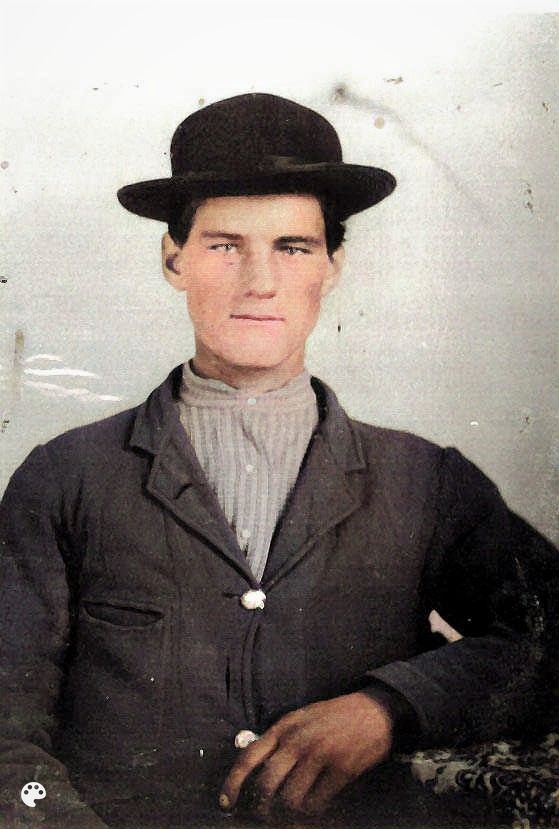
Rev. Preston Doty with third wife Mariah. Photo courtesy of my Doty cousin Ginny Feldman.
  1. Samuel Doty born 1793 in Kentucky and died before Mar 1835 in Clark County, Illinois. He married Mary Ann Dolson.
  2. Rev. Jeremiah Doty born 28 Jun 1794 Barren, Warren County, Kentucky and died 10 May 1861 in Edwards County, Illinois. He married Martha Patsy Dunnigan/Dunnagan.
  3. Rev. John M. Doty/Doughty born 30 Apr 1797 in Barren, Warren County, Kentucky and died 2 Sep 1878 in Casey, Clark County, Illinois. He married Mary Jane “Jane’ McGuire. She was the daughter of Francis Marion “Frank’ McGuire and Elizabeth Barnes. He married second to Mary Alice Bartlett. Rev. John M. Doty and his first wife Mary Jane McGuire are my direct ancestors.
  4. Rev. Daniel Doty/Doughty born 24 Dec 1800 in Red Boil Springs, Macon County, Tennessee and died 12 Aug 1872 in Willow Hill, Jasper County, Illinois. He married Isabel Ritter.
  5. Prudence Doty born 1803 Warren County, Kentucky and died 1880. She married William Gadberry.
  6. Joseph L. Doty/Doughty born 23 Jun 1804 in Warren County, Kentucky and died 27 Jun 1880 in Flat Creek, Mountain Township, Barry County, Missouri. He married first to Rebecca Ann Burcham and married second to Hannah Sparks.
  7. Elder Mastin Doty born 1 May 1806 in Warren County, Kentucky and died 15 Jan 1875 in Wilton, Boone County, Missouri. He married first Mary “Polly” Fletcher and married second to Abigail (widow Fletcher).
  8. Rev. Preston Doty/Doughty born 22 Apr 1807 in Warren County, Kentucky and died 1 Jan 1887 in Harrison County, Iowa. He married first to Nancy Shrum, he married second to Elizabeth Murphy, he married third to Maria (Mariah) H. Lee Boles.
  9. James Doty/Doughty born 21 Oct 1808 in Warren County, Kentucky and died 14 Apr 1843 in West Salem, Edward County, Illinois. He married Elizabeth “Betsy” Brown.
  10. Nancy Doty/Doughty born 1810 in Warren County, Kentucky and died 3 Feb 1825 in Indiana.
  11. Reuben Doty born 1811 Kentucky.
  12. Featherstone Doty/Doughty born 14 Apr 1814 in Warren County, Kentucky and died 1852 in Illinois. He married Francis “Fannie” Grant.
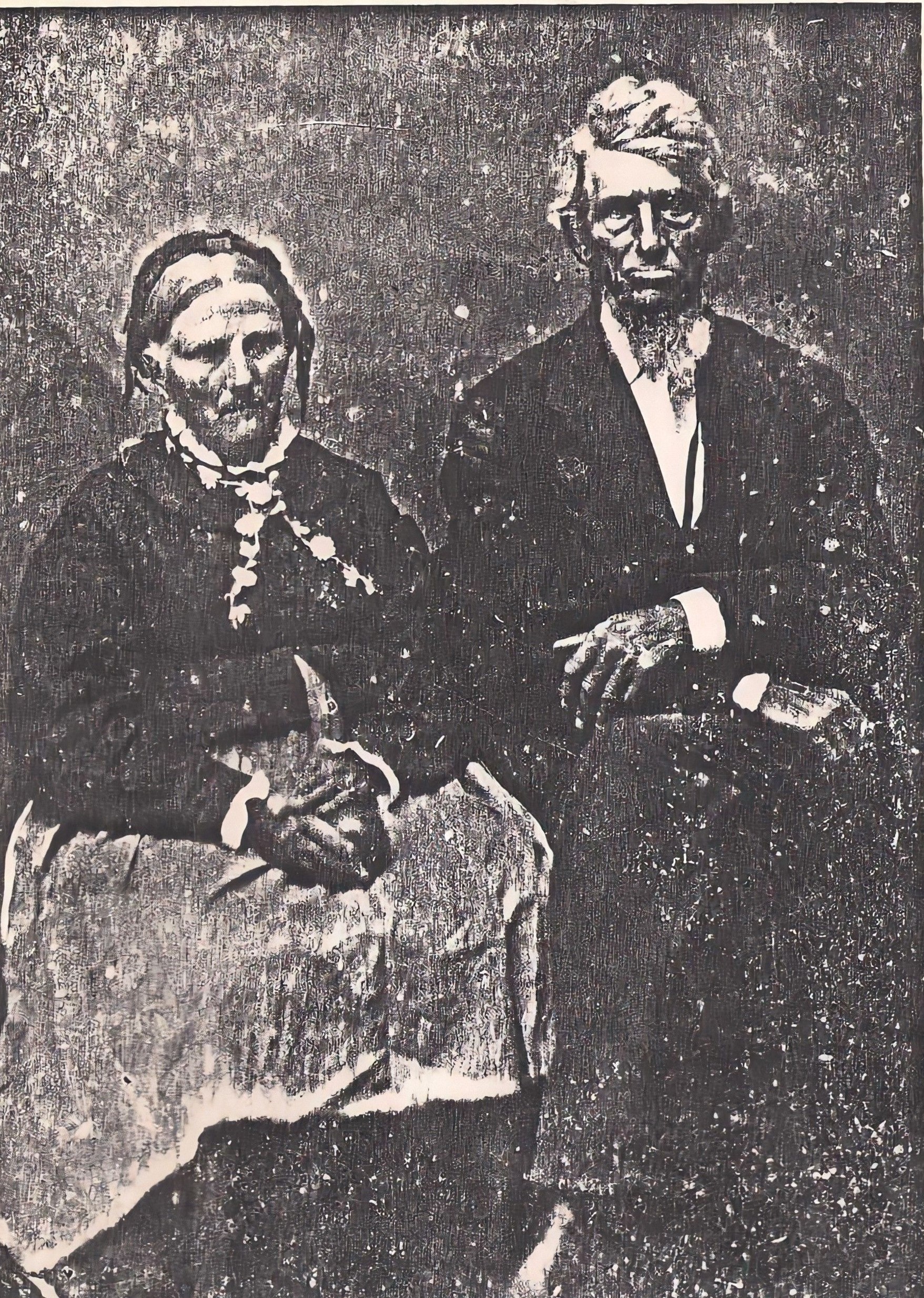
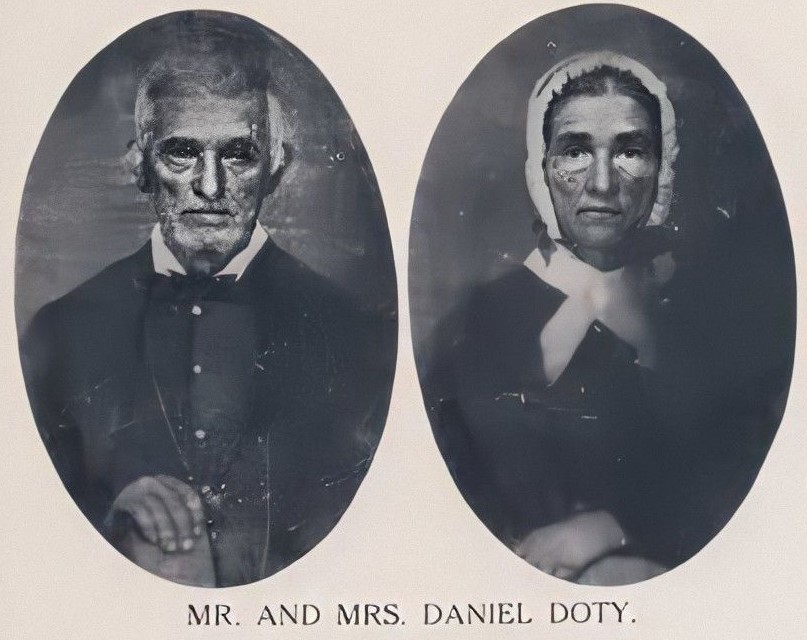
Rev. Daniel and Isabel Ritter Doty

Most people are familiar with Society of Friends, Quakers, but less so with Primitive Baptists. So what are the history and beliefs of Primitive Baptists?

Primitive Baptists – also known as Hard Shell Baptists, Foot Washing Baptists, or Old School Baptists – are conservative Baptists adhering to a degree of Calvinist beliefs, that coalesced out of the controversy among Baptists in the early 19th century over the appropriateness of mission boards, tract societies, and temperance societies. The adjective “primitive” in the name is used in the sense of “original”. (1, 2) They were originally called Regular Baptists and later known as Regular Predestinarian and also Primitive Baptists.

Clark County and Jasper County, Illinois Primitive Baptist churches with my ancestors and their kin in the records:

“GOOD HOPE

Good Hope Church was organized on July 28, 1832, by Elders Abraham Stark and William Stancil, with six charter members, viz., Lewis Walker, Stanley B. Walker, Daniel Goble, Martha Walker, Mary Walker, and Sitha Goble. The original site of this church was about a mile southwest of Westfield, Illinois.

Good Hope Church was received as a member of the Wabash District Association in about 1836. In 1839, Good Hope church hosted the annual meeting of the Wabash District Association. At that time, Elder Stanley B. Walker, Elder John M. Doty, and Lewis Walker, were the messengers, and the church reported 52 members. Good Hope Church was dropped from the Wabash District Regular Baptist Association in 1841, for retaining the name “United Baptist,” by a unanimous vote of the churches. The church then became identified with the modern mission system and was no longer recognized by the Primitive Baptists.

SALEM

Salem Church united with the Wabash District Association in the late 1830’s or early 1840’s, and hosted the annual meeting in 1847. Masten Doty was a member of this church. The church ceased to represent in the Wabash District Association in about 1865.

SURNAMES OF MEMBERS:

Davidson, Doty, King, Newman, Odom, Piper, Weldon (very incomplete list due to loss of records).

Jasper County, Illinois:

NORTH FORK (OF EMBARRASS RIVER) CHURCH:

North Fork Church was organized on February 10, 1829, at the home of Richard Eaton, about two miles west of present-day Oblong, about one-half mile west of the river from which it took its name. The charter members were dismissed from Grand Prairie Church of Crawford County. The church met for many years in Willow Hill township. In 1884, Jeremiah Doty and wife gave a deed to the church for Lots 4 and 5 in Doty’s 2nd Addition to the town of New Liberty (Willow Hill). The church continued to meet there until it closed, in 1979. Pastors of the church included Elders Thomas Young, Daniel Doty, William H. Smith, A. J. Lanter, William Lewis, James George, J. C. Biggs, H. C. Bell, Cina Greathouse, Jasper Dalby, Benjamin Ferguson, George W. Inyart, T. J. Parr, Jerry Brown, William E. Wright, Oscar Wallace, J. D. Vandeveer, and Cecil R. Fuson.

Family names who were members of this church included:

Allen, Allison, Anderson, Armstrong, Arnold, Baker, Bartlett, Bartley, Baughess, Beel, Biggs, Bonom, Bridges, Brooks, Bruner, Burcham, Cable, Carpenter, Cawhorn, Chriss, Conrad, Cottrel, Cox, Daubs, Dillman, Dispenny, Dodd, Doty, Eaton, Erwin, Fear, Ferguson, Fowler, Gardner, George, Graves, Greene, Griggs, Hambric, Harrison, Highsmith, Hill, Hilton, Holensaic, Holmes, Hon, Hone Hume, Hunt, Ireland, James, Jeffers, Jennie, Johnson, Jones, Kasserman, Keen, Kennedy, Kermicle, Kibler, Kinkade, Lameron, Lanter, Laws, Lewis, Manning, McCoy, McDaniel, McKenzie, Metcalf, Miller, Mock, Musgrove, Neal, Nebergall, Newkirk, Odell, Oef, Parr, Phelps, Pierson, Pile, Portlock, Powell, Price, Purcell, Rice, Richards, Ridlen, Robinson, Rodd, Rowe, Salisbury, Sheller, Skidmore, Smith, Stall, Stone, Tarpley, Taylor, Todd, Trowbridge, Van Black, Watts, Weaver, Welch, Wolensaid, Wright, York, Young.” (3)

My Doty ancestors and kin were ministers, elders, and members in Primitive Baptist churches in Cumberland County, Jasper County, and Edwards County, Illinois as well as in Harrison County, Iowa and Boone County, Missouri.

Have you seen the film “Cold Mountain“? If so, the church scenes and the Sacred Harp / Shape-Note singing in the film are to be found in the Primitive Baptist Church. I included the video below that includes a well-known hymn that was sung in the film “I’m Going Home”.


Children of Rev. John M. Doty and Mary Jane “Jane’ McGuire:

  1. Featherstone Doughty born 2 May 1818 in Indiana and died 29 Aug 1877 in Missouri. He married Charity Gooden, daughter of Lewis Gooden (Goodwin) and Lydia Watts.
  2. Maguire/McGuire Doughty born 9 Jul 1820 in Indiana and died 1843-1845 in Arkansas. He married Mary Ann Gooden, daughter of Lewis Gooden (Goodwin) and Lydia Watts. Maguire Doughty and Mary Ann Gooden are my direct ancestors.
  3. John Montgomery Doughty born 6 Apr 1822 in Green, Grant County, Indiana and died 25 Dec 1865 in Casey, Clark County, Illinois. He married first to Mahala J. Moore; he married second to Armetta A. Howe.
  4. Elizabeth Matilda Doughty born 28 Aug 1824 in Greene County, Indiana and died 12 May 1904 in Bourbon County, Kansas. She was left a widow three times. She married first to Samuel Deverell, second to Thomas Jefferson Rose, third to Earl O’Neill, fourth to Isaac Shively.
  5. Samuel Doughty born 5 Oct 1826 in Indiana. He married Cynthia A. Parker.
  6. Francis Marion “Frank” Doughty born 12 Mar 1830 in Greene County, Indiana and died 27 May 1909 in Demar, Clinton County, Iowa. He married Sarah Elizabeth Davis.
  7. Percilla / Pernelia P. Doty born Oct 1830 in Indiana and died 11 Jul 1903 in Jasper, Missouri. She married John A. Lamb (he and Percilla were Lamb 2nd cousins).
  8. Mary Ann “Polly” born 29 Apr 1832 in Morgan County, Indiana and died after 1915 in Cumberland County, Illinois. She married Western Humphrey.
  9. Prudence Jane Doughty born 7 Mar 1834 in Clark County, Illinois and died 6 Nov 1900 in Parsons, Labette County, Kansas. She married John H. Myers.
  10. Jonathan Jones Doughty born Apr 1836 in Casey, Clark County, Illinois and died 18 Apr 1913 in Clinton, Vermillion County, Indiana. He married Mary Jane Crane.
  11. James Preston Doughty born 23 Apr 1840 in Cumberland, Clark County, Illinois and died 17 May 1919 in Santa Fe, Santa Fe County, New Mexico. He marries first to Martha Ann Ellis, and second to Mariah Caroline Ellis.
  12. Daniel Stanley Doughty born 31 Jan 1842 in Casey, Cumberland County, Illinois and died 24 Mar 1905 Alto Pass, Union County, Illinois. He marries Lucina A. Burr.
  13. Joseph Jeptha Doty/Doughty born 26 Jun 1844 in Clark County, Illinois.

Rev. John M. Doty/Doughty and second wife Mary Alice Bartlett had one child:

  1. Lester Loran Doughty born 6 Feb 1879 in Casey, Clark County, Illinois and died 19 Jul 1952 in Houston, Harris County, Texas. He married first to Nora Dell Huey, and second to Ethel May Frasier.
My great-great grandfather John L. Doughty.

My line continues with John Lewis Doughty, my 2nd great grandfather, the son of Maguire/McGuire Doughty and Mary Ann Gooden. He was born 11 Mar 1843 in Benton County, Arkansas and died 4 Dec 1911 in Quay, Payne County, Oklahoma. He married Cynthia Ann Barrett.

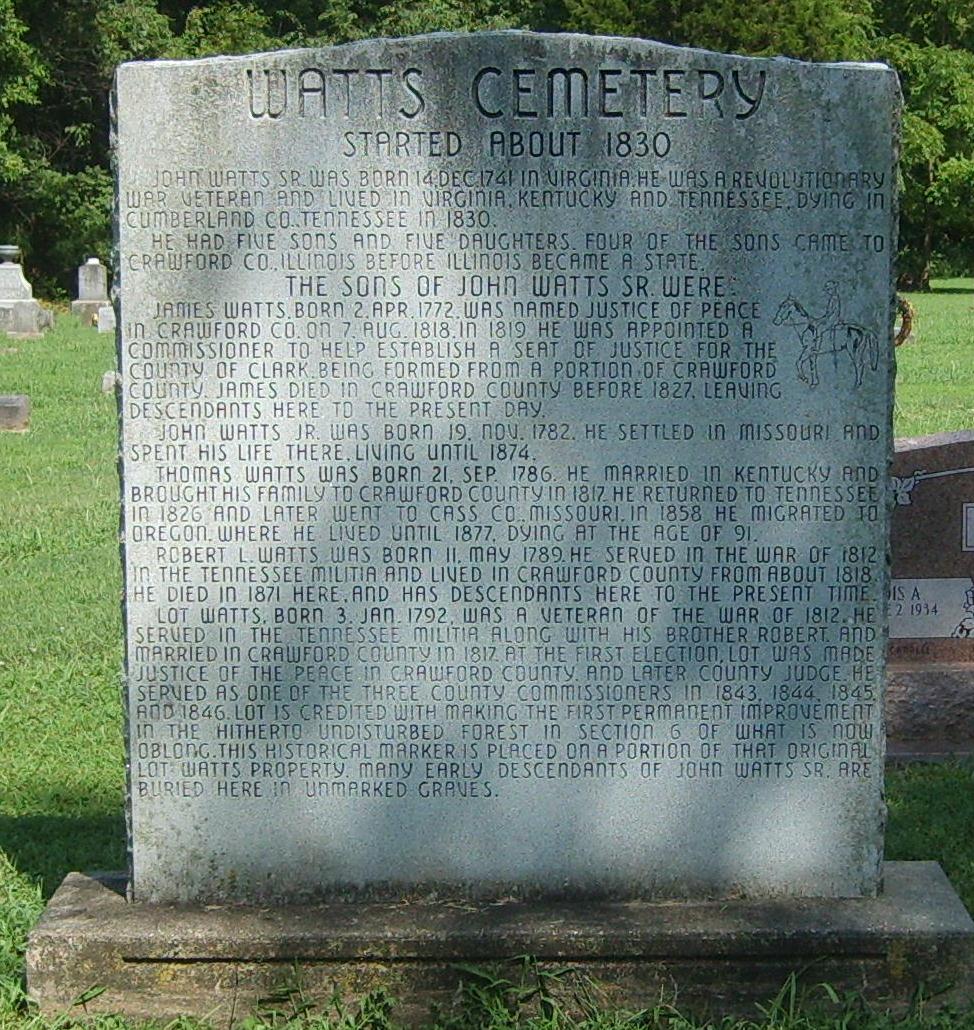
See my blog post Urquhart – Some of my Scottish Ancestors. And Related English Watts and Goodwin/Gooden Lines to follow my Watts lines back to Colonial Virginia and my Gooden lines all the way back to England.

Cynthia Ann Barrett was the daughter of Aden Barrett and Nancy Anna Rogers. My Barrett lines go back to Virginia; Chester County, Pennsylvania; Maryland; and England. My Barrett and Chambers ancestors were also Quakers.

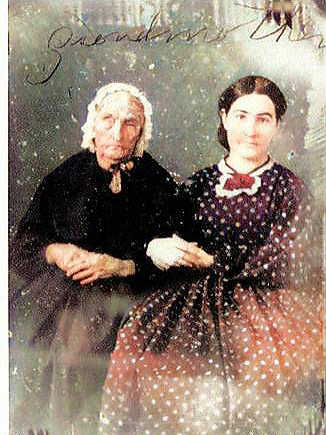
Photo above is of my great-great grandmother Cynthia Ann Barrett Doughty with her maternal grandmother Mary Ellen Stafford Rogers (my great x4 grandmother). Her grandmother died in 1867.

I am a DNA match to Doty-Doughty/Lamb cousins, Lamb/Moore cousins (other descendants of Thomas Lamb and Sarah Moore), and even to a few Manwaring cousins. I am also a DNA match to the descendants of Reuben Lamb and Martha Moore, I have a double kinship with them because we share both Lamb and Moore ancestors.

Last updated April 2026.

References:

  1. Crowley, John G. (2006). “The Primitive or Old School Baptists”. In Jonas, William Glenn (ed.). The Baptist River: Essays on Many Tributaries of a Diverse Tradition. Macon, GA: Mercer University Press.
  2. Mead, Frank S; Hill, Samuel S; Atwood, Craig D (2010) (13th edition). Handbook of Denominations in the United States. Nashville, TN: Abingdon Press.
  3. Primitive Baptist Library: Primitive Baptist Family History Assistance (pblib.org)

If you use any information from my blog posts as a reference or source please give credit and provide a link back to my work that you are referencing. Unless otherwise noted, my work is © Anna A. Kasper 2011-2026. All rights reserved. Thank you.

Posted in Genealogy | Tagged , , , , , , , , , , , , , , , , , , , , , , , , , , , , , , , , , , , , , , , , | 10 Comments

Daniel Streing / Strang, Sr. and Charlotte Marie Lemaistre – My first confirmed French Ancestors.

My first confirmed French 🇫🇷 ancestors! They were French Huguenots. To my knowledge, I believe they are my only French ancestors (see update below, I have found additional French ancestors).

Update December 2025: I have discovered I have a more French ancestors in my tree, including a few more French Huguenots. At the time I originally wrote this blog post in 2021, they were my first confirmed French ancestors. I now know that I have some additional French Huguenot ancestors on my paternal Verdon lines that migrated to Colonial America. French Protestants also migrated to the Rhineland of Germany in the late 1600s to escape intense religious persecution after the Revocation of the Edict of Nantes in 1685, which stripped them of their religious freedoms. On my more recent paternal German lines, I have discovered I have French Huguenot LeBeau/de la Barre, Vacher/Vasher, Coeu, Charles, and Dupree ancestors that came to live in Ludwigshafen am Rhein and Frankenthal, in the Rhineland-Palatinate region of Germany, but they had all migrated from Uzès, Gard, France.

Recently, in September 2025, I wrote about my Beauharnais Ancestors of Orléans, France, and our close connection to St. Joan of Arc (Jeanne d’Arc). They are the ancestors of Charlotte Marie Lemaistre, wife of Daniel Streing/Strang. She was the daughter of Jean Lemaistre and Charlotte Mariette. The Beauharnais ancestors are on her father’s lines.

Please be sure to read the quite entertaining and amusing description found below by Madam Knight about when she visited and stayed at my ancestor’s Strang’s Tavern and Inn.

Daniel Streing/Strang, Sr., was born in 1655 in Gien, Loiret, France. (Gien is on the Loire River and is 50 miles from Orléans). Daniel Strang, Sr. attended the Protestant Academy of Geneva, Switzerland. Danieland his brother, Jacques, were sent to Paris by their father, Henri, to learn the wholesale wine trade in the cellars of Michel and Guillaume Hubert, Michel being a maternal uncle by marriage. (2)

Loire River in Gien. Photo by Benjamin Kerr.


Archaeological excavations have shown that Gien was a trading post for farmers and blacksmiths in pre-historic times, and that a town was founded in Roman times. As a Protestant town, Gien suffered greatly during the Religious Wars, with the looting of the churches and clergy being hunted down. (1) Sadly, much of Gien was destroyed during the Second World War. The town was bombed by the Luftwaffe, who aimed to destroy the town’s bridge to prevent the French Army from retreating. The bombardment created a huge fire which completely destroyed over four hundred buildings, including the town’s two main churches. The town was rebuilt after the war. Gien is popular as a tourist destination and is known for its grapes (vineyards) and goat cheese.


The surname is listed originally as Steing in records in England and America but slowly became Strang.


Daniel and the others were Huguenots, which were French Protestants who held to the Reformed – Calvinist or Presbyterian traditions of Protestantism. Originally, also included in the French Huguenot group were Lutherans. Daniel and Charlotte were members of the Reformed French Church.


Daniel Steing, Sr. was the son of Henri Strengs / Strangs / Lestrange and Marie Babault.


Daniel Streing, Sr. and Charlotte Marie Lemaistre were married 21 August 1680 at The Chateau de Chamerolles, at Lorret, France, it was one of the few churches where Protestants of Huguenot or similar descent were able to marry. Their first child was born in France. The remainder of their children were born in America.


Charlotte Marie Lemaistre was also born in Giens, Loire, France and was the daughter ofJean Lemaistre and Charlotte Mariette.


Daniel Strang, Blaise Thibou, Samuel LeMaistre, Guillaum and Michel Hubert were among the first of what was to number 500,000 Frenchmen who forsook their properties and fled the realm rather than convert to Catholicism or be tortured and killed. Daniel fled to London from Paris in a wine cask aboard a Seine River barge and occupied himself there as a merchant until 1688, when he migrated to America. (2)


Daniel and Charlotte immigrated to Boston, Massachusetts and soon after went to New York City, New York.

Daniel Strang, Sr. is listed as one of the residents of New Rochelle, New York in 1698 and is listed as a Lieutenant of Infantry.


From the Rye, New York history site:

The center of Rye moved from the Long Island Sound area to the King’s Highway, aided by Strang’s Tavern at what is now the corner of the Post Road and Rectory Street and the Square House. Both taverns were the center of colonial life, providing local residents and travelers with food, drink, shelter, entertainment, news, and politics. (2)


From the book Chronicle of a Border Town: History of Rye, Westchester County, New York:


In the village itself, ‘Strang’s tavern’ was the ancient public house. A portion of the original building still standing on the southeast corner of the post-road and Rectory Street.

A pencil drawing of Strang’s Tavern and Inn


Madam Knight of Boston gives an amusing description of her entertainment at this inn, in the course of her journey on horseback in 1704 from that city to New York: —


‘From Norowalk we hasted towards Rye, walking and leading our horses near a mile together, up a prodigious high hill; and so riding till about nine at night ; and there arrived and took up our lodgings at an ordinary inn a French family kept. Here being very hungry, I desired a fricasee, which the Frenchman undertakeing mannaged so contrary to my notion of cookery, that I hastned to bed superless : being shewd the way up the pair of stairs which had such a narrow passage that I had almost stopt by the bulk of my body. But arriving at my apartment found it to be a little Lento chamber, furnisht amongst other rubbish with a high bedd and a low one, a long table, a bench and a bottomless chair. . . . My poor bones compalined bitterly, not being used to such lodgings ; and so did the man who was with us ; and poor I made but one grone, which was from the time I went to bed to the time I riss, which was about three in the morning. Setting up by the fire till light, and having discharged our ordinary, which was as dear as if we had had far better fare, we took our leave of Monsier, and about seven in the morn came to New Rochell, a French town, where we had a good breakfast, and in the strength of that, about an how’r before sunsett, got to York.’ (3)

Daniel died two years after Madam Knight’s visit to his inn. His wife Charlotte kept and ran the inn for several years. Both Daniel and Charlotte died in Rye, Westchester County, New York and both are buried in the Strang Burial Ground.

In Charlotte’s will she leaves her wedding clothes to her 3 daughters. I could only hope that one of her descendants still has them. Part of her will gives her wedding clothes to her three daughters, Clorinda, wife of Samuel Purdy: Charlotte, wife of Roger Park, and Mary Prudence, wife of John Budd.

My direct line:

  1. Daniel Strang (Streing), Sr. and Charlotte Marie Lemaistre (daughter of Jean Lemaistre and Charlotte Mariette.
  2. Mary Prudence Strang and John Budd (son of Joseph L. Budd and Sarah Underhill).
  3. Elijah Budd and Hannah Ursula “Ursty” Sine (daughter of Conrad Sine (Sayn) and Elisabetha Christina _____, both were born in Germany).
  4. Mary Budd and Solomon Palmer (son of Peter Palmer and Judith Reynolds).
  5. Floyd Palmer and Barbara Wolf (daughter of Peter Wolf and Catherine ____. Both born in Pennsylvania with German roots).
  6. John Palmer and Mary Ann Spotts (daughter of David Spatz and Hannah Hafer, both they and their parents were born in Pennsylvania, but all had German roots).
  7. Susan Palmer and John Davis Kennedy (son of John Kennedy and Jane Williams).
  8. Abraham Kennedy and Mary Elizabeth Price (daughter of James Price and Julia Ann Meteer/Mateer) – my great-grandparents.

A special thanks to my sister Linda; my niece, my brother’s daughter, Elisabeth; my grand-niece, my sister’s granddaughter, Bethany; my Cole cousin William; and my Kennedy/Price cousins Laura and her father John, for it is with all of us being DNA matches to other known Budd and Strang cousins and descendants that helped confirm our descendancy from Daniel Strang, Sr. and Charlotte Marie Lemaistre.

References:

  1. The Three Gs: Gien, Grapes and Goats’ cheese (hotelsafloat.com)
  2. Brief History — Rye Historical Society (ryehistory.org)
  3. Baird, Charles Washington. (1871). Chronicle of a Border Town: History of Rye, Westchester County, New York, 1660-1870, Including Harrison and the White Plains Till 1788. New York, NY: Anson D. F. Randolph and Company.

See also:

  1. Baird, Charles W., Rev. History of the Huguenot Emigration to America (Dodd, Mead & Co., New York, 1885). Vol. II, p 96.
  2. Baird, Charles W., Rev. “L’Estrange.” The New York Genealogical and Biographical Record (New York Genealogical and Biographical Society, 1870-). 1871, Vol. 2, pp 179-186.
  3. Strange, Charles Alfred. “The Strangs of Westchester”. The New York Genealogical and Biographical Record (New York Genealogical and Biographical Society, 1870-), Vol. 98, Oct 1967, pp 199-204.
  4. A Day To Remember | Banner of Truth USA
  5. Huguenots – Definition & French Huguenots – HISTORY

If you use any information from my blog posts as a reference or source, please give credit and provide a link back to my work that you are referencing. Unless otherwise noted, my work is © Anna A. Kasper 2011-2026. All rights reserved. Thank you.

Posted in Genealogy | Tagged , , , , , , , , , , , , , , , , , , , | 9 Comments

Epistle of Jude

Letter of Jude

Epistle of Jude

Author: Jude, the brother of Jesus and James

Date written: Circa 65 A.D.

To whom written: Jewish Christians. Not written to a specific church, but is a general / catholic epistle, a letter to the whole Church. Written to those “who are the called, beloved in God the Father, and kept for Jesus Christ.”

Why it was written:

• To remind the church of the need for constant vigilance — to keep strong in the faith and to oppose heresy.

Megathemes found in Jude. General outline of Jude:

• False Teachers. Jude warns against false teachers and leaders who reject the lordship of Christ, undermine the faith of others, and lead them astray. These leaders and any who follow them will be punished.

• Apostasy. Jude also warns against apostasy — turning away from Christ. We are to remember that God punishes rebellion against him. We must be careful not to drift away from a faithful commitment to Christ.

• Fight for the faith.

☆ Bible study note: 2 Peter covers much of the same content as Jude.

Jude’s message to Christians:

• The ungodly contending against the faith. The danger of false teachers. (1–16). Opposition would come, and godless teachers would arise, but Christians should “defend the faith” (1:3) by rejecting all falsehood and immorality (1:4-19), remembering God’s mighty acts of rescue and punishments (1:5-11, 14-16) and the warnings of the apostles (1:17-19).

• How we should contend for the faith. The duty to fight for God’s truth. A call to remain faithful. (17–25). His readers are to build up their own faith through prayer (1:20), keeping close to Christ (1:21), helping others (1:22, 23).

• A prayer of praise. Then Jude concludes with a glorious benediction of praise to God (1:24-25).

Famous passages and verses you’ll find in this Book:

• “Jude, a bond-servant [slave] of Jesus Christ, and brother of James, [writes this letter], To those who are the called (God’s chosen ones, the elect), dearly loved by God the Father, and kept [secure and set apart] for Jesus Christ: Mercy to you, and peace, and divine love be multiplied (filling your heart with the spiritual well-being and serenity experienced by those who walk closely with God).” – Jude 1:2 (GTNT, AMP)

o The opening greeting, where Jude humbly refers to himself as a “slave of Jesus Christ” and assures the recipients that they are called, loved, and “kept safe by Jesus Christ”. In keeping with his habit of writing in three’s, Jude hopes that the readers have the three-fold blessings of “mercy, peace, and love.” (2)

o Verses 1 and 2 are well known for a few reasons. One is in reference to our quest to be bondservants [slaves] for Christ in our daily walk with the Lord. And the beautiful blessing bestowed upon believers.

“But even Michael [the archangel] one of the mightiest of angels, did not dare accuse the devil of blasphemy but simply said, “The Lord rebuke you!” (The took place when Michael was arguing with the devil about Moses body). – Jude 1:9 (NLT)

and

“Enoch, who lived in the seventh generation after Adam, prophesied about these people. He said, “Listen! The Lord is coming with countless thousands of his holy ones to execute judgment on the people of the world. He will convict every person of all the ungodly things they have done and for all the insults that ungodly sinners have spoken against him.” – Jude 1:14-15 (NLT)

o These two verses are well known for the very fact that they are based on apocryphal literature (Jewish writings outside of the Scriptures). “Jude mentions events that aren’t recorded in the Bible, such as an argument between Michael the Archangel and the devil over the body of Moses, and Enoch’s ancient prophecies. These examples come from the Assumption of Moses and First Enoch. Jude’s intended audience was familiar with these pieces and therefore would have appreciated the references.” (3)

☆ Enoch’s ancient prophecies are found in apocryphal literature, but the person Enoch is found in the Bible. He is a descendant of Adam and an ancestor of Noah, whom God “took” from earth before he died. He is found in the genealogy of Adam’s descendants in Genesis 5:21. And a reference to his death is found in the New Testament in Hebrews 11:5, “It was by faith that Enoch was taken up to heaven without dying — he still speaks to us by his example of faith.” (NLT)

• Although the verses above are well known for being based on apocryphal literature, Jude references Old Testament figures and events from numerous books found in the Bible including:

o The Exodus from Egypt – Jude 1:5 is based on the Exodus story found in Exodus 1:31-51. And Jude specifically is referencing Exodus 12:51, “On that very day the Lord brought the people of Israel out of the land of Egypt like an army.” (NLT)

o The generation of Israelites who died in the wilderness. The Lord punishes the Israelites. – Jude 5. This story is found in Numbers 26:35. Jude is specifically referencing Numbers 14:35, “I, the Lord, have spoken! I will certainly do these things to every member of the community who has conspired against me. They will be destroyed here in the wilderness, and here they will die!” (NLT)

o The destruction of the cities of Sodom and Gomorrah – Jude 1:7. The story of the destruction of Sodom and Gomorrah is found in Genesis 19:1-29. Jude is specifically referencing Genesis 19:24, “Then the Lord rained down fire and burning sulfur from the sky on Sodom and Gomorroah.” (NLT)

o Cain, the son of Adam, who murdered his brother out of vengeful jealousy – Jude 1:11. The story of Cain and Able is found in Genesis 4:1-16. Jude is specifically referencing Genesis 4:8, “One day Cain suggested to his brother, “Let’s go out into the fields. And while they were in the field, Cain attacked his brother, Abel, and killed him.” (NLT)

o The prophet Balaam, who prophesied out of greed, not out of obedience to God’s command, he who tried to curse the Israelites in exchange for money – Jude 1:11. This story of Balaam can be found in Numbers 22-24. “Jude accuses the false teachers of rushing for profit into Balaam’s error. They valued financial gain more highly than God’s will and led their followers into immorality.” (1)

o Korah, who rebelled against God’s divinely appointed leaders, Moses, and Aaron, wanted the power for himself, but was swallowed up by the earth – Jude 1:11. The story of Korah can be found in Numbers 16:1-35.

☆ The usage of these stories from the Old Testament found in Jude show us that if the chosen people, and sinful cities were punished, how much more would these false teachers be judged? The stories of Cain, Balaam, and Korah show attitudes that are typical of false teachers — pride, selfishness, jealousy, greed, lust for power, and disregard of God’s will.

“These people [false teachers] are blemishes at your love feasts [fellowship meals commemorating the Lord’s love, they are like dangerous reefs that can shipwreck you], eating with you without the slightest qualm–shepherds who feed only themselves. They are clouds without rain, blown along by the wind; autumn trees, without fruit, and uprooted–twice dead. They are wild waves of the sea, foaming up their shame; wandering stars, for whom blackest darkness has been reserved forever.” – Jude 1:12-13 (NIV, NLT)

o The above verses are known for their poetic wording. Similar wording is found in 2 Peter 2:17:

“These men [false teachers] are springs without water and mists driven by a storm. Blackest darkness is reserved for them.” (BSB)

o When the Lord’s supper was celebrated in the early church, believers would eat a full meal before taking part in Communion with the sharing of the bread and wine. . . . It was a sacred time of fellowship to prepare one’s heart for Communion.

☆ This verse is an excellent reminder to keep our heart and spirit in a sacred space, a sacred place, when we are preparing ourselves to receive Communion. It reminds me of the small hand bell, Sanctus bells, that are rung shortly before the consecration of the bread and wine, and again when presented to the congregation, signifying the real presence of Christ. It reminds us to, “Pay attention, Jesus is coming. He is here on the altar. He will soon be present within us in the Holy Eucharist!” (6)

☆ The false teachers described in these verses were “doubly dead.” They were useless “trees” because they weren’t producing fruit. They weren’t even believers, so they would be rooted up and burned. The letter of Jude is highly applicable today. We have false teachers in our midst in the 21st century. The mendacity of the “Prosperity Gospel” (The belief that “financial blessing and physical well-being are always the will of God for them [believers in the message], and that faith, positive speech, and donations to religious causes will increase one’s material wealth.”) and those that teach and preach it are just one of many examples of false teaching and teachers that exist today that are leading believers astray.

“But you dear friends, must build each other up in your most holy faith, pray in the power of the Holy Spirit, and await the mercy of our Lord Jesus Christ, who will bring you eternal life. In this way, you will keep yourselves safe in God’s love.” – Jude 1:20 (NLT)

☆ The way to avoid the evil influences of false teachers and their teachings is to build each other up in our holy faith, to be more sincere in prayer (and in how we pray), grow in our devotion to God, and to help (show mercy/compassion to) those affected by the false teachers to find new life in God.

“All glory to Him who alone is God, our Savior through Jesus Christ our Lord. All Glory, majesty, power, and authority are his before all time and in the present, and beyond all time! Amen.” – Jude 1:25 (NLT)

☆ “Jude closes his letter on a note of magnificent praise to the only God and Savior. God is supreme in majesty and authority, and the same power by which he saved Christians in the first place is still available to them. God is able to keep his people safe and pure amid the destructive corruption of the false teaching, and one day bring them triumphantly into his heavenly presence.” (8)

O Perfect Father by Steph Macleod

Lyrics to O Perfect Father by Steph Macleod:

[Verse 1]
O Perfect Father on Heaven’s throne
Who gave my orphan heart a home
Treasured and destined before all time
Forever claimed by Your love divine
What wondrous kindness shown to me
To know that I’m eternally
A chosen child of God above
The perfect Father with perfect love

[Verse 2]
You never fail me You never leave
You will provide my every need
Joyful or burdened I seek Your face
O Father You never turn away
Your presence is my perfect peace
No other place I long to be
A chosen child of God above
The perfect Father with perfect love

[Verse 3]
Whom shall I fear in the days to come
You are the great Almighty One
Formed in Your image I bear Your name
Yet in Your heart still my heart remains
My silent prayer You always hear
You cradle every secret tear
A chosen child of God above
The perfect Father with perfect love

[Verse 4]
Father my Father who reigns on High
Your sovereign name be glorified
Lead me through life with great words of truth
My passion Father to worship You
What joy to serve You all my days
I live to follow and obey
A chosen child of God above
The perfect Father with perfect love

[Tag]
What joy to follow all my days
I live to follow and obey
A chosen child of God above
The perfect Father with perfect love

☆ This blog entry is from my work in my Intro. to the New Testament course I took at Phillips Seminary. ☆

Reference and Source List:

Bibles used:

a. New Living Translation (1)

b. The Godbey New Testament Bible (1902) by Rev. W. B. Godbey (1833-1920) M. W. Knapp, Office of God’s Revivalist, Cincinnati, Ohio

c. The Holy Bible: The Amplified Bible. 1987. 2015. La Habra, CA: The Lockman Foundation

d. The Bible. Today’s New International Version. Grand Rapids, MI: Zondervan, 2005.

e. The Holy Bible, Berean Study Bible, BSB. Copyright ©2016, 2020 by Bible Hub
Used by Permission. All Rights Reserved Worldwide.

  1. Life Application Study Bible, New Living Translation, 2014, Wheaton, Il: Tyndale House Publishers.
  2. Akin, D. (2004, 17 August). The place of Hebrews, the general epistles, and Revelation in the New Testament history. danielakin.com
  3. Kranz, Jeffrey (2013, 4 August). Jude: fight for the faith! overviewbible.com
  4. BibleRef.com is a ministry of Got Questions Ministries. What does Jude 1:11 mean?
  5. Herrera, Matthew D., Sanctus Bells: Their History and Use in the Catholic Church. San Luis Obispo, CA: Tixlini Scriptorium, 2004.
  6. Girotti, Fr. John W. (2020, 30 April). Why Ring Bells in the Middle of Mass? The Compass, Official Publication for the Catholic Diocese of Green Bay, Wisconsin.
  7. Wilson, J. Matthew, From Pews to Polling Places: Faith and Politics in the American Religious Mosaic. Washington, D.C.: Georgetown University Press, 2007.
  8. Flemming, Donald C. “Commentary on Jude 1:25“. “Bridgeway Bible Commentary”. 2005.

If you use any information from my blog posts as a reference or source, please give credit and provide a link back to my work that you are referencing. Unless otherwise noted, my work is © Anna A. Kasper 2011-2026. All rights reserved. Thank you.

Posted in Bible Study, Catholic, Religious | Tagged , , , , , , , , , , , , , , , , , | Leave a comment

Urquhart – Some of my Scottish Ancestors. And Related English Watts and Goodwin/Gooden Lines

Aye, I have Scottish Urquhart ancestors❣️

My Watts, Gooden/Goodwin, and Urquhart lines.

Lydia Watts and Lewis Gooden are my 4th great-grandparents. Through DNA, I have been able to confirm that the James Watts that is directly next to Lewis Gooden in the 1820 U.S. Census for Crawford County, Illinois was the father of Lydia Watts.

Watts Cemetery in Oblong, Crawford County, Illinois.

Watts

Lydia Watts was born in Virginia and was the daughter of James Watts and Lydia York. She died before 1849. Her husband Lewis Gooden is found in the 1830 US Census in Crawford County, Illinois. He was in Illinois, Washington County, Arkansas by the 1850 US Census. She either died in Crawford County, Illinois or came with him to Arkansas and died there. She had numerous siblings, and I am a DNA match to many descendants of her siblings as well as some DNA matches to descendants of her Watts’ uncles and aunts. I also am a match to York kin.

Her father James Watts was born 2 April 1772 in South Branch Potomac River, Virginia and died on 14 March 1820 in Crawford County, Illinois. He was the son of John Watts, Sr. and Mary Johnson. You will find my ancestors John Watts, Sr. and his son James Watts in the above Watts Cemetery Memorial.

John Watts, Sr. (the father of James Watts) was born 14 Dec. 1741 in Virginia and died 8 June 1830 in Cumberland, Tennessee. John Watts, Sr. was the son of James Watts and Rachel _____.

James Watts (the father of John Watts, Sr.) lived in Virginia. He may have been a descendant of Edward Watts who came from Somerset, England and was an early arrival in America, coming to Virginia first in 1640 and marrying in Stafford County and then travelling between England and Virginia over the rest of his life. I do not have any additional details or a confirmed parentage for James Watts to share currently.

Watts surname meaning: Wat as a given name in England dates back to the 8th century and an early Saxon king of Sussex (who was recorded in charters at the time as Wattus rex). A later Wat was Wat Tyler, leader of the Peasants’ Revolt in 1381. Wat de Carnegy appeared in Scotland in 1446. Wat by this time was short for Walter, a popular name in medieval times derived from the Germanic Wattier or Wautier brought to England by the Normans.

In England Watts was a surname of southern England but was widely spread there. It was found on the east coast and the west coast, with the largest numbers in London. (3)

Lydia York was the daughter of Jeremiah York and Mary Thomas.

The chancel of St. Peter’s Church in Conisbrough. Photo by Rachel Marsden.
Extended in Norman times the chancel still retains some of its Anglo-Saxon origins.
St. Peter Conisbrough was built c.750 AD. It is one of the oldest churches in England.

Gooden/Goodwin

The name is found in English church records in Conisbrough and in American records as Gooden, Goodin, and Goodwin

Lewis Gooden was born in Virginia. DNA has shown, he was the son of Thomas Gooden who was born 23 Nov. 1752 in Culpepper, Virginia and died 1820 in Greasy Creek, Bell County, Kentucky. Thomas Gooden was a Virginia Revolutionary War veteran.

Thomas Gooden was the son of Benjamin Goodwin (Goodin) and Hannah Urquhart. Benjamin Goodin was born December 1724 in Conisbrough, Doncaster, South Yorkshire, he died 1801 in Knox County, Kentucky.

Through DNA matches with Goodin cousins in England, it has shown that Benjamin Gooden was the son of Humphrey Goodin and his first wife Hannah Ellison. Both of Conisbrough, Doncaster, South Yorkshire, England.

Benjamin Gooden/Goodwin married Hannah Urquhart on 6 Feb. 1742 in Baltimore, Maryland.

Goodin/Gooden/Goodwin surname meaning: “The Gooden surname finds its earliest origins with the ancient Anglo-Saxon culture of Britain. Their name is derived from the baptismal name for the ‘son of Godwin’. The surname was a patronymic surname created for an ancestor of someone named Good. Thus, the name means “son of Good.” The name Good comes from the Middle English word “gode,” meaning “good,” in turn from the Old English “go-d,” and was a nickname surname, one which originally referred to a characteristic of the person, before evolving into a hereditary surname.” (4)

Urquhart Standard of the Chief. Note the mermaids! 🧜‍♀️🧜‍♀️🧜‍♀️

Urquhart

Hannah Urquhart was born 30 Jan. 1725 in Baltimore County, Maryland and died 1819 in Maryland County, Pennsylvania. Hannah Urquhart was the daughter of Alexander Urquhart and Elizabeth _____.

Alexander Urquhart was born in Scotland about 1695. He married in Maryland to Elizabeth _____ and had the following known children:

  1. Mary born 30 Nov. 1717.
  2. Ann born 1 Sept. 1721. She married William Reese.
  3. John born 21 March 1724.
  4. Hannah born January 30, 1725. She married Benjamin Goodin/Goodwin (my ancestors).
  5. Elizabeth born 27 Sept. 1727. She married William Hodsworth.
  6. Sarah born 28 July 1729. She married _____ Hodsworth.
  7. Rachel born 5 Dec. 1731.
  8. William born 31 Aug. 1733.

His wife Elizabeth _____ died in 1734 and he married second to Mary Reese in Apr. 1735 and no children were born of this second union.

Urquhart DNA matches.

I have several Urquhart DNA matches in Canada, Australia and Scotland. Three of those in Australia, who would be distant cousins, their Urquhart lines all go back to East Lothian in the 1800’s and Dunfermline, Scotland in the early 1900’s. East Lothian and Dunfermline are 29 miles apart.

Here are some additional findings from my DNA detective work:

Five of my Urquhart DNA matches go back to Rev. Thomas Urquhart of Kinudie and Christian Bruce.

Three DNA matches in Australia go back to John Urquhart born 1764 Edinburgh, Midlothian, Scotland. One of the three has a later connection to Dunfermline, Scotland.

Three DNA matches go back to Urquhart in Ross and Cromarty County, Scotland.

An additional Aussie line goes back to James Urquhart born 1728 in Turriff, Aberdeenshire, Scotland.

One DNA match goes back to Isobel Urquhart born 1707 Nairn, Nairnshire, Scotland. She married John Lessley.

A few of the Ross and Cromarty group are Urquhart/McKenzie/MacKenzie.

Matches in Scotland or one generation removed from Scotland:

I have a match to a person in Scotland born to Scottish parents. His father was Jewish, his mother an Urquhart. The family is from Edinburgh, Midlothian, Scotland.

An additional match in Australia, she was born in Scotland to Scottish parents. Her maternal grandmother was an Urquhart and goes back to 1893 in Longriggend, Lanarkshire, Scotland.

All these above DNA match lines are in Australia, Canada, and Scotland and only have links to me back in Scotland. My other Urquhart DNA matches, that I did not include in the analysis, are in the USA and share my Maryland Urquhart ancestors with me.

Urquhart Crest.

My line of descent:

  1. Humphrey Goodin and his first wife Hannah Ellison.
  2. Benjamin Goodin/Goodwin and Hannah Urquhart.
  3. Thomas Goodin/Goodwin and Rachel ______.
  4. Lewis Gooden and Lydia Watts.
  5. Mary Ann Gooden and Maguire/McGuire Doughty.
  6. John Louis Doughty and Cynthia Ann Barrett.
  7. Mary Adalaide “Mame” Doughty and James Francis Fay (my great-grandparents).

My Doughty (Doty) lines go back to Mayflower Pilgrim Edward Doty. I have written about my Rogers, and Irish Fay (Fahey) ancestors.

A thistle, Scotland’s national flower, in front of Eilean Donan Castle, Photo by Jasmin Gerisch.

Some general information about the Urquhart surname:

It is a habitational name, that can be derived from any of four places with the name. Other places named Urquhart, including one by Loch Ness, are derived from the Brythonic elements ar, meaning “on”, “by”; and cardden, meaning “thicket”. The Scottish Gaelic form of the surname is Urchardan. (2) (3)

References:

  1. “Learn about the family history of your surname”. Ancestry.com. Retrieved 25 March 2021. Which cited for the surname “Urquhart” Dictionary of American Family Names. Oxford University Press.
  2. Mark, Colin (2006), The Gaelic-English Dictionary, London: Routledge, p. 722
  3. Watts Surname Meaning, History & Origin | Select Surnames
  4. Gooden Name Meaning, Family History, Family Crest & Coats of Arms

Urquhart links:

  1. Link to Clan Urquhart that is open to all those descended from an Urquhart.
  2. Clan Urquhart | Meane Weil, Speake Weil, Doe Weil
  3. Clan Urquhart Association | Facebook
  4. Clan Urquhart | Facebook
  5. Urquhart of Scotland – A Scottish Highland Warrior Clan (historyandlegends.com

If you use any information from my blog posts as a reference or source, please give credit and provide a link back to my work that you are referencing. Unless otherwise noted, my work is © Anna A. Kasper 2011-2026. All rights reserved. Thank you.

Posted in Genealogy | Tagged , , , , , , , , , , , , , , , , , , , , , , | 8 Comments

Dorothy Day and the Catholic Worker Movement

Dorothy Day was born in Brooklyn Heights, a neighborhood of Brooklyn, Kings County, New York. She was the daughter of John Irving Day and Grace Bryant Satterlee. Her father was born in Tennessee and had deep southern roots going back to Colonial America. He was of English and Irish stock. Her mother was born in New York and was mostly of English heritage. Her mother’s family had been in the state of New York for numerous generations and go back to Long Island, New York in Colonial American times.

Her father was a Congregationalist and her mother an Episcopalian. Her parents were married in the Episcopal Church, but both could be described at best as Christians in name only. The family rarely attended church services. Neither Dorothy or her siblings were baptized as infants into the Episcopal Church. Eventually, Dorothy took an interest in the church and was baptized and confirmed in the Episcopal Church. But in her teenage years, her link and connection to Christianity proved to be a weak one.

Her family home life was not always a happy one. They were often living in poverty, engendered by her father’s inability to find steady work. This resulted in the family having to move several times. Her family’s financial woes were also negatively affected by her father’s like of alcoholic drink and gambling. He was especially fond of betting on the horses at the racetrack. His love of the horses and the track also were a cause for him to uproot the family, for he longed to find a permanent job writing about horses and the track. He and Dorothy were not close. Only later in life were the two able to partly mend their relationship and be civil with one another. In contrast, her relationship with her mother was a close one, especially in her young adulthood years.

Dorothy attended the University of Illinois at Urbana for two years before leaving and venturing back to New York City. Her college years began a time of her distancing herself from religion and spirituality, while at the same time her interest in social concerns and injustices began to grow. Dorothy Day stated herself of this time, “I felt then for the first time that religion was something that I must ruthlessly cut out of my life.” (From Union Square to Rome). These beliefs led her to embrace the ideas of Marxism and Communism.

During this time, she lived a Bohemian lifestyle, she was a bon vivant, who indulged in drink, and love affairs with many men, including writer Eugene O’Neill. She also began working as a journalist. She was infatuated with and entered into a relationship with Lionel Moise. He quickly ended the romance which caused Dorothy to become seriously depressed, during this time she attempted suicide. This event would affect her later in her ministry to help others and her prayer life, she could sympathize with those contemplating suicide and those who committed suicide, and she spent a great deal of her time when in intercessory prayer praying for people who had committed suicide.

Although Lionel had officially broken off their relationship, they continued to engage in romantic interludes, which resulted in Dorothy becoming pregnant. He refused to marry her and insisted she get an abortion. So, at the age of 22, she had an abortion, a decision that she regretted her whole life. Although Dorothy never wrote or discussed her getting an abortion, it had a lasting effect on her.

Dorothy Day

Only months later, she married Barkeley Tobey. She entered into the relationship and marriage on the rebound, and the marriage was a disaster. She left him and went to Chicago in an unsuccessful attempt to win back Lionel Moise. She returned to New York City and through friends she met the love of her life, Forster Batterham. Within a year, they were living as common-law spouses. Dorothy had bought a fishing cottage along the shores of Staten Island. It is during this time that Dorothy’s ideas regarding religion and spirituality began to change. She began to see God in nature and that nature was God’s Handiwork. She also began to pray, informally.

Four years into living on Staten Island, she began to notice the signs of pregnancy and this was a great joy to her, she had thought herself to be sterile after the abortion. Batterham was not overjoyed with the news of her pregnancy. The prospect of marriage and family life was not seen as appealing to him.

While living on the island she had met a nun, Sister Aloysis, who ran a community kitchen at the local Catholic parish. She began reading the Bible for herself and learning Catechism from Sister Aloysis. She felt great, simple, earthly joy living in her cottage by the sea but began to feel there must be a supernatural component to this joy. She experienced spiritual stirrings in her heart and felt “haunted by God”. A phrase that Dorothy used often.

While Batterham strongly opposed marriage and child-rearing, due to philosophical reasons and feeling they boxed him in, he felt even stronger about his dislike of religion. He vehemently opposed and was resentful of her newly-found and deepening spiritual life within the religion of the Catholic Church.

She adored Batterham, but after the birth of her only child, a daughter, Tamar Teresa Batterham, she became increasingly more devout in her spirituality and her desire of wanting a life that included her growing Catholic faith. She could no longer abide in their common-law covenant, and she insisted the child be baptized into the Catholic faith. She gave him an ultimatum, marry her, or he had to leave. Batterham would not marry her, not because he didn’t love her, but because he opposed the institution of marriage. She chose God and forced him to leave. Both she and Tamar were baptized into the Catholic faith and family. Day said of this time, “It got to the point where it was the simple question of whether I chose God or man.”

Dorothy Day and daughter Tamar


But this was not the end of the relationship between Day and Batterham. They later exchanged many letters and notes, gifts and visits in the hospital. And they always had a shared connection, their daughter Tamar. He eventually did marry and when his wife became gravely, incurably ill, Batterham called Dorothy asking her to come take care of his wife. It says a lot about Dorothy and her virtues that she did indeed go and take care of his wife.

In the last years of Dorothy’s life, Forster Batterham called her every day and attended her funeral in 1980, and the memorial Mass held at St. Patrick’s Cathedral in New York City.

Some years later, during the years of the Great Depression, and wanting to put her faith into action, Dorothy, along with her grade-school-aged daughter Tamar, left her fishing cottage on Staten Island and returned to New York City (although she always returned to her fishing cottage by the sea throughout her life, when she felt overwhelmed and needed respite).

Dorothy struggled to earn a living as a single mother working as a freelance writer. It took five years — after her baptism into the Catholic faith — before she was able to solve a great question in her life, how could she merge into one both her radical convictions regarding the unjust social order found within the world and her deep religious faith.

In early December 1932, she traveled to Washington, D.C. to cover the National Hunger March. While in Washington, D.C., and on the Feast of the Immaculate Conception, Dorothy went to the crypt in the unfinished shrine near the Catholic University and prayed, “There I offered up a special prayer, a prayer which came with tears and anguish, that some way would open up for me to use what talents I possessed for my fellow workers for the poor.”

The very next day, upon returning to New York City, she met Peter Maurin. She came home to find him waiting for her. On her meeting Maurin, she later said it was “direct Providential intervention.” His ideas coupled with her putting them into action was indeed providence.

Dorothy Day and Peter Maurin

Peter Maurin was born Aristode Pierre as one of twenty-two children born to a strong Catholic peasant family of southern France. In France, he was educated by the Christian Catholic Brothers. In his forties, he emigrated first to Canada and homesteaded there, before coming to the United States. He was an undocumented immigrant in both countries. He eventually ended up in New York and when he and Dorothy met, he had been living in Bowery flophouses and spending his time in the Public Library and sharing his ideas with anyone who would listen. He was a natural teacher and felt “the only way to reach a man on the street is to actually meet the man on the street.”

His spirituality has often been likened to St. Francis of Assisi, and he saw Dorothy Day as a new St. Catherine of Siena, the medieval saint who was a lay member of the Dominican Order, a mystic, author, reformer, and activist.

Maurin held deep beliefs in “the dignity of the worker and the dignity of labor.” He held firmly to the words and divine commandant of Jesus found in the Gospel of Mark, ‘You shall love your neighbor as yourself.’ There is not another commandment greater than these.” Mark 12:31 (BLT). Maurin believed that this could be achieved within the Christian Community. He began to teach her applied Catholic theology, in how to apply their religious beliefs in real hands-on ways.

Peter Maurin proposed to her a multi-pronged approach that included a newspaper — The Catholic Worker, round-table discussions that included the work of undertaking charitable community service, the opening of houses of hospitality, and the creation of farming communes. Together they collaborated his ideas with her ability to put them into real practical action.

She immediately went into action with purpose; her Fifteenth Street apartment became the first Catholic Worker house of hospitality. These Catholic Worker houses of hospitality incorporated works of mercy, prayer, work, and community. The houses of hospitality soon attracted many volunteers, who wanted to use their skills and spiritual gifts to help the poor.

“Our Lord Left Himself To Us As Food, Bread And Wine . . . It’s Far Easier To See Christ In Your Brother When You’re Sitting Down And Sharing Soup With Him. You Don’t Any Longer See The Destitute, Or The Drunk, Or The Disorderly, Or The Unworthy Poor.” – Dorothy Day (Christopher Closeup interview with Dorothy Day)

In 1938, Peter Maurin moved to one of the farming communes named Mary Farm; it was a Catholic Worker community of ten-acres in Easton, Pennsylvania. Although there was other farm communes set up, many ended up more as rural houses of hospitality than farming communes.

In 1949, Maurin died as he had lived. He was buried in a used suit and in a donated grave. Which was fitting for a man that had very little personal property and never wore a suit that had not been worn by another person prior, and he rarely had a bed of his own. A Catholic Worker farm on Staten Island was named in honor of him. It continues now as the Peter Maurin Farm in Marlborough, New York.

Dorothy Day was a pacifist even prior to her conversion to Catholicism. She used her practical journalism skills and social activism, within the bounds of her Catholic faith, to attempt to achieve social justice through the Gospel of St. Matthew — The Beatitudes and the Sermon on the Mount. She took them literally. We should endeavor to make works of peace, not war. The work of the Christian is one of works of mercy. We should accept the 25th chapter of Matthew (25:31-46) as commands, not counsel. And the performance of the corporal works of mercy are paramount: feed the hungry, give drink to the thirsty, clothe the naked, house the homeless, visit the sick, ransom the captive, bury the dead.

The Catholic Worker uses literal applications of the Gospels to help make changes to the social order. The houses of hospitality provide food for those in need and shelter for the homeless, they also are used as newspaper offices, as soup kitchens and community kitchens, places of prayer and worship, and are sometimes also used as boarding houses, and schools. Whatever is needed to meet the needs of the community.

This important work begun by Dorothy Day and Peter Maurin continues today with 187 Catholic Worker Houses in the United States and the across the globe.

Seeing Jesus in the poor.

“True love is delicate, and kind, full of gentle perception and understanding, full of beauty and grace, full of joy unutterable. There should be some flavor of this in all our love for others. We are all one. We are one flesh in the Mystical Body, as man and woman are said to be one flesh in marriage. With such a love one would see all things new; we would begin to see people as they really are, as God sees them.” – Dorothy Day (The Catholic Worker Movement. On Pilgrimage, November. An essay and meditation about love)

Bibliography:

Alden Whitman, Dorothy Day Outspoken Catholic Activist, Dies at 83, N.Y. Times, Nov. 30, 1980

Coles, Robert (1987). Dorothy Day: A Radical Devotion. Reading, MA: Addison-Wesley.

Day, Dorothy (1997). The Long Loneliness: The Autobiography of the Legendary Catholic Social Activist. New York, NY: HarperCollins

Day, Dorothy (2016). Dorothy Day and the Catholic Worker: The Miracle of Our Continuance (Catholic Practice in North America). New York, NY: Empire State Editions – Fordham University Press

Day, Dorothy (2003). Loaves and Fishes: The Inspiring Story of the Catholic Worker Movement. (Reprint Edition). Maryknoll, NY: Orbis Books

Day, Dorothy (2006). From Union Square to Rome. Maryknoll, NY: Orbis Books

Day, Dorothy and Sicius, Francis J. (2004). Peter Maurin: Apostle to the World. Maryknoll, NY: Orbis Books

Forest, Jim (2011). All is Grace: A Biography of Dorothy Day. Maryknoll, NY: Orbis Books

Hennessy, Kate (2017). Dorothy Day: The World Will Be Saved by Beauty: An Intimate Portrait of My Grandmother. New York, NY: Scribner

Kent, Deborah (2006), Dorothy Day: friend to the forgotten. Grand Rapids, MI: Eerdman Books

Maurin, Peter (2020). The Forgotten Radical Peter Maurin: Easy Essays from the Catholic Worker (Catholic Practice in North America). New York, NY: Fordham University Press

Miller, William (1984). Dorothy Day: A Biography. New York, NY: HarperCollins

Miller, William D. (1973). A Harsh and dreadful love; Dorothy Day and the Catholic Worker Movement. New York, NY: Liveright Publishing

Weber, Kerry (2014). Mercy in the City: How to Feed the Hungry, Give Drink to the Thirsty, Visit the Imprisoned, and Keep Your Day Job. Chicago, IL: Loyola Press Films,

Documentaries, TV Interviews:

Christopher Closeup, Segment interview with Dorothy Day. (1970’s). Created by and courtesy of The Christophers, Inc., Catholic Television Show, Video via YouTube

Dorothy Day: The World Will Be Saved by Beauty. Subject Matters. Created by Salt and Light Media, interview with Kate Hennessy, season 2, episode 4, Salt and Light Media, 7 April 2017. Video via YouTube

Dorothy Day. Who Cares About Saints? Created by James Martin, SJ, episode 1, Vision Video, 16 Nov 2020. Video via YouTube.

Entertaining Angels: The Dorothy Day Story. Dir. Michael Ray Rhodes. Paulist Pictures, 1996. Film.

Revolution of the Heart: The Dorothy Day Story. Dir. Martin Doblmeier. Journey Films, 2020. Documentary Film.

Who is Dorothy Day? Part II. Catholic News Service. Created by Catholic News Service, 13 Dec 2012. Video via YouTube

Websites:

Ancestry.com. New York, New York, U.S., Extracted Birth Index, 1878-1909 [database on-line]. Provo, UT, USA: Ancestry.com Operations, Inc., 2014. Assessed January 23, 2021

Ancestry.com. 1910 United States Federal Census [database on-line]. Lehi, UT, USA: Ancestry.com Operations Inc, 2006. Assessed January 23, 2021

Ancestry.com and The Church of Jesus Christ of Latter-day Saints. 1880 United States Federal Census [database on-line]. Lehi, UT, USA: Ancestry.com Operations Inc, 2010.
Assessed January 31, 2021

Ancestry.com. New York, New York, U.S., Birth Index, 1910-1965 [database on-line]. Lehi, UT, USA: Ancestry.com Operations, Inc., 2017. Assessed February 24, 2021

Dolan, Pamela. Following Jesus: A Sermon For Christ The King Sunday, Episcopal Church of St. Michael, November 22, 2020. Accessed February 23, 2021.
https://churchofstmartin.org/tag/works-of-mercy

“Dorothy Day-Catholic Worker Collection”. Special Collections & University Archives. Raynor Memorial Libraries. Accessed February 8, 2021.
http://www.marquette.edu/library/archives/day.php

☆ This blog entry is from my work in the Church History course I took at Phillips Seminary. ☆

If you use any information from my blog posts as a reference or source, please give credit and provide a link back to my work that you are referencing. Unless otherwise noted, my work is © Anna A. Kasper 2011-2026. All rights reserved. Thank you.

Posted in Catholic, Religious | Tagged , , , , , , , , , , , , , , , , , , , , , , | Leave a comment

A Study of the First Epistle of Peter (1 Peter)

First Epistle of Peter

Bible Journaling 1 Peter. Credit: Grace Veenker (@graceveenker) on Instagram

Authorship of 1 Peter:

The First Epistle of Peter claims to be written by the apostle Peter to a group of churches in Asia Minor. Some scholars believe that the letter was written, as claimed, by Simon, one of Jesus’ first four disciples, whose nickname, given by Jesus, was Peter. Others, including this author, believe that the letter was written after Peter’s death, in the sixties of the common era, by another Christian writing in Peter’s name and trying to apply the principles of apostolic faith to a new generation. (Aymer, p 667)

1 Peter 1:1-12: The Foundation of Christian Hope – God’s great blessings to his people:

Peter addresses Christians located throughout the region of Pontus, Galatia, Cappadocia, Asia, and Bithynia (I Pet. 1:1). In the greeting section Peter describes the work of the Trinity.

Peter referred to Christians as the “pilgrims of the Dispersion” (1 Peter 1:1, NKJV). It is translated as strangers or exiles in various versions. It means a “resident alien.” The term was originally used to refer to Jews in the Old Testament that were captives in foreign lands. (1)

The information in the address goes far beyond the simple listing of the churches to which the letter is sent. Those who are to receive the letter are called “Exiles of the Dispersion.” This reference to the exile compares the churches to the people of Israel and Judah who were exiled from their homelands in the eighth and sixth centuries BCE. As they are cut off from their homeland, so the Christians who receive this letter are cut off from their homeland too. (Aymer, p 668)

THE WORD TRANSLATED “PILGRIM” IS INTERESTING…

  1. Transliterated from Greek, it is parepidemos {par-ep-id’-ay-mos}, which is a combination of three words:

a. para – alongside of
b. epi – upon
c. demos – used in Biblical Greek of the people of a heathen city (1) (2)

  1. Here, then, is how Thayer defines the word…
    a. one who comes from a foreign country into a city or land to reside there by the side of the natives
    b. a stranger
    c. journeying in a strange place, a foreigner
    d. in the NT metaph. in reference to heaven as the native country, one who sojourns on earth: so, of Christians (1 Peter 1:1) …of the patriarchs (Hebrews 11:13). (1) (3)
  2. Another definition: One who stays in a place as a stranger or visitor; to describe Christians whose final citizenship is in heaven and who are regarded as temporary dwellers on earth. (1) (4) (5)

We will see time and again that 1 Peter distinguishes the Christians from the world around them, which is also the world where they used to live. They are in the world of pagan values and practices, but they are not of that world: they are exiles. (Aymer, p 670)

As Christians today, we are pilgrims of the Dispersion.

Christians are physically here in this world, but it is not their home. Heaven is. We are captives here on earth while our citizenship is in heaven (Philippians 3:20). Our heart ought to be set on going home; yearning for the day when we will be at rest and dwell with our Creator and Savior forever. (1)

1 Peter 1:3-12 describes The method and nature of salvation:

A salvation based on the hope inspired by Christ’s resurrection (1:3-5)

A salvation secured through a faith deepened in trials (1:6-9)

A salvation reported by the prophets who described its grace and glory (1:10-12) (6)

These themes of salvation are a blessing, literally a God-send! They are a precious gift to Christian believers. In 1:8-9 Peter repeats words similar to John 20:29 and the story of His disciple Thomas (doubting Thomas). But unlike Thomas, we believe without seeing. We love Him without seeing Him, but we still trust him and we rejoice with bursting joy. And we are rewarded for trusting that Jesus will be the salvation of our souls.

Our salvation is a gracious gift from God. God chose us out of his love for us. Jesus died to pay the penalty for our sin, and the Holy Spirit cleansed us from sin when we believed. Eternal life is a wonderful gift for those who trust in Christ. (Life Application Study Bible) (7)

1 Peter 1:13-25: The Shape of New Christian Life – A Call to Holy Living (1:13-2:3).

A Demand for Holiness:

A holiness demanded by God’s own character (1:13-16)

A holiness demanded by the costly experience of Christ’s passion (1:17-21)

A holiness expressed in genuine love responding to the gospel (1:22-25)

A holiness expressed by the new life received from a gracious God (2:1-3) (6)

In 1 Peter 1:23 it states, “You have been given a new birth” (NLV) and in 1:3 In his great mercy he has given us [a] new birth into a living hope through the resurrection of Jesus Christ from the dead, (NIV)

Some students of this letter think part of it was originally a sermon for a baptism service. . .. the references to a “new birth into a living hope” fit the theme for baptism, now as much as in the first century. (Aymer, p 669)

In 1:23 Peter asks that we are to Love (brotherly love) each other deeply with all your heart [with a pure heart] (NLT) mirroring the messages found in John 13:34 and Romans 12:10.

In 1:24 Peter quotes from Isaiah 40:6-8:

People are like grass; [Shout that people are like grass]
their beauty is like a flower in the field [Their beauty fades as quickly as the flowers of the field]. The grass withers and the flower fades [beneath the breath of the Lord. And so, it is with people]
But the word of the Lord remains forever. [the word of God stands forever] (NLT)

Peter reminds believers that everything in the life—possessions, accomplishments, people—will eventually fade away and disappear. Only God’s will, word, and work are permanent. (Life Application Study Bible) (7)

Grass and flowers. . . These are common biblical poetic metaphors for the transitory and vulnerable nature of human existence (Psalm 103:15-18; note Matthew 6:30). The word of our God. . . would include not only God’s proclamation to the people [written and spoken], but also His actions and activity in the world. This is a strong affirmation of God’s ultimate lordship over human history. (8)

1 Peter 2:1-10: The Royal Priesthood:

In this section of the letter, the author reminds his readers of the radical newness of their lives in Christ. This is yet another instance of the emphasis on rebirth and regeneration that has led some scholars to believe that at least the first portion of 1 Peter may have been a baptismal homily. (Aymer, p 671)

Being born anew does not mean simple adding a belief in Jesus to ones established patterns of thought and action. Being born anew means giving up a whole host of comfortable habits, including guile, malice, insincerity, envy, and slander; the ways of the world. (Aymer, p 672)

A description of the people of God:

A living spiritual body serving God sacrificially (2:4-5)

A building founded on Christ as the foundation stone (2:6-8)

A chosen group reflecting the excellencies of their deliverer (2:9-10) (6)

Living Stones for God’s House.

In 2:4-8 Peter in describing the church as God’s spiritual temple, Peter drew on several Old Testament texts . . . (Psalm 118:22; Isaiah 8:14; 28:16) . . . Peter’s readers would have understood the living stones to be Israel; then Peter applied the image of “cornerstone to Christ. Once again Peter showed that the church does not cancel the Jewish heritage but fulfills it. (Life Application Study Bible) (7)

For our author as for Paul, the first mark of holiness is belonging in the community of the holy, the community of saints. It is the church in its entirety that is a royal priesthood and a holy people (2:9) (Aymer, p 671)

In 1 Peter 2:10, . . . The author ends this section by recalling one of the most moving narratives of the Old Testament—Hosea’s reconciliation with his wife and with his children (see Hosea 2:23). Hosea gives his children new names when their new lives begin. The author gives the Christian community new names as well: “a chosen race, a royal priesthood, a holy nation, God’s own people. (Aymer, p 672)

1 Peter 2:11-17: Living Honorable among the Gentiles – The conduct of God’s people in the midst of suffering.

This letter is concerned that Christians be respected as good citizens, good householders, orderly family members. If they are to be immigrants and aliens, at least let the larger community admire them for their exemplary behavior. (Aymer, p 673)

The Christian witness in the world:

Separation from evil and expressions of integrity (2:11-12)

Submission to the governing powers (2:13-17) (6)

. . . though Christians are under government authority, that authority does not take away from their freedom, which is grounded in God. Christians should be good citizens only because they choose freely to do so; they are under no compulsion to obedience save obedience to God. (Aymer, p 673)

There are four injunctions for Christians. . .. The first and last injunctions tell Christians how to get along as members of the community. They urge a kind of prudence: Honor everyone. . . Honor the emperor. . .. The second and third injunctions tell Christians who they are as a new community, a royal priesthood. Love one another instructions regarding how to attend to a fellow the Christian. Fear God, reverence God tells how to attend to the Creator. Notice that these Christians, who face some kind of persecution or slander, are not told either to fear the emperor and his deputies, or to reverence them. (Aymer, p 374)

1 Peter 2:18-3:7: Living Honorable in the Household.

Subjection to masters in imitation of Christ’s example (2:18-25).

Many Christians were household slaves. It would be easy for them to submit to masters who were gentle and kind, but Peter encouraged loyalty and perseverance even in the face of unjust treatment. (Life Application Study Bible) (7)

The Christological passage powerfully provides one reading of Christ’s suffering and death, which are rightly designed by the church’s theology as both essential and mysterious. Not surprisingly, 1 Peter looks at the mystery through the lens of the Old Testament. First Peter 2:22-25 is in many ways a Christ and commentary on the meaning of Isaiah 53. (Aymer, p 675)

While considerable helpful scholarship has suggested some of the differences between slavery in the Roman Empire and slavery in pre-Civil War America, the appropriate consensus among Christians in our time is that slavery is an unacceptable human practice and that the defense of slavery is an unacceptable use of Scripture. It would be simply unethical and unfaithful for people to live in the twenty-first century as Peter enjoined Christians to live in the first. (Aymer, p 676)

In 3:1, the author shifts the focus from slaves to wives but makes clear by his sentence structure that the obedience of wives is another example his vision of right order for a Christian household. . . Appropriate wifely conduct includes a kind of dress code. . .. We notice that the description of Sarah is a considerably sanitized version of the Sarah we meet in Genesis, where her wifely obedience is considerably more ambiguous (see Kittredge, 618). (Aymer, p 375)

In 1 Peter 3:1, Peter addressed the Christian women of Asia Minor, and he urged them to be submissive to their (mostly) unsaved husbands… He also wanted them to focus on their inner beauty rather than on their outer beauty and live their lives in purity. The purpose of Peter’s instruction was evangelistic. Peter hoped the virtuous behavior and lifestyle of the Christian wives might be persuasive and “win” (a missionary term) the husbands. These men had been unpersuaded by the Word (logos), but Peter suggests they may be won to the Christian faith without a word (logos) from their godly Christian wives. (9)

Sarah did not submit simply because Abraham was her master; she submitted because she wanted to protect her husband. Sarah, however, did not always go along with what Abraham wanted. For instance, Sarah wanted to dismiss Hagar and Ishmael, but this idea distressed Abraham. On this occasion, God said to Abraham (literally): . . . in everything, whatever Sarah says to you, listen to her voice. (Genesis 21:12b, translated from the Septuagint). In Genesis 16:2 it says that Abraham (literally) obeyed Sarah’s voice. Conversely, nowhere in the Genesis narratives of Abraham and Sarah does it state that Sarah “obeyed” her husband. Nevertheless, the submission of Sarah to Abraham was a long-standing element of Jewish traditions.” (9 & 10)

Strikingly, in 3:7 husbands are not told to live in mutual obedience or subjection to their wives but to “show [them] consideration . . . as the weaker sex” (NRSV). . . However, there is no license given here for a husband to harm a wife, physically or psychologically. Husbands are enjoined to honor their wives. . .. Many Christians would argue both from a theological and from a humane point of view that the center of Christian practice should be Gal3:28: “[in Christ] there is no longer Jew nor Greek, there is no longer slave nor free, there is no longer male and female” (NRSV). (Aymer, p 675-676)

1 Peter 3:8-22: Faithful Suffering.

Continuation of the message of the Christian witness in the world.

Compassion and forgiveness among all Christians (3:8-12)

Appeals and promises to the persecuted: An appeal for a commitment to meet suffering righteously (3:13-17)

A promise derived from Christ’s exaltation (3:18-22)

Now the exhortations for right Christian conduct move from the household to the church and then to the larger community. . .. new Christians are called to embrace “Unity of spirit, sympathy, love for one another, a tender heart, and a humble mind.” (Aymer, p 676)
In 3:9 the issue of the “conduct of Christians in the larger society and especially Christian interaction with nonbelievers who may abuse them. . .. The proper Christian response to evil is good, and the proper Christian response to abuse is blessing (see also Matt. 6:38-42; Rom. 12:17-18). (Aymer, p 676)

He cites Psalm 34:12-16.

My study Bible gives the example of “praying for the offenders” (7) as a way of paying back wrongs with a blessing.

The author gives reasons for such peaceful behavior. . .. The first is that Christians want to have a good reputation in the larger community. The second reason is that Christians are to live their lives according to the shape of Jesus’ own passion, resurrection, and ascension. (Aymer, p 676-677)

The next verse (19) Aymer states is a puzzling description of what the living Jesus did after his resurrection: “he went and made a proclamation to the spirits in prison. The connection of these spirits with the flood (Genesis 6-9) suggests one of two possibilities. Perhaps these spirits are those disobedient people who perished in the flood. Or perhaps these spirits are the offspring of the “sons of God” and mortal women described in the puzzling passage Gen. 6:1-4).” (Aymer, p 677)

The view of German Protestant theologian Friedrich Spitta on this verse was that . . .

After His death and before His resurrection, Christ preached to fallen angels, also known as “sons of God”, who during Noah’s time had married “daughters of men.

This view is based upon a particular interpretation of Gen 6:1-4 . . .

a. Job 1:6; 2:1 is offered as evidence that angels are sometimes referred to as “sons of God”
b. Jude 6, also, is offered as referring to “fallen angels” in the days of Noah

1) Because it sounds very similar to references in a book called I Enoch
2) Which expounds on the idea that the “sons of God” in Gen 6 were “fallen angels”
3) And Jude seems to quote directly from this book in Jude 14,15

c. Josephus, a Jewish historian born in 37 A.D., took a similar view of Gen 6 3. This view is held by many Protestant scholars. (5)

The older Roman Catholic take on this verse was that in His spirit Christ went to release the souls of the righteous who repented before the flood and had been kept in “limbo.” (5)

In 2007 . . . the [Catholic] Church’s International Theological Commission said limbo reflected an “unduly restrictive view of salvation . . . The Pope at the time was Benedict XVI. He, himself a top theologian who before his election in 2005 expressed doubts about limbo, authorized the publication of the document. (11)

Currently, it appears that Roman Catholic theologians fall into both camps. The verse is said to be unclear and it is not known for sure which of the two possibilities is correct.

I tend to agree with Friedrich Spitta. Although the reasons why are not as scholarly! The fantasy-loving part of me wants them to be a part of the story of this verse and thinks the Nephilim are kind of cool! 😉

The audience of Genesis would have definitely understood these so-called “fallen ones” to be the offspring of celestial beings and human women. Nephilim, . . . which translated means something to the effect of “ancient champions who made a name for themselves. . .. Many theorists believe that Goliath was a descendant of the Nephilim of Genesis 6. (12)

Genesis 6:4, Giants. Hebrew Nephilim. This Hebrew word is found only one other place in the Bible. This is in Num. 13:33 where it is used twice and where the Nephilim are called to the descendants of Anak (see also Num. 13:28; Deut. 9:2; Joshua 15:14; Judges 1:20). “Scholars most often translate this word either as giants, mighty ones, or fallen ones. Scholars disagree as to meaning of the root form of this verb and whether the stem means “those that cause others to fall down” or “fallen ones.” BDB [Brown–Driver–Briggs] confesses that the basic etymology of the word is questionable. At issue, according to The TWOT [Theological Wordbook of the Old Testament], is whether the root of nephilim is nepel meaning “untimely [strange] birth or miscarriage” (resulting in the production of superhuman monstrosities), or the more likely from the root napal, which relates to other Hebrew words meaning “be wonderful, strong or mighty.” This word is of unknown origins and may even mean “heroes” or “fierce warriors.” (13)

Three New Testament passages seem to refer to them [Nephilim]: 1 Peter 3:18-22; 2 Peter 2:4, 5; and Jude 6, 7. These passages say in part: Christ died for sins once for all, the righteous for the unrighteous, to bring you to God. He was put to death in the body but made alive by the Spirit, through whom also he went and preached to the spirits in prison who disobeyed long ago when God waited patiently in the days of Noah while the ark was being built (1 Peter 3:18-20); For if God did not spare angels when they sinned, but sent them to hell, putting them into gloomy dungeons to be held for judgment; if he did not spare the ancient world when he brought the flood on its ungodly people, but protected Noah, a preacher of righteousness, and seven others (2 Peter 2:4, 5); and the angels who did not keep their positions of authority but abandoned their own home-these he has kept in darkness, bound with everlasting chains for judgment on the great Day” (Jude 6). (14)

A different Biblical Archaeology Society blog post tells us how the Nephilim have been cast in an undeserved negative light:

It was once claimed that the mating of the sons of god and the daughters of Adam that resulted in the Nephilim caused the flood, and this caused the Nephilim to have a negative reputation. This was believed, because the next verse (Genesis 6:5) is the introduction to the flood narrative and because their name means “fallen ones.” It is unlikely that this interpretation is correct because Genesis 6:4 presents nothing but praise for the Nephilim and no criticism is present. In addition, the name “fallen ones” is likely a reference to their divine paternity transforming—falling—into the human condition, albeit an almost superhuman condition. (15)

None of us, not even the Nephilim, are able to control how we are conceived and how we came to be. So, okay, aren’t the Nephilim kind of cool?

The author now uses the reference to the ark and the flood to remind the readers of their own baptism. The flood prefigures baptism, but of course only in a kind of striking reversal. Noah and his family were actually saved from water; Christians are saved through water. (Aymer, p 677)

1 Peter 4:1-11: Christ’s Suffering as Example, 1 Peter 4:12-19: The Coming Crisis.
Living for God, Suffering for Being a Christian and The shepherding of God’s people in the midst of suffering.

Appeals and promises to the persecuted (continued):

An appeal to live in the will of God, not in the lusts of men (4:1-6)

Some promises and appeals because of Christ’s return (4:7-11)

Some appeals for suffering righteously (4:12-19).

The author continues to reflect on Christ’s suffering as a guide to the current situation of those who hear his letter. Now, however, Christ’s suffering “in the flesh” becomes a paradigm for first-century Christians to understand their new conduct as Christian believers. (Aymer, p 678)

Peter’s statement in 4:6 provides a reason for the utterance in 4:5 that Christ will judge all men. The dead here are those who have died physically. Peter’s word is that the gospel had been preached to and received by some who had since died physically. They have suffered the judgment which comes on all men, physical death (see Rom. 5:12). Since, however, they have received the gospel, they can live spiritually so that after physical death they can enter into life eternal. Some have seen this verse as speaking of the offering of the gospel to some who were in a state of physical death when they heard the gospel. Again, the consistent teaching of the New Testament seems to be that men are held accountable for their response to the truth of God in this life without being offered an additional chance after physical death (see Romans 1:18-25). (6)

Many people in the early church had concerns about life after death. In Thessalonica, Christians worried that loved ones who died before Christ’s return might never see Christ (1 Thessalonians 4:13-18). Peter’s readers needed to be reminded that the dead (both the faithful and their oppressors) would be judged. . .. The judgment will be perfectly fair, he pointed out, because even the dead have heard the Good News (see also 3:18, 19). (Life Application Study Bible) (7)

In the light of Christ’s return Peter makes some practical demands of discipleship in 4:7-11. The coming consummation of Christ’s return becomes an incentive for disciplined, watchful behavior. Peter’s reference here may have been based on his sleeping in the Garden of Gethsemane and on his subsequent compromise (see Mark 14:37-40, 66-72). Although the end is near, Christians are not to abandon the ordinary duties of life but are to maintain discipline. (6)

I personally am drawn to the next few verses (8-11). In verse 8, Peters says, Above all, have fervent and unfailing love for one another, because love covers a multitude of sins [it overlooks unkindness and unselfishly seeks the best for others]. (AMP)

The love that Peter, and Jesus before him, had in mind was the agape that characterizes the love the Father has. It is selfless but also gets something in return, because when it is given, it multiplies to the giver. It is not dependent on feelings. It can be given, whether it is accepted or not. And when one loves another with the love of the Father, it is considered by God as love for the Father. (16)

In verse 9 Peter instructs that we are to Cheerfully share your home with those who need a meal or a place to stay. (NLT)

[This was] . . . In a time when traveling Christians had few roadside locations for lodging, hospitality among Christians was a necessity. Such hospitality was costly both in time and money. . . (6)

This verse reminds me of related verses in the Bible, including Hebrews 13:2.

In 4:10, 11 Peter mentions that Christians are to use their gifts for the benefit of the Christian community. Gifts related to speaking and serving are mentioned in 4:11. The person who speaks is to speak in the recognition that he is a personal representative of God. The one who performs a ministry of kindness is to do it without any conceit in personal powers or abilities so that God may be glorified. God is to be praised in that the service of human beings is seen as the overflowing of God’s goodness and kindness (See Kelly – Major Works Commentary, p. 181). The presence of a doxology in 4:11 need not indicate an intended conclusion of the book. Doxologies frequently appear in Scripture as an expression of the author’s awe and devotion after some statement or outburst concerning the majesty of God or Christ (See Kelly – Major Works Commentary, p. 182). (6)

Assurance for faithful servants:

Divine recognition for leaders serving unselfishly (5:1-4).

Divine encouragement for all Christians enduring in humility (5:5-9).

Chapter 5 includes advice for elders and young men of the church.

In 5:10 Peter assures those suffering that it will only be for “a little while”.

When we are suffering, we often feel as though our pain will never end. Peter gave these faithful Christians a broader perspective. In comparison with eternity, their suffering would last only “a little while.” Some of Peter’s readers would be strengthened and delivered in their own lifetimes. Others would be released from their suffering tough death. All of God’s faithful followers are assured of an eternal life with Christ, where there will be no suffering (Revelation 21:4). (Life Application Study Bible) (7)

Conclusion (5:10-14). Praises to God and greetings to the church.

I will leave you with the final words of the 1 Epistle of Peter, Peace be with all of you who are in Christ. (NLT)

Postscript: This song The Coloring Song by Petra is from my teenage years. My older brother Bob shared the music of the band Petra with me. It is not necessarily linked to 1 Peter, although the message of Jesus is found in both. But after in-depth research, I like to return my focus to our Savior Jesus in my life and in my heart and return to feeling versus thinking.

(Reference list is below words to the song).

The Coloring Song by Petra

The Coloring Song
Petra

Red is the color of the blood that flowed
Down the face of someone who loved us so
He’s the perfect man, He’s the Lord’s own Son
He’s the Lamb of God, He’s the only one
That can give us life, that can make us grow
That can make the love between us flow

Blue is the color of a heart so cold
That will not bend when the story’s told
Of the love of God for a sinful race
Of the blood that flowed down Jesus’ face
That can give us life, that can make us grow
That can keep our hearts from growing cold

Gold is the color of the morning sun
That shines so freely on everyone
It’s the sun above that keeps us warm
It’s the Son of Love that calms the storm
That can give us life, that can make us grow
That can turn our mornings into gold

Brown is the color of the autumn leaves
When the winter comes to the barren trees
There is birth, there is death, there is a plan
And there’s just one God and there’s just one man
That can give us life, that can make us grow
That can make our sins as white as snow

That can give us life, that can make us grow
That can turn our mornings into gold
That can give us life, that can make us grow
That can keep our hearts from growing cold
That can give us life, that can make us grow
That can make the love between us flow

Songwriters: David John Eden

☆ This blog post is from my work in Intro. to the New Testament course I took at Phillips Seminary. ☆

References:

☆ Required for the course was the use of Aymer and our choice of a study Bible. Bible verses were taken from the Life Application Study Bible (7) and are from the New Living Translation, as well as New International Version, New Revised Standard Version and one verse I used The Amplified Bible:

The Bible. Today’s New International Version. Grand Rapids, MI: Zondervan, 2005.

The Holy Bible: New Revised Standard Version. 1989. Nashville: Thomas Nelson Publishers.

The Holy Bible: The Amplified Bible. 1987. 2015. La Habra, CA: The Lockman Foundation.

Aymer, Margaret (Ed.), Briggs Kittredge, Cynthia (Ed.), Sanchez, David A. (Ed.), (2014) Fortress Commentary on the Bible: The New Testament. Minneapolis, MN: Fortress Press.

  1. Deaton, Steven. Pilgrims of the Dispersion – Conservative Bible Study | ImplantedWord.com Accessed 30 Mar 2021.
  2. Wuest, Kenneth S. Word Studies from the Greek New Testament, 1980, Grand Rapids, MI: Wm. B. Eerdmans Publishing Company.
  3. Thayer’s Greek-English Lexicon: Coded with Strong’s Concordance, 1995, Peabody, MA: Hendrickson Publishers.
  4. Tenney, Merrill C. (Editor). The Zondervan Pictorial Encyclopedia of the Bible on CD ROM [CD ROM]. (2007). Grand Rapids, MI: Zondervan.
  5. The First Epistle of Peter. Sermon Outlines. Executable Outlines [Website], Mark A. Copeland, 2006. Accessed 30 Mar 2021.
  6. Lea, Tommy. 1 PETER – OUTLINE AND EXPOSITION TOMMY LEA . SOUTHWESTERN JOURNAL OF THEOLOGY VOL. 25 – FALL 1982. Accessed 31 Mar 2021.
  7. Life Application Study Bible, New Living Translation, 2014, Wheaton, Il: Tyndale House Publishers
  8. The Turn Toward Hope – Verse Commentary on Isaiah 40. The Voice – Biblical and Theological Resources for Growing Christians [Website], Dennis Bratcher – CRI/Voice, 2018. Accessed 31 Mar 2021.
  9. Mowczko, Marg (BTh). “Submission and Respect from Wives – 1 Peter 3:1-6” [Web blog post]. Exploring the biblical theology of Christian egalitarianism. margmowczko.com, 24 Apr 2012. Web. Accessed 27 Mar 2021
  10. Karen H. Jobes, 1 Peter (Baker Exegetical Commentary on the New Testament; Grand Rapids, MI: Baker, 2005), 205.
  11. Pullella, Philip. “Catholic Church buries limbo after centuries.  REUTERS. Accessed March 31, 2021.
  12. Drummond, John. “The Nephilim and the Sons of God – Unlike Hercules, Achilles, and Peseus, demigods were seen more negatively by ancient Israelites.” Web blog post. Bible History Daily. BIBLICAL ARCHAEOLOGY SOCIETY, 3 Feb 2021. Accessed 28 Mar 2021.
  13. Lawrence, Natan. “Giants, Demon, Nephilim and the Book of Enoch.” Web blog post. Hoshanna Rabbah Blog – Midrash with Natan Lawrence. hoshanarabbah.org, 29 Oct 2016. Accessed 31 Mar 2021
  14. Dolphin, Lambert, “Notes on the Nephilim: The Giants of Old.” Website. ldolphin.org. Accessed 31 Mar 2021
  15. White, Ellen. “Who Are the Nephilim? The mysterious beings of Genesis 6.” Web blog post. Bible History Daily. BIBLICAL ARCHAEOLOGY SOCIETY, 14 Mar 2021. Accessed 28 Mar 2021
  16. Editor in Chief of ConnectUS. 1 Peter 4:8 Meaning of Love Covers a Multitude of Sins. [Website] connectusfund.org. Accessed 31 Mar 2021.

If you use any information from my blog posts as a reference or source, please give credit and provide a link back to my work that you are referencing. Unless otherwise noted, my work is © Anna A. Kasper 2011-2026. All rights reserved. Thank you.
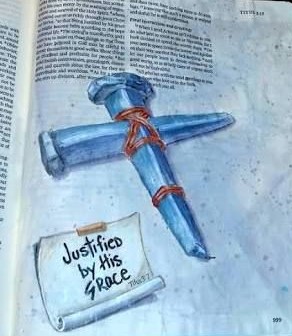

Posted in Bible Study, Catholic, Religious | Tagged , , , , , , , , , , , , , , , , , , , | Leave a comment

My Ancestor William Durkee – First Irish Catholic to settle in Massachusetts

My more recent immigrant ancestors were from in and around Gort and Peterswell Parish in Galway, Ireland, and from Klingenmünster in the Südliche Weinstraße (Southwest Wine Route) district in Germany. I have to go back an additional eighty-five years to find my next immigrant ancestors, they were Kennedy and Murray Scots-Irish that came to British Colonial America about 1770 from Ballintoy, Antrim, Ireland. I do have a few German ancestors that came from Germany in the 1750’s. And I have several additional German ancestors that came to British Colonial America via England in 1710. The English transported nearly 3,000 German Palatines in ten ships to New York in 1710. However, I have a huge amount of Colonial American ancestors that were here even earlier, including a few Mayflower Pilgrims. Although many of my colonial ancestors were from England, I also have some that were from Scotland, Wales, Germany, The Netherlands, France, and Switzerland. But . . . my earliest Irish Catholic ancestor was William Durkee. He was sent into servitude in Barbados and then came to British Colonial America. He was born about 1636 in Ireland. ☘️💚 He is believed to be the first Irish Catholic to settle in Massachusetts. 💚☘️


To understand his plight, I need to give some historical background. In 1641, Ireland’s population was 1,466,000 and in 1652, 616,000. According to Sir William Petty, 850,000 were wasted by the sword, plague, famine, hardship and banishment during the Confederation War 1641-1652. At the end of the war, vast numbers of Irish men, women and children were forcibly transported to the American colonies by the English government. These people were rounded up like cattle, and, as Prendergast reports on Thurloe’s State Papers. “In clearing the ground for the adventurers and soldiers (the English capitalists of that day) … To be transported to Barbados and the English plantations in America. It was a measure beneficial to Ireland [according to the English], which was thus relieved of a population that might trouble the planters; it was a benefit to the people removed [again according to the English], which might thus be made English and Christians … a great benefit to the West India sugar planters, who desired men and boys for their bondsmen, and the women and Irish girls… “To solace them.” (2)

In Barbados the Irish Catholics constituted the largest block of servants on the island. It is estimated that in 1652 Barbados had absorbed no less than 12,000 of these political prisoners.

William Durkee was sold into indentured servitude and was sent to Barbados. In September 1649, he was taken to Barbados as slave labor for the sugar plantations. The price was 1500 pounds of sugar each and the term of service was seven years. “They were treated no better than the African slaves, sometimes worse, for out of fear of insurrection, they were treated with great severity. Accustomed to the moist climate of Ireland, their half-naked bodies suffered terribly in the hot sun of the tropics. Consequently, they were dubbed “Red Legs” by their cruel masters. (4)

In Barbados the authority was not established until 1663, when all the Irish slaves were released and left stranded without friends or money. Many of them sold the only thing they had that was salable, namely, their services, and by this means reached the New England colonies.

William came from Barbados to the British American Colonies as an indentured servant in the household of Thomas Bishop of Ipswich, Massachusetts. His arrival in Massachusetts is documented in early Massachusetts records, and he came in 1663, and he is listed as William Durgie.

Durgie, William, came to Ipswich Nov 09 1663 and was then 33 years old. Had been in the West Indies and came here from thence.  (6)

I need to point out here that many think because the Puritans came to America for reasons including religious freedom that they were tolerant of others of different religions, but this is not true. William Durkee was a Catholic, and many believe he was the first Catholic Irishman to settle in Massachusetts. This made him a target for the fanatical Puritans. They fined him for not attending Church, the fine being paid by Thomas Bishop. He was sentenced to receive 25 lashes or pay a fine of five pounds for running away. Bishop pays again. (4)

Some historical perspective regarding Catholics in early Colonial Massachusetts:

Massachusetts was first settled by English religious dissenters. Quakers, Jews, and Catholics were not permitted in the colony. Catholics avoided Massachusetts during the colonial period after laws passed in 1647 and 1700 forbade Catholic priests to reside in the colony under pain of imprisonment and execution. (8) Because many of the British colonists, such as the Puritans and Congregationalists, were fleeing religious persecution by the Church of England, much of early American religious culture exhibited the anti-Catholic bias of these Protestant denominations. (9)

Near the close of the reign of Charles I (died 1649), however, the forced emigration of the Irish brought many of that race to these shores; their number is hard to estimate, first, because the law made it obligatory that all sailings must take place from English ports, so that there are no records of those who came from Ireland with English sailing registry; secondly, because the law, under heavy penalties, obliged all Irishmen in certain towns of Ireland to take English surnames–the names of some small town, of a color, of a particular trade or office, or of a certain art or craft. (9)

The Durkee surname:

His name is recorded with several difference spellings in various early records including: Dirkey. Dirkye, Durken, Durgee, Durgie, Durkee, Durgin.

The origins of Durkee surname are thought by some to be a variant of the Irish surname Durkin. Durkin is an Anglicized form of the Irish name Mac Duarcáin. Durgin is said to be from the Irish O’Duarcain. Others believe his surname was originally a variant of Darcy that comes from the Irish O’Dorchaide.

DURKEE: In the Gaelic, Duirche is the comparative of Dorch, dark, cloudy, hence dark-complexioned. It may come from Durga, Gaelic, surly, sour, repulsive Durgy, in the Cornish British, signifies a small turf hedge. (7)

Durkee is also an uncommon Russian and Ukranian surname that means the stupid or dull man. (11)

Durkee is also a variant of a Dutch surname with other spellings of: Dirk, Dirke, Dirkes, Dirks, Dirck, Durk, Durck, Durke, van Dirk, Dirike, Dierkes Some of the first settlers of this name or some of its variants were: Aeltje Dirck, who settled in New York, NY in 1658; Engeltie Dirkse, who arrived in New York sometime between 1677 and 1678; John Adam Durck, who came to London, Eng. in 1709. (10)

Although, I believe we can rule-out our William Durkee being of Russian or Ukranian origin! He also was not from one of the early Dutch families of New York. Durgy is a word in Cornish British, but it is not a traditional surname of Cornwall. We do know that he arrived in British Colonial America from the West Indies.

Some link him as the son of Sir William O’Durge. It is believed that the name Durge (or Durgee) was a substitute of the surname D’Arcy. Some attribute Sir William’s up bringing to Platten Hall (now Platin) in Drogheda, but the mansion known by that name wasn’t built until about 1700. However, there is evidence that a castle originally stood where the Hall was built and was the residence of Nicholas D’Arcy. Nearby is Plattin church, which may have been a private chapel for the original estate. (12)

A 19th-century representation of the massacre at Drogheda, 1649 by
Henry Edward Doyle – illustration from Chapter XXX from An Illustrated History of Ireland from AD 400 to 1800, by Mary Frances Cusack, Illustrated by Henry Doyle.

The Siege of Drogheda:

In 1649, from September 3 to 11, Cromwell and thousands of English forces laid siege to the walled harbor town of Drogheda, which lies between Belfast and Dublin. Royalists (both Irish and English) had opposed his Parliamentarian rule in England and met there in August of that year in a war summit. After a week of unsuccessfully convincing them to surrender, Cromwell bombarded the walls, finally leading his men into a breach. Once inside, he is said to have burned the Catholic church with asylum seekers inside, murdered the priests, and massacred the residents — an approach he would repeat in other Irish towns before the Royalist rebellion is put down. It is thought that these tactics caused Irish Catholics to hate Cromwell. Even the English Parliament at the time questioned the necessity of his violence. (12)

Of the 3100 Irish in Drogheda, 200 were captured and 2800 were killed by the 12,000 English soldiers (only 150 English died during the Siege according to Encyclopedia Britannica). Among the dead was William O’Durge. Among the few survivors who were taken and sold into servitude in Barbados was his 16-year-old son William. (12)

In Ireland, the family is thought to have spelled the name O’Durge. As the descendants spread in America, some chose to keep Durge or Durgee, others adapted it to Durkee (from Durke). (12)

Today, most of those with the Durkee surname are found in the United States and Canada. Most are descendants of William Durkee and Martha Cross. A few are descendants of a much later German immigrant to America who settled in Wisconsin in the late 1800’s.

William Durkee’s most life-changing “offense” was marrying Martha Cross, the Protestant daughter of a highly litigious man. (12)

The following is from The courtship and marriage of William Durkee and Martha Cross at the Historic Ipswich on the Massachusetts North Shore website:

An Interior Of An Inn With An Amorous Couple At A Table, And Figures Smoking Near A Fireplace In The Background (1645)
by David The Younger Teniers. (Cropped). Public domain.

Thanks to the existing Massachusetts court records of the time, we are able to know more about him than most other ancestors. In the same household of Thomas Bishop was a servant (she was not an indentured servant, but a local girl working as a servant) named Martha Cross, she was the daughter of Robert Cross and Anna Jordan. Martha was born in Ipswich, MA and was of a family considered upstanding and church going.

When Martha became pregnant by William, they were presented for fornication; the court ruled that they be punished and be married. They found themselves back in court when Martha’s father refused to comply and Durkee had his own misgivings.

The Essex Co. MA court records provide a detailed account of the case, where gossip and hearsay from their neighbors were presented as evidence. The court clerk recorded William Durkee’s name with several different spellings in the same document:

William Dirkey, presented for fornication, was ordered to be whipped not exceeding twenty stripes, and to put in security of 20£ to save the town of Ipswich harmless from the charges of keeping the child, or else go to prison….. Martha Crosse, for fornication, is ordered to be whipped unless she brings a note from the treasurer, of threes £s paid to him.

Thomas Bishop provided the surety, but after the birth of the child, Durkee filed a suit against Robert Cross when he refused to allow his daughter to marry Durkee.

Margrit Bishop testified that being asked by Martha whether she should go home to her father, deponent told her that it was best for her to do so. At that, William being discontented, she desired me in the presence of God to bear witness that she would have no other man but he. Furthermore, she said ‘why will not you trust me as well as I have trusted you hitherto?’ And hereupon she went away to her father.

Grace Searl testified that she heard Martha Crosse say, when her friends came for her, that she told William that if she went away, she would come again and would not forsake him.


Thomas Bishop testified that Martha Crosse desired him several times to speak to her father, that she and William Durgy might be married …


Mary Bishop testified that Martha said it was her greatest comfort that her father had given his consent to her marriage, which was to take place on the nineteenth of the present month.


The court ruled for the plaintiff, that Robert Cross must give his daughter in marriage or pay 5£s damages. Cross agreed to the settlement:

Honored Sirs, you may Easily understand how the Case stands concerning my daughter, and I give them leave to marry, Your servant Robert Crosse.

Cross also addressed a letter to Thomas Bishop:

Neighbor Bishop, to you & your wife this is to let you understand our minds, the Case standing as it does: we leave your servants to your disposal…and we shall no ways hinder it. —Your much Respected Friend, Mr. Robert Crosse at Ipswich in New England, the 12 of the 7th month 64.

But by now, William Durkee was having second thoughts about the marriage, and Robert Cross filed charges against Durkey for “abusing his daughter.” Cross frequently appeared in court, suing John Fuller in 1642; Joseph Fowler in 1649; Cornelius Waldo in 1651; William Durkee in 1664; Thomas Wells in 1668; and in 1670 Nicholar Vauden and Lawrence Clinton, two of his servants who had run away.

Back to court they went:

Goodman Story deposed that Martha Crosse conceived she had been cast out of her father’s favor and family and was sore horrified and distressed in mind, and that her Sister Goodey Nelson came with tears to hear her: ‘Woe, said I,’ I thought my Sister would have died tonight: but she thought she could not live another day in that Condition: I being much affected with their Condition, said, ‘Why doe you not go to your Father & make your Condition known unto him? To which she answered, ‘Oh, I dare not go to speak a word in her behalf.’ Then I said, ‘will you go if I go down with you?’

Then Goodey Nelson said, ‘I with all my heart,’ so we went down to Goodman Cross, and there we found them in a sad and sorrowful Condition very much horrified in their spirit, not knowing which way to turn or what to say, & as my apprehension then led me, I did treat with them about suffering them to marry, which he did, & that was the way then what we thought to be the best.

William Nelson deposed that William Durken said, at the deponent’s house, after Goodman Story had been at his father’s, that he wished he had never spoken as he had, owning the child to be his, but he had eighteen meals a week and would spare six of them to keep the child.

John Bishop deposed that he heard William Durgee say that he had rather keep the child than keep her, but he presently said if he kept one, he would keep the other, and they agreed to be married the next day.”

William Durkee married Martha Cross, daughter of Robert Cross, December 20, 1664, and they established their residence in Chebacco Parish. (1)

Life was very difficult for William and Martha. Even after William worked off his indenture to Thomas Bishop, he could not own land. This was because he refused to renounce his Catholicism and those that did not belong to the official Protestant Church in good standing could not be a land holder. It appears that his attitude may have changed, I would think out of desperation and frustration, for later there is a record of William’s purchasing 1/4 acre of land from the town of Ipswich in 1693. Also, several of his sons were deacons in the church, so in the next generation they all joined the Puritan church. (4)

William and his wife persevered, and they are said to be the origin of all the Irish American lines of the Durkee/Durgy family. They had nine children who settled in Massachusetts and Connecticut with families of their own. They were all raised Protestant. (12)

William apparently remained in Thomas Bishop’s employ and lived in one of his houses. He is later reported to be working on the highways.

According to the Ipswich, Massachusetts Town Clerk, William Durkee Sr. had a seat appointed on one of the short seats in the meeting house in 1700. His name appears on a deed as late as 1713.

Despite their rough beginning, William and Martha had several children over 20 years. By all accounts, they were married for nearly 50 years, until William’s death in 1712. (6) Actually, as noted above, his name appears on a deed as late as 1713. The circumstances and exact date of his death along with where he was laid to rest remain a mystery. But after his death, his wife Martha did migrate to Connecticut to be near her son. Martha Durkee died 11 January 1727 in Windham (the location of her death is now in the town of Hampton), Connecticut.


Known children of William Durkee and Martha Cross:

  1. John Durkee, married/1 to Elizabeth Parsons and married/2 to Hannah Bennett.
  2. Martha Durkee, married Thomas Fuller.
  3. Dr. Thomas Durkee, married/1 Elizabeth Lord and married/2 to Rebecca Lamb.
  4. Elizabeth Durkee, married George Martin, Sr. (II) as his second wife.
  5. William Durkee, married Rebecca Gould.
  6. Jane Durkee, married John Martin.
  7. Mary Durkee, married Joseph Peck.
  8. Ann Durkee, married Samuel Palmer.
  9. Henry Durkee.
  10. Mercy Durkee, married George Martin, Jr (III).

My direct line:

  1. William Durkee and Martha Cross (daughter of Robert Cross, Sr. and Anna Jordan).
  2. Mercy Durkee and George Martin, Jr (III) (son of George Martin, Sr. (II)).
  3. Mercy Martin and Amos Leach (son of James Leach and Mary ____).
  4. Jemima Leach and David Prindle (son of Daniel Prindle and Phoebe Judd).
  5. Amos Prindle and Esther Canfield (daughter of David Canfield, Sr. and Sarah Gray).
  6. David Prindle, Sr. and Hannah Elizabeth Kritsinger/Greatsinger (daughter of John (Johann) Greatsinger and Lea Litts).
  7. Daniel Prindle and Sarah Jane “Jennie” Doman (daughter of Jacob Doman and Mary Ann Davison/Davidson).
  8. Anna “Cora” Prindle and Joseph Edward Cole (son of Lorin Richard Cole and Nancy M. Losure). – my great-grandparents.

References:

  1. Historic Ipswich. The courtship and marriage of William Durkee and Martha Cross. Historic Ipswich on the Massachusetts North Shore (website). The courtship and marriage of William Durkee and Martha Cross – Historic Ipswich
  2. West, Robert E., England’s Irish Slaves. EWTN [website]. England’s Irish Slaves | EWTN
  3. The Irish Times. Red Legs in Barbados, Jan. 17, 2009 [online] Red Legs in Barbados (irishtimes.com)
  4. Bishop, Bonnie. My Genealogy Home Page: Information about William (DURGY) DURKEE [website]. Bonnie-J-Bishop – User Trees – Genealogy.com
  5. Alicia M Prater, PhD, [Blog] A Forbidden Marriage in Colonial Massachusetts | GenTales (medium.com)
  6. The New England Historical & Genealogical Register, Published Quarterly Under the Direction of The New England Historic, Genealogical Society, Rev. William Cogswell, D. D., Editor. Volume I., Boston, Samuel G. Drake, Publisher, 1847, Coolidge & Wiley, Printers, 12 Water Street, Boston, MA.
  7. Origin of the name DURKEE Geneanet.org
  8. Massachusetts, Catholic Church in New Catholic Encyclopedia. New Catholic Encyclopedia January 1, 2003 | O’CONNOR, T. H.; LUCEY, W. L.
  9. “CATHOLIC ENCYCLOPEDIA: Massachusetts”. www.newadvent.org
  10. Dutch Origins of Durkee Surname
  11. Durkee Surname Definition. Forebears.io
  12. Alicia M Prater, PhD, [Blog]. Two William O’Durges and the Battle of Drogheda An Irish massacre and unclear family origins.

Related links of interest:

  1. Records and Files of the Quarterly Courts of Essex County, Massachusetts. pg. 189. William Dirkee v. Robert Cross.
  2. Origin of the Durkee Family, The Society of Genealogy of Durkee website, archived at archive.org on 3 September 2013. The Society of Genealogy of Durkee supported the work of Bernice Gunderson, compiler and author of The Durkee family genealogy, published in 2 volumes, 2009-2012. The organization appears to be inactive, as of June 2020.
  3. Butlers and kinsfolk; Butlers of New England and Nova Scotia and related families of other names, including Durkees, descendants of Lieut. William and Sarah (Cross) Butler of Ipswich, Mass. and Eleazer 1st and Lydia (Durkee) Butler of Ashford, Conn., and Yarmouth, N.S. by Butler, Elmer Ellsworth. [Full book is available to read via this link to the Internet Archive of original website]
  4. How Roman Catholics Conquered Massachusetts: The Inside Story. GBH – PBS Boston
  5. Religion and the Founding of the American Republic America as a Religious Refuge: The Seventeenth Century, Part 1. Library of Congress.
  6. The Irish of Barbados – Irish America Magazine.
  7. Oliver Cromwell’s war crimes, the Massacre of Drogheda in 1649. IrishCentral.

If you use any information from my blog posts as a reference or source, please give credit and provide a link back to my work that you are referencing. Unless otherwise noted, my work is © Anna A. Kasper 2011-2026. All rights reserved. Thank you.

Posted in 52 Ancestors in 52 Weeks, Catholic, Famous Kin, Genealogy, Religious | Tagged , , , , , , , , , , , , , , , , , , , , , , , , , | 13 Comments

An Analysis of Revelation Chapters 2 through 5

“The Alpha and Omega” by Peter Olsen, inspired by the Biblical Book of Revelation, chapter 1. From End-time visions: Art from the Book of Revelation by artist Peter Olsen.

Revelation 2 – 5

Some general information and considerations on the various ways the book of Revelation can be interpreted:

1. Preterist View.

John is writing to encourage Christians in his own day who are experiencing persecution from the Roman Empire.
Challenge: To gain the same kind of encouragement John’s first readers gained from the vivid images of God’s sovereignty.
Caution: Do not forget that most biblical prophecy has both an immediate and a future application.

  1. Futurist View:

Except for the first three chapters, John is describing events that will occur at the end of history.
Challenge: To see in contemporary events many of the characteristics John describes and realize that the end could come at any time.
Caution: Do not assume that we have “figured out” the future, since Jesus said that no one will know the day of his return before it happens.

  1. Historicist View:

The book of revelation is a presentation of history from John’s day until the second coming of Christ and beyond.
Challenge: To note the consistency of human evil throughout history and recognize that names may change but the rebellion against God has not.
Caution: Be careful before identifying current events or leaders as fulfilling aspects of the book of Revelation.

  1. Idealist View:

The book of revelation is a symbolic representation of the continual struggle of good and evil. It does not refer to any particular historical events. It is applicable at any point in history.
Challenge: To gain insight into the past, to prepare for the future, and to live obediently and confidently in the present.
Caution: Do not avoid the book because it is difficult. Try to understand Revelation within its broader literary context.”
(Life Application Study Bible)

Revelation 2-3

Seven Churches on earth; Seven messages.

Seven letters to the churches in Asia Minor:

“The seven messages follow a similar pattern, in differing order: Each begins with a description of Jesus… Next comes performance review…” Works” set a standard by which the churches are measured. Four churches are told to repent, and five churches experience sharp rebuke… The call to “hear” resembles Jesus’ call in the Gospels (Matt. 11:15; Mark 4:9, 23; Luke 8:8). Finally, comes a wondrous promise from the Spirit to the “Conquerors”. . . Motivating hearers to remain faithful, so they can “conquer” as Jesus conquered.” (Amer, p 724)

Revelation 2

The Message to the Church in Ephesus.

“Ephesus was the capital of Asia Minor, a center of land and sea trade. The temple of Artemis, one of the ancient wonders of the world, was located in this city, and a major industry was the manufacture of images of this goddess (see Acts 19:21-41)”. (Life Application Study Bible)

The church in Ephesus was a backsliding church. Once on fire for Christ, but now becoming indifferent. “They are praised for “resisting” and they “did not endure false teachers, who are called “evil ones.” Indeed, they labored diligently to hold fast the Faith which was given them (Cf. 2 Thess. 2:15).” (2)

Interesting imagery:

“This is a message from the one who holds the seven stars in his right hand, the one who walks among the seven gold lamp stands” (Rev. 2:1 NLT)

Jesus is the one that walks among the seven gold lamp stands (the seven churches). It is he who holds the seven stars in his right hand (the messengers of the churches). In 2:5 He says “that he will come and remove your lamp stand from its place among the churches” (NLT) — That “would mean the church would cease to be an effective church.” (Life Application Study Bible). Note that he does not say that the light would be extinguished, just the lamp stand (lamp stand, candlestick, menorah) removed. So the light would remain and the lighted lamp stand could be returned.

The Message to the Church in Smyrna.

“The city of Smyrna was about 25 miles north of Ephesus. It was nicknamed “Port of Asia” because it had an excellent harbor on the Aegean Sea. The church in this city struggled against two hostile forces: a Jewish population strongly opposed to Christianity, and a non-Jewish population that were loyal to Rome a supported emperor worship. Persecution and suffering were inevitable in an environment like this.” (Life Application Study Bible)

The church in Smyrna was a steadfast church. [They] were persecuted, poor, but ever faithful and resolute! The church received only praise.

“The messages to Smyrna and Philadelphia introduce the difficult question of the relationship of the churches to Judaism.” (Amer, p 725)

“I know the blasphemy of those opposing you. They say they are Jews, but they are not, because their synagogue belongs to Satan.” – Revelation 2:5 (NLT)

A Jewish perspective on “synagogue of Satan”:

This image from the New Testament has been used for centuries to endorse the idea that Jewish synagogues and Judaism are from the devil. It has also contributed to the deep divisions and disunity between the church and synagogue. How should we understand this fateful portrayal, and what does the apostle mean by it?

As happens all too often, verses like this are taken out of context (especially about Israel and the Jews), and used in ways that they were never intended. A simple reading of the passage shows that this image is not about Jews or Judaism, but was used by John as a jarring image to warn the early Messianic community about a first century group “calling themselves Jews.” (3)

Additional discussion of “synagogue of Satan”:

The word synagogue comes from a Greek word meaning “assembly of men” or “congregation,” and it was used much like the English word “church.” The “synagogue of Satan,” then, is an assembly or congregation—a church—made up of the individuals who “say they are Jews, and are not.” The term “Jew” is used here in a spiritual sense.

Notice the apostle Paul’s definition of a spiritual Jew in Romans 2:29: “He is a Jew who is one inwardly, and circumcision is that of the heart, in the Spirit, and not in the letter; whose praise is not from men but from God.” In this case, it is not one’s physical race that counts, but his spiritual condition (Galatians 3:27-29; Romans 4:16). True Christians are spiritual Jews because Jesus says in John 4:22, “Salvation is of the Jews.”

Those in the “synagogue of Satan” say they are spiritual Jews—pretend to be real Christians—but are not. This false church was already developing in the days of the apostle John, masquerading as God’s true church. It had congregations in the cities of Smyrna and Philadelphia in Asia Minor even at that early time. It and its daughter churches are further described in Revelation 17. (4)

The Message to the Church in Pergamum.

The city of Pergamum was built on a hill 1,000 feet above the surrounding countryside, creating a natural fortress. It was a sophisticated city, a center of Greek culture and education, with a 200,000-volume library. But it was also the center of four cults, and it rivaled Ephesus in its worship of idols. The city’s chief god was Asclepius, who is a symbol was a serpent and who was considered the god of healing. People came to Pergamum from all over the world to seek healing from this god. (Life Application Study Bible)

Pergamum was a licentious (lacking in moral restraints) church. [It was] permissive, sheltering false teachers, following false doctrines. The church was praised for remaining loyal.

The message to Pergamum . . . Brings up two issues that also concern Thyatira: eating food offered to idols and participating in “fornication” . . . Probably a metaphor for participation in the imperial cult. Food was a divisive issue for early Christians, as evidence by the many New Testament debate about eating meat offered to idols (Rom. 14:13-23; 1 Cor. 1023-33). John’s strict vegetarian line prohibiting all meat sacrificed to pagan gods in the city markets would have meant social marginalization, especially for wealthier Christians seeking to move up socially by participating in civic banquets. (Amer, p 725)

Rev. 2:13-15 The church was praised for remaining loyal. It was not easy to be a Christian in Pergamum. Believers experienced great pressure to compromise or leave the faith. Nothing is known about Antipas except that he did not compromise. He was faithful, and he died for his faith. Apparently, however, some in the church were tolerating those who taught or practiced what Christ opposed. (Life Application Bible)

Interesting imagery:

Sharp two-edged sword.

A message from Jesus “from the one with the sharp two-edged sword:” – Revelation 2:12 (NLT)

“Just as the Romans used their swords for authority and judgement, Jesus’ sharp two-edged sword represents God’s ultimate authority and judgement. It may also represent God’s future separation of believers from unbelievers. Unbelievers cannot experience the eternal rewards of living in God’s Kingdom.” (Life Application Study Bible)

This is another example of Jesus defining who He is. The two-edged sword is previously noted to be in Christ’s possession in Revelation 1:16b …and out of His mouth came a sharp two-edged sword… (5)

The word of God preached also is compared to a two-edged sword. (Ephesians 6:17 and Hebrews 4:12).

Hidden manna, white stones, a new name.

From Rev. 2:17, “To everyone who is victorious I will give some of the manna that has been hidden away in heaven. And I will give to each one a white stone, and on the stone will be engraved a new name that no one understands except the one who receives it.” (NLT)

The three blessings are hidden manna, a white stone, and a new name. The precise explanation of these three items is disputed; however, all three blessings must concern the believer’s victorious reign with Christ, consistent with the blessings bestowed on the other six churches of Revelation 2–3. (6)

The “hidden manna” is likely an allusion to the manna hidden in the Ark of the Covenant, representative of God’s faithful presence and sustenance. (6)

Another take on the hidden manna associates it with the Holy Eucharist – Christ’s food for his Church, the people of the New Covenant. “Just as the ancient manna sustained the ancient Jews in their journey through the desert, so now Christ, our true and perfect manna, sustains us on our journey through the desert of this world to the Promised Land of Heaven. Why is this manna, who is Christ, called hidden? It is hidden because its truth is accessed and seen only through faith. To the worldly, the Eucharist seems nothing more than a wafer and some wine, but to the faithful, Christ is seen, whole and entire. [This] hidden manna, Christ Himself, is given to us! Though hidden to earthly eyes, His true presence is grasped through faith. (7)

The white stones and new name:

One of the better-accepted explanations of the white stone has to do with the high priest’s breastplate, which contained twelve stones. Each of these stones had the name of one of the twelve tribes of Israel engraved on it (Exodus 28:21). As he ministered in the temple, the high priest bore the names of God’s people into God’s presence. In the same way, the “white stone” with the believer’s name written on it could be a reference to our standing in God’s presence.

Another widely held explanation suggests that the white stone may be a translucent precious stone such as a diamond. The word translated “white” in Revelation 2:17 is leukos and can also mean “brilliant, bright.” This interpretation holds that on the stone is written the name of Christ, not the name of the believer. Revelation mentions that the name of Christ is written on the foreheads of the saints (Revelation 3:12; Revelation 14:1, and Revelation 14:20). (8)

A bit more information on …the Greek word is λευκός (leukos), [it] means lightsome, bright, shining, or dazzling. One might think of a shining pearl or diamond. (7)

The best theory regarding the meaning of the white stone probably has to do with the ancient Roman custom of awarding white stones to the victors of athletic games. The winner of a contest was awarded a white stone with his name inscribed on it. This served as his “ticket” to a special awards banquet. According to this view, Jesus promises the overcomers entrance to the eternal victory celebration in heaven. The “new name” most likely refers to the Holy Spirit’s work of conforming believers to the holiness of Christ (see Romans 8:29; Colossians 3:10). (8)

My Life Application Study Bible’s take on it, “It is unclear what the white stones are or exactly what the name on each will be. Because they relate to the hidden manna, they may be symbols of the believer’s eternal nourishment or eternal life. The stones are significant because each will bear the new name of every person who truly believes in Christ. They are the evidence that person has been accepted by God and declared worthy to receive eternal life. A person’ name represented his or her character. God will give us a new name and a new heart.”

The Message to the Church in Thyatira.

Thyatira was a working person’s town, with many trade guilds for cloth making, dyeing, and pottery. Lydia, Paul’s first convert in Philippi, was a merchant from Thyatira (Acts 16:14). The city was basically secular, with no focus on any particular religion. (Life Appreciation Study Bible)

Thyatira was a lax, pagan church. [It was] idolatrous, seduced into corrupt beliefs and pagan rituals. The church was praised for love, faith, service, and endurance.

As noted by Amer when discussing the message to Pergamum, two of the same issues were addressed “to Thyatira: eating food offered to idols and participating in “fornication”. (See notes above regarding Pergamum for full quote).

Rev. 2:20b, “Your are permitting that woman—that Jezebel who calls herself a prophet–to lead my servants astray. She teaches them to commit sexual sin and to eat food offered to idols.” (NLT)

We do not know the true name of this woman who is nicknamed Jezebel in this verse. It is unlikely that her name was actually Jezebel. It wouldn’t be a name that parents would have wanted to bestow on a child at this time in history. Although I will point out here that in later centuries the Puritans used all the names from the Bible when naming their children. And as a genealogist, I have come across records listing women named Jezebel!

The Majority Text indicates Jezebel may have been the wife of the angel of the church. (10) What is meant here by the word angel is the pastor of the church, this Jezebel found in Jesus’ letter to the church of Thyatira may have been the wife of the church’s pastor. Whatever her role in the church, she was a woman who was extremely influential.

Christ describes her as persuasive in the Church, using her self-appointed position to lead Church members into sin. This was like the Jezebel of the Old Testament who influenced the people of Israel to corrupt themselves. [She] was promoting destructive heresies and leading many into moral compromise. Christ also says of this Jezebel, “I gave her time to repent of her sexual immorality, and she did not repent” (Revelation 2:21). This is like the impudent Jezebel of old who remained defiant of God to her gruesome death. This Jezebel [of Thyatira] meets a violent end like the Old Testament Jezebel, a lesson for the Christian not to allow her seductive influence in the Church. (9)

Jesus does give a message to those that have not followed her [this Jezebel]. He tells them to “hold tightly to what you have until I come.” (Rev. 2:25)

Interesting imagery:

“This is a message from the Son of God, whose eyes are like flames of fire, whose feet are like polished bronze:” – Revelation 2:18 (NLT)

Eyes like flames of fire and feet like polished bronze.

The church at Thyatira had been allowing Jezebel to promote her scriptural teaching in their midst (Rev. 2:20), but not the slightest detail had escaped the eyes of the Master. As discussed in Revelation 1:14, the eyes like a flame of fire indicate His omniscience and omnipresence. He is well aware of what is happening within the church at Thyatira, especially those things he opposes (Rev. 2:20).

Fine brass is translated from a word of unknown derivation (only occurring here and in Revelation Rev. 1:15) which probably denotes bright shining metal or perhaps its purity or hardness.

The imagery of both eyes and feet is that of impending judgement upon Jezebel and her children (Rev. 2:22-23). The judgement will serve as a witness of His omniscience: “All the churches shall know that I am He who searches the minds and hearts” (Rev. 2:23). (10)

His feet like polished bronze also shows purity and steadfastness of his steps and actions.

At the end of the message to Thyatira, Christ states that those who are victorious, and who obey him to the end, he will give them the morning star. (Rev, 2:26, 28b). In this passage he is encouraging them, for you only see the morning star when the long night is almost over and the dawn is approaching and very soon the bright light of the sun will dispel the darkness. It is a message, a promise, of HOPE! Jesus is called the Morning Star in Revelation 22:16. This is one of my favorite titles of Christ. “A morning star appears just before dawn, when the night is coldest and darkest. When the world is at its bleakest point. As the Messiah, he is the “bright morning star,” the light of salvation to all. (Life Application Study Bible)

It is a message that when Jesus returns the darkness (in every sense) will abate forever. For He is the “light of the world”.…and this light of God in all its holy brilliance “like lightning (Matt. 28:3) will blot out the darkness (and sin) forever.

The Message to the Church in Sardis.

The wealthy city of Sardis was actually in two locations. The older section of the city was on a mountain, and when its population outgrew the spot, a newer section was built in the valley below. (Life Application Study Bible)

Sardis was the capital of the Lydian empire and one of the greatest cities of the ancient world. Artemis was the main goddess of the city and the temple dedicated to her in Sardis was one of the seven largest Greek temples (more than double the size of the Parthenon). The gymnasium-bathhouse built in the center of the lower city in the 2nd century AD [was a] complex of over five acres… The synagogue of Sardis is notable for its size and location. It is one of the largest ancient synagogues excavated. (12)

Sardis was a dead church. It was a church in name only, without results and [was] spiritless. The church did receive praise for being effective and the few people who remained faithful believers were affirmed.

The problem in the Sardis church was not heresy but spiritual death. In spite of its reputation for being active, Sardis was infested with sin. Its deeds were evil, and its clothes soiled. [This church] looked so good on the outside but was so corrupt on the inside. (Life Application Study Bible)

The church needed to wake up and repent.

Interesting imagery:

“This is a message from the one who has the sevenfold Spirit of God and the seven stars.” – Revelation 3:1

The “sevenfold Spirit” is another name for the Holy Spirit. The seven stars are the messengers, or leaders, of the churches (see Rev. 2:1). (Life Application Study Bible)

The Message to the Church in Philadelphia.

Philadelphia was a favored church. It was a church that was exemplary, faithful to God’s word, and filled with his love. The church was praised for being faithful. It received no criticism.

“This church will be kept from the “hour of trial coming upon the whole empire” — probably a reference to God’s impending judgement against the whole Roman Empire rather than to general end-times tribulation (Rossing 2003; Richard 1995). That judgement or legal trial will happen in the Babylon vision of chapter 18.” (Amer, p 725)

Synagogue of Satan.

Philadelphia church message. “Look at those who belong to the synagogue of Satan, who claim to be Jews but are liars instead” (Rev. 3:9).

See my notes regarding this verse and the related verse in chapter 2 under the church in Smyrna.

He gives them a message that he is coming soon and to “hold on to what you have, so that no one will take away your crown” (Rev. 3:11) “…’come soon’ in this Greek context means something that will happen “quickly or suddenly,” not necessarily “a short time from now.” (Bibleref.com)

The Message to the Church in Boadicea.

Boadicea was the wealthiest of the seven cities, known for its banking industry, manufacture of wool, and a medical school that produced eye ointment. But the city had always had a problem with its water supply. At one time an aqueduct was built to bring water to the city from hot springs. But by the time the water reached the city, it was neither hot nor refreshingly cool–only lukewarm. The church had become as bland as the tepid water that came into the city. (Life Application Study Bible)

The church in Boadicea was a lukewarm church. [It was] self-indulgent, rich, and ostentatious, full of worldly pride. Boadicea received no praise.

“The Laodiceans receive the harshest critique. Prosperous Laodicean church members who may feel secure in their wealth do not “see” that their situation nauseates God. To persuade the church to repent of its complacency, John gives the image of Jesus knocking at the door and promising to eat with the church — possibly a reference to the Lord’s supper. ” (Amer, p 725)

“Although addressed to the Laodicean community corporately, the image of Jesus knocking at the door in 3:20 is frequently interpreted by mystics and pietists as the door of the individual’s heart. Hildegard of Bingen heard 3:20 as an invitation to the spiritual life. For St. John of the Cross (1542-1591), when Christ knocks on the soul’s door he brings the supper of “his own sweetness” (Wainwright, 203).” (Amer, p 726)

Revelation 4-5
Heavenly Throne Room, the Lamb, All Creations Worship.

Having completed the letters to the Seven Churches of Asia, John is called up to the throne room in heaven where he is given a vision of God the Father on His throne. (13)

“A voice summons John to “come up” to heaven. The vision takes place “in the spirit” (the same terminology as in 1:10; 17:3; 21:10). Many ancient apocalypses contain such visionary journeys involving travel into layers of heaven or time travel into the future. The seer returns from the transformative journey with an urgent message for readers, typically calling for repentance and faithfulness.” (Amer, p 727)

“John borrows imagery from the prophets Ezekiel and Isaiah to describe what he sees in heaven. The divine throne looks as the prophets saw it (Isa. 6:2; Ezek. 1:4-28), with concentric circles of worshipers including Ezekiel’s four mysterious living creatures. Too holy to be named, God is simply the “One seated on the throne.” Peals of lightening and thunder recall God’s theophany at Sinai. John adds a rainbow, connecting the throne to God’s covenant with Noah and all creation (Gen.9:20-21). (Amer, p 727)

“As political imagery, the heavenly throne-room scene evokes comparisons with the Roman emperor’s throne-room ceremonies (Aune 1983). …. With the image of the elders casting their crowns before God’s magnificent throne (4:10), John in effect trumps Roman court liturgies. The message is that only God, not the emperor or the empire, is worthy of worshipers’ allegiance.” (Amer, p 727-728)

“Since the second century (Irenaeus, Against Heresies 3.11.8), Christian tradition has associated the four living creatures with the four Evangelists, identified by Jerome (Preface to the Commentary on Matthew) as Matthew (the human); Mark (the lion); Luke (the ox); John (the eagle).” (Amer, p 728)

With chapter 4 we begin to see vivid imagery. “Like a jasper and a sardius (carnelian) stone in appearance” (4:3).
“Instead of describing a specific form or figure, John described emanations of glistening light in two colors: white (jasper may mean diamond) and red (sardius). (14)

The white (jasper/diamond) portrays God’s absolute purity and perfection. The carnelian was ruby red. It portrays God as our Redeemer. John also indicates that an emerald rainbow circled God’s throne. An emerald is green and symbolizes life. The emerald rainbow around God’s throne likely indicates that His promise of eternal life is guaranteed.” (Bibleref.com)

Another commentary by Trapp states, “A jasper having (as they say) a white circle round about it, representing the eternity of the Father. A sardine stone of a fleshy colour representing Jesus Christ, who took our flesh upon him. An emerald, being of a green colour, refreshing the eyes of them that look upon it, representing the Spirit, who is (as the rainbow) a token of fair weather, and is a comfortable refresher, wheresoever he cometh. [And there was a rainbow] Which is sign um gratiae et foederis, a sign of grace and of the covenant of mercy, which is always fresh and green about Christ’s throne of grace.” (15)

Who are the 24 elders seated in the twenty-four thrones that surround God?

Because there were 12 tribes in Israel in the Old Testament and 12 apostles in the New Testament, the 24 elders in this vision probably represent all the redeemed of God for all time (both before and after Christ’s death and resurrection). They symbolize all those — both Jews and Gentiles — who are now part of God’s family. The 24 show us that all the redeemed of the Lord are worshiping him. (Life Appreciation Study Bible)

In 4:5, “the flashes of lightning and the rumble of thunder” as in other places in Revelation, “are connected with significant events in heaven.” (Also see Exodus 19:16 and Psalm 77:18). The “sevenfold Spirit of God” is mentioned again. As previously stated, it is another name for the Holy Spirit. (Rev. 3:1). See also Zechariah 4:2-6, where seven lamps (like the seven torches here) are equated with the one Spirit. (Life Application Study Bible)

In 4:6 we see that in front of the throne was a shiny sea of glass, sparkling like crystal. (NLT).

Glass was very rare in New Testament time, and crystal-clear glass was virtually impossible to find (see 1 Corinthians 13:12). The “sea of glass” highlights both the magnificence and holiness of God. (Life Application Study Bible)

“A sea of glass mingled with fire” is found in Revelation 15:2.

The point of this chapter [chapter 4] is summed up in this verse: All creatures in heaven and earth will praise and honor God because he is the creator and sustainer of everything. (Life Application Study Bible)

The Lamb Opens the Scroll.

Chapter 5 continues the vision of the glimpse into heaven started in chapter 4.

“Revelation 3:5 introduces Jesus into the throne-room scene via a surprising plot development. The sealed scroll God holds must be opened. But no one can be found worthy to open the scroll’s seals and learn its secrets. John invites readers to “weep much” with him, employing pathos as part of his persuasive strategy (Maier, 57). One of the elders tells John not to weep because the Lion of the tribe of Judah, the Root of David, has conquered” (5:5). Two words — “lion” and “conquer” — lead us to expect a fierce animal to open the scroll,” (Amer, p 728)

The Messianic title Lion of the tribe of Judah comes from Genesis 49:9-10, Isaiah 31:4, and Hosea 11:10. The title Root of David comes from Isaiah 11:10 and is repeated in Revelation 22:16. (14)

“Yet John delivers an amazing surprise. In place of the expected lion comes a Lamb: “Then I saw. . . a Lamb standing as if it had been slaughtered” (5:6). The Greek word John uses for lamb (arnion) actually is a diminutive form [a little or delicate lamb], suggesting vulnerability.” This is one of a number of passages where hearing and seeing reveal two different and paradoxical dimensions of the same reality. John “hears” a Lion but “sees” a Lamb.” (Amer, p 728)

“The powerful image of Jesus as “the Lamb that was slaughtered” (Rev. 5:12) becomes the central symbol of Jesus for all of Revelation. . . . The Lamb of Revelation becomes the victor not by militaristic power and bloodshed but rather through being slaughtered. Evil has been conquered not by overwhelming force or violence, but by the Lamb’s victory on the cross.” (Amer, p 728)

In Revelation 5:6b the Lamb is shown as “having seven horns and seven eyes, which are the seven Spirits of God sent out into all the earth” (NLT). Even though the marks of His sacrifice were evident, the Lamb was not presented as an object of pity. He also bore the marks of omnipotence (seven horns) and omniscience (seven eyes).

Throughout the Scriptures, eyes suggest knowledge and wisdom, and horns suggest power. This Lamb has knowledge, wisdom, and power fulfilled perfectly: seven horns and seven eyes. The seven eyes of the LORD are a picture of omniscience drawn from the prophet Zechariah (Zechariah 4:10 and 3:9). (14)

“Which are the seven Spirits of God sent out into all the earth.” (Rev. 5:6b) The Holy Spirit is not only the Spirit of God (in the sense of being the “Spirit of the Father”), but also the Spirit of Christ (see Acts 16:7 and Romans 8:9).

“Singing breaks out in heaven for a second time when the Lamb is introduced. John of Patmos envisions a liturgy where animals and all creatures in heaven, on earth, and under the earth join in exuberant singing. The four living creatures and twenty-four elders now take up their harps to sing a “new song,” this time praising Jesus, the Lamb (Rev. 5:8-14).” (Amer, p 728)

Each elder has a harp and is holding golden bowls full of incense, which are the prayers of God’s people (Rev. 5:8b). “Golden bowls full of incense: In this we see how precious the prayers of the saints are to God. He regards them as a sweet-smelling incense, as if set in precious golden bowls. (14)

People from every nation are praising God before his throne. God’s message of salvation and eternal life is not limited to a specific culture, race, or country. Anyone who comes to God in repentance and faith is accepted by him and will be part of his Kingdom. (Life Appreciation Study Bible)

I would not really use Revelation with not-yet Christians. Possibly I could use it with those who have left the church or new Christians. But the concepts and symbolism have the potential to be misunderstood, and can even be scary to some people. The messages to the seven churches do include issues found today within churches and there is wisdom to be gleaned from those words. I would accept the challenge and discuss Revelation with anyone that brought it up themselves, but I would not choose it as my first choice. That being said, the broader message when putting it all together is one of hope, one of ultimate love, and even joy.

In closing, I will end with commentary of the last verses of Revelation 5:14.
Then [And] the four living creatures said, “Amen!” And the twenty-four elders fell down and worshiped the Lamb. (5:14) “who lives forever” (Rev. 4:11)

“Fell down and worshiped Him: The ancient Greek word for worshiped is literally “to prostrate” or “to lay before another in complete submission.” . . . The elders fell down to their knees, then laid themselves before Him who lives forever as an expression of their total submission and worship.

This is the eastern method of adoration: first, the person worshiping fell down on his knees; and then, bowing down touched the earth with his forehead. This latter act was prostration.” (Clarke)

Forever… worshiped Him who lives forever: The living God reigns eternally. The Caesars come and go, including those who persecute God’s people. But the Lord God lives forever and is ever worthy of our praise.” (14)

Amen! And again, I say, Amen!

☆ This blog post is from my work in Intro. to the New Testament course I took at Phillips Seminary. ☆

References:

☆ Required for the course was the use of Aymer and our choice of a study Bible. All verses were taken from the Life Application Study Bible and are from the New Living Translation:

  1. a. Aymer, Margaret (Ed.), Briggs Kittredge, Cynthia (Ed.), Sanchez, David A. (Ed.), (2014) Fortress Commentary on the Bible: The New Testament. Minneapolis, MN: Fortress Press.
    • 1. b. Life Application Study Bible, New Living Translation, 2014, Wheaton, Il: Tyndale House Publishers.
  2. Lynch, Fr. Zechariah (2020, January 27) The Church of Ephesus: Praise and Rebuke. [Blog Post]. The Inkless Pen – I trod the earth and knew it was my tomb + A blog by Fr. Zechariah Lynch. Accessed January 23, 2021.
  3. Lazarus, David, The “Synagogue of Satan” Does this image in the New Testament describe the Jews? Judaism? What does it mean? Israel Today [website]. Accessed January 23, 2021.
  4. Ritenbaugh, Pastor John W., What is the ‘Synagogue of Satan’ (Revelation 2:9; 3:9)? Church of the Great God [Website]. Accessed January 23, 2021.
  5. Lehr, Paul. (2017, June 17) Revelation: Pergamum, A Two-Edged Sword. [Blog Post].  Publisher: Truth is in the Journey – God in a Nutshell. Accessed January 23, 2021.
  6. Got Questions. Your Questions. Biblical Answers. What was Jesus’ message to the church in Pergamum in Revelation? GotQuestions.org [Website]. Accessed January 23, 2021.
  7. Pope, Msgr. Charles. (2020, June 15) Of Hidden Manna and a Shining Stone: A Meditation on a Text From Revelation [Blog Post]. Community in Mission blog of the Archdiocese of Washington. Accessed January 23, 2021.
  8. Got Questions. Your Questions. Biblical Answers. Why is God going to give us a white stone with a new name?  GotQuestions.org [Website]. Accessed January 23, 2021. 
  9. United Church of God, Who Is Jezebel in Revelation 2 verse 20? Beyond Today – United Church of God [Website]. Accessed January 23, 2021.
  10. The Majority Text as represented by [Zane C. Hodges and Arthur L. Farstad], The Greek New Testament According To The Majority Text (Nashville, TN: Thomas Nelson Publishing, 1985).
  11. Bible Study Tools, Bible Commentary on Revelations 2:18. www.BibleStudyTools.com [Website].  Accessed January 23, 2021.
  12. BiblePlaces.com, Sardis. [Website]. Accessed January 23, 2021.
  13. Bible Study Tools, Bible Commentary on Revelations 4.  www.BibleStudyTools.com [Website].  Accessed January 23, 2021.
  14. Guzik, Pastor David. Enduring Word – Free Bible Commentary [Website].  Accessed January 22, 2021, Enduring Word – Free Bible Commentary from Pastor David Guzik
  15. Trapp, John. “Commentary on Revelation 4”. John Trapp Complete Commentary. 1865-1868.

After a deep dive of study, I want to return to the heart, and I am sharing this video of one of my favorite renditions of the song In Christ Alone by Celtic Worship featuring Steph Macleod.  ♡ ♡ ♡

If you use any information from my blog posts as a reference or source, please give credit and provide a link back to my work that you are referencing. Unless otherwise noted, my work is © Anna A. Kasper 2011-2026. All rights reserved. Thank you.

Posted in Bible Study, Catholic, Religious | Tagged , , , , , , , , , , , , , , , | 1 Comment